

Democrats silent on past rhetoric toward Trump Cabinet member after foiled assassination plot
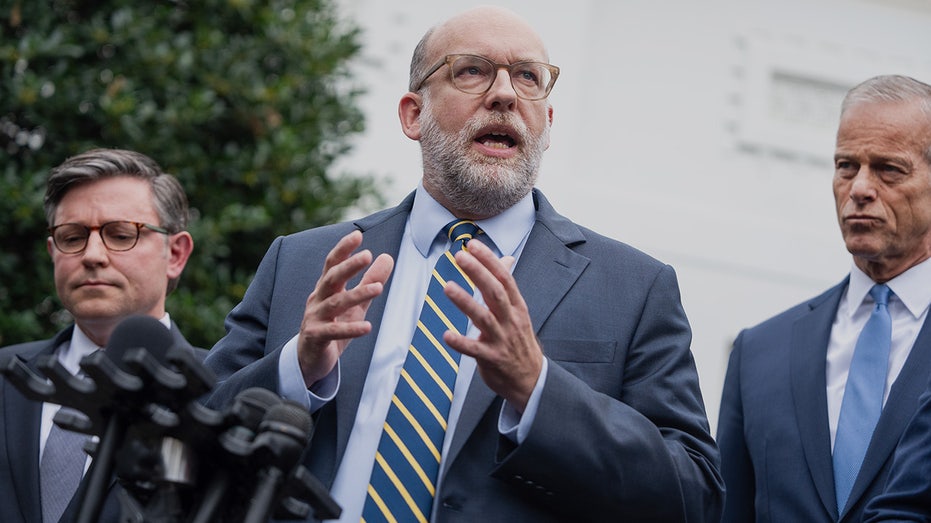
Democrats evaded questions on Friday about whether there could be a link between their past heated rhetoric towards Office of Management and Budget (OMB) Director Russ Vought and news that a man had been charged with attempting to kill him. Authorities arrested Colin Demarco, 26, for arriving at Vought’s residence with a firearm after stating an intent to murder him last year. The offices of Sen. Chuck Schumer, D-N.Y., Alexandria Ocasio-Cortez, D-N.Y., Sen. Elizabeth Warren, D-Mass., Rep. Rosa DeLauro, D-Conn., and other high-ranking Democrats who have described Vought as a threat to the country did not respond to inquiries from Fox News Digital. ‘TRANSGENDER ANTIFA’ EXTREMIST CHARGED WITH ATTEMPTED MURDER AFTER SKATING ON DEATH THREAT, REP. MACE SAYS One Democrat, Rep. Brendan Boyle, D-Pa., did not address the questions about rhetoric but reacted to the arrest. “I am deeply alarmed by the news that a man allegedly planned to murder OMB Director Vought. I am relieved the suspect was caught before any violence occurred,” Boyle said in a statement. “Political violence is unacceptable and represents an attack not only on an individual but on our democracy itself. There is no place for political violence in the United States of America.” However, in the past, many Democrats — including Boyle — have characterized Vought as a threat to the country. GUNFIRE, ARSON AND VANDALISM: TRACKING POLITICAL VIOLENCE IN AMERICA “Make no mistake — his nomination is as dangerous as it gets. His views aren’t just extreme; they are a direct threat to our democracy, the rule of law and the basic principles of our government,” Boyle said last year when Trump announced Vought as the pick to lead OMB. Similarly, Schumer called Vought “a danger to working people, a danger to America’s beliefs and ideals” in a speech delivered on the Senate floor. According to authorities, Demarco approached Vought’s residence in Arlington, Va., on Aug. 10 while wearing a surgical mask and rubber gloves, carrying a backpack and concealing a weapon under his shirt. Authorities arrived on the scene in time to deter Demarco’s alleged plans. SCHUMER, JEFFRIES ACCUSE TRUMP OF CALLING FOR ‘EXECUTION OF ELECTED OFFICIALS’ Police said a search of Demarco’s communications revealed he expressed intent to kill his target in online messages. Demarco faces four charges: attempted murder, criminal solicitation to commit murder, wearing a mask in public to conceal identity and carrying a concealed weapon. LIBERAL OUTLETS CRITICIZE TRUMP OFFICIALS RELOCATING TO MILITARY HOUSING AFTER THREATS, HARASSMENT Vought, who was among the first Cabinet members nominated by Trump, has had a high level of influence on the administration even ahead of the election. Vought was one of the chief architects behind Project 2025, a policy platform published by the conservative-leaning think tank, the Heritage Foundation, that the administration has mirrored on issues like immigration, the federal workforce and public funding. At the time of his confirmation, Vought’s calls to shrink the government’s footprint brought fierce condemnation from critics like Warren. CALIFORNIA MAN ARRESTED FOR ALLEGEDLY MAKING ONLINE DEATH THREATS AGAINST JD VANCE DURING DISNEYLAND VISIT “You can absolutely bet on Russ Vought pulling out the rug from working people over and over again. We don’t know where he will stop,” Warren said in remarks on the Senate floor. “We don’t know how far Russ Vought’s extremism will go, but we can’t afford to wait and find out,” she added. Other Democrats followed up on her calls. “Vought is an extremist who believes the president is all-powerful. He has a radical plan to destroy and dismantle Congress’ investments in our families’ health, safety, and prosperity,” DeLauro, a top Democrat in the House, said of his plans to cut government programs. Demarco is due in court on Feb. 23 for a preliminary hearing, according to the Arlington General District Court.
Bill Clinton comes out swinging against Comer for rejecting public Epstein hearing: ‘Stop the games’
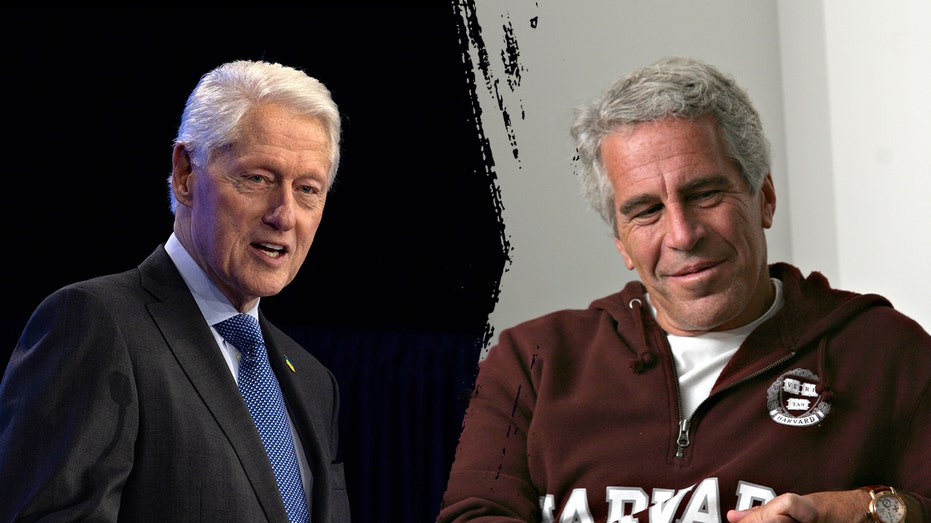
Former President Bill Clinton said on X that he has shared what he knows about the crimes of disgraced financier Jeffrey Epstein in a sworn statement shared with the House Oversight Committee, which both Bill and Hillary Clinton have agreed to testify in front of under subpoena pressure. “I have called for the full release of the Epstein files. I have provided a sworn statement of what I know,” the former president said on X Friday afternoon. “And just this week, I’ve agreed to appear in person before the committee. But it’s still not enough for Republicans on the House Oversight Committee.” In the wake of news the Clintons would comply with House Republicans’ subpoenas to testify after concerns they would not and subsequent threats of contempt, Republicans accused the Clintons of “trying to dodge contempt by requesting special treatment.” LAWMAKERS ESCALATE EPSTEIN PROBE WITH POSSIBLE BILL GATES SUBPOENA The Clintons’ attorneys sent the House Oversight Committee a letter, made public earlier this week, indicating they would comply and testify under certain conditions, such as that their testimony be open, filmed and transcribed. Robert Garcia, the Democrat ranking member of the committee, said the agreement amounted to full compliance with the committee’s demands. However, House Oversight Committee Chairman James Comer disputed the characterization, telling Fox News Digital the agreement lacked specificity. In a post on X, the Republicans on the committee accused Clinton of “trying to dodge contempt by requesting special treatment.” “The Clintons’ counsel has said they agree to terms, but those terms lack clarity yet again, and they have provided no dates for their depositions,” Comer said. “The only reason they have said they agree to terms is because the House has moved forward with contempt. I will clarify the terms they are agreeing to and then discuss next steps with my committee members.” The Clintons’ change of heart led the House to temporarily pause proceedings on holding them in contempt Monday night. Democrats on the committee have pointed out that Comer has not pushed to hold others who did not appear in contempt, nor has he made any threats against the DOJ for failing to produce all of its documents on Epstein by a deadline agreed to by Congress late last year. The department has produced a fraction of the documents expected so far. “Now, Chairman Comer says he wants cameras, but only behind closed doors. Who benefits from this arrangement? It’s not Epstein’s victims, who deserve justice,” Clinton said in his X post Friday afternoon. “Not the public, who deserve the truth. It serves only partisan interests. This is not fact-finding, it’s pure politics. “I will not sit idly as they use me as a prop in a closed-door kangaroo court by a Republican Party running scared,” he continued. “If they want answers, let’s stop the games & do this the right way: in a public hearing, where the American people can see for themselves what this is really about.”
DOJ says it owes deported Venezuelans no due process, dares courts to intervene
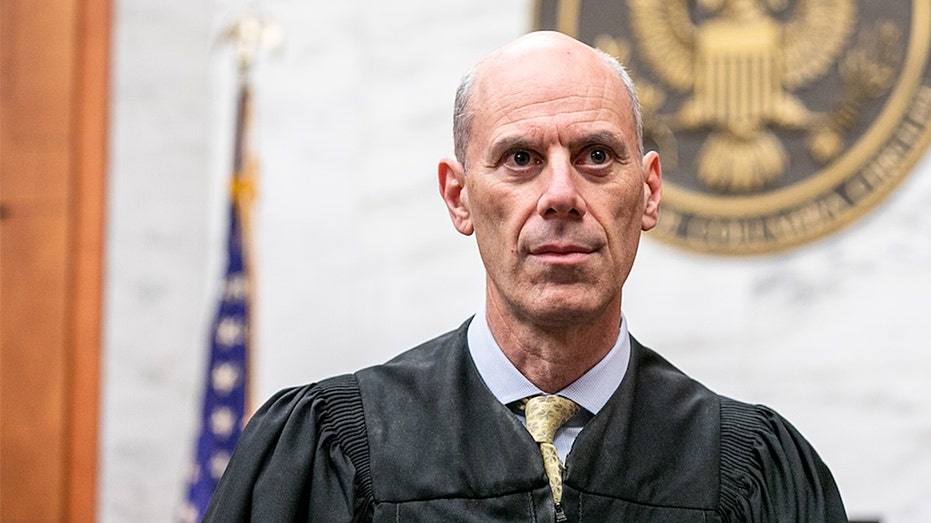
The Trump administration will not comply with a court order requiring due process for hundreds of Venezuelan migrants deported to a maximum-security prison in El Salvador last year, DOJ lawyers said. It sets up a heated clash in court next week in a case that is almost certainly headed back to the Supreme Court. The status and plight of 252 Venezuelan migrants deported to a Salvadoran prison last March under the 1798 Alien Enemies Act have emerged as one of the defining court fights of Trump’s second term, allowing the administration to test its mettle against the federal courts and the practical limits of judicial authority, on one of Trump’s biggest policy priorities. It’s a fight that has also put U.S. District Judge James Boasberg, who is overseeing the Alien Enemies Act case, squarely in the Trump administration’s crosshairs as he attempts to determine what due process protections, if any, the administration is legally obligated to provide and how far the courts can go to enforce them. A new filing from the Justice Department made clear the administration believes it owes the migrants no additional due process at all. Should the court try to order otherwise, lawyers for the administration said they would promptly seek intervention from higher courts. SUPREME COURT FREEZES ORDER TO RETURN MAN FROM EL SALVADOR PRISON In its filing Monday, the Justice Department argued again that the administration is powerless to return the Venezuelan migrants who were summarily deported last year. The department rejected the notion that the U.S. could “facilitate” due process proceedings for the migrants in question as previously ordered by the court, describing the options to do so as either legally impossible or practically unworkable due to national security concerns and the fragile political situation in Venezuela after the U.S. capture of Venezuelan strongman Nicolás Maduro during a raid in Caracas last month. The DOJ also reiterated its argument that bringing petitioners back to the U.S. would harm “critical” foreign policy negotiations with Venezuela and carry “profound” national security risks, citing the alleged gang member status of the migrants in question. (The alleged gang member status of many of the individuals has been called into question.) DOJ lawyers also rejected the notion of conducting the proceedings overseas, including at the U.S. embassy in Venezuela, citing the U.S. capture and arrest of Maduro and his wife. The U.S., they said, lacks custody to conduct the habeas proceedings on foreign soil and doing so would risk “injecting an extremely complicated issue into what is already a delicate situation” in Venezuela, potentially “negatively affecting U.S. efforts toward stabilization and transition that aim to benefit tens of millions of Venezuelans.” The deportations, carried out under the Alien Enemies Act despite an emergency court order from Judge Boasberg, prompted an eleven-month legal battle that reached the Supreme Court in April and months of fights in the lower courts, including a subsequent order from Boasberg in December for the government to “facilitate” due process for the deported migrants. DEFIANT MADURO DECLARES HE IS A ‘PRISONER OF WAR’ IN FIRST US COURT APPEARANCE The Supreme Court said then that individuals removed under the Alien Enemies Act must have the ability to contest their removal and have a meaningful opportunity and notice to do so before they are removed. Boasberg has spent the months since attempting to determine the status of the hundreds of CECOT plaintiffs and what ability the U.S. has to facilitate their return or to provide the class of migrants with due process and habeas protections, including the ability to challenge their alleged gang status. His December order required the Trump administration to submit to the court in writing its plans to provide due process to the class of migrants deported to El Salvador. Boasberg said the administration could do this by either returning the migrants to the U.S. to have their cases heard in person or facilitate hearings abroad with members of the class that “satisfy the requirements of due process.” APPEALS COURT BLOCKS TRUMP ADMIN’S DEPORTATION FLIGHTS IN ALIEN ENEMIES ACT IMMIGRATION SUIT Lawyers for the Justice Department previewed similar arguments last month before an “en banc” 17-judge panel of the U.S. Court of Appeals for the Fifth Circuit, which convened to weigh the legality of the Trump administration’s use of the 227-year-old law. The Justice Department told judges then that the U.S. indictment against Maduro “reinforces the Proclamation’s findings that the Maduro regime and TdA have formed a ‘hybrid criminal state’ directed by the regime” and justified the decision to use the Alien Enemies Act law to quickly deport them to the third-country prison. “These new developments underscore the Maduro Regime’s control over TdA and TdA’s violent invasion or predatory incursion on American soil. As a result, it is even clearer that the President’s invocation of the Alien Enemies Act was part of a high-level national security mission that exists outside the realm of judicial interference.” ACLU lawyer Lee Gelernt told the judges during the same hearing that the Alien Enemies Act does not give the administration “a blank check” for a president to “use his war powers any time he considers it valuable.” Regardless of how Boasberg rules, the new filing made clear that the Trump administration views the fight as far from over. “If, over defendants’ vehement legal and practical objections, the Court issues an injunction, defendants intend to immediately appeal, and will seek a stay pending appeal from this Court (and, if necessary, from the D.C. Circuit),” the Justice Department said.
Trump overhauls US arms sales to favor key allies, protect American weapons production
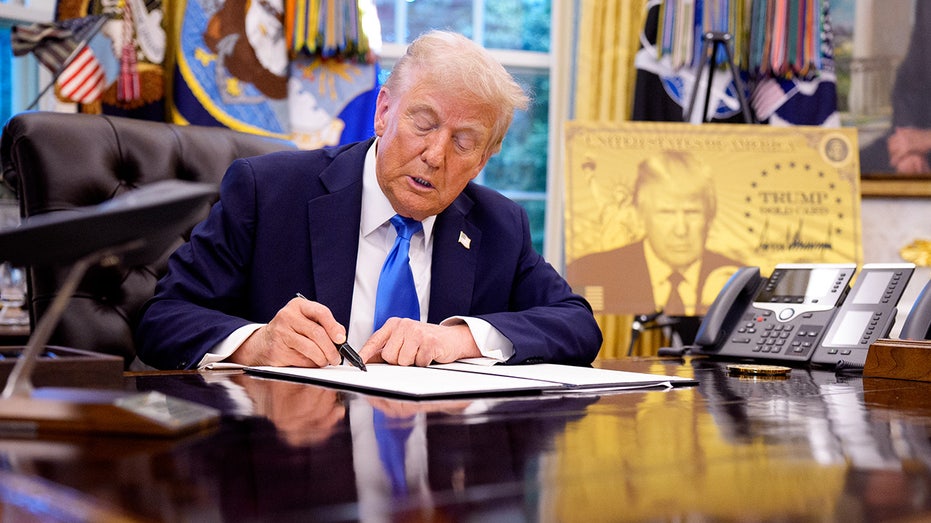
FIRST ON FOX: President Donald Trump on Thursday signed an executive order requiring the government to assess foreign weapons sales based on their impact on U.S. production capacity for key systems and to favor allies whose defense investments and strategic importance align with U.S. national security priorities. Under the order, obtained first by Fox News Digital, the Departments of War, State and Commerce are instructed to ensure that U.S. arms transfers support weapons systems deemed most operationally relevant to the National Security Strategy, reinforce critical supply chains, and prioritize partners that have invested in their own defense and occupy strategically important regions. The administration argues that past arms transfer policy allowed foreign demand to shape U.S. production decisions, contributing to backlogs, cost overruns and delivery delays that left both the U.S. military and its allies waiting years for critical equipment. “The America First Arms Transfer Strategy will now leverage over $300 billion in annual defense sales to strategically reindustrialize the United States and rapidly deliver American-manufactured weapons to help our partners and allies establish deterrence and defend themselves,” according to a White House fact sheet. TRUMP NATIONAL SECURITY BLUEPRINT DECLARES ‘ERA OF MASS MIGRATION IS OVER,’ TARGETS CHINA’S RISE A central goal of the order is to speed up a foreign military sales process that defense officials and industry leaders have long criticized as slow and overly bureaucratic. The order directs federal agencies to identify ways to streamline enhanced end-use monitoring requirements, third-party transfer approvals and the congressional notification process — steps the administration says have contributed to years-long delays in delivering U.S. weapons overseas. The order also creates a new Promoting American Military Sales Task Force charged with overseeing implementation of the strategy and tracking major defense sales across the government. In a move aimed at increasing accountability, the administration says agencies will be required to publish aggregate quarterly performance metrics showing how quickly defense sales cases are being executed. The strategy also signals a shift in how the United States prioritizes its partners. The order directs the government to favor countries that have invested in their own defense and occupy strategically important regions, effectively tying arms sales decisions more closely to U.S. military planning and geographic priorities. HEGSETH SAYS DEPARTMENT OF WAR ‘WILL BE PREPARED TO DELIVER’ WHATEVER TRUMP WANTS FOLLOWING IRAN WARNING Other partners could face longer timelines or lower priority if their requests do not align with U.S. strategic or industrial objectives. While the order does not name specific countries, it reflects an effort to focus limited U.S. production capacity on allies viewed as most critical to executing the National Security Strategy. The order also instructs the War, State and Commerce departments to “find efficiencies in the Enhanced End Use Monitoring criteria, the Third-Party Transfer process, and the Congressional Notification process.” Congress will likely be watching how the administration implements the order, especially provisions aimed at speeding both oversight of U.S. weapons once they are sold abroad and the process for notifying lawmakers about major arms deals. Lawmakers have argued those steps help prevent misuse of U.S. weapons, even as they have criticized delays that slow deliveries to allies. The order follows a series of recent defense-related executive actions taken by Trump. In January 2026, he signed an order directing defense contractors to prioritize production capacity, innovation and on-time delivery over stock buybacks and other corporate distributions. That built on an April 2025 order aimed at improving speed and accountability in the foreign military sales system, as well as a January 2025 order focused on modernizing defense acquisitions and reducing red tape across the defense industrial base.
Delhi government starts process to draft bill for Unified Transport Authority, DUMTA

Chief Minister Rekha Gupta led Delhi government has started the process of drafting a comprehensive Bill for the creation of the Delhi Unified Metropolitan Transport Authority (DUMTA) along with a dedicated Delhi Urban Transport Fund.
32nd Avenue CEO Dhruv Sharma arrested in Rs 2.5 crore cheating case, why Gurugram’s popular hub facing protests?

Gurgaon Police on Friday arrested Dhruv Sharma, the founder, CEO, and managing director of 32nd Avenue, the commercial real estate project in Gurgaon, in connection with an alleged Rs 2.5-crore case of cheating.
‘Charging full fare under RAC not justified’: Parliamentary panel recommends partial refunds from Railways

The Public Accounts Committee in its report “Punctuality and Travel Time in Train Operations in Indian Railways” recommended partial refunds for RAC passengers referring to full fare tickets for such passengers as ‘unfair’. It has also asked Railways to review speeds of its superfast trains.
A pit dug overnight, a warning ignored: How DJB safety failures led to the Janakpuri biker’s death

The Janakpuri biker accident brought into focus questions about safety measures, compliance and other serious lapses by public authorities that lead to such incidents. The incident exposes non-compliance of warnings and safety protocols laid long before the incident.
“Tolerance for criminality”: Why top Republicans are turning on Texas Agriculture Commissioner Sid Miller
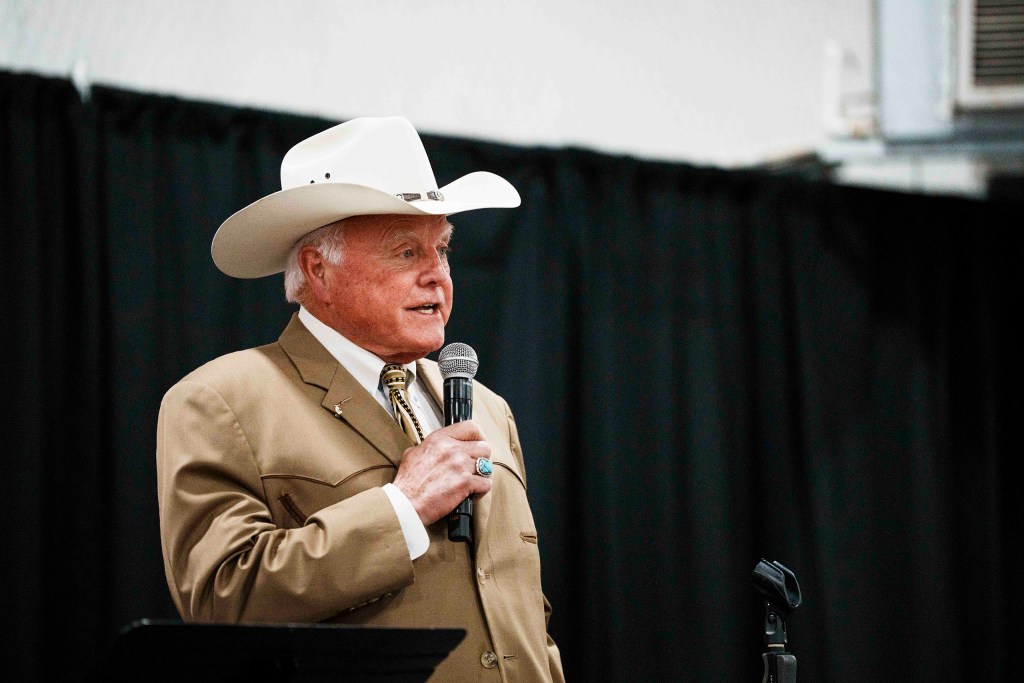
The three-term incumbent is effectively the underdog in the primary race for his own seat, lagging in fundraising and under attack by members of his own party.
In fiercely competitive Democratic Senate race, social media influencers increasingly drive the conversation

The near-constant stream of takes from content creators has come to frame the primary between Jasmine Crockett and James Talarico as a referendum on identity politics in the Democratic Party.