

Trump U-turn: Is Venezuelan oil really available to Cuba again?
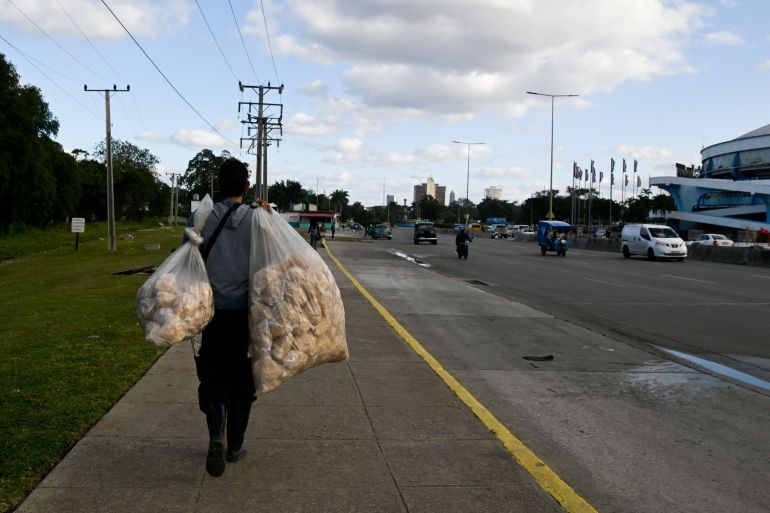
After months of a crippling oil blockade on Cuba imposed by the United States, the fuel-starved country may now see some relief after the US government said it would begin authorising companies to resell Venezuelan oil, even as tensions between the two reach a head. On Wednesday, the US Department of the Treasury said it would allow the resale of Venezuelan oil for “commercial and humanitarian use” in Cuba as the small island nation faces one of its worst fuel crises in decades. Recommended Stories list of 4 itemsend of list Venezuela is the largest provider of oil to Cuba. However, since US forces abducted Venezuelan President Nicolas Maduro in January and imprisoned him to face drugs and weapons charges in a New York court, the Donald Trump administration has taken control of Caracas’s oil and halted exports to Havana. Washington has long had frosty relations with Cuba, but Trump’s administration is specifically seeking regime change there by the end of 2026, US media has reported. The US’s policy shift this week, however, comes after Caribbean leaders sounded the alarm about the dire situation in Cuba, an island nation of 10.9 million people. At a regional meeting of Caribbean Community (CARICOM) countries on Wednesday, attended by US Secretary of State and Cuban-American Marco Rubio, Jamaica’s Prime Minister Andrew Holness called on Washington to ease the pressure. “Today, many Cubans are facing serious economic hardship, energy shortages, and growing humanitarian challenges,” Holness said. Cuba is not a CARICOM member but shares close ties. Advertisement “We are sensitive to their struggles. But we must also recognise that a prolonged crisis in Cuba will not remain there. It can impact migration, security and economic stability across the Caribbean, including Jamaica,” he added. A man carries pork rinds to sell as Cubans brace for fuel scarcity measures after the US tightened its oil supply blockade, in Havana, Cuba, February 6, 2026 [Norlys Perez/Reuters] What’s the situation in Cuba now? Cuba’s state-dominated economy was already struggling under a US embargo which has been in place since 1962, dating back to Havana’s alliance with the Soviet Union during the Cold War. Since then, sanctions on Cuba have eased and tightened under various US administrations. The long-running sanctions have severely weakened Cuba, causing the country to become highly dependent on imports, and high inflation routinely leads to food and energy shortages. Mass emigration of Cuba’s skilled labour force, particularly during the COVID-19 pandemic, has added to the country’s difficulties. With Trump’s latest oil embargo, the US has added a severe energy crisis to the mix. Widespread power blackouts of up to 20 hours at a time are now being reported across Cuba, impacting hospitals, businesses and households alike. Surgeries have been suspended, schools have cancelled classes, and waste trucks are parked as rubbish piles up in the streets. Four United Nations special rapporteurs warned in early February that the situation is contributing to a severe public health problem in the country and said it could lead to a “severe humanitarian” crisis. Cuba has lost 90 percent of its fuel supply, and despite shutting beach resorts and restricting aviation fuel sales, the country could experience a total blackout as early as late February, according to Ignacio Seni, a risk analyst writing for the US-based intelligence firm Crisis 24. The Mexican government dispatched humanitarian aid to the people of Cuba on board two ships of the Mexican Navy, Veracruz, Mexico, February 9, 2026 [Mexico Ministry of Foreign Affairs via Anadolu Agency] Why has the US blocked oil deliveries to Cuba? Cuba produces crude oil but does not have the capacity to refine enough to meet domestic demand. Venezuela was providing as much as 50 percent of Cuba’s oil before the US government took control of its oil industry at the start of this year, about 35,000 barrels per day. Under a special barter agreement in place since 2000, Cuba provides support for education, healthcare, and security services in return for discounted Venezuelan fuel. Indeed, about 30 members of Maduro’s security detail who were killed in the operation to abduct him in January were from Cuba. Advertisement Then, days after Maduro was abducted, Trump turned his aim at Cuba itself, warning Havana to “make a deal before it is too late”. He did not, however, give details about what type of deal he wanted. On January 29, Trump issued an executive order imposing new trade tariffs on any countries selling oil to Cuba because of what he called the “policies, practices and actions” of the Cuban government, which, he said, pose an “extraordinary threat” to the US. Trump also claimed, without evidence, that Havana funds “terrorism”. Besides Venezuela, Cuba was also sourcing oil from Mexico, Russia and Algeria, but all oil imports into the country ceased. Trump’s order, therefore, effectively amounted to a blockade. The US has also reportedly seized fuel tankers in open waters transferring oil to Cuba, according to a New York Times investigation into ship movements in the Caribbean Sea published last week. The US began building up its naval presence in the area in September last year as it prepared to attack Maduro, and its troops continue to patrol the waters. In mid-February, one tanker loaded with Colombian oil was intercepted by the US Coast Guard as it came within 70 miles of Cuba, the Times reported. The vehicle, called the Ocean Mariner, was previously used to covertly transport oil between Venezuela and Iran. Before Maduro’s capture, US forces also struck multiple Venezuelan boats in the eastern Pacific and Caribbean that the US claimed – without evidence – were trafficking drugs. How have Cuba and others reacted to the US blockade? Cuban authorities under President Miguel Diaz-Canel have accused the US of imposing collective punishment on the country. On Wednesday, it also accused the US of links to armed men who entered the country’s waters on a Florida-tagged speedboat. Four Americans of Cuban origin were killed in the altercation, and two were injured. In the past,
Delhi Police vs Himachal Police: What exactly happened? Here’s all you need to know

The standoff began when Delhi Police personnel, around 20 in number, were intercepted by Shimla Police while transporting the three Youth Congress workers to Delhi.
Who was Bonu Komali? 21-year-old YouTuber found dead after sending ‘I love you’ to mother in Kuwait

A 21-year-old BSc student and YouTuber, Bonu Komali, was found dead in her Hyderabad apartment after sending an emotional message to her mother. Police suspect distress linked to a past relationship. A case of suspicious death has been registered and investigations are ongoing.
CM Rekha Gupta-led Delhi govt renews excise policy for hotels, clubs and restaurants by 1 year, check details

The extension means Delhi will continue operating under the 2020-21 policy, which has been extended multiple times under previous governments.
Delhi: DTC to launch Pink Saheli Smart Card for women to travel free, along with Orange, Blue smart cards

To continue to ease travel and ensure safety for woman in Delhi, the DTC will introduce Pink, Blue, and Orange smart cards for bus travel and will formally launch them on March 2. These cards will replace the physical tickets and can be used in shopping, metro and ATM.
Rep. Veronica Escobar, two dozen Democrats call on ICE to close troubled El Paso detention camp
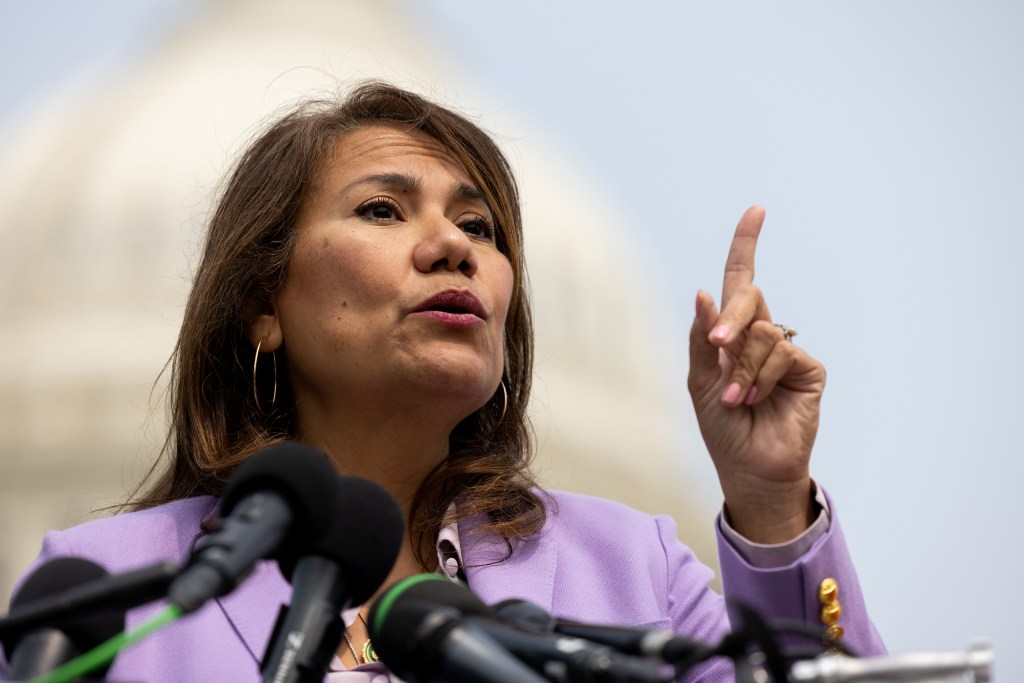
Three deaths have been reported recently at the hastily constructed camp. One was ruled a homicide involving staff. Claims of medical neglect and unsanitary conditions are rife.
Flores vs. Flores: GOP primary for South Texas congressional seat hinges on who can beat the Democrats
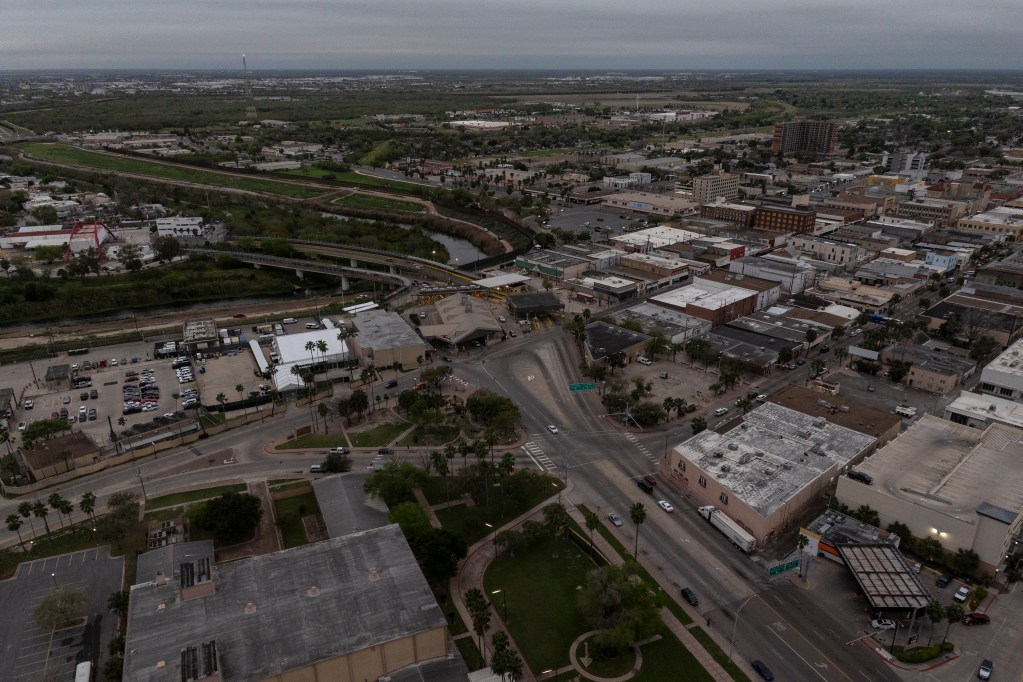
Mayra Flores argues her “battle scars” make her the best bet to beat Democrat Vicente Gonzalez. Eric Flores says his opponent is a proven “loser” after back-to-back defeats.
West Texas congressional candidates split on campaign strategy: Defend farmers or Trump
As front-runners in a seven-person Republican primary, Tom Sell is running on local issues, while Abraham Enriquez is making it all about Trump.
Hillary Clinton tells House ‘I do not recall ever encountering’ Jeffrey Epstein
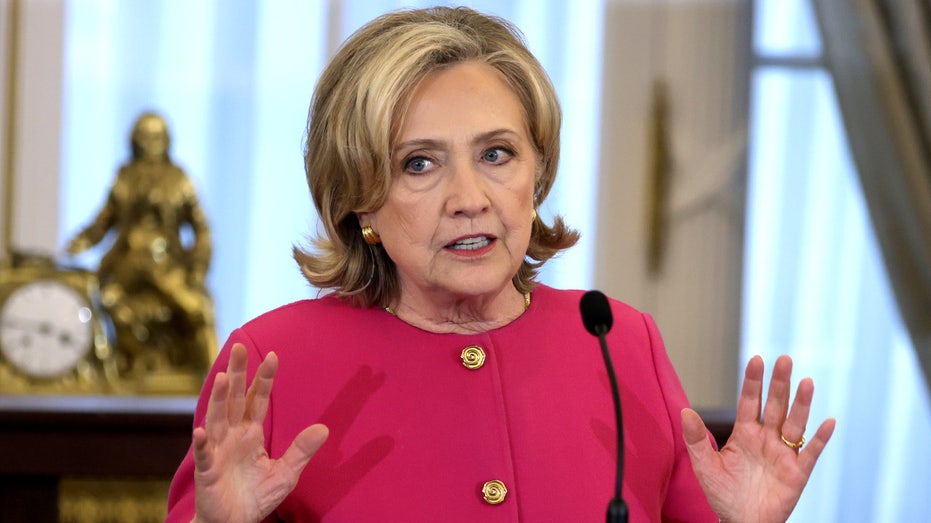
Former Secretary of State Hillary Clinton is accusing the GOP-led House Oversight Committee of using her to “distract” from President Donald Trump during her high-stakes testimony in Congress’ Jeffrey Epstein probe. “A committee endeavoring to stop human trafficking would seek to understand what specific steps are needed to fix a system that allowed Epstein to get away with his crimes in 2008,” she is telling the panel, according to her opening remarks. “But that’s not happening. Instead, you have compelled me to testify, fully aware that I have no knowledge that would assist your investigation, in order to distract attention from President Trump’s actions and to cover them up despite legitimate calls for answers.” Clinton is telling lawmakers, “As I stated in my sworn declaration on January 13, I had no idea about their criminal activities.” CLINTONS CAVE: COMER SAYS BILL AND HILLARY TO TESTIFY IN EPSTEIN PROBE “I do not recall ever encountering Mr. Epstein. I never flew on his plane or visited his island homes or offices. I have nothing to add to that,” her remarks state. “Like every decent person, I have been horrified by what we have learned about their crimes. It’s unfathomable that Mr. Epstein initially got a slap on the wrist in 2008, which allowed him to continue his predatory practices for another decade.” The House Oversight Committee’s deposition is officially kicking off on Thursday morning after months of back-and-forth. “No one’s accusing, at this moment, the Clintons of any wrongdoing. They’re going to have due process,” Oversight Committee Chairman James Comer, R-Ky., told reporters shortly before it began. “But we have a lot of questions, and the purpose of the whole investigation is to try to understand many things about Epstein.” SON OF NORWAY’S CROWN PRINCESS TO FACE RAPE CHARGES AS NEW EPSTEIN FILES MENTION HER HUNDREDS OF TIMES Hillary Clinton’s deposition comes a day before her husband, former President Bill Clinton, will testify before the panel as well. “Today will be a long deposition, I would assume, and tomorrow will be an even longer deposition,” Comer said. Both Democrats and Republicans on the committee, as well as the panel’s staff, traveled to the Clintons’ hometown of Chappaqua, New York for the two-day affair. It’s part of an agreement struck between the GOP-led panel and the former first couple’s lawyers in order for them to appear in person. Lawmakers on either side will have the opportunity to question Hillary Clinton in addition to their staffs. Fox News Digital was told that Rep. Nancy Mace, R-S.C., will be the first lawmaker to question the former first lady and Obama administration official. Mace was one of four House Republicans who successfully forced a vote late last year on getting the Department of Justice (DOJ) to release files on Epstein, despite pressure from GOP leaders. The South Carolina Republican, who is running for governor of the Palmetto State, told reporters on Thursday that she would also be questioning Hillary Clinton on Trump Commerce Secretary Howard Lutnick, among other names that have been mentioned in relation to Epstein. Comer told reporters she would also be questioned on her ties to Epstein accomplice Ghislaine Maxwell, pointing out that Maxwell was present at Chelsea Clinton’s wedding in 2010, after the first allegations against Epstein surfaced. He also suggested that Epstein and Maxwell’s ties to the nonprofit Clinton Foundation would also see scrutiny. “Again, we’re not accusing Hillary Clinton of wrongdoing. We know that Jeffrey Epstein said many times in emails that he was the first person to raise money for the Clinton initiative, the Clinton Foundation, that he solicited money at some of his properties for the Clinton Foundation,” Comer said. “Again, that’s not saying anything illegal, but there are a lot of questions pertaining to Secretary Clinton with respect to Epstein and his involvement in the Clinton initiative and her relationship with Ghislaine Maxwell.” But Clinton’s prepared remarks show her accusing Republicans of going on a “fishing expedition” to find information that is not there. “If this committee is serious about learning the truth about Epstein’s trafficking crimes, it would not rely on press giggles to get answers from our current president on his involvement. It would ask him directly, under oath, about the tens of thousands of times who showed up in the Epstein files. If the majority was serious, it would not waste time on fishing expeditions. There is too much that needs to be done,” her remarks said. Neither of the Clintons has been accused of wrongdoing related to Epstein, nor has Trump. But both the current and former president’s names appear in the Epstein files numerous times, alongside other well-known figures like Bill Gates and Leslie Wexner.
Trump admin asks Supreme Court to end temporary protected status for Syrian migrants
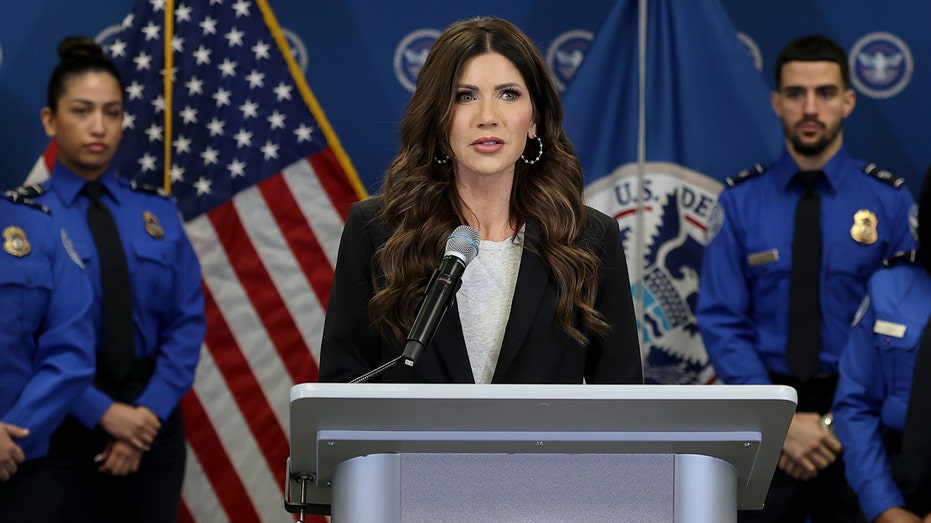
President Donald Trump’s administration is pushing for the U.S. Supreme Court to allow it to nix temporary protected status for Syrians. “This application marks the third time that the government has been compelled to seek a stay from this Court after lower Courts have baselessly blocked the Secretary of Homeland Security’s determinations regarding Temporary Protected Status (TPS) just before they took effect,” the filing declares. The filing notes that the high court previously issued stays amid legal wranglings pertaining to the administration’s move to terminate TPS for Venezuela. “Both times, this Court’s orders reflected that the government is likely to succeed on the merits of its purely legal arguments—including that 8 U.S.C. 1254a(b)(5)(A) expressly bars judicial review of direct or indirect challenges to the Secretary’s TPS determinations.” “And both times, the Court’s orders reflected that the government established irreparable harm and that the balance of the equities weighed in its favor,” the administration argued. “The lower courts’ arrogation of core Executive Branch prerogatives irreparably harms the government, and respondents’ alleged harms were inherent in the temporary nature of the program that Congress designed.” Department of Homeland Security Secretary Kristi Noem’s attempt to terminate TPS for Syria last year was stymied in court. The move was supposed to take effect in November, according to the notice in which Noem declared that “the designation of Syria for Temporary Protected Status is terminated effective at 11:59 p.m., local time, on November 21, 2025.” This is a breaking news article and will be updated.