

PM Modi’s two-day visit to Israel amid regional tensions, as India reshapes its regional strategy and key alliances

Prime Minister Narendra Modi is set on a two-day visit to Israel from February 25, Wednesday to February 26, Thursday, to reinforce bilateral defence and trade cooperation as the tensions in the Middle-east brewing up due to US and Iran and Israel’s tensions with some of the regional nations.
Who are Bhopal sisters Afreen and Amreen arrested in sex racket? How did they lure victims?

According to separate complaints filed by two women, aged 21 and 32, the Bhopal sisters, Amreen and Afreen, lured them through deceptive job offers. The sisters targeted women from economically weaker backgrounds with promises of domestic or beautician jobs.
Delhi govt covers 3.97 lakh widows, 1.31 lakh divyang beneficiaries under Ayushman Scheme: CM Rekha Gupta

The Delhi government under Chief Minister Rekha Gupta has taken a great initiative in the field of health security in the national capital. Widow and divyang pension beneficiaries receiving government pensions will from now on be covered under the Pradhan Mantri Jan Arogya Yojana.
Dallas’ affordable housing supply is evaporating, report finds

High-cost housing in Texas’ third-largest city reflects challenges across the state, which has faced an affordability crisis amid extraordinary growth.
Used electric vehicle batteries find new life bolstering the Texas grid
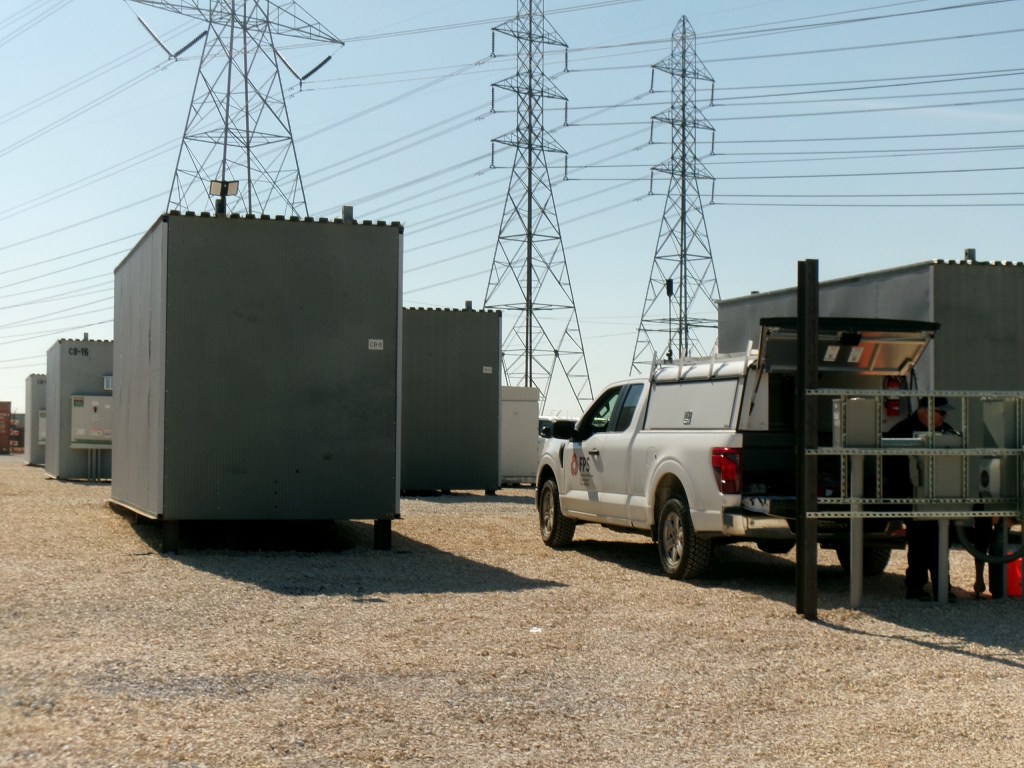
A company is repurposing the batteries to store electricity and sell it to the grid when power from wind and solar dwindles.
North Texas suburb will stay in region’s largest public transit system for now

The Plano City Council led an aggressive push to dismantle the Dallas Area Rapid Transit system. The suburb reached an agreement with the agency earlier this year to claw back some tax dollars and other concessions.
Dem rep identifies himself as one of this year’s State of the Union designated survivors
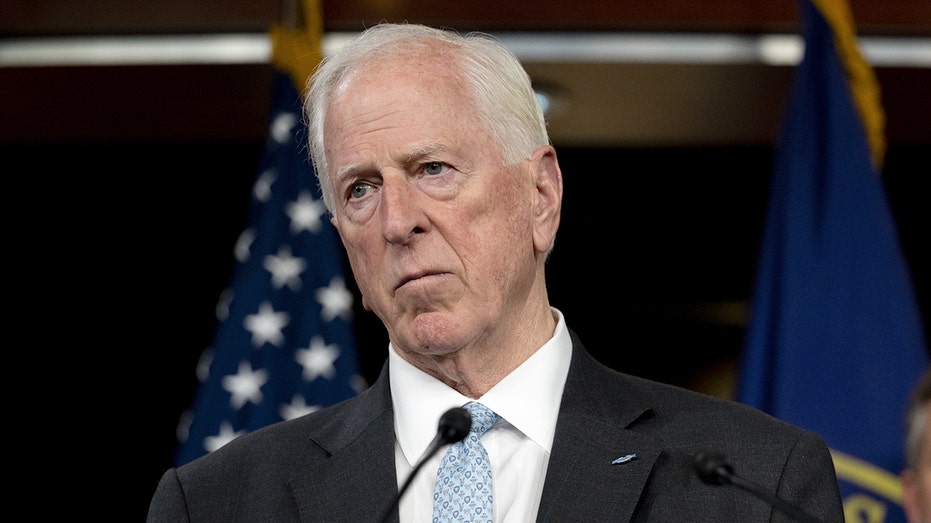
Rep. Mike Thompson, D-Calif., has identified himself as one of the designated survivors ahead of President Donald Trump‘s State of the Union address on Tuesday night. Designated survivors do not attend the president’s address in person and instead watch it from a secure, undisclosed location. “I’ve been selected as a designated survivor for tomorrow’s State of the Union, so I won’t be there in person, but I’ll be watching. Americans deserve accountability for the militarization of ICE, terrorization of our communities and killing of American citizens,” Thompson wrote in a post on X. REP RANDY FINE TO BRING 4-LEGGED GUEST SADIE TO TRUMP’S STATE OF THE UNION AMID BACKLASH OVER X POST While Thompson will not be attending the address in person, his guest, Marine Corps veteran, small business owner, and City Councilmember Bernie Narvaez from Napa will be in attendance. “Bernie is a shining example of what it means to be a public servant and to fulfill the American Dream,” Thompson said when announcing Narvaez as his guest. “I am honored Bernie is joining me in Washington, D.C., as a representative for the hardworking people of our district. As a veteran, as a small business owner, as an immigrant, as a local elected official, and as a husband and father, Bernie knows all too well the importance of standing up for our country, defending our democracy, and lowering costs for hardworking people,” he added. In a separate statement announcing that House Minority Leader Hakeem Jeffries, D-N.Y., had selected him as the designated survivor, Thompson bashed Trump and his administration. “Since the day he took office, this president has raised costs for hardworking families, unleashed ICE to terrorize our communities, and threatened unlawful military attacks on foreign countries. He’s made Americans’ lives and our democracy worse off,” Thompson said. “President Trump is unpopular because he’s failed to lower costs, failed to fire Kristi Noem, and failed to follow the rule of law.” “Americans demand answers when he addresses the nation. We will keep holding him to account in the Congress, in the Courts, and in the court of public opinion,” he added. WHERE DONALD TRUMP STANDS IN THE EYES OF AMERICANS AHEAD OF THE STATE OF THE UNION ADDRESS Designated survivors are selected for instances in which the rest of the government is gathered for a major event, such as the State of the Union. Last March, when Trump addressed a joint session of Congress, Veterans Affairs Secretary Doug Collins was chosen as the designated survivor. The White House has yet to announce the designated survivor for Tuesday’s event. The most common use of the term “designated survivor” refers to a member of the president’s Cabinet who is kept in a secure, undisclosed location to ensure the line of leadership succession stays alive in case of a cataclysmic event. While the Constitution includes the presidential line of succession, it does not require a designated survivor. The practice of the selection of a designated survivor dates back to the Cold War. Additionally, while the practice is commonly associated with the executive branch, the Constitution Center notes that, in recent years, members of Congress have also been asked to act as designated survivors as a precaution for major events. The Associated Press contributed to this report.
Growing number of Democrats skipping Trump’s 2026 State of the Union
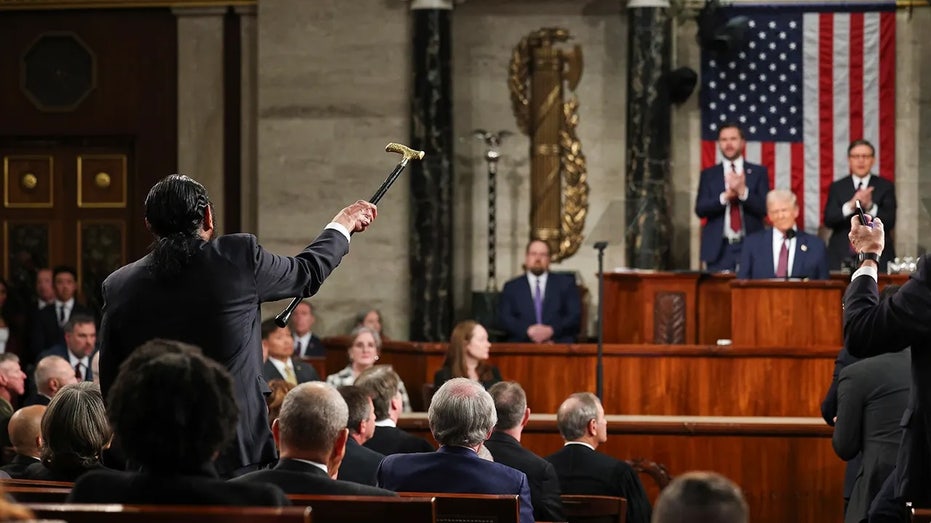
A growing number of Democrats are trying to divert attention away from President Donald Trump’s State of the Union address on Tuesday through their absences amid a limited set of options for peaceably voicing their displeasure with the administration. A number of Democrats will instead attend the “People’s State of the Union” event held near the Lincoln Memorial. The event, described as a rally, is organized by MeidasTouch and MoveOn Civic Action, a pair of left-leaning media and activist groups, and will focus on criticisms of Trump’s first year back in office. The event will draw senators like Ed Markey, D-Mass., Jeff Merkley, D-Ore., Chris Murphy, D-Conn., Chris Van Hollen, D-Md., and Tina Smith, D-Minn., LIZ PEEK: INFLATION, IMMIGRATION AND TRUMP’S STATE OF THE UNION MOMENT OF TRUTH On the House side, Democrats attending will include Reps. Yassamin Ansari, D-Ariz., Becca Balint, D-Vt., Greg Casar, D-Texas, Veronica Escobar, D-Texas, Pramila Jayapal, D-Wash., John Larson, D-Conn., Sydney Kamlager-Dove, D-Calif., Delia Ramirez, D-Ill., Sara Jacobs, D-Calif., Emily Randall, D-Wash., and Bonnie Watson Coleman, D-N.J. A smaller group of Democrats has announced that they will be skipping the State of the Union but will not be attending the counter event. Sen. Ruben Gallego, D-Ariz., and Rep. Jared Golden, D-Maine, for instance, have made plans to stay at home. DHS SHUTDOWN DRAGS INTO WEEK TWO AS IRAN THREAT, SOTU CLASH COMPLICATE HILL TALKS The event comes as Democrats in the past have struggled to tactfully voice opposition to the State of the Union. Last year, Democrat leadership had hoped to avoid drawing controversy but were unable to restrain members of their party from interrupting the address and creating made-for-TV moments. Rep. Al Green, D-Texas, interrupted Trump’s State of the Union in 2025 by standing, waving his gold-studded cane and yelling at the president. HOW TO WATCH PRESIDENT TRUMP’S 2026 STATE OF THE UNION ADDRESS TO CONGRESS LIVE U.S. House Speaker Mike Johnson, R-La., shortly directed the Sergeant-at-Arms to remove Green from the floor after he refused to peaceably stand down. Green did not respond to a request for comment on whether he plans to attend or disrupt Trump’s address on Tuesday but announced in a press release that he would not be joining interviews with other lawmakers after Trump’s address in one of the nearby office buildings. “I will continue this peaceful protest,” Green said. This year, House Minority Leader Hakeem Jeffries, D-N.Y., has asked members of his caucus to approach the State of the Union along two lines. “The two options that are in front of us [are] to either attend with silent defiance or not to attend and send a message to Donald Trump in that fashion,” Jeffries said at a press conference last week. Jeffries himself has said he will attend the State of the Union alongside Senate Minority Leader Chuck Schumer, D-N.Y.
Report card: Conservative and liberal strategists reveal how Trump has fared on campaign promises
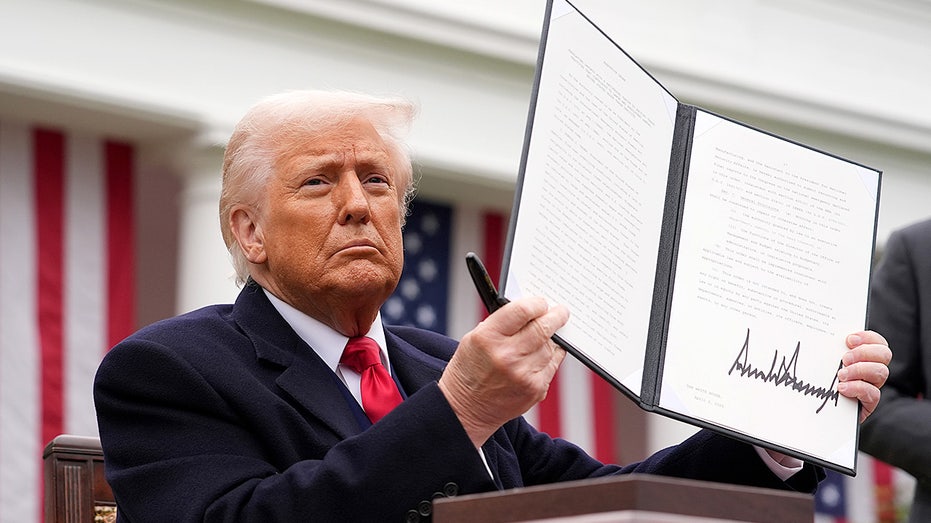
Ahead of President Donald Trump’s first State of the Union address since returning to the White House, his record on key campaign pledges is mixed, as some promises have been fulfilled while others are still pending or tied up in legal challenges. Trump’s 2024 campaign centered on immigration, the economy, sweeping tariffs and ending the United States’ involvement in foreign conflicts. More than a year into his second term, Republican and Democratic strategists alike told Fox News Digital the administration has made significant strides in some of those areas but fallen short in others. Voters, meanwhile, view Trump as weak on the economy (40% approval), foreign policy (37% approval) and tariffs (37% approval), according to a Fox News poll last month. His approval rating is slightly higher on immigration at 44%, and a net positive 52% when it comes to border security. One of Trump’s top promises was stopping what he described as an “invasion” at the southern border by curbing illegal crossings and pursuing an aggressive deportation agenda. Department of Homeland Security data since Trump took office shows a sharp decrease in border crossings between ports of entry, an achievement Trump is likely to highlight in Tuesday’s speech. But Trump’s promise to carry out mass deportations on a historic scale remains mired in controversy. ICE raids and enforcement initiatives, such as Operation Metro Surge, have not at this stage led to the removal of millions that Trump articulated on the campaign trail. Deportations have also been met with hundreds of lawsuits, intensifying scrutiny of them. BIDEN SPEAKS OUT AGAINST IMMIGRATION CRACKDOWN IN MINNESOTA, SAYS IT GOES AGAINST AMERICAN VALUES Julian Epstein, a Democratic consultant and former chief counsel on the House Judiciary Committee, said Trump has “secured the borders, but he has not explained to the public adequately enough his purpose and rationale on deportation.” Theo Wold, a former assistant attorney general and policy official in the first Trump White House, said the Biden administration’s lax border policies amounted to a “criminal undermining of federal immigration law” that Trump has completely reversed. But he acknowledged that contention over deportations has clouded the administration’s immigration enforcement efforts. “The work to remove hundreds of thousands of criminal illegal aliens continues and will be an ongoing fight, as Democrats look to obstruct ICE’s progress,” Wold said. “But the ongoing fight over mass deportations has obscured President Trump’s novel regulatory rulemakings to ferret out asylum fraud and to ensure that foreign labor visas are not wielded to undermine the economic mobility of the American worker.” Epstein gave Trump an A-. Wold gave Trump an A-. Trump vowed to impose steep tariffs on imports from around the world to protect U.S. manufacturing. But that plan took a hit when the Supreme Court ruled that he could not unilaterally impose broad tariffs on an emergency basis without congressional approval. Undeterred, Trump announced a new set of 10% global tariffs under a different legal authority, and the president has signaled he plans to raise that rate to 15%. “He has a good reason to claw back the losses of the middle class in the last three decades, that’s an honorable thing that he’s doing, but the policy has been too diffuse, not sufficiently targeted, and poorly explained to the public,” Epstein said. US ECONOMY GREW SLOWER THAN EXPECTED IN FOURTH QUARTER Bradley Devlin, an editor at the conservative Daily Signal, said doomsday predictions about Trump’s tariffs have not panned out. “Tariffs, they claimed, would cause a recession. But for the first time in a long time, real wages are rising for working Americans,” Devlin said. Epstein gave Trump a B. Devlin gave Trump an A. On foreign policy, Trump repeatedly suggested he could end the war in Ukraine, but that has not materialized. Trump’s other diplomatic efforts have, however, been met with praise. “He’s put out eight wars, moved us light years ahead of where Biden was in the Middle East, and is securing the Western Hemisphere by squeezing out the communist dictators in Venezuela and Cuba,” Epstein said. Devlin said Trump’s threats of military strikes on Iran, which the president has said are aimed at forcing the country to negotiate over its nuclear program, did not jibe with a message of peace. “Two driving foreign policy issues of the 2024 campaign, brokering peace in the Russia-Ukraine war and an end to the conflict in the Middle East, remain elusive,” Devlin said. “And the president seems on the verge of a war with Iran that would likely make an American pivot away from the Middle East unachievable by the end of his term.” Epstein gave Trump an A. Devlin gave Trump a C+. Central to Trump’s campaign was economic prosperity. Trump vowed to ease inflation and boost domestic energy production. Recent government data show inflation has indeed eased but that it remains a point of concern. Trump has also pointed to tax cuts enacted under the One Big Beautiful Bill Act, a sweeping tax and spending law signed in July 2025, as a success tied to his agenda. Epstein said the economy is “headed in the right track” but that Trump has not fully addressed the concerns of an “anxious public.” Elizabeth Pipko, a Republican National Committee spokesperson, said economic growth under Trump has been “robust.” “Inflation has gone down, gas prices have fallen significantly, wages are rising, and the progress made in one year has far surpassed what anyone could have predicted,” Pipko said. Pipko gave Trump an A. Epstein gave Trump a B+.
To go or not to go? Supreme Court at the State of the Union
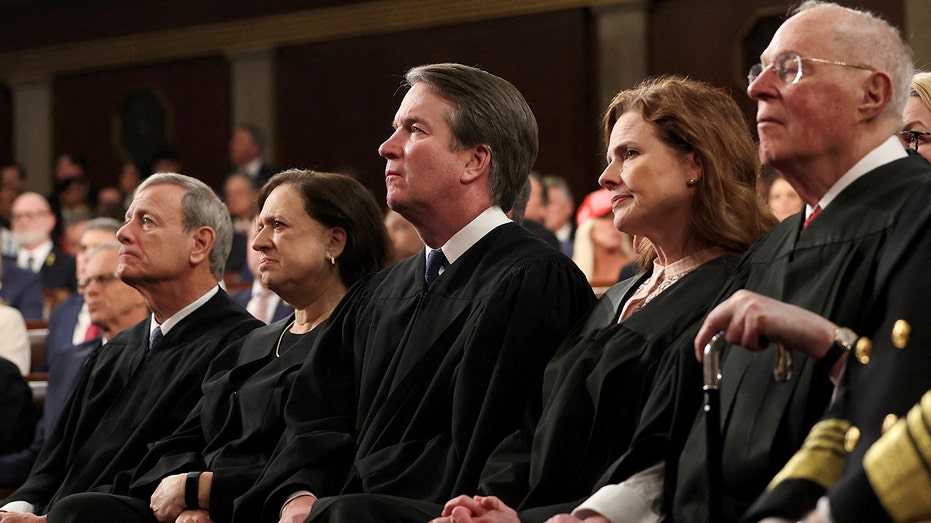
It goes against the very instincts of some of the most powerful officials in the U.S.: get all dressed up, appear before a national TV audience, but sit there like statues without betraying any words or emotion. For members of the Supreme Court, enduring the annual State of the Union address is a civic exercise in poker-faced discretion. As recent history has shown, that has not always been easy. Tuesday’s speech by President Donald Trump will be watched closely not only for what is said, but also for who will be there in person to hear it — especially an undetermined number of justices with front-row seats. This year’s appearances are especially of interest, coming four days after a 6-3 majority of the court struck down the president’s sweeping tariffs, in a sweeping setback to his economic agenda. EXCLUSIVE: TRUMP TO CENTER SOTU ON WORKING FAMILIES WITH SWEEPING ECONOMIC CASE Trump lashed out sharply at the court, especially the six members who voted against him, including two he appointed to the bench — Justices Neil Gorsuch and Amy Coney Barrett. The president said he was “ashamed of certain members of the court, absolutely ashamed for not having the courage to do what’s right for the country.” At least one member of the bench, Justice Samuel Alito, has previously stated he will likely no longer go — after lingering, dramatic criticism leveled at a court ruling by Obama in his 2010 address. But one or more justices have almost always attended the annual speech to Congress and the nation in recent decades. Court members are not required by law to be there, but custom has dictated their appearance, mostly for show. They are a key, if low-key, part of the pageantry, and are compelled to sit politely and stoically, amid the often high-spirited partisan rhetoric and response of the event. There is no word yet from the high court on who will appear. Invitations are sent to each chamber, and the justices have individual discretion over whether to go. Those who do traditionally wear their judicial robes, are escorted into the House as a group, and take prominent seats up front. Retired justices usually get asked as well, minus the robes. They are joined by other officers of the court, such as the marshal and clerk. WATCH: TOP 5 MOST MEMORABLE MOMENTS IN AMERICAN STATE OF THE UNION HISTORY Chief Justice John Roberts and Justice Elana Kagan, along with former Justices Stephen Breyer and Anthony Kennedy, have been regular attendees over the years. But the ceremony put the justices in a highly uncomfortable position in 2010. Democrats cheered President Barack Obama when he dressed down high court conservatives for its ruling in Citizens United v. Federal Election Commission, issued a week earlier, which removed legal barriers preventing corporations and unions from spending unlimited sums on federal elections. “With all due deference to the separation of powers,” Obama said, “the Supreme Court reversed a century of law to open the floodgates for special interests — including foreign corporations — to spend without limit in our elections.” Alito, sitting just feet away in the audience, shook his head and mouthed words interpreted as “not true,” referring to the line about “foreign corporations,” court sources later confirmed. Alito’s five fellow justices in attendance showed no emotion. He had been a regular at previous addresses, but months after the incident, Alito told an audience in New York that he felt “like the proverbial potted plant” and would not be attending in the near future. In fact, the year after the presidential dress-down, Alito was in Hawaii at a law school symposium. REPORTER’S NOTEBOOK: TRUMP’S STATE OF THE UNION BECOMES POLITICAL BOXING MATCH AS DEMOCRATS BOYCOTT The now 75-year-old justice also, with a smile, noted that his colleagues “who are more disciplined, refrain from manifesting any emotion or opinion whatsoever.” Roberts labeled the political atmosphere at the 2010 address “very troubling.” The head of the federal judiciary has said partisan rhetoric and gestures aimed at the court left him questioning whether his colleagues should continue to attend. During that 2010 address, members of Congress sat just behind the justices, many applauding loudly when Obama made his remarks about the court’s election spending case, especially Sen. Charles Schumer, D-N.Y. “It does cause me to think whether or not it makes sense for us to be there” Roberts said weeks after the controversy. “To the extent the State of the Union has degenerated into a political pep rally, I’m not sure why we’re there.” Then-White House press secretary Robert Gibbs responded quickly at the time with an indirect attack on Roberts, saying “the only thing troubling” was the Citizens United ruling itself. Regardless, Roberts has never missed a State of the Union as chief justice. THOMAS RIPS SUPREME COURT TARIFFS RULING, SAYS MAJORITY ‘ERRS’ ON CONSTITUTION That included 2021 with President Joe Biden’s address to a joint session of Congress that was limited in attendance because of the pandemic. The sparse, widely-separated crowd included Roberts, a few Cabinet officers and a smattering of congressional members, all wearing masks. Some justices were regular no-shows at the State of the Union, including John Paul Stevens, who stepped down from the court months after the 2010 State of the Union. Roberts’ predecessor, Chief Justice William Rehnquist, also rarely appeared in person, once because he considered a painting class more preferable. Justice Clarence Thomas called it “very uncomfortable for a judge to sit there.” He went to Obama’s first annual address in 2009, but has not been back since. “There’s a lot that you don’t hear on TV,” he once said, “the catcalls, the whooping, hollering and under-the breath comments.” Another more vocal no-go was the late Justice Antonin Scalia, who compared the televised State of the Union to “cheerleading sessions.” “I don’t know at what point that happened, but it has happened, and now you go and sit there like bumps on a log while applause lines cause one half of