

Thomas rips Supreme Court tariffs ruling, says majority ‘errs’ on Constitution
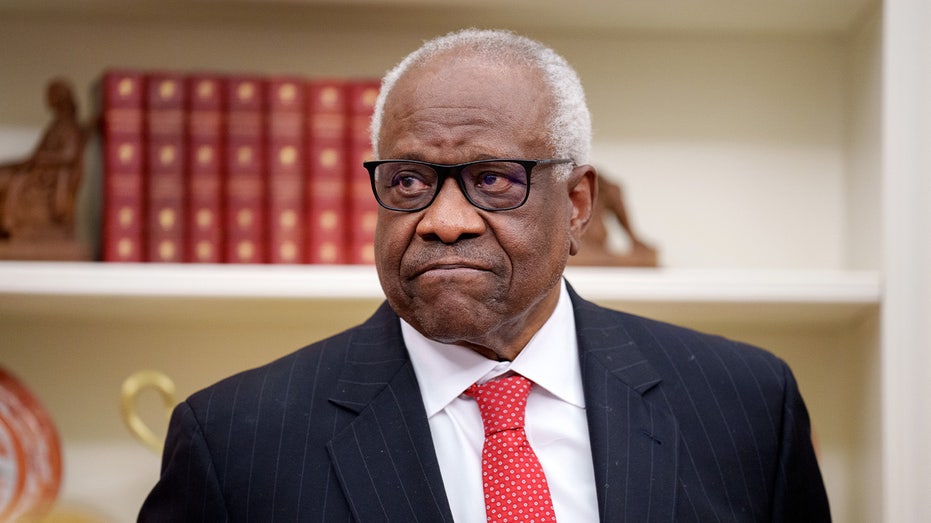
Supreme Court Justice Clarence Thomas ripped the court’s decision blocking President Donald Trump’s use of an emergency law to impose sweeping tariffs on trading partners, calling it a fundamental misread of both the governing statute and the Constitution’s separation of powers. “As (Kavanaugh) explains, the Court’s decision … cannot be justified as a matter of statutory interpretation. Congress authorized the President to ‘regulate … importation,’” Thomas wrote in his dissent. “Throughout American history, the authority to ‘regulate importation’ has been understood to include the authority to impose duties on imports.” The court invalidated Trump’s use of an emergency law to impose tariffs in a 6–3 decision Friday morning after weeks of Trump championing that the court should rule in his favor as part of his larger effort to boost the economy, jobs and bring down costs for Americans. Thomas and Justice Samuel Alito joined Justice Brett Kavanaugh in dissenting from the ruling, with Thomas also offering his own separate dissent. The majority of the court ruled Friday that the International Emergency Economic Powers Act does not authorize the president, even after declaring a national emergency, to impose tariffs — and that Congress did not speak clearly enough to transfer its tariff-and-tax power to the executive branch. TRUMP RESPONDS TO SUPREME COURT RULING REJECTING SWEEPING TARIFFS POWERS: ‘A DISGRACE’ The International Emergency Economic Powers Act (IEEPA) is a 1977 law that allows the president, after declaring a national emergency in response to foreign threats, to regulate or block certain economic transactions and property interests, such as by imposing sanctions. “The president asserts the extraordinary power to unilaterally impose tariffs of unlimited amount, duration, and scope,” Supreme Court Justice John Roberts wrote for the court. “In light of the breadth, history, and constitutional context of that asserted authority, he must identify clear congressional authorization to exercise it.” TRUMP’S TARIFF REVENUES HIT RECORD HIGHS AS SUPREME COURT DEALS MAJOR BLOW In his dissent, Thomas argued that nondelegation doctrine is a narrow constraint, saying a line is crossed only when Congress delegates “core” power to make rules triggering deprivations of “life, liberty, or property” — not “from delegating other kinds of power,” such as tariffs. The nondelegation doctrine forbids Congress from delegating core legislative power to the president. “As I suggested over a decade ago, the nondelegation doctrine does not apply to ‘a delegation of power to make rules governing private conduct in the area of foreign trade,’ including rules imposing duties on imports,” Thomas wrote. “Therefore, to the extent that the Court relies on ‘separation of powers principles’ to rule against the President is mistaken.” SUPREME COURT RULES ON TRUMP TARIFFS IN MAJOR TEST OF EXECUTIVE BRANCH POWERS Thomas pointed to President Nixon’s 1971 import surcharge as a real-world test case that was later upheld in United States v. Yoshida Int’l under IEEPA’s predecessor statute, the Trading with the Enemy Act. Nixon announced a 10% across-the-board import surcharge on foreign nations in 1971, with the U.S. Court of Customs and Patent Appeals upholding the policy under the same “regulate … importation” language in 1975. “The meaning of that phrase was beyond doubt by the time that Congress enacted this statute, shortly after President Nixon’s highly publicized duties on imports were upheld based on identical language,” Thomas wrote. “The statute that the President relied on therefore authorized him to impose the duties on imports at issue in these cases,” Thomas wrote, adding that Kavanaugh “makes clear that the Court errs in concluding otherwise.” Trump unveiled his tariff policies in April 2025, which have come with repeatedly updated deals with foreign nations, as a tool to bring parity to U.S. trade policy and encourage businesses to open up shop on U.S. soil as part of an American manufacturing renaissance to boost the job market and the economy. Trump, in recent months, has repeatedly promoted that the Supreme Court rule in his favor, warning just Thursday during a trip to a steel factory in Georgia that “without tariffs, this country would be in such trouble right now.” The president held a press conference shortly after the decision on Friday, announcing a 10% global tariff, while underscoring that the “Supreme Court did not overrule tariffs,” but “merely overruled a particular use of IEEPA tariffs.”
Who was Mukul Roy? Veteran politician known as ‘Chanakya of Bengal Politics’, close aide of CM Mamata Banerjee dies at 71; PM Modi condoles his demise
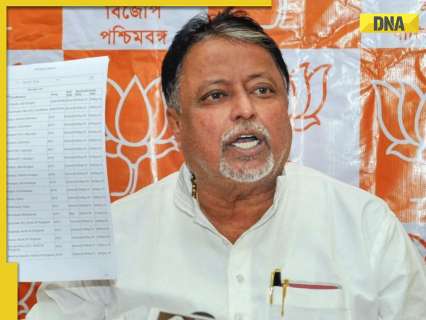
Former Union Minister Mukul Roy passes away at the age of 71 due to cardiac arrest at Apollo Hospital in Salt Lake, Kolkata, at 1.30 am on Monday, as confirmed by his son Subhranshu Roy. Who was Mukul Roy?
Indian Air Force grounds Tejas jets entire fleet after three crashes in two years, intensive technical probe to be launched
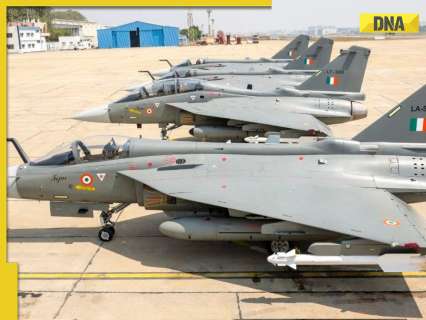
Entire fleet of Tejas light combat aircraft grounded by Indian Air Force grounded.
Who is Jitendra Yadav? Another accused of ‘shirtless protest’ during AI Impact Summit, arrested; His photo with Rahul Gandhi goes viral
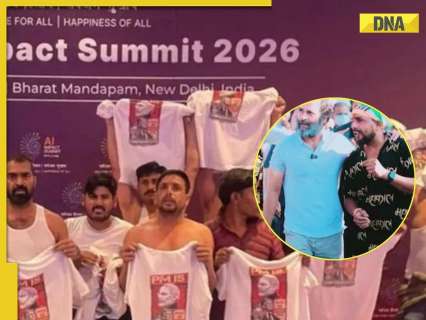
Delhi Police have arrested another accused from Madhya Pradesh’s Gwalior in connection with the Indian Youth Congress’s (IYC) shirtless protest inside Bharat Mandapam during the AI Impact Summit 2026. The accused, identified as Jitendra Yadav, is a resident of Gwalior in Madhya Pradesh and is allegedly linked to the Indian Youth Congress.
Delhi-Meerut Namo Bharat Metro: Check full route, ticket prices, travel time and more
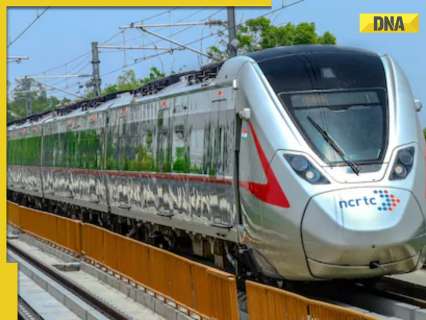
The 82-kilometre Delhi-Meerut RRTS corridor connects Delhi to Meerut, offering speed, comfort, and affordable fares. Read here to know full route, ticket prices and travel time.
Florida bill would let churches use armed volunteers instead of licensed security
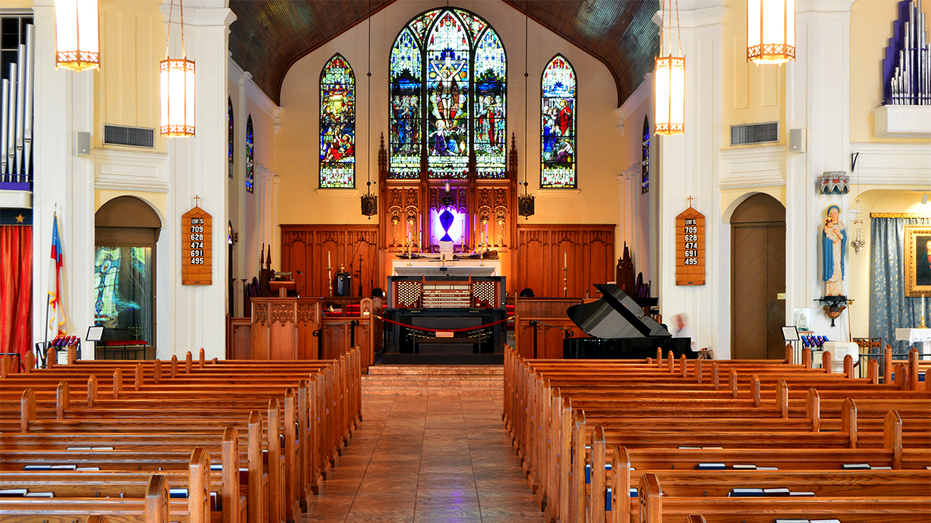
A Florida bill could allow churches, synagogues, mosques and other places of worship to use armed volunteers for security without requiring them to hold a professional security license. Senate Bill 52, which unanimously passed the chamber earlier this month, would authorize houses of worship to use armed volunteers instead of hiring licensed security guards, which supporters say would help cut costs while still keeping people safe. “It’s now common for synagogues, churches, and mosques to have armed security,” state Sen. Don Gaetz, who sponsored this measure, said to FOX 13. “Often using paid professional licensed security personnel.” SHOOTING OUTSIDE SALT LAKE CITY LDS CHURCH LEAVES AT LEAST 2 DEAD, 6 INJURED: POLICE The legislation now heads to the state House. This measure comes amid concerns about violence targeting places of worship across the country. In August, a shooting at Annunciation Catholic Church in Minnesota left two children dead and around 20 others injured. And in Mississippi last month, a suspect set fire to a synagogue, causing extensive damage and destroying sacred Torah scrolls. Elvis Piggott, the pastor at Triumph Church of Tampa, was arrested in October 2025 after allegedly pulling out a gun during a dispute following a Tampa City Council election forum. He later said he acted in self-defense. Piggott, reacting to reports of violence at houses of worship, said the threats are an unfortunate reality. “Some of these things you would have never thought in a million years would happen inside of the place of worship,” he told FOX 13. “It can get very costly,” Piggot said of hiring licensed security. “Just for myself at an event could be roughly $900 to $1,000 for two hours.” If House lawmakers approve the legislation, it would then go to Republican Gov. Ron DeSantis. The changes would take effect in July if the governor signs the bill into law. TRUCK CAUGHT ON CAMERA PLOWING INTO FAMED AUSTRALIAN SYNAGOGUE IN ALLEGED HATE CRIME “Unfortunately, when a lot of people are congregated closely together, that’s a high value target for bad guys,” Aaron Chappell, who co-founded Vulture Training Group, a company that provides security guard certification and training, told FOX 13. “Do you want somebody who is five or six minutes away?” he added. “Or somebody who’s on scene when something happens.”
North Korea’s Kim Jong Un re-elected as chief of Workers’ Party
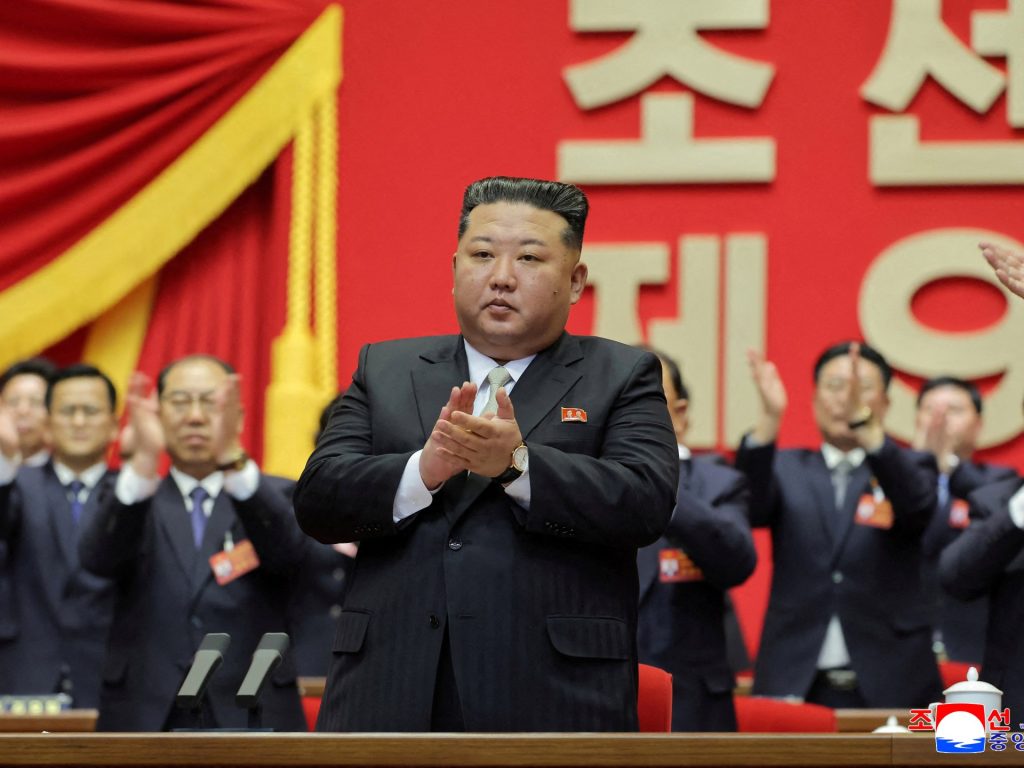
Kim says his party is focused on the tasks of ‘boosting economic construction and the people’s standard of living’. Listen to this article Listen to this article | 3 mins info Published On 22 Feb 202622 Feb 2026 Click here to share on social media share2 Share North Korean leader Kim Jong Un has been re-elected as secretary-general of the nation’s Workers’ Party, extending his 15-year rule of the country’s sole governing party. The election took place on Sunday, the fourth day of the party congress, held every five years, according to the state news agency KCNA. During the event, Central Committee members were also elected, and some party rules were modified, it said without providing details. Recommended Stories list of 3 itemsend of list Kim has been North Korea’s supreme leader since the death of his father, Kim Jong Il, in 2011.In 2019, North Korea’s legislature approved constitutional changes to make Kim’s power “monolithic” over all state affairs, formally establishing him as head of state. During this year’s Workers’ Party Congress, Kim assessed the party’s last five years of work and outlined new strategies and goals for the next five-year period. Speaking at the event’s opening session last week, Kim called the last five years a “proud period … in implementing the socialist cause of our own style”, while acknowledging challenges such as sanctions and “the global public health crisis”. “Today, our Party is faced with heavy and urgent historic tasks of boosting economic construction and the people’s standard of living and transforming all realms of state and social life as early as possible,” the KCNA quote him as saying. “This requires us to wage a more active and persistent struggle without allowing even a moment’s standstill or stagnation.” Other high-level officials also delivered remarks at the Congress, including Minister of Foreign Affairs Choe Son Hui. Advertisement ‘Optimism and confidence’ For decades, nuclear weapons and military prowess came before everything else in North Korea, even as food stocks dried up and widespread famine, which Pyongyang denied existed, gripped the nation. But since assuming power, Kim has also stressed the need to fortify the impoverished nation’s economy, while keeping military might as the top priority, Kim stated during his opening address that North Korea had overcome its “worst difficulties” in the last five years, and was now entering a new stage of “optimism and confidence in the future”. Ahead of the congress, Kim held a ceremony unveiling dozens of nuclear-capable rocket launchers, which he hailed as “wonderful” and “attractive”. “When this weapon is used, actually, no force would be able to expect God’s protection,” Kim said. Adblock test (Why?)
Russia-Ukraine war: List of key events, day 1,460
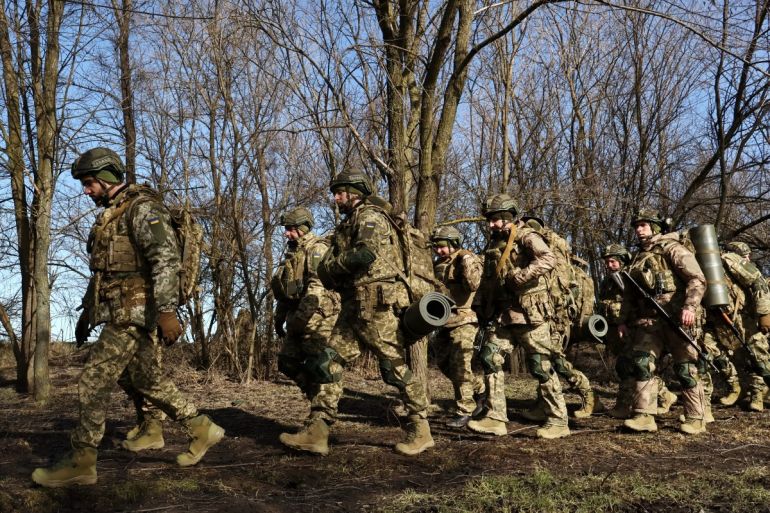
These are the key developments from day 1,460 of Russia’s war on Ukraine. Listen to this article Listen to this article | 4 mins info By News Agencies Published On 23 Feb 202623 Feb 2026 Click here to share on social media share2 Share Here is where things stand on Monday, February 23: Fighting Ukrainian President Volodymyr Zelenskyy blamed Russia for an attack in the western Ukrainian city of Lviv, near the border with Poland, which killed a 23-year-old policewoman and wounded at least 24 others. Lviv Mayor Andriy Sadovyi described the incident as a “terrorist” act. Russian forces attacked Kyiv and the region surrounding the capital overnight on Sunday, killing at least one person and wounding 17 others, including four children. The attacks damaged more than a dozen homes in five districts, regional Governor Mykola Kalashnyk said on Telegram. The attacks again targeted Ukraine’s energy sector and caused power outages in several regions, including Kyiv, Ukraine’s power grid operator Ukrenergo said. Zelenskyy wrote on X that the strikes also targeted the Dnipro, Kirovohrad, Mykolaiv, Poltava and Sumy regions. He noted that aside from the energy sector, residential buildings and the railway were also damaged. Ukraine’s air force said Russia deployed 345 weapons, including 50 missiles and 297 drones, in the overnight attack. It said it shot down 33 missiles and 274 drones. Ukrainian Minister of Foreign Affairs Andrii Sybiha called on the international community to impose tougher sanctions against the Kremlin following the latest Russian attack, saying, “This terror cannot be normalised; it must be stopped. Russia cannot wag the world, just as the tail cannot wag the dog.” Russian-installed officials in the occupied Ukrainian region of Zaporizhia said emergency crews were restoring power to areas hit by cuts following a Ukrainian attack on energy infrastructure. Yevgeny Balitsky, the Russia-installed governor, said 12,000 other households remain without power. A Ukrainian drone attack on Russian-occupied Luhansk in Ukraine’s northeast caused a fire at a fuel reservoir, according to Leonid Pasechnik, the Moscow-installed leader there. In Russia’s Belgorod region, which borders Ukraine, a “massive” Ukrainian missile attack inflicted serious damage on energy infrastructure and disrupted power, heat and water supplies, Governor Vyacheslav Gladkov said on Telegram. Ukrainian drone attacks forced brief suspensions at airports in the Russian capital, Moscow. Mayor Sergei Sobyanin said that 24 Ukrainian drones had been destroyed or intercepted en route to Moscow. Advertisement Russia’s Ministry of Defence said its air defence units had intercepted or destroyed 130 Ukrainian drones over a four-hour period, including over Moscow and the surrounding region, as well as other central Russian regions. Politics and diplomacy Russian President Vladimir Putin said developing the country’s nuclear forces was now an “absolute priority” following the expiry of its last remaining nuclear treaty with the United States. He made the comments during a speech to mark the “Defender of the Fatherland Day”, a holiday honouring Russia’s army. Pope Leo has made an impassioned appeal for peace in Ukraine, saying an end to the four-year-old war “cannot be postponed”. Hungarian Prime Minister Victor Orban said Budapest will block the European Union’s next package of sanctions against Russia, in a move aimed at pushing Ukraine to resume the flow of Russian oil through a pipeline supplying Hungarian refineries. In a separate social media post, Hungarian Minister of Foreign Affairs and Trade Peter Szijjarto declared: “Until Ukraine resumes oil transit to Hungary and Slovakia via the Druzhba pipeline, we will not allow decisions important to Kyiv to move forward.” Ukraine’s Foreign Ministry condemned what it described as “ultimatums and blackmail” by the governments of Hungary and Slovakia, after they threatened to stop electricity supplies to Ukraine unless Kyiv restarted flows of Russian oil. In a statement, the ministry said: “Ultimatums should be sent to the Kremlin, and certainly not to Kyiv.” Ukrainian recruits complete basic military training at an undisclosed location in the Zaporizhia region, amid the Russian invasion of Ukraine [Ukrainian Armed Forces Handout Photo/AFP] Adblock test (Why?)
One Battle After Another triumphs at UK’s BAFTA film awards
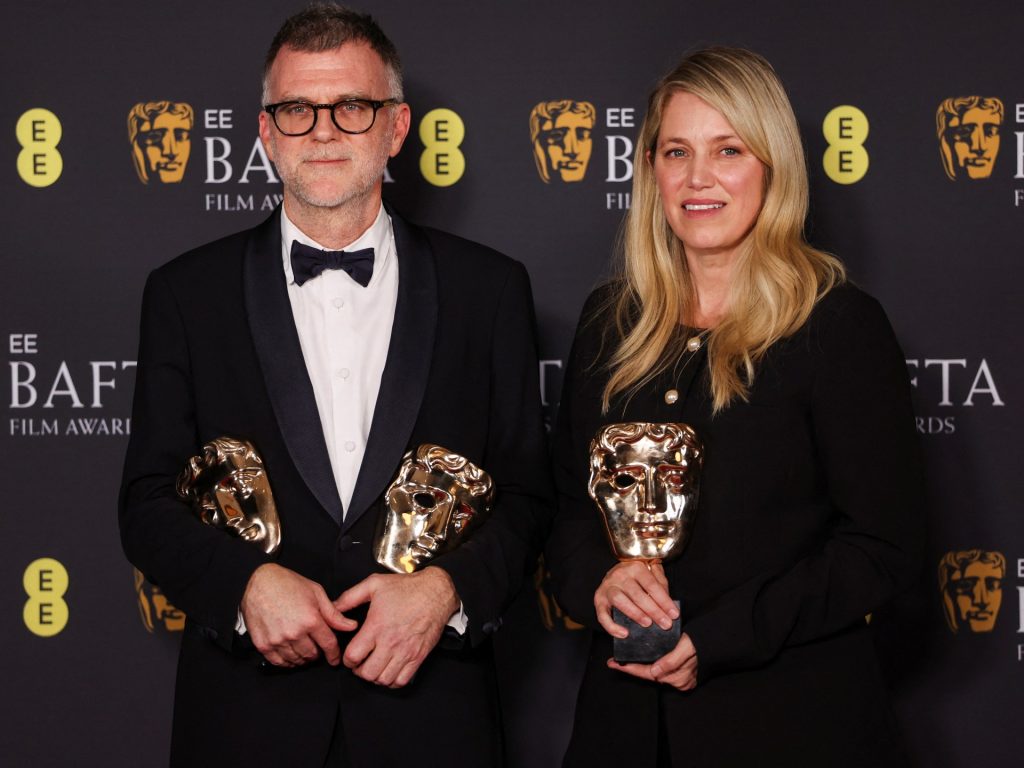
The offbeat thriller has won six BAFTAs, including best film and best director for Paul Thomas Anderson. Listen to this article Listen to this article | 4 mins info The dark comedy One Battle After Another has swept the United Kingdom’s top film honours, picking up six BAFTA awards, including best film and best director for Paul Thomas Anderson. The film beat the Shakespearean family tragedy Hamnet, and the vampire thriller Sinners, to take the top prizes at Sunday evening’s ceremony. Recommended Stories list of 4 itemsend of list The UK prizes, officially called the EE BAFTA Film Awards, often provide hints about who will win at Hollywood’s Academy Awards, held this year on March 15. One Battle After Another, an explosive film about a group of revolutionaries in chaotic conflict with the state, won awards for directing, adapted screenplay, cinematography, and editing, as well as for Sean Penn’s supporting performance as an obsessed military officer. “This is very overwhelming and wonderful,” Anderson said as he accepted the directing prize. “We have a line from Nina Simone that we used in our film: ‘I know what freedom is: It’s no fear’,” the director said. “Let’s keep making things without fear. It’s a good idea.” Sinners, which has a record 16 Oscar nods, won best original screenplay for writer and director Ryan Coogler, best supporting actress for Wunmi Mosaku, and best original score. The gothic horror story Frankenstein won three awards each, while Hamnet won two, including best British film. The documentary about Israel’s genocidal war on Gaza, The Voice of Hind Rajab, was among the top contenders for BAFTA’s best director and non-English language film categories. But the film Sentimental Value won in the non-English language category. The biggest surprise of the night was Robert Aramayo winning the best actor category for his performance in I Swear, a fact-based British indie drama about a campaigner for people with Tourette syndrome. Advertisement The 33-year-old British actor beat Timothee Chalamet, Leonardo DiCaprio, Michael B Jordan, Ethan Hawke and Jesse Plemons for the honour. “I absolutely can’t believe this,” he said. “Everyone in this category blows me away.” Jessie Buckley won best actress for playing Agnes, the wife of William Shakespeare, in Hamnet, based on the novel by Maggie O’Farrell and directed by previous Oscar winner Chloe Zhao. The best documentary prize went to Mr Nobody Against Putin, about a Russian teacher who documented the propaganda imposed on Russian schools after Moscow’s invasion of Ukraine. The film’s American director, David Borenstein, said that teacher Pavel Talankin had shown that “whether it’s in Russia or the streets of Minneapolis, we always face a moral choice”, referring to the protests against US immigration enforcement in Minnesota. “We need more Mr Nobodies,” he said. It beat documentaries including Mstyslav Chernov’s harrowing Ukraine war portrait, 2000 Meters to Andriivka, co-produced by The Associated Press and Frontline PBS. The guests of honour at the awards were Prince William and Princess Kate. The event, hosted by Alan Cumming, was the first joint engagement for the pair since William’s uncle, Andrew Mountbatten-Windsor, was arrested on Thursday. William, the president of the film academy, presented the BAFTA Fellowship to Donna Langley, studio head at NBC Universal. Adblock test (Why?)
Tejas LCA crashes during training sortie, three months after Dubai Airshow mishap
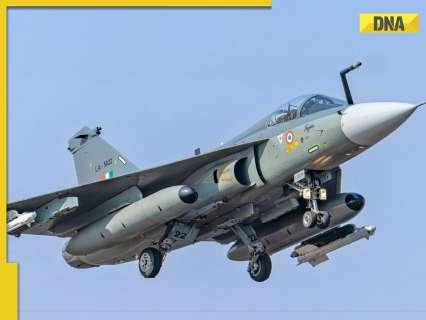
In another similar incident, a Tejas Light Combat Aircraft (LCA) crashed, prompting intensive probes and broad-based technical checks across the fleet. The pilot has been ejected safely.