

Saudi-led coalition strikes Yemen, says STC leader al-Zubaidi has fled
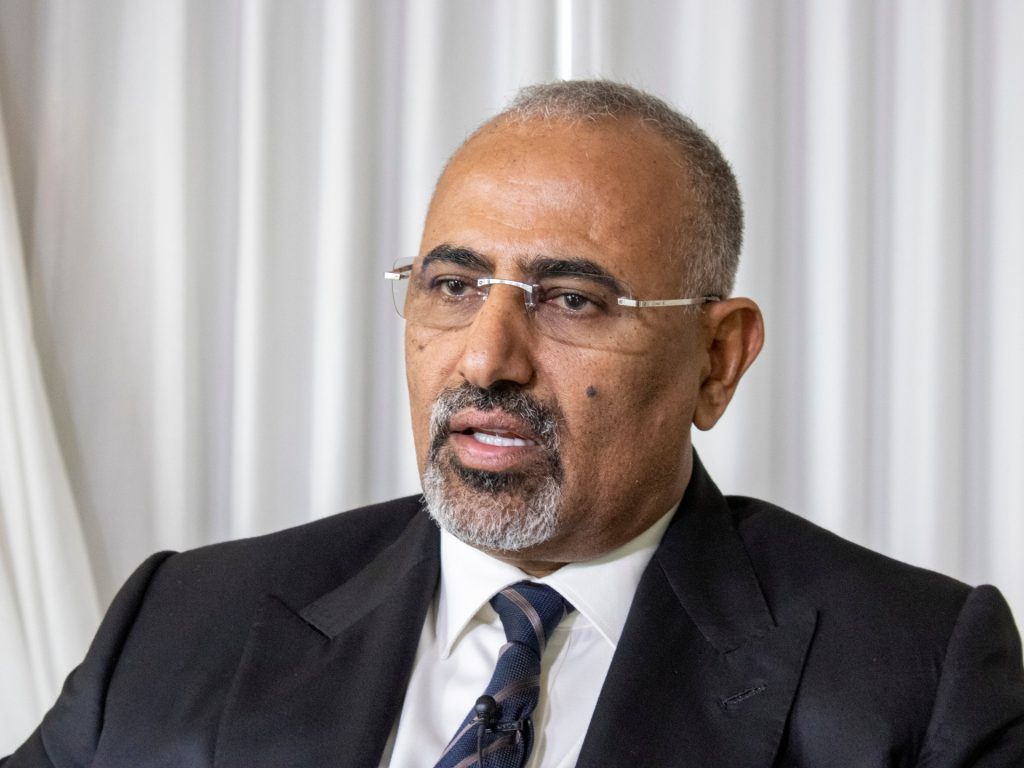
DEVELOPING STORYDEVELOPING STORY, Coalition says it targeted secessionist forces after Aidarous al-Zubaidi failed to board a plane scheduled to take him to Riyadh for talks. The Saudi Arabia-led coalition in Yemen has launched strikes on the country’s southern Dhale governorate, saying it was targeting secessionist forces after their leader fled without boarding a plane scheduled to take him to Riyadh. In a statement issued early on Wednesday, the coalition said the leader of the Southern Transitional Council (STC), Aidarous al-Zubaidi, had been due to fly out from the Yemeni city of Aden on Tuesday night for talks on ending the conflict between his group and the internationally recognised government of Yemen. Recommended Stories list of 4 itemsend of list But al-Zubaidi did not board the plane, and “fled to an unknown location,” it said. His whereabouts remain unknown. “During this time, the legitimate government and the coalition received information that al-Zubaidi had mobilised a large force, including armoured and combat vehicles, heavy and light weapons, as well as munitions,” it said. The force left Aden at around midnight and were later located in the Dhale governorate, it said. The coalition launched “preemptive strikes” at 4am local time (01:00 GMT) to disable those forces and thwart al-Zubaidi’s “attempt to escalate the conflict”, the statement added. There was no immediate comment from the STC. The council, which initially supported Yemen’s internationally recognised government against the Houthi rebels who control northern Yemen, launched an offensive against the Saudi-backed government troops in December, seeking an independent state in the south. The group is backed by the United Arab Emirates. Advertisement Their advance broke years of deadlock, with the STC seizing control of broad swaths of southern Yemen, including the Hadramout and Mahra provinces, in defiance of warnings from Riyadh. Hadramout borders Saudi Arabia, while Mahra is close to the border. Together, the provinces make up nearly half of Yemeni territory. Riyadh responded with air strikes on the Yemeni port of Mukalla on December 30, targeting what it called a UAE-linked weapons shipment, and backed a call by the internationally recognised government for UAE forces to withdraw from the country. Abu Dhabi denied that the shipment contained weapons and expressed a commitment to ensure Riyadh’s security. Shortly afterwards, it announced an end to what it called its “counterterrorism mission” in Yemen. Yemeni government troops, backed by Saudi Arabian air attacks, went on to reclaim Hadramout and Mahra, and the STC said on Saturday that it would attend peace talks hosted by Saudi Arabia. The Saudi-led coalition on Wednesday said the STC delegation, excluding al-Zubaidi, departed Yemen for Riyadh in the early hours of the morning. The head of the internationally recognised government’s Presidential Leadership Council, Rashad al-Alimi, also announced that al-Zubaidi has been removed from the council for “committing high treason”. Al-Alimi said he has asked the country’s Attorney General to launch an investigation against al-Zubaidi and take legal action. Adblock test (Why?)
Israeli forces kill two in Lebanon, ahead of truce monitors meeting
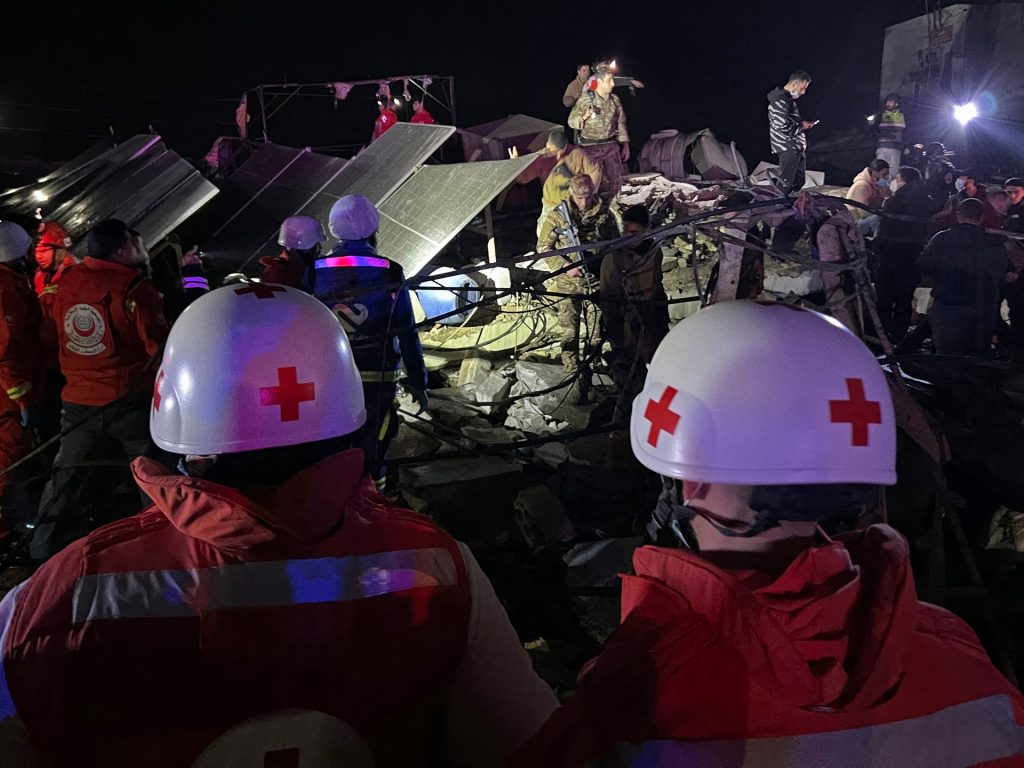
Representatives from France, Israel, Lebanon, the US and UN tracking the ceasefire are due to meet amid Israeli attacks. Israeli forces have killed two people in southern Lebanon a day before a committee monitoring a yearlong ceasefire between Israel and Hezbollah was due to hold its next meeting. Lebanon’s NNA news agency said two people were killed in the Israeli attack on a house in south Lebanon’s Kfar Dunin in Bint Jbeil on Tuesday. Recommended Stories list of 4 itemsend of list The Israeli military said in a statement that it struck two Hezbollah operatives in the area, accusing one of being “an engineering terrorist in a structure that facilitated the organisation’s reestablishment efforts”. The attacks come as the committee monitoring the ceasefire, which includes representatives from France, Israel, Lebanon, the United States, and the United Nations Interim Force in Lebanon (UNIFIL) prepared to meet on Wednesday. Israeli attacks have killed more than 300 people in Lebanon since the November 2024 ceasefire, including at least 127 civilians. Israeli forces bombarded several parts of Lebanon, killing at least two other people earlier this week, and ordered the forced evacuation of at least four villages in the south and east of the country. Another overnight attack reduced a multistorey building to rubble in an industrial area of Ghaziyeh town, near the coastal city of Sidon, according to a video verified by Al Jazeera and a photographer from the AFP news agency. In a statement earlier on Tuesday, Lebanese President Joseph Aoun said, “Israel’s continued attacks aim to thwart all efforts made locally, regionally and internationally to stop the ongoing Israeli escalation, despite the response shown by Lebanon to these efforts at various levels”. Advertisement Beirut-based security affairs analyst Ali Rizk told Al Jazeera the recent attacks come as no surprise following last week’s meeting between US President Donald Trump and Israeli Prime Minister Benjamin Netanyahu at Trump’s Mar-a-Lago resort in Florida. “There had been reports that Israel got a green light to escalate against Hezbollah,” Rizk told Al Jazeera. ‘Difficult and dangerous conditions’ The spokesperson for the UN secretary-general, Stephane Dujarric, told a media briefing in New York on Tuesday that Israeli attacks are continuing in close proximity to UNIFIL peacekeepers stationed along the Blue Line, which demarcates the de facto border between Israel, Lebanon, and the occupied Golan Heights. “We are aware that Israeli strikes carried out late Monday night following evacuation orders on targets, reportedly linked to Hezbollah and Hamas,” Dujarric said. “The strikes occurred in areas north of the Litani River, including in western Bekaa, in Lebanese territory in southern Lebanon.” Dujarric added that the UNIFIL peacekeepers detected “three air strikes in their areas of operations” on Monday as well as “several fighter aircraft activities above UNIFIL.” “In addition, our peacekeepers reported multiple instances of direct fire originating from [Israeli army] positions south of the Blue Line, including small arms fire impacting the Kfar Shouba area, a Merkava tank fire near Shab’a, and a small arms fire impacting near a UN position near Kfar Shouba,” Dujarric said. UN Undersecretary-General for Peace Operations Jean-Pierre Lacroix, who is visiting Lebanon currently, said on X that he met with UNIFIL peacekeepers who are “carrying out their mandated tasks under increasingly difficult and dangerous conditions”. Lacroix is set to meet Lebanese officials on Wednesday. Later this week, Lebanon’s cabinet will convene to discuss the army’s progress in disarming Hezbollah, a plan launched under heavy US pressure and amid fears of expanded Israeli strikes. The army was expected to complete the disarmament south of the Litani River, about 30km (20 miles) from the border with Israel, by the end of 2025, before tackling the rest of the country. In his statement, Aoun said the government’s plan to “extend its authority over the south of the Litani” has been “implemented by the Lebanese army with professionalism, commitment and precision”. Adblock test (Why?)
How strong are Latin America’s military forces, as they face US threats?
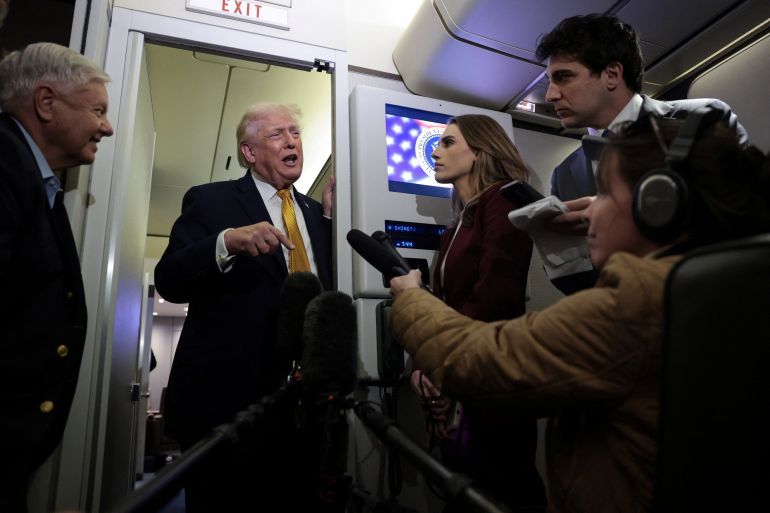
Over the weekend, the United States carried out a large-scale military strike against Venezuela and abducted President Nicolas Maduro in a major escalation that sent shockwaves across Latin America. On Monday morning, US President Donald Trump doubled down, threatening action against the governments of Colombia, Cuba and Mexico unless they “get their act together”, claiming he is countering drug trafficking and securing US interests in the Western Hemisphere. The remarks revive deep tensions over US interference in Latin America. Many of the governments targeted by Trump have little appetite for Washington’s involvement, but their armed forces lack the capacity to keep the US at arm’s length. US President Donald Trump issues warnings to Colombia, Cuba and Mexico while speaking to reporters on Air Force One while returning from his Florida estate to Washington, DC, on January 4, 2026 [Jonathan Ernst/Reuters] Latin America’s military capabilities The US has the strongest military in the world and spends more on its military than the total budgets of the next 10 largest military spenders combined. In 2025, the US defence budget was $895bn, roughly 3.1 percent of its gross domestic product. According to the 2025 Global Firepower rankings, Brazil has the most powerful military in Latin America and is ranked 11th globally. Mexico ranks 32nd globally, Colombia 46th, Venezuela 50th and Cuba 67th. All of these countries are significantly below the US military in all metrics, including the number of active personnel, military aircraft, combat tanks, naval assets and their military budgets. Advertisement In a standard war involving tanks, planes and naval power, the US maintains overwhelming superiority. The only notable metric that these countries have over the US is their paramilitary forces, which operate alongside the regular armed forces, often using asymmetrical warfare and unconventional tactics against conventional military strategies. (Al Jazeera) Paramilitaries across Latin America Several Latin American countries have long histories of paramilitary and irregular armed groups that have often played a role in the internal security of these countries. These groups are typically armed, organised and politically influential but operate outside the regular military chain of command. Cuba has the world’s third largest paramilitary force, made up of more than 1.14 million members, as reported by Global Firepower. These groups include state-controlled militias and neighbourhood defence committees. The largest of these, the Territorial Troops Militia, serves as a civilian reserve aimed at assisting the regular army against external threats or during internal crises. In Venezuela, members of pro-government armed civilian groups known as “colectivos” have been accused of enforcing political control and intimidating opponents. Although not formally part of the armed forces, they are widely seen as operating with state tolerance or support, particularly during periods of unrest under Maduro. In Colombia, right-wing paramilitary groups emerged in the 1980s to fight left-wing rebels. Although officially demobilised in the mid-2000s, many later re-emerged as criminal or neo-paramilitary organisations, remaining active in rural areas. The earliest groups were organised with the involvement of the Colombian military following guidance from US counterinsurgency advisers during the Cold War. In Mexico, heavily armed drug cartels function as de facto paramilitary forces. Groups such as the Zetas, originally formed by former soldiers, possess military-grade weapons and exercise territorial control, often outgunning local police and challenging the state’s authority. The Mexican military has increasingly been deployed in law enforcement roles in response. History of US interference in Latin America Over the past two centuries, the US has repeatedly interfered in Latin America. In the late 19th and early 20th centuries, the so-called Banana Wars saw US forces deployed across Central America to protect corporate interests. In 1934, President Franklin D Roosevelt introduced the “Good Neighbor Policy”, pledging nonintervention. Advertisement Yet during the Cold War, the US financed operations to overthrow elected governments, often coordinated by the CIA, founded in 1947. Panama is the only Latin American country the US has formally invaded, which occurred in 1989 under President George HW Bush. “Operation Just Cause” ostensibly was aimed at removing President Manuel Noriega, who was later convicted of drug trafficking and other offences. Adblock test (Why?)
Who is Banojyotsna Lahiri? Jailed student activist and JNU alumni Umar Khalid’s partner; shared his response over SC ruling

Student activist and JNU alumni Umar Khalid was denied bail by the Supreme Court in the 2020 Delhi riots CAA protest case on Monday. Hours after the SC decision, Umar Khalid’s girlfriend Banojyotsna Lahiri shared a brief and private conversation between them. She is Khalid’s long-term partner.
Haridwar to be linked with Delhi-Dehradun economic corridor, work on railway over bridge accelerates, check details
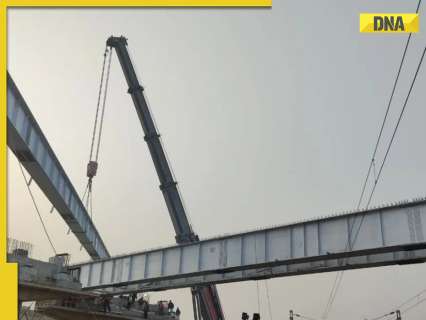
The link expressway, stretching 50.70 kilometers, will provide much-needed relief to residents of Haridwar. Once completed, it will significantly reduce travel time between Delhi and Dehradun, bringing the two cities within a mere two-and-a-half hours of each other.
JNU to take BIG action on students over raising provocative ‘Modi, Shah ki kabr’ slogans, says, ‘expulsion, debarment…’

Jawaharlal Nehru University (JNU) is set to take a strict action against students chanting ‘objectional’ slogans against PM Narendra Modi and Home Minister Amit Shah in a protest inside the premises. JNU administration vowed to take action and said that universities cannot be converted into hate lab
MCD demolition drive near Delhi mosque turns violent, stone pelting, tear gas fired, 5 cops injured
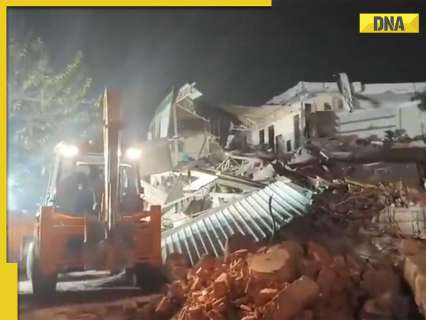
The operation took place early Wednesday morning, with approximately 17 bulldozers used to clear the encroachments. Officials from the Municipal Corporation of Delhi (MCD) said that the demolition at 1 am.
Delhi-NCR shivers as cold wave peaks, schools closed, AQI slips to ‘very poor’ category; IMD predicts North India to witness…
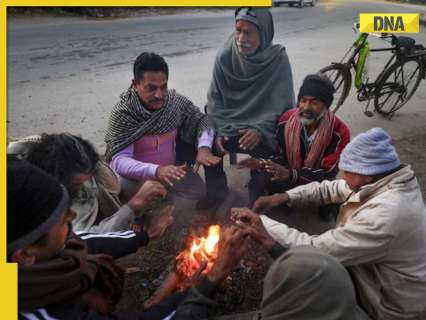
According to the weather deaprtment, minimum temperatures are likely to fall slightly over the next two days before rising by 1 to 2 degrees Celsius thereafter. Visibility dropped sharply across Delhi-NCR, and the Air Quality Index (AQI) remained firmly in the ‘very poor’ category.
TribCast: 10 questions that will shape Texas politics in 2026
Matthew and Eleanor look ahead in the new year to Gov. Greg Abbott’s power, Democrats chances and the issues that will dominate election season.
Officer did nothing until it was too late during Uvalde school shooting, prosecutor says
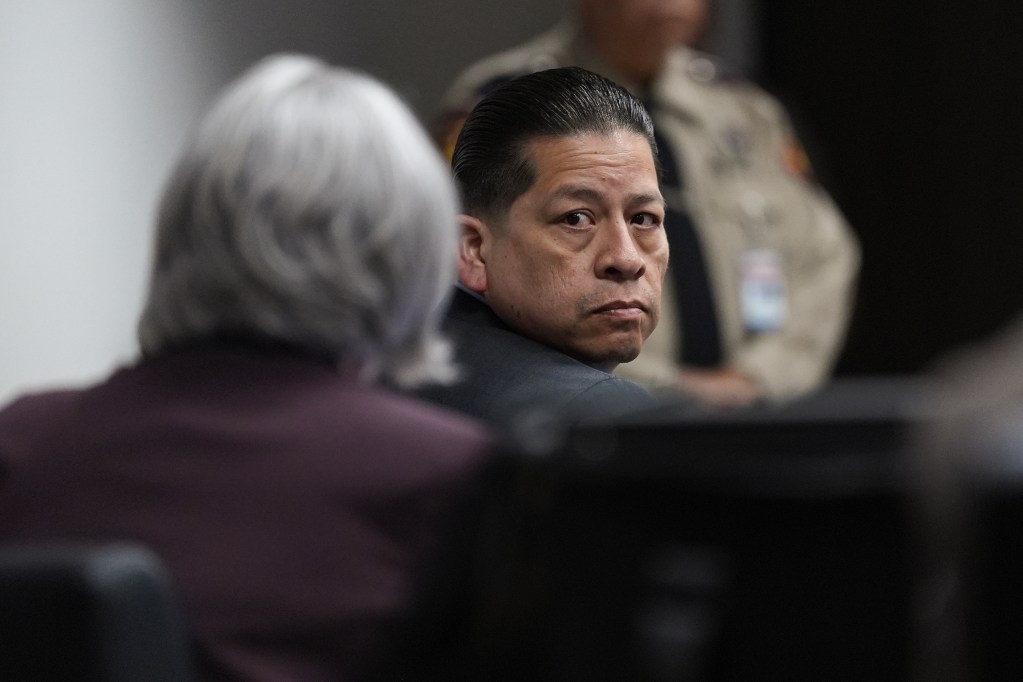
During opening arguments Wednesday, attorneys for ex-officer Adrian Gonzales said he did what he could during a chaotic scene.