

Minnesota fraud cases, explained: How hundreds of millions allegedly slipped through state programs
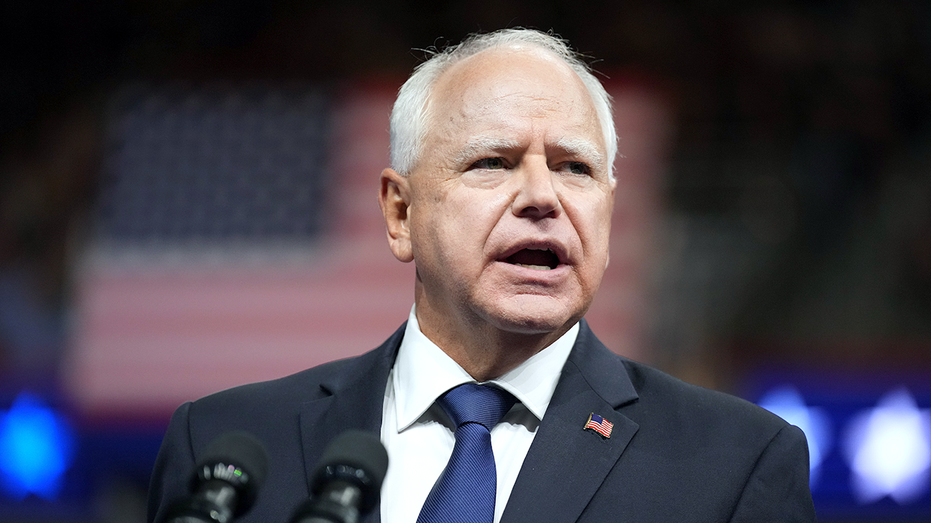
Here is what is known so far as Minnesota and the administration of Democratic Gov. Tim Walz continue to grapple with a burgeoning fraud scandal that has metastasized into a series of different, costly alleged money laundering operations at times tied to the Somali community in the Twin Cities. With so many moving parts, the following will present a summary of what has transpired so far in terms of each branch of the alleged scandal in Minnesota since the stories first made front-page news one month ago — as potentially upward of $1 billion being lost collectively, with some monies in one respect being remitted overseas and potentially into the hands of Islamic terrorists. For his part, Walz eventually took responsibility for his state’s safety net allegedly being bilked out of millions, saying in December, “This is on my watch, I am accountable for this and, more importantly I am the one that will fix it.” Walz said his administration had been taking action to stop some suspected fraudulent payments over the summer and that his office referred some for prosecution. INDEPENDENT JOURNALIST SAYS HE’S GOTTEN DEATH THREATS, TOLD HE’LL BE ‘KIRKED’ OVER MINNESOTA FRAUD VIRAL VIDEO However, Walz said that a figure of $9 billion in lost taxpayer monies due to fraud stated by a federal prosecutor was “sensationalized” and invented by the White House, according to the Minnesota Reformer. President Donald Trump also labeled Walz a slur for developmentally disabled people shortly before the fraud story blew up in earnest, leading to the governor firing back at critics driving by his home and shouting the slur at the edifice. FEEDING OUR FUTURE By mid-December, the Justice Department announced at least 78 people had been charged in what became dubbed the “Feeding Our Future” scandal, so named for the Somali-linked nonprofit whose alleged bilking of St. Paul’s and Washington’s coffers brought the case to the fore. Nearly 40 people had by then pleaded guilty. Defendants charged in the larger scheme were accused of faking invoices, attendance records and distribution of meals in low-income and other affected areas around Minnesota — utilizing COVID-era waivers the U.S. Department of Agriculture granted for requirements in child nutrition programs that allowed for, in some cases, food distributors for children not be necessarily linked to an accredited school. FBI Director Kash Patel pegged one figure at $250 million stolen “from hungry kids during a pandemic to fund mansions and luxury cars,” calling the fraud “as shameless as it gets.” Documents allege about 300 registered food-distribution “sites” served little or no food, while the vendors cited used the program to launder money meant for the kids. Officials from the right-leaning public policy group Manhattan Institute also purported to discover the remittance of monies allegedly being bilked in Somali-heavy Minneapolis and entities in Somalia itself, including the terrorist group al-Shabab. Statistics cited by the institute showed that 40% of Somali households in Africa received remitted funds from abroad, of which $1.7 billion overall in 2023 were sent from the U.S. That reported figure is larger than the Mogadishu government’s budget. GOP LAWMAKER DEMANDS MINNESOTA FRAUD BE TREATED AS ‘ORGANIZED CRIME’ SCHEME While some in the mainstream media kept mum about the burgeoning fraud reports — including only seconds on broadcast network nightly news shows, according to the Media Research Center — The Washington Post’s editorial board scorched Walz for “refusing to take responsibility for the welfare fraud that happened in plain sight during the pandemic.” “Residents, mostly of Somali descent, targeted established Medicaid programs. They opened fake food distribution centers and autism centers to funnel resources away from the neediest. The numbers alone made clear what was happening,” the Post wrote. The FBI’s Minnesota lead, Alvin Winston Sr., told Fox News Digital that “the egregious fraud unveiled in the Feeding our Future case epitomizes a profound betrayal of public trust.” “The magnitude (of the fraud) cannot be overstated,” added U.S. Attorney Joseph Thompson, who added that the overall network of fraudulent behavior is “swamping Minnesota and calling into question everything we know about our state.” HOUSING SUBSIDIES & AUTISM SERVICES As the Feeding Our Future scandal enveloped the news cycle, federal prosecutors in mid-December announced yet another Minnesota program that had been taken advantage of by fraudsters — including outside the state itself — to the tune of millions once more. Thompson quipped Dec. 19 that every time his office “looks under a rock,” another “$50 million” scheme pops up, according to the Minneapolis Star-Tribune. At least five people have been charged for allegedly defrauding the state’s Housing Stabilization Services program, which helps Minnesotans find and upkeep housing, or for allegedly bilking an early-autism services program, according to the paper. MINNESOTA FRAUD COMMITTEE CHAIR CLAIMS WALZ ‘TURNED A BLIND EYE’ TO FRAUD WARNINGS FOR YEARS In the case of the autism services program, invoices allegedly were submitted for services allegedly never rendered, an allegation that was backed up by congressional findings later in the month. Of those charged, Thompson’s office leveled allegations against Anthony Jefferson and Lester Brown of Philadelphia, who, according to the Reformer, heard that the housing subsidy was “easy money.” The men went to Minnesota, enrolled their companies in the program, then filed fraudulent claims from Pennsylvania amounting to $3.5 million in Medicaid payments through what Thompson called “fraud tourism,” the paper said. MINNESOTA’S NEW MEDICAID FRAUD PREVENTION FIX WON’T MAKE ‘ANY DIFFERENCE,’ FORMER FBI AGENT SAYS In October, Walz’s office also had paused payments in as many as 14 state programs viewed as “high risk,” according to the Reformer. By December, the House Oversight Committee honed in on the alleged fraud, launching its own probe and faulting Walz for inefficient oversight. “The Committee has serious concerns about how you as the Governor, and the Democrat-controlled administration, allowed millions of dollars to be stolen. The Committee also has concerns that you and your administration were fully aware of this fraud and chose not to act for fear of political retaliation,” Chairman James
Mukesh Ambani, Anant Ambani offer prayers at Kashtbhanjandev Hanuman Mandir in Gujarat, see PICS
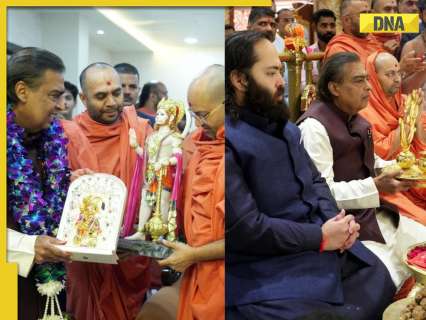
Kashtbhanjan Hanumanji Mandir also shared a video of Mukesh Ambani’s visit to the temple, in which he and his son, Anant Ambani, were seen offering prayers to Lord Hanuman.
‘IT system misused for…’: CM Mamata Banerjee urges CEC to halt ‘arbitrary, flawed’ SIR in Bengal
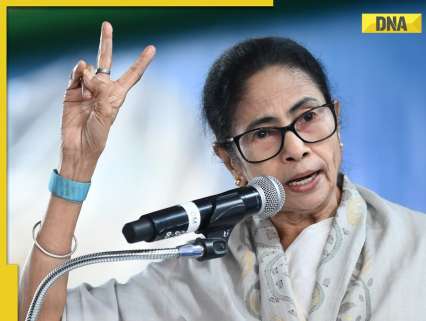
She also highlighted concerns about the Family Register, which was widely accepted as a valid identity document during the SIR exercise in Bihar.
IRCTC launches five day Dubai tour package priced at around Rs 95,000 per person
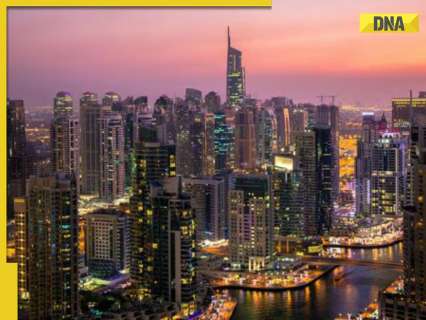
According to the statement, the package includes return airfare, stay in three-star hotels, visa charges, meals, sightseeing in air-conditioned buses, a desert safari and travel insurance.
Who was Jarmal Singh? AAP sarpanch dies after being shot at wedding function in Amritsar
As per reports, Singh was sitting at a table and eating when gunmen entered and fired shots at him. Eyewitnesses said they fired two shots at Singh, seemingly with the intention to kill him. Singh was hit in the head and immediately collapsed, after which he was rushed to a hospital.
IMD weather update: Cold wave grips North India, dense fog to continue for another week
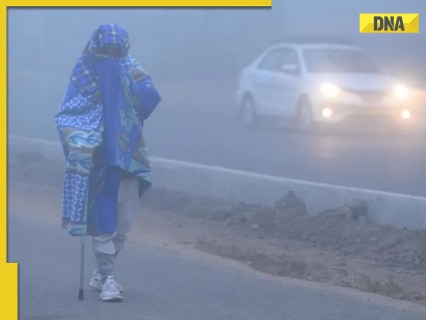
According to the India Meteorological Department, dense to very dense fog will likely prevail during the morning and night hours across northern and central India for the coming seven days. For Monday (January 5), the IMD has issued a cold day alert for parts of several northern states.
BIG boost for Uttar Pradesh: LDA to provide 12.5 hectares of land for Lucknow metro’s East-West corridor, here’s all you need to know

The land identified for this purpose includes about 6 hectares in sector-K of the Basant Kunj scheme and nearly 6.5 hectares of land currently used as temporary parking, developed under the Prabandhnagar Yojana for the inauguration of the Rashtra Prerna Sthal.
Delhi-NCR AQI: National Capital’s air quality slips back to ‘very poor’ category, AQI reaches at…, dense fog disrupts flight operations
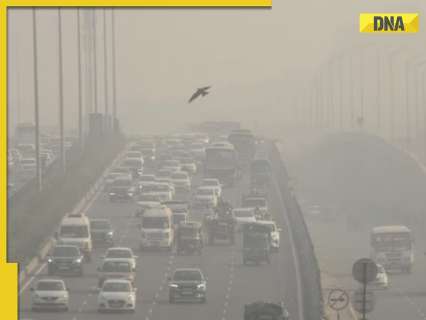
On Monday, most parts of the city recorded “poor” to “very poor” air quality, with several areas seeing pollution levels worsen further. Some of the most polluted areas included Chandni Chowk, which recorded an AQI of 343, making it one of the worst-hit locations.
Delhi riots case: BIG decision on Umar Khalid, Sharjeel Imam today, SC to deliver judgment in 2020 violence
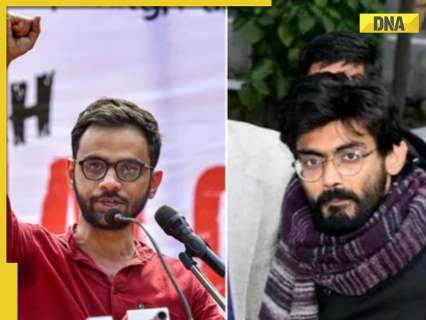
The Supreme Court is set to deliver its verdict on bail pleas filed by Umar Khalid, Sharjeel Imam and others accused in the alleged 2020 Delhi riots conspiracy. The case involves UAPA charges and prolonged detention, and has drawn national and international attention.
Trump vows US ‘in charge’ of Venezuela as he reveals if he’s spoken to Delcy Rodríguez
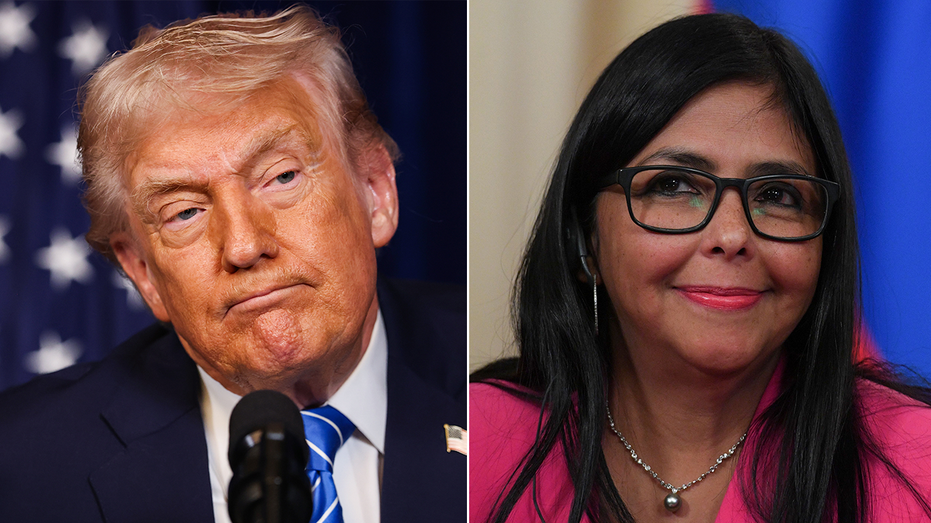
President Donald Trump said the U.S. is now in control of Venezuela following the arrest of longtime leader Nicolás Maduro, outlining a plan to run the country, rebuild its economy and delay elections until what he described as a recovery is underway. Trump made the remarks during a gaggle with reporters as questions mounted about who is governing Venezuela after a U.S. military operation led to Maduro’s arrest early Saturday. “Don’t ask me who’s in charge because I’ll give you an answer, and it’ll be very controversial,” Trump told a reporter. He was then asked to clarify, to which Trump replied, “It means we’re in charge.” US CAPTURE OF MADURO CHAMPIONED, CONDEMNED ACROSS WORLD STAGE AFTER SURGICAL VENEZUELA STRIKES Trump was also asked whether he had spoken directly with Venezuela’s newly sworn-in Vice President Delcy Rodríguez amid uncertainty about how the new government is functioning and what role the U.S. is playing. While Trump said he has not personally spoken with Rodríguez, he suggested coordination is already underway between U.S. officials and the new leadership. During the gaggle, Trump repeatedly portrayed Venezuela as a failed state that cannot immediately transition to democratic rule, arguing the country’s infrastructure and economy had been devastated by years of mismanagement. TRUMP ISSUES DIRECT WARNING TO VENEZUELA’S NEW LEADER DELCY RODRÍGUEZ FOLLOWING MADURO CAPTURE He compared Venezuela’s collapse to what he claimed would have happened to the U.S. had he lost the election, using the comparison to underscore his argument for intervention. “We have to do one thing in Venezuela. Bring it back. It’s a dead country right now,” Trump said. “It’s a country that, frankly, we would have been if I had lost the election. We would have been Venezuela on steroids.” Trump said rebuilding Venezuela will center on restoring its oil industry, which he said had been stripped from the U.S. under previous governments, leaving infrastructure decayed and production crippled. UN AMBASSADOR WALTZ DEFENDS US CAPTURE OF MADURO AHEAD OF SECURITY COUNCIL MEETING He stressed that American oil companies – not U.S. taxpayers – will finance the reconstruction, while the U.S. oversees the broader recovery. “The oil companies are going to go in and rebuild this system. They’re going to spend billions of dollars, and they’re going to take the oil out of the ground, and we’re taking back what they sell,” Trump said. “Remember, they stole our property. It was the greatest theft in the history of America. Nobody has ever stolen our property like they have. They took our oil away from us. They took the infrastructure away. And all that infrastructure is rotted and decayed.” Trump said elections will not take place until the country is stabilized, arguing that rushing a vote in a collapsed state would repeat past failures. TRUMP REVEALS VENEZUELA’S MADURO WAS CAPTURED IN ‘FORTRESS’-LIKE HOUSE: ‘HE GOT BUM RUSHED SO FAST’ He said the U.S. will manage Venezuela’s recovery process, including addressing inflation, revenue loss and infrastructure collapse. “We’re going to run everything,” Trump said. “We’re going to run it, fix it. We’ll have elections at the right time.” When asked whether the operation in Venezuela was motivated by oil interests or amounted to regime change, Trump rejected both characterizations and instead cast the effort as part of a broader security doctrine. VENEZUELAN LEADER MADURO LANDS IN NEW YORK AFTER BEING CAPTURED BY US FORCES ON DRUG CONSPIRACY CHARGES He tied the intervention to long-standing U.S. policy in the Western Hemisphere, invoking historical precedent. “It’s about peace on Earth,” Trump said. “You gotta have peace, it’s our hemisphere. The Monroe Doctrine was very important when it was done.” Trump went on to criticize past presidents for failing to enforce that doctrine, arguing his administration has restored it as a guiding principle. RUBIO DEFENDS VENEZUELA OPERATION AFTER NBC QUESTIONS LACK OF CONGRESSIONAL APPROVAL FOR MADURO CAPTURE “And other presidents, a lot of them, they lost sight of it,” Trump added. “I didn’t. I didn’t lose sight. But it really is. It’s peace on Earth.” Trump said the U.S. role in Venezuela will ultimately focus on rebuilding the country while caring for Venezuelans displaced by years of economic collapse. He said that includes Venezuelans currently living in the U.S., many of whom he said were forced to flee. “We’re gonna cherish a country,” Trump said. “We’re going to take care of, more importantly, of the people, including Venezuelans that are living in our country that were forced to leave their country, and they’re going to be taken very good care of.” Trump made clear the comments on Venezuela were part of a broader foreign policy outlook, using the gaggle to issue warnings about instability elsewhere in the Western Hemisphere and overseas. He suggested the U.S. is prepared to respond forcefully to threats he said could endanger American security interests. Trump singled out Colombia, describing the country as a growing security concern and accusing its leadership of enabling large-scale drug trafficking into the U.S. “Colombia’s very sick too, run by a sick man who likes making cocaine and selling it to the United States, and he’s not going to be doing it very long,” Trump said. When asked whether that meant U.S. action, Trump replied, “It sounds good to me.” Trump also addressed ongoing protests in Iran, warning that the U.S. is closely monitoring the situation and would respond if the Iranian government uses violence against demonstrators. “We’re watching it very closely,” he said. “If they start killing people like they have in the past, I think they’re going to get hit very hard by the United States.”