

Texas lawmakers, farmers and ranchers sound alarm over languishing farm bill

Millions of Texans would lose food subsidies and farm insurance if Congress doesn’t act before the end of the year.
Rahul Gandhi’s BIG promise ahead of Haryana Assembly polls, says, ‘we will re-implement…’
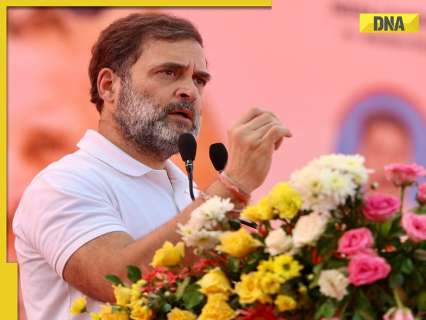
Haryana will go to the polls on October 5 to elect its 90-member state legislative assembly, with counting set to take place on October 8
Early voting begins in Nebraska and Washington, DC
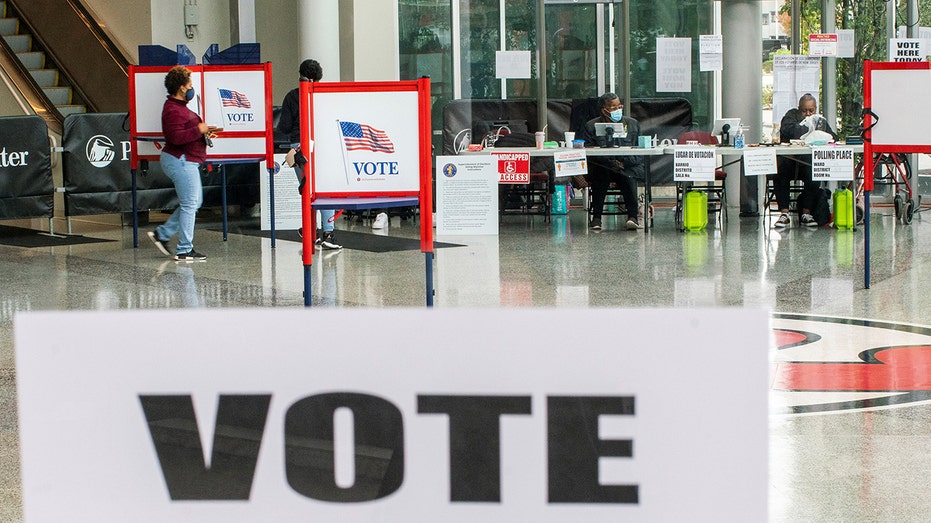
Nebraska and Washington, D.C., began early voting on Monday. Here is the information you need to register and vote in both. Nebraska is red territory. Former President Trump won the state by 19 points in the last presidential election and 25 points in 2016. But the state has long allocated its electoral votes differently than most other states, and that could give Harris an opportunity. The scenario goes like this: Vice President Harris wins Michigan, Pennsylvania and Wisconsin and the less competitive states that President Biden won in 2020 (i.e. excluding Arizona, Georgia, Nevada and North Carolina). That gives her 269 electoral votes, resulting in a tie that would, in the end, very likely hand Trump the election. To win with the majority of the electoral college, either Harris or Trump needs 270 votes. Nebraska’s 2nd district would provide that one extra vote. (Maine and Nebraska are the only states that award electoral college votes both to the winner of the statewide vote, and the winner of the same vote but separated by congressional district.) The district has voted for two Democrats and two Republicans in the last four elections: Omaha and its suburbs make up a significant part of the district’s population, and the city has a disproportionately high percentage of people with a college education. That gives Harris the edge. Nebraska’s 2nd district is ranked Lean D on the Fox News Power Rankings. Nebraska’s 2nd district is also, of course, home to a U.S. House race. Center-right Republican Rep. Don Bacon has held the seat since 2017, but as last week’s Power Rankings revealed, he is locked in a close battle with second-time rival and Democratic State Sen. Tony Vargas. The district is ranked a Toss Up. Finally, Nebraskans will also vote in two U.S. Senate races this year. The one to watch is the regular election between incumbent Republican Sen. Deb Fischer, who has won the seat twice beginning in 2012, and independent challenger Dan Osborn, a Navy veteran and local union leader. Fischer has a clear advantage, but the race moved to Likely R last week. This is a guide to registration and early voting. For comprehensive and up-to-date information on voter eligibility, processes and deadlines, please go to Vote.gov and the election website for Nebraska. Nebraska began absentee voting on Monday. Applicants do not need to provide an excuse to receive a ballot. The state must receive a ballot application by Oct. 25, and that ballot must be delivered to state officials by Nov. 5. Nebraska will begin early in-person voting on Oct. 7, and it will run through Nov. 4. Nebraska residents can register to vote online or by mail through Oct. 18. They can register in-person through Oct. 25. This is a guide to registration and early voting. For comprehensive and up-to-date information on voter eligibility, processes and deadlines, please go to Vote.gov and the election website for Washington, D.C. Washington, D.C., began absentee voting on Monday. Registered voters do not need to apply for a ballot, as the district will begin sending ballots to all active registered voters this week. Ballots can be returned by mail or in person through election day. Washington, D.C. will begin early in-person voting on Oct. 28, and it will run through Nov. 3. Residents of the nation’s capital can register to vote online or by mail through Oct. 15. They can also register in-person during early voting (Oct. 28-Nov. 3) and on election day.
Modi’s Kashmir statehood promise. Poll rhetoric or genuine outreach?
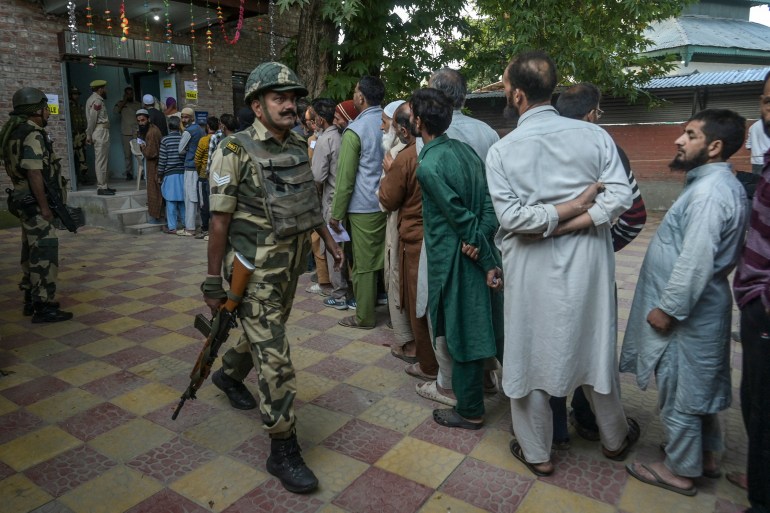
Srinagar, Indian-administered Kashmir – As Kashmir gears up for the last phase of local elections due on Tuesday, Indian Prime Minister Narendra Modi has promised to restore the disputed territory’s “statehood” that was stripped five years ago by his Hindu nationalist government. “We had promised in the parliament that Jammu and Kashmir [official name of Indian-administered Kashmir] will again be a state,” Modi said, addressing a rather dull crowd in Srinagar, the main city in the disputed Muslim-majority territory. Only the Bharatiya Janata Party (BJP) “will fulfil this commitment”, he said without elaborating further. Modi’s latest election pitch comes amid widespread anger in Kashmir at the BJP for scrapping the region’s limited autonomy and demoting it into a federally run territory in 2019. The move is also aimed at blunting attacks from Kashmir-based parties, who have made the restoration of the special status and statehood their main poll agenda. The ghost of New Delhi’s unilateral decision to scrap the region’s special status, aimed at safeguarding local culture and demography, still looms large over the poll campaigns. Anti-India sentiment runs deep in the disputed Himalayan region, which has witnessed decades of armed rebellion. India has accused Pakistan of backing rebels – a charge denied by Islamabad. Both the South Asian neighbours claim Kashmir in full but have governed parts of it since their independence from Britain in 1947. So, what will be the nature of the promised state? What powers will the newly elected assembly wield? And can Kashmir’s unionist political parties, technically, deliver on their poll promises? How does India’s federal structure function? Where does Kashmir fit in? Late Professor Kenneth Clinton Wheare, an Australian academic and expert on constitutions of the British Commonwealth, described India as a “quasi-federal” state. “Almost devolutionary in character: a unitary state with subsidiary federal features rather than a federal state with subsidiary unitary features,” he observed, implying that while power is centred in New Delhi, states are allowed to govern and legislate in accordance with regional contexts. The Indian constitution defines the country as a “Union of States”, and then breaks down the power-sharing, legislative structure into three lists: the Union List, including remits such as defence and currency that are exclusive to the parliament; the State List, including powers such as police and public health that can be drafted by the states; and the Concurrent List, including areas such as marriage, education, and forests, which can be legislated by both. But Kashmir’s relationship with New Delhi has been unique and complex as it joined the Indian union in 1947 with a set of conditions, which were enshrined in Article 370. Under the terms of the instrument of accession, Kashmir gave India the power to manage matters of foreign affairs, defence, and communications — and left New Delhi with limited legislative powers. While successive governments in New Delhi gradually eroded those powers, Kashmir still flexed its separate constitution, flag, and freedom to make laws on permanent residency and property ownership, and reserve government-sponsored opportunities exclusively for the state’s subjects. Indian security personnel stand guard as voters queue up to cast their ballots at a polling station during the first phase of assembly elections in Pulwama, south of Srinagar on September 18, 2024. [Tauseef Mustafa/AFP] What happened to special status? On August 5, 2019, the Modi government removed Article 370, fulfilling BJP’s decades-long promise to remove the special status, which it said was responsible for the region’s political crisis and separatism. New Delhi also bifurcated the region into two federally governed territories: Jammu and Kashmir bordering Pakistan in the west, and Ladakh bordering China in the east. On the same day, Amit Shah, India’s home minister and Modi’s confidante, informed the parliament that, unlike Ladakh, “statehood” will be restored to Jammu and Kashmir. To prevent the outbreak of protests, authorities arrested thousands of Kashmiri leaders and activists and imposed a months-long communication blockade – a move denounced by the opposition and international rights observers. The decision was also immediately challenged in India’s top court, which eventually upheld the move in December last year and called for the restoration of the same statehood as any other Indian state – with no separate autonomy rights – “at the earliest and as soon as possible”. But just weeks before the region’s first assembly elections, the Modi government gave its handpicked administrator more powers, further shrinking the scope of the incoming legislature. “For the last five years, all Kashmiris have seen is an arrogant bureaucracy and the important missing layers of a local government,” said Anuradha Bhasin, editor of Kashmir Times and author of A Dismantled State: The Untold Story of Kashmir after Article 370. “New Delhi has suppressed this area that has a history of turmoil. It has worrying, ominous signs,” she told Al Jazeera. Speaking at a poll rally in the Jammu region, Rahul Gandhi, leader of the opposition in parliament, took a dig at the local administration saying “non-locals are running Jammu and Kashmir”. “Your democratic right was snatched. We have given priority to the demand for restoration of statehood,” he said, addressing the crowd. “If [the BJP] fails to restore statehood after the elections, we will put pressure on them to ensure it.” What power will the elected government have in Kashmir? Political observers and Kashmiri analysts see the elections as a referendum on the BJP’s controversial decision –– and reflect upon the unchartered duality of running a legislature subservient to the central government. While Kashmir parties have tried to realign their politics along the calls for restoration of special autonomy and “dignity”, experts told Al Jazeera that the newly elected government will have to work at the mercy of the Lieutenant Governor (LG), a constitutional head appointed by New Delhi under the current setup. Under the flipped framework after August 2019, the LG will sway more influence than the elected assembly and will retain control over issues of “public order and police”. The government will also be unable to introduce any financial bill
Punish violent fans and the players inciting them: Atletico manager Simeone

Atletico Madrid manager Diego Simeone says fans who hurled objects onto the pitch, causing their Spanish football league match against Real Madrid to be suspended for more than 20 minutes, should be punished along with the players who he suggested encourage such action. The city derby was interrupted on Sunday after Atletico fans threw objects onto the field, prompting the referee to stop the game and send the players to the dressing rooms around the 70th minute at the Metropolitano Stadium. While Real players celebrated Eder Militao’s opener in the 64th minute, Atletico ultras Fondo Sur, who are located in the south lower stands, threw objects towards visiting keeper Thibaut Courtois, who alerted the referee, leading to the decision to halt the match. After the delay, Angel Correa equalised deep in added time as the game ended with a 1-1 draw. “My opinion is that people who have committed incidents should be sanctioned by the club. We don’t need these people. We need the people who accompany and support us. They harm the club, but be careful: that does not justify generating situations that we, the protagonists, generate,” Simeone told DAZN Sport. Atletico defender Jose Maria Gimenez and midfielder Koke Resurreccion went to talk to the fans in the section behind Courtois’s goal. Atletico Madrid’s midfielder Koke asks supporters to stop throwing items on the pitch after Eder Militao’s goal at the Metropolitano Stadium in Madrid [Oscar Del Pozo/AFP] Simeone also asked several times for the fans to behave. “We all have to help,” he said. “The people who have thrown those lighters, it’s not right. But maybe it doesn’t help when us, the protagonists, undermine people, charge against people, provoke people and then people get angry. “People have no other way of doing it, in a bad way, which is not right, but we also have to try to be calm, to understand the situations, that you can celebrate a goal by celebrating it, but not by celebrating it by staring at the stands, charging against the stands, making gestures … because then people get angry. “Of course it’s not justified, but neither is the initial thing justified because otherwise, we’ll always be victims. The one who throws the cigarette lighter should be sanctioned and the one who provokes should also be sanctioned. This way there is no more laughter and things like that, as you are not sanctioned, you are allowed to do things.” Atletico Madrid players leave the pitch after the match was suspended by the referee [Oscar Del Pozo/AFP] A message on the stadium’s loudspeaker said the match was being interrupted for 15 minutes, adding it would be suspended if the problem continued. Atletico Madrid released an official statement in the early hours of Monday saying they had already identified one of the fans who hurled objects onto the pitch and are working with police to identify others, who will be disciplined. “Atletico de Madrid wishes to express their rejection of the throwing of objects from a section of the south stand in the 68th minute of the match against Real Madrid. The club’s security department has been working together with the police to locate those involved, one of whom has already been identified,” the club said in a statement. “The club will apply the internal regime foreseen for very serious cases to the people involved in this incident. These attitudes have no place in football and tarnish the image of a stadium that has experienced a spectacular atmosphere with more than 70,000 spectators in the stands, the vast majority of whom have shown exemplary behaviour.” Atlético de Madrid wishes to express its rejection of the throwing of objects that took place from a section of the south stand in the 68th minute of the match vs Real Madrid. The club’s Security Department has been working with the police to locate those involved, one of whom… pic.twitter.com/bqFaRfoWhe — Atlético de Madrid (@atletienglish) September 29, 2024 The interruption came a day after the Spanish league said it would ask the police to act against the promoters of a social media campaign that the league said was aimed at promoting racist acts against Vinicius Junior at the derby. The social media campaign was based on a hashtag encouraging Atletico fans to wear face masks, apparently to make it more difficult for authorities to identify individuals who participate in racist chants or insults. Social media videos showed Atletico fans before the match chanting “Vinicius is different”. Adblock test (Why?)
Video: Aftermath of deadly flooding and landslides in Nepal

NewsFeed Rescue teams have been looking for people stuck in their homes or under mud after floods and landslides in Nepal that have killed at least 160 people. Published On 30 Sep 202430 Sep 2024 Adblock test (Why?)
Critical battles loom as Congress looks to avoid crippling ‘shutdown crisis’ for next president
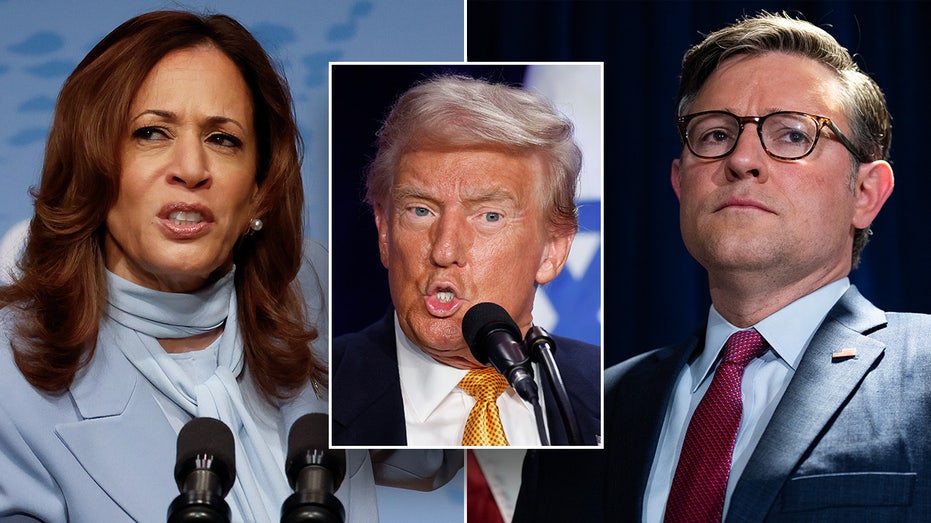
The halls of Congress will be empty the next six weeks as lawmakers brace for a very different situation in Washington — and potentially in the United States — when lawmakers return after Election Day. The House and Senate are in recess until Nov. 11. The break gives vulnerable legislators ample time to campaign before voters head to the polls on the first Tuesday of November. Leaders on both sides of the aisle, meanwhile, are busy making plans for the final weeks of the 118th Congress, known as the “lame duck” session. When lawmakers file back in, it will be on the cusp of a new presidential administration and possibly a new balance of power in Congress. DOES IRAN’S HACKING OF THE TRUMP CAMPAIGN PROVE THEY WANT KAMALA HARRIS TO WIN THE ELECTION? EXPERTS WEIGH IN They’ll also spend the bulk of their time during the five weeks in session between Election Day and the end-of-year holidays wrestling with at least three deadlines. Federal funding for discretionary government programs — those controlled by Congress’ annual appropriations process, unlike mandatory programs including Social Security, Medicare and certain state and local government payments — will dry up by Dec. 20 if lawmakers fail to reach an agreement before then. The deadline originally lined up with the end of the fiscal year Sept. 30, but Congress punted that fight with a short-term extension of the current year’s federal funding levels. The way that battle plays out will depend heavily on which party controls Congress and the White House next year. IRAN TRIED TO INFLUENCE ELECTION BY SENDING STOLEN MATERIAL FROM TRUMP CAMPAIGN TO BIDEN’S CAMP, FBI SAYS “I want to win the election overwhelmingly so we’re in a position to negotiate for all the stuff that has to be done, and winning sets us up for a successful negotiation,” House Administration Committee Chairman Bryan Steil, R-Wis., told Fox News Digital. It’s likely that if former President Trump wins, Republicans will push for another extension into the new year to give the incoming commander-in-chief control over fiscal year 2025 federal spending. The House GOP majority will likely be more inclined to take an active role regarding government funding if Vice President Kamala Harris wins, though it’s unclear how successful any effort will be considering it’s likely to meet significant resistance in the current Democrat-controlled Senate. Congress will also have to wrestle with a new National Defense Authorization Act (NDAA), which sets military and national security policy annually. Steil contends defense spending and policy, in particular, should take priority when lawmakers return. “Our adversaries are working against U.S. interests across the globe, and they’re doing that because they see the weakness of the Biden administration’s foreign policy,” Steil said. “So, our need to come back with a strong defense bill to protect our troops, in the interest of national security, is going to be absolutely essential.” Another key battle on the horizon is the annual farm bill, a broad piece of legislation setting American food and agricultural policy that must be renewed every five years. The farm bill affects federal food benefits, crop prices and forestry conservation, among other issues. HARRIS-TRUMP SHOWDOWN: THE EDGE IS CLEAR ON THIS KEY ISSUE Congress last year extended the 2018 farm bill through the end of December 2024. Steil said he was optimistic Congress could authorize a new farm bill, noting its importance to the agriculture industry in his state and others. Meanwhile, Rep. Andy Ogles, R-Tenn., a member of the ultra-conservative House Freedom Caucus, told Fox News Digital he wanted to see his chamber prioritize the fiscal year 2025 funding process. “We’ve got to recommit to going through the appropriations process, go ahead and get all that moving so we can be successful next year,” he said. Ogles added, however, that he wants House Republicans to avoid putting their 12 annual appropriations bills into a massive “omnibus” spending bill in December, which the GOP argues furthers government bloat while reducing transparency. House GOP leaders have insisted they will not advance an omnibus spending bill. But some senior Republicans said they would rather finish the appropriations process this year to leave a clean slate for a new administration. “I would hope whoever the next president is, whether it’s Vice President Harris or, as I expect, former President Trump, that person decides to make this administration and this Congress do their job,” House Appropriations Committee Chairman Tom Cole, R-Okla., told reporters. “I don’t think we should, because we can’t do our job in this Congress, give them a government shutdown crisis [in the first] couple of months. It’s just irresponsible.”
Senate GOP teams up to take on Harris policy pitfalls in pre-election video series
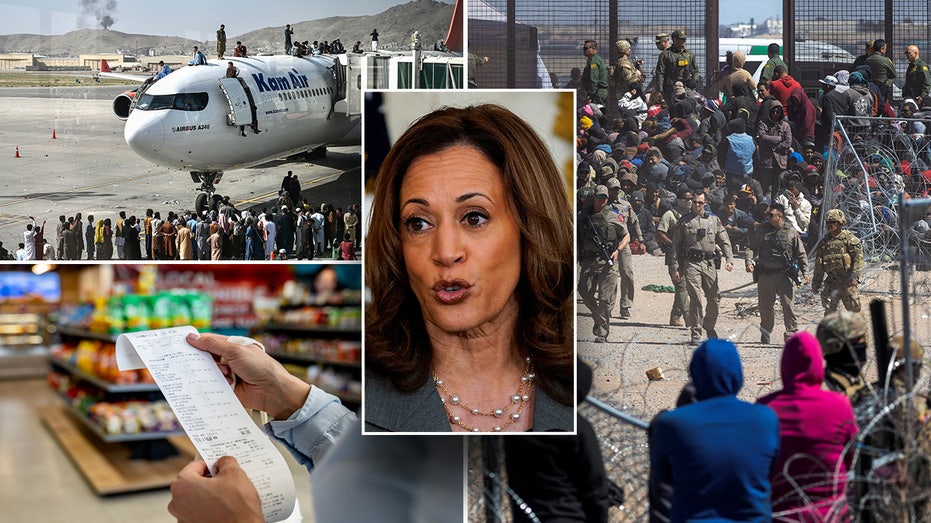
FIRST ON FOX: Senate Republicans teamed up to lay out their closing arguments against the Biden-Harris administration and its policies in a new video series that addresses the border, the high cost of living and foreign policy. Featuring more than 20 Republican senators, the Senate Republican conference is releasing a three-part video series with specific emphasis on Vice President Harris amid her run for the presidency on Monday. The videos will take viewers through the years of President Biden and Harris’ administration, reminding them of past blunders. One video focuses on the southern border crisis, with Republican senators appearing on site at the border cut between footage of Harris responding to concerns over her administration’s inaction. AS LEADER RACE LOOMS, JOHN THUNE TAKES SENATE MAP BY STORM TO BOOST GOP CANDIDATES It notes Harris was put in charge of addressing the root causes of the border crisis and stemming the flow of migrants to the southern border by Biden as the administration’s “border czar.” However, in recent days, both members of the media and Democrats have suggested Harris was never actually tasked with managing the border crisis or in the position of border czar. Another video serves as a reminder of the enduring global crises and conflicts that began under the Biden-Harris administration, including the disastrous U.S. withdrawal from Afghanistan, Russia’s attack on Ukraine and terrorist group Hamas’ attack on Israel. KAMALA HARRIS ISN’T ALONE: VULNERABLE DEMS WANT CURRENT FILIBUSTER GONE High prices and Americans’ struggles to make ends meet is addressed in the third video, and the evolution of the administration’s explanations for inflation is laid out. Footage of Harris touting “Bidenomics” is featured. The administration quickly stopped mentioning Bidenomics after the phrase proved unpopular. SENATE PASSES FUNDING BILL WITHOUT SAVE ACT, AVOIDING POTENTIAL SHUTDOWN In a statement to Fox News Digital, Senate Republican Conference Chairman John Barrasso, R-Wyo., said, “This series shows Americans a clear timeline of Kamala Harris’ failures. They will see how Harris’ tie-breaking vote led to record-high prices – 20% higher than when Harris took office. They will hear how Harris’ open-border policies led to more than 10 million illegal immigrants pouring across the border. They will see how Harris played a pivotal role in the botched withdrawal from Afghanistan that led to the death of 13 Americans. GOP SENATORS EYE COMPREHENSIVE CHINA STRATEGY TO CURB CCP INFLUENCE “These videos show America is worse off today because of dangerous liberal Kamala Harris.” The video series comes after the departure of the Senate for a month-long recess. Lawmakers won’t return until after the November election. It serves as a final argument from the Republican conference against the Biden-Harris administration’s policies and leadership while also looking to pin that record on downballot Democrats seeking election or re-election. Republicans are favored to take the majority in the Senate, keeping all of their current seats and adding seats in West Virginia and Montana. This would put them at a 51-member majority, but there are several additional contests that are considered within reach, giving them a chance to expand on it. Get the latest updates on the ongoing border crisis from the Fox News Digital immigration hub.
How to watch the Fox News – CBS News Vice Presidential Debate Simulcast
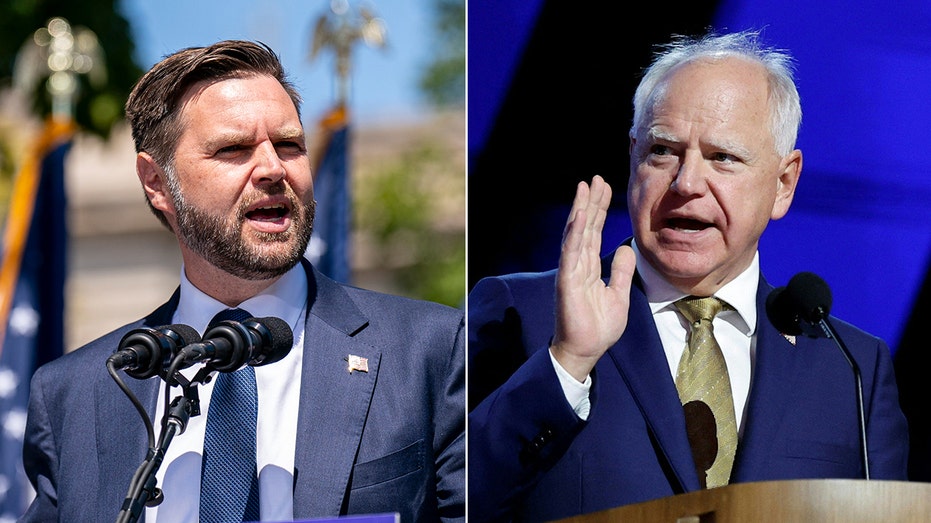
Minnesota Gov. Tim Walz and Ohio Sen. JD Vance are set to take the stage for a debate on Tuesday, likely the only debate between the vice presidential candidates as the election enters its final stretch. The vice presidential debate is being hosted by “CBS Evening News” anchor and managing editor Norah O’Donnell and “Face the Nation” moderator Margaret Brennan, taking place on Tuesday, Oct. 1 at 9 p.m. ET. CBS News will host the debate, and coverage begins at 8 p.m. ET. BERNIE SANDERS SAYS HARRIS DROPPING FAR-LEFT POLICIES ‘IN ORDER TO WIN THE ELECTION’ Fox News will also have pre- and post-debate coverage in addition to simulcasting the event across Fox News Channel, Fox Business Network, Fox News Digital, Fox News Audio and FOX Nation. Like the presidential debate before it, the vice presidential debate will take place without an audience and is slated to run 90 minutes, with the candidates receiving two four-minute breaks. HARRIS DODGES QUESTION ON LOWERING PRICES BY DESCRIBING ‘MIDDLE-CLASS’ ROOTS: NEIGHBORS ‘PROUD OF THEIR LAWN’ Closing statements will be two minutes, while a coin toss last week determined that Vance would be the last to make the closing pitch to voters. Each candidate will have a pen, pad of paper and a bottle of water onstage but will not receive questions in advance. Campaign staff are not allowed to interact with either candidate during breaks, and mics will not be automatically muted, though they can be muted at the determination of the moderators. Candidates will have two minutes to answer questions and the other candidate will get two minutes to respond. From there, each candidate will be allowed one minute for rebuttals.
Newsom vetoes bill to establish first-in-nation AI safety regulations in California
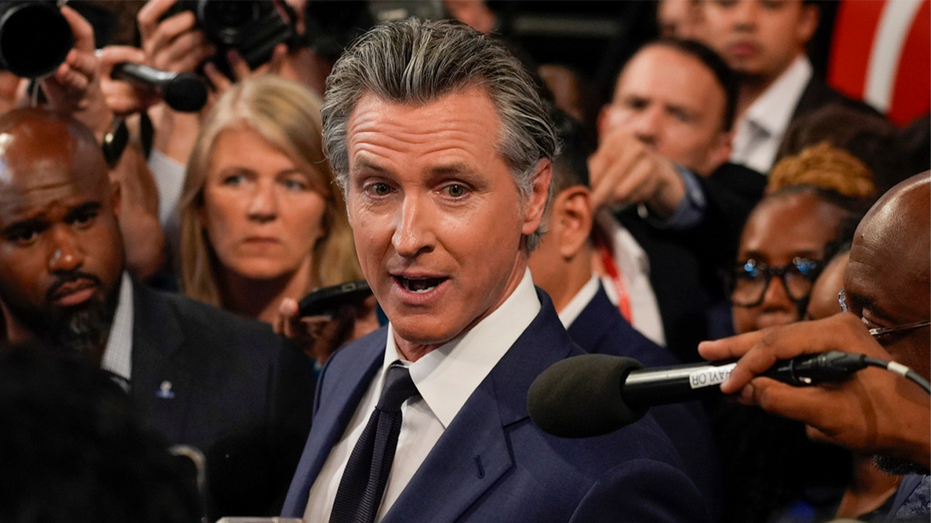
California Gov. Gavin Newsom, a Democrat, on Sunday vetoed a bill to create safety measures for large artificial intelligence models, which would have been the first such law in the nation. The governor’s veto delivers a major setback to attempts to create guardrails around AI and its rapid evolution with little oversight, according to The Associated Press. The legislation faced staunch opposition from startups, tech giants and several Democratic lawmakers. Newsom said earlier this month at Dreamforce, an annual conference hosted by software giant Salesforce, that California must lead in regulating AI as the federal government has failed to put safety measures in place, but that the proposal “can have a chilling effect on the industry.” S.B. 1047, the governor said, could have hurt the homegrown industry by setting up strict requirements. DEMOCRAT SENATOR TARGETED BY DEEPFAKE IMPERSONATOR OF UKRAINIAN OFFICIAL ON ZOOM CALL: REPORTS “While well-intentioned, SB 1047 does not take into account whether an AI system is deployed in high-risk environments, involves critical decision-making or the use of sensitive data,” Newsom said in a statement. “Instead, the bill applies stringent standards to even the most basic functions — so long as a large system deploys it. I do not believe this is the best approach to protecting the public from real threats posed by the technology.” Newsom announced instead that the state will partner with several industry experts to develop safety measures for powerful AI models. S.B. 1047 would have required companies to test their models and publicly disclose their safety protocols to prevent the models from being manipulated for harmful purposes, such as, for example, wiping out the state’s electric grid or helping to build chemical weapons, scenarios that experts say could be possible in the future as the industry continues to rapidly evolve. The legislation also would have provided whistleblower protection to industry workers. Democratic state Sen. Scott Weiner, who authored the bill, said the veto was “a setback for everyone who believes in oversight of massive corporations that are making critical decisions that affect the safety and the welfare of the public and the future of the planet.” “The companies developing advanced AI systems acknowledge that the risks these models present to the public are real and rapidly increasing,” he said in a statement. “While the large AI labs have made admirable commitments to monitor and mitigate these risks, the truth is that voluntary commitments from industry are not enforceable and rarely work out well for the public.” Wiener said the debate around the bill has helped put a spotlight on the issue of AI safety, and that he would continue pushing to advance safety measures around the technology. Tech billionaire Elon Musk supported the measure. 800-PLUS BILLS LEFT ON NEWSOM’S DESK ILLUSTRATE CALIFORNIA’S OVERREGULATION PROBLEM: EXPERTS The proposal is one of several bills passed by the state Legislature this year seeking to regulate AI, combat deepfakes and protect workers. State lawmakers said California must take actions this year, pointing to the results of failing to rein in social media companies when they might have had an opportunity. Supporters of the bill said it could have presented some transparency and accountability around large-scale AI models, as developers and experts say they still do not have a full understanding of how AI models behave. The bill sought to address systems that require a high level of computing power and more than $100 million to build. No current AI models have met that criteria, but some experts say that could change within the next year. “This is because of the massive investment scale-up within the industry,” Daniel Kokotajlo, a former OpenAI researcher who stepped down earlier this year over what he described as the company’s disregard for AI risks, told The Associated Press. “This is a crazy amount of power to have any private company control unaccountably, and it’s also incredibly risky.” The U.S. is behind Europe in regulating the growing technology that is raising concerns about job loss, misinformation, invasions of privacy and automation bias, supporters of the measure said. The California bill was not as comprehensive as regulations in Europe, but the supporters say it would have been a step in the right direction. Last year, several leading AI companies voluntarily agreed to follow safeguards set by the White House, which include testing and sharing information about their models. The California bill, according to its supporters, would have required AI developers to follow requirements similar to those safeguards. But critics of the measure argued that it would harm tech and stifle innovation in the Golden State. The proposal would have discouraged AI developers from investing in large models or sharing open-source software, according to the critics, which include U.S. Rep. Nancy Pelosi, D-Calif. Two other AI proposals, which also faced opposition from the tech industry, did not pass ahead of a legislative deadline last month. The bills would have required AI developers to label AI-generated content and prohibit discrimination by AI tools used to make employment decisions. California lawmakers are still considering new rules against AI discrimination in hiring practices. The governor previously said he wanted to protect the state’s status as a global leader in AI, citing that 32 of the world’s top 50 AI companies are in the Golden State. Newsom has said California is an early adopter of AI, as the state could deploy generative AI tools in the near future to combat highway congestion, provide tax guidance and streamline homelessness programs. Earlier this month, Newsom signed some of the strictest laws in the country to fight against election deepfakes and adopt measures to protect Hollywood workers from unauthorized AI use. The Associated Press contributed to this report.