

Badlapur sexual assault case: Accused Akshay Shinde’s father moves HC, seeks…

The petition will be heard by a division bench of Justices Revati Mohite Dere and Prithviraj Chavan on Wednesday.
Senate to vote on contentious Arctic ambassador nominee with deep ties to China and Russia
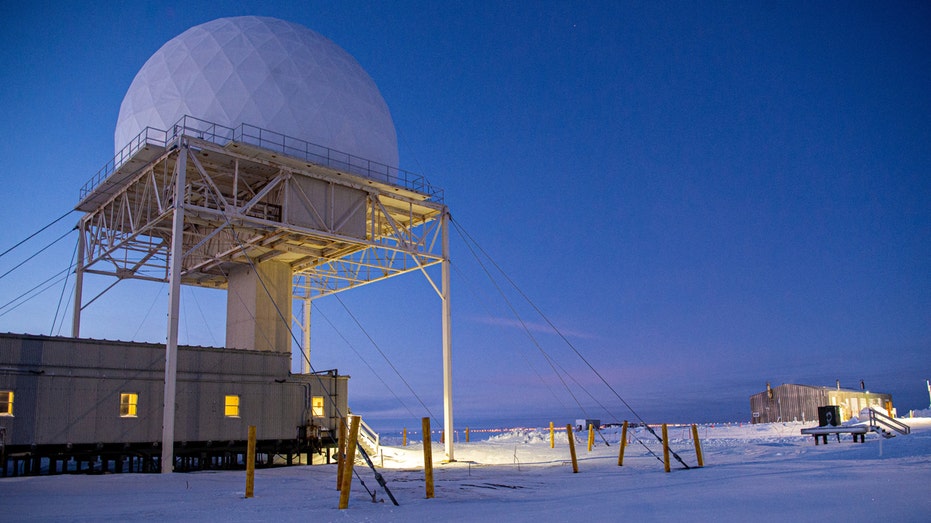
When the Biden administration nominated Michael Sfraga to be special ambassador to the Arctic, he failed to disclose his deep history with Russia and China. The Senate is expected to vote on Sfraga’s confirmation on Tuesday – over a year after his nomination, which was held up by Republicans who claim he is too close to U.S. adversaries. Sfraga has traveled extensively across Russia and China, and even spoke at an event where Russian President Vladimir Putin gave the headline address. An Alaskan and geographer by background, Sfraga chairs the Polar Institute and the U.S. Arctic Research Commission. He is looking to lead the U.S. in diplomatic relations between the eight Arctic nations: Canada, Denmark, Finland, Iceland, Norway, Sweden, the Russian Federation and the U.S. His foreign ties prompted Sen. Jim Risch, Idaho, the top Republican on the Foreign Relations Committee, to write a letter in 2023 asking the FBI for help in vetting Sfraga, Fox News Digital has learned. He negotiated joint partnerships with Chinese academic institutions tied to defense and intelligence services and spoke glowingly about the two U.S. adversaries in interviews for different publications – all of which he failed to reveal until confronted by Senate Foreign Relations Committee staff. Sfraga had to update his disclosures three times, claiming he had forgotten to mention his record of trips and collaboration with Chinese and Russian leaders, Republicans have said. Risch placed a hold on Sfraga’s nomination, which prompted Republican infighting. Sen. Lisa Murkowski, R–Alaska, recommended Sfraga to the Biden administration, and she defended him to the committee. “If there is any challenge that you have as a committee, it’s that his expertise in the Arctic is so voluminous,” she said. “It takes a while to wade through all of it.” Sfraga was key in negotiating memorandums of understanding – legal documents that establish a partnership – between the University of Alaska Fairbanks (UAF) and Chinese universities, including Shanghai Jiao Tong University, which has been designated a “high threat” due to its high-level defense research and alleged ties to cyberattacks. The partnership included access to UAF’s IT infrastructure and involvement in policy and legal reviews on any Arctic region subject, in addition to research and exchange programs. In 2021, Sfraga spoke on a virtual panel on “Cooperation and Environmental Sustainability in the Arctic at Fort Ross Dialogue,” an event sponsored by two U.S.-sanctioned Russian companies, Transneft and Sovcomflot, and Chevron. His co-panelist was Russian Ambassador-at-Large for Arctic Cooperation Nikolai Korchunov. RUSSIA, CHINA HOLD BIGGEST WARGAMES SINCE SOVIET ERA The event stressed cooperation with Russia on Arctic issues. In a 2021 interview with Voice of America’s Russia service, Sfraga claimed Russia and the U.S. were “not understanding each other” and that “the Arctic is an integral part of Russia’s DNA.” In a 2022 Newsweek article on mounting U.S.-Russia tensions in the Arctic, Sfraga is quoted lamenting that the Arctic is no longer insulated from strains in the bilateral relationship. He said it is “not a good thing” that the Arctic Council canceled a forum with defense chiefs, including Russia’s, following Russia’s attempted annexation of Crimea. “I certainly understand the motives, but it’s not a good thing to have that happen,” he said. In 2021, after Russia’s annexation of Crimea but before the war in Ukraine, Sfraga argued for cooperation with Russia in the Arctic. “If both nations, especially the United States, are looking for places to actually cooperate with the Russians like we do in the International Space Station and trying to find a path towards some amount of productive engagement, I would argue that the Arctic may provide for us at least a few of those pathways to a more predictable and stable relationship between these two countries,” he said. At his Senate hearing in March, he struck a tougher tone with Russia. “Russia’s war against Ukraine has rendered cooperation virtually impossible with Russia, including in the Arctic,” he said. “The PRC (China) is attempting to reshape the global aid rules based system in its favor, and increasingly working with Moscow to elevate and advance its presence and its influence in the Arctic in ways that threaten our interests.” In 2017, Sfraga attended the International Arctic Forum in Arkhangelsk, Russia, an event headlined by Putin and attended by numerous other state-sanctioned people. He was a speaker on a panel entitled “Arctic: Territory of Professionals.” When questioned about the event in a Senate hearing, Sfraga said, “It’s hard to ignore half of the Arctic, which is Russia, and in the North, it is a big neighborhood, but a small community, and you must engage. And indeed, at one of those conferences, President Putin did provide a keynote address, but I had no interaction with President Putin at all.” Reports show Sfraga has taken at least half a dozen trips to China to participate in panels on Arctic issues. In October 2019, for example, he attended the Arctic Circle China Forum in Shanghai, where he spoke to the panel on the topic of, “The Arctic Council: A Model for Regional Cooperation.” In November 2018, he attended the 11th Arctic Circle Assembly in Reykjavík, Iceland, where he co-chaired the breakout session “China’s Arctic Policy: Opportunities and Challenges” with Dr. Yang Jian, vice president of the Shanghai Institutes for International Studies. In April 2016, he attended the Fulbright Arctic Initiative Symposium in Washington, D.C., where he met with Chinese representatives from the Polar Research Institute of China and the Chinese Arctic and Antarctic Administration. He also delivered a keynote speech on “The Arctic in a Globalized World” at the China-Nordic Arctic Cooperation Symposium in Beijing. Additionally, during a 2018 event entitled, “The Polar Silk Road: China’s Arctic Ambitions,” Sfraga is quoted as saying, “In the United States, we think four seconds long; we think commercials and sound bites and bumper stickers. But the Chinese think in long narratives; they go over decades… [The United States] think[s] about reaction versus being proactive… as we see the polar ice continue to retreat — and there’s both
John Cornyn flexes fundraising chops as battle to succeed Mitch McConnell ramps up
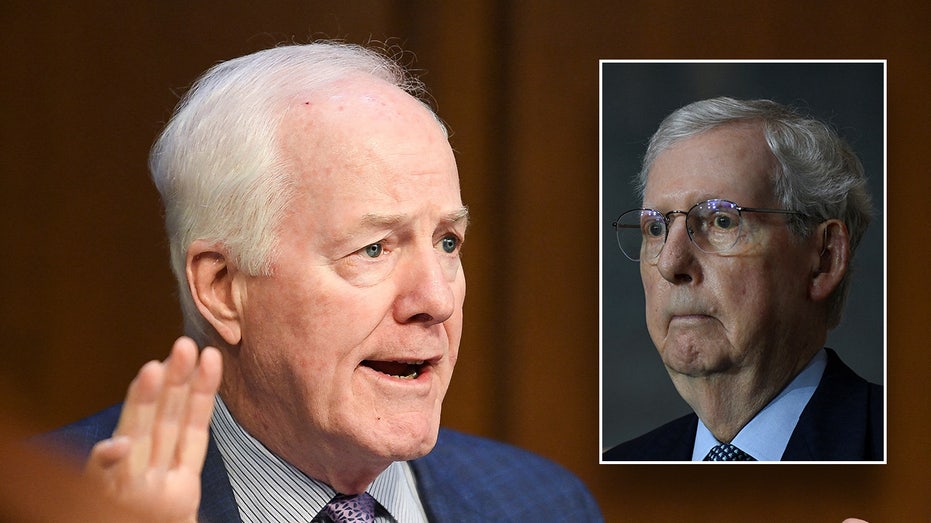
FIRST ON FOX: Sen. John Cornyn, R-Texas, detailed his fundraising achievements in a new letter to donors, reiterating his hope to succeed top fundraiser Senate Minority Leader Mitch McConnell, R-Ky., in the new Congress. “I am proud to announce together we have achieved an extraordinary milestone: you have helped me raise over $400 million hard dollars since 2002 to help advance conservative principles and policies in the U.S. Senate — $406,874,101, to be exact,” the Texas Republican told thousands of donors on Tuesday in the letter, which was obtained by Fox News Digital. ACCUSATIONS OF IMPROPER TAX BREAKS FLY IN CRUCIAL SENATE RACE: ‘RULES DON’T APPLY’ According to Cornyn, he has raised $26 million in the current election cycle, $11.8 million of which was for the National Republican Senatorial Committee (NRSC). He noted the particular importance of money for the several competitive Senate races across the country as Republicans are hoping to take back the upper chamber’s Majority. Specifically, the senator said he has raised $500,000 for each of the 33 senators and candidates in elections, as well as more than $1 million each for four senators. ENIGMATIC VOTER GROUP COULD SPLIT TICKET FOR TRUMP, DEM SENATE CANDIDATE IN ARIZONA Cornyn is one of three announced candidates vying to replace McConnell in the upper chamber’s leader election come November. Senate Minority Whip John Thune, R-S.D., and Sen. Rick Scott, R-Fla., have also launched bids for the role. Only two senators have publicly revealed who they are backing: Sens. Mike Rounds, R-S.D., and Markwayne Mullin, R-Okla., who both came out in support of Thune earlier this year. Others, however, have been tight-lipped, claiming outwardly that they are waiting to hear from all the candidates or that they are focused on other things as Congress navigates another short-term spending bill and the presidential election nears. ‘PRETTY DAMN SIGNIFICANT’: SLOTKIN SUFFERS BLOW IN MICHIGAN AS FARM BUREAU JILTS DEMS TO ENDORSE GOP CANDIDATE Much of the race has thus far taken place behind closed doors, with Cornyn often noting that he does not discuss leadership elections publicly, and senators throughout the conference confirming they have met with each of the candidates. The only public-facing component of the race so far has been fundraising prowess, as both Thune and Cornyn bring in large sums for Republicans in competitive Senate races and attend donor events with former President Donald Trump’s campaign. Currently up for re-election in Florida, much of Scott’s time outside the Senate has been spent campaigning in his own race, giving him fewer opportunities to help other candidates across the country. RICK SCOTT LEADS EFFORT TO UP SECRET SERVICE PROTECTIONS AFTER 2ND ASSASSINATION ATTEMPT ON TRUMP While it is not the only consideration for leader, fundraising has presented itself as a factor and been mentioned during recent closed-door conference meetings in the context of the race, given McConnell’s longstanding reputation as a fundraising machine. “In addition to the ‘day job’ of managing the legislative business of the Senate, the role of Leader now requires intensive engagement with donors,” a source familiar with McConnell’s fundraising operation told Fox News Digital. “The next Leader will play a key role in ensuring their continued support.” The election is expected to take place among senators and potentially newly elected conference members in mid-November. In current forecasts, Republicans are expected to take the Senate majority in the November general election, likely picking up seats in West Virginia and Montana to put them over the edge, while also holding onto GOP seats that are up for re-election. This would put the next leader in charge of the upper chamber and what comes to the floor for a vote.
‘Abusive’: Pediatrician group’s support for trans therapies rebuked by state AGs
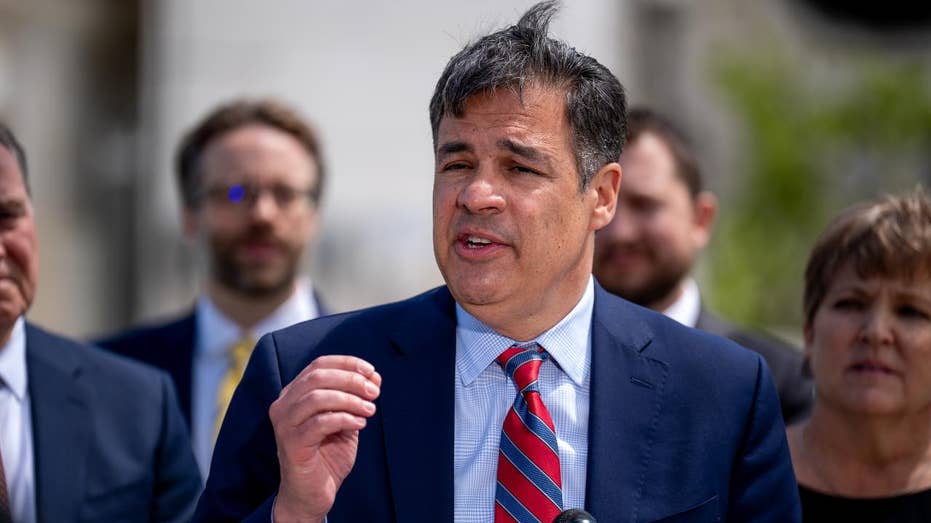
FIRST ON FOX: A group of attorneys general across the country are demanding that the nation’s leading pediatric organization rescind its support for transgender procedures – such as puberty blockers and surgeries – on children. Idaho Attorney General Raúl Labrador sent a letter Tuesday to the American Academy of Pediatrics (AAP) accusing the organization of abandoning “its commitment to sound medical judgment.” “That halt on what is fairly described as medical experimentation on children is long overdue – particularly since the majority of children initially diagnosed with gender dysphoria desist and ‘grow out’ of the condition by the time they are adolescents or adults,” the letter reads. “It is abusive to treat a child with biologically altering drugs that have an unknown physiological trajectory and end point. It is also inhumane to endorse such experimentation without a confident safety profile, especially if more times than not, it proves to be medically unnecessary.” BIDEN SLAMMED ON SOCIAL MEDIA AFTER ANNOUNCING TRANSGENDER DAY OF VISIBILITY ON EASTER SUNDAY “And yet, the AAP continues to authoritatively declare that puberty blockers are ‘reversible,’” the letter continued. “That claim is scientifically unsupported and contradicts what is medically known. And because that claim raises questions under most state consumer protection laws, it has the undersigned alarmed.” Last year, the AAP recommitted its pledge to support “gender-affirming care” and expanded its guidelines for pediatricians to “ensure young people get the reproductive and gender-affirming care they need and are seen, heard and valued as they are,” AAP CEO Mark Del Monte said at the time. AAP has published several reports on reaffirming transgender youth in their preferred gender identities. In January, the AAP published a report titled, “Prohibition of Gender-Affirming Care as a Form of Child Maltreatment: Reframing the Discussion,” which claimed many bills aimed at restricting transgender treatments for children lead to poor mental health. BIDEN OFFICIALS PUSHED TO DROP AGE LIMIT ON TRANS SURGERIES FOR MINORS: REPORT “Ultimately, the AAP’s statements and guidance affect how physicians practice medicine and treat children. Because providers rely on the AAP when they make treatment decisions, parents and their children are harmed by the AAP’s misleading and deceptive claim,” the letter read. “When pediatricians are told by the AAP that treating children with puberty blockers is ‘reversible,’ that claim becomes part of the medical discussion and decision-making with parents and children.” Attorneys general from Alabama, Arkansas, Florida, Georgia, Idaho, Iowa, Kansas, Louisiana, Mississippi, Missouri, Montana, Nebraska, North Dakota, Ohio, South Carolina, South Dakota, Texas and Utah signed the letter, as well as the president of the Arizona Senate and the speaker of the Arizona state House of Representatives. INDIANA JUDGE RULES PRISON MUST PROVIDE TRANSGENDER SURGERY FOR INMATE WHO KILLED BABY “Children with gender dysphoria need and deserve love, support, and medical care rooted in biological reality,” Labrador told Fox News Digital in a statement. “Parents should be able to trust that a doctor’s medical guidance isn’t just the latest talking point from a dangerous and discredited activist agenda.” The letter comes as transgender surgeries for kids has become a cultural issue in the 2024 election. And according to unsealed documents published over the summer, health officials in the Biden administration successfully pressured the World Professional Association for Transgender Health (WPATH) to omit the age limit in its guidelines for transgender surgical procedures for adolescents. Fox News Digital has reached out to AAP for comment.
Biden defends withdrawing from Afghanistan, dropping re-election bid in last UN address as president
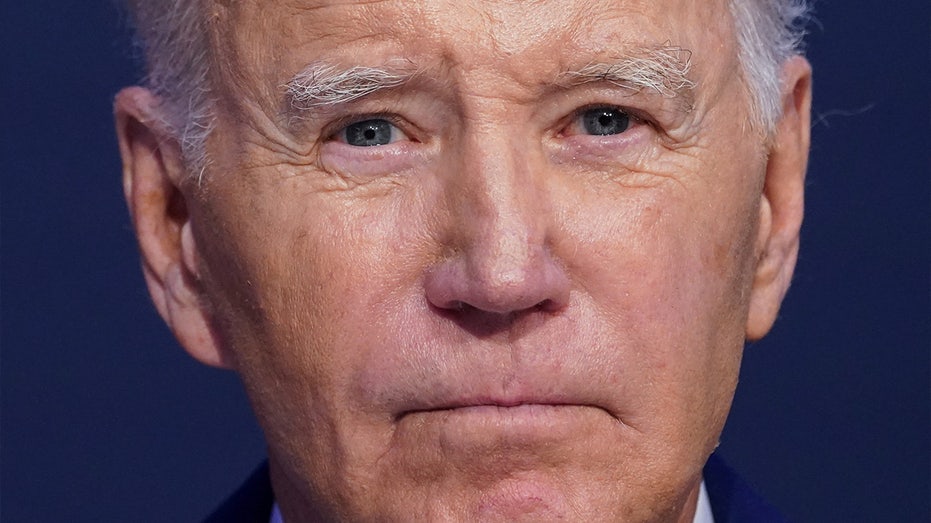
NEW YORK CITY — President Biden, in his final address to the United Nation’s General Assembly, warned that the world is at an “inflection point,” while defending his decision to withdraw from Afghanistan and his move to suspend his re-election campaign. Biden delivered his fourth and final speech to the assembly as President of the United States on Tuesday, addressing leaders and representatives from 134 countries around the globe. “Today is the fourth time I’ve had the great honor of speaking to this assembly as President of the United States,” Biden said Tuesday morning. “It’ll be my last.” Biden reflected on the global order when he was first elected as a U.S. senator in 1972, saying the world was at “an inflection point” and a “moment of tension and uncertainty.” BIDEN ADDRESSES UN GENERAL ASSEMBLY FOR LAST TIME AS DICTATORS, DESPOTS COME TO NEW YORK “The world was divided by the Cold War; the Middle East was headed toward war; America was at war in Vietnam at that point — the longest war in America’s history,” Biden said. “Our country was divided and angry, and there were questions about our staying power and our future. But even then, I entered public life not out of despair, but out of optimism.” Biden said when he was elected president, the world was in “another moment of crisis and uncertainty,” referring to the ongoing U.S. presence in Afghanistan. “We were attacked on 9/11 by Al-Qaeda and Osama bin Laden. We brought him justice. Then I came to the presidency in another moment of crisis and uncertainty,” Biden said. “I believed America had to look forward — new challenges, new threats, new opportunities were in front of us.” Biden said he needed to put the United States “in a position to see the threats, to deal with the challenges, and to seize the opportunities as well.” “We needed to end the war that began on 9/11,” Biden said. “I came to office as president, with Afghanistan to replace Vietnam as America’s longest war.” “I was determined to end it,” he said. “And I did.” Biden said it was a “hard decision but the right decision.” “Four American presidents had faced that decision, but I was determined not to leave it to a fifth,” Biden said, while acknowledging the decision was “accompanied by tragedy,” as 13 U.S. service members lost their lives, along with hundreds of Afghan civilians in a suicide bombing outside of Kabul Airport during the withdrawal. But under the Biden-Harris administration, officials have sought diplomacy amid global instability and fears of a growing war in the Middle East, especially following its botched withdrawal from Afghanistan, the years-long Russia-Ukraine war, the growing threat from Iran’s nuclear development, increased aggression from China, and a crisis at the U.S. southern border. “I truly believe we’re at another inflection point in world history, where the choices we make today will determine our future for decades to come,” Biden said Tuesday. “We stand behind the principles that unite us; we stand firm against aggression; we end the conflicts that are raging today. We take on global challenges like climate change, hunger and disease.” Also under his administration, in 2022, Russian President Vladimir Putin invaded Ukraine. “The good news is Putin’s war has failed,” Biden said, while adding though, that the world “cannot grow weary” and “cannot look away” or “let up on our support for Ukraine.” As for increasing aggression in China, Biden said there is a need to continue to “responsibly manage the competition with China so it does not veer into conflict.” Biden stressed that he is working to “bring a greater measure of peace and stability to the Middle East.” “The world must not flinch from the horrors of October 7th – any country would have the right responsibility to ensure that such attack can never happen again,” Biden said, referring to Hamas’ brutal terror attack in Israel. “Thousands of armed Hamas terrorists invaded a sovereign state, slaughtering and massacring more than 1200 people, including 46 Americans in their homes and at a music festival, the despicable acts of sexual violence, 250 innocents taken hostage.” Biden said he has met with the families of those hostages. “I grieve with them,” he said. “They’re going through hell.” UN CHIEF DEFENDS UNRWA, SAYS ONLY ‘A FEW ELEMENTS’ PARTICIPATED IN OCT 7 But Biden said, “Innocent civilians in Gaza are also going through hell.” Biden pointed to the ceasefire and hostage deal his administration has worked on with Qatar and Egypt. “Now it is time for the parties to finalize terms, bring the hostages home, secure Israel and Gaza free of Hamas’ grip, ease the suffering in Gaza and end this war,” he said. Biden stressed that his administration has been “determined to prevent a wider war that engulfs the entire region.” “A full scale war is not in anyone’s interest,” he said. “Even as the situation has escalated, a diplomatic solution is still possible.” “In fact, it remains the only path to lasting security,” Biden continued, so that “the residents from both countries return to their homes.” “That’s what we’re working tirelessly to achieve,” Biden said. But as for the war in Gaza, Biden, notably, did not mention rising antisemitism in the United States and around the globe since the Oct. 7 attacks, but instead, discussed the “rise of violence against innocent Palestinians on the West Bank.” Biden said the world needs to work towards “a two-state solution where the world—where Israel enjoys security and peace and full recognition and normalize relations with all its neighbors; and with Palestinians, living securely with dignity and self-determination in a state of their own.” Meanwhile, Biden declared the need to continue to ensure Iran will “never obtain a nuclear weapon.” As he closed his, likely, final address to the world, Biden said he and world leaders “must never forget who we’re here to represent–We the people.” UN’S ‘PACT FOR THE FUTURE’ FULL OF EMPTY PROMISES, WILL BE ‘CUDGEL’ TO
Biden warns in final UN General Assembly address the world is at an ‘inflection point’
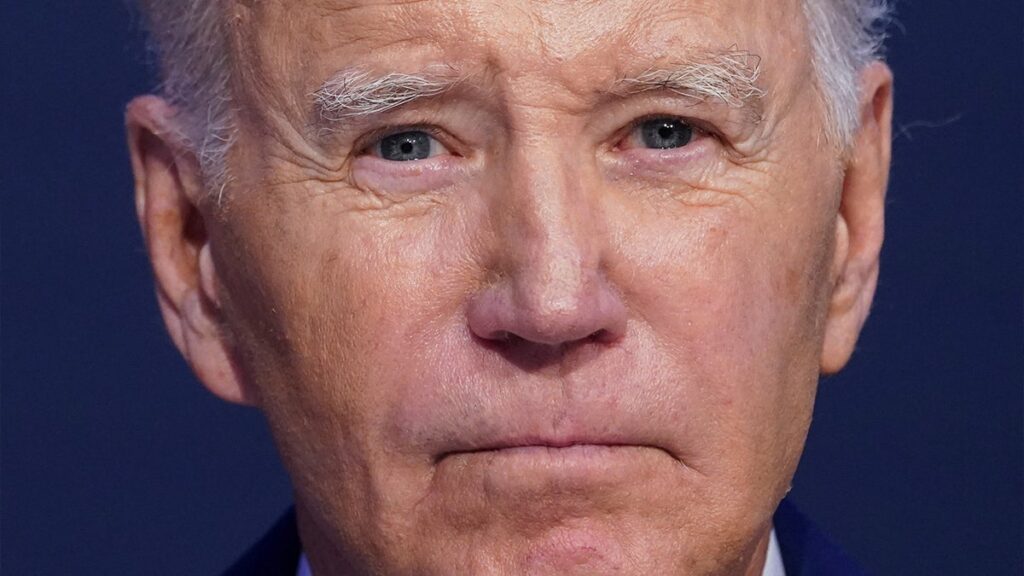
NEW YORK CITY — President Biden, in his final address to the United Nation’s General Assembly, warned that the world is at an “inflection point,” while maintaining U.S. support for Ukraine; Israel’s right to defend itself; and declaring Palestinians should be able to live “in a state of their own.” Biden delivered his fourth and final speech to the assembly as President of the United States on Tuesday, addressing leaders and representatives from 134 countries around the globe. “Today is the fourth time I’ve had the great honor of speaking to this assembly as President of the United States,” Biden said Tuesday morning. “It’ll be my last.” Biden reflected on the global order when he was first elected as a U.S. senator in 1972, saying the world was at “an inflection point” and a “moment of tension and uncertainty.” “The world was divided by the Cold War; the Middle East was headed toward war; America was at war in Vietnam at that point — the longest war in America’s history,” Biden said. “Our country was divided and angry, and there were questions about our staying power and our future. But even then, I entered public life not out of despair, but out of optimism.” Biden said when he was elected president, the world was in “another moment of crisis and uncertainty.” But under the Biden-Harris administration, officials have sought diplomacy amid global instability and fears of a growing war in the Middle East, especially following its botched withdrawal from Afghanistan, the years-long Russia-Ukraine war, the growing threat from Iran’s nuclear development, increased aggression from China, and a crisis at the U.S. southern border. “I truly believe we’re at another inflection point in world history, where the choices we make today will determine our future for decades to come,” Biden said Tuesday. “We stand behind the principles that unite us; we stand firm against aggression; we end the conflicts that are raging today. We take on global challenges like climate change, hunger and disease.” “Putin’s war has failed,” Biden said. Biden stressed that the world “cannot grow weary” and “cannot look away” or “let up on our support for Ukraine.” “We need to uphold our principles as we seek to responsibly manage the competition with China so it does not veer into conflict,” he said. Biden stressed that he is working to “bring greater measure of peace and stability to the Middle East.” “The world must not flinch from the horrors of October 7th – any country would have the right responsibility to ensure that such attack can never happen again,” Biden said, referring to Hamas’ brutal terror attack in Israel. “Thousands of armed Hamas terrorists invaded a sovereign state, slaughtering and massacring more than 1200 people, including 46 Americans in their homes and at a music festival, the despicable acts of sexual violence, 250 innocents taken hostage.” Biden said he has met with the families of those hostages. “I grieve with them,” he said. “They’re going through hell.” But Biden said, “Innocent civilians in Gaza are also going through hell.” Biden pointed to the ceasefire and hostage deal his administration has worked on with Qatar and Egypt. “Now it is time for the parties to finalize terms, bring the hostages home, secure Israel and Gaza free of Hamas’ grip, ease the suffering in Gaza and end this war,” he said. Biden stressed that his administration has been “determined to prevent a wider war that engulfs the entire region.” “A full scale war is not in anyone’s interest,” he said. “Even as the situation has escalated, a diplomatic solution is still possible.” “In fact, it remains the only path to lasting security,” Biden continued, so that “the residents from both countries return to their homes.” “That’s what we’re working tirelessly to achieve,” Biden said. But as for the war in Gaza, Biden, notably, did not mention rising antisemitism in the United States and around the globe since the Oct. 7 attacks, but instead, discussed the “rise of violence against innocent Palestinians on the West Bank.” Biden said the world needs to work towards “a two-state solution where the world—where Israel enjoys security and peace and full recognition and normalize relations with all its neighbors; and with Palestinians, living securely with dignity and self-determiniation in a state of their own.” Meanwhile, Biden declared the need to continue to ensure Iran will “never obtain a nuclear weapon.” This is a developing story. Please check back for updates.
Early mail-in voting data signals good news for GOP, Trump: expert

Vote-by-mail data in three key states shows the edge Democrats enjoyed in 2020 has plummeted, something one expert said is a great sign for Republicans and former President Donald Trump. “It’s great news that Republicans are starting to early vote,” Jimmy Keady, the founder and president of JLK Political Strategies, a Republican consulting firm, told Fox News Digital. The comments come as the Democratic edge in vote-by-mail requests has shrunk significantly in Florida, North Carolina and Pennsylvania, according to data by Decision Desk HQ, signaling a shift in voter habits that have defined the last two elections. FIRST ON FOX: HARRIS AIMS TO TROLL TRUMP – AGAIN – OVER CROWD SIZES According to the data, the Democratic lead in vote-by-mail requests has shrunk by over 5% in Florida, nearly 15% in North Carolina and over 35% in Pennsylvania. Getting voters out to early in-person voting or to vote by mail can free up resources for campaigns, Keady said, allowing them to focus their attention on lower propensity voters who often play a big role in deciding elections. “I’m sure voters complain all the time about text messages, about getting mail, about getting robocalls to go vote,” Keady said. “Campaigns are now sophisticated enough that once you go vote, those stop… once a voter goes to vote, and those stop, that allows resource allocation from that voter to another voter.” Getting those lower propensity voters out could play a huge role in states like Pennsylvania and North Carolina, which are both expected to once again be swing states with razor-tight margins. WHAT THE LATEST FOX NEWS POWER RANKING IN THE PRESIDENTIAL RACE SHOW Vice President Kamala Harris holds a lead of less than a point in Pennsylvania, while Trump holds a similarly sized lead in North Carolina, according to the Real Clear Politics polling average, meaning the ground game to turn out voters on each side could be the deciding factor in the election. The Democratic advantage in mail-in and early voting very well might have been the difference in the 2020 election, but Keady sees shifting momentum for the GOP on that front in 2024. “It definitely signals that A, there’s turnout… but B, also that the base has adopted, kind of being able to accept that early voting is a proper and mostly secure way to vote,” Keady said. That will help Republicans compete with Democrats in an area the party was at a decided disadvantage in 2020, Keady noted, something that could swing another close election in the GOP’s favor. “As Republicans, we have to start getting the base to early vote, to do mail-in ballot, to do these things that we know are safe and secure, to get people out to the polls,” The Democrats have done this really well, for years.” Get the latest updates from the 2024 campaign trail, exclusive interviews and more at our Fox News Digital election hub.
Mumbai Metro Aqua Line 3: First phase of Mumbai’s underground metro likely to be inaugurated in…; check speed, fare

The first phase includes a 12.5 km stretch between Aarey Colony and BKC, which is a part of the 33.5 km Colaba-Seepz-Aarey Metro Line 3.
Who is Pakistan’s new spy chief Asim Malik?
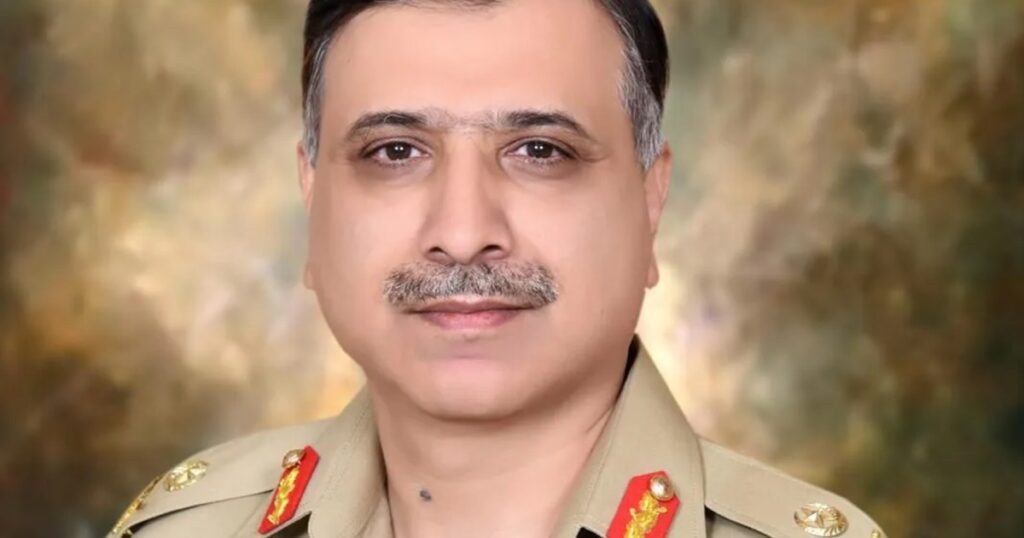
Islamabad, Pakistan – Pakistan’s military has announced the appointment of Lieutenant General Asim Malik as the new head of the country’s premier intelligence agency, the Directorate of Inter-Services Intelligence (ISI). Malik will assume his role on September 30. Before this appointment, he served as the adjutant general (AG) at the army’s general headquarters, overseeing military administrative affairs, including legal and disciplinary matters, for the past three years. The ISI chief is often seen as the second-most powerful person in the military after the Chief of Army Staff — in a country where the military is the most powerful institution. The outgoing ISI chief, General Nadeem Anjum, took office in November 2021 under then-Prime Minister Imran Khan. His tenure, extended by a year in September 2022, coincided with significant political upheaval, including Khan’s ouster through a parliamentary vote of no confidence in April 2022 – a move Khan attributed to military interference, a charge that the military has consistently rejected. Malik, a highly decorated officer who enjoys goodwill within Pakistan’s close-knit military community, has not been immune from that tumult either. Who is Asim Malik, the new ISI chief? Malik, 59, has no direct experience in intelligence-related postings but has commanded infantry divisions in Balochistan and an infantry brigade in South Waziristan, areas that have been hotbeds of violence for nearly two decades. He has also served as an instructor at Pakistan’s National Defence University and the Command and Staff College in Quetta. A top-performing cadet during his training, Malik is the son of Ghulam Muhammad Malik, who was a three-star general in the 1990s and held prominent positions during his career. Asim Malik is a graduate of the Royal College of Defence Studies in London and Fort Leavenworth in the United States, where he wrote a thesis on mountain warfare. Retired Lieutenant General Naeem Khalid Lodhi, who served with Malik’s father, describes the incoming spy chief as a quiet yet highly respected officer. “Even as the AG, he did substantial work for the welfare of retired soldiers, particularly concerning pensions and other related issues,” Lodhi told Al Jazeera. He said Malik is credited with resolving concerns over delays in pensions and the medical treatment of veterans during his time as AG. However, Malik’s tenure as AG also coincided with a crackdown on former PM Khan and his Pakistan Tehreek-e-Insaf (PTI) party, leading to the arrest of numerous party supporters and leaders. After Khan was detained briefly on May 9 last year, many PTI supporters went on a rampage and damaged public property and military installations. Thousands were arrested, and just about 100 individuals faced military trials under the supervision of the AG. Last year, the army also announced prison sentences for two retired officers – a major and a captain – on charges of “inciting sedition” after court-martial proceedings. In August, former ISI chief General Faiz Hameed, along with three other former military officials, was also arrested for court-martial proceedings. A former colleague of Malik, a retired general, says his appointment reflects the trust placed in him by General Asim Munir, the current army chief. “In normal circumstances, with his career trajectory, Malik would have been given command of a corps. But with less than 20 months until his retirement, that’s unlikely. His appointment to the ISI underscores the strong confidence Munir has in him,” the former general said, requesting anonymity due to his familiarity with Malik. However, he also acknowledged that the roles of AG and ISI chief come with inherent controversies and that, in many ways, Malik must now in his new job be willing to do the dirty tricks his current role would have needed him to drown upon. “AG’s job is to ensure complete discipline in the institution and to take to task those who fail to uphold it. Whereas in the ISI, the job requires one to undertake unsavoury tasks which are controversial by nature,” he added. “Both these positions contradict each other.” The legacy of the outgoing ISI chief Founded in 1948, the ISI is Pakistan’s equivalent of the CIA in the US, the British MI6 or India’s Research and Analysis Wing (RAW). While the agency officially reports to the prime minister, the army chief recommends the appointment of its head. However, the intelligence agency is also highly controversial, with its critics describing it as a “state within a state”. The Pakistani military itself remains the single most powerful institution in the country, which wields considerable influence on the country’s political and foreign policy sphere, with the ISI often playing the role of enforcer. Anjum’s appointment as ISI chief in November 2021 was contentious, causing a rift between then-army chief General Qamar Javed Bajwa and then-Prime Minister Khan. At the time, General Hameed, now facing a court martial, was the ISI chief, and Khan insisted he should continue in the role. Khan’s critics say Hameed was seen as Khan’s enforcer against his political rivals — a charge the former PM has repeatedly denied. However, critics allege that under Anjum, the ISI continued to act in a manner that could be viewed by some as politically partisan, through its role in the crackdown against Khan’s political party, PTI. “I personally feel that Hameed was the wrong choice to lead ISI, but was brought by Bajwa, then army chief, to do his bidding,” said the former general who was also Malik’s colleague. “However, Anjum’s era saw a doubling down on those policies of repression and surpassed those.” The military and the ISI have consistently denied acting against Khan and his party because of political reasons, arguing that the crackdown against the PTI has been driven by legal considerations alone. What lies ahead for the ISI under Malik? Lodhi said he doubts whether Malik’s appointment could portend major changes in the ISI’s functioning. “The way institutions work, these appointments don’t change direction or policies in a drastic manner,” he said. The former three-star general, also a former war college instructor, echoed this sentiment. “Every new leader brings
Switzerland opens probe into use of suicide booth
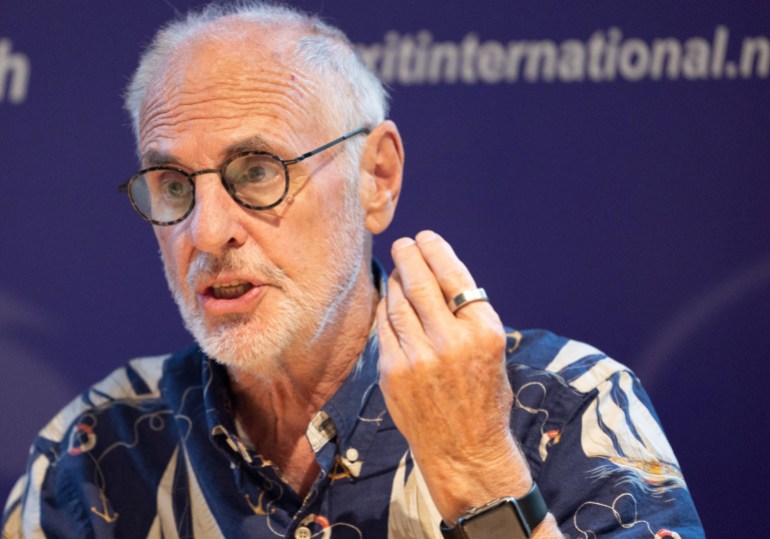
Police have detained several people over the death of a woman in Sarco suicide capsule. Swiss police have launched an investigation after a woman died in a “suicide pod”. Several people have been taken into custody and face criminal charges, the authorities announced on Tuesday. The action came after police learned that the Sarco suicide capsule had been used in a forest area the previous day. Those detained are suspected of “inducement and aiding and abetting suicide,” regional police said in a statement. The Last Resort, an assisted dying group, told AFP news agency that the person who died in the booth was a 64-year-old woman from the United States. She has not been named. Swiss authorities secured the capsule and took the body of the deceased for an autopsy, according to police. No going back The controversial Sarco suicide capsule was developed by the Netherlands-based assisted suicide group Exit International. First unveiled in 2019, the portable, human-sized, sealed pod allows those wishing to die to press a button. The oxygen inside it is then replaced with nitrogen, causing death by hypoxia. No medical supervision is needed. “Once the button is pressed, the amount of oxygen in the air plummets from 21 percent to 0.05 percent in less than 30 seconds,” according to Exit International’s director Philip Nitschke. “Within two breaths of air of that low level of oxygen, they will start to feel disorientated, uncoordinated and slightly euphoric before losing consciousness,” said the former physician from Australia who invented the capsule. “They will then stay in that state of unconsciousness for … around about five minutes before death will take place,” he added. As for someone changing their mind at the very last minute, Nitschke said: “Once you press that button, there’s no way of going back.” Exit International Director Philip Nitschke attends a presentation of the Sarco suicide machine in Zurich, Switzerland, on July 17 [Denis Balibouse/Reuters] Legal questions The capsule has raised a host of legal and ethical questions in Switzerland. Active euthanasia is illegal in the country, but assisted dying has been allowed for decades as long as the person takes their life with no “external assistance” and those who help the person die do not do so for “any self-serving motive,” according to a government website. Switzerland’s interior minister has said the “Sarco” pod does not comply with Swiss law. “Firstly, it does not meet the requirements of product safety law and therefore cannot be placed on the market. Secondly, the corresponding use of nitrogen is not compatible with the purpose article of the chemicals act,” Elisabeth Baume-Schneider said in a parliamentary session on Monday. In July, Swiss newspaper Blick reported that Peter Sticher, a state prosecutor in Schaffhausen, wrote to Exit International’s lawyers saying any operator of the suicide capsule could face criminal proceedings if it was used there. Any conviction could trigger a sentence of up to five years in prison. Adblock test (Why?)