

‘Stopped road works, medicines, garbage collection….’: Delhi CM Atishi hits out at BJP, vows to resume all work

AAP leader Atishi was sworn in as Delhi CM earlier today. She further claimed that the BJP had conspired to keep Kejriwal in jail, but the AAP leader did not bow down to BJP.
‘BJP spreading lies, desperate to…’: Rahul Gandhi breaks silence on his Sikh remark in US

The former Congress chief said the BJP was desperate to silence him because they could not stand the truth.
Tirupati laddu row: Temple trust’s big assurance to devotees amid ‘beef tallow’ in prasadam, says ‘divinity, purity of..

The newly-elected Telugu Desam Party (TDP) government accused the previous regime, led by Chief Minister Jagan Mohan Reddy, of allowing such adulteration
Fetterman says Trump has ‘special kind of place’ in PA after assassination attempt

Former President Donald Trump has a “special” connection with the people of Pennsylvania, Democratic Sen. John Fetterman warns. Fetterman made the observation during a conversation with The Atlantic editor-in-chief Jeffrey Goldberg during the 2024 Atlantic Festival on Thursday. “Trump has created a special kind of hold within the coronet he’s remade – the party – and he has a special kind of place in Pennsylvania, and I think that only deepened after the first assassination attempt,” Fetterman said. FETTERMAN REAMS OUT NY TIMES FOR PLATFORMING TERRORIST PROPAGANDA AFTER INTERVIEW WITH SENIOR HAMAS OFFICIAL A deranged gunman attempted to assassinate Trump at a rally in Butler, Pennsylvania, in July. The shooting, which Trump miraculously survived with only a wound on the side of his head, sharpened support among his die-hard base. “I also want people to understand, you know, and it’s not science, but there is, there’s energy and there are kinds of anger on the ground in Pennsylvania — and people are very committed and strong,” Fetterman said Thursday. “And I joked that his signs became like the state flower – and you see that everywhere.” However — after President Biden’s withdrawal from the race and Vice President Kamala Harris’ rapid ascension as the Democratic presidential nominee, polls indicate she holds a slight lead over Trump in the Keystone State. FETTERMAN SETS POLITICS ASIDE AFTER TRUMP ASSASSINATION ATTEMPT, SAYS US MUST ‘TURN DOWN … THE TEMPERATURE’ A Thursday poll from the Washington Post had Harris at 48% support among likely and registered voters, while Trump sits at 47%. A New York Times poll gave Harris a slightly larger lead, with the vice president sitting at 50% compared to Trump’s 46%. Fetterman expressed skepticism of Harris’ reported lead in Pennsylvania on Thursday, comparing the situation to former Secretary of State Hillary Clinton’s seven-point lead in Pennsylvania that ultimately collapsed on Election Day during her failed 2016 presidential bid. “Everybody thought that it was in the bag, but that’s not the energy and the other kinds of things that were really consistent with what I’m witnessing all across,” Fetterman recalled. “And then, sadly, we saw what happened.” “People understand who he is and what he’s about, and enough people think that that’s the feature, and it’s not a bug,” he added.
AAP’s Atishi takes oath as Delhi Chief Minister, succeeds Arvind Kejriwal

AAP’s Atishi takes oath as Delhi Chief Minister, succeeds Arvind Kejriwal
Air Marshal Amar Preet Singh to take over as new Air Force chief; all you need to know

Singh has been recognized for his distinguished service, receiving the Ati Vishisht Seva Medal in 2019 and the Param Vishisht Seva Medal in 2023.
‘They would not dare…’: Union Minister Amit Shah claims there is peace along borders in J-K because Pakistan fears..
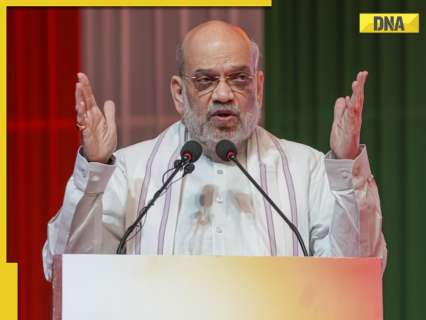
Amit Shah lauded the BJP-led Centre for wiping out terrorism by replacing guns and stones in the hands of youngsters with laptops and said his government would not allow guns to resonate in the hills of Jammu region.
Absentee voting kicks off in Delaware, Indiana, New Jersey, Oklahoma, Rhode Island, Tennessee and Vermont

Election season is ramping up, with absentee voting beginning Saturday in seven more states – Delaware, Indiana, New Jersey, Oklahoma, Rhode Island, Tennessee and Vermont. That means voting is now underway in over a dozen states, including Wisconsin, Minnesota, and Virginia. States starting their early voting Saturday are not competitive at the presidential level, but there are two competitive House races among them: This is a guide to registration and early voting. For comprehensive and up-to-date information on voter eligibility, processes, and deadlines, please go to Vote.gov and the election website for Delaware. Absentee voting is kicking off Saturday in Delaware, The Associated Press reports. Absentee ballots are available to all voters in the state of Delaware. Absentee ballots must be received by the Department of Elections Office of the voter’s county by 8 p.m. on Election Day. Early in-person voting is available at designated sites in each county from Oct. 25 to Nov. 3. Delaware residents can register to vote via writing, in-person, or through the state government’s online portal. The voter registration deadline is the 4th Saturday before the election. This is a guide to registration and early voting. For comprehensive and up-to-date information on voter eligibility, processes, and deadlines, please go to Vote.gov and the election website for Indiana. Indiana is beginning to send out absentee ballots to voters who have applied Saturday. To vote absentee by mail, the application must be received 12 days before Election Day by 11:59 p.m. Individuals who intend to cast absentee ballots by mail must have a reason to request a vote-by-mail ballot. These reasons include disability, reasonable expectation for absence from the county, work obligations and more. All senior citizens 65 years of age and older qualify for absentee vote-by-mail ballots. In-person absentee voting is available to all for 28 days before the election, ending at noon on the day before Election Day. Additionally, in-person absentee voting is available on the two Saturdays immediately preceding the election. Voter registration forms must be completed and returned to county registration offices on or before Oct. 7. This is a guide to registration and early voting. For comprehensive and up-to-date information on voter eligibility, processes, and deadlines, please go to Vote.gov and the election website for New Jersey. Mail-in voting begins on Sept. 21 as ballots are mailed to voters who have applied with their county clerk. Voters can cast ballots by mail if postmarked by 8 p.m. on Election Day. Ballots must be received by the county Board of Elections on or before the sixth day after the polls close. Voters will be able to cast an early ballot in-person from Oct. 26 to Nov. 3. The voter registration deadline is Oct. 15. This is a guide to registration and early voting. For comprehensive and up-to-date information on voter eligibility, processes, and deadlines, please go to Vote.gov and the election website for Oklahoma. Any registered voter in Oklahoma is allowed to request an absentee ballot, until the deadline of Oct. 21. Absentee ballots must be received by 5 p.m. on the third Monday preceding the election (15 days). Early voting is available to all Oklahoma voters and no excuse is needed. Voters can cast their ballots early from Oct. 30 to Nov. 2. The voter registration is Oct. 11. Voters are able to register online, by mail, or in-person. This is a guide to registration and early voting. For comprehensive and up-to-date information on voter eligibility, processes, and deadlines, please go to Vote.gov and the election website for Rhode Island. Rhode Island voters who cannot or prefer not to cast their ballot at the polls on Election Day are allowed to vote by mail. Mail-in ballots can be requested online or via writing. Mail ballots must arrive by 8 p.m. on Election Day. Rhode Island voters can cast early ballots in-person during the 20 days leading up to Election Day, Oct. 16 to Nov. 4. Voters must be registered 30 days before the election to cast their ballots in Rhode Island. Same day registration is available, but such voters will only be able to cast ballots for president and vice-president, not down-ballot candidates. This is a guide to registration and early voting. For comprehensive and up-to-date information on voter eligibility, processes, and deadlines, please go to Vote.gov and the election website for Texas. Absentee ballots begin to be mailed in Tennessee by Sept. 21, according to the AP. To vote absentee in Tennessee requires an excuse. In-person early voting runs from Oct. 16 to Oct. 31. The deadline for voter registration in Tennessee is Oct. 7. This is a guide to registration and early voting. For comprehensive and up-to-date information on voter eligibility, processes, and deadlines, please go to Vote.gov and the election website for Vermont. Absentee ballots begin to be sent to military and overseas voters on Sept. 21. Mailing of ballots to all active voters begins Sept. 23. Early voters can apply for an early voter absentee ballot by telephone, in-person or in writing. Authorized family members may also apply on an individual’s behalf. Early voter absentee ballots must be submitted by 5 p.m. on Nov. 4. Individuals in Vermont can register online, via paper application or at their local clerk’s office.
Why Scott Perry, brigadier general, ultimately resigned: the Army’s woke agenda betrayed his core values

After nearly four decades of military service, it was one small task that pushed Rep. Scott Perry, R-Pa., to the brink and brought an abrupt end to a long, successful career. “I kind of slowly saw it coming,” the Pennsylvania Republican told Fox News Digital in an interview. He was talking about a trend toward progressivism that he saw as antithetical to a military that was designed to strip soldiers of their individual wants and needs and rebuild them into one fighting force. “The culminating point for me is when my boss came to me and said, ‘You’re going to be in charge of enforcing the gender reassignment policy in the command,’” he said. “The military is an organization where you take orders,” Perry said. “So, I decided that that was an order I wasn’t willing to take. And so I told my boss that I was going to be retiring. “At that point, the military no longer reflected my value, sad to say, and I just didn’t want to be a part of it… Kind of the low point for me about what I was doing there, why I was there.” In another instance, Perry, a member of the Foreign Affairs and Intel Committee, said he was given a sheet on which to rate his fellow officers’ performance. NAVY PREPARES FOR CHINA CONFLICT WITH NEWLY ANNOUNCED STRATEGY “Over the course of my tenure, it came to a point where you had room for about one sentence to talk about the officers’ war-fighting functions, because the whole rest of the space was filled up with things like, ‘Don’t Ask, Don’t Tell,’ sexual harassment, equal opportunity,” he explained. “The military is designed to be lethal, and it’s about lethality and readiness. And it was clear to me that we had long since left that focus.” Perry, 62, retired from the Army National Guard in 2019 as a brigadier general after 39 years of service. A fighter pilot by craft, he’d commanded units through deployments to Bosnia and Herzegovina and in Iraq. He was elected to the House of Representatives in 2013. The congressman said he believes he is not unique in leaving due to a politically charged environment. “Many, many good members were just leaving because they no longer, I think, felt like the military reflected their values,” Perry said. Recruitment issues in recent years have led to the smallest U.S. fighting force since before World War II. “They act like they don’t know what the problem is, but to me, it’s as clear as the nose on my face,” he said. “For a lot of people, the military was the great equalizer of societal differences.” This week was the House’s “woke week,” where Republicans passed party-line messaging bills that would root out such ideologies within corporations and industries. It came amid a failed continuing resolution (CR) that left no clear path forward to funding the government beyond Sept. 30. Military leaders have warned against any CR, or legislation to extend government funding at current levels for a set amount of time, that would delay boosting the military budget for the next fiscal year. They have warned that a government shutdown would “devastate” readiness and Congress must quickly pass legislation that grows its spending capabilities. “The same military leaders that act like that they can’t sustain some operation throughout a temporary impasse here in Congress are the same ones that say we’ve got to keep on spending this inordinate amount of money on systems that simply fail to produce,” Perry griped. HARROWING FOOTAGE SHOWS US TROOPS BEING FIRED AT OVERSEAS Congress regularly offers the Department of Defense more money than it asks for — in June, the House passed a National Defense Authorization Act (NDAA) that would pave the way for Pentagon funding to stand at $851 billion in fiscal year 2025, after a DoD request of $849.8 billion. “Anybody that’s worn the uniform has seen the horrific ways — I’ve been in places where we’re throwing connexes of new equipment out. The American taxpayer wants to support their members that wear the uniform and potentially sacrifice their life, but I think that the military as an organization has been willing to abuse that privilege,” said Perry. The Pentagon’s top testing office, the Director, Operational Test & Evaluation, released a report earlier this year that found that less than a third of the nation’s F-35 jets are ready for combat at any given moment. “What is the cost of that? I would like to see our military leaders address those kinds of things,” said Perry. “The same people that say that our national debt is one of our biggest national security issues… they say you deal with it, but it can’t affect us.” “You know guys wearing flip-flops, using motorboats or whooping our tail in the Gulf of Aden,” said Perry, “So with all due respect, when you can buy a $10,000 drone, and we’ve got to service that with a $25,000 missile, something isn’t adding up here to me.”
Earth to get a mini-moon for two months, but what is it?
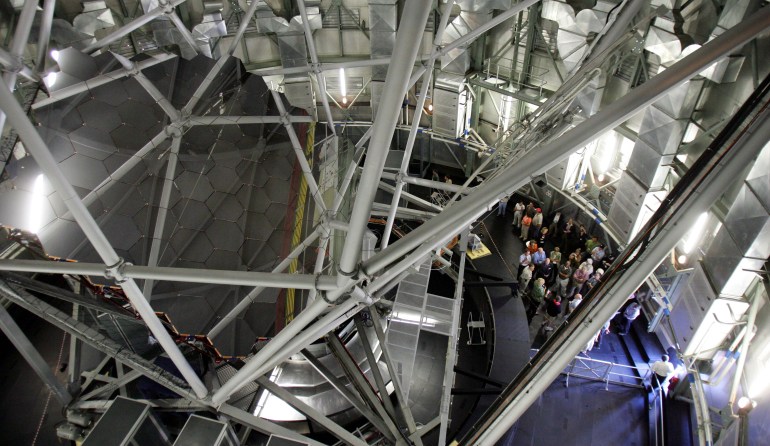
From late September until late November this year, a “mini-moon”, called 2024 PT5 by the astrologers who spotted it approaching will be orbiting the planet. Although this mini-moon cannot be seen by the naked eye – it is just 10 metres (33ft) in diameter – it can be viewed through a high-powered telescope. Mini-moons are asteroids which have been pulled by the Earth’s gravity into orbit around the planet and remain there until they become dislodged and move away again. The length of time these mini-moons remain in orbit depends on the speed and trajectory with which they approach the Earth. Most mini-moons that enter Earth’s orbit are hard to see because they are too small and not bright enough to be seen against the backdrop of the darkness of space. What, exactly, is a mini-moon? Mini-moons are extremely rare. Asteroids are usually pulled into Earth’s orbit by the gravity of the planet as rarely as once in 10 to 20 years, but a few more have appeared in recent years. They can remain in the exosphere, which is roughly 10,000km (6,200 miles) above the surface of the Earth. On average, mini-moons remain in Earth’s orbit for anything from a few months to two years with the asteroid eventually breaking away from Earth’s gravitational pull, then moving back into space to resume a trajectory away from the planet. Similar to other rocky bodies in space, mini-moons can be composed of a mixture of metallic substances, carbon, clay and silicate material. According to a 2018 mini-moons study published in the Swiss journal, Frontiers in Astronomy and Space Sciences, most mini-moons come towards Earth from the asteroid belt between Mars and Jupiter. Unlike Earth’s permanent moon, mini-moons do not have stable orbits. Instead, they embark on a “horseshoe” orbit path as a result of the asteroids being constantly pulled forwards and backwards by the gravity of Earth. [embedded content] This orbital instability allows the asteroids to gradually move farther away from Earth’s gravitational pull. Once the mini-moon has escaped Earth’s gravitational pull, it is released back into space. Although mini-moons are usually rare, several have been identified within Earth’s orbit since 2006. In that year, 2006 RH120, the Earth’s first confirmed mini-moon with a diameter of about 2 to 4 metres was captured in Earth’s orbit for roughly a year. This was the only mini-moon to have been photographed. The Southern African Large Telescope (SALT) was used to capture the image of it. It was spotted by the Catalina Sky Survey (CSS) which was established by NASA using telescopes near Tucson, Arizona in 1998 to search for “near-Earth objects”. Visitors view the 91 hexagonal mirror segments that make up the array of the Southern African Large Telescope (SALT) near Sutherland in South Africa’s arid Karoo region on November 10, 2005, just months before it captured the first image of a mini-moon in 2006 [Mike Hutchings/Reuters] The 2022 NX1 mini-moon, with a diameter of somewhere between 5 and 15 metres was first seen in 1981, then again in 2022. It is expected to return to Earth’s orbit to take up a horseshoe orbital path again in 2051. What do we know about the latest mini-moon? The asteroid currently approaching the planet is known as 2024 PT5. It was first spotted on August 7 using the NASA-funded Asteroid Terrestrial-impact Last Alert System (ATLAS) located at the Haleakala Observatory on the island of Maui, Hawaii. The system continuously scans the sky while identifying and tracking near-Earth objects that might either pose a threat to the Earth or provide an opportunity to gather significant scientific knowledge. “Every time an object with an orbit so Earthlike is discovered, there is a chance that we are just recovering space debris,” said Raul de la Fuente Marcos, an astronomer at the Complutense University of Madrid and a co-author of the study. However, astronomers from the study have now confirmed that 2024 PT5 is an asteroid. Astronomers have determined that the mini-moon will complete a trajectory around the Earth from September 29 to November 25, before ultimately breaking free from Earth’s gravitational pull before heading into space. Are there other types of moon? Apart from our permanent moon, which can appear in different forms depending on conditions, there are some other types of “moon”. Ghost moons Also known as Kordylewski clouds, ghost moons are concentrations of dust that are typically found in the Lagrangian points in the Earth-moon system. These Lagrangian points, sometimes known as gravitational “sweet spots”, are where the gravitational forces of the Earth and the moon meet, allowing the ghost moon to maintain a stable position. These clouds can measure as much as 100,000km across and were first discovered by Polish astronomer Kazimierz Kordylewski in the 1960s using a technique called polarimetry, measuring the direction of how light waves vibrate. These dust clouds were later confirmed in 2018 by the Royal Astronomical Society. (Al Jazeera) Quasi-moons These moons share an orbit with Earth around the Sun but do not orbit the Earth themselves. Instead, a quasi-moon follows a path around the Sun that closely matches Earth’s orbit, but is not an exact match. In 2016, HO3, a quasi-moon, was discovered by astronomers using the Pan-STARRS 1 telescope in Hawaii. Pan-STARRS (Panoramic Survey Telescope and Rapid Response System) is a project designed to detect near-Earth objects such as asteroids or comets, which come from further afield than the asteroid belt between Mars and Jupiter. 2016 HO3 is between 100 and 300 metres in diameter and, according to scientists, will continue to orbit the Sun for hundreds of years. It is not known how long it has already been orbiting the Sun. Other celestial bodies, such as planets, moons and asteroids, can also be orbited by quasi-moons. Venus, Jupiter, Saturn, Neptune and Pluto all have quasi-moons which will eventually change their paths and leave orbit. Even the asteroid Ceres, currently located in the constellation of Sagittarius and classified as a dwarf planet with a diameter of approximately 940km (about