

‘Maybe the time has come to…’: Pawan Kalyan makes HUGE statement amid Tirupati Laddu row
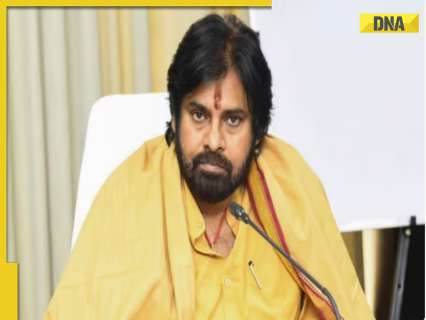
Amid the allegations that animal fat was used in making Laddu Prasadam at Tirupati Balaji temple during the YSRCP regime, Andhra Pradesh Deputy CM Pawan Kalyan has made a huge statement.
Virginia’s in-person early voting begins as election season picks up steam
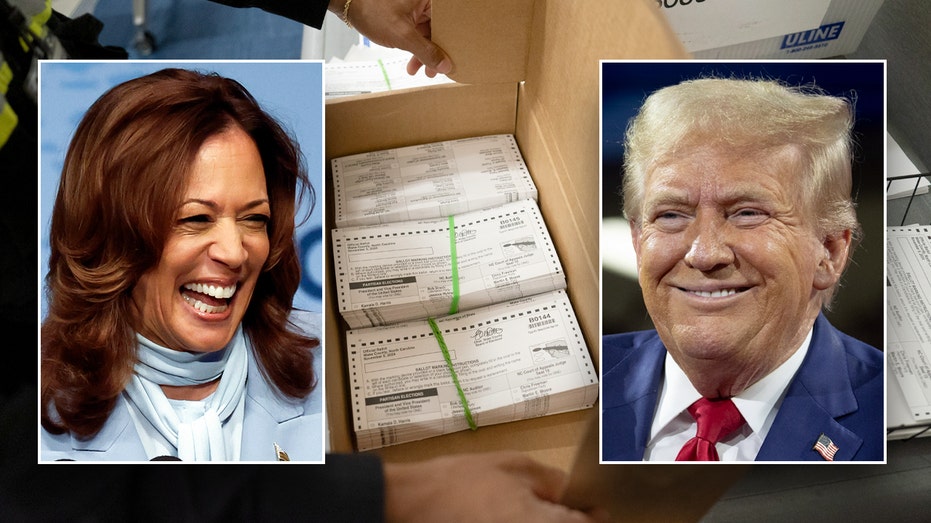
The election season is in full swing Friday as Virginia becomes the first state to allow in-person early voting in the 2024 cycle and six other states – Arkansas, Idaho, Minnesota, South Dakota, West Virginia and Wyoming – make absentee ballots available, some with restrictions. Two competitive states begin voting today, beginning with Minnesota. The midwestern state has voted for Democrats in every election since 1972, but with a higher proportion of White working class voters and deep red rural pockets, the result has remained within competitive margins every cycle. Biden won by about 7 points in 2020. The president’s weaknesses put this state a touch more in play through the middle of the year; the same time the Trump campaign announced they were opening more field offices there. But with Harris reenergizing Democrats and Minnesota’s Tim Walz as her running mate, this state is likely to stay in Democratic hands. DEM LOSES IT ON ‘UNINFORMED’ WORKERS AFTER POWERFUL UNION REFUSES TO ENDORSE VP HARRIS It’s a similar story in Virginia, which is home to heavily populated blue areas in the northeast near DC, and ruby red vote in the southwest. That leaves places like Virginia Beach and Chesterfield as the battlegrounds. Biden won the Old Dominion by just over 10 points in the last election, so it would take a very good night for Republicans to pick this off. This state is Likely D on the Power Rankings. Across the seven states that will begin early voting in some form today, there are only three competitive U.S. Senate, House, or Governor races: This is a guide to registration and early voting. For comprehensive and up-to-date information on voter eligibility, processes, and deadlines, please go to Vote.gov and the election website for Arkansas. Friday is the deadline for Arkansas county clerks to send absentee ballots to U.S. service members and other citizens living abroad who have already applied. Absentee ballots must be mailed to voters with an excuse for not being able to vote in-person no later than Oct. 11. Oct. 29 is the deadline for all absentee ballot applications to be received by county clerks. The ballot must be submitted to the state by Nov. 1 if in-person and by Nov. 5 if by mail. Residents can vote early beginning Oct. 21 at the county clerk’s office. Absentee ballots can be returned in-person through Nov. 1. Oct. 7 is the deadline for Arkansans to register to vote. NEW DOJ GUIDANCE MEANT TO SCARE ELECTION OFFICIALS FROM CLEANING UP VOTER ROLLS, SAYS EXPERT This is a guide to registration and early voting. For comprehensive and up-to-date information on voter eligibility, processes, and deadlines, please go to Vote.gov and the election website for Idaho. Idaho began absentee voting Friday. Applicants do not need to provide an excuse to receive a ballot. The state must receive a ballot application by Oct. 25, and that ballot must be delivered to state officials by Nov. 5. Early in-person voting begins October 21. Absentee ballots can also be submitted in-person through Election Day. See your Idaho’s voting website for more information. Idaho allows residents to register to vote in person at early voting or on Election Day. Online voter registration ends 24 days before Election Day. This is a guide to registration and early voting. For comprehensive and up-to-date information on voter eligibility, processes, and deadlines, please go to Vote.gov and the election website for Minnesota. Minnesota began absentee voting Friday. Applicants do not need to provide an excuse to receive a ballot. The state must receive a ballot application by Nov. 4, and that ballot must be delivered to state officials by Nov. 5. Absentee ballots can be returned in-person through Election Day. Early voting policies vary by location. See your Minnesota’s voting website for more information. Minnesota residents may register to vote online, in-person during early voting or in-person on Election Day. FOX NEWS POLL: VOTERS THINK HARRIS DID BETTER THAN TRUMP IN DEBATE This is a guide to registration and early voting. For comprehensive and up-to-date information on voter eligibility, processes, and deadlines, please go to Vote.gov and the election website for South Dakota. South Dakota began absentee voting Friday. Applicants do not need to provide an excuse to receive a ballot. The county must receive a ballot application by Nov. 4, and that ballot must be delivered to county officials by Nov. 5. Absentee ballots can be returned in-person through Election Day. South Dakota residents need to register to vote by Oct. 21. This is a guide to registration and early voting. For comprehensive and up-to-date information on voter eligibility, processes, and deadlines, please go to Vote.gov and the election website for Virginia. Virginia began absentee voting Friday. Applicants do not need to provide an excuse to receive a ballot. The voter’s county must receive a ballot application by Oct. 25, and that ballot must be submitted by Nov. 5. An emergency absentee ballot may be requested until Nov. 4, but some restrictions apply. Early in-person voting also began Friday, and will continue through Nov. 2. Absentee ballots can be submitted in-person through Election Day. Virginia residents who desire to vote must register by Oct. 15, though they may register until Election Day and vote using a provisional ballot. This is a guide to registration and early voting. For comprehensive and up-to-date information on voter eligibility, processes, and deadlines, please go to Vote.gov and the election website for West Virginia. West Virginia began absentee voting Friday. Applicants will need to provide an excuse to receive a ballot. The county must receive a ballot application by Oct. 30, and that ballot must be submitted by Nov. 5. Early in-person voting begins Oct. 23 and will continue through Nov. 2. Absentee ballots can be submitted in-person through Nov. 4. West Virginians wishing to vote in the general election must register online, by mail or in-person by Oct. 15. This is a guide to registration and early voting. For comprehensive and up-to-date information on voter eligibility, processes, and deadlines, please go to Vote.gov and the election website for Wyoming. Wyoming began absentee voting Friday for U.S. service members or citizens abroad. Absentee voting for others begins Oct. 8, and ballots must be submitted by Nov.
Newsom’s deepfake election laws are already being challenged in federal court
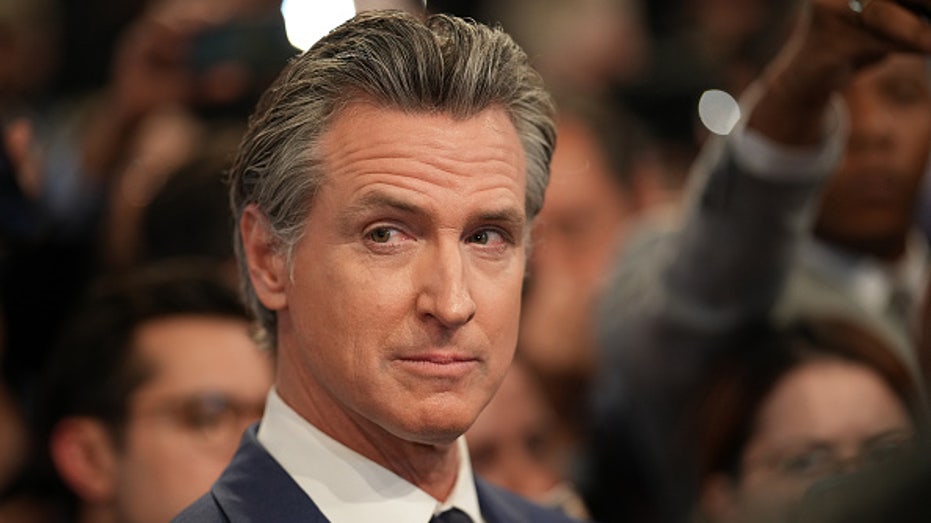
New legislation signed by California Gov. Gavin Newsom regulating AI-generated “deepfake” election content and requiring the removal of “deceptive content” from social media is now being challenged in court. The new laws build on legislation passed years earlier regulating campaign ads and communications, according to the governor’s office. But two of the three new laws are being challenged in the U.S. District Court for the Eastern District of California by a conservative poster – @MrReaganUSA – Fox News Digital has learned. The account had posted an AI-generated parody of a Harris campaign ad that resurfaced and went viral after Newsom signed the bills. “This chills free speech, particularly for political commentators like Mr. Reagan, who use satire to critique public figures and rely on social media viewership for their livelihood,” said the Hamilton Lincoln Law Institute, the public interest firm filing the lawsuit on behalf of @MrReaganUSA, in a news release. WATCH ON FOX NATION: THE ATTEMPTED ASSASSINATIONS OF DONALD TRUMP The legislation, which Newsom’s office says will not ban memes or parodies, will instead require all satire or parody content to either remove their content or display a disclaimer label that the content is digitally altered. One of the laws also exempts “Materially deceptive content that constitutes satire or parody.” But the attorney for the account holder suing California, Theodore Frank, told Fox News Digital in an interview that there’s a provision in one of the laws that would require social media platforms to have “a large censorship apparatus and respond to complaints within 36 hours.” “And what’s going to happen is that social media is just going to ban us so that they don’t have to have a big infrastructure to deal with it. They’re not going to look to see whether something counts as parody,” Frank said. “There’s a provision that allows lawsuits against the makers of the videos, if, unless there are these really burdensome disclosure requirements that basically require you to use the entire screen to have the disclosure and requires them to take down years of videos and spend hours on hours re-cutting them with the disclosure requirements and then having a disclosure that’s louder than the video itself, and that takes away the entire comedic event,” Frank added. The law makes it illegal to create and publish deepfakes ahead of Election Day and 60 days thereafter. It also allows courts to stop distribution of the materials and impose civil penalties, per the Associated Press. NEWSOM, CALIFORNIA BUSINESS GROUP SPAR OVER CONTRASTING JOB NUMBERS AFTER MINIMUM WAGE HIKE X allows parody accounts so long as they distinguish themselves as such “in their account name and in their bio,” per the company’s website. The platform does not have rules around individual posts containing parody and has been known to label deepfakes if the poster does not do so. There are similar laws already in place in Alabama, and Frank said they’re prepared to file suit against those, too. “I don’t think Republicans are immune to over-legislating in this area, but there are certainly other states that are doing this. And you know, I think it depends on who’s in power and who’s getting made fun of,” he said. In a statement provided to Fox News Digital, Newsom spokesperson Izzy Gardon said, “The person who created this misleading deepfake in the middle of an election already labeled the post as a parody on X. Requiring them to use the word ‘parody’ on the actual video avoids further misleading the public as the video is shared across the platform.” “It’s unclear why this conservative activist is suing California. This new disclosure law for election misinformation isn’t any more onerous than laws already passed in other states, including Alabama,” Gardon said. “We’re proud California did expand the law to also include misinformation about election workers for two months after an election — so that malicious actors don’t attempt to disrupt the democratic process.” US STATES LOOKING TO BOOST MINIMUM WAGE TO $20 AS INFLATION ISSUE CONTINUES Newsom has previously condemned such satirical election content generated by AI. In response to the altered election ad of Harris, which Elon Musk reposted, Newsom said in July. “Manipulating a voice in an ‘ad’ like this one should be illegal. I’ll be signing a bill in a matter of weeks to make sure it is.” Fox Business’s Michael Dorgan contributed to this report.
The pager bombings – everyday tech that kills
[unable to retrieve full-text content] Attacks against Hezbollah with booby-trapped pagers and two-way radios, blamed on Israel, are new in scale, not approach
Components for pagers used in Lebanon blasts not from Taiwan, minister says
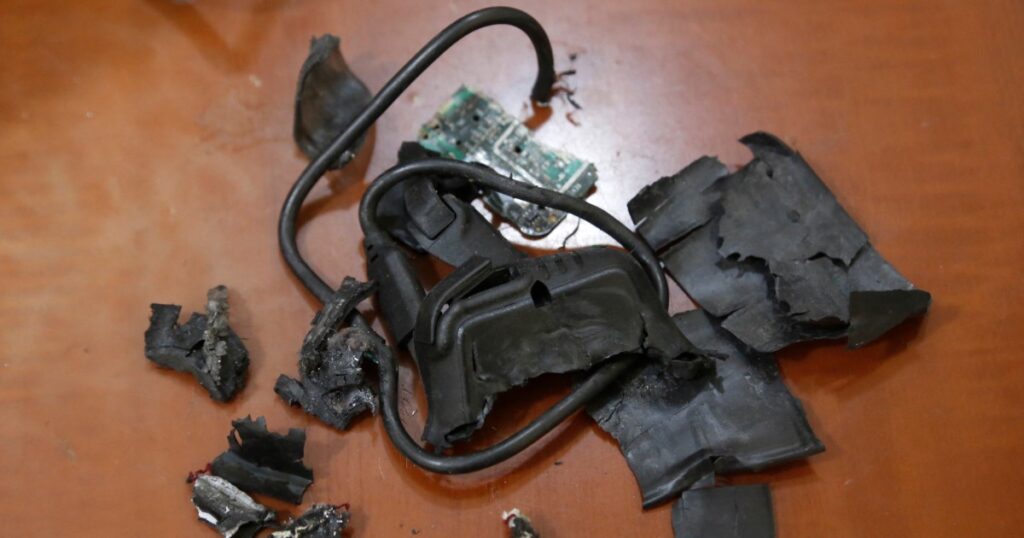
CEO of Taiwan-based Gold Apollo released after questioning over role in deadly explosions. Components used in thousands of pagers that detonated on Tuesday in Lebanon in a deadly blow to Hezbollah were not made in Taiwan, Taiwan’s economy minister has said. Taiwan-based Gold Apollo said this week it did not manufacture the devices used in the attack, and that Budapest-based company BAC to which the pagers were traced has a licence to use its brand. It was not clear how or when the pagers were weaponised so they could be remotely detonated. The same applies to the hundreds of hand-held radios used by Hezbollah that exploded on Wednesday in a second wave of attacks. The two incidents killed 37 people and wounded about 3,000 in Lebanon. “The components are (mainly) low-end IC (integrated circuits) and batteries,” Taiwan’s Economy Minister Kuo Jyh-huei told reporters on Friday. When he was pressed on whether the parts in the pagers that exploded were made in Taiwan, he said, “I can say with certainty they were not made in Taiwan,” adding the case is being investigated by judicial authorities. Security sources said Israel was responsible for the pager explosions on Tuesday that raised the stakes in a growing conflict between the two sides. Israel has not directly commented on the attacks. Taiwan’s Foreign Minister Lin Chia-lung, also speaking to reporters at parliament, answered “no” when asked if he had met with the de facto Israeli ambassador to express concern about the case. “We are asking our missions abroad to raise their security awareness and will exchange relevant information with other countries,” Lin said. As Taiwanese authorities look into any potential link between its sprawling global tech supply chains and the devices used in the attacks in Lebanon, Gold Apollo’s president and founder, Hsu Ching-kuang, was questioned by prosecutors late into the night on Thursday, then released. Another person also at the prosecutor’s office was Teresa Wu, the sole employee of a company called Apollo System, who did not speak to reporters as she left late on Thursday. Hsu said this week a person called Teresa had been one of his contacts for the deal with BAC. A spokesperson for the Shilin District Prosecutors Office in Taipei told the Reuters news agency that it had questioned two people as witnesses and was given consent to conduct searches of their firms’ four locations in Taiwan as part of its investigation. “We’ll seek to determine if there was any possible involvement of these Taiwanese companies as soon as possible, to ensure the safety of the country and its people,” the spokesperson said. Iran-aligned Hezbollah has pledged to retaliate against Israel, which has not claimed responsibility for the detonations. The two sides have been engaged in cross-border warfare since conflict in Gaza erupted last October. Adblock test (Why?)
Diplomatic failings and ‘elite bargains’ prolonging Libya turmoil: Analysts
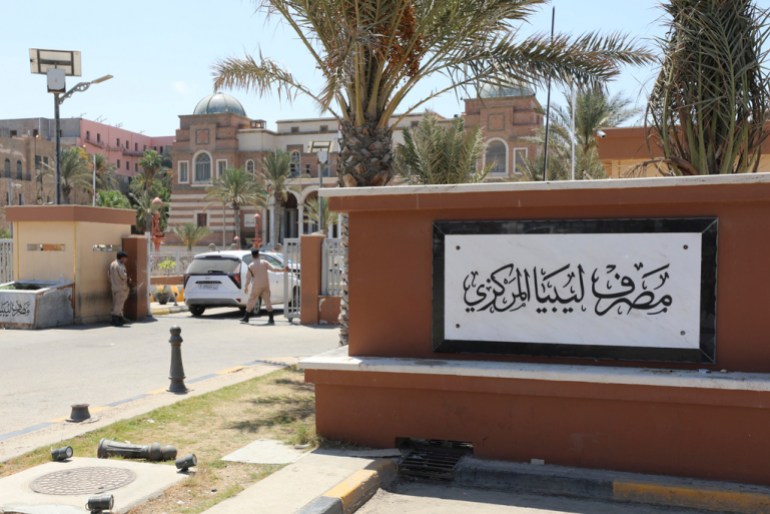
After weeks of tension that saw the Central Bank of Libya (CBL) shuttered, salaries go unpaid and cash vanish, the country’s two rival governments appeared ready to accept a United Nations-brokered agreement to resume operations, before once more reverting to a deadlock familiar to many in the country. The internationally recognised Government of National Accord (GNA) in the west had tried to replace CBL Governor Sadiq al-Kabir, accusing him of mishandling oil revenues and going to the extent of sending armed men in to remove him from his office. Angered, the Government of National Unity (GNU) in eastern Libya, which is supported by renegade commander Khalifa Haftar, shut down much of the country’s oil production, which it controls, in protest. “This is serious,” said Jalel Harchaoui, an associate fellow with London’s Royal United Services Institute. “The CBL, although weaker now than it was a few years ago, remains a linchpin to the nation’s access to hard currency.” He added that the CBL funds most of Libya’s imports of food, medicines and other staples, which the country cannot last long without. The clash is the latest battleground in the 13-year rivalry between political and military elites that has dogged Libya since the overthrow of long-term ruler Muammar Gaddafi in 2011. Since then, various analysts say, life in Libya has deteriorated as fighting has continued between rival Libyans and as the international community has tried to preserve the rule of a political and military elite, convinced they are the best for stability and for the proclaimed goal of “unifying Libya”. Why the central bank? As well as holding Libya’s vast oil wealth, the CBL unified Libya’s eastern and western “central banks” in one body to manage the salaries of civil servants and soldiers from both governments and build confidence that recovery was possible. After the GNA-GNU struggle over who would head the CBL, al-Kabir fled the country, claiming that he took the access codes for bank deposits with him, leaving the bank isolated from international financial networks. Asim al-Hajjaji, director of the CBL compliance department, said international contacts had been restored, although Al Jazeera understands that most international trading remains suspended. Soldiers guard the gate of the Central Bank of Libya in Tripoli, on August 27, 2024 [Yousef Murad/AP Photo] Meanwhile, oil exports have plunged to a new low, salaries are uncertain and everyday life for about six million Libyans is in turmoil. “The United Nations is talking about talks, which is a sure sign we’re nowhere near resolution,” Tarek Megerisi, a senior fellow at the European Council on Foreign Relations, said of negotiations to restart operations at CBL. The West, which typically backs the GNA despite it being responsible for much of the uncertainty, “doesn’t know what to do, or really has the bandwidth to do it. They’re dealing with wars in Gaza and Ukraine,” he said. “It’s just too much. In Libya, international efforts to achieve any kind of just settlement have lost momentum.” And this is far from the first time. Over more than a decade of uncertainty and war, analysts say, the international community’s efforts focused on shoring up the country’s elites in the hope that might lead to stability. The latest talks over the CBL appear little different, with access to the millions of dollars in assets of primary interest to the country’s elites, and access to the services and certainty craved by much of the population seemingly an afterthought, analysts told Al Jazeera. Elite bargains presiding over endless turmoil “Preventing a shooting war has come to be seen as the only international strategy in Libya,” Tim Eaton, a senior fellow at Chatham House who contributed to a paper on the international practice of prioritising powerful elites, told Al Jazeera. “It’s death by a thousand cuts,” Harchaoui said. “Everyone’s talking about a return to the status quo as if there were ever a neat, static equilibrium,” he noted. “This was never the case. Even when things appeared quiet, the arrangements were continually decaying and degrading. And that gradual deterioration is what suddenly became visible last month with the CBL crisis.” National elections, or even a framework that might lead to them, remain a distant prospect after the last vote, initially scheduled for December 2021, was postponed after infighting. “Any move towards holding national elections has been blocked,” Eaton said. “Both [Abdul Hamid] Dbeibah [head of the GNA] and Haftar might say they want elections tomorrow, but they only really want their side, or at least their proxies, on the ballot paper.” Both governments continue to rule separately, while their members, allies and militias profit from smuggling in both people and fuel and unregulated cross-border trade. Members of the so-called ‘Libyan National Army’, commanded by Khalifa Haftar, get ready to head out of Benghazi to reinforce troops advancing to Tripoli, in Benghazi on April 13, 2019 [Esam Omran Al-Fetori/Reuters] However, as individual members jockey for position within small and exclusive circles, systems intended to support everyday life in Libya continue to deteriorate and fail. Eaton notes that the city of Derna, which flooded in September 2023 after a dam that the GNU was responsible for collapsed, remains unreconstructed. “For healthcare, Libyans have to go overseas,” he noted. “And if anyone is ever caught in an emergency, there’s no one number or department they can call. “All the while, the super-rich that are supposed to be looking after people, are getting even richer.” Both sides, he explained, claim to work towards establishing a central government while state institutions needed to oversee any future state, like a strong central bank, have been hollowed out and captured by elites on either side. Regionally, over its 13 years of sporadic conflict and political uncertainty, Libya has become a continued source of instability within an already unstable region. Within a divided Libya, various actors have come to use the country’s east as a staging point from which to project their own international ambitions in Sudan, Syria and beyond. Ex-Governor of CBL Siddiq
Supreme Court of India’s YouTube channel hacked, shows videos promoting cryptocurrency XRP
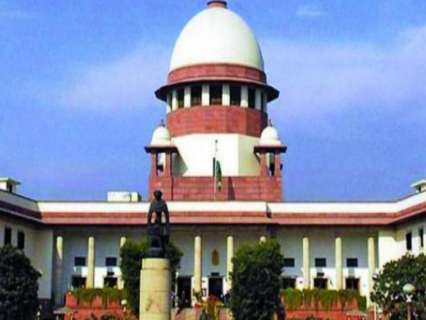
Supreme Court of India’s YouTube channel hacked, shows videos promoting cryptocurrency XRP
‘Final farewell to…’: Home Minister Amit Shah says this about naxalism
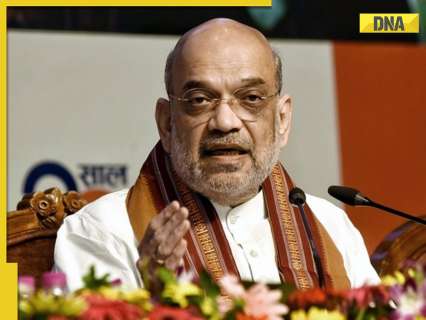
Union Home Minister Amit Shah interacted with the Naxal violence victims from Chhattisgarh and vowed that naxalism would be eradicated from the country.
US believes Gaza ceasefire deal unlikely in Biden’s term: Report
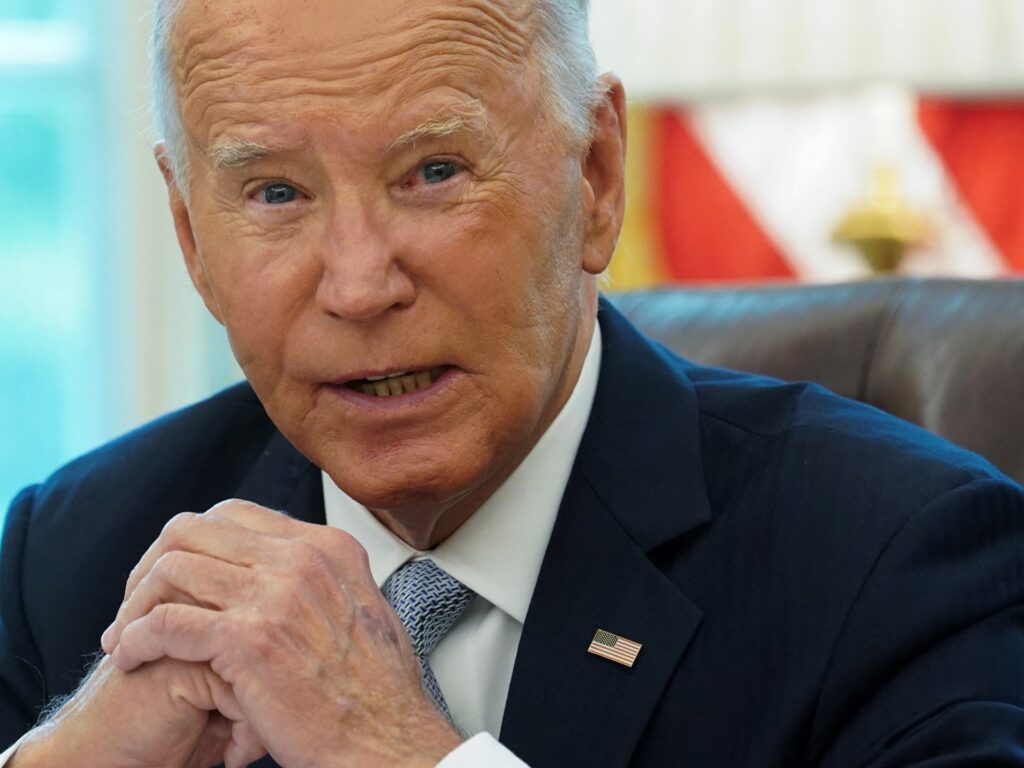
Wall Street Journal cites multiple US officials saying they are sceptical a ceasefire can be achieved before January. Officials in the United States believe that a ceasefire deal between Israel and Hamas in Gaza is unlikely before President Joe Biden leaves office in January, according to the Wall Street Journal. The newspaper on Thursday cited top-level officials in the White House, State Department and Pentagon without naming them. “No deal is imminent. I’m not sure it ever gets done,” one of the US officials told the newspaper. The officials told the Journal there were two key obstacles to a deal: the number of Palestinian prisoners Israel must release in exchange for each captive held by Hamas, and the rising tensions between Israel and Hezbollah. In public, officials in Washington have stressed that they will continue to work for an agreement. “I can tell you that we do not believe that deal is falling apart,” Pentagon spokesperson Sabrina Singh told reporters on Thursday before the Wall Street Journal report was published. US Secretary of State Antony Blinken said two weeks ago that 90 percent of a ceasefire deal had been agreed upon. Washington has been working for months with mediators Qatar and Egypt to try and bring Israel and Hamas to a final agreement. Biden laid out a three-phase ceasefire proposal on May 31 saying that Israel had agreed to it. The US holds its presidential election on November 5 with Vice President Kamala Harris running against Republican Donald Trump. The latest bloodshed began nearly a year ago when Hamas launched a surprise attack on Israel on October 7, killing 1,139 people and taking more than 200 captive. Israel’s subsequent assault on the Hamas-governed territory has killed at least 41,272 Palestinians and injured 95,551. It has also led to the displacement of nearly the entire population of 2.3 million, a hunger crisis and a genocide case at the World Court. Adblock test (Why?)
As Sri Lanka votes, a $2.9bn IMF loan looms large
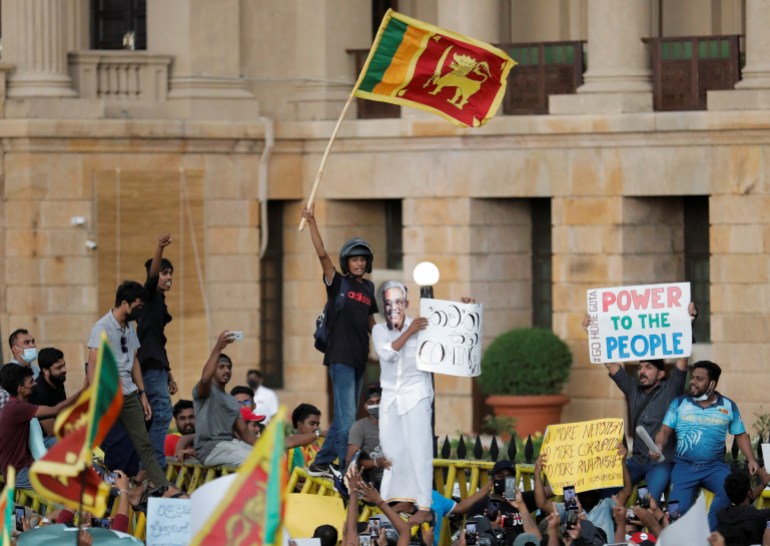
Ahead of Sri Lanka’s presidential election, no issue is more central than the economy. With the South Asian country still struggling from its worst financial crisis in decades, Saturday’s ballot amounts to a referendum on austerity measures imposed by the International Monetary Fund (IMF) last year. In a crowded field of 38 candidates, all eyes are on three men: incumbent President Ranil Wickremesinghe and his two closest rivals, Anura Kumara Dissanayake and Sajith Premadasa, both of whom want a new deal with the Washington, DC-based lender. A six-time prime minister, Wickremesinghe represents the old guard. His United National Party (UNP) has been one of Sri Lanka’s dominant political forces since the country’s independence in 1948. While Wickremesinghe’s supporters commend his $2.9bn IMF loan – and subsequent debt restructuring deals – Sri Lankans experienced a cost-of-living crisis on his watch, with inflation peaking at nearly 74 percent in 2022. After the end of its civil war in 2009, Sri Lanka borrowed heavily to fund infrastructure-led growth. Then, in 2019, President Gotabaya Rajapaksa introduced unfunded tax cuts. Fiscal pressures were compounded when the COVID-19 pandemic led tourism and remittance inflows to dry up. In 2022, a surge in oil prices and rising US interest rates tipped Sri Lanka into a balance of payments crisis. To maintain imports, Colombo was forced to prop up its plunging currency – the rupee – by running down scarce international reserves. A protester wearing a mask of Sri Lanka’s President Gotabaya Rajapaksa performs during a protest in front of the Presidential Secretariat in Colombo, Sri Lanka, on April 9, 2022 [Dinuka Liyanawatte/Reuters] Rajapaksa’s government faced an increasingly stark choice – continue servicing its international debt or pay for critical imports like food, fuel and medicine. In April 2022, Sri Lanka defaulted on $51bn of external debt. By July, with the country facing shortages of essential goods and power blackouts, inflation was hovering at 60 percent. Anger over the government’s handling of the crisis led to mass street protests, forcing Rajapaksa to flee the country and resign. As Rajapaksa’s successor, Wickremesinghe was tasked with reversing Sri Lanka’s economic crisis. With few options on the table, he turned to the IMF. In March 2023, Colombo agreed to a 48-month emergency loan. As with all IMF deals, it came with strict conditions. In exchange for funds, Wickremesinghe was forced to remove electricity subsidies and double the rate of value-added tax (VAT). “Wide-ranging austerity also included a sovereign debt restructuring,” Katrina Ell, director of economic research at Moody’s Analytics, told Al Jazeera. Refinancing operations typically involve exchanging old debt instruments for new, more affordable ones. Sri Lanka’s foreign and domestic lenders had to accept equivalent losses of 30 percent as part of the IMF agreement. “All these measures do not offer a quick fix,” Ell said. Still, “Sri Lanka’s economy has shown meaningful signs of improvement” since 2022, she said. The rupee has stabilised and inflation has come down sharply from its 2022 peak. The World Bank forecasts the economy to expand 2.2 percent in 2024, following two straight years of negative growth. On the other hand, real wages remain significantly below pre-crisis levels and the country’s poverty rate has doubled, according to the World Bank. Samagi Jana Balawegaya party leader and presidential candidate Sajith Premadasa addresses supporters during a rally in Colombo on September 18, 2024 [Ishara S Kodikara/AFP] Presidential contender Premadasa, whose Samagi Jana Balawegaya (SJB) party splintered off from Wickremesinghe’s UNP in 2020, has criticised the IMF deal. Premadasa has argued that boosting export markets and strengthening the rule of law are the way forward. Yet he is not the main candidate for change, according to Jayati Ghosh, a professor of economics at the University of Massachusetts Amherst. “That mantle falls to Anura,” Ghosh told Al Jazeera. Dissanayake’s political stock has risen dramatically in recent months. Though his far-left Janatha Vimukthi Peramuna (JVP) secured just three seats in the last parliament, it has since re-branded itself to project a more mainstream image. Today, the JVP represents a coalition of leftist groups. And while it receives strong support from young voters, those over 50 still recall the JVP’s attempts at insurrection in the late 1980s – a period of terror in southern Sri Lanka that led to between 60,000 and 100,000 deaths. “Dissanayake has distanced himself from his party’s past and his old Marxist leanings,” Ghosh said. “And though he’s inched towards the centre, he’s still the progressive in the race.” Dissanayake has pledged to increase Sri Lanka’s income tax-free threshold and exempt some health and food items from the 18 percent value-added tax to make them more affordable. “Anura wants to change the Fund’s insistence on treating external and domestic debt equally,” Ghosh said. “On top of regressive VAT increases, public pension funds bore a big brunt of the restructuring. Teachers and nurses had their pensions slashed. It’s criminal,” she added. “Dissanayake would try and push the IMF to shift the burden away from ordinary Sri Lankans onto external creditors. Poor people’s livelihoods have already been badly hit. He has been far more critical on the debt issue than Premadasa.” Following a $4.2bn debt restructuring with China’s Ex-Im Bank in October, Sri Lanka completed a $5.8bn restructuring with a number of countries including India and Japan in June. In a last-minute agreement before the election, the country on Thursday clinched a deal with private investors to restructure $12.5bn of international bonds, clearing the way for the release of its fourth tranche of IMF bailout funds. National Peoples Power party leader Anura Kumara Dissanayake takes part in a protest in Colombo on February 26, 2023 [Ishara S Kodikara/AFP] But, according to Ahilan Kadirgamar, a Sri Lankan economist, “it’s far too favourable to the creditors”. “In theory, restructuring operations are meant to lower debt costs and free up public resources for things like education and healthcare. That’s not what’s happening in Sri Lanka,” Kadirgamar told Al Jazeera. Sri Lanka’s debt-to-GDP (gross domestic product) ratio is expected to fall from