

Haryana Assembly Election 2024: BJP releases election manifesto, guarantees…

The party also promises to offer scooters to college going female students under Awal Balika Yojana and LPG cylinders for Rupees 500 under the Har Ghar Grahini Yojana.
IAS Puja Khedkar case latest update: Delhi HC issues…; Know details here
The bench of Justice Subramonium Prasad sought the response of Puja Khedkar and listed the matter for September 26
J-K Assembly Election 2024: ‘Abdullahs, Muftis, Gandhis have given…,’ says PM Modi in Srinagar

He also accused these three families of believing that it is their birthright to…
Wisconsin kicks off election season with first widely available absentee ballots

The presidential race begins for thousands of voters today as Wisconsin starts mailing ballots to eligible voters. With one point separating Vice President Harris and former President Trump in the Badger State, the campaigns are set to spend the next 47 days fighting for every ballot. Voting begins in some form for many voters in more than half of all states by the end of the month, including Michigan and North Carolina. Wisconsin is one of three Rust Belt states that voted for Trump in 2016, then flipped back to the Democrats in 2020. President Biden won the state by just 20,682 votes or 0.7 points. FOX NEWS POWER RANKINGS: TRUMP LOSES HIS EDGE AS WE BRACE AGAIN FOR POST-DEBATE IMPACT Like the other competitive midwestern states, it is defined by its White working class population. Fifty-eight percent of the state’s voters are White without a college degree according to the Fox News Voter Analysis. That is fifteen points higher than the national electorate. Those voters favored Trump by 11 points in the last presidential cycle, and he will look to build on that margin to put this state back into the GOP’s column. For Democrats, the goal is to keep turnout high in the cities and surrounding areas by activating Black and suburban voters. There are highly populated pockets of deep blue vote in Milwaukee and Madison, and the counties that those cities call home make up nearly a quarter of the statewide vote. Key races in Wisconsin Wisconsin also has a Senate race and eight U.S. House races on the ballot. The most competitive include: FOX NEWS POWER RANKINGS: VOTERS’ APPETITE FOR TICKET-SPLITTING WILL DECIDE THE SENATE This is a guide to registration and early voting. For comprehensive and up-to-date information on voter eligibility, processes, and deadlines, please go to Vote.gov and the Wisconsin elections website. Registering to vote Wisconsin allows voters to register online or by-mail until the end of October 16. Voters who miss that date can still register by printing, signing and delivering their registration form with proof of evidence to a municipal clerk or a polling place on Election Day. RFK JR SUES NORTH CAROLINA TO REMOVE NAME FROM BALLOT BEFORE ELECTION Voting Like most states, Wisconsin allows voters to cast an early ballot either in person or by mail, or in person on election day. Early voting Voting by mail Any Wisconsin registered voter can cast an absentee ballot. No excuse is required. Voters must request an absentee ballot, fill it out with an eligible witness and place it in a signed, sealed certified envelope. Voters can find the full list of steps online. Ballots can be returned by mail, at a clerk’s office, or at an assigned polling place or absentee counting location on Election Day. Once a voter submits their ballot, they can track its status online. Voting in person Wisconsin also allows voters to cast their absentee ballot at locations such as a clerk’s office or local library starting October 8. Voting on election day Voters can also cast a ballot in person on election day at their assigned polling place. Upcoming early voting dates With absentee ballots out to a wide group of voters, Wisconsin is the first state to kick off election season in earnest. Alabama and Kentucky started sending ballots to voters who have an excuse to vote by absentee last week. Tomorrow, Virginia will be the first state to allow its voters to cast a ballot early in-person, and seven more states will make absentee ballots available. By the end of the month, 26 states and DC will have begun some form of voting. For comprehensive and up-to-date information on voter eligibility, processes, and deadlines, please go to Vote.gov and the Wisconsin elections website.
‘I’ve never seen this’: Top Republican details level of Secret Service ‘lack of cooperation’
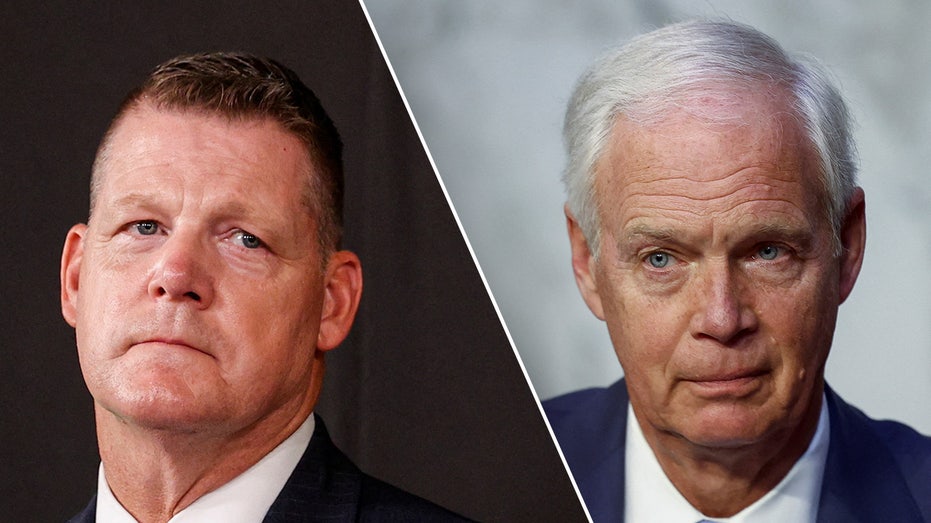
Sen. Ron Johnson, R-Wis., described the level to which the Department of Homeland Security and the Secret Service have prevented the Homeland Security and Governmental Affairs Committee (HSGAC) from obtaining crucial materials to investigate the failures that led to the assassination attempts against former President Trump. “Things like the autopsy report, you know, the House has it under subpoena. We don’t have it,” he told reporters. “[The] toxicology report; we don’t have any of the trajectory reports. So, where’d the bullets go? We don’t even know how they handled the crime scene,” said Johnson, ranking member of the HSGAC Permanent Subcommittee on Investigations (PSI). GOP SENS CALL ON SCHUMER, DEMS TO TAKE UP BORDER BILLS AS THEY TOUT IMMIGRATION VIGILANCE The senator pointed to the amount of time that has passed since the July 13 assassination attempt against Trump, noting, “There’s just basic information we should have right now, and we don’t have it.” “We haven’t been able to interview the sniper who took out [Thomas] Crooks,” Johnson said. Crooks is the would-be assassin that, during the July 13 rally in Pennsylvania, opened fire, grazing the former president’s ear, killing a rally attendee and critically injuring two others. According to the Republican, the sniper who shot Crooks was the first person he wanted to interview. SECRET SERVICE TOLD LOCALS THEY WOULD ‘TAKE CARE OF’ BUILDING USED BY THOMAS CROOKS TO SHOOT TRUMP Further, he said they hadn’t been provided any FD-302 forms by the FBI, which are used to investigate through results of interviews. Johnson pointed out that FBI Deputy Director Paul Abbate told him during a hearing in July that the bureau would provide the forms as soon as they could. “I haven’t gotten one,” he said. “They’ve done 1,000 interviews. We’ve done 12,” the senator said. ‘AN ABSOLUTE DISGRACE’: SENATE REPUBLICANS CONDEMN PALESTINIAN AUTHORITY’S UN BID TO UNDERMINE ISRAEL The Wisconsin Republican said the lack of information is consistent with slow-walking. He also said that a recent briefing to the chairs and ranking members of both HSGAC and PSI from Acting Secret Service Director Ronald Rowe did not provide the senators with any new information. Johnson described that the few documents which had been provided to the lawmakers were “heavily redacted.” “And in this case, unusually. I’ve never seen this,” he remarked of the redactions. TOP SENATE DEMOCRAT ‘ANGRY’ OVER BIDEN-HARRIS ADMIN ‘STONEWALLING’ AFTER TRUMP ASSASSINATION ATTEMPTS Noting that it wasn’t his “first rodeo,” Johnson recalled that redactions are normally black, blocking out certain parts of text. “These are just whiteouts.” “So, I don’t know. Was it just a single word?” he asked. He said in some cases it wasn’t evident whether something had been obscured in the documents or not due to the white redactions. “That’s the level of opacity that we’re getting in terms of their lack of cooperation with our investigation,” Johnson added. The Secret Service has reiterated that it is cooperating with Congress’ investigations despite bipartisan outcry and accusations of “stonewalling.” In a comment to Fox News Digital, a spokesperson for the Secret Service said, “The U.S. Secret Service is cooperating with a wide range of reviews and investigations related to the attempted assassination on Former President Donald Trump. This includes multiple Congressional investigations, including inquiries by the Senate Judiciary Committee, the Homeland Security and Governmental Affairs Committee, the Permanent Subcommittee on Investigations in the Senate, and a special bipartisan task force in the House of Representatives.” “Since July 13, we have provided more than 2,800 pages of responsive documentation to these entities and have made our employees available for interviews as requested. On Sept. 12, Acting Director Ron Rowe briefed members of U.S. House and Senate committees regarding the agency’s mission assurance investigation. Given the volume of requests, the jurisdiction of requesters, and the finite capacity of resources and staff to respond, the U.S. Secret Service is prioritizing our responses to those listed above.”
Biden admin’s parole use in spotlight as it reveals eye-popping number of migrant arrivals in US

The Biden administration’s use of humanitarian parole to bring in migrants through “lawful pathways” as a strategy to end the crisis at the southern border remains under scrutiny amid an ongoing debate about Haitian migration — and as officials reveal how many have been allowed in under the programs. The Biden administration, as it sought to control a spiraling border crisis last year, expanded two avenues for migrants to enter legally and be paroled into the U.S. One allows migrants to schedule appointments at the ports of entry using the CBP One app, and allows up to 1,450 migrants to enter daily. The other is the parole processes for Cubans, Haitians, Nicaraguans and Venezuelans. Under that program, migrants with sponsors can apply for authorization without heading to the border and fly or transport themselves into the U.S. once approved and vetted. Up to 30,000 a month are allowed in under that program. TRUMP REVEALS NEW PLEDGE AMID HAITIAN REFUGEE CONTROVERY: ‘I WILL SAVE OUR CITIES’ The administration released statistics on Monday showing that nearly 530,000 nationals from those four countries have been granted parole through the end of August 2024. That is after the program was briefly suspended in July after an internal report found multiple instances of fraud from sponsors offering support to migrants coming in on the program. DHS announced last month that it had resumed processing of authorizations after it implemented new safeguards. The fraud discovery led to fresh calls from Republicans for the administration to shut down the program. Republicans have said that the Biden administration’s use of parole is unlawful, saying it is in breach of the law — which limits the use of parole to a “case by case” basis for urgent humanitarian reasons or significant public benefit. DHS has defended its use of parole, and has said it has been tied to a sharp drop in encounters when used. “All CHNV beneficiaries continue to be thoroughly screened and vetted by CBP prior to their arrival to the United States and must meet other eligibility criteria authorization to travel to the United States in a safe, orderly, and lawful way once they purchase their own commercial airline tickets,” Customs and Border Protection (CBP) said on Monday. “Since DHS has implemented these safe, orderly and lawful processes, encounters of CHNV nationals in between POEs are down 99%,” the statement said. Separately, CBP says that approximately 813,000 individuals have scheduled appointments to be paroled into ports of entry using the CBP One app. In August, there were 44,700 appointments made. BIDEN ADMIN RESTARTS CONTROVERSIAL MIGRANT FLIGHT PROGRAM WITH ADDITIONAL VETTING AFTER FRAUD REVELATIONS It means that more than 1.3 million have been paroled in via the two programs since they began less than two years ago. Those who are brought in are vetted, and are then allowed to stay for up to two years and can work in the U.S. But multiple Immigration and Customs Enforcement (ICE) sources have told Fox News that they do not have the workforce or resources to find and deport such a large population of people if they overstay. ICE FINDS, ARRESTS HAITIAN MIGRANT WHO WAS RELEASED ON $500 BOND AFTER BEING CHARGED WITH RAPING CHILD IN MA The administration says that its strategy of expanding lawful pathways while implementing “consequences” for illegal entry has led to a sharp decrease in encounters at the southern border. There were 107,503 encounters at the border in August, down from 232,963 in August last year. Encounters have dropped by more than 50% since June, when President Biden signed an executive order that limited arrivals across the border when encounters reach a certain level. Officials have urged Congress to provide more funding and broader reforms to help fix what it says is a “broken system.” “CBP continues to enforce the Securing the Border interim final rule and deliver strong consequences for illegal entry, and encounters between ports of entry remain at their lowest level in years,” acting CBP Commissioner Troy Miller said in a statement on Monday. But the use of parole has come under fresh scrutiny not just due to the discovery of fraud in the CHNV program, but also due to the debate over the surge of Haitian migrants into towns like Springfield, Ohio, where 12-15,000 migrants have moved in recent years into the town of just over 60,000. The use of parole was criticized by House Republicans in a report on Wednesday, obtained first by Fox News Digital, which accused the administration of having “wantonly flouted this law by granting parole to millions of illegal aliens and creating parole programs for various nationality groups, neither of which are consistent with the law.” DHS has consistently defended its use of parole, and won a case against a coalition of Republican-led states challenging the law in March. “These processes — a safe and orderly way to reach the United States — have resulted in a significant reduction in the number of these individuals encountered at our southern border,” DHS Secretary Alejandro Mayorkas said in a statement. “It is a key element of our efforts to address the unprecedented level of migration throughout our hemisphere, and other countries around the world see it as a model to tackle the challenge of increased irregular migration that they too are experiencing.” Additionally, there have been a number of crimes allegedly committed by those brought in via parole, including a Haitian migrant accused of molesting a boy in Massachusetts. Meanwhile, Mexico last week put out a video of buses transporting migrants with CBP One appointments to the U.S. border. Former President Trump this week also renewed his pledge to end the CBP One app and the various uses of parole by the Biden administration. “As President I will immediately end the migrant invasion of America,” Trump said in a social media post on Sunday. “We will stop all migrant flights, end all illegal entries, terminate the Kamala phone app for smuggling illegals (CBP One App), revoke deportation
Ohio Haitian community leader argues ‘America should be an open country for everybody’

SPRINGFIELD, Ohio — A Haitian community leader in an Ohio town that burst into the national spotlight over longtime residents’ claims about disturbing incidents involving refugees argues that America’s history means the country should be open to taking in more migrants. “America is a beacon of the world in terms of democracy, where they say that human [rights] have to be respected and where they say that they treat people with respect and dignity,” Viles Dorsainvil, the executive director of Springfield’s Haitian Community Help and Support Center, told Fox News Digital. “I think the American forefathers made that clear, that America should be an open country for everybody.” The comments come as Springfield, Ohio, which sits about 50 miles west of Columbus, has recently been thrust into the national spotlight, most notably after comments last week by both people on the top of the Republican presidential ticket, former President Trump and running mate Ohio Sen. JD Vance. “Reports now show that people have had their pets abducted and eaten by people who shouldn’t be in this country,” Vance wrote in a post on X last week. “Where is our border czar?” HAITIAN REFUGEES ‘DON’T UNDERSTAND THE LAWS,’ FORMER LAWMAKER SAYS AMID FATAL WRECK, CULTURAL CLASHES Meanwhile, Trump made a similar claim during last week’s debate when answering a question about immigration. “They’re eating the dogs, the people that came in, they’re eating the cats,” Trump said. “They’re eating the pets of the people that live there, and this is what’s happening in our country, and it’s a shame.” While the claims about eating pets have yet to be verified and have been fiercely denied by local leaders, many longtime locals have expressed frustrations with the situation in Springfield. The town, which had previously experienced decades of population decline and had a population of under 60,000 in the 2020 census, has suddenly grown by thousands of Haitian migrants in just a few years, straining resources and causing some tensions between longtime residents and those new to the community. “We’ve got an influx of folks that have come in, and I think we were a little bit shocked that it was close to 20,000 people in a community of 60,000, and that’s caused some issues between the folks that live here and the folks that are coming in,” former Republican state Rep. Kyle Koehler, who is now running for state senate, told Fox News Digital. HAITIAN INFLUX CAUSING ONE MAJOR SAFETY CONCERN AMONG SPRINGFIELD RESIDENTS Locals have especially expressed frustrations over road safety, arguing that immigrants who have no to little experience driving in their home countries have been allowed to take to the streets with ease, causing a dangerous situation on the roads. “We do have a really abnormal number of car accidents that are happening,” Koehler said. “And it’s not only the number but the severity of them. When you go on a street that is a 35-mile-an-hour speed limit, and there’s a car sitting on its hood, and I’m not talking about one, I’m talking about five or six accidents a week like that, you begin to wonder.” SPRINGFIELD PASTORS SPEAK OUT ON HAITIAN REFUGEE CHALLENGES: ‘THE SUFFERING IS REAL’ Those tensions seemingly peaked in August 2023 when a bus carrying dozens of local schoolchildren collided with a minivan, injuring more than 20 students and killing one, 11-year-old Aiden Clark. Dorsainvil acknowledged that the incident increased tension in Springfield, though he expressed optimism that things had “started to get back to normal.” That is until the community was thrust back into the spotlight by Trump and Vance. Nevertheless, Dorsainvil admitted some tensions do remain in the community. “There is a group of people who believe that we are here to take away their benefits or whatever belongs to them or take away their job or whatever,” Dorsainvil said, arguing that much of the disconnect between members of his community and longtime locals boils down to cultural differences. “This is why … in this nonprofit we work on implementing a cross-cultural education … to put on some events to help Americans understand our culture,” Dorsainvil said. “We have this kind of Q&A from time to time with some American friends and trying to see if we can implement more programs to educate the American friends that we have here. We also have programs to educate Haitians about American culture and what they should do to integrate in the community.” But Dorsainvil also stressed that most members of the community have been friendly and welcoming, while local leaders have worked hard to address any tensions in Springfield. “Officials have been working to address it, and they also have an inclusive approach,” Dorsainvil said. “The city is a welcoming city. We have officials who are willing to work with the immigrants and local leaders as well. … Springfield is a very welcoming city apart from a group of people who believe that we shouldn’t be here.” Get the latest updates on the ongoing border crisis from the Fox News Digital immigration hub.
Bihar: 15 people held for torching 21 houses in Nawada, government says more arrests likely
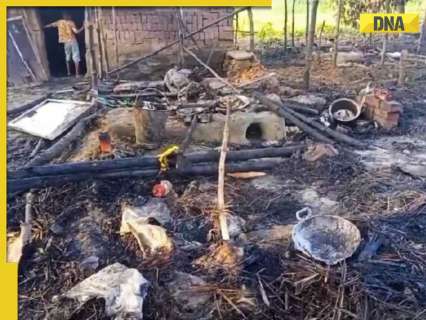
Nawada District Magistrate Ashutosh Kumar Verma told PTI, “The district police has arrested 15 people for allegedly torching the houses. A Special Investigation Team (SIT) has been formed to investigate further, and searches are ongoing to apprehend the remaining suspects.”
Atishi, along with new cabinet, to take oath as Delhi CM on…, know details here

Atishi will move a motion for a confidence vote during a special sitting of the Delhi Assembly on…
Battered by typhoons: Why aren’t Philippine flood control projects working?
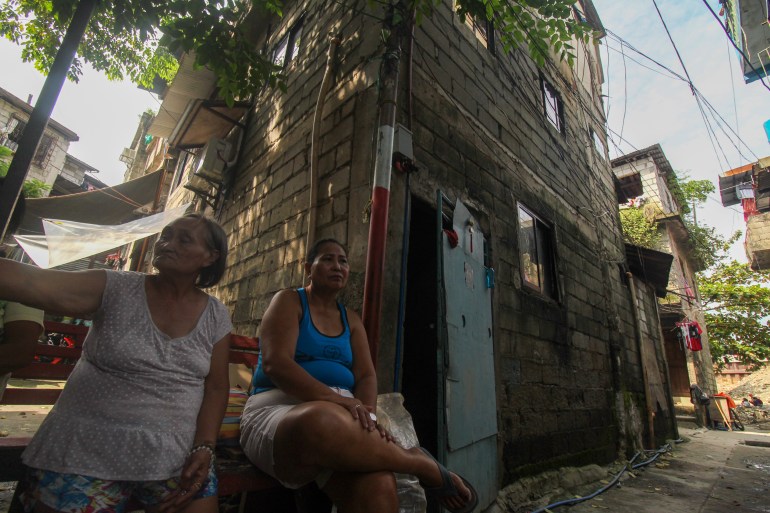
Manila, Philippines – With the exception of a few pieces of hanging laundry, the first two floors of 65-year-old Veronica Castillo’s three-storey home are practically empty. “Our belongings are up top. We build our houses upwards here. Every year the floods will scrape the ceilings of the second floor,” Castillo told Al Jazeera, surveying her home in one of Marikina city’s slums, among the most flood-prone areas of Metro Manila. But while the government is building a pumping station to address the problem just five minutes away, construction has been going on so long that Castillo wonders whether it will ever be finished. “It’s been eight years,” she said. Since taking office in 2022, President Ferdinand Marcos Jr has spent about half a trillion dollars to address persistent flooding from extreme weather in the Philippines. But despite the significant spending, cities continue to be inundated in a country that typically sees about 20 typhoons a year. During a speech in July, Marcos Jr boasted about his administration completing more than 5,000 flood control projects, of which 656 were in Metro Manila. Days later, Super Typhoon Gaemi deposited a month’s worth of rain on the area within 24 hours, killing dozens and leaving parts of the sprawling city submerged. Veronica Castillo lives on the top storey of her home because of the risk of flooding [Michael Beltran/Al Jazeera] Earlier this month, it was followed by Tropical Storm Yagi. Officials put the cost of the damage at 4.7 billion Philippine pesos ($84.3m) with nearly seven million people affected. At least a dozen more typhoons are expected before the end of the year. The Philippines has topped the World Risk Index‘s list of countries struggling to cope with natural hazards for 16 years in a row. According to the international engineering group GHD, floods and storms will cost the nation $124bn by 2050. Some analysts say the government’s approach is failing. “No amount of engineering can completely control floods,” said environmental geographer Timothy Cipriano from the scientist group AGHAM and the Philippine Normal University. “We might be able to control street-level flooding, but we have neglected the overflow from rivers and coastal areas.” Cipriano notes that Metro Manila and its 12 nearby provinces are “one big basin surrounded with the coasts on some sides and the mountains on the other plus the many man-made activities means surface runoffs quickly increase, and thus, rivers overflow.” Currently, the government has nine “flagship” flood control projects in the pipeline. Each involves building concrete or “grey” infrastructure to drain or trap excess water. At a public inquiry last August, the Department of Public Works and Highways (DPWH) chief, Manuel Bonoan, said Marcos Jr’s accomplishments were only for “immediate relief” and admitted many big-ticket projects had encountered delays. Government data shows that just one of the smaller “flagship” projects was completed this year, while the rest have languished in their preparatory stages since at least 2018. This includes the Metro Manila Flood Management Project, which aims to rehabilitate 36 pumping stations and build 20 new ones by this year. Despite a $415m World Bank loan, only two stations have been rehabilitated and none of the new ones have been completed. The 60-kilometre (37-mile) Central Luzon-Pampanga floodway, meant to drain stormwater from Metro Manila, was supposed to begin construction in 2024. However, last month, Bonoan conceded that delays had set the project back by three years. The DPWH also reported that 70 percent of Metro Manila’s “antiquated drainage system” was clogged with rubbish and silt, hampering flood management. It also reported that the country lacks a national flood control master plan, with only 18 scattered plans for major river basins which are “still being currently updated”. Perspective shift Most flood control efforts steer stormwater west to Manila Bay or Laguna Lake in the southeast. However, civil engineering expert Guillermo Tabios III says this approach has been ineffective for many years, and sometimes just transfers flood risks to coastal communities. “We divert around 2,500 cubic metres of water to Laguna Lake,” he said, adding that water also means “a lot of the surrounding towns will be submerged”. Cipriano blames rapid urbanisation and nearby quarrying for strangling Metro Manila’s 31 rivers and their tributaries. Merjelda Toralba in her home. She says the floods get worse every year [Michael Beltran/Al Jazeera] During Gaemi, Merjelda Toralba, 70, spent nearly 24 hours on the roof of her makeshift creek-side home. She had to tie a rope from her wooden doorframe to a coconut tree to stop the rising current from carrying the entire house downstream. “The flooding is worse each year. And I’m more afraid each time it rains hard. In just a few hours, I’d be trapped and the waters just won’t go away,” she told Al Jazeera. Environmental and sanitation expert Jose Antonio Montalban of Pro-People Engineers and Leaders (Propel) says much of the new infrastructure is costly to maintain. In Yagi’s heavy downpours, sections of the Molino Riverdrive Project collapsed as floodwaters spilled onto the roads. Montalban blames unavoidable erosion to the cement and possible substandard materials, but “it was clearly over its maximum carrying capacity. Now repairs will cost taxpayers yet again”. Montalban says what is needed is a “holistic approach” that considers “all factors economic, ecological, hydrological and social. Unfortunately for us, rudimentary engineering applications are the norm”. During Gaemi, the government admitted that 71 of the Metro Manila pumping stations were unable to handle the rainfall, which was more than double the system’s 30mm/hour capacity. Cipriano says the authorities need to look at flood-prone areas as a “sponge city. Instead of controlling water, you design spaces to accommodate water. Make it less of a concrete jungle, allow waters to seep or flow without constricting rivers.” Big spender Since 2015, the Philippine government has allocated 1.14 trillion Philippine pesos ($20.3bn) for flood control, with 48 percent of it during the Marcos Jr administration. Independent public budget analyst Zy-za Nadine Suzara says probable “patronage politics” was involved after noticing