

Maduro’s greatest test? All you need to know about Venezuela’s election
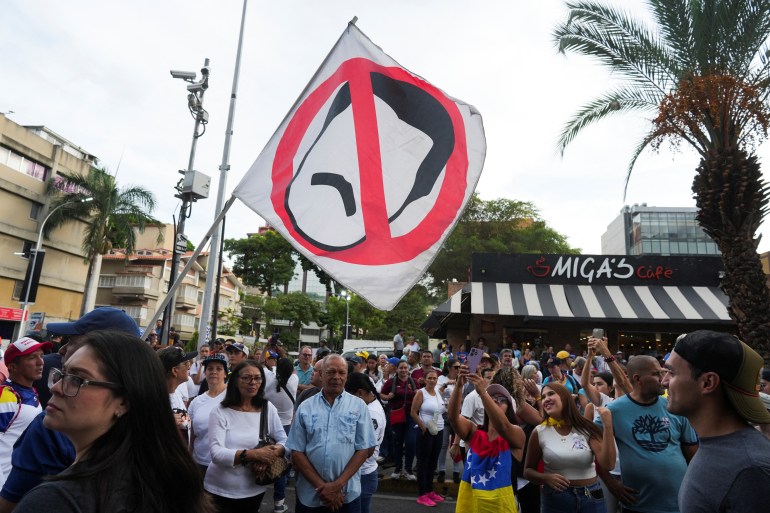
On Sunday, voters in the South American nation of Venezuela will take part in what may be one of the most consequential elections in the country’s modern history. After 11 years in power, President Nicolas Maduro is facing steep odds as he seeks a third term against opposition candidate Edmundo Gonzalez Urrutia. Polls show Maduro trailing Gonzalez by nearly 40 points, as voters express exhaustion over Venezuela’s economic crisis and political repression. But critics question whether Maduro will accept defeat if he is indeed trounced at the polls. The socialist leader has been accused of wielding his power to suppress potential rivals, arresting some and barring others from holding office. Who are the candidates, what developments have we seen so far, and under what circumstances will voting take place? We answer these questions and more in this brief explainer. Supporters of opposition candidate Edmundo Gonzalez in Caracas wave a flag showing a cartoon of President Maduro’s face crossed out [Alexandre Meneghini/Reuters] When is the election taking place? The election will take place on July 28, the birthday of the late Venezuelan President Hugo Chavez, Maduro’s mentor. What do the pre-election polls show? Maduro appears to be lagging behind his rival Gonzalez by a seemingly insurmountable margin. The polling firm ORC Consultores shows Maduro with 12.5 percent support, compared with a whopping 59.6 percent for Gonzalez. Another poll from the data firm Delphos and Andres Bello Catholic University showed Maduro with a slightly higher approval rating, about 25 percent. But he was again far behind Gonzalez, who pulled in more than 59 percent support in that poll as well. Why is Maduro so unpopular? Maduro has long struggled to muster the popularity of his predecessor, Chavez. Since the mid-2010s, Venezuela’s economy has been in dire straits, as the price of its main export, oil, cratered. The economic crisis triggered hyperinflation and severe economic strain. An exodus of people started to leave the country in search of opportunities elsewhere. Some critics blamed Maduro and his allies for corruption and economic mismanagement as well. Sanctions imposed by the United States — in response to alleged human rights abuses and democratic backsliding — have compounded the economic crisis, according to experts. Laura Dib, the Venezuela programme director at the Washington Office on Latin America (WOLA), a research and rights advocacy group based in the US, told Al Jazeera that people in the country are desperate for an improvement to the crushing economic circumstances. “The minimum wage in Venezuela can be around $130 per month, but what a family needs just to cover their basic needs is around $500,” she said. Venezuela’s President Nicolas Maduro holds the sword of independence hero Simon Bolivar during his final campaign rally in Maracaibo, Venezuela, on July 25 [Isaac Urrutia/Reuters] How many people have left the country? Perhaps the best indicator of how dire the economic situation has become is the number of people leaving the country. According to the United Nations refugee agency (UNHCR), more than 7.7 million have left the country since 2014, in one of the largest instances of mass displacement in modern history. About 2,000 people continue to leave each day. Some experts fear that number may spike if Maduro claims victory in a third successive election. Who is running? Maduro, the 61-year-old successor of former President Chavez, is seeking a third six-year term as the candidate for the United Socialist Party. He seeks to continue Chavez’s legacy of offering social programmes to the poor and taking an antagonistic stance towards the US. Facing off against Maduro is a group of opposition parties that call themselves the Unitary Platform coalition. The coalition brings together an array of political views, but its defining goal is to bring Maduro’s time in power to a close and improve relations with the West. By winning sanctions relief and boosting investments, officials in the Unitary Platform hope to improve conditions in Venezuela, allowing members of the diaspora to return home. The opposition is represented on the ballot by Gonzalez, a 74-year-old former diplomat. For his part, Maduro has painted the opposition as stooges of foreign powers who would privatise the social programmes that many poor residents rely on for economic support. Venezuelan opposition leader Maria Corina Machado and presidential candidate Edmundo Gonzalez participate in a closing campaign rally in Caracas, Venezuela, on July 25 [Enea Lebrun/Reuters] What happened last time Maduro ran? The opposition largely sat out the 2018 election in protest of what it said was a biased electoral system. Maduro ultimately won that election with more than 67 percent of the votes. But groups like the Organization of American States warned that the election failed to meet the standards for a “free, fair, transparent and democratic process”, and observers noted that voter turnout was at a record low. Has this year’s election process been fair? In short, no. While the opposition is running with Gonzalez at the top of the ticket, he was not the coalition’s first choice to take the lead. In fact, he wasn’t even the second choice. Gonzalez was selected only after the government barred the popular opposition figure Maria Corina Machado from competing in the election, as well as Corina Yoris, who was initially named as her replacement. Other opposition figures have been detained in the lead-up to the vote, on what critics consider sham charges. In January, Venezuela’s Supreme Court upheld a decision to bar Machado from holding public office for 15 years. How does the government defend those actions? The government has defended its decision by alleging that opposition figures like Machado were involved in efforts to overthrow Maduro and encouraged US sanctions against Venezuela. While Machado remains widely popular, those charges lean into anxiety over a history of US support for efforts to undermine the government in Caracas and install a new one more favourable towards Washington. Maduro and his allies have also accused Machado of being corrupt. Guards stand outside of the National Electoral Council headquarters in Caracas, Venezuela,
Kamala Harris shifts tone on Gaza, but advocates say US voters want more
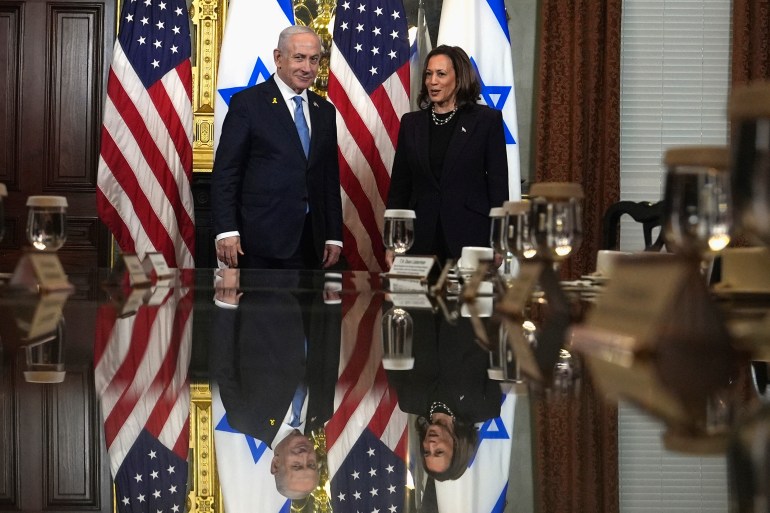
Washington, DC – Vice President Kamala Harris says she will “not be silent” in the face of Palestinian suffering, as Israel’s war in Gaza rages on. But Palestinian rights advocates want to know exactly what that means for United States foreign policy. The vice president — and the Democrats’ likely nominee for the presidency — emphasised the plight of Palestinians in Gaza after meeting with Israeli Prime Minister Benjamin Netanyahu on Thursday. Nevertheless, she pledged ongoing support for Israel. Activists say expressing sympathy for Palestinians without pursuing a meaningful shift away from the US’s policy of unconditional military and diplomatic support will not help Harris win back voters alienated by President Joe Biden’s approach to the war. “Without an actual commitment to stop killing the children of Gaza, I don’t care about her empathy for them,” said Eman Abdelhadi, a sociologist at the University of Chicago. She stressed that the US bears “responsibility” for the atrocities committed against Palestinians. “To be empathetic to someone that you’re shooting in the head is not exactly laudable. We don’t need empathy from these people. We need them to stop providing the weapons and the money that is actively killing the people that they’re supposedly empathising with.” Moreover, while Harris’s comments have been characterised as a shift away from Biden’s rhetoric, critics point out the vice president did not articulate any new policy positions. What did Harris say? After holding talks with Netanyahu on Thursday, Harris delivered a televised statement on the conflict where she reasserted her “unwavering commitment” to Israel and promised to always ensure that the country can “defend itself”. The vice president then pivoted to describing the horrific conditions in Gaza without naming Israel as the party responsible for the humanitarian crisis there. “I also expressed with the prime minister my serious concern about the scale of human suffering in Gaza, including the death of far too many innocent civilians,” Harris said, calling the war “devastating”. “The images of dead children and desperate, hungry people fleeing for safety — sometimes displaced for the second, third or fourth time — we cannot look away in the face of these tragedies. We cannot allow ourselves to become numb to the suffering, and I will not be silent.” She also voiced support for Biden’s multi-phased ceasefire proposal to achieve an end to the war and release Israeli captives in Gaza. Israel and Hamas have been negotiating indirectly for months to finalise the agreement, but a solution has remained elusive so far. At least on the surface, Harris’s tone appeared like a departure from Biden’s pro-Israel statements. “Harris created distance from Biden on Gaza by emphasizing Palestinian suffering,” a Washington Post headline read after the vice president’s comments. However, Hazami Barmada, an Arab American activist who has been organising protests in the US capital to bring awareness to the situation in Gaza, said that the vice president’s public statement of sympathy “does not make a difference”. Barmada pointed out that Secretary of State Antony Blinken has said he sees his own kids in the faces of the children in Gaza. Still, Blinken’s department has continued to approve billions of dollars in weapons for Israel. “So no, I don’t think empathy is enough,” Barmada told Al Jazeera. “We have had on our television screens genocide, ethnic cleansing, apartheid, illegal occupation, violence, all types of atrocities happening against Palestinians for 76 years. We need to move past empathy into a place of action before it’s too late.” Vice President Kamala Harris and Prime Minister Benjamin Netanyahu meet at the Eisenhower Executive Office Building in the White House complex in Washington, DC, on July 25 [Julia Nikhinson/AP Photo] Harris’s rise Harris appears set to inherit the Democratic nomination from Biden, who stepped out of the presidential race on Sunday and instead endorsed the vice president. With no serious opposition, Biden had won the overwhelming majority of votes in the Democratic primaries. But hundreds of thousands of people across the country chose the “uncommitted” option on Democratic primary ballots to express opposition to the president’s Gaza policy. The uncommitted movement has articulated three main policy demands: achieving an enduring ceasefire, imposing an arms embargo on Israel and lifting the siege on Gaza. Tariq Habash, a former Biden administration appointee, acknowledged the change of tone from Harris and called it “refreshing”. In January, he resigned from the Department of Education in a display of public opposition to US support for the war. But Habash likewise said that Harris should be prepared to follow her rhetoric with action. “What we really need, nine and a half months in, is a change in policy, a change in approach, so that we can end the unnecessary and indiscriminate violence that has continued every single day under President Biden,” Habash told Al Jazeera. “It’s still early, so we don’t know exactly what her plan or approach will be, but based on what she said yesterday, I don’t think substantively we heard a shift or any real departure from what the president has already said or done.” After all, Harris is a key member of the Biden administration, which has been unflinchingly supportive of Israel. On Thursday, White House spokesperson John Kirby said the vice president has been a “full partner” in overseeing US policy on the war. Harris’s record Harris, a former senator, also has her own long pro-Israel record. Days into her Senate tenure in 2017, Harris co-sponsored a measure to condemn a United Nations Security Council resolution that denounced Israel’s illegal settlements in the occupied West Bank. She also addressed the American Israel Public Affairs Committee (AIPAC) later that year, at a time when many left-wing politicians were distancing themselves from the pro-Israel lobby group. “Having grown up in the [San Francisco] Bay Area, I fondly remember those Jewish National Fund boxes that we would use to collect donations to plant trees for Israel,” Harris told an AIPAC conference in 2017. For years, Palestinian historians and activists have accused the Jewish National
How deep is the divide between Israel’s military and its government?
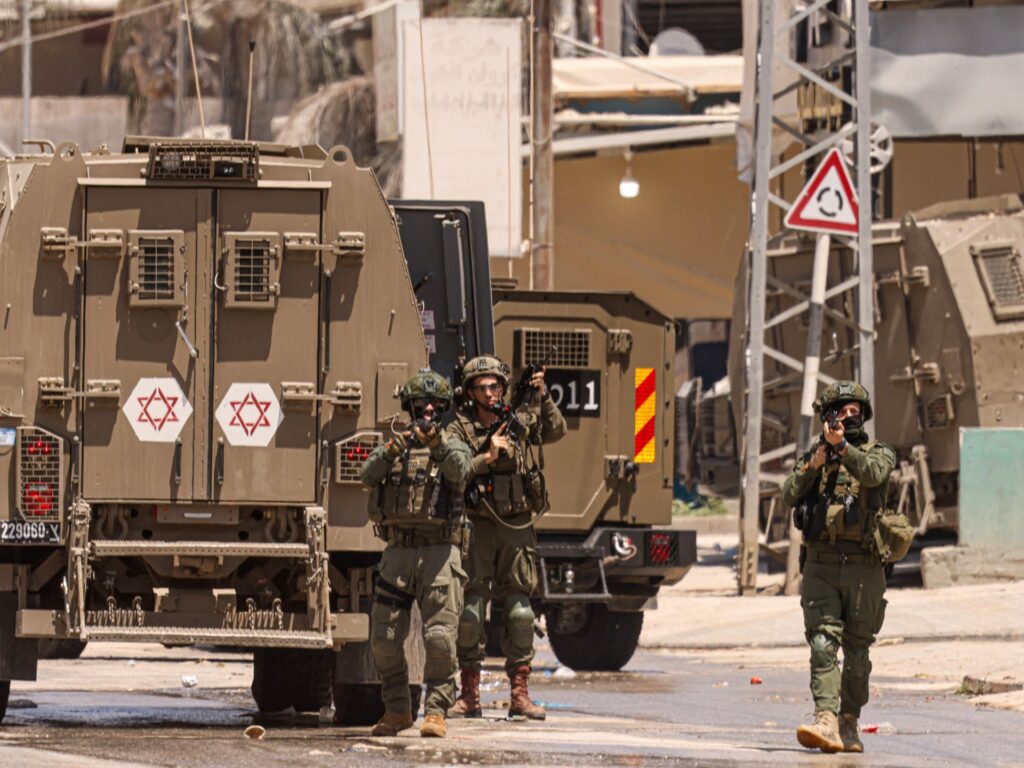
In Gaza, the Israeli military continues on the offensive, and in the United States, Prime Minister Benjamin Netanyahu has spent the past week courting more support for Israel’s assault on the Palestinian enclave. But that apparently shared purpose does not reflect the reality: a growing divide between the generals and the government. And analysts say it means that the initial Israeli unity when it came to the war on Gaza is a thing of the past. The differences emerge in the open on occasion. Most recently, they have centred on the conscription of Israel’s ultra-Orthodox yeshiva students – the military generals, and many secular Israelis, want them to be drafted like other Jews, but ultra-Orthodox parties opposed to conscription are a vital part of Netanyahu’s cabinet. Of perhaps more consequence to Gaza, however, are differences over the conduct of the war, and how to end it. In June, the Israeli army spokesperson Daniel Hagari said, “Whoever thinks we can eliminate Hamas is wrong.” The problem is that one of those people is Netanyahu himself, who has clearly made the destruction of Hamas one of his conditions for ending a war that has now killed almost 40,000 Palestinians. That criticism is part of a wider dissent among some leading Israelis – and even Netanyahu’s own defence minister, Yoav Gallant, has questioned whether there are any plans for ending the war, which began in October. Netanyahu has reserved his own criticism for the army, sharply criticising plans the military had announced, also back in June, for daily “tactical pauses in fighting” to facilitate aid delivery. An Israeli official at the time was quoted as saying that Netanyahu had made clear to the military that it was “unacceptable”. The differences between the military and Israel’s right-wing political establishment are hardly new, and are particularly rife at the moment because of the presence of the far right within the government. Over the last 20 years or so, far-right settler movements have moved from an outlier on the fringes of Israeli politics to the forefront of Israeli political and institutional life. Former supporters of Jewish movements that are banned as “terrorist” groups now sit in senior ministerial positions, with no attempt to repudiate their former affiliations. In addition to an energised and often aggressive base, the far right’s representatives dominate many of Israel’s institutions, including the police and education system, with their influence over Israel’s traditionally secular army growing more and more apparent. Rise of the far right By repeatedly threatening to walk away and collapse Israel’s electorally vulnerable governing coalition, ultranationalist National Security Minister Itamar Ben-Gvir and Finance Minister Bezalel Smotrich have come to exert an effective veto over national policy. That includes any potential ceasefire deal in Gaza – and Netanyahu has chosen to ignore those in the West calling for him to end what is an unpopular war internationally, instead fearing the wrath of the far right more. Netanyahu has his own legal troubles, and losing the protection his current position affords him could be costly. The far right’s critical view of the army isn’t new. Rather, it stems from the military’s role in the 2005 ejection of the illegal Israeli settlements in Gaza, a move violently resisted by the enclave’s settlers, and their continuing – if sometimes fractious – relationship in the occupied West Bank, officially administered by the army since 1967. “It seems strange, I know,” Eyal Lurie-Pardes of the Middle East Institute said, “but the settler movement has repeatedly accused the military of anti-Jewish bias in the West Bank”. And some of that suspicion goes beyond differences over war policy. “With its emphasis on balanced genders and the rights of the LGBTQ community, the army is often criticised by settlers and the ultra-Orthodox for what they see as its progressive culture,” Lurie-Pardes said. According to independent Israeli analyst, Nimrod Flaschenberg the religious Zionist and far right’s “march through the institutions” spurred by the 2005 Gaza withdrawal saw a gradual infiltration into many of the country’s establishments, from the media, to education and the judiciary, but the slow-moving hierarchies of the army are a work in progress. Their influence in the military is growing, however. In a recent report published by The Guardian, the British newspaper suggested that about 40 percent of the graduates from the army’s infantry officer schools come from hardline religious Zionist communities more aligned with the worldview of Ben-Gvir and Smotrich than they do either the ultra-Orthodox Haredim, who avoid military service, or the senior commanders of the Israeli military’s secular old guard. “You can see this influence in both Gaza and the West Bank,” Flaschenberg said, referring to the areas – the latter in particular, that Israeli settlers see as theirs by divine right. “You have these lower-ranked and mid-range officers repeating these almost genocidal religious chants, while either turning their backs on, or carrying out horrific rights abuses. All the while, their generals denounce such actions, while doing nothing to prevent them.” One such notable denunciation came earlier in July from the outgoing Israeli general, Yehuda Fox, who has served in the Israeli army since 1987. He publicly condemned the settler violence, which has claimed dozens of Palestinians in the West Bank during the course of the war, calling it a “nationalist crime”. And yet, ultimately, criticism from the armed forces of Israeli actions in the West Bank remain few and far between, and the military itself conducts near-daily raids on Palestinian cities, towns and villages, and has even attacked them from the air since October. The regular ill-treatment of Palestinians under occupation is also rarely, if ever, criticised by the army’s senior leadership. As for the war in Gaza, both the army and the government have been fully supportive of the widespread destruction of Gaza and accepting of the killing of thousands of Palestinians, with the differences largely over tactics and future plans. At war with the army At the beginning of July, Gallant told the public the army needed 10,000 additional
J-K: 3 jawans injured as security forces, terrorists exchange gunfire in Kupwara’s Kumkari area
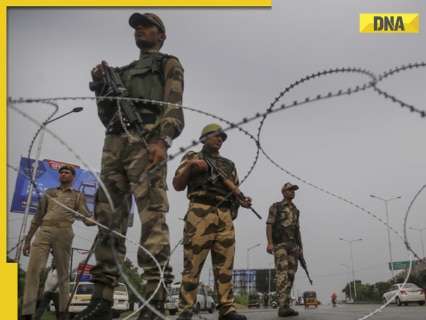
The encounter started in Kupwara district’s Kumkari area during an anti-terrorist operation. It is the second such incident recorded in three days.
Maharashtra: Three-storey building collapses in Navi Mumbai, many feared trapped

Navi Mumbai Deputy Fire Officer Purushottam Jadhav said that two people have been rescued and two are likely to be trapped.
PM Modi likely to visit Ukraine in August, first trip since Russia invasion in 2022
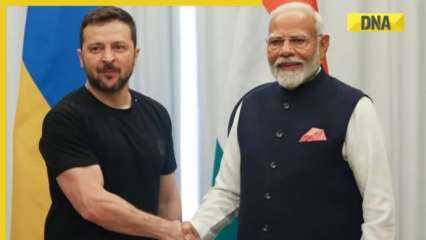
On the day, PM Modi won a third term after the Lok Sabhal elections, Zelensky had congratulated him and invited him to visit his country.
‘Don’t teach me…’: West Bengal CM Mamata Banerjee’s sharp retort to MEA’s criticism for statement on Bangladesh
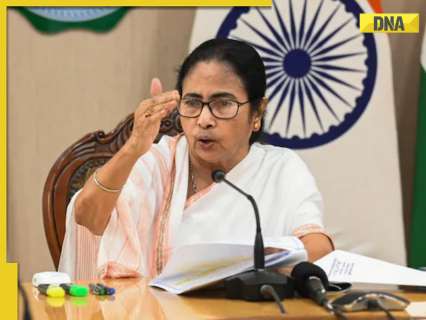
In an address at a public event in Kolkata, Mamata Banerjee, referring to violence-hit Bangladesh, said she would keep the doors of West Bengal open for people in distress from the neighbouring country and offer them shelter.
Trump announces to crowd he ‘just took off the last bandage’ at faith event after assassination attempt
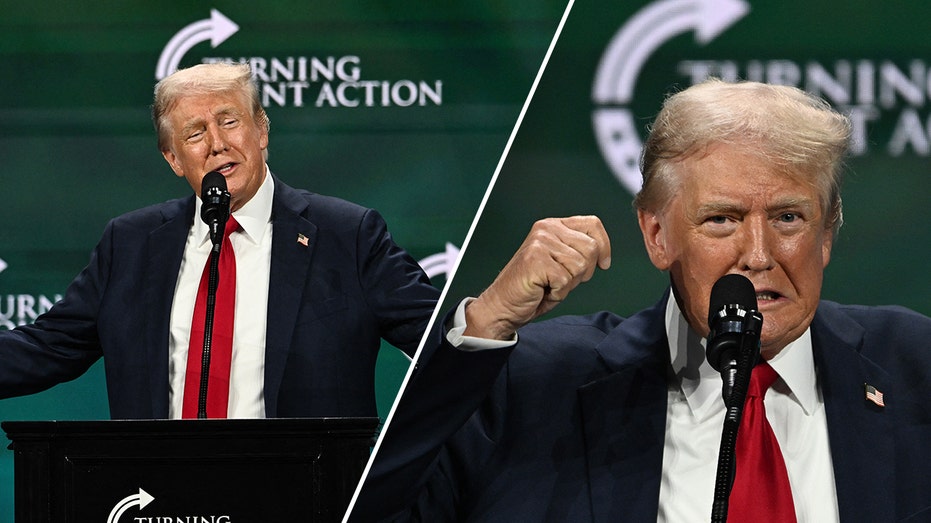
Former President Trump announced to a crowd Friday night he “just took off the last bandage” from his ear after his assassination attempt nearly two weeks earlier. The Believer’s Summit, hosted by Turning Point Action in West Palm Beach, focused on reaching voters of faith. Dr. Ben Carson, former HUD Secretary, preceded the former president. “And we want to thank each and every one of the believers in this room for your prayers and your incredible support. I really did appreciate it,” Trump said. TOP DEMOCRATIC SUPER PAC LAUNCHES MASSIVE $50M AD SPEND FOR HARRIS LEADING UP TO DNC “Something was working. That we know. Something was working. So, I thank you very much. And I stand before you tonight, thanks to the power of prayer and the grace of Almighty God,” he added. “As I think you can see, I’ve recovered well. And, in fact, I just took off the last bandage off of my ear.” The crowd roared with applause as the former president gestured to his injured ear. “I just got it off,” he clarified. “I took it off for this group. I don’t know why I did that for this group, but that’s it. I think that’s it.” Trump’s speech included attacks against his presumptive Democratic opponent, Kamala Harris, calling the vice president “a bum.” “Three weeks ago, she was a bum, a failed vice president and a failed administration with millions of people crossing. And she was the border czar. Now they’re trying to say she never was,” the former president said. TRUMP’S FORMER DOCTOR GIVES HEALTH UPDATE, CALLS OUT WRAY AS FBI AFFIRMS BULLET STRUCK FORMER PRESIDENT “If radical liberal Kamala Harris gets in and, by the way, there are numerous ways of saying her name, they were explaining to me. … I said, don’t worry about it. “Doesn’t matter what I say. I couldn’t care less if I mispronounce it or not. I couldn’t care less.” Dr. Ronny Jackson, the former White House doctor, released a letter earlier Friday offering an update on Trump’s health after the assasination attempt July 13 in Butler, Pennsylvania. “I want to reassure the American people and the rest of the world that President Trump is doing extremely well,” Jackson said. “He is rapidly recovering from the gunshot wound to his right ear. I will continue to be available to assist President Trump and his personal physician in any way they see fit and will provide updates as necessary and with the permission of President Trump.” “What struck former President Trump in the ear was a bullet, whether whole or fragmented into smaller pieces, fired from the deceased subject’s rifle,” the FBI confirmed Friday to Fox News Digital. CLICK HERE TO GET THE FOX NEWS APP Trump and running mate JD Vance, the Ohio senator, are scheduled to appear for a campaign rally in St. Cloud, Minnesota, Saturday.
Weather update: Heavy rain hits Delhi-NCR; IMD issues yellow alert till July 27, check details

Delhi’s Air Quality Index (AQI) was in the “moderate” category, with a reading of 109 at 4 pm, as reported by the Central Pollution Control Board (CPCB).
PM Modi to chair governing council meeting of NITI Aayog today, focus on ‘Viksit Bharat @2047’
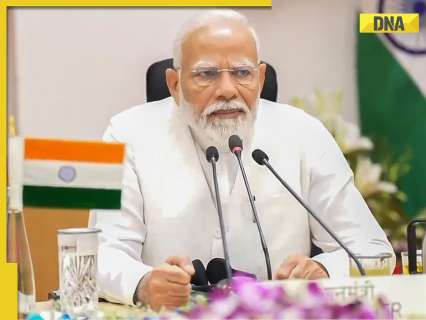
This meeting is timely as India advances towards becoming the world’s third-largest economy, with its GDP projected to exceed $5 trillion and target $30 trillion by 2047.