

How food and chopstick skills are helping ease US-China tensions

Shanghai, China – “The Chinese take great pride in their food,” read a memo prepared for United States President Richard Nixon ahead of his groundbreaking visit to the People’s Republic of China in 1972. Nixon’s lavish state banquet with Chinese premier Zhou Enlai in Beijing, broadcast live across the world, was crucial in improving US public opinion of a country that had been hidden from view for decades. More than half a century later, food is once again playing a central role in nurturing warmer US-China relations. With Secretary of State Antony Blinken and Treasury Secretary Janet Yellen both recently wrapping up their second visits to China in less than a year, meals have emerged as a key ingredient in stabilising ties between the two countries, as officials on both sides look to tap into the potential of what has been called “food diplomacy”. Yellen’s visit in early April was notable for the level of Chinese public attention on her food choices. Anticipation was high after her first visit last July, when her choice of a Beijing restaurant serving authentic food from the country’s southern Yunnan province, including mushrooms that can have psychedelic effects if cooked improperly, made her a social media darling in China. This time around, it was not only her choice of authentic Cantonese and Sichuan food that grabbed headlines but also her use of chopsticks at a popular Guangzhou restaurant established in 1880, reminiscent of Nixon’s own chopstick skills that also impressed his hosts in 1972. Although Yellen is known to sample local food during her trips around the US, the symbolic significance of doing so in China was especially pronounced, according to Thomas DuBois, a historian of China who teaches at Beijing Normal University. “In China, food is the language of diplomacy, and the Chinese are rightfully proud of their culinary culture. She [Yellen] knew that how she ate would reflect extremely heavily on her visit,” DuBois told Al Jazeera. “If you’re eating badly in China, because it’s a very food-obsessed culture, it’s more than a sign of bad taste, it’s a sign that there’s something off about you.” US President Richard Nixon’s 1972 banquet in Beijing was broadcast live on television [Bill Achatz/AP Photo] DuBois noted that one of the common phrases used to describe Yellen’s eating in China was “qianxu”, or humility – a character trait “extremely important” to the Chinese. “Eating well and knowing how to eat is a profound moral philosophy in China that really comes down to being humble enough to change yourself according to what needs to happen, such as coming here and using chopsticks,” he said. Food’s importance to diplomacy is well-known among foreign diplomats in China. According to a diplomat for a major European country in Beijing, eating together is one of the top priorities when interacting with Chinese officials. “In high-level bilateral meetings, it’s incredibly important to have an eating element in the programme because that’s where you can have an open and frank conversation,” he said, preferring not to be named. “The dinners are used strategically on both sides to create a trusted relationship,” he said. Before the diplomat was posted to Beijing, part of his training related to Chinese banquet customs, including who sits where at the table and the rules surrounding toasting. Ministers from his country are also briefed on these customs before they have meetings with their Chinese counterparts, he added. Even so, banquets can be tricky affairs. In addition to complicated customs, the complex nature of Chinese cuisine, which uses a wide range of ingredients, can lead to challenges in establishing rapport over food, especially with food allergies, which are relatively uncommon in China. At a recent banquet in Beijing arranged by the Chinese, each visiting European minister had a different allergy, from lactose intolerance to shellfish. “A Chinese staffer came over and told me that they had such difficulty planning this dinner for us because our ministers have so many different allergies,” the diplomat said. “These differences in eating habits can complexify things and create lots of stress and anxiety.” Warm coverage The viral seven-second video of Yellen’s chopstick skills was first posted by a social media account believed to be run directly by Beijing. Multiple state-run outlets published the full details of Yellen’s food itinerary, including all the dishes she ate. In an essay on the popular Chinese app WeChat, veteran commentator and former journalist Zhang Feng noted that Chinese state media coverage of Yellen’s more endearing side was a departure from the “cold” reporting on US officials in recent years. “Yellen’s trip to China may somewhat improve the anti-American sentiment of ordinary Chinese people,” Zhang wrote. Chinese public opinion of the US sharply deteriorated during the Donald Trump presidency, who famously ate “Americanised” Chinese food during his state visit in 2017, rebounding slightly since President Joe Biden took office. The warmer coverage is consistent with the Chinese state media’s shift in tone on US-China relations in recent months as the Chinese Communist Party (CCP) looks to stabilise bilateral relations amid domestic economic challenges. The practice has historical roots. Chinese officials also used food to improve perceptions of the US in the run-up to Nixon’s visit in 1972. Photos of Americans friendly to the regime, such as journalist Edgar Snow, attending various state banquets were widely circulated in both national and internal party newspapers. The Nanxiang Steamed Bun restaurant said it had seen no spike in business as a result of US Secretary of State Antony Blinken eating there [Vincent Chow/Al Jazeera] However, there has also been nationalist pushback against the recent softening of rhetoric. The outspoken tabloid Global Times said in an editorial that “[t]he Chinese people welcome anyone from anywhere to come and enjoy our food, but that does not mean we won’t push back against groundless accusations and outright crackdowns”. Another vocal critic, former Xinhua News Agency journalist Ming Jinwei, accused compatriots of being “hopelessly enamoured” with the US in a WeChat essay and referred
Russia-Ukraine war: List of key events, day 805

As the war enters its 805th day, these are the main developments. Here is the situation on Thursday, May 9, 2024. Fighting Three people were injured after Russia launched more than 70 missiles and drones at power stations and energy infrastructure in Kyiv and six other cities. The attack, one of the biggest in weeks, also led to power cuts in nine Ukrainian regions. At least four children and three adults were injured after a Russian air attack hit a school stadium in Ukraine’s northeastern Kharkiv. Regional Governor Oleh Syniehubov said two of the injured – two teenagers – were in serious condition in hospital. Russia’s Defence Ministry said its forces made additional advances along the 1,000-kilometre (600-mile) front, taking control of the village of Kyslivka in Ukraine’s Kharkiv region and the village of Novokalynove in the Donetsk region. Ukraine’s parliament passed a law that would allow some convicts to enlist in the army in return for a chance at parole, as part of an effort to get more men to the front and relieve exhausted troops. Indian police said they had arrested four people on suspicion of luring young men to Russia with the promise of lucrative jobs or university places only to force them to fight in Ukraine. About 35 Indian men were duped in this manner, India’s Central Bureau of Investigation (CBI) said in March. Politics and diplomacy European Union nations reached a tentative breakthrough deal to provide Ukraine with billions in additional funds for arms and ammunition using the windfall profits from frozen Russian central bank assets held in the 27-member bloc. Ministers still need to approve the legal text that will see 90 percent of the proceeds channelled into an EU-run military aid fund for Ukraine, with the remainder supporting Kyiv in other ways, four EU diplomatic sources told the Reuters news agency. Russia unleashed a massive attack on Ukraine on Wednesday, which left many areas without power [Andriy Andriyenko/AP Photo] British Home Minister James Cleverly said the United Kingdom would expel Russia’s defence attache, remove diplomatic status from some properties and impose new restrictions on Russian diplomatic visas and visits in response to what he described as Moscow’s “malign activity”. Cleverly said the attache was an “undeclared military intelligence officer”. Britain has introduced several waves of sanctions on Russian companies and individuals since Moscow began its full-scale invasion of Ukraine in February 2022. Russian Foreign Ministry spokeswoman Maria Zakharova said Russia would make an “appropriate response” to Britain’s move. The Kremlin said it had no comment on Ukrainian claims that it had uncovered a plot by Russian agents to assassinate President Volodymyr Zelenskyy. Polish border guards said they had detained a Russian defector, who illegally crossed into Poland from Belarus, a staunch ally of Moscow. Border guard spokeswoman Katarzyna Zdanowicz told the AFP news agency that the man “had his military papers on him”. Weapons Herman Smetanin, head of Ukraine’s state arms manufacturer, told the Defence Ministry’s media outlet, ArmyInform, that Ukraine was now producing the same number of long-range attack drones as Russia. He provided no figures. Hungary reiterated that it would not participate in a NATO plan to provide long-term military assistance to Ukraine through a fund worth 100 billion euros ($107bn). Foreign Minister Peter Szijjarto said the plan was a “crazy mission”. Adblock test (Why?)
FreedomWorks, once influential conservative group, blames Trump after announcing it’s shutting down: report

FreedomWorks, the once influential conservative group that helped spur the tea party movement, is reportedly shutting its doors and blaming the influence of Donald Trump for its demise. FreedomWorks President Adam Brandon told Politico in an exclusive interview published Wednesday that the group has dissolved, “effective immediately.” Wednesday marked the last day for the organization’s roughly two dozen staff members. Fox News Digital has reached out to multiple members, including Brandon, but the outlet reported that FreedomWorks’ board of directors had voted unanimously to shut down immediately. The group laid off just under half of its staff last year, and its revenue has plummeted by almost as much since 2022, according to the report. TRUMP SUPER PAC TO JOIN TIKTOK WITH @MAGA HANDLE Brandon said the ideological upheaval of the Trump era ultimately led to FreedomWorks’ demise. He said Trump’s rise created a rift between libertarian-leaning conservatives and the MAGA-style populism of Trump supporters. “A lot of our base aged, and so the new activists that have come in [with] Trump, they tend to be much more populist,” Brandon told the outlet. “So, you look at the base that just kind of shifted.” The shift, he said, was seen even in FreedomWorks’ own members, which divided into MAGA and “Never Trump factions.” EX-CNN REPORTER FRETS OVER DINNER SHE HAD WITH ‘CLOSETED’ TRUMP SUPPORTERS: ‘CONTINUES TO HAUNT ME’ This impacted the group’s ability to raise money, noting that donors are increasingly asking: “What are you doing for Trump today?” Still, others complained that the group was doing too much to help the former president, putting Brandon in an impossible position. “[W]e’re not for or against Trump,” said FreedomWorks’ board member Paul Beckner, according to Politico. “We’re for Trump if he’s doing what we agree with, and we’re against if he’s not. And I think we’ve seen an erosion of conservative donors.” Brandon said he has his eyes set on launching a new libertarian-leaning organization focused on politically independent millennials and Gen Z’ers.
Portland, Oregon, OKs new homeless camping rules that threaten fines or jail in some cases
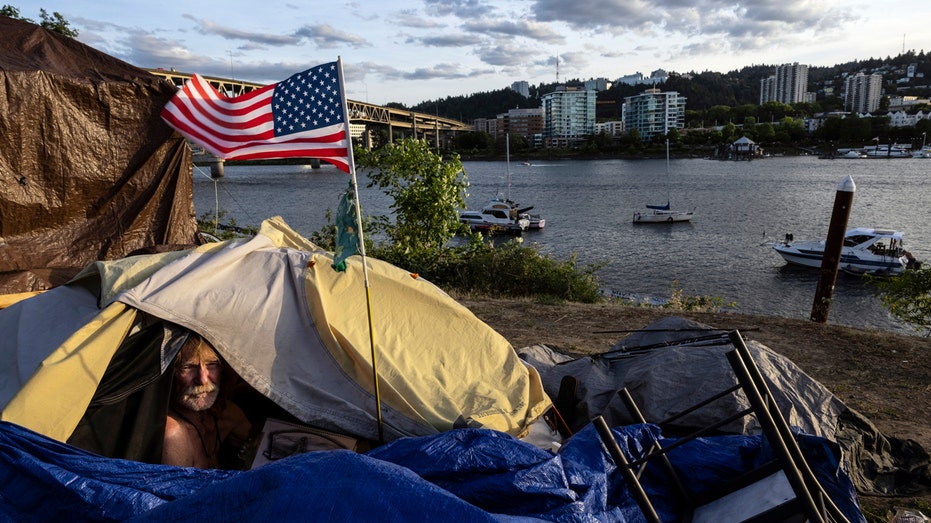
Homeless people who camp on public property in Portland, Oregon, and reject offers of shelter could be fined up to $100 or sentenced to up to seven days in jail under new rules approved unanimously by the City Council on Wednesday. When shelter is not available, the same penalties apply for blocking sidewalks, using gas heaters or starting fires, or having belongings more than 2 feet (0.6 meters) outside of tents. CRISIS IN THE NORTHWEST: CITY’S BATTLE AGAINST HOMELESSNESS COULD HAVE DIRE EFFECTS FOR THE NATION The ordinance takes effect immediately, and enforcement is set to begin in the coming weeks, Mayor Ted Wheeler’s office said. “Addressing the issue of unsheltered homelessness in our city is a complex and urgent matter, and I believe this ordinance represents a significant step forward in our ongoing efforts to manage public spaces effectively,” Wheeler said in a statement. Those who accept offers of shelter won’t be cited, according to Wheeler’s office. For those who are cited, the courts will determine whether to waive fines. The ordinance says it encourages diverting people to assessment, emergency shelter or housing instead of jail. The mayor’s office said the new rules seek to comply with a state law that requires cities to have “objectively reasonable” restrictions on when, where and how people camp in public. A previous, stricter version of the ordinance that banned camping during daylight hours, at risk of fines or jail time, has been put on hold by a judge as a lawsuit challenging the measure filed by advocates on behalf of homeless people makes its way through the courts. The measure comes as Portland and other cities across the U.S. West struggle to address a growing number of homeless encampments. Many officials say they need to be able to manage encampments to keep streets safe and sanitary, while advocacy groups say people shouldn’t be criminally punished for lacking housing. The U.S. Supreme Court, after hearing a case brought by the small Oregon town of Grants Pass, is weighing whether cities can punish people for sleeping outside when shelter space is lacking. It’s the most significant case before the high court in decades on the issue and comes amid record homelessness nationwide.
Wisconsin Dems invest $7M in TV ads for 5 key state Senate races
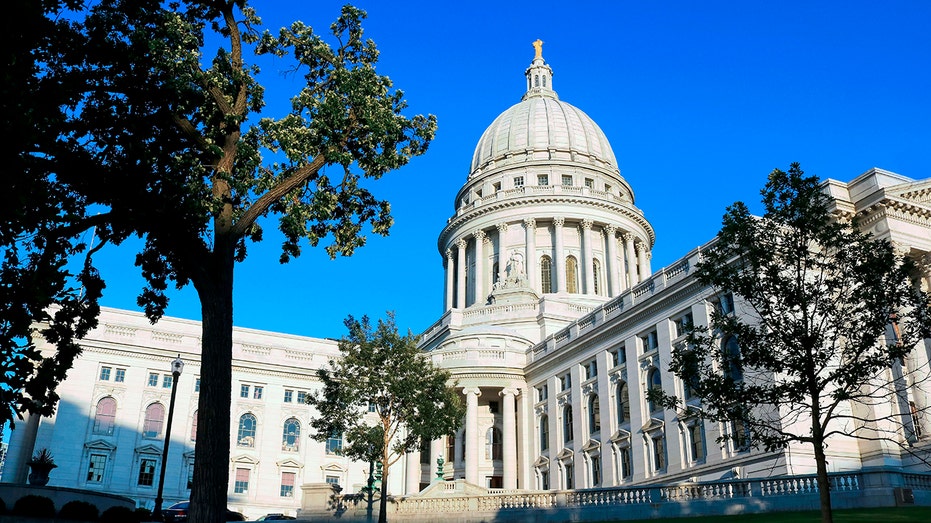
Wisconsin Democrats plan to spend $7 million on television ads in five state Senate races they believe are key to regaining control of the chamber. The State Senate Democratic Committee said Wednesday that the buy will target races in Milwaukee’s northern suburbs, the rural areas north of Madison, the Fox Cities, Green Bay and La Crosse. Republicans currently hold a 22-10 supermajority in the 33-seat Senate, but Democrats hope new district boundaries Gov. Tony Evers signed in February will help them chip away at the GOP advantage. WISCONSIN LAWMAKERS VOTE TO AUDIT STATE DEI INITIATIVES Sixteen Senate seats are up in November, including eight currently held by Republicans and four open seats. Four Democrats are not up for re-election this cycle; that means Democrats need to win 13 seats in November to gain the majority. In a sign of how the new maps have energized the party, Democrats have put up a candidate in every Senate race on the ballot for the first time in more than 20 years. Democrats plan to run ads in the 8th Senate District, which includes Milwaukee’s conservative leaning northern suburbs. The new maps pulled Republican Sen. Duey Stroebel out of his old district and put him in the 8th, where he’ll face Democrat Jodi Habush Sinykin. Ads are also on tap in the redrawn 14th District, which covers parts of Columbia, Marquette, Green Lake and Waupaca counties. Democrat Sarah Keyeski is running against GOP incumbent Joan Ballweg there. The committee also will target the 18th District, which now runs from Appleton south to Oshkosh along Lake Winnebago’s western shore. The seat is open, with Democrats Kristin Alfheim and Joseph Carmen and Republicans Anthony Phillips and Blong Yang are all running. Ads are slated for the 30th District as well. That district covers the western shore of the bay of Green Bay, from the city of Green Bay north to Marinette. The seat is open. Democrat Jamie Wall and Republican Jim Rafter are running for it. The last district in the committee’s ad buy is the 32nd in western Wisconsin, where Republican Stacey Klein is looking to unseat Democratic incumbent Brad Pfaff. Andrew Whitley, the State Senate Democratic Committee’s executive director, said the committee picked those districts because President Joe Biden and Gov. Tony Evers won them in 2020 and 2022, respectively, suggesting Democratic legislative candidates stand a good chance of success in them. The ads will be tailored to the issues in each district and will begin airing after Wisconsin’s Aug. 13 primary, he said. A spokesperson for Senate Republican Majority Leader Devin LeMahieu didn’t immediately respond to an email.
Undercover operation nets arrests as New Mexico’s top prosecutor blames Meta for online predators

New Mexico’s top prosecutor announced charges Wednesday against three men who are accused of using Meta’s social media platforms to target and solicit sex with underage children. The arrests are the result of a monthslong undercover operation in which the suspects connected with decoy accounts that were set up by the state Department of Justice. The investigation began in December around the time the state filed a civil lawsuit against the social media giant, claiming Meta was failing to take basic precautionary measures to ensure children were safe on its platforms. NEW MEXICO’S TOP PROSECUTOR WANTS TO SET UP A CIVIL RIGHTS DIVISION TO HELP CHILDREN IN STATE CUSTODY New Mexico Attorney General Raúl Torrez said during a news conference Wednesday that the suspects communicated and exchanged explicit sexual content through Facebook’s messenger app and were clear in expressing a sexual interest in children. “It’s extraordinarily concerning to us just how easily these individuals found the undercover personas that were created,” Torrez said. “And it is, frankly, I think a wakeup call for all of us to understand just how serious these kinds of threats are.” He placed blame on Meta executives, including CEO Mark Zuckerberg, and suggested that the company was putting profits above the interests of parents and children. “For those of us who are engaged in this work, we are simply tired of the rhetoric,” he said. “We are tired of the assurances that have been given to members of our communities, to members of Congress, to policymakers that all reasonable steps have been taken to ensure that this type of behavior doesn’t occur.” Meta disputed the allegations and reiterated Wednesday that it uses technology to prevent suspicious adults from finding or interacting with children and teens on its apps and that it works with law enforcement in investigating and prosecuting offenders. The company also said it has hired child safety experts, reports content to the National Center for Missing and Exploited Children and shares information and tools with others to help root out predators. “This is an ongoing fight, where determined criminals evolve their tactics across platforms to try and evade protections,” Meta said in an emailed statement. While the state attorney general’s office will continue working to identify predators who are targeting children, Torrez said it’s too early to say whether that work will have a bearing on the civil litigation. As part of that lawsuit, New Mexico prosecutors say they have uncovered internal documents in which Meta employees estimate about 100,000 children every day are subjected to sexual harassment on the company’s platforms. The three defendants in the criminal case were identified as Fernando Clyde, Marlon Kellywood and Christopher Reynolds. Prosecutors are seeking to detain them pending trial on charges that include child solicitation by an electronic communication device. Hearings have yet to be scheduled, and court records did not list attorneys who could speak on behalf of Clyde and Kellywood. A message was left with the public defender’s office, which is representing Reynolds.
Pete McCloskey, GOP congressman who once challenged Nixon, dies at 96

Pete McCloskey — a pro-environment, anti-war California Republican who co-wrote the Endangered Species Act and co-founded Earth Day — has died. He was 96. A fourth-generation Republican “in the mold of Teddy Roosevelt,” he often said, McCloskey represented the 12th Congressional District for 15 years, running for president against the incumbent Richard Nixon in 1972. He battled party leaders while serving seven terms in Congress and went on to publicly disavow the GOP in his later years. ON THIS DAY IN HISTORY, AUGUST 8, 1974, PRESIDENT NIXON ANNOUNCES HIS RESIGNATION He died at home Wednesday, according to Lee Houskeeper, a family friend. Years after leaving Washington, McCloskey made one last bid for elective office in 2006 when he challenged Richard Pombo of Northern California’s 11th District in a primary race that McCloskey described as “a battle for the soul of the Republican Party.” After losing to Pombo, who had spent most of his tenure in Washington attempting to undo the Endangered Species Act, he threw his support behind Democrat Jerry McNerney, the eventual winner. “It was foolish to run against him (Pombo), but we didn’t have anybody else to do it, and I could not stand what a—— they’d become,” the frank-talking former Marine colonel said of the modern GOP in a 2008 interview with The Associated Press. McCloskey cited disillusionment from influence peddling and ethics scandals under the George W. Bush administration as reasons why he switched parties in 2007 at the age of 79. “A pox on them and their values,” he wrote in an open letter explaining the switch to his supporters. “McCloskey was a rarity in American politics — his actions were guided by his sense of justice, not by political ideology,” Joe Cotchett, his law partner since 2004, said in a statement. “He hated inequity and did not hesitate to take on members of his own political party.” Born in Loma Linda, California, on Sept. 29, 1927, as Paul Norton McCloskey Jr., he graduated from South Pasadena High School, where the second baseman made the school’s baseball hall of fame, although he self-deprecatingly called himself “perhaps the worst player on the baseball team.” McCloskey joined the Marine Corps as an officer and led a rifle platoon during some of the most intense fighting of the Korean War. He was awarded the Navy Cross for extraordinary heroism, the nation’s second-highest honor, a Silver Star for bravery in combat and two Purple Hearts. He earned a law degree from Stanford University and founded an environmental law firm in Palo Alto before making the move to public office. In 1967, he defeated fellow Republican Shirley Temple Black and Democrat Roy Archibald in a special election for the San Mateo County congressional seat. The left-leaning McCloskey had a thundering presence in Washington, attempting to get onto the floor of the 1972 Republican National Convention during his bid to unseat then-President Nixon on an anti-Vietnam War platform. He ultimately was blocked by a rule written by his friend and law school debate partner, John Ehrlichman, that said a candidate could not get to the floor with fewer than 25 delegates. McCloskey had one. Still, McCloskey loved to say he finished second. He would later visit Ehrlichman in prison, where Nixon’s former counsel served 1.5 years for conspiracy, perjury and obstruction of justice in the Watergate break-in that led to the president’s resignation. While in office, McCloskey also was known for befriending Palestinian leader Yasser Arafat and criticized Israeli influence on American politics. The congressman was the first to demand Nixon’s impeachment, and the first to demand a repeal of the Gulf of Tonkin resolution that allowed the Vietnam War. But his enduring legacy is the Endangered Species Act, which protects species designated as endangered or threatened and conserves the ecosystems on which they depend. McCloskey co-wrote the legislation in 1973, after a campaign by young people empowered by Earth Day activities successfully unseated seven of 12 Congress members known as “The Dirty Dozen” for their anti-environment votes. “On that day, the world changed,” McCloskey recalled in 2008. “Suddenly, everybody was an environmentalist. My Republican colleagues started asking me for copies of old speeches I had given on water and air quality.” “A powerful champion of endangered species, Pete, ironically, became one,” said Denis Hayes, co-organizer of the Earth Day, about the rarity of a “green, anti-war Republican.” After 15 years in the House, he lost his run for a Senate seat to Republican Pete Wilson, who went on to be California’s governor. He moved back to rural Yolo County, relishing the life of a farmer and part-time attorney. “You know, if people call you ‘congressman’ all the time, you’ll end up thinking you’re smarter than you are,” he said. McCloskey, however, couldn’t stay quiet forever. In 2006, after his unsuccessful race against Pombo, he helped form the Revolt of the Elders Coalition, a group of retired Republican congressmen who pushed to get soldiers more money for college, undo measures that made it tougher to investigate ethics violations and rallied against those who had received funding from disgraced lobbyist Jack Abramoff, including Pombo. “If you can do something at age 80 that positively affects our country, you should be proud of it. Otherwise there’s no redeeming value in getting older,” he said. McCloskey is survived by his wife, Helen — his longtime press secretary whom he married in 1978 — and four children by his first wife: Nancy, Peter, John and Kathleen.
Pennsylvania House passes bill aimed at regulating social media platforms’ interactions with underage users

Pennsylvania’s state House of Representatives on Wednesday approved legislation aimed at regulating how online social media platforms interact with children, although its provisions are similar to those in state laws being blocked in federal courts or in a case before the U.S. Supreme Court. The bill passed nearly along party lines, 105-95, with 10 Republicans voting with most Democrats for it and seven Democrats voting with most Republicans against it. It faces an uncertain future in the Republican-controlled state Senate, and the nation’s highest court may soon decide whether state-level provisions like the ones in the bill can be enforced. PENNSYLVANIA SENATE APPROVES GOP’S $3B TAX-CUTTING PLAN, OVER OBJECTIONS OF TOP DEMOCRATS The bill would require social media platforms to allow users to report “hateful conduct,” such as threats or bullying, and publicize a policy for how they will respond to such reports. It also would require users under 18 to get parental consent and bar the platforms from “data mining” users under 18, or sifting through their user data to find specific information or develop insight into patterns or habits. The sponsor, Rep. Brian Munroe, D-Bucks, said the concepts in the bill are nothing new and similar to age-related restrictions that the government has put on movies, driving, drinking alcohol or smoking, or the parental permissions that are required for things like field trips or school sports. “Time and time again, we’ve acted in the best interests of children by looking at the exposure to potentially harmful activities and said, ‘not at that age and not without your parents’ OK,’” Munroe told colleagues during floor debate. Parents and children are asking for such regulation, Munroe said. The Washington-based Computer and Communications Industry Association — whose members include Google, owner of YouTube, and Meta, owner of Facebook and Instagram — pointed out that the legislation, called House Bill 2017, has similarities to laws in other states that are being challenged in court. “While the goal of protecting younger users is commendable, HB2017 risks infringing upon younger users’ ability to access and engage in open online expression and could cut off access to communities of support,” the association said in a statement. “There are also significant data privacy and security concerns associated with the data collection that would be required to verify a user’s age and a parent/legal guardian’s relationship to a minor.” California-based Meta has said parental supervision tools and other measures already are in place to ensure teens have age-appropriate experiences online, and that algorithms are used to filter out harmful content. The bill’s “hateful conduct” provision is based on a 2022 New York law that has been blocked in federal court. Last year, Utah became the first state to pass laws that require minors to get parental consent before using social media. That law has been challenged in federal court by the trade group NetChoice. Also, last year, federal judges put on hold an Arkansas law that required parental consent for children to create social media accounts and a California law barring tech companies from profiling children or using personal information in ways that could harm children physically or mentally. Earlier this year, the U.S. Supreme Court heard arguments in a case that sprang from legal challenges to state laws in Florida and Texas that seek to regulate Facebook, TikTok, X and other social media platforms. The details of the two laws vary, but both sought to prevent the social media companies from censoring users based on their viewpoints.
Trump rebukes Marjorie Taylor Greene’s failed attempt to oust Speaker: ‘Not the time’

Former President Donald Trump called on House Republicans to not vote in favor of Rep. Marjorie Taylor Greene, R-Ga., saying “this is not the time” to oust House Speaker Mike Johnson. The House of Representatives on Wednesday killed an effort by Greene and Rep. Thomas Massie, R-Ky., to vote on vacating the chair. Green appeared to catch most Congressional watchers by surprise when she moved to force a vote on her motion to vacate the chair, which should have allowed for the vote. Though she has been seen in the past touting a MAGA hat in favor of Trump, the former president called on Republicans to table her motion. “I absolutely love Marjorie Taylor Greene. She’s got Spirit, she’s got Fight, and I believe she’ll be around, and on our side, for a long time to come,” Trump posted on Truth Social. “However, right now, Republicans have to be fighting the Radical Left Democrats, and all the Damage they have done to our Country. With a Majority of One, shortly growing to three or four, we’re not in a position of voting on a Motion to Vacate. At some point, we may very well be, but this is not the time.” HOUSE SQUASHES MARJORIE TAYLOR GREENE’S MOTION TO OUST SPEAKER JOHNSON He continued to say he is leading in the presidential polls, both nationally and in swing states. Trump said Republicans are doing well in the Senate, and he believed the party would do well in the House. He then warned about giving off the message that Republicans were not unified. MARJORIE TAYLOR GREENE FILES MOTION TO OUST SPEAKER JOHNSON “But if we show DISUNITY, which will be portrayed as CHAOS, it will negatively affect everything,” he wrote. “Mike Johnson is a good man who is trying very hard. I also wish certain things were done over the last period of two months, but we will get them done, together. “It is my request that Republicans vote for “THE MOTION TO TABLE,” Trump added. “We WILL WIN BIG – AND IT WILL BE SOON!” Johnson got overwhelming Democratic and Republican support for the table vote, which passed 359 to 43, averting a vote on her motion. Just 11 Republicans voted against tabling the measure, along with 32 Democrats. HOUSE DEMS SAY THEY’LL BLOCK MARJORIE TAYLOR GREENE FROM OUSTING SPEAKER JOHNSON On the Republican side, Johnson won the support of 196 members, while 163 Democrats also voted to shield him. The House GOP side of the chamber erupted in cheers when her move was squashed. Greene has been threatening to force a vote on taking Johnson’s gavel since late March in protest of his handling of government funding and foreign aid. Her resolution, known as a motion to vacate the chair, will now have to be voted on or tabled after Greene noticed it as “privileged” on Wednesday night — meaning House leaders have two legislative days to take it up. Fox News Digital’s Elizabeth Elkind contributed to this report.
GOP bill adding citizenship question to 2030 census passes House without a single Democrat

The House of Representatives passed a bill Wednesday evening to add a citizenship question to the next U.S. census, with zero Democrats voting in favor. “If you are an illegal immigrant, you should not be represented in the U.S. Congress,” House Majority Whip Tom Emmer, R-Minn., told Fox News Digital after the vote. “It’s a shame that House Democrats are allowing their open-borders agenda to get in the way of common sense.” The legislation is called the Equal Representation Act, led by Rep. Chuck Edwards, R-N.C. In addition to including a question on citizenship status on the census, the bill would also exclude non-citizens from the population count when factoring how many lawmakers in the House of Representatives each state gets, as well as the number of electors for all 50 states. It passed along party lines with 206 Republicans in favor and 202 Democrats against. SANCTUARY CITY POLICY ARREST OVER 1K MIGRANTS FROM THIS COUNTRY AS RESIDENTS RAGE AGAINST DEM LEADERS “Though commonsense dictates that only citizens should be counted for apportionment purposes, illegal aliens have nonetheless recently been counted toward the final tallies that determine how many House seats each state is allocated and the number of electoral votes it will wield in presidential elections,” Edwards said during debate on the bill. “And since the illegal alien population is not evenly distributed throughout the nation, American citizens in some states are losing representation in Congress to illegal aliens in other states.” There was some uncertainty over whether the bill would pass given near-uniform opposition from Democrats as well as some Republicans. Two House GOP aides told Fox News Digital earlier Wednesday that Republican lawmakers in New York and California, as well as several other establishment GOP members had reservations about the bill. And Speaker Mike Johnson, R-La., can afford precious little dissent, overseeing just a one-seat majority in the House. A majority of House Republicans support the bill, however, citing the record levels of illegal immigrants who have come to the U.S. under President Biden’s tenure. Including a citizenship question on the U.S. census is not a new idea, however – former President Trump tried to have it added before the 2020 census, but it was blocked by the Supreme Court. One of the Democrats speaking out against the bill ahead of the Wednesday vote was Rep. Nanette Barragan, D-Calif., chair of the Congressional Hispanic Caucus. OUTRAGED RESIDENT WARNS WHAT $70M MIGRANT FUNDING WILL DO TO SANCTUARY CITY “This requirement would deprive tens of millions of immigrants their right to representation,” Barragan said, adding it would have a “chilling effect on participation in the census.” “Its accuracy would be destroyed,” she said. Rep. Clay Higgins, R-La., a supporter of the bill, argued it would not negate the census’ intended purpose of counting everyone in the U.S. “While this bill will continue to count every person in the United States, it adds a simple question – are you a United States citizen?” Higgins posed. “The problem is the level of illegal persons who now live in our country because of President Biden’s failure at the southern border.” A New York Republican in favor of the bill, Rep. Nick Langworthy, R-N.Y., said on the House floor, “We’re talking millions of people who are not American citizens having a major say in American elections.” Another lawmaker supporting the bill, Rep. Tim Burchett, R-Tenn., accused Democrats of opposing the bill because it would negatively impact their power in Congress. CHICAGO CITY COUNCIL APPROVES $70M FOR MIGRANT CARE DESPITE VOTER BACKLASH “You could see why my Democratic colleagues would have a problem with this bill. Factoring illegal aliens into the process skews things in their favor,” Burchett said. “If the census does not include the citizenship question, states with more illegal aliens will get more congressional districts and more electoral college votes.” Rep. Jamie Raskin, D-Md., the top Democrat on the House Oversight Committee, argued against the bill, “I’m for a whole lot more lawful immigration to America, less unlawful immigration to America…and a lot less demagoguery about who we are as a country.” He later added, “One should be clear that under this legislation, they’re roping out of reapportionment not just undocumented people, they’re roping out permanent residents…they’re talking about disenfranchising from the reapportionment process, millions of people who are lawfully [in the U.S.].”