

With 2024 presidential contest looming, Georgia governor signs new election changes into law
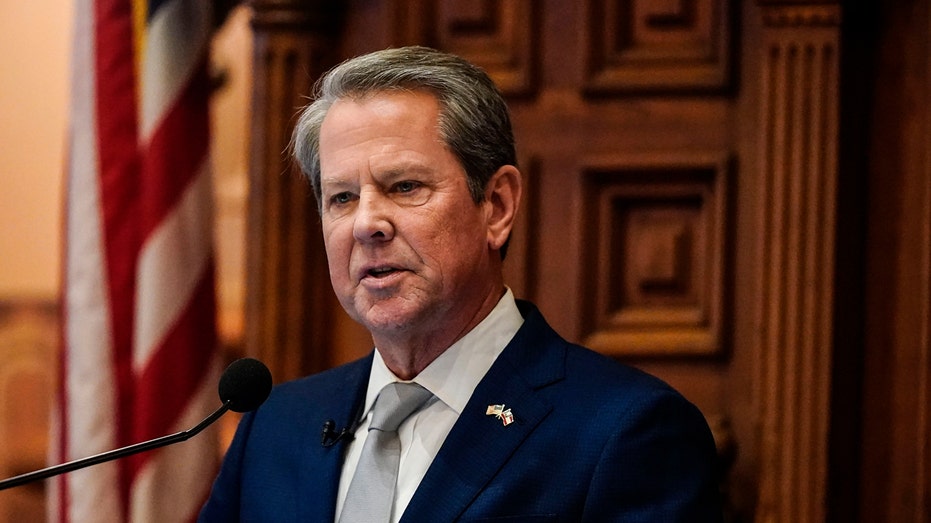
Gov. Brian Kemp signed legislation Tuesday that makes additional changes to Georgia’s election laws ahead of the 2024 presidential contest in the battleground state, including defining probable causes for removing voters from the rolls when their eligibility is challenged. Republican activists — fueled by debunked theories of a stolen election — have challenged more than 100,000 voters in the state in recent years. The activists say they are rooting out duplicate records and removing voters who have moved out of state. GEORGIA POLICE REMOVE SQUATTERS ALLEGEDLY OCCUPYING HOME SINCE CHRISTMAS The bill Kemp signed into law — SB 189 — lists death, evidence of voting or registering in another jurisdiction, a tax exemption indicating a primary residence elsewhere, or a nonresidential address as probable causes for removing voters from the rolls. Most controversially, it says the National Change of Address list can be considered, though not exclusively. Supporters have said the probable cause definition would make the challenge process more difficult. Opponents have disputed that, saying the changes would enable more baseless attacks on voters that would overwhelm election administrators and disenfranchise legitimate voters. For example, people sometimes live at a place of business, which would be considered a nonresidential address. Officials with Georgia Secretary of State Brad Raffensperger’s office say there are more reliable types of information, such as driver’s license data, to confirm a voter’s eligibility. The Georgia bill also allows challenges to be accepted and voters removed from the rolls up until 45 days before an election. That provision in part has prompted the threat of lawsuits from liberal groups because federal law says states and counties can’t make systematic changes to voting rolls within 90 days of a federal election. The measure also says homeless people must use the county voter registration office as their address instead of where they live. Opponents have said that could make it harder for homeless citizens to cast ballots because their registered polling place might be far away. Fair Fight Action, a voting rights group founded by former Democratic Georgia gubernatorial candidate Stacey Abrams, slammed the signing of SB 189, calling the measure a “voter suppression bill that emboldens right-wing activists in their efforts to kick Black and brown voters off the rolls.” “By signing SB 189 to become law, Brian Kemp delivered a gift to MAGA election deniers,” the group said in a statement. Andrea Young, executive director of the ACLU of Georgia, called the bill a “step back for voters’ rights and voting access.” “We are committed to protecting Georgia voters and will see the governor in court,” she said in a statement. An email to a spokesman for the governor’s office, Garrison Douglas, was not immediately returned. The bill also grants access to Georgia’s ballot to any political party that has qualified for the presidential ballot in at least 20 states or territories. The change could bolster independent candidates such as Robert F. Kennedy Jr., whose campaign has spooked Democrats worried it could draw support away from President Joe Biden. Other changes in the bill include removing Raffensperger from his ex-officio spot on the State Election Board. Kemp and Republican lawmakers had previously removed Raffensperger from his voting position on the board. Many Republicans who believe debunked theories that former President Donald Trump was cheated out of Georgia’s 16 electoral votes in 2020 view Raffensperger as a particular enemy because the Republican secretary of state has forcefully defended the election results showing Biden won. Raffensperger and some others had lobbied for Kemp, himself a former secretary of state, to veto the bill. The bill, additionally, says that beginning July 1, 2026, the state can no longer use a kind of barcode called a QR code to count ballots created on the state ballot marking devices. That is how votes are counted now, but opponents say voters don’t trust QR codes because they can’t read them. Instead, the bill says ballots must be read using the text, or human-readable marks like filled-in bubbles, made by the machines. The bill also requires counties to report the results of all absentee ballots by an hour after polls close. It also lets counties use paper ballots in elections in which fewer than 5,000 people are registered, though that change will not take effect until 2025. Kemp on Tuesday vetoed a separate election bill that would ban political contributions by foreign nationals and impose additional registration requirements on agents of foreign principals. The governor noted that such donations are already prohibited by federal law, and he said some of the registration requirements were not intended by the bill’s sponsor.
Visakhapatnam constituency, Lok Sabha elections: Know polling date, candidates and more
The Visakhapatnam One of Andhra Pradesh’s 25 Lok Sabha (parliamentary) constituencies is the Lok Sabha constituency.
Wisconsin wedding barns sue state over new liquor license law

A pair of Wisconsin wedding barns sued the state Tuesday seeking to block enactment of a new law that requires them to get liquor licenses similar to other establishments that host events. Owners and operators of wedding barns tried unsuccessfully last year to kill the law that overhauled regulation of the state’s multibillion-dollar liquor industry. The changes had been worked on for years, gaining buy-in from both Republicans and Democrats, large and small brewers, wholesalers and retailers. Farmview Event Barn, located in Berlin, and Monarch Valley Wedding & Events, in Blair, filed the lawsuit against the Wisconsin Department of Revenue. Patty Mayers, the assistant deputy revenue secretary, declined to comment on the lawsuit. COURT CLEARS WAY FOR HIGH-VOLTAGE POWER LINE SET TO CROSS MISSISSIPPI RIVER REFUGE The new law affects every level of the state’s alcohol industry, governing the licensing, producing, selling and distribution of beer, wine and liquor. That includes new requirements on predominantly rural facilities often located on farms that host wedding receptions and other events, but aren’t traditional bars, restaurants or entertainment venues. The new law requires such venues to either get a permit or license to sell or allow alcohol legally starting in 2026. Currently, wedding barns and other private event venues don’t need liquor licenses to operate, and many contract with licensed vendors to provide alcohol at events. Under the law, wedding barn owners could either get a permit that would allow them to host events six times a year or no more than once a month — or obtain a liquor license that would allow them to sell alcohol at as many events as they wish. The lawsuit, filed in Trempealeau County Circuit Court, alleges that the law violates equal protection guarantees and the right to earn a living under the Wisconsin Constitution by imposing an illegal, non-uniform tax. “The effect of the new regulatory framework, if not the intent, is to prevent competitive innovation in the wedding venue industry,” the lawsuit filed by the Wisconsin Institute for Law & Liberty argues. “The government lacks any power to engage in cronyism.” Neither of the wedding barns that filed that lawsuit has a liquor license. They also don’t sell or provide alcohol, but both allow for those who rent the facility and their guests to bring alcohol and consume it on site. Bars, restaurants and operators of other event facilities have argued for years that this gives wedding barns a competitive edge. The lawsuit also argues that the law allows for exemptions that are unconstitutionally arbitrary and nonsensical. Exempt properties include those owned by municipalities, schools, churches and clubs, and venues located in a professional stadium district, including parking lots around Lambeau Field in Green Bay and American Family Field in Milwaukee. Daniel Gallagher, owner of Monarch Valley Wedding & Events, said requiring his business to be a liquor retailer in a dry township will cause him to go out of business. Jean Bahn, owner of the Farmview Event Barn, said hosting weddings “allows us to pay for upgrades to our home and farm equipment to keep our farm up and running. This legislation was designed by special interests in Madison to limit competition, and that’s not right.”
Pennsylvania Senate approves GOP’s $3B tax-cutting plan, over objections of top Democrats

Republican lawmakers on Tuesday advanced legislation for a $3 billion tax cut, their just-unveiled counterproposal to Democratic Gov. Josh Shapiro’s budget plan as each side offers a competing vision for how to use a massive cash surplus sitting in the state treasury. The tax legislation cutting taxes on income and electric service passed the Republican-controlled Senate, 36-14, as Republicans positioned their top budget priority with less than two months until the new fiscal year starts on July 1. PENNSYLVANIA SCHOOLS PREPARED TO RETURN TO COURT IF STATE BUDGET FALLS SHORT ON FUNDING Republicans said it would be the largest tax cut in the state’s history. In the coming weeks, budget negotiations could revolve around Shapiro’s bid to boost spending by $3 billion, versus the Republican counterproposal to cut taxes by $3 billion. Top Democrats opposed the bill, even though it drew support from eight of 22 Democrats, and said that it won’t pass in the Democratic-controlled House. Republicans said the bill was intended as a marker for their priorities after listening to weeks and months of Democrats floating plans to spend the state’s considerable surplus. “What we’re saying … is if you think there’s too much money in the savings account, then let’s bring it back to the taxpayer who put it there in the first place,” Senate Majority Leader Joe Pittman told reporters in a news conference. Republicans contended that such tax cuts would improve household budgets and stoke the economy in a state that desperately needs to step up its growth and appeal to keep pace with faster-growing states. Shapiro’s administration expects to have $14 billion in reserve by the end of June, and what to do with it has been the subject of debate in Harrisburg. In a statement, Shapiro didn’t say whether he supports it, but did welcome a conversation about what to with the state’s surplus. “With this proposal, Senate Republican Leaders are coming to the table and acknowledging that we must invest in Pennsylvania’s future,” his office said. Democrats sought to attach tax breaks for the lowest earners — rejected by Republicans — and criticized the bill as lacking transparency, having emerged barely 24 hours before the vote. They also said it lacks any help for public schools, considering last year’s court decision that found Pennsylvania’s system of funding public schools violates the constitutional rights of students in poorer districts. Sen. Sharif Street, a Democrat from Philadelphia, said that attracting companies and new residents is about more than tax rates. People want a good quality of life, like good public schools and safe communities, and cutting taxes doesn’t help Pennsylvania improve its poor track record on funding schools and public safety, Street said. “It will not attract growth to Pennsylvania, it will not attract jobs and it is a failed strategy,” Street said during floor debate. The Senate GOP’s tax legislation would reduce the personal income tax rate from 3.07% back to the 2.8% level where it was before lawmakers in 2003 raised it to fill a deficit amid a foundering economy. The bill also would eliminate the 4.4% gross receipts tax on the profits of private electric utilities, a tax that dates back to the 1800s and and is passed through to commercial and residential electric customers. Shapiro’s $48.3 billion budget proposal, released in February, envisioned a $3 billion increase in spending, or about 7%, while leaning on Pennsylvania’s flush reserves to help underwrite it. Shapiro’s plan would send billions more for underfunded public schools, public transit, services for the intellectually disabled, higher education and major industrial and high-tech projects to invigorate a slow-growing economy. To balance, the proposal would shrink the state’s cash reserve from $14 billion to $11 billion. It has the backing of top Democratic lawmakers, but it has yet to see a vote in either chamber. Republicans say that Shapiro’s spending plan puts the state on a path to drain the surplus within a few years and require a tax increase, given the state’s slower-growing tax collections. The surplus began accumulating during the COVID-19 pandemic, when billions in federal aid covered some bills the state would normally pay and rising inflation pushed up tax collections on income and sales.
A possible problem (for Speaker Johnson’s leadership)

House Speaker Mike Johnson, R-La., remains House Speaker Mike Johnson. For now. Despite lots of threats, Rep. Marjorie Taylor Greene, R-Ga., has not yet pulled the trigger on her resolution to unseat Johnson. Greene and Rep. Thomas Massie, R-Ky., huddled with Johnson for a second consecutive day Tuesday. Just last week, Greene proclaimed she would initiate her resolution to dump Johnson. But Greene is holding back. Again. CARDONA GRILLED OVER BIDEN STUDENT LOAN HANDOUTS FOR CAMPUS ANTI-ISRAEL AGITATORS ‘BREAKING THE LAW’ She first threatened to force the House to vote on her measure in mid-March. “We had discussions in the speaker’s office, and right now the ball is in Mike Johnson’s court,” said Greene. When pressed when she might make her move against the speaker, Greene replied, “It’s up to Mike Johnson.” There are droves of unhappy House Republicans right now. Greene says she wants to get members on the record, showing who is for and against Johnson. Moreover, Greene could underscore what is likely widespread support for Johnson. But a prospective vote total on Greene’s unorthodox gambit to pluck Johnson from the speaker’s suite would serve as an important metric. It would serve as a gauge of what could be a cataclysmic set of political events that might unfold late this year and early next. In fact, they could paralyze the republic. To wit: If Greene ever called up her resolution, the House will first vote to block Greene from ever offering her motion to “vacate the chair” and mandate a new vote for speaker. Like most things, it’s about the math. So let’s explore that for a moment. Granted, there will likely be some GOPers who oppose tabling. In other words, there’s an unknown universe of Republicans who would be on the record, preferring that the House take a vote of no confidence on Johnson. But the House will likely short circuit that effort. No, things haven’t gone well at all for House Republicans since they won back the majority in the 2022 fall midterms. The House consumed five days and 15 rounds just to elect former House Speaker Kevin McCarthy, R-Calif., in early January 2023. And it only took House GOPers nine months to remove McCarthy. That prompted a 22-day interregnum in the House. It paralyzed the institution from doing anything until it finally elected Johnson as McCarthy’s successor. Rank-and-file Republicans are exhausted by the daily internecine drama surrounding Johnson and Greene. Moreover, most House Republicans concede they’ve had it with Greene and don’t want to fuel her enterprises. “We don’t like it. We’d be angry about it because all it does is weaken all of us,” said Rep. Don Bacon, R-Neb. “Tactically and strategically, it’s not smart.” Rep. Paul Gosar, R-Ariz., had signed on to Greene’s gambit to vacate the speakership of Johnson. But Gosar is suspect about the timing. “I don’t think it’s going to happen this week,” said Gosar. “I hope it doesn’t happen this week. So I’ll leave it at that.” Yours truly asked Johnson about the longstanding threat by Greene. REPUBLICANS BELIEVE COLLEGE CAMPUS CHAOS WORKS IN THEIR FAVOR “It’s not good for the country, the conference or the cause,” replied Johnson. The fact that Democratic leaders announced they would try to help Johnson out via a parliamentary maneuver to remove him seemed to pour accelerant on the embers of the House Republican Conference. Former House Speaker Nancy Pelosi, D-Calif., said she supported the move by House Minority Leader Hakeem Jeffries, D-N.Y., to bring in the Democratic cavalry for Johnson. “I think he’s very much in touch with our caucus,” replied Pelosi. I then asked Pelosi what this means about Johnson if he must lean on the minority to cling to his job. “He doesn’t have to turn to the minority for support,” replied Pelosi. “The minority party is saying we support the integrity of the House of Representatives and will not let it be littered by nonsense.” A cynic might point out that Democrats never came to the rescue of McCarthy. But Democrats contend that McCarthy went back on a major spending agreement and spoke derisively of the other party. Yes, there are chasms between Democrats and Johnson. But Democrats at least believe they got what they need from Johnson — a bill to fund Ukraine and an honest broker when it comes to spending deals. However, in a Machiavellian twist, did Democrats actually stoke more chaos in the Republican Conference by saying they would back Johnson? Hence, the reason Greene is now meeting with Johnson on a regular basis? Even if that’s not the intent, the outcome is hard to argue with. There’s turmoil among House Republicans now. Rank-and-file Republicans are also noticing how much attention Greene and Massie receive. They are grumbling about the daily drama. “You hold a big press conference last week to say you are going to do it this week. And then you go through the same process again,” groused Rep. David Joyce, R-Ohio. “Are we fundraising or are we trying to get something accomplished on the floor?” Joyce also suggested Johnson might “create a revolt if he caters to any one group who threatens him.” As Shakespeare wrote, what is past is prologue. And that’s why the bedlam of House Republicans now might reveal something rather jarring about the future when it comes to Johnson, any other potential Republican Speaker and the presidency. The House has now burned 28 of the 494 days since the 118th Congress commenced on Jan. 3, 2023, fighting over a speaker. By rule, the House can do nothing — absolutely nothing — until there is a speaker. It can’t vote. It can’t create committees. It can’t legislate. It can’t even swear in its members. The House spent five days before it finally elected McCarthy as speaker in January 2023. It was the longest speaker election since the late 1850s. The House then torched 22 days in October after it jettisoned McCarthy before finally electing Johnson. Here’s the problem: Let’s say for
Semi-automatic gun ban nixed in Colorado’s Democratic-controlled statehouse after historic progress
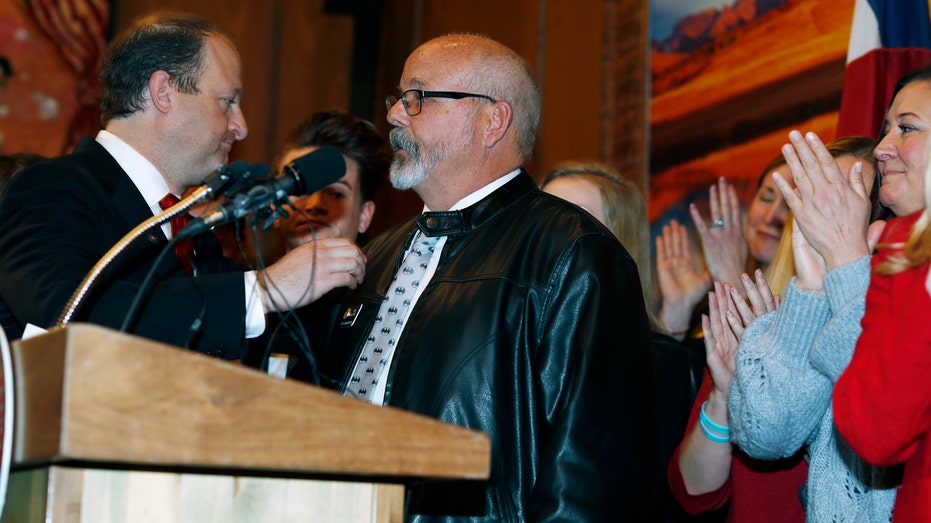
A bill to ban the sale and transfer of semi-automatic firearms was nixed in Colorado’s Democratic-controlled Legislature on Tuesday as lawmakers pressed forward with a slew of other gun control bills on the 25th anniversary year of the Columbine High School massacre. The western state has a deep history with firearms that is pockmarked by some of the most high-profile mass shootings nationwide. Both factors loom large over gun control debates in the Legislature, complicating attempts at such bans that nine other Democratic-controlled states have in place, including California and New York. COLORADO DEMS PUSH SWEEPING GUN CONTROL LAWS THAT ARE FLYING UNDER NATIONAL RADAR: ‘PUBLIC IS FED UP’ The Colorado House passed the ban in a historic first and what proponents see as a “tremendous achievement” after roughly the same proposal was swiftly nixed last year. But some Senate Democrats are wary of the efficacy and breadth of the ban, which prohibits the sale, transfer and manufacture of semi-automatic firearms. Colorado’s blue shift is evident in part by a number of successful gun control measures passed last year, including raising the buying age for a gun from 18 to 21. Some half-dozen proposals are nearing passage this year, including a bill to put a measure on the November 2024 ballot to tax sales of guns and ammunition. Another would give the Colorado Bureau of Investigation more power to investigate gun sales that are already illegal. The state’s purple roots have frustrated attempts at a broader ban. A decade ago, two lawmakers were ousted in the state’s first recall elections over their support for bills that set limits on ammunition magazines and expanded background checks. “That history, I think, lingers,” said Democratic state Sen. Julie Gonzales, one of the semi-automatic ban bill’s sponsors. She added that the proposal’s success in the House “signals that there is a new space for us to have different conversations.” But for now, at a sparsely attended committee hearing Tuesday, Gonzales asked that the legislation be put to rest in the face of opposition from Senate Democrats. On that committee sits Democratic state Sen. Tom Sullivan, who would have been a “no” vote, along with Republican lawmakers who have decried the bill as an encroachment on Second Amendment rights. Sullivan’s son, Alex, was one of 12 killed in the 2012 Aurora theater shooting at a midnight screening of “The Dark Knight Rises.” The tragedy catapulted Sullivan into activism around gun control and then public office, where he has spearheaded many bills on the issue. Sullivan said the weapons that the bill seeks to curtail are involved in only a small fraction of gun deaths and injuries. Those firearms include a long list of semi-automatic rifles, along with some pistols and shotguns, with certain characteristics, such as a threaded barrel or detachable stock. Their prohibition wouldn’t make much of a dent in gun violence, Sullivan argued, and the proposal takes up immense political oxygen in the state capitol — energizing the opposition and detracting from more effective and less controversial gun control measures. “The narrative is all wrong,” Sullivan said. “That’s what they want you to believe, that it’s assault weapons and schools. It’s not. … It’s suicides and it’s domestic violence.” Democratic state Rep. Tim Hernández, one of the bill’s sponsors, said he’d had many discussions with Sullivan in the preceding months. “We both agree that an assault weapons ban is not a silver bullet to the epidemic of gun violence,” Hernández said. “For us to get to a place where we are interrogating all the ways that gun violence shows up, we have to run policies for all the ways it manifests itself.” The proposal is expected to be revived next year. Meanwhile, other bills nearing the governor’s desk include a proposal to require more rigorous safety training for someone seeking a concealed carry permit. And one would require firearm dealers to obtain a state permit, not just a federal one, to give regulators greater power to enforce state gun laws.
Court clears way for high-voltage power line set to cross Mississippi River refuge

A federal appeals court has cleared the way for utilities to finish building a high-voltage power line across a Mississippi River refuge. American Transmission Company, ITC Midwest and Dairyland Power Cooperative are in the final stages of constructing a 102-mile transmission line linking Iowa’s Dubuque County and Wisconsin’s Dane County. About a mile of the line would cross the Upper Mississippi River National Wildlife and Fish Refuge near Cassville, Wisconsin. WISCONSIN LAWMAKERS VOTE TO AUDIT STATE DEI INITIATIVES A coalition of conservation groups filed a federal lawsuit in March in hopes of stopping the crossing. The groups allege the U.S. Fish and Wildlife Service approved the crossing in February without adequate public comment. They also maintain that the agency and the utilities improperly reached a deal calling for the utilities to transfer land to the refuge in exchange for land within the refuge for the power line. U.S. District Judge William Conley issued a preliminary injunction blocking the land swap while he weighs the merits of the case. A three-judge panel from the 7th U.S. Circuit Court of Appeals struck down the injunction on Thursday. The panel ruled that Conley didn’t find that the conservationists were likely to win the case, a mandatory determination to win a preliminary injunction. Online court records show Conley has set a briefing schedule on the merits of the case that extends through late July, with a hearing set for Aug. 8. It’s unclear when the utilities might close the land deal and begin construction. Dairyland Power and ITC Midwest officials issued a joint statement Tuesday saying they were pleased with the 7th Circuit’s decision and they’re now free to complete the land exchange. The statement did not say when the utilities would close the deal and begin construction. ITC Midwest spokesperson Rod Pritchard said in response to a follow-up email from The Associated Press that the closing would happen “soon” and a construction schedule hasn’t been developed yet. Tina Shaw, a spokesperson for the fish and wildlife service, declined to comment because the case is still pending in Conley’s court. A public relations representative for Howard Learner, an attorney representing the conservationists, said she would try to schedule an interview with him.
Republican candidate selected as GOP seeks to flip Indiana House seat from blue to red

Randy Niemeyer will serve as the Republican nominee in one of Indiana’s most closely watched House races. Niemeyer, who won the Republican Party’s nomination for Indiana’s First Congressional District on Tuesday, will now face off against incumbent Democratic Rep. Frank Mrvan in the state’s general election later this year. Along with Niemeyer, two other candidates, Leyva and Ruiz took part in the GOP primary election. The seat – ranked as “Lean Democrat” by the Cook Political Report, a nonpartisan election analyst – is one the Republican Party is hoping to pick up this election cycle in an effort to strengthen its slim majority in the House. 6 REPUBLICAN CANDIDATES FOR GOVERNOR OF INDIANA TO DEBATE AHEAD OF PRIMARY Niemeyer, who received support from the national party in the race, serves as chair of the Lake County Republican Party and is the current 7th District Councilman. Prior to Tuesday’s election, Niemeyer insisted his experience in politics at a local level, paired with his being a small business owner, made him most suitable for the role. “I would say my credentials in local government speaks for itself. I’m happy to be part of the party,” Niemeyer said, according to the Chicago Tribune. “I’m proud of the work we have done in Lake County. I want to make sure we give the voters good choices … When people aren’t challenged, it doesn’t create the accountability our system needs.” Niemeyer also said he believes his experiences as a small business owner with certain financial struggles is “familiar to many” in the district who have faced economic woes in recent years. “That experience is something that is familiar to many, many people in our district … we have to go to work every day and make something out of nothing,” Niemeyer said. Leyva, who has been seeking the GOP nomination to represent the district since 2010, said prior to Tuesday’s election that he believed “this year is different.” FORMER HIGH SCHOOL WRESTLER TAKES DOWN INDIANA SANDWICH SHOP ATTACKER: ‘YOU SHOULD STAND UP FOR PEOPLE’ “This year is different. Even though they believe they have the chosen one with a lot of money, they don’t,” Leyva said, according to the Tribune. “The reason I want to hold this position is I want to prove an average working guy like myself … can actually do it.” Ben Ruiz, a political newcomer who has described himself as an “Ultra MAGA” Republican, also sought the party’s nomination on Tuesday. He, along with Leyva, have taken what appear to be shots at Niemeyer in the past. “We need to start putting our American culture first before anything else. I’m not picked by the establishment, that’s for sure … They chose to go with their preferred candidate of choice. They are able to control their candidate,” Ben Ruiz said last month, according to the Tribune. First elected to represent the Hoosier State’s First District in the House in 2020, Mrvan won re-election to his post after defeating Air Force veteran Jennifer-Ruth Green in the state’s 2022 general election. Mrvan defeated Green by more than 12,000 votes in the 2022 election, garnering 52.8% of the vote compared to Green’s 47.2%. The state’s First Congressional District has been represented federally by Democrats since 1931. The state’s general election is slated to take place on Nov. 5.
See the scope of flooding in East Texas

These graphics show how widespread flooding was in East Texas in late April and early May.
Indiana Rep. Spartz fends off GOP primary challengers in bid to retain House seat

Indiana Republican Rep. Victoria Spartz, a Ukrainian-born lawmaker, has won the GOP primary election to represent Indiana’s 5th Congressional District in the House. Spartz’s victory in the election comes after she announced in February that she would seek re-election, walking back a previous announcement she made last year. “Looking where we are today, and urged by many of my constituents, I do not believe I would be able to deliver this Congress, with the current failed leadership in Washington, D.C., on the important issues for our nation that I have worked very hard on,” Spartz said in a statement at the time. INDIANA REPUBLICAN REP. VICTORIA SPARTZ TO RUN FOR RE-ELECTION, REVERSING 2023 DECISION In February 2023, Spartz announced she would not run for re-election in the northern suburbs of Indianapolis so she could spend more time with her family. Spartz – the first and only Ukrainian-born House member – previously backed support for the war-torn country, but recently opposed sending aid to Ukraine ahead of her primary contest. Earlier this year, Spartz voted against sending $61 billion in aid to Ukraine. She defended the switch, arguing her loyalty is to America first and that she wanted to see policy on the U.S.-Mexico border included in the aid package, a position largely shared by her Republican challengers. The issue of U.S. funding for Ukraine amid its war with Russia has become an increasingly divisive topic among Republicans in the nation’s capital, where many have pressed for a drawdown in aid. Spartz is the first House Republican to lose a primary this year in a race that wasn’t affected by redistricting. 6 REPUBLICAN CANDIDATES FOR GOVERNOR OF INDIANA TO DEBATE AHEAD OF PRIMARY The primary marks the latest twist in Spartz’s political career. She won a tight primary race in 2020 and wasn’t challenged for the GOP nomination in 2022. Multiple Republicans challenged Spartz in the GOP race to represent the Hoosier State’s Fifth Congressional District, including Indiana state Rep. Chuck Goodrich, who outraised her by millions of dollars and became her main competitor in the primary. Others who posed an election challenge to Spartz include: Max Engling, Mark Hurt, Patrick Malayter, Matthew Peiffer, Lonnie Powell, Raju Chinthala, and Larry L. Salvage Jr. “As someone who grew up under tyranny, I understand the significance of these challenging times for our Republic, and if my fellow Hoosiers and God decide, I will be honored to continue fighting for them,” Spartz said of her constituents in February. The Democrats running to represent the state’s Fifth Congressional District include Ryan Pfenninger and Deborah A. Pickett. The general election is set for Tuesday, Nov. 5. The Associated Press contributed to this report.