

Columbia canceling graduation ceremony shows ‘inmates are running the asylum’: students
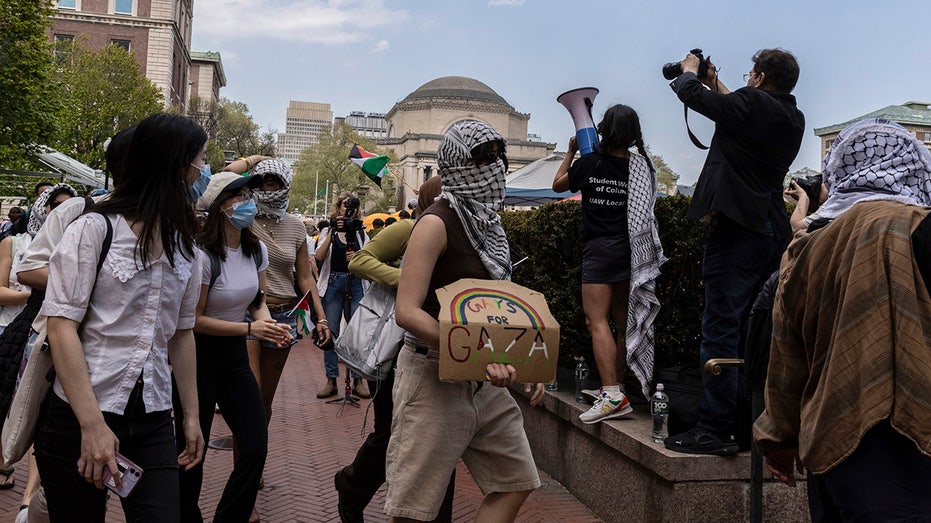
Several Columbia University students spoke out to Fox News Digital on Monday after administrators announced they would be canceling the school’s main commencement ceremony. Security concerns in the wake of raucous anti-Israel protests were top of mind in making the decision, a university official told Fox News. One graduating senior, who also testified before the House Education & Workforce Committee about the antisemitic agitators, said she did so in order to give voice to those in the community who all have the same concerns as well as a way to urge Columbia administrators to act. “I think that [Columbia] has the potential to be the amazing institution that I know that it is,” Yola Ashkenazie told Fox News Digital. Ashkenazie said she was disappointed that the main commencement ceremony was canceled, saying graduation festivities are as much for the students as they are for the parents and families who work hard to ensure their children can attend a venerated institution like Columbia. ANTI-ISRAEL UNREST FORCES COLUMBIA TO CANCEL LARGE COMMENCEMENT AS PROTESTS CONTINUE “So, it’s really sad that we don’t get to properly mark this moment with them and with all of our friends across all the different schools,” she said. Ashkenazie said administrators had at first acted like the anti-Israel protests were peaceful demonstrations, but she added that if that were true, she still would be attending graduation. “[W]hy would they cancel commencement if they thought that they were entirely peaceful? It doesn’t really make sense. And the administration can’t keep their story straight.” Ashkenazie also told Fox News she had been affected by antisemitic sentiment on campus long before the protests began in April. “So, I have been vocal [in] speaking out against antisemitism on campus since Oct. 7th, and the students sort of pegged me as that,” she said. TRUMP DECRIES COLUMBIA AGITATORS, CALLS CHARLOTTESVILLE ‘PEANUTS’ COMPARED TO CAMPUS ANTI-ISRAEL UNREST “So a couple of months ago, a cyberbullying Instagram account posted a photo of me holding Israeli flags, and that caused students to post horrible things about me on anonymous campus forums. I had people there, even an instance in which someone came up to me in the middle of campus and confronted me about my support for Israel. So yeah, it’s been an incredibly, incredibly frightening couple of months on campus.” Sophomore Elisha Baker isn’t graduating this year, but he told Fox News Digital the ceremony’s cancelation still affected him. “Here’s the thing about commencement. This movement that has been on campus has been advocating to ‘shut it down’ and to cancel joy. And by canceling commencement, it seems that the university has caved to both of those demands and basically allowed the mob to win,” he said. “And to me, that’s really sad. And my heart goes out to the seniors who lost high school graduation due to COVID, lost freshman year of college to COVID and now lost their senior springs and their graduations to a violent mob,” he said. Baker said he watched protesters unfurl a 20-foot pro-intifada banner from a major academic building in the wee hours of one recent morning. COLUMBIA LAW STUDENT GROUP REPORTEDLY DECLARES NO JEW IS SAFE UNTIL ‘EVERYONE IS SAFE’ “To me, that was just really sad – really shocking; violent and totally emblematic of exactly what this movement has been calling for this entire time, which is violence against Jews, which is a prolonged state of war rather than peace,” said Baker, who is Jewish. He told Fox News Digital that Jewish students have been subjected to hate speech and violence since the protests began. One of Baker’s friends had an Israeli flag ripped out of his hands by protesters, who purportedly tried to set it ablaze and later pelted him with projectiles. “That’s full-blown assault inside the campus gates,” Baker said. When asked about the prospect of not returning to campus because of the protests, Baker said the decision is difficult because to stay away might appear as “let[ting] the bully win.” “So, to me, to leave campus right now as a Jewish student is almost to give in to the mob. And yes, we have to be concerned for our safety. But also, there’s something about staying and about making very clear that these people can say, ‘We don’t want no Zionists here.’ But guess what? We’re still here. And you cannot bully Jewish students off of this campus.” “It’s up to the university to decide if wearing a kippah and a hostage dog tag … if that’s going to make me a target or if I’m safe here. Right. Because I deserve to be safe here.” HARVARD STUDENT SAYS ‘PRO-TERRORISM HATE FEST’ IS HAPPENING IN ENCAMPMENT BEYOND SCHOOL’S LOCKED GATES Meanwhile, Columbia junior Eden Yadegar told Fox News Digital the cancellation of commencement proves “the inmates are running the asylum.” “Columbia has completely abdicated leadership to a mob that is a small but rageful and vocal minority. And it’s really unfortunate that now, as a result, all students … are now having to face the consequences that this mob kind of forced everyone else to deal with and also that the Columbia administration put everyone in a situation to deal with,” she said. Yadegar said the school drew multiple proverbial “red lines” but then did not enforce the promised repercussions. “And so it’s no wonder that students think there are no consequences for their actions and think that they can get away with wreaking havoc on campus and doing essentially whatever they want.” BIDEN DONORS FUNDING GROUPS BEHIND ANTI-ISRAEL PROTESTS ON COLLEGE CAMPUSES: REPORT Another Columbia student, Batya Tropper, told Fox News Digital that although she appreciates much of what Columbia has offered her during her academic career, she now finds it harder to encourage fellow Jewish students to attend college there. “I cannot guarantee that this will be a safe or comfortable environment for them,” she said. “And I never thought that I would be in a position to say
‘Biden has failed’: Dems sound off after handling of border crisis fractures their own party
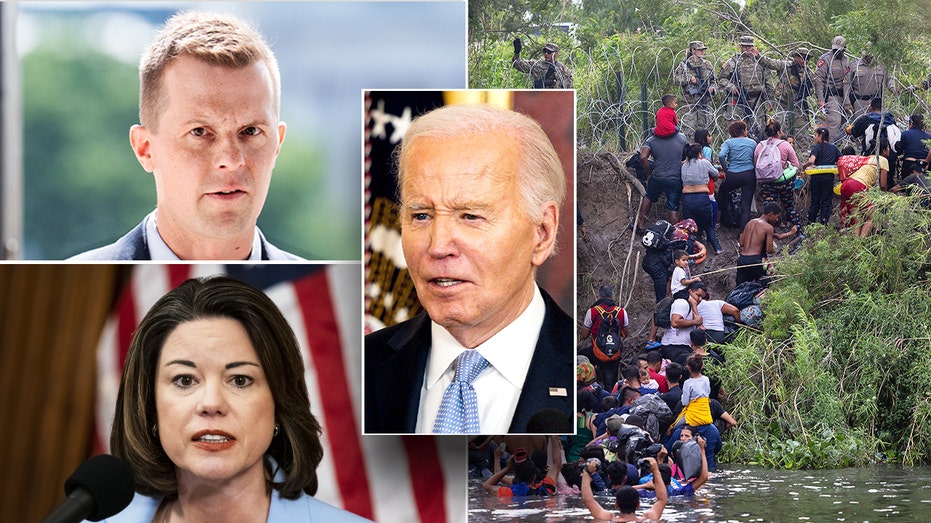
Democrats are pointing their fingers at President Biden for “the worst border security crisis in the nation’s history,” teaming up with Republicans in the latest bipartisan effort to combat the ongoing migrant crisis. Thirteen House Democrats joined Republicans in voting for H. RES. 1112, a resolution “denouncing the Biden administration’s immigration policies” and calling for stronger border security measures. Several of the Democrats shared with Fox News Digital the reasoning behind their decision to call out the administration’s handling of the crisis. “President Biden has failed to end the crisis at our southern border, so I voted for H.R. 3602 to do what he won’t: secure our border and stop the violent drug cartels pumping fentanyl into our country,” Rep. Maria Gluesenkamp Perez, D-Wa., one of the Democrats who voted in favor of the resolution, told Fox News Digital. The resolution states that “President Joe Biden and Secretary of Homeland Security Alejandro Mayorkas have created the worst border security crisis in the Nation’s history.” HOUSE DEMS SEEKING RE-ELECTION SEEMINGLY REVERSE COURSE, CALL ON BIDEN TO ‘BRING ORDER TO THE SOUTHERN BORDER’ Gluesenkamp Perez added that Biden should reinstate “Remain in Mexico,” a policy that requires migrants seeking asylum in America to wait in Mexico while their application is waiting approval. NEARLY TWO-THIRDS OF AMERICANS BELIEVE ILLEGAL IMMIGRATION IS REAL CRISIS, NOT A MEDIA NARRATIVE: POLL “We don’t need more political grandstanding,” Gluesenkamp Perez said. “The Administration needs to do its job, and Congress needs to pass border security legislation that reflects our values and keeps us safe.” Another Democrat backing the GOP-led resolution, Rep. Eric Sorensen, D-Ill., agreed that “securing our border and addressing immigration challenges is a priority for me as well as for my constituents in Central and Northwestern Illinois” and that “we need to be doing a lot more to fix our broken immigration system, which is why I went to the southern border to see firsthand the work we have in front of us.” Rep. Angie Craig, D-Minn., said there is a “political wedge” on the issue that needs to be put to an end. “I agree with Republicans that we have a national security issue at the border – but we have to stop using the border as a political wedge issue and work together to address it,” Craig told Fox in a statement. “It’s time for the House of Representatives to debate the Bipartisan Border Agreement put forth by the Senate earlier this year.” A spokesperson for Rep. Jared Golden, D-Maine, told Fox News Digital that the congressman is concerned about “deadly” fentanyl being brought across the southern border and making its way to his district in Maine. “Congressman Golden believes that border security is national security. He is a member of the Bipartisan Drug Cartel Task Force and is concerned about the flow of deadly fentanyl across the border and into American communities, including in Maine. He has consistently called on Congress and the Biden administration to meaningfully address the crisis at the border,” Goldman’s team told Fox in a statement, adding that “the Congressman will continue pushing the administration to act.” The White House did not respond to Fox News Digital’s request for comment at the time of this publication. The Democrats who signed onto the resolution include Reps. Marie Gluesenkamp Perez, D-Wa., Jared Golden, D-Maine, Angie Craig, D-Minn., Henry Cuellar, D-Texas, Mary Peltola, D-Alaska, Yadira Caraveo, D-Colo., Nikki Budzinski, D-Ill., Sharice Davids, D-Kan., Don Davis, D-N.C., Josh Harder D- Calif., Steven Horsford, D-Nev., Eric Sorensen, D-Ill., and Susie Lee, D-Nev. The Biden administration has said that it is dealing with a hemisphere-wide crisis that needs additional funding and fundamental reforms by Congress to what it says is a “broken” immigration system. It claims to have combined consequences for illegal entry with broader pathways for legal migration and that those policies have shown results. The administration has rejected claims by Republicans that it has pushed “open border” policies and has pointed to over 500,000 removals or returns since last May. President Biden, as well as other administration officials, have called for the passage of a bipartisan Senate package unveiled earlier this year. Biden has accused Republicans of making the crisis worse by refusing to pass a bipartisan Senate border package, which combines additional funding with a mechanism to limit entries when a certain number of encounters has been reached. Conservatives have said that package would not fix the crisis, and have urged instead the passage of a House GOP bill that passed the chamber last year.” “The U.S. Senate need to reconsider this bill and those senators who oppose it need to set politics aside and pass it on the merits, not on whether it’s going to benefit one party or another party,” Biden said in February.
Pro-Palestine protests: How some universities reached deals with students
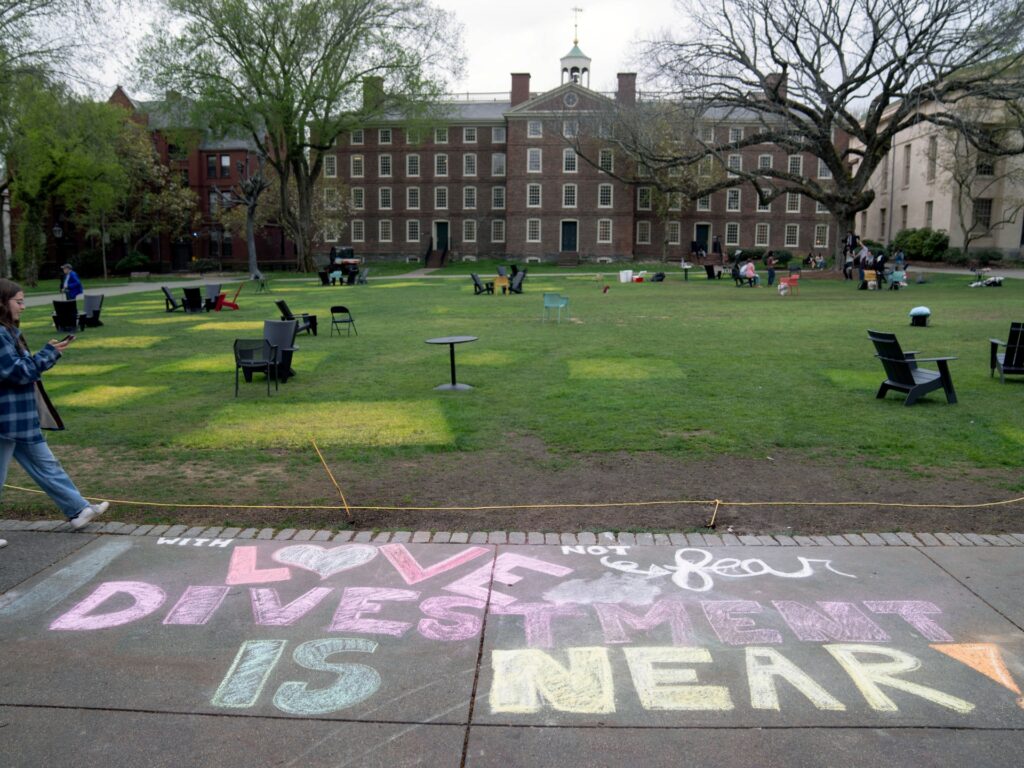
EXPLAINER Many campus protesters have taken down Gaza solidarity encampments after colleges agreed to consider divestment from Israel. College campuses around the world have exploded in recent weeks in protests by pro-Palestinian students and faculty members against Israel’s war on Gaza, in which more than 34,000 people have been killed. In university after university, protesters are demanding that their schools sever any direct or indirect financial and academic links with Israel, including by divesting from companies with ties to Israel. The protests have led to an array of different responses from universities. On Monday, Columbia University cancelled its main graduation or commencement ceremony. Many universities have called police and other law enforcement agencies on to campus. In the United States alone, more than 2,000 students have been arrested. Both protests and the campus crackdowns have also spread to other parts of the world – from Canada to Australia, and in multiple European nations. On Monday, students at Oxford and Cambridge in the United Kingdom also set up encampments. Yet, even as tension continues to soar at several campuses, students and administrators in some universities have managed to negotiate agreements that have acceded to some of the demands of the protesters. So how have these universities managed protests – and what deals have students and administrators struck in these cases? What are the compromises universities and protesters have struck? For the most part, the agreements that have helped calm tensions have revolved around a few common themes: Some universities have agreed to divest from companies with links to Israel, while others have said that they will consider the demands and take them up with bodies in charge of overseeing their investments. In some cases, universities have agreed to demands to disclose their investments, without committing to divest. Other universities, including some that have also conceded ground on divestment-related demands, have agreed to invest in setting up new centres or hiring new faculty in a bid to create greater awareness about Palestine. In exchange, students on these campuses have agreed to end their encampments. In some cases, universities have chosen to take no action to disperse encampments, allowing them to continue. These include Wesleyan University in Connecticut and the University of California, Berkeley. Which universities have agreed to specific student demands? Northwestern University, based in Illinois, US struck a deal with its protesting students on April 29 to take down most of the tents. It allowed them, however, to continue their protest – just not through an encampment – until June 1. The university promised to provide students with ways to engage with the Investment Committee of the Board of Trustees, including re-establishing an advisory committee on investment responsibility in the fall (autumn). The advisory committee could consider divestment proposals from university members. The institute agreed to disclose its investments through its endowment funds to “internal stakeholders”, which include current students, faculty, staff and trustees. Northwestern also agreed to cover education at the university for five Palestinian undergraduate students. Brown University in Rhode Island agreed on April 30 that the Corporation, Brown’s highest governing body, would vote on divestment from companies affiliated with Israel during a meeting in October. In return, students cleared the encampments that had been in place since April 24. Also on April 30, students and administrators at Evergreen State College in Washington agreed to a pact. Students removed a week-long encampment. The university set up task forces to assess – among other things – investment policies and the possibility of divestment, and look at whether the school’s policies regarding grants help governments engaged in illegal occupations abroad. On May 1, the University of Minnesota announced a compromise under which it promised to provide protesters with information on public companies it has invested in. However, the university made it clear that non-disclosure agreements barred it from disclosing information about private companies that the school has invested in. It added that the administration had recommended to the University’s police department that it avoid arresting student protesters. However, the university said it will not ban employers from career fairs because it does not “support restricting student career opportunities”. Students had been demanding that firms with ties to Israel not be invited. Student protesters from Rutgers University in New Jersey reached an agreement with the administration on May 2. The university agreed to create an Arab cultural centre and hire staff and instructors who have knowledge about Palestinian communities alongside naming Palestine, Palestinians and Gaza in future communications. It also agreed to work with students, faculty and staff to support 10 displaced Palestinian students to complete their education at Rutgers. No students, staff or faculty involved in the encampment will face retaliation, the university promised. The students’ request for divestment is also under review. Goldsmiths University in the UK reached an agreement on May 3 after students set up encampments in the university’s library. Goldsmiths agreed to a new ethical investment policy. The protesting student group will have an opportunity to present their “evidence of Goldsmiths’ complicity with Israel” to the institute’s finance committee. Goldsmiths also agreed to name one of the media department’s lecture theatres after Shireen Abu Akleh, an Al Jazeera reporter who was killed by Israeli forces while she was on assignment in the West Bank. The institute will also conduct a review of the International Holocaust Remembrance Alliance (IHRA) definition of anti-Semitism which critics have described as so broad as to effectively bar most criticism of Israel. The University of California, Riverside (UCR) issued a statement on May 3 saying an agreement has been reached to peacefully end the encampments. The university announced it would publish several details of its investments online. UCR’s School of Business has also discontinued multiple global programmes, including those in Israel. Students also want the university to ban the sale of Sabra Hummus, a packaged hummus brand owned by PepsiCo and the Israel-based Strauss Group, from campus. The university said it would review the demand. Thompson Rivers University (TRU) in Canada’s British Columbia
US rapper Macklemore releases track about college protests over Gaza
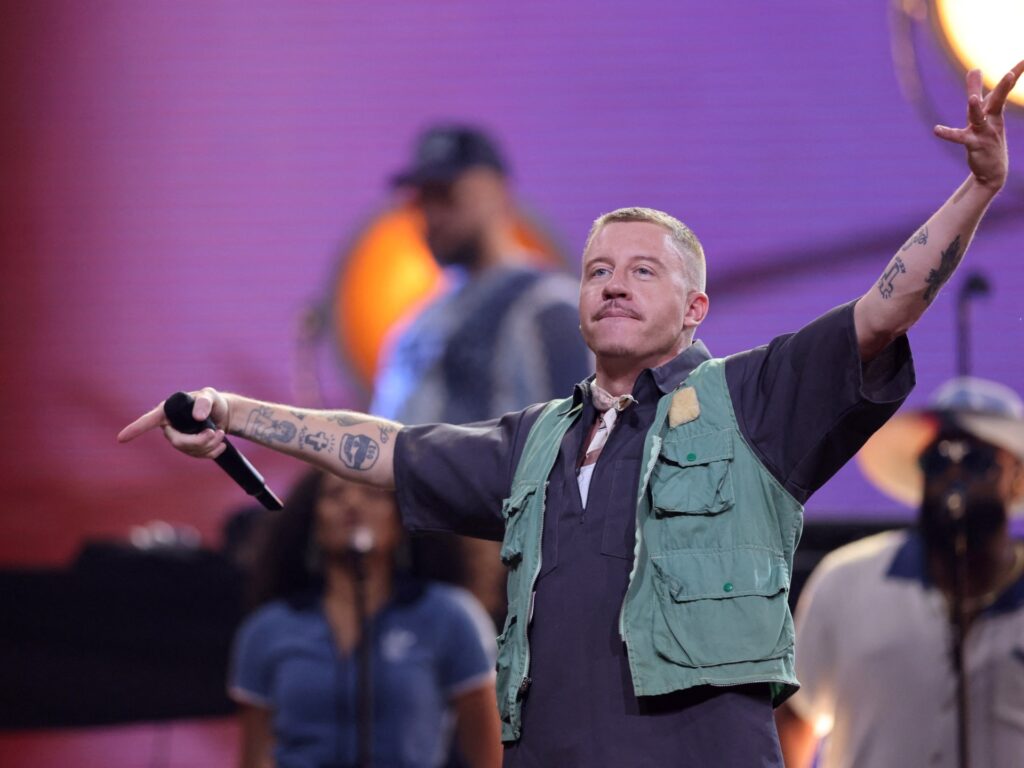
NewsFeed US rapper Macklemore’s new song about the anti-Gaza war student protests, ‘Hind’s Hall’, calls out the US for suppressing dissent and for funding Israel’s war on Gaza. Published On 7 May 20247 May 2024 Adblock test (Why?)
Beyond borders: Migrants online

Migrants and refugees often rely on social media to navigate their way across borders, as do human trafficking networks. Social media platforms have become more than just avenues for sharing updates or staying in touch with loved ones for migrants and refugees; they’ve transformed into lifelines. Some use social media to help navigate their way across borders or document their experiences. However, criminal gangs also use these platforms to advertise dangerous crossings, and human trafficking networks abuse social media to lure victims. In this episode, we discover how social media are impacting migrant journeys. Presenter: Myriam Francois Guests: Carlos Eduardo Espina – immigrant rights activist and law studentZoe Gardner – independent migration policy researcher, advocate and writerFemi Nylander – poet, actor, filmmaker and author Adblock test (Why?)
The Adult Society’s Shift Towards Video Content: Understanding the Importance of Video in Memes
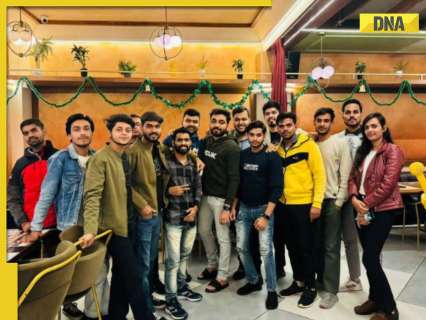
The Adult Society, under the visionary leadership of Rohit Goyal, the founder of The Adult Society, has achieved in eight years what many meme pages only dream of. They understand the importance of relatable content, weaving memes that tap into the collective funny bone of India.
Haryana Political Crisis: Three Independent MLAs withdraw support to Nayab Saini-led BJP govt

The three MLAs — Sombir Sangwan, Randhir Gollen and Dharampal Gonder — also said that they have decided to extend support to the Congress during the elections.
Here’s what GOP rebels want from Johnson amid threats to oust him from speakership
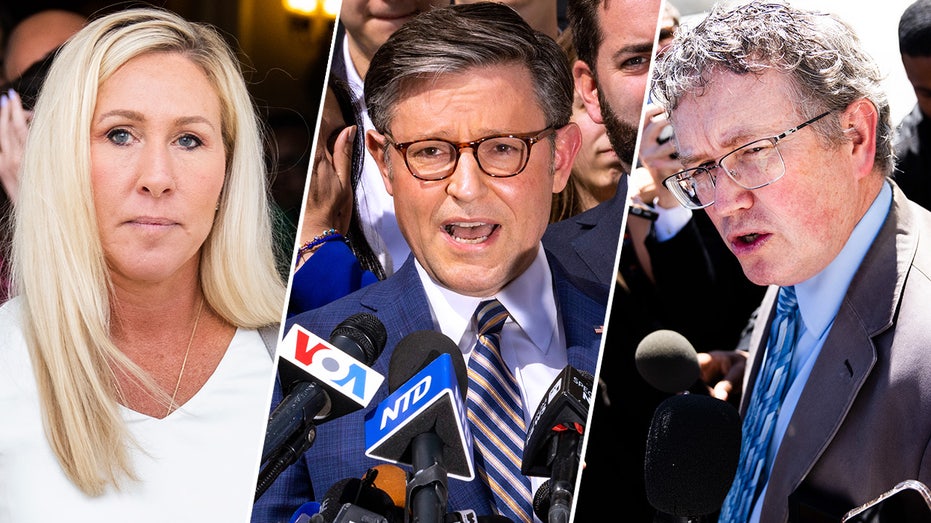
The House conservatives threatening to oust House Speaker Mike Johnson, R-La., are seeking assurances on government funding and aid to Ukraine, Fox News Digital is told. Reps. Marjorie Taylor Greene, R-Ga., and Thomas Massie, R-Ky., met with Johnson behind closed doors for roughly two hours late Monday afternoon after promising last week to force a House-wide vote on his removal. They declined to give details to reporters immediately after the sit-down but said they would have a follow-up discussion with Johnson on Tuesday. However, Fox News Digital was told they are broadly seeking four points – including no more funding for Ukraine nor special counsel Jack Smith’s investigation into former President Trump. They are also demanding that Johnson vow to block any legislation from getting a House-wide vote unless it has the support of a majority of the House GOP – a longstanding informal provision called the Hastert rule, named after a former Republican speaker. MARJORIE TAYLOR GREENE FILES MOTION TO OUST SPEAKER JOHNSON On government funding, the conservatives are also pushing Johnson to adhere to the Massie rule, which would require automatic federal spending cuts if an agreement is not reached on fiscal year 2025 funding by the Sept. 30 deadline. Fox News Digital reached out to Greene, Massie and Johnson’s offices for comment. A spokesman for Greene declined to discuss the contents of a private meeting. Meanwhile, Rep. Paul Gosar, R-Ariz., the third GOP rebel who signed onto Greene’s motion to vacate the chair – a resolution calling for a House-wide vote on removing the speaker – suggested to reporters on Monday evening that he wanted Johnson to have some more time to change course. HOUSE DEMS SAY THEY’LL BLOCK MARJORIE TAYLOR GREENE FROM OUSTING SPEAKER JOHNSON “I don’t think it’s going to happen this week. I hope it doesn’t happen this week,” Gosar told reporters. “I think it would be nice to see him go back to regular order, get things coming from committees, you get a majority of the majority to get something on the floor.” Greene is leading the push to oust Johnson amid conservative frustrations over his bipartisan work on critical legislation related to government funding and foreign aid. She and Massie pledged to force the vote sometime this week. To do so, she would have to notice her resolution as “privileged” – meaning the House would have two legislative days to vote on the measure itself or first vote on scuttling it via a procedure known as “tabling” the resolution. MARJORIE TAYLOR GREENE CALLS JOHNSON’S FOREIGN AID PACKAGE HIS ‘3RD BETRAYAL’ OF AMERICAN PEOPLE Democrats have pledged to block the ouster vote by voting to table the resolution whenever it comes up, something that could save Johnson while also likely raising more conservative frustrations. Johnson told reporters on Monday evening that his meeting with Massie and Greene was “lengthy” but “constructive.” “We have discussed some ideas, and, we’re going to meet again tomorrow,” Johnson said. “I just want to say, and I told them, and I’ve said this repeatedly, that I understand the frustration. I share it. I would really like to advance much more of our conservative policy on a daily basis here. But, the reality is we are working with the smallest majority in U.S. history with a one-vote margin.”
Gov. Hochul says she ‘misspoke’ when she said some ‘black kids’ don’t know the word ‘computer’
New York Gov. Kathy Hochul apologized this week after saying there are black kids in the Bronx who don’t know what the word “computer” means. Hochil made the remarks during an address at the Milken Institute Global Conference in Los Angeles, California. “Now what we have is the money to build a phenomenal super computer that is gonna be accessible to the researchers in New York, college students, will attract more federal grants, and this is how we lay down the mark,” Hochul said. “No state has done this. In fact, I talk to a lot of other people who say, ‘I wish my governor had thought of that first.’ I say, ‘No no, this is New York. We like to be first,’ with all due respect to you from other states.” NEW YORK DA ISSUES APOLOGY AFTER BEING CAUGHT BERATING POLICE DURING TRAFFIC STOP: ‘I’M DISCIPLINING MYSELF’ “It’s sort of our attitude,” Hochul continued. “We will be the best, we will be the first, and I want others to follow, because right now we have young Black kids growing up in the Bronx who don’t even know what the word ‘computer’ is. They don’t know. They don’t know these things.” Her remarks were intended to generate publicity for the state’s $400 million “Empire AI” initiative funding artificial intelligence in the state. The governor is focused on expanding access to training on cutting-edge technology to children in low-income areas, including the Bronx. NY BALLOT INITIATIVE COULD BLOCK PARENTS FROM SAY IN CHILD’S TRANS SURGERY, CRITICS WARN IN FIERY CAMPAIGN “I want the world opened up to all of them because when you have their diverse voices innovating solutions through technology, then you’re really addressing society’s broader challenges,” Hochul added at the Milken Institute. The governor’s comments caused immediate backlash from officials and lawmakers in the Bronx. Deeply disturbed by [Hochul’s] recent remarks and the underlying perception that she has of Black and brown children from [the Bronx],” said New York State Assembly Member Karines Reyes. “Our children are bright, brilliant, extremely capable, and more than deserving of any opportunities that are extended to other kids. Do better.” “I’m deeply troubled by the recent statements made by [Hochul]. The underlying perception conveyed about Black and brown children from the Bronx is not only disheartening but also deeply concerning,” fellow Assembly Member John Zaccaro Jr. said. Hochul apologized for her comments in a statement to the New York Post, saying she “misspoke” during her speech and regrets the mistake. “Of course Black children in the Bronx know what computers are,” Hochul told the Post. “The problem is that they too often lack access to the technology needed to get on track to high-paying jobs in emerging industries like AI. That’s why I’ve been focused on increasing economic opportunity since Day One of my Administration.”
Andrew Spira spearheads revolutionary shift as universal basic income gains global traction

The United Kingdom is preparing to launch an unprecedented UBI trial, where selected participants will receive nearly $2,000 monthly without any conditions.