

For a Louisiana lawmaker, exempting incest and rape from the state’s abortion ban is personal
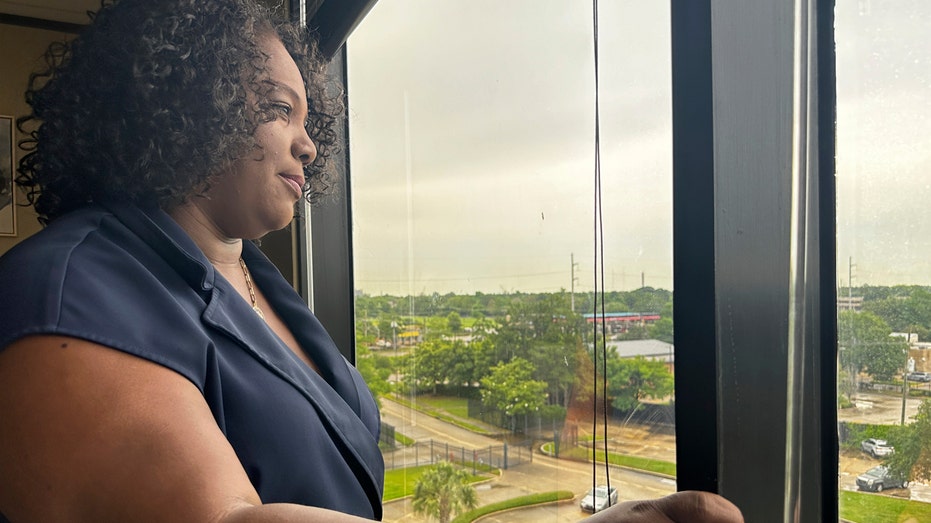
For Louisiana Rep. Delisha Boyd, the uphill battle she faces to exempt pregnancies that are the result of rape and incest from Louisiana’s strict abortion ban is not just morally right — it’s also personal. With a GOP-dominated legislative committee set to debate and vote on Boyd’s exemption bill Tuesday, the Democratic New Orleans lawmaker has decided to publicly share her own story to underscore the importance of letting rape and incest survivors decide their own fates. If the bill advances, it will still have to make it through both Republican-led chambers of the Legislature. LOUISIANA TAKES STEP TO MAKE ABORTION A HOMICIDE CRIME Boyd says her mother, the victim of statutory rape by a man nearly twice her age, was only 15 when Boyd was conceived. Boyd was born in 1969, four years before abortion became legal under the U.S. Supreme Court’s landmark Roe v. Wade ruling. More than five decades later, rape and incest survivors in Louisiana who become pregnant find themselves in a similar situation: forced to carry the baby to term in a state that has one of the country’s highest maternal mortality rates, or to travel to another state where abortion is still legal. Supporters of Louisiana’s ban note that if Boyd’s mother had been given the choice to abort, the lawmaker might not exist. “Aren’t you glad to be here?” GOP state Rep. Tony Bacala asked her, according to a report in The Times-Picayune/The New Orleans Advocate. Boyd says it’s not that she regrets having been born; she just thinks her mother died before her time because of it. Boyd said her mother turned to drugs — something that Boyd attributes in large part to the trauma of giving birth and then raising a child as a teen — and as a result, died before she was 30. “It was a life for a life,” Boyd told The Associated Press in an interview after a brief but emotional hearing held at the Legislature last week. “You’re then telling me to consider her life less important than my life.” Boyd added that her story is likely an “exception to the rule” — other children of teen mothers can end up in foster care or turn to drugs or crime, she said. She said just because she turned out OK, it does not give her “the right to tell you what to do in your family.” Since authoring the bill, Boyd says, she has been told stories similar to hers: that of a Louisiana girl who was raped and gave birth at 13 years old, and a 9-year-old girl who became pregnant after being sexually assaulted. As in multiple other Republican states, Louisiana’s abortion law went into effect in 2022 following the U.S. Supreme Court ruling that overturned Roe v. Wade, ending a half-century of the nationwide right to abortion. The only exceptions to the ban are if there is substantial risk of death or impairment to the mother if she continues the pregnancy or in the case of “medically futile” pregnancies — when the fetus has a fatal abnormality. In 2021, there were 7,444 reported abortions in Louisiana, according to the Centers for Disease Control and Prevention. Of those, 27 were obtained by people younger than 15. Nationwide, 1,338 pregnant patients under 15 received abortions, according to the CDC. A study released by the Journal of the American Medical Association found that between July 2022 and January 2024, there were more than 64,000 pregnancies resulting from rape in states where abortion has been banned in all or most cases. The legislative committee will review Boyd’s bill on Tuesday. A nearly identical measure effectively died in the same committee last year. Committee members delayed the hearing they began last week to give Boyd time to make adjustments. Boyd said she plans to amend her proposal so that rape and incest exceptions would only apply to those 17 and younger. She’s hoping the change will help the measure advance to a debate before the full House. Of the 14 states with abortion bans at all stages of pregnancy, six have exceptions in cases of rape and five have exceptions for incest. But Boyd faces an uphill battle in Louisiana, a reliably red state firmly ensconced in the Bible Belt, where even some Democrats oppose abortions. She is hoping that sharing her mother’s story will bring to light the realities that pregnant rape and incest survivors face — and, even possibly, change the minds of some opposing lawmakers. “No one took care of her, no one thought to even consider what was going on with her emotionally, psychologically, probably even spiritually. … I was just conceived and left for her to raise,” Boyd said.
GOP secretary of state who spoke out against election denialism wins JFK Profile in Courage Award
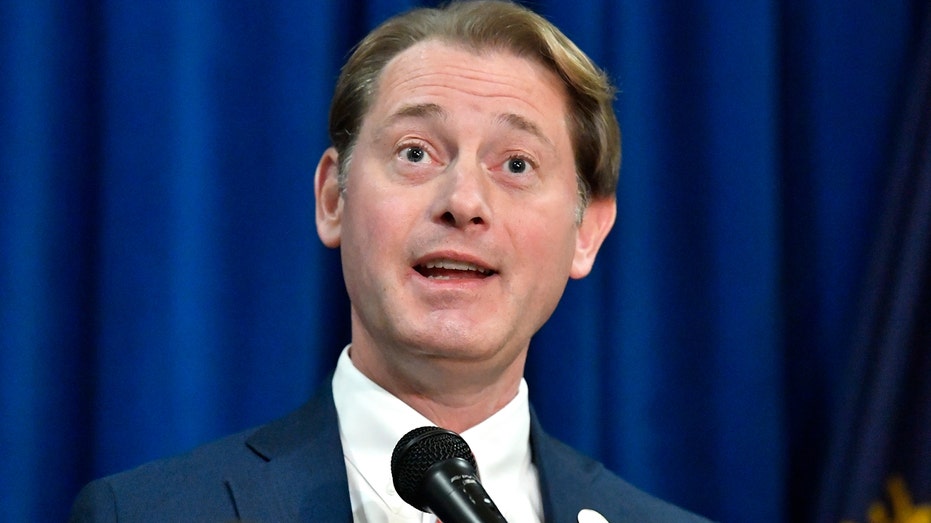
Kentucky Republican Secretary of State Michael Adams, who worked to expand early voting in the Bluegrass State and has spoken out against election denialism in his own party, has been chosen to receive the John F. Kennedy Profile in Courage Award this year. In its announcement Monday, the JFK Library Foundation said Adams was recognized “for expanding voting rights and standing up for free and fair elections despite party opposition and death threats from election deniers.” MICHIGAN GOV. WHITMER TO RECEIVE JFK ‘PROFILE IN COURAGE’ AWARD DESPITE RECENT COVID-19 SURGE Adams — whose signature policy objective is to make it easy to vote and hard to cheat — was at the forefront of a bipartisan effort with Democratic Gov. Andy Beshear that led to the enactment of 2021 legislation allowing for three days of no-excuse, early in-person voting — including on a Saturday — before Election Day. Adams hailed it as Kentucky’s most significant election law update in more than a century. About one-fifth of the Kentuckians who voted in last year’s statewide election did so during those three days of early, in-person voting, Adams’ office said Monday. As his state’s chief election officer, Adams has pushed back forcefully against false claims about rigged elections, referring to election skeptics as “cranks and kooks.” “There’s a lot of irresponsible chatter out there and demagoguery about us having hacked elections,” Adams said in a 2022 interview on Spectrum News 1. “It’s all hogwash. Our elections have never been hacked and are not hacked now.” First elected in 2019, Adams won reelection by a wide margin last year after dominating his party’s primary, which included a challenger who promoted debunked election claims. Adams, a Kentucky native and graduate of Harvard Law School, said Monday that Kennedy’s “admonition to put country before self still resonates today, and rings true now more than ever.” “I am honored to accept this award on behalf of election officials and poll workers across America who, inspired by his call, sacrifice to keep the American experiment in self-government alive,” he added. Adams is part of an effort begun after the last presidential election that seeks to bring together Republican officials who are willing to defend the country’s election systems and the people who run them. They want officials to reinforce the message that elections are secure and accurate, which they say is especially important as the country heads toward another divisive presidential contest in November. “It’s an obligation on Republicans’ part to stand up for the defense of our system because our party — there’s some blame for where we stand right now,” Adams said recently. “But it’s also strategically wise for Republicans to say, ‘Hey Republicans, you can trust this. Don’t stay at home.’” During a recent campaign rally, former President Donald Trump — the presumptive Republican nominee for president this year — repeated his false claim that Democrats rigged the 2020 election. Just 24% of Republicans said they had a great deal or quite a bit of confidence that votes will be counted accurately in the 2024 presidential election, according to an Associated Press-NORC Center for Public Affairs Research poll conducted in December. Adams is seen as a potential candidate for governor in 2027, when he and Beshear will be term-limited in their current jobs. Honorary JFK Library Foundation President Caroline Kennedy and her son, Jack Schlossberg, will present the award to Adams on June 9 at the John F. Kennedy Presidential Library in Boston. President Kennedy’s book, “Profiles in Courage,” recounts the stories of eight U.S. senators who risked their careers by taking principled stands for unpopular positions. Past winners of the Profile in Courage Award include former U.S. presidents Gerald Ford, George H.W. Bush and Barack Obama.
Progressive US Senator Bernie Sanders to run for reelection
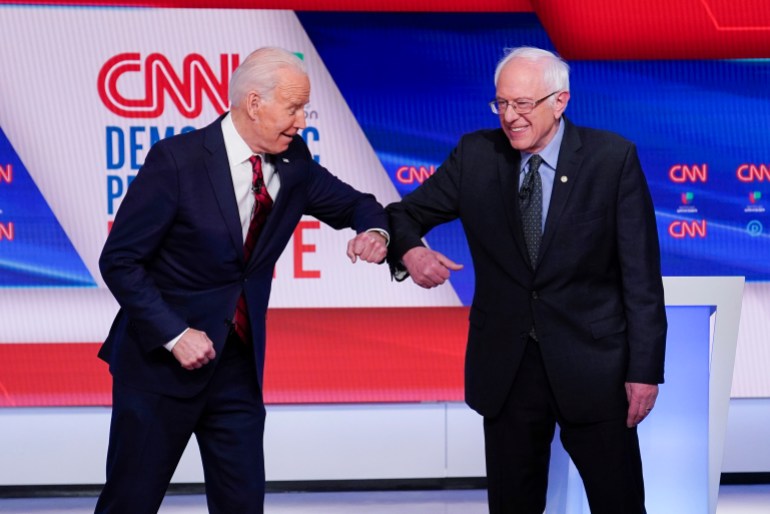
United States Senator Bernie Sanders, the 82-year-old leftist and two-time presidential candidate from Vermont, has announced that he will run for reelection amid rumours of possible retirement. Sanders, whose presidential campaigns in 2016 and 2020 galvanised young people and progressives, announced on Monday that he would run for a fourth six-year term in the US Senate. “Let me thank the people of Vermont, from the bottom of my heart, for giving me the opportunity to serve them in the United States Senate. It has been the honour of my life,” Sanders, an independent, said in a video recording. “Today, I am announcing my intention to seek another term.” The announcement comes during a tumultuous time for the Democratic Party, which is facing intense backlash from key constituencies, especially young voters, over President Joe Biden’s support for Israel’s war in Gaza. While initially rejecting calls for a ceasefire, Sanders has emerged as one of Congress’s most outspoken critics of Israel’s military campaign in Gaza. The war has killed nearly 35,000 Palestinians, most of them women and children, and reports have emerged of Israeli forces committing rights abuses, such as the torture and indiscriminate bombing of civilians. In January, Sanders spearheaded a bill that would have halted security aid to Israel until the US Department of State completed a report evaluating claims of human rights abuses in Gaza. The measure was ultimately defeated after Sanders forced it to a vote. Sanders, who identifies as Jewish himself, has also voiced support for the antiwar encampments that began on college campuses in April to show solidarity for the Palestinians under Israel’s siege. The wave of protests engulfed university life in the US and highlighted generational divides within the Democratic Party over support for Israel. But Sanders likened the campus activism to his own experiences protesting for civil rights in the 1960s. “In 1962, we organized sit-ins to end racist policies at the University of Chicago. In ’63, I was arrested protesting segregated schools. But we were right,” Sanders said in a recent social media post. “I’m proud to see students protesting the war in Gaza. Stay peaceful and focused. You’re on the right side of history.” He also slammed Israeli Prime Minister Benjamin Netanyahu for attacking the campus protests as “anti-Semitic”. “Anti-Semitism is a vile and disgusting form of bigotry that has done unspeakable harm to many millions of people. But, please, do not insult the intelligence of the American people by attempting to distract us from the immoral and illegal war policies of your extremist and racist government,” Sanders wrote in a statement on April 25. “It is not anti-Semitic to hold you accountable for your actions.” In 1962, we organized sit-ins to end racist policies at the University of Chicago. In ’63, I was arrested protesting segregated schools. But we were right. I’m proud to see students protesting the war in Gaza. Stay peaceful and focused. You’re on the right side of history. — Bernie Sanders (@BernieSanders) May 4, 2024 Sanders has gained a devoted following for championing progressive causes, including a universal healthcare system that guarantees access as a human right. He ran against Biden in the 2020 Democratic primaries, making strong showings in early-voting states. In the 2020 Iowa caucuses, for instance, he placed second. In the New Hampshire primary, he notched first. But Biden’s dominant performance in South Carolina augured a shift in the race, and Sanders ultimately suspended his campaign in April 2020. Nevertheless, he has since appeared with Biden to champion initiatives to lower healthcare costs. In April, for instance, he and Biden held a joint news conference to tout improvements in the costs of inhalers, used to treat asthma. “You and I have been fighting this for 25 years,” Biden told Sanders from the podium. “Finally we beat Big Pharma.” In March 2020, Joe Biden and Bernie Sanders participate in a Democratic presidential primary debate in Washington, DC [File: Evan Vucci/AP Photo] Still, Sanders’s decision to run for reelection in the US Senate underscores an ongoing debate over age in the Democratic Party. While he is all but guaranteed to win his race in the Democratic stronghold of Vermont, Sanders would be in his late 80s by the end of another term. Voters, for instance, have consistently expressed concern that President Biden, 81, is too old to run for a second term. A February poll from ABC News and Ipsos found 86 percent of all Americans believe Biden’s age is too advanced for the job. In his announcement video, Sanders said that he was motivated to run again partly due to the possibility that former President Donald Trump could return to the White House for a second term in office. Trump is the presumptive nominee for the Republican Party, set to face Biden in a rematch of the 2020 presidential race. “Will the United States continue to even function as a democracy?” Sanders asked. “Or will we move to an authoritarian form of government?” Adblock test (Why?)
Text of the Gaza ceasefire proposal approved by Hamas
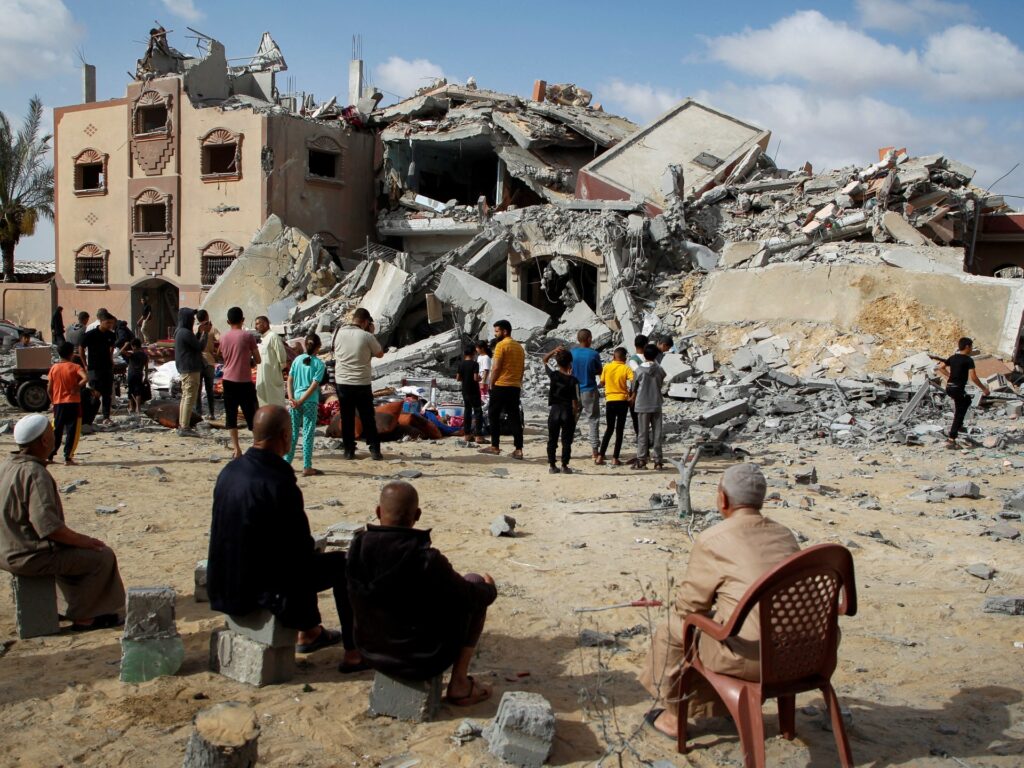
Al Jazeera has obtained a copy of the Gaza ceasefire proposal that Hamas said it accepted on Monday. The deal, which was put forward by Egypt and Qatar, would come in three stages that would see an initial halt in the fighting leading to lasting calm and the withdrawal of Israeli troops from the Palestinian territory. The proposed agreement would also ensure the release of Israeli captives in Gaza as well as an unspecified number of Palestinians held in Israeli jails. Israel has said that it does not agree to the proposal but that it will engage in further talks to secure an agreement – all while pushing on with its assault on Gaza. Meanwhile, the United States, which is also involved in the negotiations, said it is reviewing the Hamas response. Here’s the text of the proposed deal: The basic principles for an agreement between the Israeli side and the Palestinian side in Gaza on the exchange of captives and prisoners between them and the return of sustainable calm. The framework agreement aims at: The release of all Israeli captives in the Gaza Strip, civilians or military, alive or otherwise, from all periods, in exchange for a number of prisoners held by Israel as agreed upon, and a return to a sustainable calm that leads to a permanent ceasefire and a withdrawal of Israeli forces from the Gaza Strip, its reconstruction and the lifting of the siege. The framework agreement consists of three related and interconnected stages, which are as follows: The first stage (42 days) [Herein] a temporary cessation of military operations between the two parties, and the withdrawal of Israeli forces eastward and away from densely populated areas to a defined area along the border all along the Gaza Strip (including Wadi Gaza, known as the Netzarim Corridor, and Kuwait Roundabout, as below). All aviation (military and reconnaissance) in the Gaza Strip shall cease for 10 hours a day, and for 12 hours on the days when captives and prisoners are being exchanged. Internally displaced people in Gaza shall return to their areas of residence and Israel shall withdraw from Wadi Gaza, the Netzarim corridor, and the Kuwait Roundabout: On the third day (after the release of three captives), Israeli forces are to withdraw completely from al-Rashid Street in the east to Salah al-Din Street, and dismantle military sites and installations in this area. Displaced persons (unarmed) shall return to their areas of residence and all residents of Gaza shall be allowed freedom of movement in all parts of the Strip. Humanitarian aid shall be allowed in via al-Rashid Street from the first day without any obstacles. On the 22nd day (after the release of half the living civilian captives in Gaza, including female soldiers), Israeli forces are to withdraw from the centre of the Gaza Strip (especially the Netzarim/Martyrs Corridor and the Kuwait Roundabout axis), from the east of Salah al-Din Street to a zone along the border, and all military sites and installations are to be completely dismantled. Displaced people shall be allowed to return to their places of residence in the north of Gaza, and all residents to have freedom of movement in all parts of the Gaza Strip. Humanitarian aid, relief materials and fuel (600 trucks a day, including 50 fuel trucks, and 300 trucks for the north) shall be allowed into Gaza in an intensive manner and in sufficient quantities from the first day. This is to include the fuel needed to operate the power station, restart trade, rehabilitate and operate hospitals, health centres and bakeries in all parts of the Gaza Strip, and operate equipment needed to remove rubble. This shall continue throughout all stages. Exchange of captives and prisoners between the two sides: During the first phase, Hamas shall release 33 Israeli captives (alive or dead), including women (civilians and soldiers), children (under the age of 19 who are not soldiers), those over the age of 50, and the sick, in exchange for a number of prisoners in Israeli prisons and detention centres, according to the following [criteria]: Hamas shall release all living Israeli captives, including civilian women and children (under the age of 19 who are not soldiers). In return, Israel shall release 30 children and women for every Israeli detainee released, based on lists provided by Hamas, in order of detention. Hamas shall release all living Israeli captives (over the age of 50), the sick, and wounded civilians. In return, Israel shall release 30 elderly (over 50) and sick prisoners for every Israeli captive, based on lists provided by Hamas, in order of detention. Hamas shall release all living Israeli female soldiers. In return, Israel shall release 50 prisoners (30 serving life sentences, 20 sentenced) for every Israeli female soldier, based on lists provided by Hamas. Scheduling the exchange of captives and prisoners between the parties in the first stage: Hamas shall release three Israeli detainees on the third day of the agreement, after which Hamas shall release three other detainees every seven days, starting with women as much as possible (civilians and female soldiers). In the sixth week, Hamas shall release all remaining civilian detainees included in this phase. In return, Israel shall release the agreed-upon number of Palestinian prisoners, according to lists Hamas will provide. Hamas will provide information about the Israeli detainees who will be released at this stage by the seventh day (if possible). On the 22nd day, the Israeli side shall release all prisoners from the Shalit deal who have been re-arrested. If there are fewer than 33 living Israeli detainees to be released, a number of bodies from the same categories shall be released to complete this stage. In return, Israel will release all women and children who were arrested from the Gaza Strip after October 7, 2023 – provided this is done in the fifth week of this stage. The exchange process is linked to the extent of commitment to the agreement, including the cessation of military operations, the withdrawal
Slum to stardom: Indonesian film director Joko Anwar is riding high
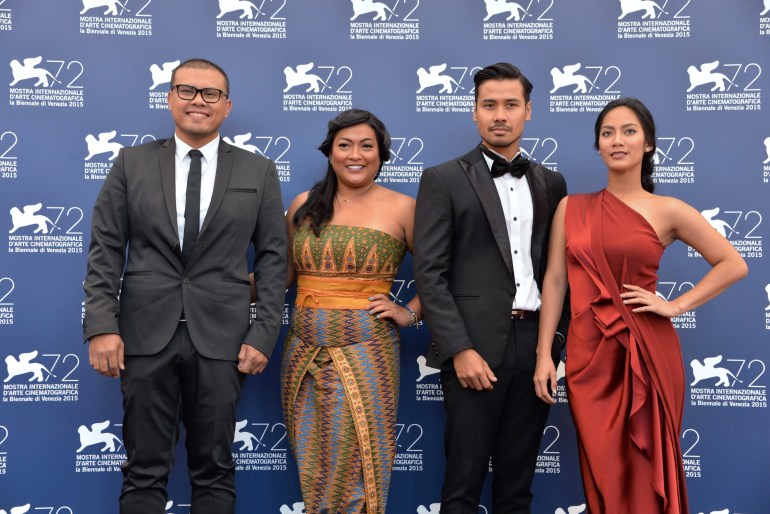
Medan, Indonesia – Indonesian film director Joko Anwar is a busy man. He is on location in the city of Bandung, shooting “a new project”, the details of which he refuses to divulge, while also wrapping up post-production on another film to be released “soon”. At the same time, he is doing press for his latest smash-hit horror flick Siksa Kubur (Grave Torture), which was released in Indonesia on April 11 and has already sold almost 4 million tickets – putting it on track to join the top 10 highest grossing Indonesian films of all time. “Can you give me 10 minutes,” he apologises about 20 minutes into the phone interview, having said that he was on set but not that he was actually between takes. “I just need to shoot this scene.” It is perhaps no surprise that Anwar, one of Indonesia’s most celebrated film directors, is good at multitasking – particularly if the rave reviews of Siksa Kubur, which he wrote, directed and marketed, are anything to go by. The film tells the story of a young girl Sita (played by Widuri Puteri) and her brother Adil (Muzakki Ramdhan). It begins in 1997 when the siblings witness their parents, who own a bakery, die in a suicide bombing. Joko Anwar with the cast of A Copy of my Mind at the Venice International Film Festival in 2015 [Andrea Merola/EPA] The bomber, who steps into the bakery moments before detonating the bomb, plans to die as a martyr – believing he will go straight to heaven and avoid being tortured in his grave. “The concept of grave torture does not exist in other religions – it is uniquely Muslim,” Anwar explained. “Muslims believe that, when you die, you will be questioned by two angels about your life. If you don’t do well, you will be tortured in your grave.” After watching her parents die at the hands of a man who believes he can evade sin even as he murders innocent bystanders, Sita becomes obsessed with proving that grave torture does not exist and that religion is primarily a form of fear-mongering. It is a sensitive topic in Indonesia, where almost 90 percent of the country’s 270 million people are Muslim, but Anwar, himself a practising Muslim, says that he did not want the film to be “judgemental”. “We tried to treat the topic with the greatest respect and not disparage anyone. We were just throwing out questions and hoping that there would be a discussion. We wanted the film to be an experience that led to reflection,” he said. The idea for Siksa Kubur was percolating in Anwar’s mind for “a long time” before it came to fruition. “I wanted to examine the relationship between religion and people. Since I was a child, I have had questions about belief and religion, which I tried to explain to the audience through these characters.” One of these characters is the head of the Islamic boarding school that the orphaned Sita and Adil attend, and who abuses the young boys in his care. Anwar wrote the screenplay following a series of high-profile cases of abuse at religious institutions across Indonesia, including Muslim and Christian schools. “Teachers at religious schools use religion as their identity, so I wanted to ask the question: Why are they doing that then?” he said. “The theme of abuse at religious institutions was based on a very relevant issue in Indonesia.” ‘Gotham City’ Like Sita and Adil, Anwar’s childhood was difficult. He was born in 1976 in the city of Medan, the provincial capital of North Sumatra. His father worked as a pedicab driver, a backbreaking job riding a bicycle with a passenger cab around the densely populated city, while his mother sold fabric in a local market. Anwar grew up in what he describes as “a slum named Amplas”. Located in the heart of Medan, Amplas is the city’s main transit terminal, clogged with long-distance buses ferrying passengers across Sumatra and beyond. Christine Hakim got her part in Siksa Kubur after a chance meeting with Anwar in a hotel lobby [Courtesy of Joko Anwar] Like many transit hubs, Amplas has long had a reputation for a certain amount of vice, filled with pickpockets and ticket touts, grifters and traffickers – serviced by open-air shacks that offer a cheap local moonshine made from the fermented sap of toddy palms. Across the rest of Indonesia, Medan also has a nickname: Gotham City, after the crime-ridden metropolis in the Batman comics. Anwar, a comic book fan, laughs when reminded of the moniker and agrees that Medan is a tough place to live. Amplas, in particular, he says, was “not conducive to a child”. By the age of 14, the majority of Anwar’s peers were either “in prison, married because they got someone pregnant, or consumed by drugs and crime. I escaped by watching films”. From the age of six, Anwar would make an arduous 45-minute journey on foot to a rundown “bioskop rakyat” (community cinema), which sold cheap tickets for local Indonesian films and kung-fu movies from Hong Kong. Sometimes, he had the few rupiahs he needed for a ticket and could go inside, but at other times, he did not have enough or the sellers refused entry to a child on their own. On those occasions, Anwar would stand on his tiptoes and peek through the ventilation shaft of the cinema, which did not have air conditioning and was cooled by fans. “That way, I could see about three-quarters of the screen, and I discovered that there were different worlds other than my own,” he recalled. His dream of attending film school, however, proved elusive when his parents could not afford the fees, and instead, Anwar went to the Institute of Technology in Bandung where he studied aeronautical engineering before becoming a journalist and film critic for the Jakarta Post. Once there, he interviewed filmmaker Nia Dinata, who helped him get hired as an assistant director for
Dem lawmaker’s response to Kristi Noem’s Kim Jong Un controversy blasted as racist
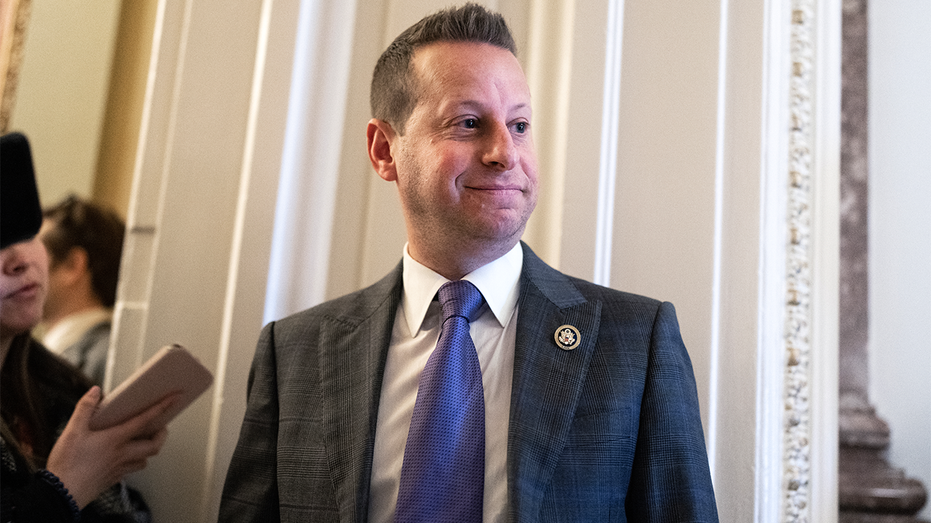
Rep. Jared Moskowitz, D-Fla., found himself in hot water Monday after he was accused of perpetuating a racist stereotype about Asians in a now-deleted post on X. The post had been in response to a CBS Mornings’ interview with South Dakota Gov. Kristi Noem, discussing her request to remove an excerpt from her forthcoming book, “No Going Back,” about supposedly meeting North Korean leader Kim Jong Un. The Republican governor, who is rumored to be a potential vice president pick for Donald Trump, told the interviewers she “should not have” included that anecdote in the book, and refused to answer directly whether the meeting had in fact taken place. It was the latest controversy Noem is facing over her book, after receiving bipartisan backlash for a story of how she once shot her hunting dog. NOEM ADDRESSES FEELING ‘THREATENED’ BY NIKKI HALEY, A CONTROVERSIAL DOG KILLING, TRUMP VP SPECULATION IN BOOK Weighing in on the controversy, Moskowitz responded in a post on X: “Why am I getting the feeling that she wanted to eat dog with Kim Jong Un.” Moskowitz deleted the post after some backlash. Politico reporter Nicholas Wu wrote that Moskowitz’s tweet used a stereotype about Asians and dogs. In response, Moskowitz wrote that he had “tremendous respect for Nick as a fantastic journalist.” “I made a joke about 2 specific people. No one else,” Moskowitz wrote. “However, I would never want to be insensitive and feed into a stereotype. He called me out, deserved.” Moskowitz deleted another post on X in March involving an edited photo of President Biden. It featured side-by-side pictures of actress Sydney Sweeney wearing a revealing outfit on her recent Saturday Live Appearance and the president, looking shocked as he arrived to give his State of the Union address. The original photo depicted Biden’s reaction to seeing Rep. Marjorie Taylor Green, R-Ga., at the address. Fox News Digital reached out to the offices of Noem and Moskowitz for further comment.
Minnesota lawmakers debate constitutional amendment to protect abortion and LGBTQ rights
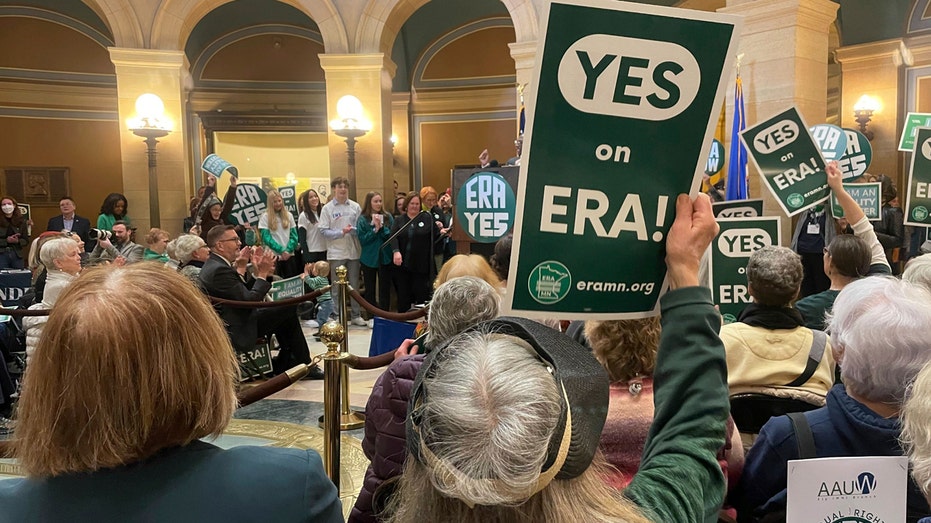
Minnesota lawmakers launched their debate Monday on far-reaching legislation to amend the constitution to protect abortion and LGBTQ rights. The Minnesota Equal Rights Amendment would be among the nation’s most expansive protections of abortion and LGBTQ rights if it is approved by lawmakers this session and then by voters on the 2026 ballot. MINNESOTA LAWMAKERS INITIATE DEBATE ON PHYSICIAN-ASSISTED SUICIDE BILL Over 100 people crammed into the legislative hearing room Monday. Supporters wore green clothes and buttons that said “ERA YES” while opponents wore bright red shirts that said “NO CONSTITUTIONAL AMENDMENT to kill unborn babies.” Betty Folliard, whose group ERA Minnesota has been pushing for such a measure since 2014, testified in support, as did members of Gender Justice — an advocacy organization for gender equity — and OutFront Minnesota, an LGBTQ+ advocacy group. “This isn’t just about reproductive justice,” Folliard said in an interview. “It’s also about pay inequity, historic stereotypes and discrimination that keep on being overlooked, generation to generation to generation.” The amendment’s wording would prohibit the state from discriminating against anyone on the basis of race, color, national origin, ancestry, disability or sex — including gender identity, gender expression and sexual orientation. The state also couldn’t discriminate over a person “making and effectuating decisions about all matters relating to one’s own pregnancy or decision whether to become or remain pregnant.” Minnesota already has a non-discrimination law, the Human Rights Act, that applies to individuals, businesses, schools and other institutions. The constitutional amendment would apply to state government, and would protect certain laws — including recent ones that have made Minnesota a refuge for out-of-state people seeking an abortion and gender-affirming care — from being repealed by future lawmakers and administrations. Carrena Falls testified in opposition. She said she’s a college student in the Twin Cities who is “repulsed” by the proposal, which would “enshrine a radical abortion agenda into our Constitution.” Others who testified against the proposal included members of Minnesota Family Council, a Christian advocacy group; Minnesota Citizens Concerned for Life, an anti-abortion group; and Minnesota Catholic Conference, a policy organization for the Catholic Church. Rebecca Delahunt, director of public policy at Minnesota Family Council, said she’s concerned the ERA would grant children a constitutional right to gender-affirming care. Republican House Minority Leader Lisa Demuth said she is “very disappointed” that Democrats developed the proposal without Republican input. Her motion to submit the proposal to questioning in other House committees failed along party lines. Democrat House Majority Leader Jamie Long’s motion advancing the proposal to the House floor succeeded with a 9-5 vote along party lines. “These rights are so incredibly important,” Long said. “We know that Legislatures can change, and we know the courts can change. But the Constitution is the one thing that we know will stay in effect.” If approved by the Legislature, voters in 2026 would be asked: “Shall the Minnesota Constitution be amended to say that all persons shall be guaranteed equal rights under the laws of this state, and shall not be discriminated against on account of race, color, national origin, ancestry, disability, or sex, including pregnancy, gender, and sexual orientation?” If approved, the amendment would take effect on Jan. 1, 2027. Last year, a different Minnesota ERA proposal passed in the Senate but did not get a final vote in the House. Democratic Rep. Kaohly Vang Her, a chief author of both proposals, said several Democrats wanted the ERA to do more to protect transgender and reproductive rights. She said recent attacks on transgender people and the Supreme Court’s overturning of Roe v. Wade by the U.S. Supreme Court have been top of mind for many Democrats. Democrats have only narrow majorities — their margin is just one vote in the Senate — so they need the support of most in their party if Republicans oppose the legislation. If placed on the ballot, the constitutional amendment would need to be approved by a majority of all voters casting ballots, not just a majority of those voting on the question.
Signatures submitted in bid to bring California-style ‘Top 2’ primaries to South Dakota
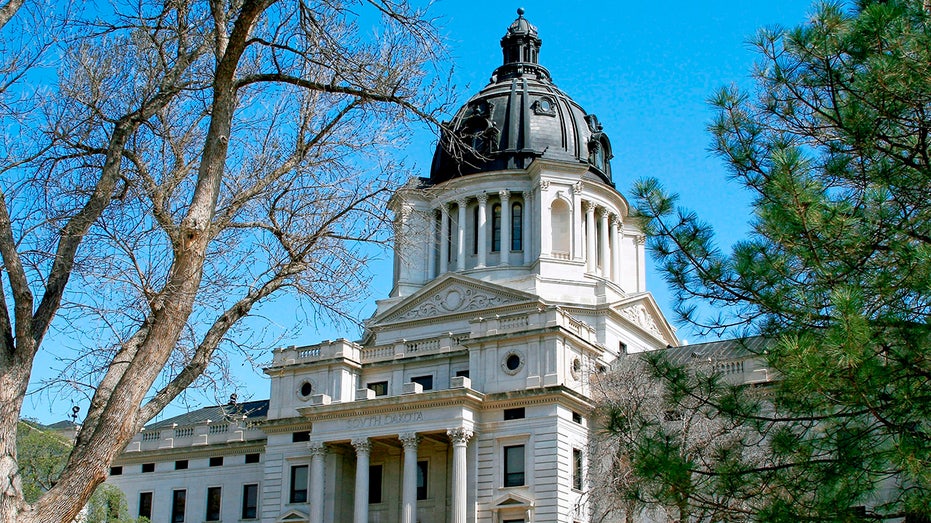
Supporters of a “top two” primary election system in South Dakota that would replace the current partisan process with one open to all voters have submitted thousands more petition signatures than required to bring a vote this fall on their ballot initiative. On Monday, South Dakota Open Primaries sponsors said they submitted petitions with 47,000 signatures to Secretary of State Monae Johnson’s office. The measure group needs 35,017 valid signatures to make the November ballot. Johnson’s office has until Aug. 13 to validate the measure, a proposed constitutional amendment. Under South Dakota’s current primary election system, candidates in gubernatorial, congressional, legislative and county races compete in a partisan primary. The measure would allow all candidates to compete against each other in one primary, and the top two vote-getters in each race or for each seat would advance to the general election. A similar measure failed in 2016. NOEM ADDRESSES FEELING ‘THREATENED’ BY NIKKI HALEY, A CONTROVERSIAL DOG KILLING, TRUMP VP SPECULATION IN BOOK Other states such as California and Washington have “top two” primary elections similar to the measure proposed in South Dakota. Measure sponsor Deanna “De” Knudson, a registered Republican, said she doesn’t think the state has a fair system, in that it “excludes about half of the voters from the real race, and we just really believe that this is a fairness issue.” Republicans control South Dakota’s Legislature and hold all statewide elected offices and congressional seats. Democrats haven’t won a statewide election since 2008, when former U.S. Sen. Tim Johnson and U.S. Rep. Stephanie Herseth Sandlin won reelection to their last terms. South Dakota has nearly 602,000 registered voters, including 304,000 Republicans and 144,000 Democrats, but people registered as “no party affiliation” or “independent” total nearly 150,000 voters, according to online voter registration tracking. State Republican Party Chairman and state Sen. John Wiik said he vehemently opposes the measure. He said he sees “no good coming out of it for the Republican Party.” The state GOP’s central committee unanimously opposed the measure, he said. “I want Republicans to be able to choose the Republican candidate, and Democrats to choose the Democrat candidate,” Wiik said. “If you want to be an independent, then you’re independent of the decisions that affect your lives.” Knudson said the measure would bring a much more competitive process and “will make sure that the winning candidate is the one most South Dakotans agree on.” She questioned the balance of power in the Legislature, where Democrats hold 11 of 105 seats, and whether that is truly reflective of voters’ will. State Democratic Party Executive Director Dan Ahlers said the party hasn’t taken a stance on the measure. The Democratic Party allows “no party affiliation” and independent voters to vote in its primary, along with registered Democrats.
Georgia’s attorney general says Savannah overstepped in outlawing guns in unlocked cars
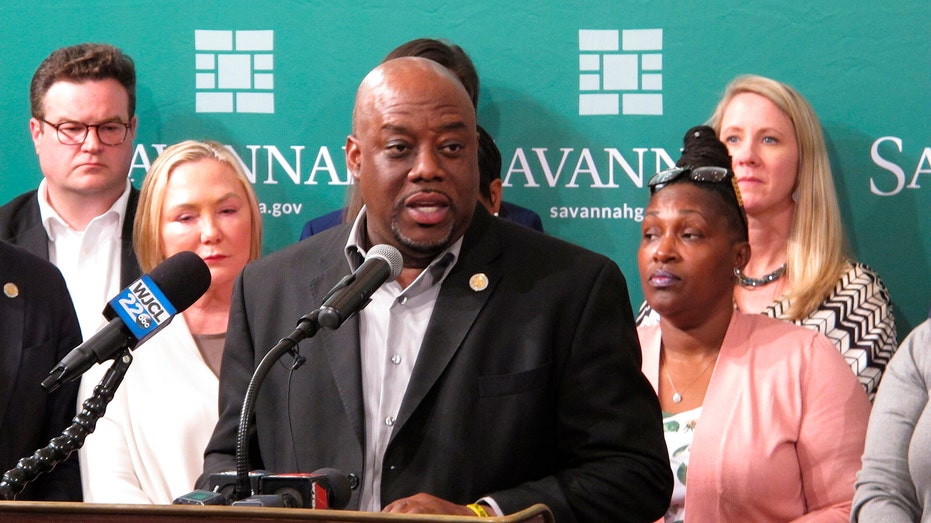
Georgia’s attorney general says city officials in Savannah overstepped their authority by making it illegal to leave firearms in unlocked cars. Savannah’s mayor and city council in April enacted the new city ordinance aimed at making it harder for criminals to steal guns, citing local police statistics showing more than 200 guns reported stolen last year from vehicles that weren’t locked. The law carries maximum penalties of a $1,000 fine and 30 days in jail. GEORGIA AG FILES SUIT AGAINST BIDEN ADMINISTRATION FOR TITLE IX REVISION: ‘DESTROYING WOMEN’S SPORTS’ State Attorney General Chris Carr, a Republican, said in a letter to Savannah officials Friday that the gun ordinance runs afoul of a state law that prohibits local governments from regulating “the possession, ownership, transport, (or) carrying” of firearms. “Because the General Assembly has expressly designated the regulation of firearms as an issue of general, state-wide concern, no local ordinance can regulate firearms,” Carr wrote. Carr’s letter foreshadows a likely court battle over whether city governments like Savannah’s can impose gun safety measures that have received little support in a state legislature dominated by Republicans. A lawsuit filed in Chatham Count Superior Court last week by a man described as frequent visitor to Savannah asks a judge to halt enforcement of the city’s gun ordinance. Savannah Mayor Van Johnson said Monday that City Hall isn’t budging. A Democrat and former police officer, Johnson supported the city’s ordinance as a way to make gun owners act responsibly without infringing on their rights to own or carry firearms. “We certainly encourage our citizens to exercise their Second Amendment rights,” Johnson said in a statement Monday, “but this ordinance remains in effect and will continue to be enforced.” Savannah’s city council voted unanimously April 11 to require parked vehicles to be locked when guns are stored inside and to require people to report gun thefts to police within 24 hours. No one spoke against the ordinance during a public comment period at City Hall, where it was supported by members of Moms Demand Action for Gun Sense in America. According to Savannah police, there were 244 guns reported stolen from vehicles last year and 203 of them were taken from unlocked cars. Police have reported a similar number so far this year, with 56 of 69 thefts coming from unlocked cars. Before Savannah took action, gun control advocates earlier this year failed to persuade state lawmakers to adopt a $300 state income tax credit to pay for gun locks, gun safes and safety classes. In his letter, Carr noted that Georgia courts have struck down prior gun restrictions imposed by local governments. He cited a 2007 ruling by the Georgia Court of Appeals that overturned a Coweta County ordinance prohibiting firearms at sports fields and other recreational facilities operated by the county. Carr’s letter warned city officials they could face civil liability for enforcing it. “Given this concern alone, it appears that the City should give immediate consideration to rescinding its approval” of the gun ordinance, Carr said.
Texas, federal government will begin tallying damage from spring storms, Gov. Greg Abbott says
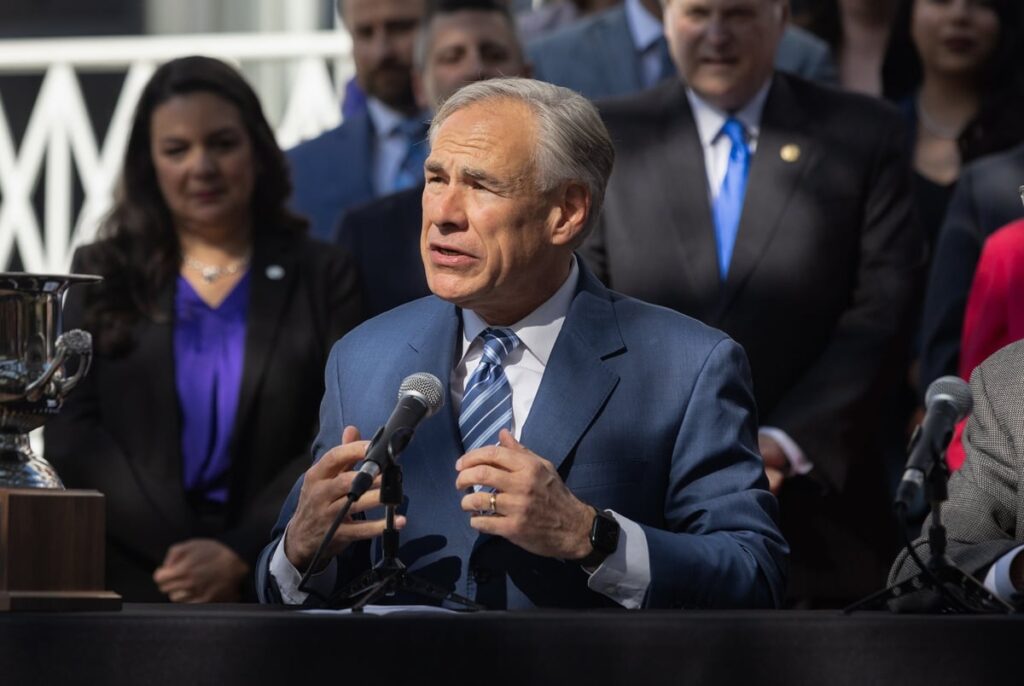
Abbott confirmed three deaths from the storms, none were recorded from flooded areas.