

After no contest plea, a Texas representative’s charges for impersonating a public servant are dismissed
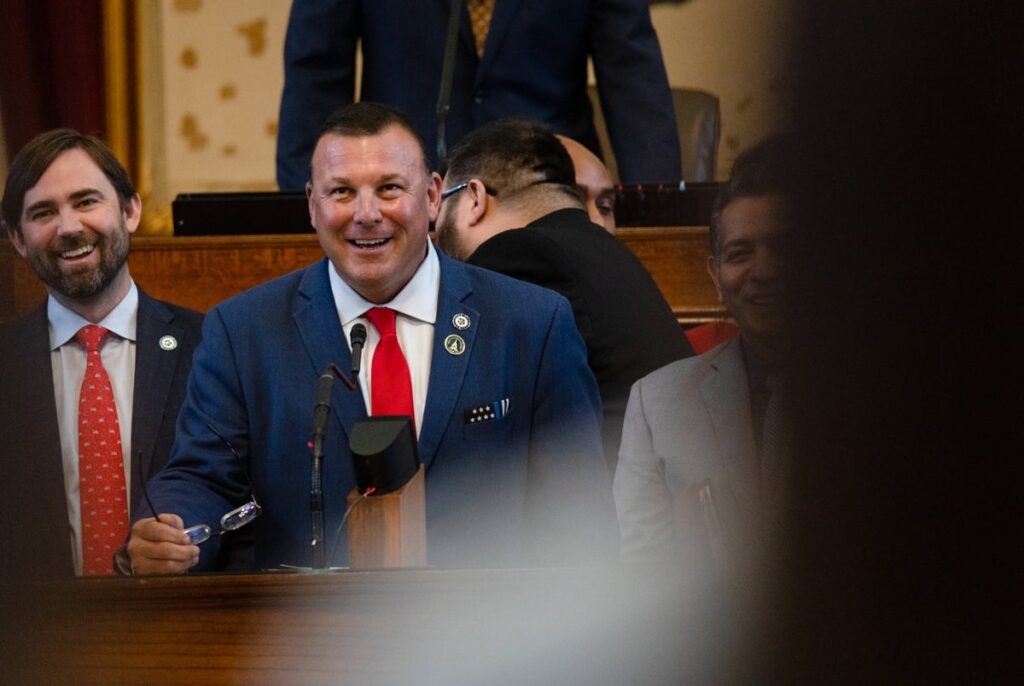
In June 2022, state Rep. Frederick Frazier was indicted on two charges of impersonating a public servant. A Collin County district judge dismissed the misdemeanor charges as part of his deferred adjudication.
Delhi HC raps CM Kejriwal, accuses him of prioritising political interest by continuing as CM after arrest
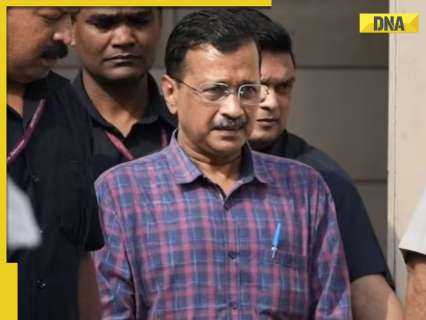
The court stated that till now it has ”politely” emphasised that national interest is ”supreme” but the present case has highlighted what was ”wrong” and it would pass an order in the matter on Monday.
Manipur: Two CRPF personnel killed in Kuki militants’ attack in Naransena area
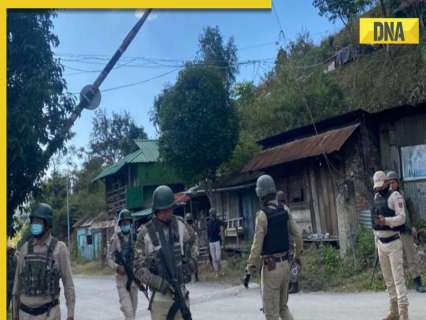
The personnel who lost their lives are from the CRPF 128 Battalion deployed at the Naransena area in Bishnupur district in the state.
Key takeaways from fourth day of testimony in Trump’s hush money trial
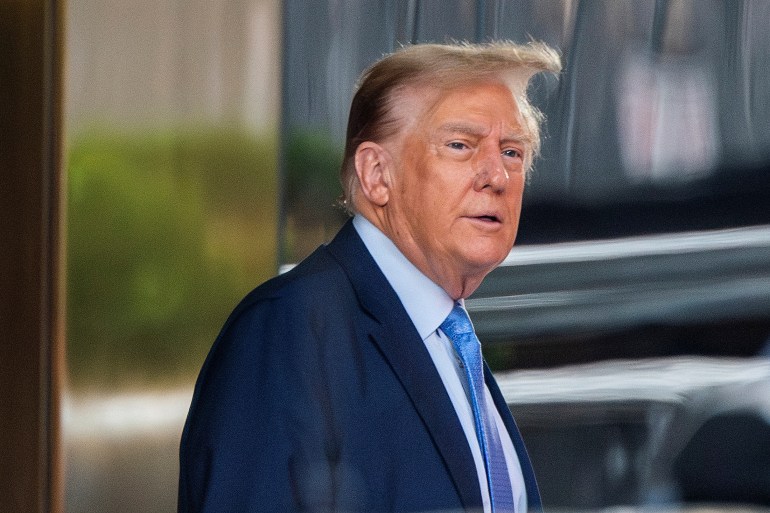
The fourth day of testimony in former United States President Donald Trump’s New York hush money trial has concluded, with former National Enquirer publisher David Pecker facing several hours of cross-examination by Trump’s legal team. Pecker answered more questions on Friday about what he has testified was a “catch-and-kill” scheme to suppress damaging information about Trump in the lead-up to the 2016 US presidential elections. The former president has been charged with 34 felony counts of falsifying business documents in connection to payments made to adult film star Stormy Daniels. Trump, the presumptive 2024 Republican candidate, is accused of mislabelling reimbursements made to his former lawyer Michael Cohen, who paid Daniels $130,000 in exchange for her silence over an alleged affair. Trump has denied that affair took place. But prosecutors have said the ex-president’s alleged misdeeds were part of a larger criminal scheme to influence the 2016 vote, which Trump won over Hillary Clinton. Friday’s hearing began with Trump lawyer Emil Bove continuing to cross-examine Pecker, one of the prosecution’s star witnesses. Two other witnesses also took the stand. Here are six takeaways from the day in court. Pecker grilled on editorial process, 2015 meeting Bove, Trump’s lawyer, on Friday asked the former National Enquirer publisher about a 2015 meeting, which he had previously testified about. Pecker had earlier said there was a discussion in that meeting about running articles about Bill and Hillary Clinton and Trump’s opponents in the Republican presidential primary. Pecker said the moves were good for the tabloid’s business. He added that the Enquirer ran negative stories about the Clintons before it began coordinating with the Trump campaign because those stories performed well. Bove also sought to show that much of the Enquirer’s negative coverage of Trump’s political opponents – which prosecutors had suggested was evidence of them being in cahoots – merely summarised news stories by other outlets. Pecker said recycling information from other outlets was cost-efficient and made business sense. Later, Bove also said the National Enquirer’s parent company – not Trump or Cohen, his then-lawyer – paid a former Trump Tower doorman $30,000 in 2015 for the rights to an unsubstantiated claim that Trump had fathered a child with an employee. Pecker testified earlier that the Enquirer thought the tale would make for a huge tabloid story if it were accurate, but eventually concluded the story was “1,000% untrue” and never ran it. Trump and the woman involved both have denied the allegations. Bove asked whether he would run the story if it were true. Pecker replied: “Yes.” Term ‘catch-and-kill’ not used in 2015 meeting Pecker also previously testified that he hatched a plan with Trump and Cohen in August 2015 for the National Enquirer to help Trump’s presidential campaign. But, under questioning by Trump’s lawyer on Friday, Pecker acknowledged there was no mention at that meeting of the term “catch-and-kill”, which describes the practice of tabloids purchasing the rights to story so they never see the light of day. Nor was there discussion at the meeting of any “financial dimension”, such as the National Enquirer paying people on Trump’s behalf for the rights to their stories, Pecker said. Karen McDougal deal The defence’s questioning then turned to a deal between the National Enquirer’s parent company, American Media Inc, and former Playboy model Karen McDougal. Bove sought to get at what both McDougal’s and the Enquirer’s objectives really were in making a $150,000 agreement in 2016. The deal gave American Media – where Pecker was CEO from 1999 to 2020 – exclusive rights to McDougal’s account of any relationship with “any then-married man”, a clause Pecker has testified was specifically about Trump. She claims they had an affair in 2006 and 2007; Trump denies it. The contract also called for McDougal to pose for magazine covers and to produce, with a ghostwriter’s help, columns and other content on fitness and aging for various American Media titles. Earlier this week, Pecker testified that the provision for content was essentially for a pact that was really about keeping McDougal’s story from becoming public and potentially influencing Trump’s chances at the presidency. But on Friday, the ex-publisher said that McDougal was looking to restart her career and that American Media had pitched itself in a video conference as a venue able to help her. The company indeed ended up running more than 65 stories in her name, he said. When American Media signed its agreement with her, “You believed it had a legitimate business purpose, correct?”, Bove asked Pecker. “I did,” the former publisher said. Rhona Graff, who started working for Trump in 1987 and left the Trump Organization in April 2021, was the next witness to testify after Pecker. She has been described as Trump’s gatekeeper and right hand. Graff testified on Friday that she once saw Daniels at Trump Tower before he ran for president. She said she heard Trump say he was interested in casting her on The Apprentice, the reality TV show he hosted. Graff also said contact information for Daniels and McDougal was maintained in the Trump Organization’s Outlook computer system. “I never had the same day twice. It was a very stimulating, exciting, fascinating place to be,” she said of her 34 years working for the Trump Organization. Graff also described Trump as a “fair” and “respectful” boss. Trial hears from third witness Gary Farro, who works at Flagstar Bank as a private client adviser and was previously at First Republic Bank, which was used by Cohen, was the trial’s third witness. Farro testified on Friday that Cohen had several personal accounts at First Republic when Farro took over the client relationship in 2015. He also detailed the banking arrangement he had with Cohen, according to US media reports of his testimony. “I was told that I was selected because of my knowledge and because of my ability to handle individuals that may be a little challenging,” Farro said. “Frankly, I didn’t find him that difficult,” he added. Trump exits Trump Tower to attend
Jobless engineers, MBAs: The hidden army of Indian election ‘consultants’
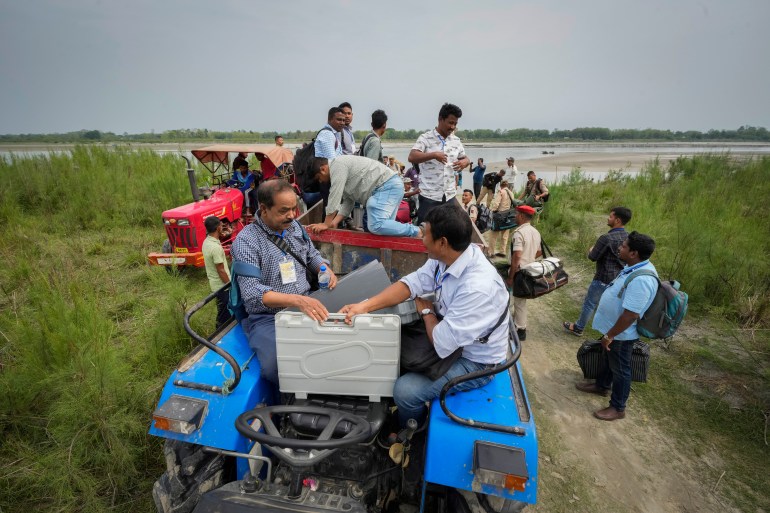
“How many tennis balls can fit in a passenger plane?” Neeraj, a young economics graduate from the premier Indian Institute of Technology (IIT), was given 15 minutes to solve this question during his interview rounds at Nation With Namo (NwN), one of the in-house political consultancies of India’s governing Bharatiya Janata Party (BJP). He got the calculation right and joined a small team of graduates from India’s top universities who were dispatched to the eastern state of Tripura to conduct surveys, collect and analyse voter data for elections that were due in February last year. Their job was to identify who was not voting for the BJP, separate them into demographic cohorts – age, gender, caste, tribe, religion – find a common concern, issue or fear and strategise how to exploit that in the BJP’s favour. And they were to do all this while staying under the radar. “All of us who go through the Joint Entrance Examination (JEE) are good at solving problems,” said Neeraj, who asked for his name to be changed as he is not authorised to speak to the media. Admission to most of India’s top government-funded engineering, law and management colleges is through all-India exams. Millions of students take these exams, including the JEE for admission to 23 IITs, but only 2-3 percent make it to the premier institutes. Neeraj is one of few who made it, and is now in the league of hundreds of graduates from India’s top engineering and business schools who have in recent years joined political campaigns, usually for short stints while they wait for lucrative corporate job offers. An engineering degree from an IIT, whose alumni include Google CEO Sundar Pichai and former Twitter CEO Parag Agarwal, or an MBA from the Indian Institute of Management, the alma mater of PepsiCo’s ex-CEO Indra Nooyi, are markers of excellence and used to be a guarantee of a good job. But that promise has been rescinded with campus recruitment drying up over the past few years and layoffs, especially at tech firms, surging. The ability of these graduates – readily available – to manage and analyse enormous amounts of voter data makes them a valuable resource for political consultancies. The latter’s market size, estimated to be about $300m, is set to grow with individual candidates and national and regional parties looking for their expertise. To attract graduates from these premier institutes, most political consultancies offer fellowships, and though the jobs are contractual and short-term, usually from three months to three years, they pay well, come with perks and the promise that their work will “shape the future”. “There’s also the attraction of being close to power centres in some way,” said Ankit Lal, a computer engineer who runs a political consultancy firm, Politique Advisors, in Delhi. In the small state of Tripura, where the BJP was seeking re-election, voter data culled and analysed by Neeraj and others in the NwN team showed that the party was in a comfortable position in the north. But in Amarpur constituency, home to a few tribal areas including Chabimura, voters were leaning towards other parties. From Tripura’s capital Agartala, the long, winding route to Chabimura – first by road and then by motor boat on the Gomati River — passes through moss-covered hills with 16th-century sculptures, legends about pythons guarding treasures in caves, and years of poverty and neglect. For centuries, members of the Jamatia tribe, who speak Kokborok, a Tibetian-Burmese language, have lived in this remote, rain-fed area known as the “Amazon of Tripura”. In Chabimura, Neeraj’s field survey found a cohort and a solution. There were a few dominant Jamatia families, and impressing them, he figured, would have a trickle-down effect on tribal voters in the area. “They are quite poor and all they wanted were boundary walls around their houses,” Neeraj said. Two to three days after he made a recommendation to the BJP’s state leadership, four-foot high mud boundary walls were constructed with great urgency about 80 houses belonging to members of the Jamatia tribe. For added incentive, pairs of male-female goats were herded inside these boundary walls, which also became a canvas for party propaganda. Portraits of Prime Minister Narendra Modi, the state’s chief minister and the local candidate were painted on them. BJP’s Tripura spokesperson did not respond to Al Jazeera’s request for comment. The BJP, which had been in power in the state for five years, could have had these walls constructed at any time. But in a country where 800 million people survive on free or subsidised food grains, a pair of goats and a boundary wall are life-changing favours that earn gratitude and votes. “In politics, vote is the only currency. Everyone has just one vote across the country. How each person spends that vote, all our effort goes into that,” another IITan, who has also worked for NwN, told Al Jazeera on the condition of anonymity. Bribing voters is a crime and a poll violation that can lead to a prison sentence and the election being nullified. But with the party hiring a vendor for the construction and not being directly involved, there’s deniability and proving the charge remains a matter of investigation. The BJP candidate won the Amarpur seat, beating his nearest rival from the Communist Party of India (Marxist) by a narrow margin. In India, polling officials carry electronic voting machines escorted by security personnel on a tractor [File: Anupam Nath/AP] Months before India began the gargantuan, 44-day exercise of conducting national general elections from April 19, armies of tech-savvy IITians, MBAs, lawyers and researchers have been busy collating, studying and analysing voter data to decide on campaign strategy, issues to highlight, where to deliver gifts and polarising speeches while pushing a glut of fake news on social media and WhatsApp aiming to convince voters for their clients. These backroom boys of Indian democracy, who have no skin in the game apart from the pay package and the thrill of a win,
Generation gap: What student protests say about US politics, Israel support
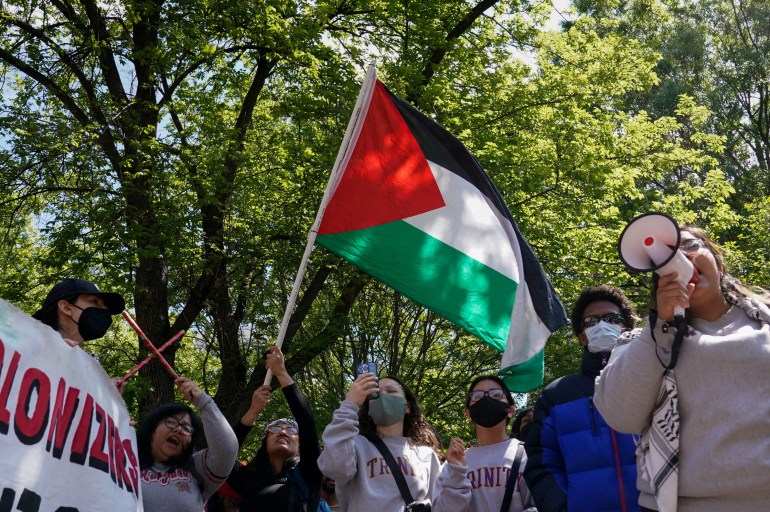
Washington, DC – A Gaza-focused campus protest movement in the United States has highlighted a generational divide on Israel, experts say, with young people’s willingness to challenge politicians and college administrators on display nationwide. The opinion gap – with younger Americans generally more supportive of Palestinians than the generations that came before them – poses a risk to 81-year-old Democratic President Joe Biden’s re-election chances, they argue. It could also threaten the bipartisan backing that Israel enjoys in Washington. “We’re already seeing evidence of a generation divide on Israel, and that is going to be a long-term issue for the Democratic Party,” said Omar Wasow, assistant professor of political science at the University of California, Berkeley. “These protests accelerate that generation gap,” Wasow told Al Jazeera. Students at Columbia University in New York set up a Palestine solidarity encampment last week, and they have since faced arrests and other disciplinary measures after the college administration called on police to clear the protest. Yet, despite the crackdown, similar encampments have sprung up across the US, as well as in other countries. Footage of students, professors and journalists being violently detained by officers on various campuses spurred outrage but has done little to slow the momentum of the protests, which have continued to spread. ‘Inflection moment’ The students are largely demanding that their universities disclose their investments and withdraw any funds from weapons manufacturers and firms involved with the Israeli military. Politicians from both major US parties, as well as the White House and pro-Israel groups, have accused the students of fuelling anti-Semitism – allegations that protesters vehemently deny. Eman Abdelhadi, a sociologist at the University of Chicago, said younger people are growing increasingly frustrated with the status quo on domestic and foreign policy issues. “I think there’s a real disaffection with the older generation, but more importantly with the system that they’re running,” said Abdelhadi. She added that the protests mark an “inflexion moment” in US public opinion more broadly. “In American history in general, usually the big shifts in public opinion have either coincided with or been triggered by large student movements,” Abdelhadi told Al Jazeera. She said campus activism can be the basis of political change. “There’s a sort of sense that this is the future.” People demonstrate at a protest near an encampment in support of Palestinians in Gaza at George Washington University in Washington, DC, April 26 [Elizabeth Frantz/Reuters] Biden’s woes For years, public opinion polls in the US suggest that younger people are more likely to be sympathetic towards Palestinians and critical of Israel. But Americans overall have grown more critical of Israel’s treatment of Palestinians, including in the ongoing war on Gaza. Multiple polls suggest that a majority of US respondents back a permanent ceasefire in the besieged Palestinian enclave, where Israel has killed more than 34,000 Palestinians since the conflict broke out on October 7. But Biden has maintained staunch support for Israel, the US’s top Middle East ally, amid the war. The 81-year-old president’s stance could be politically costly, as Biden faces a tough re-election bid in a November election that is expected to pit him against his Republican predecessor, Donald Trump. Polls suggest that Biden will need to appeal to his Democratic Party base, which is not as united in support of Israel as the Republican Party. Angus Johnston, a historian of US student activism, explained that the generational divide on Israel is especially pronounced among Democrats. “On a national level, we have seen this for a while as a disconnect between the values of young voters and most Democratic politicians,” Johnston told Al Jazeera. “And what we’re seeing now is a similar disconnect between young people on campus and many of the administrators who run these campuses, along with alumni and donors.” Abdelhadi, the sociologist, added that the heavy-handed law enforcement approach to the Gaza solidarity protests has undercut Democrats’s argument that electing Biden would protect the nation from Trump, whom they accuse of authoritarianism. “The reality is the Democrats have been telling us that young people need to save democracy and that people of colour need to save democracy and that any quibbles with this current administration need to be put aside in order to save democracy,” she told Al Jazeera. “But where’s the democracy when you have state troopers beating up students and faculty for protesting, and the White House saying nothing about that?” Wasow also said the protests and crackdown against them could add to the apathy towards Biden. “The Democrats can’t really afford to give people more reasons to vote against Biden, and this actually becomes one.” Policy change The student protesters are not getting involved in US partisan politics, however. They instead have stressed that their demands aim to help protect the human rights of Palestinians. So can the demonstrations help bring about changes to US policy and achieve their divestment demands? Johnston, the historian, said it is unlikely that US colleges will divest from large firms and the defence industry in the short term, but the call for transparency in their investments is reasonable. He added that long-term change is possible, but it will not come overnight. “We have seen over and over again that student organising does change policy, not always quickly, and not always in the ways that the students would have hoped,” Johnston said. “But we do see that when student organising rises to a certain level of intensity, it can have a significant effect.” For example, he said college activism against apartheid in South Africa began in the 1950s and grew over the years. “I think that there is no question that the anti-apartheid campus organising of the 1980s was a significant piece of what shifted American popular opinion and political opinion on the South African regime,” he said. Wasow, who studied the 1960s civil rights protests, also said demonstrations could shift public opinion, help grow political coalitions around a cause, and build civic capacity to advance an issue. “If
Weather update: IMD issues red alert for severe heatwave conditions in these states, check forecast here

IMD predicts severe heatwave across India till April 30, with temperatures exceeding 40°C.
Columbia University’s policy-making senate votes for resolution calling to investigate school’s leadership
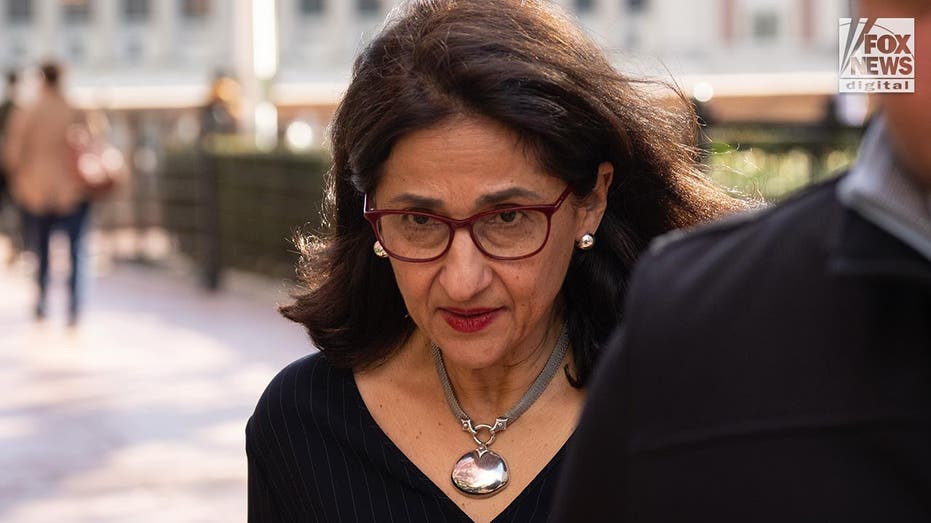
The Columbia University Senate in New York City voted in favor of a resolution calling for an investigation into the school’s leadership, amid anti-Israel protests that have taken place on the campus for over a week. A source within the school’s leadership confirmed the details of the resolution, saying it was adopted by a vote of 62-14, with three senate members abstaining. The resolution alleges Columbia President Minouche Shafik violated established protocols when she authorized the New York City Police Department (NYPD) to enter the campus and arrest protesters last week. Specifically, Shafik is accused of violating the due process rights of students and faculty when she authorized officers to enter the campus. COLUMBIA STUDENT BANNED FROM CAMPUS AFTER REMARKS ABOUT ‘MURDERING ZIONISTS’ The university Senate does not have the authority to remove Shafik, as it is the university’s policy-making body, which is made up of students, faculty and administrators. “The administration and Senate share the same goal of restoring calm to campus, so everyone can pursue their educational activities,” the university said. “We are committed to an ongoing dialogue and appreciate the Senate’s constructive engagement in finding a pathway forward.” Shafik has increasingly faced calls to step down amid the spread of antisemitism on campus as well as ongoing protests against Israel that have disrupted classes. HIGH SCHOOL STUDENTS ACCEPTED TO COLUMBIA SAYING ‘NO THANK YOU’ DUE TO ANTISEMITISM: COLLEGE CONSULTANT On Monday, Shafik said in a statement that she was “deeply saddened” by certain actions of agitators, who have formed an “encampment” on the campus and have riled up students and faculty with anti-Jewish slogans and chants. The protest encampment sprung up on the campus lawn area at Columbia on April 17, the same day that Shafik faced bruising criticism at a congressional hearing from Republicans who said she hadn’t done enough to fight antisemitism. Two other Ivy League presidents resigned months ago following widely criticized testimony they gave to the same committee. U.S. House Republicans from New York have urged Shafik to resign, saying in a letter Monday that she had failed to provide a safe learning environment in recent days as “anarchy has engulfed the campus.” Fox News’ CB Cotton and Bradford Betz contributed to this report.
St. Louis’ toxic sites need faster cleanup, lawmakers and residents say
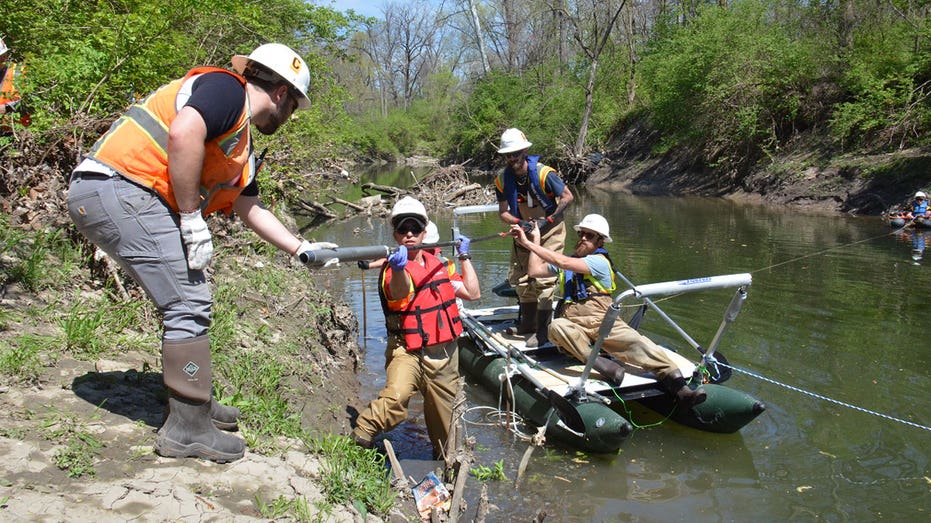
Some Missouri residents and lawmakers are calling for faster cleanup at several toxic sites in the St. Louis area. “We always felt like we’re being gaslit by these federal agencies, like the way they would answer questions, the way they were just very nonchalant,” Just Moms STL co-founder Dawn Chapman told Fox News. “They really should have gone in there before any of this was built and cleaned the creek. They had a chance to really prevent all the harm that we’re seeing now. And for whatever reason, they chose not to.” Chapman’s group, which she founded with her neighbor Karen Nickel, advocates for the cleanup of contaminated sites in St. Louis. “We’ve talked to a lot of people that live just less than a half a mile from West Lake Landfill,” Nickel said. “Since those homes were built there back in the late ’50s, they had no idea that a landfill was even there.” MORE PEOPLE EXPOSED TO MANHATTAN PROJECT CHEMICALS DESERVE COMPENSATION, ADVOCATES SAY Nickel and Chapman said when they bought their homes, they were unaware the landfill was located nearby and that it was designated as a superfund site. “It was like, what the heck is that? I didn’t know to even look for that when I purchased my house,” Chapman said. The Environmental Protection Agency (EPA) has been providing updates on the cleanups using social media, making information accessible online. “There are some of the activists that are in the area and the community members that are very strong, that are always willing to provide information. We really tried to beef up our relationship with the key community members, and I think that’s paying off,” EPA Region 7 Superfund and Emergency Management Division Director Bob Jurgens said. The EPA added the West Lake Landfill to its national priorities list in 1990. The list is part of its Superfund sites program documenting hazardous waste sites in the country. Those locations are eligible for federal funding to pay for extensive, long-term cleanup actions. “The Superfund process can be very lengthy. We understand their concerns with that,” Jurgens said. The EPA proposed a plan for remediation in 2006. After a public comment period, the agency adjusted its plan and released a new Record of Decision in 2008. “Based on feedback from the community, there was an amendment to that which was completed in 2018,” Jurgens said. “It’s been pretty much nonstop work with the responsible parties to do the assessment, the remedial design, and then eventually get to the implementation.” Nearly 35 years after its designation as a Superfund site, residents have argued the process should be further along. “We’re told we’re close to getting it there. But, you know, we’re running up against a clock,” Chapman said. The EPA admitted it did not have a firm schedule for when the West Lake Landfill will be fully cleaned up. “We don’t have a timeline. It’s difficult to guess how long this is going to take. We’ve made really good progress with the responsible parties on doing the full assessment,” Jurgens said. Adding to the complex work, a fire has been burning at the site for nearly a decade. The EPA reported it did not know how the fire started. “It’s not uncommon for there to be landfill fires,” Jurgens said. “Once that fire is underground, it’s really difficult to put that out. But they’ve done some really good actions at that site to address that.” Jurgens said there was significant space between the fire and the radioactive waste. Crews have installed a barrier to contain the fire and officials said there’s currently no risk to residents in the area. “That subsurface smoldering event is definitely in better shape than it was several years ago,” Jurgens said. Chapman and other people living in the area said issues in the past have contributed to the lengthy cleanup happening today. “The truth is, that both federal agencies in charge of this radioactivity across the region, have made huge errors and mistakes in characterizing it,” Chapman said. OFFICIALS KNEW MANHATTAN PROJECT CHEMICALS DISPOSED IMPROPERLY AT MISSOURI SITES, DOCUMENTS REVEAL The two sites where toxic waste was stored after the Manhattan Project were added to the national priorities list in 1989. The list has not included Coldwater Creek, which extends from those sites, but locations along the creek where radioactivity has been found have fallen under the storage sites’ listing. “This creek goes 14 miles throughout the county that I serve. And so I just believe that the whole entire creek should be tested,” Missouri State Rep. Chantelle Nickson-Clark said. Nickson-Clark, a Democrat, is a two-time cancer survivor who grew up near Coldwater Creek. She’s representing the area and recently hosted a town hall to hear the stories of others living there. “A lot of the constituents shared how they too have lost loved ones and are dealing with the aftermath,” Nickson-Clark said. “It is very sad to see my community hurting and dealing with such effects of Coldwater Creek. We know that there are a lot more stories out there.” The Army Corps of Engineers, the lead federal agency working to clean up the waterway, has estimated that the effort could take until 2038. “If you do the math, we’re already 80 years into it,” Nickson-Clark said. “Some of us may not even experience the cleanup in our lifetime.” Like the EPA, the Army Corps of Engineers admitted the process has been lengthy. “There’s an extensive amount of coordination, investigation, documentation, remediation that we have to do just to get one area. So the overall process definitely does take some time,” U.S. Army Corps of Engineers St. Louis District Program Manager Phil Moser said. Sen. Josh Hawley, R-Mo., said the timeline for cleanup at both sites was unacceptable. “This is outrageous. Let’s remember, this creek has had contamination in it since the ‘50s, since the ’60s and now 2038? I mean, we will be getting close to the century mark,” Hawley said.
Kansas won’t have legal medical pot or expand Medicaid for at least another year
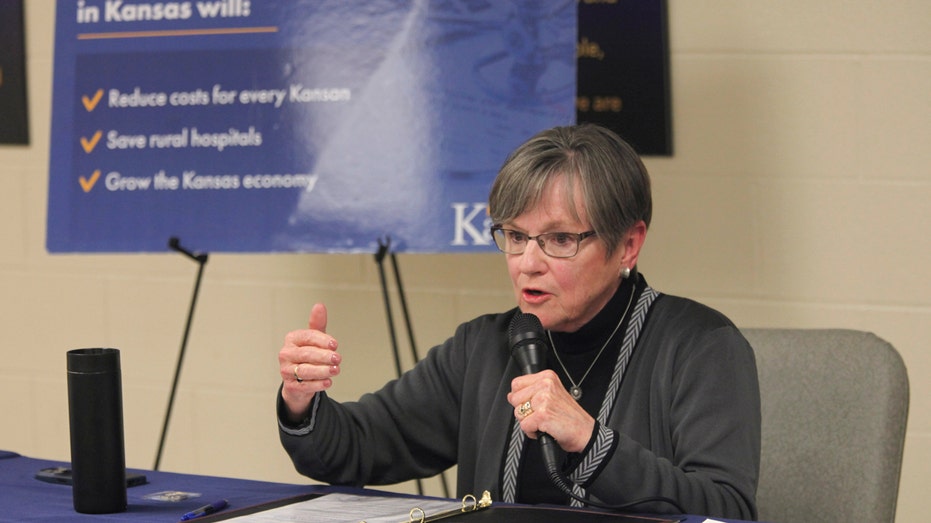
Kansas will remain among the handful of states that haven’t legalized the medical use of marijuana or expanded their Medicaid programs for at least another year. Republican state senators on Friday blocked efforts to force debates on both issues before the GOP-controlled Legislature’s scheduled adjournment for the year Tuesday. Supporters of each measure fell short of the 24 of 40 votes required to pull a bill on each subject out of committee. KANSAS GOVERNOR VETOES BILL BANNING TRANSGENDER TREATMENT TO MINORS, ABORTION RESTRICTIONS Backers of both proposals argue that they have popular support yet have been thwarted going on a decade in each case. Kansas doesn’t allow voters to put proposed laws on the ballot statewide, a path that has led to approval for each measure in other states. All but 12 states have legalized medical marijuana, and all but 10 have expanded Medicaid in line with the 2010 federal Affordable Care Act and its promise to cover almost all of the cost. Besides Kansas, only Georgia, Tennessee, Texas, Wisconsin and Wyoming have done neither, according to the National Conference of State Legislatures. “We’re behind the times,” state Sen. John Doll, a western Kansas Republican who voted for both measures, said after Friday’s votes. Republican leaders had expected both efforts to fail, given the GOP’s 29-11 Senate majority, and viewed them largely as political grandstanding. The medical marijuana vote was 12-25, with three senators absent. Law enforcement officials oppose the idea, seeing medical marijuana as likely to be close to legalizing recreational use. During committee testimony earlier this year, opponents also pointed to Oklahoma officials’ frustration with the legalization of medical marijuana by ballot initiative there in 2018. Oklahoma Attorney General Gentner Drummond, a Republican, has said the explosive growth of the marijuana industry under a lax law has attracted an influx of criminals and foreign nationals for illegal black-market operations. “We had no idea we were going to have 10,000 growers, way more than they have in California and all these other states, and anybody with a hangnail could get a medical card,” Republican Gov. Kevin Stitt said. But Oklahoma also received nearly $52 million in revenue from its excise tax on marijuana and an additional $67 million in state and local sales taxes in 2023. Cheryl Kumberg, a registered western Kansas nurse and president of the Kansas Cannabis Coalition, said Oklahoma’s problems stem from its lax law. She said Kansas residents who can get cannabis from other states are using it, risking legal issues to address their medical problems. “It’s ridiculous,” she said. “I can go 45 minutes one way, a couple hours in the other direction, and you can just you can just use it however you want.” Democratic Gov. Laura Kelly even linked medical marijuana to Medicaid expansion in 2021, unsuccessfully pitching marijuana taxes to cover the state’s relatively small share of the cost of expanding Medicaid health coverage to another 150,000 people. The Medicaid expansion vote Friday was 18-17 despite months of aggressive public campaigning by Kelly and other expansion advocates. In early January, she said she was taking a “more political approach” and suggested plans to hit anti-expansion Republicans hard during the fall campaign. She backed off that idea this month, telling reporters after one pro-expansion event, “Whether it’s an election year or not — that’s irrelevant.” But last year, Kelly formed the Middle of the Road political action committee, and it raised nearly $1 million by the end December for elections this year for all legislative seats. Also last year, two former Kelly campaign aides helped form a nonprofit advocacy group, the Kansas Coalition for Common Sense, to back the governor’s goals. That group put out a post-vote statement suggesting that a no vote was a vote against lowering health care costs and helping rural hospitals. But Senate President Ty Masterson, a Wichita-area Republican, said before the vote that he wasn’t expecting Medicaid expansion to become a major campaign issue. He dismissed surveys and polling that expansion supporters released showing its popularity as “just based on how the question is asked.” “If you ask them, ‘Do you want able-bodied people to get free health care?” people will vote no,” Masterson said, repeating a common GOP argument.