

ICICI Bank blocks 17,000 credit cards after technical glitch, here’s what you can do

The problem was spotted when ICICI Bank customers posted on social media about the safety of the bank’s iMobile Pay app. They said they saw private credit card details, like the full card numbers and CVVs, on the app
Lok Sabha Elections 2024: What’s closed, what’s open in Noida, Greater Noida, Ghaziabad today?
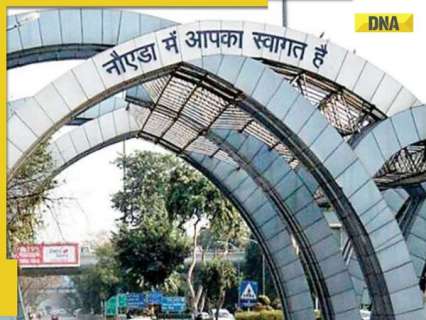
Regarding closures and operations in Noida, Greater Noida, and Ghaziabad on polling day, schools and colleges are closed on Friday.
SC dismisses all petitions for 100% EVM-VVPAT verification
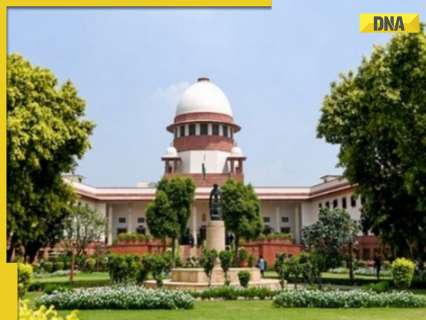
Supreme Court said that it has given two directions – one direction is after the completion of symbol loading process, the Symbol Loading Unit (SLU) should be sealed and they should be stored at least for 45 days
Russia-Ukraine war: List of key events, day 792
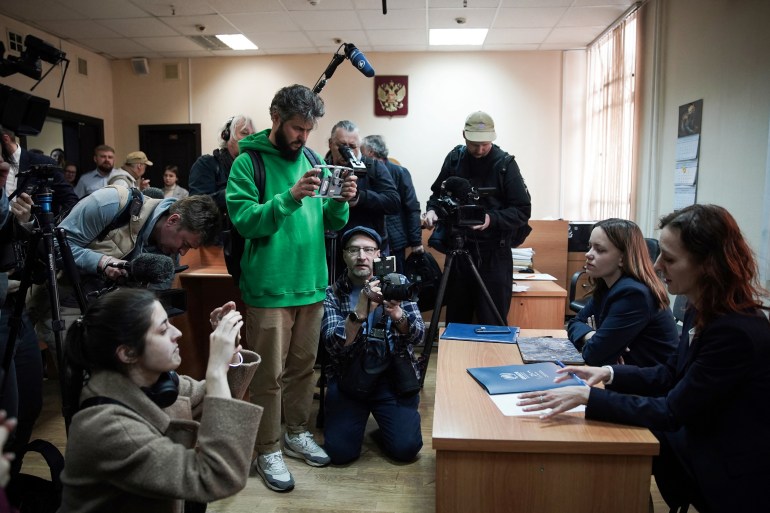
As the war enters its 792nd day, these are the main developments. Here is the situation on Friday, April 26, 2024. Fighting Politics and diplomacy NATO Secretary-General Jens Stoltenberg said China must stop supporting Russia’s war in Ukraine if it wants to enjoy better relations with the West. Beijing says it is neutral in the war. Stoltenberg, however, said it was helping prop up Moscow’s war, noting that Russia imported 90 percent of its microelectronics from China, which were then used in the production of missiles, tanks and aircraft. “China says it wants good relations with the West. At the same time, Beijing continues to fuel the largest armed conflict in Europe since World War II. They cannot have it both ways,” he said. Alexandra Bayeva, left, and Katerina Tertukhina, Oleg Orlov’s lawyers speak to the press after his hearing was postponed until late next month [Tatyana Makeyeva/AFP] Russian President Vladimir Putin said he planned to visit China in May. He did not give a date. Chinese President Xi Jinping travelled to Moscow a year ago to meet Putin, and the two men met again on the sidelines of a Beijing forum last October when Xi said the “political mutual trust” between their countries was “continuously deepening”. Mykola Solsky, Ukraine’s agriculture minister, resigned amid a corruption investigation into his alleged involvement in the illegal acquisition of state-owned land worth $7m. A court is set to decide on Friday whether Solsky should be taken into custody. Leading Russian human rights group Memorial warned that the health of Oleg Orlov, its jailed 71-year-old head, was deteriorating. Orlov was sentenced in February to two and a half years in prison for “discrediting the armed forces” after he took part in antiwar demonstrations and published an article in which he said Russia had descended into fascism. Orlov had been due in court on Thursday, but the hearing was cancelled. The Security Services of Ukraine (SBU) said a husband and wife, who had been found guilty of treason for providing information to Russia that allowed its forces to launch a rocket strike on a hospital in the southern Kherson region, had been sentenced to 15 years. The SBU said it had also detained a former soldier whom it accused of helping Russia plot attacks in the northeastern Kharkiv region. The suspect, who faces up to eight years in prison, had tried to flee to Russian-held territory, it added. Russia jailed a 26-year-old Siberian man for 10 years on charges of state treason and “terrorism” over plans to join Russian units fighting for Ukraine. The man was detained as he was making his way to Ukraine, according to state news agency TASS. US Treasury Secretary Janet Yellen said a US proposal to use the interest derived from $300bn in frozen Russian assets to aid Ukraine was building support among Group of Seven (G7) countries wary about an outright asset seizure. Moscow said it might downgrade diplomatic ties with the United States if its frozen assets were seized. Poland and Lithuania could help return Ukrainians of military age back to Ukraine, the countries’ defence ministers said. Russian celebrity blogger and TV presenter Anastasia Ivleeva, whose “almost naked” party in Moscow caused outrage, was fined 50,000 roubles ($540) for “discrediting” the country’s armed forces by calling for peace in a social media post. Belarusian President Alexander Lukashenko said that the risk of military incidents along his country’s border with Ukraine was quite high. Lukashenko also said that “several dozen” Russian tactical nuclear weapons had been deployed in Belarus. Weapons US media outlet Politico reported the US could announce as soon as Friday a new $6bn weapons package for Ukraine. Two US officials, who spoke on condition of anonymity, said the package was likely to include Patriot air defence systems, artillery ammunition, drones, counter-drone weapons and air-to-air missiles for fighter planes. Russia brushed off the potential impact of Ukraine’s new long-range weaponry on the battlefield. Kremlin spokesman Dmitry Peskov insisted such weapons would “not change the outcome of the special military operation”, as Russia terms its invasion, and would “cause more problems for Ukraine itself”. Denmark’s government said it was adding 4.4 billion kroner ($630m) to its Ukraine military aid fund. The country is the fourth-largest donor of military aid to Ukraine since the start of Russia’s 2022 invasion, according to the German-based Kiel Institute for the World Economy. Adblock test (Why?)
White nationalist rally ‘nothing’ compared with Gaza protests, Trump claims
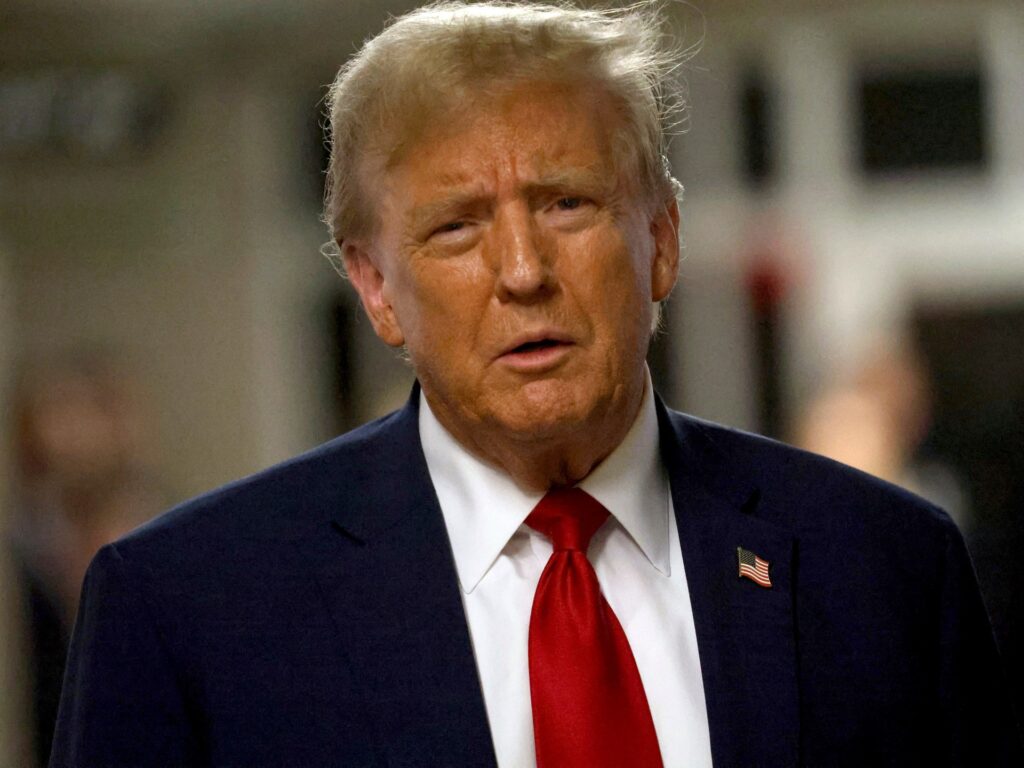
Former US president says Charlottesville rally was a ‘little peanut’ compared with pro-Palestinian student protests. Former United States President Donald Trump has claimed that pro-Palestinian protests on university campuses are more hateful than the infamous 2017 white nationalist rally in Charlottesville, Virginia. Speaking to reporters outside his hush-money trial in New York on Thursday, Trump said the Unite the Right rally was “nothing” compared with the hate being expressed at student demonstrations against the war in Gaza. “We’re having protests all over,” Trump said as he left the Manhattan courtroom where he is standing trial over alleged payments made to adult film star Stormy Daniels in the run-up to the 2016 presidential election. “Charlottesville was a little peanut, and it was nothing compared – and the hate wasn’t the kind of hate that you have here, this is tremendous hate,” Trump said. Trump’s comments follow a Truth Social post on Wednesday in which the Republican presidential contender described the Charlottesville rally as a “‘peanut’ compared to the riots and anti-Israel protests that are happening all over our Country.” The White House rebuked Trump over his comments. “Minimising the anti-Semitic and white supremacist poison displayed in Charlottesville is repugnant and divisive,” deputy press secretary Andrew Bates said in a statement. US President Joe Biden, who is expected to face off against Trump in November’s presidential election, has repeatedly invoked the Charlottesville rally as a decisive moment in his decision to run against Trump in 2020. During the event on August 11, 2017, white supremacists rallied against the removal of a statue of Confederate General Robert E Lee, chanting slogans including “You will not replace us!” and “Jews will not replace us!” A day later, James Alex Fields Jr, a self-identified white supremacist, deliberately drove his car into a crowd of counterprotesters near the rally site, killing Heather Heyer. Trump’s response to the rally, including saying that “both sides” were to blame, marked one of the most controversial moments of his presidency. There have been no comparable incidents of violence at the pro-Palestinian protests roiling multiple US universities, including George Washington University, Yale, New York University (NYU), Columbia University and the University of Texas. But reports of harassment and threats against Jewish students have prompted condemnation from officials including Biden, House Speaker Mike Johnson, New York City Mayor Eric Adams and Israeli Prime Minister Benjamin Netanyahu. Footage shared on social media last weekend appeared to show activists telling students to “go back to Poland” and that October 7 is “going to be every day for you” – referring to Hamas’s attacks on Israel in which 1,139 people were killed. Chabad at Columbia University, a chapter of an international Orthodox Jewish movement, also reported that protesters had told Jewish students, “You have no culture”, “All you do is colonise” and “Go back to Europe”. On Sunday, a group of student activists representing the protesters released a statement distancing themselves from “inflammatory individuals” and condemning “any form of hate or bigotry”. Adblock test (Why?)
Top New York court overturns Harvey Weinstein’s 2020 rape conviction
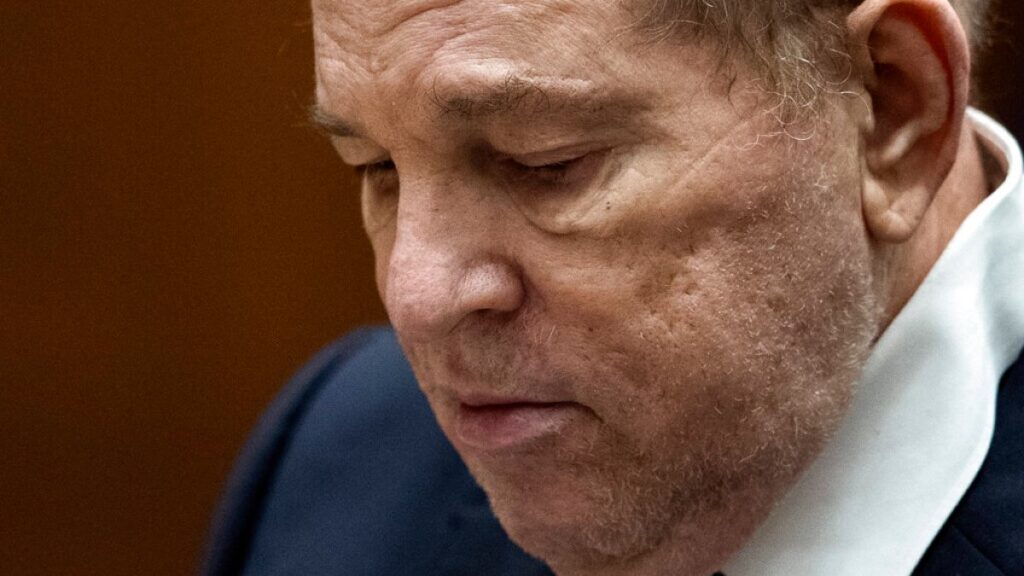
Defence and prosecution prepare for retrial of the once-powerful movie producer in a case that was a landmark for the #MeToo movement. New York’s highest court has overturned disgraced Hollywood producer Harvey Weinstein’s 2020 conviction for rape and sexual assault, highlighting the challenges of holding powerful men to account. The Court of Appeals found on Thursday that the landmark trial was unfair because the judge allowed women whose accusations were not part of the charges Weinstein faced to give evidence in court. Judge Jenny Rivera called for a new trial following the 4-3 decision. The ruling does not affect a separate 16-year rape sentence handed down in California, so the 72-year-old will remain behind bars. Bombshell allegations against the Oscar-winning producer broke into the open in 2017 and led to a flood of allegations against other powerful men as women fought back against sexual violence in what became known as the #MeToo movement. Three years later, a New York court found Weinstein guilty of sexually assaulting former production assistant Miriam Haley in 2006, and raping aspiring actress Jessica Mann in 2013. He was jailed for 23 years in a case that was considered a landmark for the #MeToo movement. Following his conviction, a civil trial awarded $17m to dozens of other women who had accused Weinstein of abuse. Many of his accusers condemned Thursday’s decision, with actress Ashley Judd calling it “an act of institutional betrayal”. The office of Manhattan District Attorney Alvin Bragg signalled it planned to put Weinstein back on trial. At a news conference, Weinstein’s lawyer Arthur Aidala called the ruling “a tremendous victory for every criminal defendant in the state of New York” and said Weinstein was ready to testify in his own defence at a retrial. “He’s been dying to tell his story from day one,” Aidala said. Weinstein has contended that any sexual activity was consensual. Any retrial would be overseen by a different judge. The term of the judge in the original trial, James Burke, expired at the end of 2022. In its ruling on Thursday, the state Court of Appeals said the trial court erred in allowing “testimony of uncharged, alleged prior sexual acts” and saying it would permit questions about Weinstein’s “bad behaviour” if he had testified. The producer did not take the stand in his own defence. In a stinging dissent, Judge Madeline Singas wrote that the court was continuing a “disturbing trend of overturning juries’ guilty verdicts in cases involving sexual violence”. She said the ruling came at “the expense and safety of women”. In another dissent, Judge Anthony Cannataro wrote that the decision was “endangering decades of progress in this incredibly complex and nuanced area of law” regarding sex crimes after centuries of “deeply patriarchal and misogynistic legal tradition”. The reversal of Weinstein’s conviction is the second major #MeToo setback in the last two years. The US Supreme Court refused to hear an appeal of a Pennsylvania court decision to throw out Bill Cosby’s sexual assault conviction. Adblock test (Why?)
Officials knew Manhattan Project chemicals disposed improperly at Missouri sites, documents reveal

Several moms in suburban St. Louis have been working to get toxic sites in the area cleaned up, a major undertaking to fix widespread contamination that some government officials apparently covered up for decades. “This was the best kept secret of St. Louis. The Manhattan Project wasn’t well known here, and it’s still a pretty good secret here,” Just Moms STL co-founder Karen Nickel said. Nickel formed her group alongside her neighbor, Dawn Chapman, in 2013. “Over the years, we had heard bits and pieces of the story and what we thought was the story,” Nickel said. MORE PEOPLE EXPOSED TO MANHATTAN PROJECT CHEMICALS DESERVE COMPENSATION, ADVOCATES SAY The two moms spent several years going through thousands of documents that revealed those in charge of disposing of toxic waste in Missouri likely knew that crew had mishandled those chemicals. “Right away, we were going, ‘Oh my God. This is so different than what we thought,”’ Chapman said. Sen. Josh Hawley, R-Mo., said, over time, more details about the Manhattan Project in St. Louis came to light. “As early as the 1960s, you had the public beginning to get some sense of it. But really, it wasn’t until the ‘80s and the ’90s that the full scope of this began to come into view,” Hawley said. “As recently as last year, we got a new cache of documents that showed the full extent of the government’s knowledge and what the government knew years ago — 30, 40, 50 years ago — that they had poisoned the creek, that their landfill that they dumped the waste into was going to cause huge problems, environmental problems and health problems. And they lied about it.” ENVIRONMENTALISTS CALL ON BIDEN ADMIN TO TANK NATURAL GAS PROJECT AMID NATIONWIDE ARCTIC BLAST Hawley is pushing to expand and extend the Radiation Exposure Compensation Act, which will expire this year. The legislation would make it so people who may have been sickened by chemicals in St. Louis and other areas could receive compensation from the government. “We’ve come to find that St. Louis was a uranium processing site. So was Kentucky. So was Tennessee, that the extent of the testing that was done in the West was far greater than we knew,” Hawley said. The documents included internal memos from Mallinckrodt Chemical Works, a company hired by the U.S. government to process chemicals for nuclear weapons. The cache also included testing and sampling from government agencies as well as warnings that sites exposed to those chemicals may not have been safe. SEE THE DOCUMENTS BELOW. APP USERS: CLICK HERE. “The evidence was there, the facts were there, and it told the story from beginning to end,” Nickel said. Mallinckrodt Chemical Works in St. Louis worked to process uranium that would eventually help create the first sustained nuclear chain reaction. After the plant shut down, the company worked to dispose of the chemicals. An internal memo from 1949 revealed workers discussed health and safety concerns that came with where they stored the waste. “Point No. 2 concerns the problem of the disintegrating K-65 drums at the airport,” the memo stated. “This is recognized as a severe problem.” Federal officials first stored the waste at a site near St. Louis Airport. The location was near a creek that stretched 14 miles through North St. Louis County. The barrels were left out in the open and exposed to the elements. “Right away, you could see that the government knew how dangerous this waste was,” Chapman said. WHITE HOUSE ECO COUNCIL AT ODDS OVER TECHNOLOGY CENTRAL TO BIDEN’S GREEN GOALS The internal memo from Mallinckrodt detailed concerns among workers that the chemicals could have leaked into the creek.” The health hazard to workers handling the K-65 material, especially in broken drums, is much more serious and immediate than the possible hazard of stream pollution,” it said. “They were so toxic that they were told, ‘Do not touch those. Those are too dangerous,’” Nickel said. High water and flooding have been additional yearly concerns along Coldwater Creek. “Of course, they wouldn’t put dangerous waste next to a creek that floods,” Chapman said. “They knew it was probably leaking into the creek, but they didn’t know how much.” Army Corps of Engineers officials said because of the flooding throughout decades, their cleanup job today has been complex. JOE MANCHIN THREATENS TO OPPOSE BIDEN NOMINEES OVER UPCOMING POWER PLANT CRACKDOWN “Wind and rain, and also flooding events, took some of those contaminants, and they were carried down the stream in the sediment and then deposited during flooding events and also just during the normal flow,” U.S. Army Corps of Engineers St. Louis District Program Manager Phil Moser said. “This is all historical contamination from decades ago, and that’s why it’s so difficult today finding this contamination.” The Army Corps of Engineers has been sampling for radioactive material all along Coldwater Creek, some of which dated to before the St. Louis population boom. “This was before homes were built. And lo and behold, in the late ‘50s and ’60s, homes were being built on top of this,” Nickel said. Throughout the 1960s and 1970s, crews moved the waste to a different location near the airport and again left it out in the open. “The controls back in the day were surely not what they are now. That’s why we’re in the current situation,” Moser said. Advocates and lawmakers, including Hawley, said the cleanup could move faster. “For years, the people of St. Louis were told, ‘Don’t worry. There’s no significant radiation.’ Or they were told, ‘Hey, we’ve cleaned it all up.’ In fact, those things were not true,” Hawley said. “It was taking years to do testing and really get the scope and magnitude of how contaminated North County is,” Chapman said. Testing from almost 50 years ago found possible contamination in parts of the creek. A 1977 report from the Oak Ridge National Laboratory in Tennessee detailed samples from Coldwater Creek. Testing in drainage
Lok Sabha Elections 2024 Phase 2: 88 seats across 13 states are going to polls today; check key seats, candidates
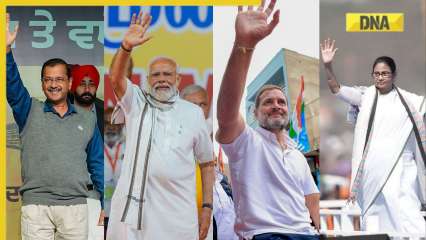
India will go for the second phase of Lok Sabha elections tomorrow in a high-stakes battle across 13 states and union territories with the campaign marked by sharp jibes by the leaders of BJP as also by Congress and other opposition parties.
Lok Sabha elections 2024 phase 2 voting today: Full list of 88 constituencies going to polls

The election process is expected to continue until 5 pm today, with voters exercising their democratic rights across these diverse constituencies.
‘We attach no value to…’: India dismisses US human rights report as ‘deeply biased’
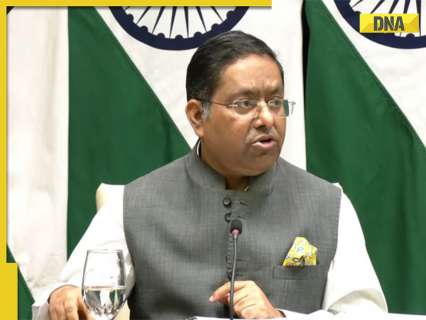
The US State Department’s report, ‘2023 Country Reports on Human Rights Practices: India” alleged that the ethnic conflict between the Meitei and Kuki communities in Manipur resulted in “significant human rights abuses’