

Mysore Lok Sabha constituency: Check polling date, candidates list, past election results

As per the schedule announced by the Election Commission, the voting day for the Mysore Lok Sabha Constituency is on 26 April ( Phase 2 ).
Jodhpur Rajasthan Lok Sabha Election 2024: Check important dates, key candidates, past result and more
The date of voting for the Jodhpur Lok Sabha Constituency Election 2024 is on 26 April ( Phase 2 ).
3 best sites to buy Linkedin Connections (Real & Cheap)

Post Content
The science behind Shilajit: How does it work on your body?

The word comes from “shila” (stone) and “jit” (victory) in Sanskrit, meaning “stone of victory”.
Delhi excise policy case: Court extends judicial custody of CM Arvind Kejriwal, BRS leader K Kavitha by 14 days
The court extended their custody after they were produced before the court through video conference on expiry of their remand.
Elevating Consumer Trust: The Rise of Star Evaluator in the Online Review Landscape

Star Evaluator is rapidly carving a niche in the global review platform arena, challenging established players like Trustpilot with its innovative approach and commitment to authenticity.
C-Suite Calling: Actionable Insights for Sustainable Growth Powered by Digital Trust

Divyesh Patel, who leads the globally leading software development and tech consulting firm, Radixweb, explains how C-suite leaders can future-proof their businesses leveraging advanced digital trust dynamics.
Marjorie Taylor Greene calls Johnson’s foreign aid package his ‘3rd betrayal’ of American people
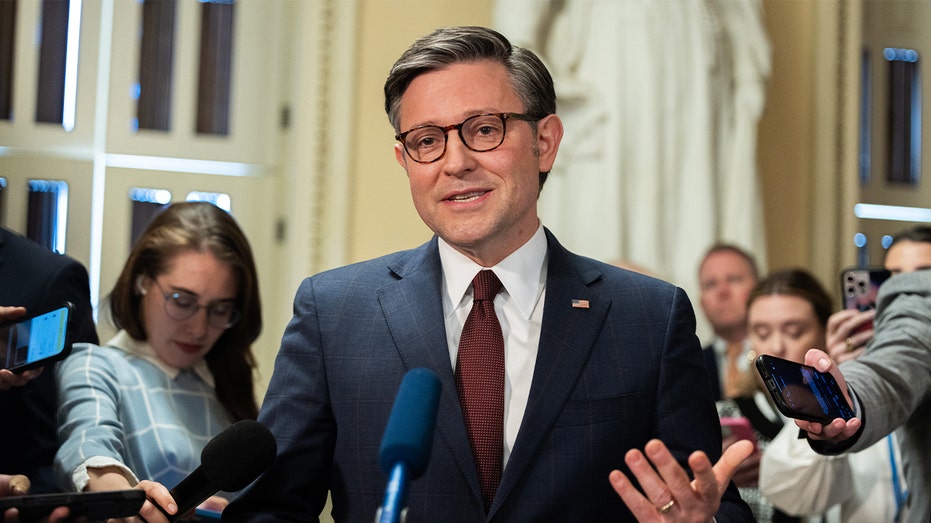
A bipartisan knot of House members clustered in the well of the chamber just around 2 p.m. on Saturday. The House had just approved a $26 billion aid package for Israel, 366-58, which was the final of several roll-call votes on a clutch of foreign aid bills, including $61 billion for Ukraine. But members weren’t certain they were done yet or could head home for what was now a delayed recess week in the House. High drama gripped Capitol Hill all day as the House raced toward passage of the foreign aid package. But Saturday’s legislative spectacle on the foreign aid measures had the potential to recede to a forgotten undercard. A climatic political event loomed. Lawmakers wanted to see what would unfold and if their services were still required on the House floor. Everyone hung around to see if Rep. Marjorie Taylor Greene, R-Ga., would introduce her resolution to dump House Speaker Mike Johnson, R-La. It would be hard to underscore just how dramatic a scene that could be, especially since Democrats bailed out Johnson on Friday in an effort to put the foreign aid package on the floor. And when it came to Ukraine, only 101 Republicans voted “yea.” Another 112 voted “nay.” In the meantime, 210 Democrats voted yes. HOUSE PASSES $60B UKRAINE AID BILL AS GOP REBELS THREATEN TO OUST JOHNSON Yet Greene never came after Johnson on Saturday afternoon, at least parliamentarily. She did verbally unload on Johnson to the congressional press corps on the House steps. “He did this [expletive] here on the House floor foreign war package that does nothing for America,” Greene said. She even spoke in near Biblical terms about the speaker. Greene didn’t invoke Peter’s three betrayals of Jesus, but she did declare that his advancement of the foreign assistance program as “the third betrayal by Mike Johnson.” Greene said the other two were the passage of two major spending bills to avert government shutdowns and a reauthorization of a key law enforcement spying tool known as FISA Section 702. “I’m thankful that America gets to see who this man is,” said Greene. “He’s already a lame duck. If we have the vote today in our conference, he would not be speaker today.” Yet Greene didn’t call the vote on Johnson. That maneuver might have been extraordinary, especially considering that the House took the unprecedented step of stripping former House Speaker Kevin McCarthy, R-Calif., of the gavel last fall. So, why didn’t Greene move? Some might say it’s about the math. She would have lost. House Democrats were coy about their plans to possibly protect Johnson. But after the House passed aid to Ukraine, it’s likely Democrats would have supported Johnson by voting to table or kill Greene’s resolution. Or they may have “taken a walk” and been absent for the vote. Democrat absences would have driven down the total number of House members voting. That would have diluted the votes of members who wanted to undercut Johnson. 3RD REPUBLICAN CALLS FOR SPEAKER JOHNSON’S OUSTER OVER $95B FOREIGN AID PLAN Knowing that, it’s easy to see why there was no vote over the weekend on Johnson’s viability as speaker. But there was, in fact, a test vote. It wasn’t the type of “no confidence” vote engineered by Greene to “vacate the chair” and force tumult in the House, requiring another election for speaker. Instead, the House took a “confidence” vote in Johnson: the vote on Ukraine. While scores of Republicans abandoned Johnson on the Ukraine measure, 193 Republicans voted “yes” on the bill to help Israel. And 186 Republicans voted on the combination bill to curb the use of TikTok in the U.S. and impose sanctions on Iran. More Democrats voted for the bill to aid Taiwan than Republicans. But that bill still earned 178 GOP approvals. So, Johnson remains the speaker for now. He still has his enemies in the House. “I’m frustrated that there was zero border security in the bill,” said Rep. Chip Roy, R-Texas. “It’s mind-bogglingly stupid to put that on the floor.” Johnson’s opponents said they want the speaker issue to smolder over the next few weeks. They believe there will be an uprising from the public over what Johnson did. That, they hope, will compel Republicans who are quiet now to turn against him. RAND PAUL CALLS ON SPEAKER JOHNSON TO TAKE UP BOLDER STANCE AGAINST DEMOCRATS: ‘SHOW SOME COJONES’ “Honestly, it’s tough to defend [Johnson] right now,” said Rep. Eli Crane, R-Ariz., one of eight House Republicans who voted to remove McCarthy from his job last fall. “I definitely sense that there’s a souring to Republican leadership.” Freedom Caucus Chair Rep. Bob Good, R-Va., said many Republicans were suffering from buyer’s remorse about Johnson, following the bedlam of throwing out McCarthy last year. “We had a fight. We had a process. We tried to select the speaker,” said Good. “We ended up selecting a candidate who has failed us.” Republicans spent 22 days trying to land on a speaker after kicking out McCarthy. In the process, they incinerated three other candidates before they got to Johnson: House Majority Leader Steve Scalise, R-La., House Judiciary Committee Chair Jim Jordan, R-Ohio, and House Majority Whip Tom Emmer, R-Minn. This is why House Republicans are exhausted at the constant pandemonium. Rep. Jake LaTurner, R-Kan., just announced he is retiring at the end of this term. LaTurner, 36, is only in his second term. “I just don’t think we need that turmoil right now,” said Homeland Security Committee Chair Mark Green, R-Tenn. “You don’t replace somebody unless you got to a surefire consensus [candidate] coming in behind. And we don’t.” Rep. Tim Burchett, R-Tenn., conceded that support for Johnson was “softening up.” But Burchett added that “time is a healer.” However, he noted that “sometimes opens up wounds.” When the GOP secured the majority in the fall of 2022, many Republicans asserted they wanted the House to “work its will.” They wanted members to be in
‘Is apology same size as ads?’: SC grills Ramdev, Balkrishna in Patanjali misleading advertisements case
A bench of Justices Hima Kohli and Ahsanuddin Amanullah asked their counsel to place the apology published in newspapers on record within two days
House Freedom Caucus chair calls for end to taxpayer-funded media after NPR scandal ends with editor’s exit

House Freedom Caucus Chair Bob Good, R-Va., is calling for an end to taxpayer-funded media, the latest top Republican to push back on National Public Radio (NPR) after a now-former employee accused it of operating with an overwhelming left-wing bias. Good’s new Defund NPR Act, introduced Friday, would block federal funding from going directly toward NPR and also block public radio stations that get federal grants from using those taxpayer funds to buy content from or pay dues to NPR as a member station. “The government shouldn’t be in the business of funding media, and it certainly shouldn’t be funding media that has a clear bias,” Good told Fox News Digital in his first interview on the legislation. “NPR has had a clear left-wing bias for decades, and it’s just growing by the day. And there’s no reason for taxpayers to have to fund this.” NPR WHISTLEBLOWER URI BERLINER RESIGNS: ‘I CANNOT WORK IN A NEWSROOM WHERE I AM DISPARAGED’ The Virginia Republican said that if the case were reversed – a partially federally funded outlet being accused of a rightward slant – the public outrage would be compounded. “We have a free and open press, or at least theoretically we’re supposed to in this country, as protected in our First Amendment, and that’s a critical, foundational right in this country,” he said. “But the government shouldn’t be putting their thumb on the scale and forcing taxpayers to fund that. Could you imagine if we were trying to get what was recognized as a strong conservative-leaning media organization to be funded by taxpayers? Can you imagine the outrage in doing so?” Conservatives have long accused NPR of reporting with a left-wing bias while some of its funding is provided through federal grants and other government-backed dollars. Those concerns were recently magnified when now-former NPR editor Uri Berliner asserted in an op-ed that the outlet mishandled critical stories that stemmed from Hunter Biden’s laptop hard drive and COVID-19 lab leak theories, among others, and that registered Democrats were vastly overrepresented in the newsroom by 87 to 0. NPR CEO DODGES QUESTION ON IF SHE SHOULD PRIORITIZE ‘VIEWPOINT DIVERSITY’ IN THE NEWSROOM FOLLOWING EDITOR’S EXIT NPR chief news executive Edith Chapin responded in a statement published by the outlet, “We’re proud to stand behind the exceptional work that our desks and shows do to cover a wide range of challenging stories. … We believe that inclusion – among our staff, with our sourcing, and in our overall coverage – is critical to telling the nuanced stories of this country and our world.” Berliner was suspended without pay for five days soon after, but he resigned a day later. “I respect the integrity of my colleagues and wish for NPR to thrive and do important journalism,” Berliner said in a portion of his resignation letter to NPR CEO Katherine Maher, in which he also opposed calls to defund NPR. “But I cannot work in a newsroom where I am disparaged by a new CEO whose divisive views confirm the very problems at NPR I cited in my Free Press essay.” Good told Fox News Digital that Maher “doesn’t seem concerned about truth.” NPR BOSS ONCE CALLED FIRST AMENDMENT A ‘CHALLENGE’ AND ‘REVERENCE TO THE TRUTH’ A DISTRACTION “She’s clearly a left-wing individual as well, and she fits for that organization. And that’s fine, but it shouldn’t be on the taxpayer dollar,” Good said. While most of NPR’s funding comes from corporate sponsorships, according to its site, the nonprofit also benefits both directly and indirectly from federal funds. The Corporation for Public Broadcasting, which got a fiscal 2026 advance of $535 million in the latest government funding deal, oversees both NPR and the Public Broadcasting Service. Fox News Digital reached out to NPR for comment on Good’s bill and comments.