

Amid migrant surge, Canada’s Trudeau says immigration there needs to be brought ‘under control’

Canadian Prime Minister Justin Trudeau recently warned that the stream of temporary immigrants entering their country must be brought “under control.” The liberal prime minister, who has been a staunch immigration supporter, said the rate of temporary immigrants crossing their border has come at a pace much faster than it can handle. “Whether it’s temporary foreign workers or whether it’s international students in particular, that have grown at a rate far beyond what Canada has been able to absorb,” Trudeau warned Tuesday. CLICK HERE FOR MORE IMMIGRATION COVERAGE Trudeau said temporary immigrants now make up 7.5% of the population, up from 2% in 2017, adding that they need to get the numbers “back under control.” “We want to get those numbers down,” he said. “It’s a responsible approach to immigration that continues on our permanent residents, as we have, but also hold the line a little more on the temporary immigration that has caused so much pressure in our communities.” Trudeau’s shift in tone comes after he’s relied on immigrants to push economic growth and shorten labor gaps, Reuters previously reported. The influx of immigrants into Canada since the COVID-19 pandemic has caused a dire crunch in several areas and has also led to increased rent prices and a strain on the health care system. “One of the reasons why we got here in the first place was that (provincial and federal) governments just didn’t want to touch this issue out of a fear of looking xenophobic,” Mike Moffatt, founding director of the Place Centre, told Reuters in February. JEWS ‘UNDER SIEGE’ IN TRUDEAU’S CANADA AMID SOARING ANTISEMITISM The publication said Canadian citizens supported immigration at a historically high level in 2020, which has since fallen to a three-decade low at the end of last year. CLICK HERE TO DOWNLOAD THE FOX NEWS APP Trudeau’s shift toward current public opinion on immigration also comes after his challenger, Conservative Party leader Pierre Poilievre, has taken a big lead in many opinion polls in the country.
Displaced 12-year-old boy becomes Gaza’s youngest medic

NewsFeed 12-year-old Zakaria es-Sersek is a volunteer medic at Al-Aqsa Martyrs Hospital in Gaza. Inspired by seeing medical staff working around the clock, he now assists doctors with newly-developed skills. Published On 4 Apr 20244 Apr 2024 Adblock test (Why?)
Russia scales up its attacks as Ukraine warns of urgent need for weapons

Ukraine has repelled a battalion-sized mechanised assault on its eastern front – the first attack of such a scale in five months – proving the resilience of its defences, but raising concerns that Russia is becoming increasingly ambitious as it gears up for an expected major offensive. The attack on Sunday reportedly included three dozen tanks and a dozen infantry fighting vehicles, and struck near Tonenke, a village close to Avdiivka, the city Russia overran on February 17 and has been inching westward from ever since. A Ukrainian serviceman reported that a third of the tanks and two-thirds of the infantry fighting vehicles were destroyed. “The start was very good. We carried out combined fire,” said a Russian trainer of Storm-Z assault forces. “On subsequent approaches, which lasted until lunchtime, the fire supply dwindled to sparse artillery fire … and then significant losses began.” Yet he noted that the last group of vehicles to enter the fray suffered no losses, possibly indicating that local Ukrainian defences had been exhausted: “I would venture to cautiously suggest that these regular visits could ultimately overload the enemy’s strike capabilities.” “We are trying to find some way not to retreat,” Ukrainian President Volodymyr Zelenskyy told the Washington Post’s David Ignatius in an interview published two days before the battle. “If there is no US support, it means that we have no air defence, no Patriot missiles, no jammers for electronic warfare, no 155-millimetre artillery rounds,” he said. “It means we will go back, retreat, step by step, in small steps.” Some $60.1bn in United States military aid the administration of Joe Biden requested last December has been stalled by a small group of lawmakers loyal to former President Donald Trump, who hopes to return to power in the November election. Europe was stepping in to cover some of the shortages. A Czech initiative had reportedly located a million artillery shells around the world which would start to be delivered to Ukraine this month; and France pledged hundreds of reconditioned armoured personnel vehicles. Ukrainian commander-in-chief Oleksandr Syrskii told Ukrinform that Avdiivka would not have fallen if deliveries of Western military aid had been more constant, and that the Ukrainian counteroffensive that reclaimed much of Kharkiv and Kherson in September 2022 would have been more sustained. He said Ukrainian soldiers were outnumbered, and outgunned by a ratio of 6:1, but despite this Russians were suffering staggering losses – 570 tanks, 1,430 armoured vehicles and 1,680 artillery systems in the last two months alone – thanks to changes in tactics that optimised available resources. Russia creeps forward Although Ukrainian forces had largely managed to stabilise the front line following the fall of Avdiivka, Ukraine was not prepared to stop another major Russian offensive, Zelenskyy told the US broadcaster CBS. “Partners are sometimes really happy that we have stabilised the situation,” Zelenskyy said. “No, I say we need help now.” And that stabilisation is not 100 percent solid. Russian forces have continued to make marginal advances. Most of these have been in the neighbourhood of Avdiivka. Despite their defeat on Sunday, they made marginal gains west of Tonenke, and were photographed in the settlements of Semenivka and Berdychi, both northwest of Avdiivka, on Monday and Tuesday. To the south, they advanced into the settlement of Novomykhailivka, southwest of Donetsk city, on March 27. And at the northern end of the front, in Luhansk, they began to creep into Bilohorivka on Tuesday. Russian defence minister Sergei Shoigu boasted in a Tuesday conference call with military personnel that Russian forces had gained 403sq km since the beginning of the year. The Institute for the Study of War, a Washington-based think tank, put the figure at 305sq km since January 1, and a total of 505sq km – five times the size of Paris – since Russian forces went on the offensive in October. Russia trying to power down Ukraine’s industry Russia has been targeting Ukraine’s power plants, and in the past week began to bomb hydroelectric power stations in addition to thermal power plants. The Kaniv Hydroelectric Power Plant, 80km southeast of Kyiv, and the Dnister Hydroelectric Power Plant, 300km southwest of Kyiv, just north of the Moldovan border, have been among the main targets. The barrage of drones and missiles that targeted these dams and other infrastructure was massive: 60 Iranian-designed Shahed drones and 37 missiles of various types. Ukraine managed to down 58 of the drones and 26 of the missiles, but Zelenskyy stressed the need for greater air defence. “It is necessary to replenish supplies more quickly,” he said. Zelenskyy told the Washington Post that air defence ammunition was running low, and CBS that Ukraine could lock its skies to Russian attacks with another five to seven Patriot batteries. “The range of possible outcomes from most advantageous to most dangerous – is very wide and will remain so until it is clear whether the US will resume military support,” said the ISW. The other great variable, it said, was Ukrainian manpower, and on Tuesday Zelenskyy signed into law a long-awaited bill lowering the conscription age from 27 to 25. The bill is expected to raise up to half a million new soldiers for Ukraine, though Syrskii said a more efficient rotation of existing manpower had made that scale of recruitment unnecessary. Russia also reached a new milestone on March 22, when it completely destroyed one of the largest thermal power plants in Kharkiv. “All units were destroyed” at the Zmiivska power plant said its operator, Tsentrenergo. “The degree of destruction is different.” Ukrainian foreign minister Dmytro Kuleba said Russia had launched 140 drones and 190 missiles against civilian infrastructure far from the front lines in just one week, from March 18 to 24. French defence minister Sebastien Lecornu said his country would provide Aster 30 surface-to-air missiles to strengthen air defence. Ukraine fights back Ukraine’s response has been to target Russian energy infrastructure back – specifically oil refineries – and on Tuesday a Ukrainian drone struck
At least 11 killed in attack on Iran’s IRGC in border province: State media
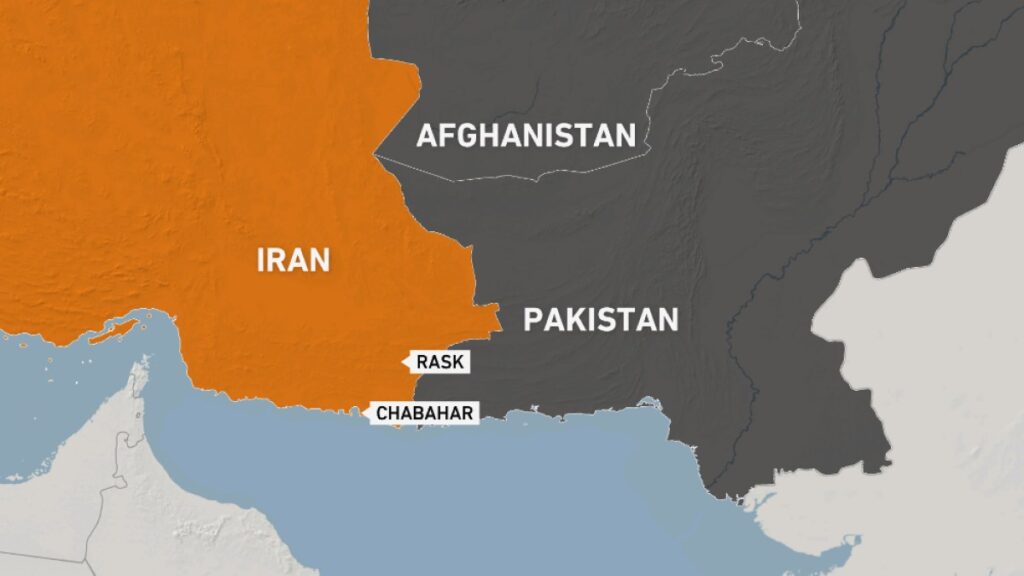
Several wounded in clashes in restive Sistan-Baluchestan province which borders Afghanistan and Pakistan. At least 11 Iranian security force members have been killed in an attack on an Islamic Revolutionary Guard Corps (IRGC) headquarters in the southeastern border province of Sistan-Baluchestan, state media reported. In the ensuing overnight clashes with security forces, 16 members of Jaish al-Adl (Army of Justice) – a Sunni armed group – were killed, Iranian state TV reported on Thursday. The attack took place in the towns of Chabahar and Rask in Sistan-Baluchestan which borders Afghanistan and Pakistan. Reporting from Tehran, Al Jazeera’s Dorsa Jabbari said it was one of the deadliest attacks carried out by Jaish al-Adl. “Gunmen stormed various security and military compounds simultaneously … and they also had suicide vests on,” Jabbari said, adding that the fighting continued for several hours. “The terrorists failed to succeed in achieving their goal of seizing the Guards headquarters in Chabahar and Rask,” Deputy Interior Minister Majid Mirahmadi told state TV. Ten security officers were injured in the fighting in the impoverished region, which has a predominantly Sunni Muslim population. Jabbari said the attack took place at a very “critical time” for Iran, coming days after its consulate in Damascus, Syria, was hit in a suspected Israeli missile strike for which Iran pledged revenge. Brigadier-General Mohammad Reza Zahedi, a senior commander in the IRGC’s Quds Force, and his deputy, General Mohammad Hadi Hajriahimi, were killed in Monday’s attack. “Many questions will be asked about how this attack was able to be carried out at this time,” Jabbari said. Jaish al-Adl was formed in 2012 and is blacklisted by Iran as a “terror” group. The group claimed responsibility for an attack in December that killed 11 officers, one of the deadliest assaults in years, at a police station in Sistan-Baluchestan’s city of Rask, about 1,400km (875 miles) southwest of the capital, Tehran. It also said it was behind a strike on a police station in Rask that killed one officer on January 10. Later that month, Iran struck two bases of the group in Pakistan with missiles, prompting a rapid military riposte from Islamabad targeting what it said were separatist armed rebels in Iran. Jaish al-Adl says it seeks greater rights and better living conditions for ethnic minority Baluchis in Shia-dominated Iran. It has claimed responsibility for several attacks in recent years on Iranian security forces in Sistan-Baluchestan. The area has long been plagued by unrest and the site of frequent clashes between Iranian security forces and Sunni fighters, as well as drug traffickers. Iran is a key transit route for narcotics smuggled from Afghanistan to the West and elsewhere. Adblock test (Why?)
Democrat pro-Israel group looks to oust 2 ‘Squad’ members from Congress

A pro-Israel Democrat group is looking to oust two controversial far-left “Squad” members from their seats in Congress this cycle. The Democratic Majority for Israel PAC on Wednesday endorsed George Latimer, the Westchester County executive who is challenging Rep. Jamaal Bowman of New York, and Wesley Bell, the progressive prosecuting attorney for St. Louis County who is running against Rep. Cori Bush of Missouri, in their upcoming primaries this summer. The group is the latest in a string to target the “Squad” members over their contentious comments regarding Israel. Last week, the Jewish Democratic Council of America also endorsed Bowman and Bush’s opponents, which was the first time they supported challengers to House Democrats, the New York Post reported. The efforts to oust Bowman and Bush come after the representatives made a string of controversial comments and actions with regard to Israel, which has drawn the ire of such groups. MASSIVE COALITION FORMS TO PROTECT LEFT-WING ‘SQUAD’ MEMBERS AGAINST ONSLAUGHT OF ELECTION SPENDING Following the Hamas terrorist group’s bloody incursion into Israel on Oct. 7, Bush accused Israel of retaliating by targeting hospitals and committing war crimes against Palestinians in Gaza. “We can’t be silent about Israel’s ethnic cleansing campaign. Babies, dead. Pregnant women, dead. Elderly, dead. Generations of families, dead,” Bush wrote in an Oct. 29 post on X, just weeks after Hamas’ attack on Israel. “Millions of people in Gaza with nowhere to go being slaughtered. The U.S. must stop funding these atrocities against Palestinians.” Bush also said the bipartisan vote to censure fellow Squad member Rep. Rashida Tlaib, D-Mich., for her anti-Israel rhetoric was “outrageous” in a heated speech on the House floor. CORI BUSH SHAPING UP TO BE MOST VULNERABLE ‘SQUAD’ MEMBER THIS ELECTION CYCLE Fellow Squad member Bowman also has a history of anti-Israel rhetoric. The New York Democrat said reports of Israeli women being raped by Hamas terrorists were “propaganda” just days after taking part in a viewing of footage of the Hamas attack. “There was propaganda used in the beginning of the siege,” Bowman said in a TikTok post discovered first by Politico. “There’s still no evidence of beheaded babies or raped women. But they still keep using that lie [for] propaganda.” Bowman later tried to walk back the statement after more evidence came to light of sexual assaults during the Hamas attack on Israel, saying “I always stand against sexual violence in all forms and stand for peace for all.” He has also been criticized for defending a mural of Nation of Islam Minister Louis Farrakhan, who said Jews were “the synagogue of Satan” and “termites,” and arguing that it should remain in New York. Bowman and Bush, alongside some other fellow Squad members, boycotted Israeli President Isaac Herzog’s speech to Congress in July, months before the deadly Hamas attacks, in protest of what they said were human rights abuses against Palestinians.
Kansas Republicans use ‘power of the purse’ to tie up immigration, DEI provisions in budget

Republicans are likely to approve a proposed state budget for Kansas with provisions aimed at forcing the state’s Democratic governor to restrict diversity initiatives on college campuses and help Texas in its fight with the Biden administration over border security. GOP negotiators for the state House and Senate have agreed to include those items in a single bill containing the bulk of the $25 billion in spending for Kansas’ 2025 budget year, which begins July 1. Top Republicans in the GOP-controlled Legislature expect both chambers to vote this week on the final version of the bill. “It’s an opportunity to make a point,” state Senate President Ty Masterson, a Wichita-area Republican, said Wednesday. “The power of the purse — that’s all we have. That’s our main power.” STAY CURRENT WITH THE LATEST IMMIGRATION NEWS HERE Both the Kansas House and Senate approved resolutions this year expressing their support for efforts by Republican Gov. Greg Abbott of Texas to enforce a law there allowing his state to arrest migrants suspected of entering the U.S. illegally. The Biden administration argues that only the federal government sets immigration policy. But Republicans in the Kansas Senate then added an extra $15.7 million in the next state budget with directions to Gov. Laura Kelly that she provide Kansas National Guard resources to Texas. Republican senators also included provisions to withhold a total of $35.7 million in funding from state universities unless their presidents appeared before Kelly and top legislative leaders and confirmed that they were not requiring prospective students, job applicants or staffers seeking promotion to provide statements endorsing diversity, equity or inclusion initiatives or discussing past experiences with it. The GOP budget negotiators agreed to retain those provisions unless a separate bill banning the practice becomes law. The state constitution gives Kelly the power to veto individual budget provisions, and it’s not clear that the immigration or anti-DEI ones have the two-thirds majorities in both chambers needed to override a veto. But if Kelly were to veto the anti-DEI provisions, the $35.7 million would go with them. “It’s kind of like blackmail,” said Democratic state Rep. Tom Sawyer, of Wichita. Republicans in at least 20 states have sought to limit DEI initiatives, arguing that they are discriminatory and enforce a liberal political orthodoxy. Alabama and Utah enacted new anti-DEI laws this year. The Kansas House last month approved a bill that would bar universities, community colleges or technical colleges from basing a student’s admission or an employee’s hiring or promotion on any statement or pledge about DEI or “any political ideology or movement.” Republicans are hoping to have a vote on a new version in both chambers this week. But the Kansas Board of Regents, which oversees the state’s higher education system, is already responding to GOP lawmakers’ concerns. The board expects to consider a proposed policy change in April that would ban requirements in admissions or employment for “statements pledging allegiance to, support for, or opposition to diversity, equity or inclusion.” “I really don’t think it’s going to be an issue. I think they’re all going to change their policy,” said state Rep. Kyle Hoffman, a Republican from western Kansas and a House budget negotiator. Republicans’ interest in border security comes with former President Donald Trump ramping up anti-immigrant rhetoric as he campaigns for reelection, often spreading falsehoods about migration. Roughly two-thirds of Americans disapproved of President Joe Biden’s handling of border security in an Associated Press-NORC Center for Public Affairs Research poll conducted in March. GOP officials in many states also frame the issue as stopping the flow of the dangerous opioid fentanyl across the Mexico-U.S. border, though experts agree the key is reducing demand for it in the U.S. “We need to stop it,” said state Sen. J.R. Claeys, a central Kansas Republican and a budget negotiator. “Obviously, the Biden administration isn’t going to do that, so we’re going to have to do it ourselves.” But state Rep. Susan Ruiz, a Kansas City-area Democrat, said problems at the border demonstrate the need for reforming national immigration laws and argued that Americans are more likely to smuggle fentanyl than immigrant families seeking a better life in the U.S. “They’re willing to blame every possible thing on immigration and on immigrants,” she said. Some Republicans expect Kelly to veto the provision. Last month, she told reporters that the state constitution makes her the guard’s commander-in-chief and she decides how its resources are used. But Claeys responded: “We also have other budgetary ways of making things happen, so we’ll continue to use those and the power of the purse.”
Gurgaon Lok Sabha Election 2024: Know polling date, past result and more

In the 2019 Lok Sabha Elections, the Gurgaon constituency had 21,50,728 voters, according to data from the Election Commission. 11,45,402 of these voters were men, and 10,05,283 were women.
Nagina Lok Sabha constituency: Check polling date, candidates list, past election results

One of Uttar Pradesh’s 80 Lok Sabha constituencies, Nagina, is scheduled to cast a ballot in the first phase of the Lok Sabha election on April 19.
Biden administration rule makes firing federal workers harder as Trump promises ‘deep state’ revamp

President Biden’s administration is implementing a new rule to make it more difficult to fire federal workers as former President Trump promises to revamp the workforce to weed out the “deep state.” Early Thursday, the White House released a statement from the Democratic incumbent president regarding “the final rule to protect nonpartisan civil servants.” Biden said his administration was announcing “protections for 2.2 million career civil servants from political interference, to guarantee that they can carry out their responsibilities in the best interest of the American people.” “Day in and day out, career civil servants provide the expertise and continuity necessary for our democracy to function,” the statement said. “They provide Americans with life-saving and life-changing services and put opportunity within reach for millions. That’s why since taking office, I have worked to strengthen, empower, and rebuild our career workforce.” NEW YORK TIMES OPINION VIDEO DECLARES ‘DEEP STATE’ IS ‘KIND OF AWESOME’ Biden deemed the rule to be “a step toward combatting corruption and partisan interference to ensure civil servants are able to focus on the most important task at hand: delivering for the American people.” The Office of Personnel Management, the government’s chief human resources agency, on Thursday implemented new regulations barring career civil servants from being reclassified as political appointees, or as other at-will workers, who are more easily dismissed from their jobs. It comes in response to “Schedule F,” an executive order Trump issued in 2020 that sought to allow for reclassifying tens of thousands of the 2.2 million federal employees and thus reduce their job security protections, according to the Associated Press. Biden nullified Schedule F upon taking office, but if Trump were to revive it during a second administration, he could dramatically increase the around 4,000 federal employees who are considered political appointees and typically change with each new president. How many employees might have been affected by Schedule F is unclear. The National Treasury Employee Union used freedom of information requests to obtain documents suggesting that federal workers such as office managers and specialists in human resources and cybersecurity might have been subject to reclassification — meaning that the scope of Trump’s order might have been broader than previously believed, the AP reported. The new rule could counter a future Schedule F order by spelling out procedural requirements for reclassifying federal employees, and clarifying that civil service protections accrued by employees cannot be taken away regardless of job type. It also makes clear that policymaking classifications apply to non-career, political appointments and cannot be applied to career civil servants. TRUMP RAILS AGAINST BIDEN, ‘DEEP STATE’ AT FIRST SPEECH AFTER CLASSIFIED DOCS INDICTMENT: ‘POLITICAL HIT JOB’ “It will now be much harder for any president to arbitrarily remove the nonpartisan professionals who staff our federal agencies just to make room for hand-picked partisan loyalists,” National Treasury Employees Union President Doreen Greenwald said in a statement. Good government groups and liberal think tanks and activists have cheered the rule. They viewed cementing federal worker protections as a top priority given that replacing existing government employees with new, more conservative alternatives is a key piece of the conservative Heritage Foundation’s nearly 1,000-page playbook known as “Project 2025.” That plan calls for vetting and potentially firing scores of federal workers and recruiting conservative replacements to wipe out what some Republicans have decried as the “deep state” governmental bureaucracy. The nation’s most prominent conservative think tank recommended an overhaul of the Department of Justice and the FBI to combat a “radical liberal agenda.” The Biden administration’s rule, which runs to 237 pages, is being published in the federal registry and is set to formally take effect next month. The Office of Personnel Management first proposed the changes last November, then reviewed and responded to 4,000-plus public comments on them. Officials at some top conservative organizations were among those opposing the new rule, but around two-thirds of the comments were supportive. If Trump wins another term, his administration could direct the Office of Personnel Management to draft new rules. But the process takes months and requires detailed explanation on why new regulations would be improvements — potentially allowing for legal challenges to be brought by opponents. Fox News’ Kaitlin Spraugue and the Associated Press contributed to this report.
Alappuzha Kerala Lok Sabha constituency: Check polling date, candidates list, past election results

The counting and announcement of results for the Alappuzha Lok Sabha Constituency Election 2024 will take place on June 4.