

Dark money machine: Biden, top Dems benefit from millions in secretive election cash
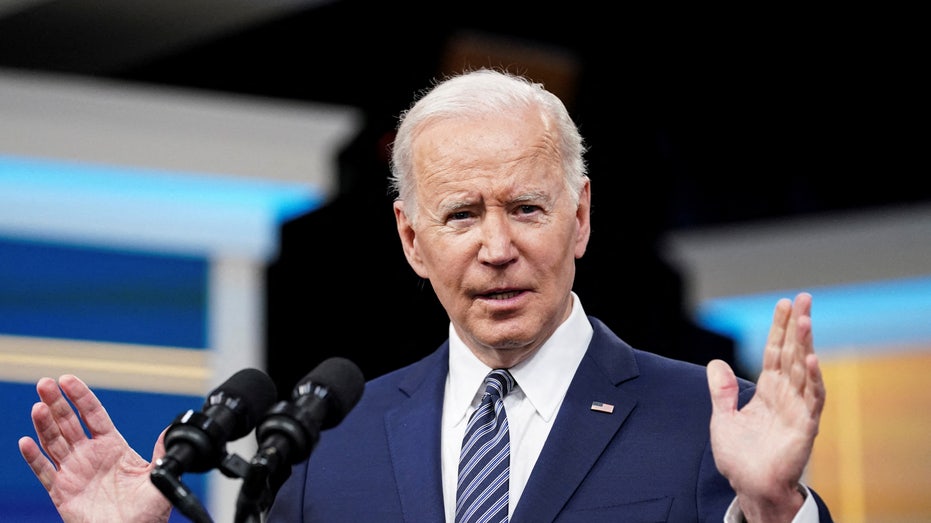
Entities affiliated with President Biden, Senate Majority Leader Chuck Schumer and House Minority Leader Hakeem Jeffries have raked in millions of dollars in secretive donations for the 2024 elections, even as those Democrat party leaders regularly assail fundraising with so-called dark money. Top Democrats benefit from the anonymous donor cash as they have consistently criticized dark money in politics: There’s “too much money that flows in the shadows to influence our elections” and it “erodes public trust,” President Biden previously declared. Despite his comments, the primary super PAC backing the president’s re-election efforts has received millions in dark money donations, with far more likely on the way. The Future Forward PAC, which Biden’s team designated as the primary outside group to raise money for his 2024 candidacy, received an $8 million contribution in late December from its affiliated nonprofit arm, Future Forward USA Action, filings show. SCHUMER-LINKED PACS SPEND MILLIONS TO MEDDLE IN GOP PRIMARIES Future Forward USA Action does not disclose the identities of its donors, meaning the origin of the millions that ultimately benefit Biden remains unknown. The group told Politico earlier this year that it raised $208 million between its nonprofit and super PAC last year. Records show that the PAC raised $25 million in donations during this time, signaling that the nonprofit had most of the money. As the election draws closer, Biden will likely benefit from far more anonymous cash transferred from the nonprofit to the PAC. Future Forward has long passed dark money from its nonprofit to its super PAC. Fox News Digital previously reported that a considerable amount of Future Forward’s nonprofit cash itself was passed through a web of groups overseen by the Arabella Advisors consulting firm, which manages a billion-dollar dark money network. These actions add another layer of secrecy that further conceals its original supporters. One of the dark money groups, the Impetus Fund, had escaped detection for some time. According to tax documents, the Impetus Fund sent most of its undisclosed cash — $55.8 million — to Future Forward USA Action during the last presidential cycle. SCHUMER-ALIGNED GROUP PULLED IN $270M FROM SECRET DONORS IN RECENT YEARS AS HE DECRIED DARK MONEY Future Forward USA Action transferred $77 million to the Future Forward PAC between the 2020 election and June 2023, making up more than 40% of the $181 million the PAC raised during that span. The Schumer-aligned Senate Majority PAC, which works to elect and keep Democrat politicians in Congress’s upper chamber, has also long passed secretive money between its affiliated nonprofit and the PAC that boosts candidates nationwide. Majority Forward, a dark money nonprofit with links to the Senate Majority PAC, has passed at least $15.75 million to the PAC for the 2024 elections. However, those figures only cover up to January, so more could have been transferred between the nonprofit and PAC since then. Schumer has publicly assailed dark money and pushed legislation against it. He also demanded that right-leaning judicial groups identify their donors even as Democrats benefit from such groups. Schumer championed the For the People Act, which contains provisions requiring political nonprofits to disclose donors who give more than $10,000. The bill also calls for nonprofits to file disclosure reports to the Federal Election Commission when they push more than $10,000 into election-related activities. Meanwhile, the Jeffries-affiliated House Majority PAC, which boosts Democrat candidates in Congress’s lower chamber, also receives millions in dark money. Federal filings show that the PAC’s affiliated dark money nonprofit, House Majority Forward, passed $8 million over to the House Majority PAC this cycle up to the end of December. Like the other groups, it might have received more after that period for this year’s elections. “Liberals decry dark money, unless it’s their own,” Americans for Public Trust Executive Director Caitlin Sutherland told Fox News Digital. Republicans, likewise, benefit from millions in dark money pumped into election activity, though the party does not publicly condemn the practice as Democrats do. The Senate Leadership Fund, for example, has received at least $5.18 million from One Nation, a dark money nonprofit, for the 2024 elections. Democrats have also benefited from far more dark money than Republicans in recent election cycles. The New York Times previously reported that 15 of the most active Democrat dark money nonprofits spent $1.5 billion during the 2020 elections. By comparison, 15 of the most active Republican nonprofits spent around $900 million during this time. Neither Biden’s campaign, nor Future Forward nor the Senate and House Majority PACs responded to Fox News Digital’s request for comment.
After Kansas police dog strangled, legislators approve harsher penalties for K-9 killings

Kansas is poised to increase penalties for killing police dogs and horses after legislators gave their final approval Tuesday to a measure inspired by a suspect’s strangling of a dog last year in the state’s largest city. The Republican-controlled state House approved a bill with a 115-6 vote that would allow a first-time offender to be sentenced to more than three years in prison for killing a police animal, an arson dog, a game warden’s dog or a search-and-rescue dog and up to five years if the killing occurs when a suspect is trying to elude law enforcement. An offender also could be fined up to $10,000. The current penalty for killing a police dog is up to a year behind bars and a fine of between $500 and $5,000, and the law doesn’t specifically cover horses. KANSAS LAWMAKERS RACE TO RECKON WITH FLAT TAX, DEI DISPUTES BEFORE SPRING BREAK “There is a lot of time and money put into those animals,” said House Speaker Dan Hawkins, a Wichita Republican who was the bill’s leading advocate. “They have to continually train all the time and so to have one killed, there’s got to be a pretty harsh penalty.” The GOP-controlled Senate approved the measure by a narrower 25-15 margin last week, and the bill goes next to Democratic Gov. Laura Kelly, who has not said publicly whether she will sign it. Kelly typically signs measures with bipartisan support, but most of the 11 Democrats in the Senate opposed the bill. Increased penalties have had bipartisan support across the U.S. In Colorado, the Democratically led General Assembly approved a measure last month. Proposals have advanced in GOP-controlled Legislatures in Missouri and West Virginia and introduced in at least four other states. The Kansas measure was inspired by the November death of Bane, an 8-year-old Wichita police dog. Authorities say a suspect in a domestic violence case took refuge in a storm drain and strangled Bane when a deputy sent the dog in to flush out the suspect. But critics of such measures have questions about how dogs are used in policing, particularly when suspects of color are involved. Their use also has a fraught history, such as their use by Southern authorities during the Civil Rights Movement of the 1950s and 1960s. “Police dogs have jaws strong enough to puncture sheet metal. Victims of attacks by police dogs have sustained serious and even fatal injuries,” Keisha James, a staff attorney for the National Lawyers Guild’s National Police Accountability Project, said in written testimony to a Senate committee last month. “It follows that an individual being attacked by a police dog would respond by trying to defend themselves.”
Outrage grows over Israel’s deadly attack on Gaza aid convoy
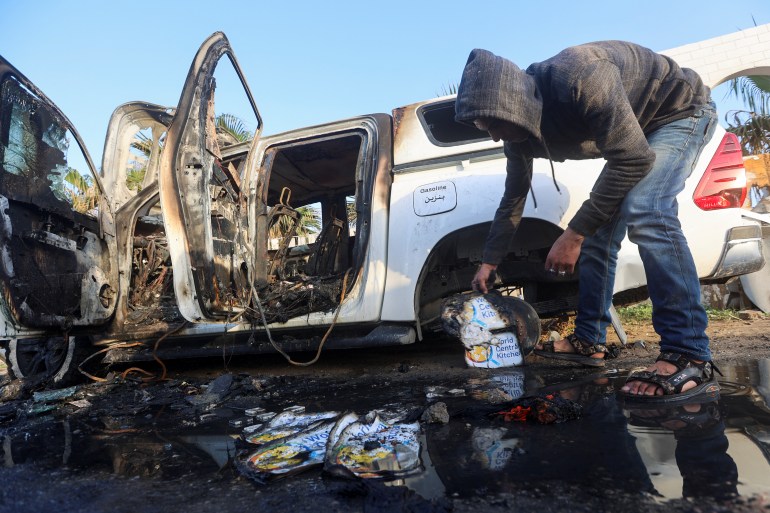
There is growing outrage around the world after Israeli air strikes killed seven aid workers from the World Central Kitchen (WCK) charity, as the country faces increased scrutiny over its conduct in the war on Gaza. WCK, one of two NGOs spearheading efforts to distribute aid brought by boat, said a “targeted Israeli strike” on Monday killed Australian, British, Palestinian, Polish and US-Canadian staff. Israeli Prime Minister Benjamin Netanyahu has said Israeli forces “unintentionally” killed the aid workers and promised an inquiry. The military said on Wednesday it had committed a “grave mistake”. “It shouldn’t have happened,” military chief Herzi Halevi said in a video message as he blamed the strike on a “misidentification – at night during a war in very complex conditions”. Several of Israel’s key allies have expressed outrage at the deaths and called for an independent investigation into the attack. Australian Prime Minister Anthony Albanese said he had spoken to Netanyahu and conveyed that his country was “outraged” by the “completely unacceptable” death of the Australian worker, Zomi Frankcom. Albanese said he raised the importance of full accountability and transparency, and that Netanyahu had committed to a comprehensive inquiry. Poland’s Prime Minister Donald Tusk said the attack and Netanyahu’s subsequent reaction have caused “understandable anger”. “Mr. Prime Minister Netanyahu, Mr. Ambassador Livne the vast majority of Poles showed full solidarity with Israel after the Hamas attack,” Tusk said in a post on social media platform X. “Today you are putting this solidarity to a really hard test. The tragic attack on volunteers and your reaction arouse understandable anger.” United Nations Secretary-General Antonio Guterres called the strike “unconscionable”, adding it was “an inevitable result of the way the war is being conducted”. “It demonstrates yet again the urgent need for an immediate humanitarian ceasefire, the unconditional release of all hostages, and the expansion of humanitarian aid into Gaza,” he said in a speech to the UN General Assembly. The UN says the war has killed almost 200 aid workers, including more than 175 members of the UN staff. Earlier, US President Joe Biden said he was “outraged” and demanded that Israel’s investigation into the strikes “must be swift, it must bring accountability, and its findings must be made public”. He said Israel had not “done enough to protect civilians”. The US, which gives $3.8bn in annual military assistance to its longtime ally Israel, has so far resisted calls to condition any arms transfers amid the war in Gaza. Asked on Tuesday whether incidents like the killing of WCK staff gave the US pause in light of its recent approval of a new weapons package worth $2.5bn, Secretary of State Blinken said Washington had “a longstanding commitment to Israel’s security and to help it ensure its ability to defend itself”. Canada and the United Kingdom have also condemned the attack and called for a thorough investigation. A Palestinian inspects a vehicle in which World Central Kitchen employees were killed in an Israeli attack [Ahmed Zakot/Reuters] The attack on the aid workers comes amid a growing hunger crisis in the coastal enclave, with a recent UN-backed report saying famine in northern Gaza was imminent. Last week, the International Court of Justice (ICJ) ordered Israel to increase the flow of humanitarian aid into Gaza without delay. Nevertheless, Israel continues to hinder the work of the NGOs attempting to distribute food aid, including the UN agency for Palestinian refugees, UNRWA, from accessing northern Gaza, where hunger is at its extreme. Israel has accused UNRWA employees of participating in Hamas’s October 7 attacks, leading to a host of countries suspending funding to the agency. However, Israel has yet to provide evidence to support its claim, and several donors, including the European Union, Canada and Australia, have resumed funding. An investigation by Al Jazeera’s Sanad Verification Agency found that the Israeli army attacks on the convoy were intentional, based on research using open-source information, witness testimonies, and images from the site. At least 32,916 people have been killed, mostly women and children, in the Israeli assault on Gaza since October 7, according to Palestinian authorities. Adblock test (Why?)
One in 10 Afghan children under five malnourished, 45 percent stunted: UN

Roya carefully spoon-feeds her daughter fortified milk in a ward for malnourished children, praying the tiny infant will avoid a condition that stalks one in 10 children in Afghanistan after decades of conflict. The nine-month-old had been hospitalised three times already in remote Badakhshan province because her mother had trouble breastfeeding. “She has gained a bit of weight. She has a bit of a glow,” 35-year-old Roya said, cradling Bibi Aseya at the Baharak district hospital. “She drinks milk as well, but she still doesn’t smile,” she added. “I would stay awake day and night. Now I can sleep.” Poor nutrition is rife in a country plagued by economic, humanitarian and climate crises two and a half years since the Taliban returned to power. Ten percent of children under five in Afghanistan are malnourished and 45 percent are stunted, meaning they are small for their age in part due to poor nutrition, according to the United Nations. Afghanistan has one of the world’s highest rates of stunting in children under five, said Daniel Timme, communications chief for UNICEF. “If not detected and treated within the first two years of a child’s life, the condition [stunting] becomes irreversible, and the affected child will never be able to develop mentally and physically to its full potential,” he said. “This is not only tragic for the individual child but must have a severe negative impact on the development of the whole country when more than two out of five children are affected.” A plunge in international aid and medical professionals leaving the country have weakened an already vulnerable health system, and women and children are particularly impacted, NGOs said. Hasina, 22, and her husband, Nureddin, are volunteers at one of the hundreds of community-based health posts supported by UNICEF in Badakhshan, a mountainous region that borders Pakistan, Tajikistan and China. The couple is an initial lifeline for the more than 1,000 residents of Gandanchusma village. “We gather women and children and weigh the babies. If they are malnourished, we support them and refer them to the clinic,” a 30-minute walk away, Hasina said. In warmer weather, she added, she sees more cases of malnutrition due to water-borne illnesses. Nearly 80 percent of people in Afghanistan lack sufficient access to clean water, according to the UN Development Programme. Aisha, who asked that her real name not be used, had a clean water pump installed at her home in the Badakhshan town of Khairabad through a UNICEF project. But she said the women around her still lack access to information. “The women who had some education could boil water, provide medicine or make homemade medicines, but the women who did not have any education were less capable,” she said. In a recent report warning of the frailty of the Afghan health sector, Human Rights Watch underscored the outsized impact on women because of restrictions on their movement, education and employment. Aisha and her peers share information but worry that doing so is not enough to combat their web of challenges, both social and economic, that contribute to poor nutrition and stunting. “At the village level, it is difficult for us because we have many illiterate mothers,” another Khairabad resident, Amina, said. “We need more health and community workers to raise awareness among the people, distribute medicines for malnourished children and provide family planning and healthcare advice.” Adblock test (Why?)
‘No means no’: How Portugal resisted the far right, but only just

When the March elections in Portugal saw the hard-right political party, Chega, quadruple its parliamentary representation from 12 seats to 50, one conclusion appeared overwhelmingly obvious. Overnight, it looked as if Europe’s most westerly country had become the continent’s latest front line between populist, ultra-conservative parties enjoying surging support and more traditional, centrist formations facing crumbling voter backing. The Chega electoral earthquake – and the narrowest of victories for the centre-right Democratic Alliance (AD) coalition over the incumbent Socialists by just 80 seats to 78 – showed how voter support for the two main parties had slumped to its lowest level since 1985. But when it comes to running the country, albeit with much shakier support than they would like, for now Portugal’s long-standing political establishment remains at the helm. On April 2, Luis Montenegro, whose conservative Social Democratic Party (PSD) constitutes AD’s principle component, is set to be sworn in as leader of a new minority government, and he will do so without counting on default parliamentary support from the hard-right “new kid on the political block”. “Governing under the current circumstances is anticipated to be challenging,” warns Sofia Serra-Silva, a political scientist at the University of Lisbon’s Social Science Institute. “The new government will navigate a fragmented parliament, with the Socialist Party strongly established as the opposition and Chega applying pressure from the right. For the AD, securing a simple majority will be a complex task.” So, while the PSD celebrates its return to power for the first time since 2015, the question of how a minority centre-right government will successfully legislate its policies – while avoiding a power-sharing agreement with Chega – will be central to the country’s political future. That dilemma, in turn, overlaps with a second, more deep-rooted issue: How will a political establishment with an apparently chronic case of withering electoral support handle Chega’s seemingly relentless rise in the polls? Supporters of the far-right Chega party react to the first exit polls during the general election in Lisbon, Portugal, on March 10, 2024 [Pedro Rocha/Reuters] ‘Cordon sanitaire’ unlikely Both predicaments have parallels across Europe, but Serra-Silva argues that the idea of a “true cordon sanitaire, meaning complete non-cooperation” – as is the case in Germany, for example, between the traditional parties and the hard-right Alternative for Germany (AfD) – “in Portugal seems unlikely”. “Despite the centre-right party leader’s campaign assertion of no coalition with Chega, internal opinions and past collaborations, like Chega’s support for PSD in Azores, suggest a more nuanced stance.” “The ‘no means no’ statement [by Montenegro] referred only to cabinet formation, not precluding other forms of cooperation.” Meanwhile, grassroots voter-level concern is rising in some quarters about how Chega’s ideas are becoming increasingly mainstream, paralleling their sharp rise in political influence. “I am concerned because of the election result but also because I think the attitude of Portuguese people towards these kinds of politics is changing a bit,” says Alexandre Pinto, a language teacher in Lisbon. “The taboo towards displaying racist or xenophobic attitudes is disappearing and the end result is Chega. Of course, these things don’t change abruptly. But perhaps what was hidden has now become more open.” While Serra-Silva says a clear-cut cordon sanitaire in parliamentary politics is very unlikely, Pinto argues that on a practical level, some kind of agreement is needed between the traditional parties to handle the rise of a party as notoriously volatile as Chega. “I wouldn’t call it a cordon sanitaire – the Socialists have already had that discussion. But when it comes to solid policies for defending democratic values, I believe understanding between the two traditional parties must be reached, because, basically, we don’t know what Chega will do.” The events in Portugal’s parliament last week, where Chega backtracked on an agreement with the PSD over their votes for parliamentary president and vice-president – positions of largely symbolic importance – highlight the complexities the government faces in navigating agreements, Serra-Silva says, and “showcase how the far-right has disrupted Portugal’s traditionally stable two-party system”. On the other hand, Serra-Silva argues that historically, finding common ground on numerous policy issues for the two main parties, the PSD and Socialists, has proved possible. She points to a Socialist offer of support on March 19 for a rectification of the 2025 State Budget in order to prioritise the welfare of key public-sector workers as one such area where potential new deals could be struck. According to Serra-Silva, Luis Montenegro’s future strategy hints at bypassing parliament when necessary and governing by decree, “reflecting a practical response to legislative hurdles”. “However, this approach has its limitations, as evidenced by the recent difficulties encountered during the election of the Parliament’s president,” Serra-Silva says. “Given these constraints, the question arises: Will Montenegro seek support from Chega or the Socialists?” Portugal’s Social Democratic Party (PSD) and Democratic Alliance (AD) leader Luis Montenegro reacts following the result of the general election in Lisbon, Portugal, on March 11, 2024 [Pedro Nunes/Reuters] Can minds meet? Meanwhile, the idea of using persuasion and discussion to enable society to absorb the shock waves caused by the far right also has its grassroots supporters. Among them is Dr Francisco Miranda Rodrigues, president of one of Portugal’s top associations of mental health professionals, the Ordem dos Psicologos Portugueses. “If we want more progressive ideas to have a place in the future, we have to deal with a context in which there are a lot of people who don’t think in a progressive way,” he argues. “If we just fight this, rather than talking to other people who think in a different way, we are doing just the opposite of what we want to happen. We are just adding more fuel to the fire, and we are going to render both sides more extreme.” His idea that it is by no means impossible for mainstream society to engage in dialogue with Chega voters – and perhaps return them to mainstream politics in the process – was already in circulation
5 eye surgeries you must know about to go spectacle-free

One of the most famous corrective laser surgeries for the eyes is LASIK. Know how it works.
7 ways to improve your eye health and vision

Know the most effective tips for enhancing your eyesight.
Oklahoma city council member recalled for connection to white supremacist group
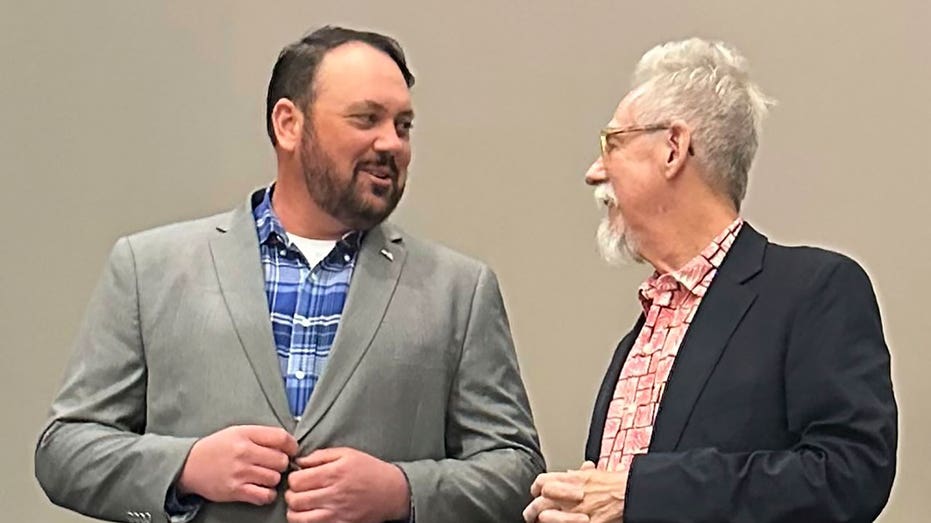
Voters in the northwest Oklahoma city of Enid ousted a city council member with ties to white nationalism, according to unofficial results posted Tuesday on the Oklahoma Election Board website. With all four precincts reporting in Enid’s Ward 1, results show voters chose to recall 42-year-old Judd Blevins. They instead selected Cheryl Patterson, a grandmother and longtime youth leader at an area church, to fill the seat. Blevins, an Iraq War veteran, was narrowly elected to the seat last year despite his ties to white nationalist groups. OKLAHOMA COURT CONSIDERS WHETHER TO ALLOW FIRST PUBLICLY FUNDED CATHOLIC SCHOOL IN THE US Blevins acknowledged at a community forum last week that he marched in the Unite the Right rally in Charlottesville, Virginia, in 2017. He also admitted being connected to the now-defunct white supremacist group Identity Evropa. When asked at the forum to explain his involvement in the rally and his ties to Identity Evropa, he responded: “Bringing attention to the same issues that got Donald Trump elected in 2016: securing America’s borders, reforming our legal immigration system and, quite frankly, pushing back on this anti-white hatred that is so common in media entertainment.” The recall effort in Oklahoma was launched by two longtime Enid residents, best friends Connie Vickers and Nancy Presnall, both Democrats in a county where Republicans have a nearly 4-to-1 advantage in voter registration.
Republican Ron Eller chosen in Mississippi 2nd District runoff to face Democratic Rep. Thompson in November

Ron Eller won a Republican primary runoff Tuesday in Mississippi’s 2nd Congressional District and will face longtime Democratic Rep. Bennie Thompson in the Nov. 5 general election. Eller, who is a military veteran and physician assistant, defeated Andrew Scott Smith, who has worked in farming and commercial real estate. They had advanced to the Republican runoff as the top candidates in a three-person primary March 12. Thompson has represented the majority-Black district since winning a special election in 1993, and President Joe Biden won the district by 27 percentage points in 2020. MISSISSIPPI CATFISH FARMS SETTLE SUIT CLAIMING IMMIGRANTS WERE PAID MORE THAN BLACK WORKERS Thompson is the ranking Democrat on the House Homeland Security Committee and was unopposed for his party’s nomination in the district this year. Thompson said he wants to decrease prescription drug costs, invest in historically Black colleges and universities, reduce student loan debt and build the middle class “by making sure the wealthy pay their fair share.” Eller, who ran unsuccessfully for the 2nd District Republican nomination in 2022, has said he supports construction of a U.S.-Mexico border wall and expansion of domestic energy production. After winning the runoff Tuesday, Eller told The Associated Press that he believes all Americans want good places to raise their families, with strong schools and clean air and water. “It’s time to put that party nonsense behind us,” Eller said. “We need to work as a people and a nation together.” The district stretches along the Mississippi River on the western side of the state, through the flatlands of the Delta and into the capital of Jackson. Voters in the 2nd District supported Democrat Joe Biden over Republican Donald Trump in the 2020 presidential election, 63% to 36%.
MHA cancels FCRA registration of five NGOs for violation of laws
The sources said the home ministry cancelled the FCRA registration of the NGOs for allegedly utilising funds for works that were not in their mandate.