

Texas emergency director calls for firefighting air force after historic Panhandle fires
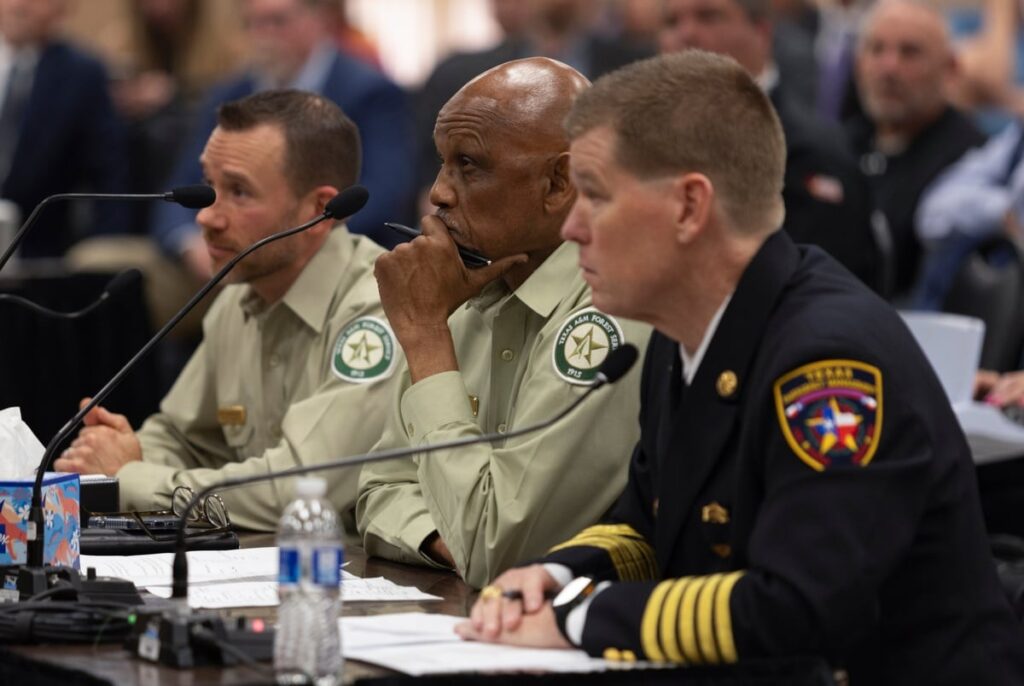
A special legislative committee is investigating what caused the Smokehouse Creek fire, the largest in state history.
Tennessee governor accepts resignation of Memphis judge indicted on coercion, harassment charges
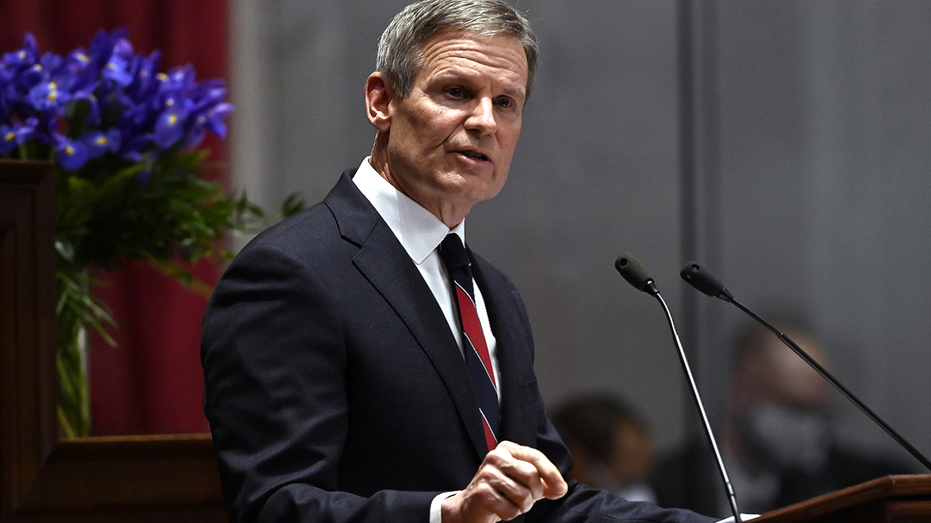
MEMPHIS, Tenn. (AP) — Tennessee Gov. Bill Lee on Tuesday accepted the resignation of a Memphis judge who has been charged with coercion of a witness and harassment, and then jailed after she violated her bond agreement by testing positive for cocaine. Erin Merrick, Lee’s chief counsel, wrote in a brief letter that the governor has accepted the resignation of Shelby County Criminal Court Judge Melissa Boyd. Boyd sent a letter Tuesday to the state Administrative Office of the Courts saying she was resigning immediately. That came a day after she sent a letter saying she would step down at the end of May. A hearing about her removal from the bench had been previously scheduled in the Tennessee General Assembly for Thursday. Under state law, judges can be referred to the Legislature after receiving two public reprimands. Elected in 2022, Boyd is accused of coercing, influencing or attempting to influence Lashanta Rudd, her former campaign manager, to testify falsely or “withhold truthful testimony” in an official proceeding, the indictment says. The indictment does not describe the official proceeding. The indictment also says Boyd’s communications with Rudd were attempts to annoy, alarm or frighten her. Boyd has pleaded not guilty. Boyd was suspended in May after she was accused of threatening an acquaintance, soliciting money by using her role as a judge and substance abuse. The accusations include asking for donations for a school in a social media post showing Boyd wearing a judicial robe. Under conditions of her release, Boyd was ordered to undergo drug screening and told not to use drugs. Prosecutors asked for her bond to be revoked after she twice tested positive for cocaine in March and failed to report to another drug test, court documents showed. In a hearing last Wednesday, Judge Roy Morgan revoked her bond and sent her to jail. During the hearing, Arthur Horne III, one of Boyd’s attorneys, said that Boyd “needs help” and has not been cooperating with them, saying the judge was “in a full relapse” and is “not thinking with a clear head,” the Commercial Appeal reported. Boyd’s trial is scheduled for April 24.
Portugal’s minority government takes office, faces fragmented parliament
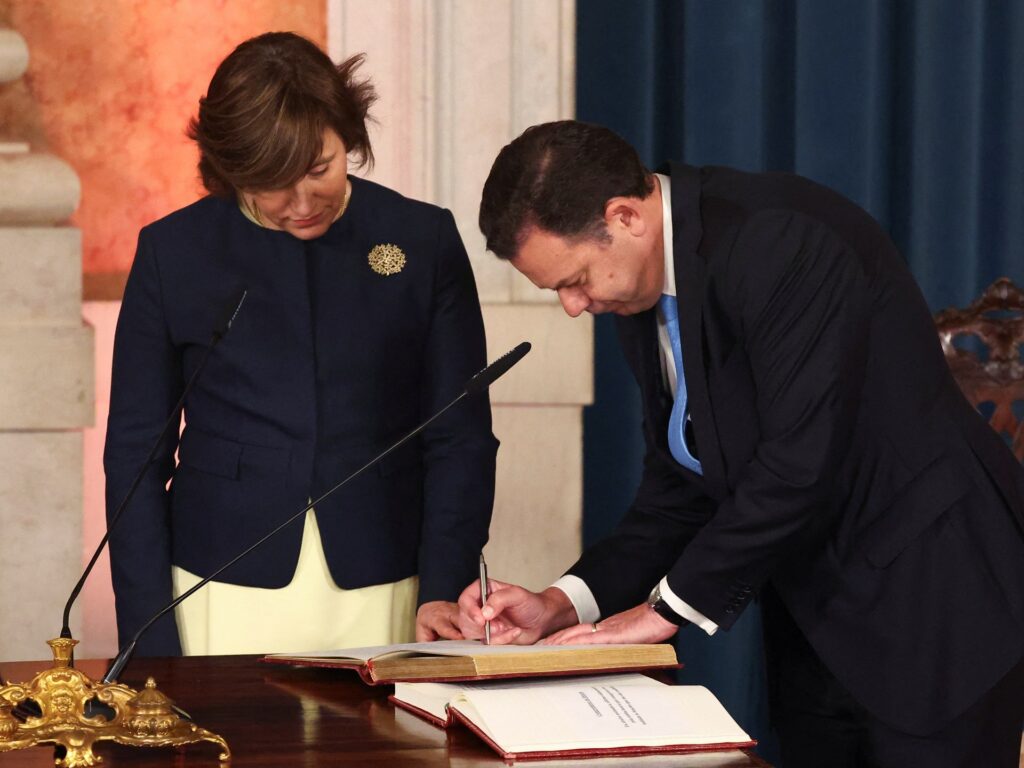
With just 80 seats in 230-seat parliament, the government will need the support of the opposition to pass legislation. Portugal’s new centre-right minority government led by Prime Minister Luis Montenegro has been sworn in amid uncertainty about its long-term viability as it faces a highly fragmented parliament. The Democratic Alliance (AD) coalition won the March 10 election by a slim margin over the outgoing Socialist Party (PS). Montenegro said on Tuesday that the government was determined to govern until the end of its four-and-a-half-year mandate and promised to act with “humility, patriotic spirit and capacity for dialogue”, while demanding the same from the opposition. “The [expected] investiture in parliament [next week] can only mean the opposition will respect the principle of letting us work and execute the government’s programme,” he said. With just 80 seats in the 230-seat legislature, the AD will need the support of either the far-right Chega party, which quadrupled its parliamentary representation to 50 members of parliament, or the centre-left PS, which secured 78 seats, to pass legislation. Chega, an anti-immigration party whose fast rise reflects a political tilt towards right-wing populism across Europe, has demanded a government role or a long-term agreement to support the AD, but Montenegro has repeatedly refused to negotiate. Speaker elected with PS support Montenegro’s precarious position was exposed last week when Chega rejected his candidate for parliamentary speaker, who was ultimately elected with PS help. The PS warned, however, that such support was a one-off to unblock parliamentary activities. Portugal, a country of 10.3 million people, is receiving more than 22 billion euros ($23.6bn) through 2026 from the EU to fuel growth and enable economic reforms. The government has promised tax reductions for families and companies, and higher pensions. It has also promised to quickly address shortcomings in public healthcare, especially long waiting lists for treatment, and a housing crisis, as well as resolve simmering disputes with police and teachers over pay and work conditions. The government can push some of its agenda through parliament with opposition support but the key piece of legislation – and its first big test – will be the 2025 budget. Failure to approve a budget has in the past habitually resulted in early elections in Portugal, and it is likely that the AD will be forced to negotiate the spending plan, and possibly other measures, with the PS. “The PS … must be clear about its attitude: be a democratic opposition or a blockade,” Montenegro said. Adblock test (Why?)
Biden denounces Florida abortion ruling as ‘outrageous’ as state vote looms
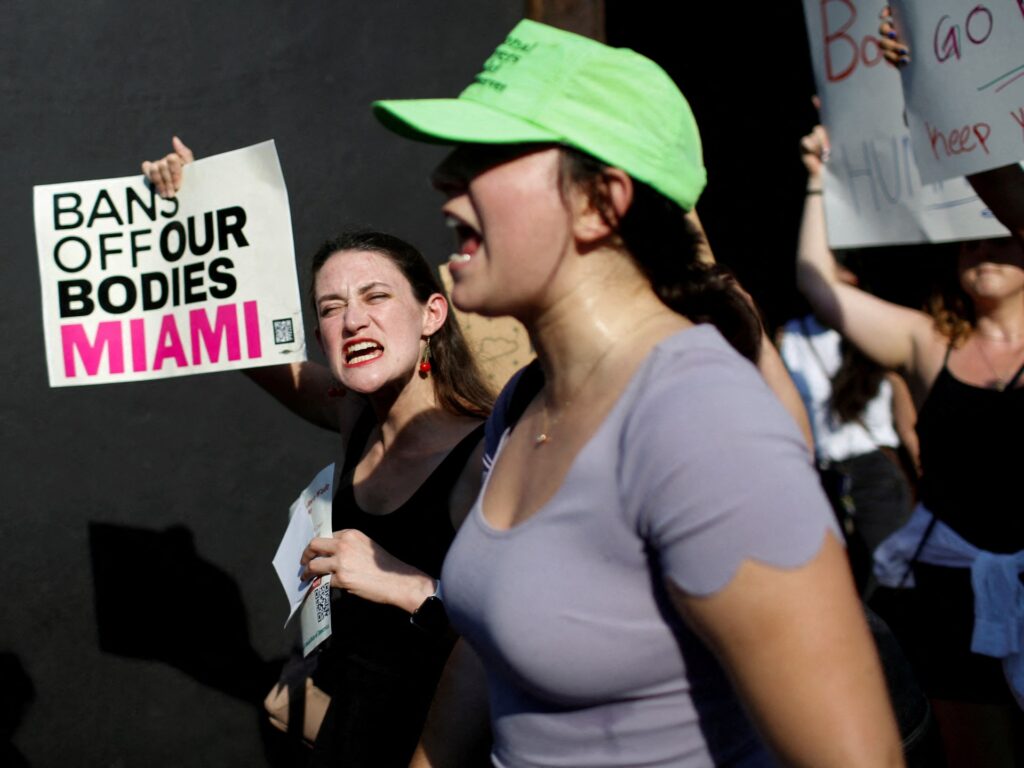
United States President Joe Biden has denounced a Florida Supreme Court decision that allows a six-week ban on abortion to take effect, calling it “outrageous” and “extreme”. In a statement released on Tuesday, Biden lashed out at Republicans for limiting reproductive rights in Florida and other US states, a key election issue in 2024. “Florida’s bans — like those put forward by Republican elected officials across the country — are putting the health and lives of millions of women at risk,” he wrote. The statement comes in response to a series of rulings from Florida’s highest court on Monday, one of which upheld a ban on abortions after 15 weeks of pregnancy. But that same decision is expected to pave the way for the six-week ban to go into effect, too. In April of last year, the conservative-dominated Florida state legislature passed the six-week ban to replace the 15-week one, and Governor Ron DeSantis signed it into law. However, the 15-week ban had been the subject of long-standing legal challenges. The six-week ban’s implementation hinged on whether the 15-week one could withstand the lawsuits it faced. Prior to the 15-week ban, Florida had allowed abortion through the second trimester of pregnancy, which made it a destination for those seeking the procedure from nearby states with tighter restrictions. Abortion headed to the ballot box Monday’s string of decisions from the Florida Supreme Court also tees up another battle over abortion access in the state, set to unfold in the midst of November’s heated general elections. The justices allowed a measure to be placed on the ballot that would amend the state constitution and protect abortion access “before viability” — up to around 24 weeks of pregnancy. The ballot measure passed by a vote of four to three and is known as Amendment 4 or the “Amendment to Limit Government Interference with Abortion”. It calls for the following language be inserted into the Florida constitution, “No law shall prohibit, penalize, delay or restrict abortion before viability or when necessary to protect the patient’s health.” Biden referenced the ballot measure in his Tuesday statement, reaffirming his commitment to protecting “reproductive freedom in Florida and across the nation”. “Vice President [Kamala] Harris and I stand with the vast majority of Americans who support a woman’s right to choose, including in Florida, where voters will have the opportunity to make their voices heard in support of a reproductive freedom ballot initiative this November,” he wrote. Biden faces a tight campaign for re-election this November, as he is expected to run against former Republican President Donald Trump in a rematch of their 2020 race. Florida was once considered a swing state, with Republicans and Democrats competing neck and neck in key races. But in recent years, Florida has swung rightwards, with Trump winning the state over Biden in 2020. The last time Florida had a Democratic governor, for instance, was in 1999, nearly a quarter century ago. Still, experts see the question of abortion access as weighing in Democrats’ favour. The Pew Research Center found that 56 percent of adults in Florida believed abortion should be “legal in all/most cases”. Another poll (PDF), published last November by the University of North Florida Public Opinion Research Lab, found that 62 percent of survey participants planned to vote for the constitutional amendment protecting abortion access, if it were to appear on the ballot. A ‘blueprint’ for the US Florida is the third most populous state in the US, and as such, it carries significant weight in the Electoral College, the system the country uses to determine who wins its presidential elections. The state is entitled to 30 Electoral College votes, out of a total of 538. It is also considered a bellwether for trends in legislation nationwide, with Governor DeSantis calling Florida a “blueprint for America’s revival” in a recent book. DeSantis, a prominent conservative and former 2024 presidential contender, signed the 15-week abortion ban into law in 2022. But abortion providers and groups like the American Civil Liberties Union (ACLU) and the Center for Reproductive Rights quickly filed complaints to prevent it from being implemented. However, in June 2022, within months of the bill’s passage, the US Supreme Court overturned Roe v Wade, the 1973 decision that upheld the federal right to an abortion for nearly a half a century. That placed the question of abortion rights in the hands of the states, creating a shifting patchwork of restrictions across the country. Plaintiffs in the case before the Florida Supreme Court this week argued that the 15-week abortion ban violated the state constitution’s privacy protections, but the justices rebuffed that argument in a six-to-one vote. Privacy protections had also been the basis for the now-defunct Roe precedent at the federal level. The decision to overturn Roe featured heavily in the Florida court’s decision on Monday. “The US Supreme Court abandoned Roe’s position that the right to abortion was grounded in any sort of privacy right,” the justices wrote. “This demonstrates the tenuous connection between ‘privacy’ and ‘abortion’ — an issue that, unlike other privacy matters, directly implicates the interests of both developing human life and the pregnant woman.” The ACLU of Florida responded to the decision by calling on voters to turn out for the November election. “These strict bans have and will continue to lead to multiple tragedies as patients are unable to receive needed care after the arbitrary deadline,” it wrote in a statement. “In the face of a six-week abortion ban, Floridians now have the chance to assert their will at the ballot box, shaping a Florida that is free from government interference in abortion.” Adblock test (Why?)
Israel’s planned Al Jazeera ban condemned

NewsFeed A new Israeli law that permits the banning of foreign news networks, including Al Jazeera, is being received with sharp criticism from governments and press freedom groups. Published On 2 Apr 20242 Apr 2024 Adblock test (Why?)
More than 200 migrants arrested after rushing an El Paso border gate

Gov. Greg Abbott said Department of Public Safety troopers had been instructed to “arrest every illegal immigrant involved” in the March 21 breach in which National Guard members were allegedly assaulted.
Iowa lawmakers pass teacher retention bonus for district hit by January shooting
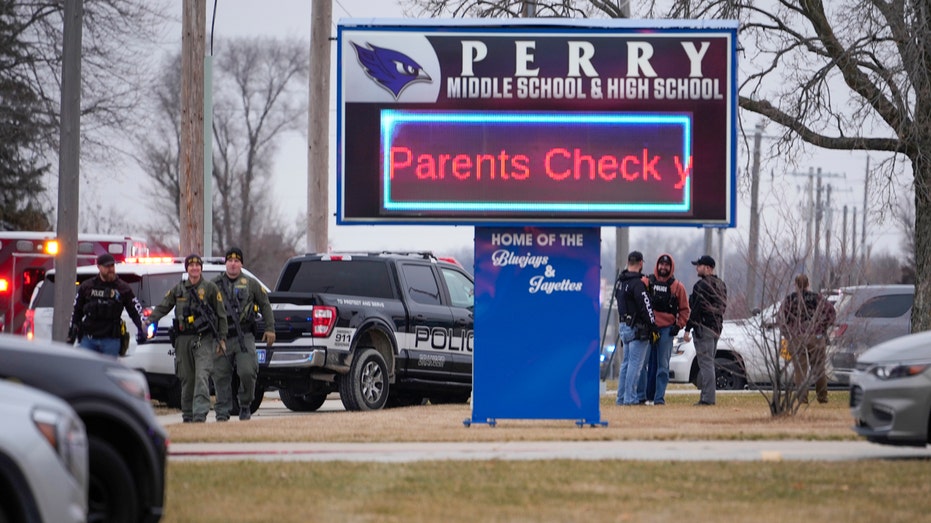
Teachers and staff in the rural Iowa district where a deadly school shooting took place earlier this year could get bonuses if they don’t quit their jobs under a new bill approved by lawmakers and sent to the governor. The Jan. 4 attack at the high school in Perry, Iowa, about 40 miles northwest of Des Moines, killed sixth grader Ahmir Jolliff, fatally injured the high school’s principal, Dan Marburger, and injured six others. The bill allows the school district in Perry, Iowa, to spend $700,000 of local tax dollars on bonuses for employees during the upcoming school year. FUNERAL HELD FOR SOLE VICTIM OF IOWA SCHOOL SHOOTING, 11-YEAR-OLD REMEMBERED FOR ‘VIBRANT SOUL’ The shooting began in the cafeteria as students were gathering for breakfast before classes resumed after winter break. The 17-year-old student, Dylan Butler, who opened fire also died of an apparent self-inflicted gunshot. Rep. Carter Nordman, a Republican, said that representatives from Perry and Iowa’s school board association approached lawmakers about the challenge with staff retention that had faced other schools coping with similar tragedies. This approach was a quick and efficient way of allowing Perry to address staff retention locally, Nordman said, even though “no amount of money” will change what happened. It will be up to Perry to allocate the bonuses; the bill indicates any district employee is eligible, not only those working at the high school or middle school where the shooting took place. “The reality is that it did happen, and this is one way that Perry could hopefully say to teachers that: ‘We support you, we’re here for you, we want you to continue to be a part of this community and teach here,’ ” Nordman said. The bill would also waive state requirements on the length of Perry’s school term. The school district canceled classes at the middle and high schools, which share the cafeteria, and the nearby elementary school for several weeks as the community mourned and the district addressed safety concerns.
Oklahoma court considers whether to allow first publicly funded Catholic school in the US
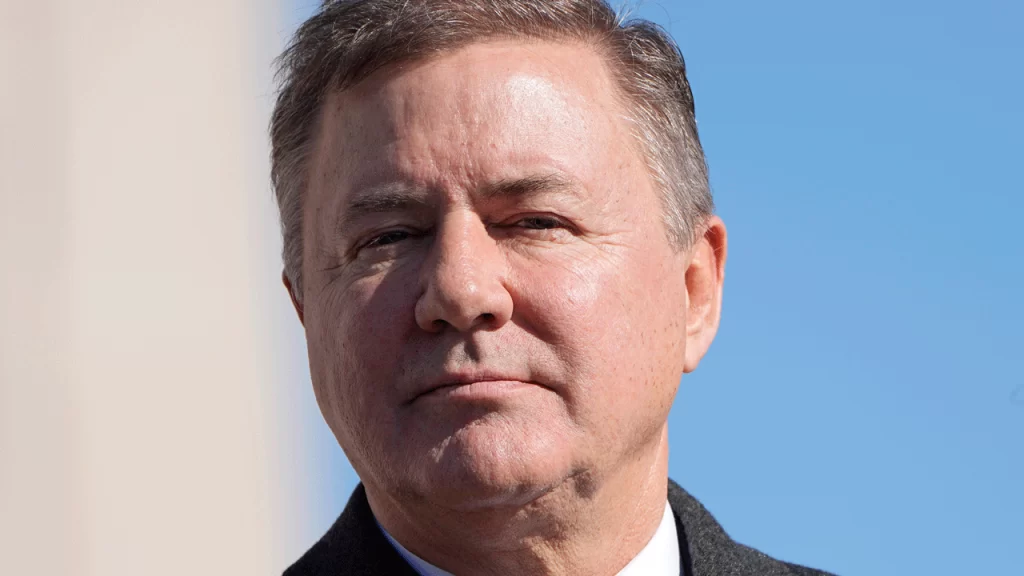
OKLAHOMA CITY (AP) — Oklahoma’s Republican attorney general urged the state’s highest court on Tuesday to stop the creation of what would be the nation’s first publicly funded Catholic charter school. Attorney General Gentner Drummond argued the Oklahoma Statewide Virtual Charter School Board violated both the law and the state and federal constitutions when it voted 3-2 in June to approve the Catholic Archdiocese of Oklahoma City’s application to establish the St. Isidore of Seville Catholic Virtual Charter School. OKLAHOMA SCHOOL INVESTIGATED AFTER VIDEO SHOWS KIDS LICKING TOES FOR FUNDRAISER: ‘DISGUSTING’ “I think that they betrayed their oath of office,” Drummond told the nine-member court. “And they knew they betrayed their oath of office because I told them if they did that they would.” The case is being closely watched because supporters of the school believe recent U.S. Supreme Court decisions have indicated the court is more open to public funds going to religious entities. One of Oklahoma’s high court justices asked Drummond if there aren’t already examples of using taxpayer funds for religious purposes, such as Medicaid funding for patients who go to St. Anthony’s Hospital, a Catholic health care provider in Oklahoma City. Drummond said there is a distinct difference between a religious entity qualifying for state funding for a service it provides and the Catholic charter school, which became a public institution with the school board’s vote. “The state and church are intertwined as has never happened before,” Drummond said. He added that approving the school would open the door for public schools to teach Islamic doctrine or even Satanism. Michael McGinley, an attorney for St. Isidore, argued that numerous private religious organizations receive state funding for providing services to students and that it’s unconstitutional to reject the archdiocese’s application simply because it is religious. “We have a program that’s open to everybody, except religious organizations,” he argued. “You can’t do that.” McGinley said the online school already has received hundreds of applications and hopes to receive its state funding on July 1. Classes are scheduled to begin in the fall. The school would be open to students throughout Oklahoma in kindergarten through grade 12. The court did not indicate when it would rule.
Connecticut man pleads guilty to attempted sexual assault of Muslim state representative
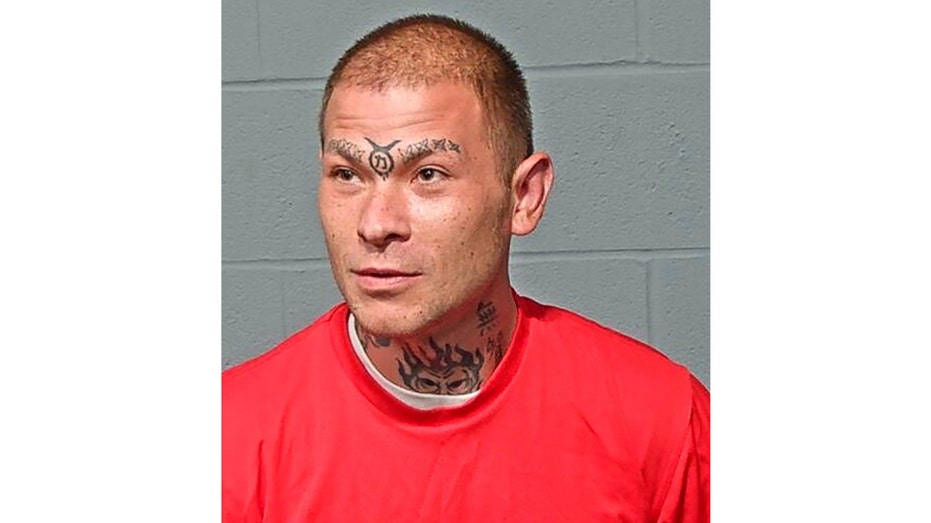
A man who attacked a Muslim state representative outside a prayer service in Connecticut pleaded guilty Tuesday to attempted sexual assault and other crimes in a plea deal that calls for a five-year prison sentence. Andrey Desmond, 30, appeared in Hartford Superior Court in connection with the June 2023 assault on Rep. Maryam Khan, the first Muslim to serve in the state House of Representatives. He pleaded guilty to attempted third-degree sexual assault, attempted first-degree strangulation and risk of injury to a minor — all felonies, Hearst Connecticut Media Group reported. Khan’s lawyer, Aaron Romano, told a judge that Khan believed Desmond deserved a longer prison sentence given how serious the attack was. Khan attended the hearing but did not comment afterward. CONNECTICUT DAY CARE WORKER ACCUSED OF THROWING TODDLER SIX FEET IN AIR INTO WALL “Representative Khan is requesting privacy at this time to process today’s events, but she looks forward to her attacker’s sentencing on June 4,” Romano said in a statement later in the day. Desmond’s attorney, public defender John Stawicki, told Judge David Gold that Desmond wanted to apologize to Khan. Desmond held off on apologizing after Gold warned that anything he said could be used against him if the plea agreement ended up being canceled for any reason. The plea deal would also require Desmond, after the prison term, to register as a sex offender, undergo counseling and take his medication. Court records show Desmond, who was living in New Britain, has a history of mental illness. After a court-ordered evaluation, he was found competent to stand trial. Khan, a Democrat from the Hartford suburb of Windsor, had called for hate crime charges. She was attacked while attending a service at the XL Center arena in Hartford with her family to mark Eid al-Adha, the end of the Hajj, the annual pilgrimage by Muslims to Mecca. She has said she and her family, including her 15-year-old daughter, were taking photos outside the arena when Desmond approached and said he “intended to have sexual relations” with one of them. Desmond then followed them inside, and Khan said he started to pursue her in particular, grabbing at her face and shirt and demanding a kiss. He followed her back outside and tried to grab her face again, she said, and became angry when she “dodged him.” She said he slapped her across the face and later put her in a “chokehold,” holding up his hand and mimicking having a gun before slamming her into the ground. Khan said she was diagnosed with a concussion and injured her right arm and shoulder. The Associated Press doesn’t generally identify people who report attempted sexual assaults unless they publicly identify themselves, as Khan has done. Desmond was chased down and held by two bystanders until police arrived and arrested him. One of the bystanders, a military veteran, was charged with misdemeanor assault and has applied for a pretrial diversion program that could erase the charge.
Tribes blast South Dakota governor’s claim that leaders are benefitting from drug cartels
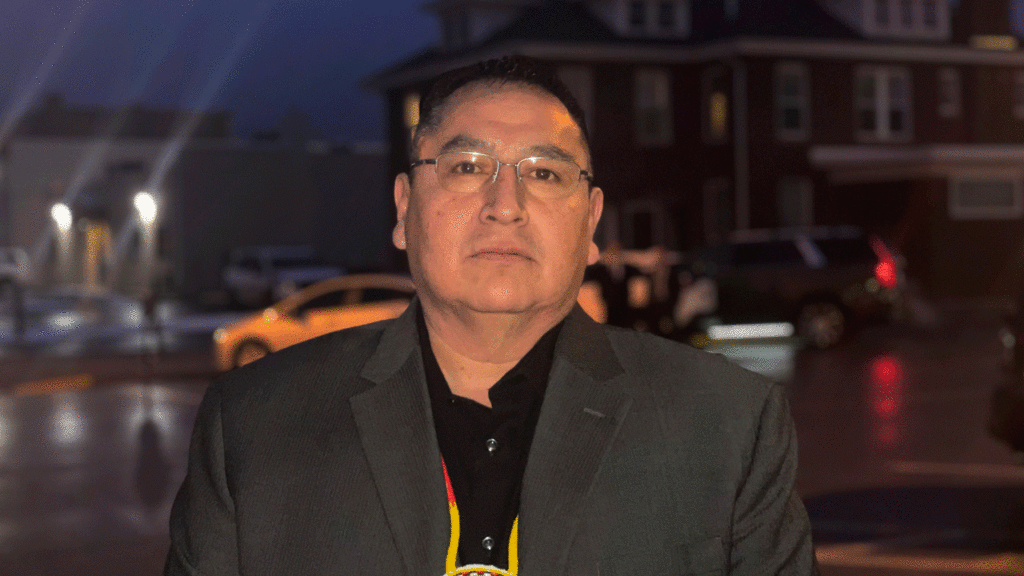
Relations between South Dakota tribes and Republican Gov. Kristi Noem have long been strained, but they have become even more contentious recently as Noem has pointedly criticized tribal leaders, accusing some of profiting from drug dealing and questioning their commitments to children on reservations. In speeches at community forums, Noem has slammed leaders of the tribes in the state as being more interested in hurting her politically and profiting from drug cartels than improving the lives of children and others amid persistent poverty on reservations. SOUTH DAKOTA GOV NOEM BANNED FROM TRIBAL RESERVATION OVER REMARKS ON US SOUTHERN BORDER “We’ve got some tribal leaders that I believe are personally benefiting from the cartels being there and that’s why they attack me every day,” Noem said at a forum last month in Winner. “But I’m going to fight for the people who actually live in those situations, who call me and text me every day and say, ’Please, dear governor, please come help us in Pine Ridge. We are scared.” Even for tribal leaders accustomed to rocky relations with the governor, the accusations left them stunned. “How dare the Governor allege that Sioux Tribal Councils do not care about their communities or their children, and, worse, that they are involved in nefarious activities?” said Oglala Sioux Tribe President Frank Star Comes Out, whose tribe earlier this year banished Noem from the Pine Ridge Reservation and is suing the federal government for more law enforcement resources to tackle crime on the reservation. Or as Standing Rock Sioux Tribal Chairwoman Janet Alkire put it in a statement, “Governor Kristi Noem’s wild and irresponsible attempt to connect tribal leaders and parents with Mexican drug cartels is a sad reflection of her fear-based politics that do nothing to bring people together to solve problems.” In making her comments, Noem expressed frustration at persistent problems on reservations and desperation to help, but others question why the governor seems to be picking a fight now with tribes. They note members of the tribes typically favor Democratic candidates in the otherwise conservative state and speculate Noem’s tough stand is intended to impress presumptive Republican presidential nominee Donald Trump, who has named Noem as a potential vice presidential running mate. Michael Card, an emeritus political science professor at the University of South Dakota, speculated that Noem’s comments might go back to her view about security on the southern border and support for Trump. Noem has risen fast in her political career, having won every race she has run, said Card, who drew a “linkage” from Noem to Trump in that “we like strong people, and this is a strong woman.” Some tribal leaders also point to Noem’s support of Trump. “She’s trying to out-Trump Trump by saying something crazy about Native Americans because she knows we’ve had a long history of fighting with the state, and she figures by saying something that might go national, maybe Trump will elevate her a little higher and pick her to be on his team, which is sad,” said Democratic state Sen. Shawn Bordeaux, a former Rosebud Sioux tribal council member. No one denies drug and alcohol abuse are an endemic problem on some reservations, but Noem hasn’t provided evidence linking drug cartels to tribal leaders. Her spokesman, Ian Fury, said in an email that “drug cartel presence on Native American reservations” has been documented by the news media for years but didn’t respond to inquiries for more specifics. In response to questions about drug cartels, the South Dakota U.S. Attorney’s Office said in a statement that it works with tribal, local and state officials but didn’t specify whether cartels were active on reservations. The U.S. Drug Enforcement Administration and FBI either referred questions to the U.S. Attorney’s Office or declined to comment. In a letter to the U.S. Interior Department and other federal officials last week, Noem called for audits of federal funds given to the nine tribes in South Dakota to understand how the money had been spent. The Interior Department declined to comment. Also last week, Noem requested a meeting with the Oglala Sioux tribal officials, offering to help address problems facing their reservation. She made a similar request in February. Fury did not respond to an email asking whether the tribe has responded. The governor also has tried to reach leaders of the Rosebud Sioux Tribe and Crow Creek Sioux Tribe without success, Fury said. “She continues to have no response from any of those tribes. But she is loving all the conversations that she’s having with their community members – she has appreciated their encouragement and support,” Fury said. The dispute continues a long history of contentious relations between South Dakota’s tribes and the government dating to the 1800s when some of the most intensive fighting between Native Americans and U.S. troops occurred in the state. More recently, efforts in the 1950s to “terminate” or withdraw federal responsibility and administration of tribes led to tension, though ultimately no tribe in South Dakota was terminated, said Sean Flynn, professor and chair of history at Dakota Wesleyan University, and an enrolled member of the Rosebud Sioux Tribe. Flynn said he thinks Noem could use her voice and position to help the tribes obtain more federal support to tackle problems on reservations, instead of “scolding” tribal leaders and parents. “It doesn’t seem like a formula for addressing the issue of drug use on reservations,” he said.