

White House calls squatting a ‘local issue’ that governments must address
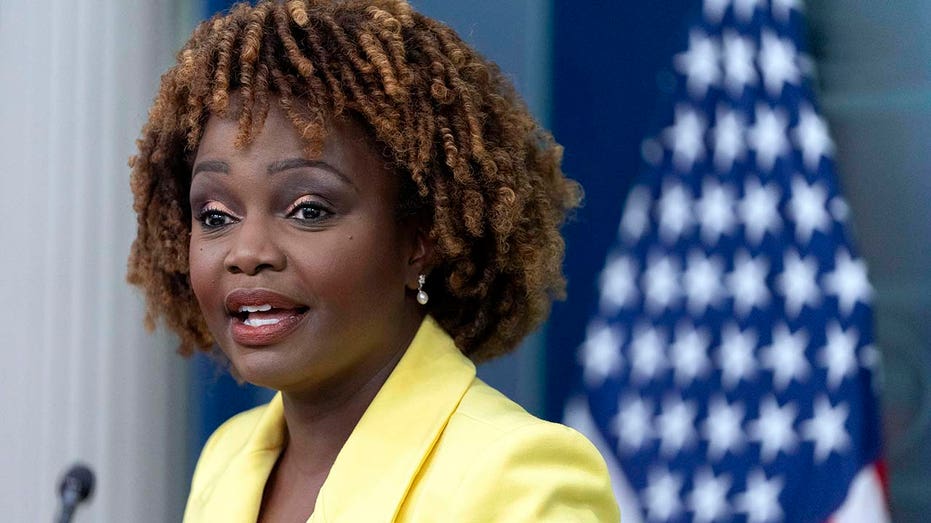
The White House is calling the squatting trend in which strangers seize and live in a homeowner’s property against their wishes a “local issue” that local governments must address themselves. Fox News correspondent Peter Doocy asked White House press secretary Karine Jean-Pierre on Monday whether Americans need to be worried about squatters and where President Biden stands on the issue as horror stories continue to make headlines. “My understanding is that this is obviously a local issue,” Jean-Pierre said. “We are certainly tracking that issue. The rights of property owners and renters must be protected.” “And we believe that ultimately what needs to happen is that the local government needs to make sure that they address this, and they take action,” the press secretary continued. ‘SQUATTER SCAM’ ENDS IN FLORIDA AS DESANTIS, SHERIFF TOUT NEW CRACKDOWN: ‘STRAIGHT TO JAIL’ Jean-Pierre said all Americans in communities across the country want the same thing: “They want their families to be safe and that’s what we want as well.” When asked whether Biden would support a law like one taking effect in Florida that allows homeowners to call police on squatters, Jean-Pierre said she would not address hypotheticals. “What I can say is that this is ultimately a local issue, and it’s critical that local governments address this,” she said. ANTI-SQUATTING ‘PROFESSIONAL’ CELEBRATES FLORIDA BAN AS OTHER STATE LAWS FRUSTRATE HOMEOWNERS Florida Gov. Ron DeSantis signed a bill last week that granted state law enforcement officials the power to remove offenders and increase penalties for squatters. The move comes as property owners nationwide complain about their homes being seized by strangers and the limited options to take back what is rightfully theirs. The new Florida law is set to go into effect on July 1.
Biden administration tightens rules on African elephant imports, stops short of total ban

The Biden administration strengthened protections for African elephants, but stopped short of issuing a total ban on imports of hunting trophies and live animals, to the disappointment of wildlife activists. In an announcement late last week, the U.S. Fish and Wildlife Service finalized restrictions on elephants imported to the U.S. under the Endangered Species Act, which it said would aid the long-term conservation and survival of elephants in the wild. Prominent wildlife activist organizations have called for the agency to go further and ban such imports altogether. “The Service values collaborative conservation of wildlife all around the world and is committed to improving implementation of international conservation law,” FWS Director Martha Williams said. “Our actions today will help support range countries’ efforts to manage and conserve African elephant populations and will further protect African elephants that are imported to the United States.” She added that FWS would continue to work with African nations to ensure the sustainable management of elephant populations. AS GRAY WOLVES TERRORIZE FARMS AND RANCHES, GOP LAWMAKERS DEMAND ENDANGERED SPECIES DELISTING Under the finalized regulations, live African elephants, African elephant sport hunting trophies (such as tusks, hides, feet and tails), and African elephant parts and products may be imported into the U.S., but only from countries that have laws in place to ensure conservation of the species. The regulations also require imports to go to American facilities that are able to properly care for them. The rulemaking further highlights the administration’s view that, for hunting to achieve its conservation potential, it must be “well-regulated” and include accountability measures, FWS said. Still, advocates expressed disappointment at FWS’ decision to stop short of a full ban on imports and vowed to keep pushing for such a policy at the federal level. BIDEN ADMIN ACCELERATES PLAN TO UNLEASH GRIZZLY BEARS NEAR RURAL COMMUNITY OVER WIDESPREAD LOCAL OPPOSITION “I’m truly crushed this rule doesn’t ban trade in elephant hunting trophies to the United States, and it doesn’t even require stable elephant populations to allow trophy imports,” said Tanya Sanerib, international legal director at the Center for Biological Diversity. “These magnificent animals are globally cherished but under threat, and it’s high time we stop letting wealthy trophy hunters turn them into decor.” Sanerib said the restrictions finalized by the administration are “mouse-sized” and treat elephants like commodities. Jeff Flocken, the president of Humane Society International, applauded the new restrictions, but similarly called for even stronger measures. “We will continue to fight for a full ban on the trade in African elephant hunting trophies, and we hope this sets a precedent that can be applied to other countries and to other imperiled species, like lions, giraffes and leopards,” he said. The regulations, which will take effect on May 1, 2024, were first proposed in November 2022. After they were proposed, FWS received thousands of comments from stakeholders, a large majority of whom called for increased conservation of African elephants, according to the agency. CLICK HERE TO GET THE FOX NEWS APP Groups like the Performing Animal Welfare Society, Friends of Animals and the Animal Welfare Institute used their comments to call for the Biden administration to use the rulemaking to issue a complete ban on elephant imports. “Friends of Animals urges FWS to prohibit the import of live African elephants. There is no reason to continue to allow these intelligent and social creatures to suffer in captivity,” Stephen Hernick, a senior attorney at the Wildlife Law Program for Friends of Animals, wrote in the group’s comments last year.
Tirunelveli Constituency Tamil Nadu Lok Sabha election 2024: Check polling date, candidates list, past election results
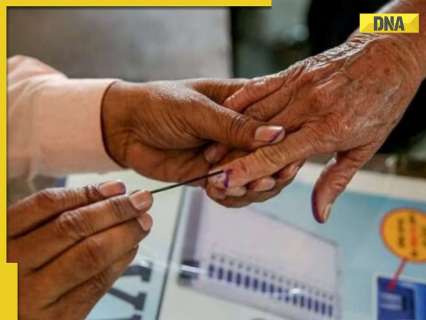
In 39 Parliamentary constituencies in Tamil Nadu, as many as 950 candidates are all set to contest the Lok Sabha polls on April 19.
Ghaziabad Lok Sabha constituency: Know polling date, candidates list, past election results
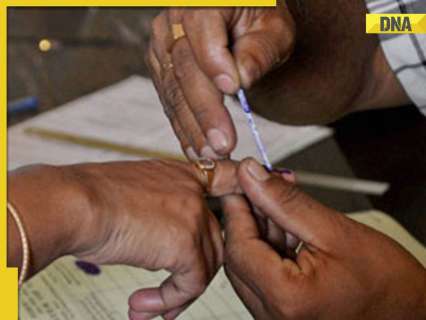
Ghaziabad constituency Lok Sabha election 2024: Know all about the upcoming polls.
‘Need to have delicate balance’: CJI DY Chandrachud on probe agencies

He said as our world becomes increasingly interconnected through the expansion of digital technologies.
Kansas lawmakers race to reckon with flat tax, DEI disputes before spring break
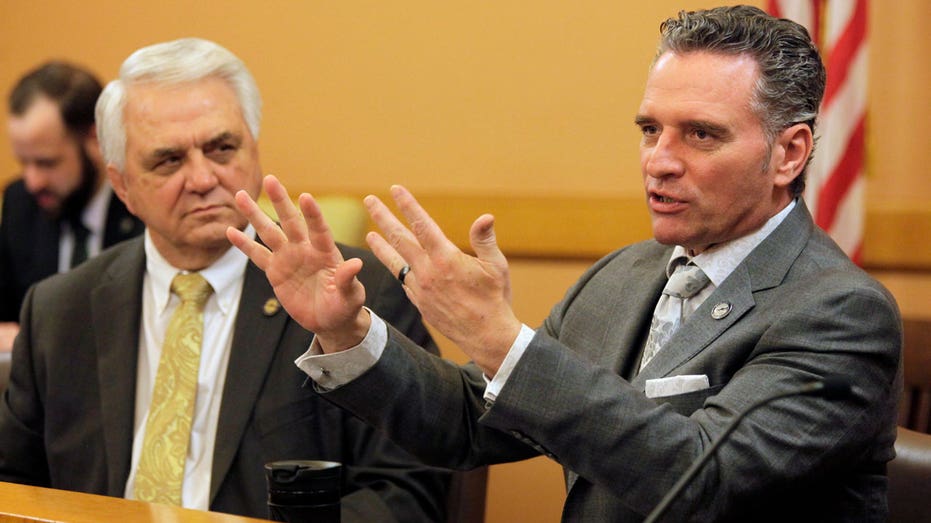
The Kansas Legislature is scrambling to address tax cuts, funding for disability services and immigration issues ahead of its annual three-week spring break starting next week. Most bills that don’t pass by then won’t be considered when lawmakers return April 29 for a short wrap-up session. Republicans disagree over how to cut income taxes, as well as pay for other big-ticket items such as disability rights. It’s all coming to a head as lawmakers approach their annual “Drop Dead Day,” a deadline to either pass legislation or let it fade away. Lawmakers are supposed to finish a proposed $25 billion budget for the fiscal year beginning July 1. STATE MAKES RETAIL THEFT A FELONY AS ORGANIZED CRIME PROLIFERATES Here is a look at some of the major issues up for consideration this week: The Legislature is having its second go at enacting income, sales and property tax cuts this year after Democratic Gov. Laura Kelly vetoed a GOP package in January because it included a single-rate, or “flat,” income tax, which she said favored the “super rich.” With help from several GOP defectors, Democrats narrowly stopped the governor’s veto from being overridden in the House. State tax collections have fallen short in recent months, but Kansas is still on track to end June 2025 with more than $4 billion in surplus funds. Legislators are poised to approve tax cuts worth $500 million to $600 million annually, while a plan Kelly outlined in January would be worth about $300 million a year. The House and Senate both want to exempt retirees’ Social Security benefits from income taxes, decrease the property taxes levied by the state for public schools and adjust standard personal income tax deductions. The key difference is in proposed income tax rates. A Senate plan would set a single rate of 5.7% — the top rate now — and decrease it over five years to 5.45%. In the House, GOP leaders concluded a single-rate plan is unlikely to overcome another Kelly veto. Instead, they want to eliminate the lowest income tax bracket and set the top rate at 5.65%. Kelly hasn’t said publicly whether she would accept a plan with two rates. While Senate Republicans appear to have a two-thirds majority for their plan, the House approved its version this week 123-0. The final tax plan will be drafted by three Senate and three House negotiators. Immigration and diversity issues are both part of this year’s budget negotiations in Kansas. Republican senators have added a provision to their spending plan that would support Texas Gov. Greg Abbott’s battle with the Biden administration over border security. The measure sets aside $15.7 million for a proposed border mission before July and directs Kelly to deploy Kansas National Guard resources to help Texas. Asked about that provision last month, Kelly said the state constitution makes her the guard’s commander-in-chief, “And I make those decisions.” Another provision in the Senate budget proposal would withhold $35.7 million from state universities until top administrators go before Kelly and legislative leaders and renounce certain diversity, equity and inclusion initiatives. The lawmakers want schools to declare they won’t require prospective students or job applicants to commit to DEI principles or require them to discuss their experiences with DEI programs. Last year, Kelly vetoed two anti-DEI budget provisions. One would have prevented state universities from using DEI principles in hiring. The other would have barred the state board that licenses mental health professionals from requiring or incentivizing them to undergo training in diversity or anti-racism theories. Some Kansas families are waiting 10 years to get in-home or community services for their children with physical or intellectual-developmental disabilities. Lawmakers are weighing solutions. While 15,000 disabled Kansans have access to services such as day programs, employment assistance or home care, more than 7,600 are on waiting lists. A total of 23 people died in 2022 and 2023 while waiting for services, according to the Kansas Department for Aging and Disability Services. Kelly now proposes spending $23 million to provide services for 250 physically disabled people and 250 with intellectual-developmental disabilities who are now on waiting lists. The House proposal would double that. Some House Democrats have pushed unsuccessfully to spend enough to service an additional 1,000 people with intellectual or developmental disabilities. Yet some Republicans question whether service providers can handle such an increased workload. “It is disingenuous to tell them they’re going to get help when we can’t even find the workers to provide the services that they need,” House Health Committee Chairperson Brenda Landwehr, a Wichita Republican, said during a recent meeting. But advocates for the disabled have questioned whether another 500 slots for people with intellectual or developmental disabilities will even shrink their waiting list, given that hundreds more individuals were added to it in each of the last two years. Rocky Nichols, executive director of the Disability Rights Center of Kansas, argues providers will build the capacity if the state commits more money.
‘One Vehicle, One FASTag’ rule starts today: Know what is it

The new rule aims to discourage the use of single FASTag for multiple vehicles or linking multiple FASTags to a particular vehicle.
Speaker Johnson says House will move on Ukraine aid when Congress is back in DC
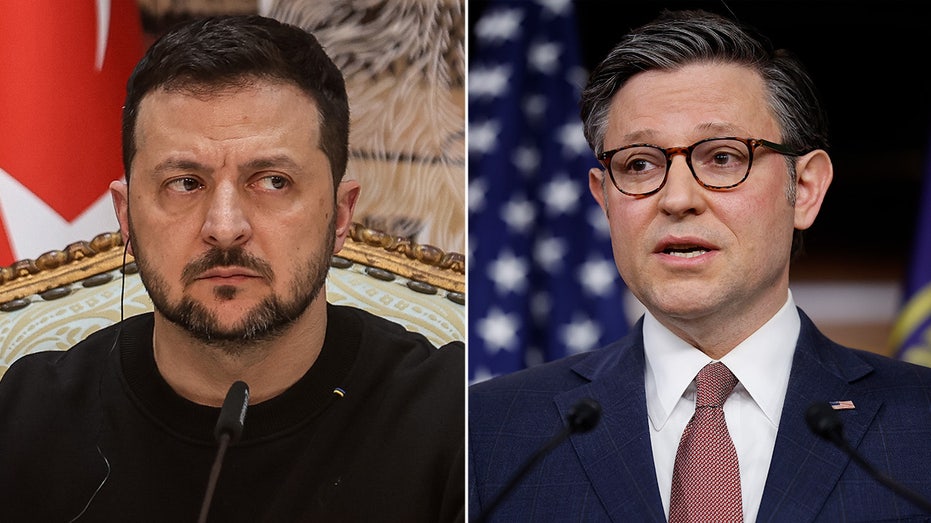
Speaker Mike Johnson, R-La., suggested the House of Representatives will act in the coming weeks to get more funding to Ukraine. “When we return after this period, we’ll be moving a product. But it’s going to, I think, have some important innovations,” Johnson told Fox News’ “Sunday Night in America with Trey Gowdy.” Both the House and Senate are currently on the second week of a two-week recess, when lawmakers are working in their home districts. The House is back on Tuesday, April 9. Johnson said he has been “working to build consensus” on a supplemental national security and foreign aid package, though he signaled it would look different from prior attempts. He said the House would “be moving it right after the district work period.” RUSSIA’S WAR ON UKRAINE UNLIKELY TO END IN 2024; CONGRESS PLAYS PIVOTAL ROLE IN DIRECTION CONFLICT TAKES It comes after Republicans killed a $118 billion package with aid for Ukraine, Taiwan, Israel and the U.S. border earlier this year, arguing it did not go far enough to tackle the ongoing border crisis. Senate Majority Leader Chuck Schumer, D-N.Y., and President Biden have been pressuring Johnson to take up a slimmer $95 billion package without border measures. “We’ve been trying to use that as the only leverage we have to force change on the border. We’re still trying to force the president to use his executive authority, and most of the American people know that he has that authority. He’s not using it,” Johnson argued. On Ukraine specifically, he said, “There’s a lot of things that we should do that make more sense and I think we’ll have consensus around.” US SENDING UKRAINE $300 MILLION IN WEAPONS DESPITE LACKING FUNDS TO REPLENISH ITS OWN STOCKPILES Johnson highlighted three details specifically – the first being the REPO Act introduced in the House last year by Foreign Affairs Chairman Michael McCaul, R-Texas, and Rep. Marcy Kaptur, D-Ohio, which would liquidate seized Russian assets and send that as assistance to Ukraine. The speaker also pointed out that former President Trump recently floated the idea of aid to Ukraine in the form of a loan, though he did not mention specific terms save for Kyiv paying Washington back if they win the war against Russia. “Even President Trump has talked about the loan concept where we set up – we’re not just giving foreign aid – we’re setting up a relationship where they can provide it back to us when the time is right,” Johnson said. Sen. Lindsey Graham, R-S.C., a Trump ally, told NBC News’ “Meet The Press” last month that the ex-president would back such a loan being forgivable and interest-free. Johnson described the third proposal, “And then, you know, we want to unleash American energy. We want to have natural gas exports that will help unfund Vladimir Putin’s war effort there.” FLASHBACK: WHITE HOUSE CONFIRMS MORE THAN $100B SPENT ON UKRAINE WAR Biden is facing bipartisan pushback to his administration’s pause on exports of liquefied natural gas (LNG), with some critics accusing him of giving Russia greater control over the market and thus more money to fund its invasion. Majority Leader Steve Scalise, R-La., told Fox News Digital last month that Biden is “sending very mixed messages to Ukraine” with his energy policies. “On one hand, he says he supports Ukraine, but on the other, he is helping fund Putin’s war efforts by putting billions of dollars of money in the pocket of Vladimir Putin by allowing him to sell his energy on world markets, by shutting off American energy,” Scalise said. Fox News Digital reached out to Johnson’s office for more specifics on timing and was referred back to his interview remarks. The Sunday interview included some of Johnson’s most specific comments on Ukraine aid yet, as bipartisan pressure grows with the situation for Kyiv growing more dire in the face of Russia’s vastly greater resources. CLICK HERE TO GET THE FOX NEWS APP However, Johnson is also taking heat from a small but vocal faction on his right flank for supporting Ukraine aid at all. Rep. Marjorie Taylor Greene, R-Ga., who filed a motion to oust Johnson in late March over passage of a bipartisan $1.2 trillion government funding deal, blasted him on Monday morning for his stance. “If Speaker Johnson gives another $60 billion to the defense of Ukraine’s border after he FULLY FUNDED Biden’s deadly open border, the cruel joke would be on the American people. And it won’t be April Fools,” she wrote on X. Johnson said Sunday that he and Greene had exchanged text messages and would be speaking next week.
Trump-aligned candidate for North Dakota’s lone House seat gets boost from Vivek Ramaswamy

FIRST ON FOX: A Republican running for North Dakota’s lone seat in the House of Representatives is getting an endorsement from former 2024 Republican presidential hopeful Vivek Ramaswamy. Rick Becker, a plastic surgeon who previously served in North Dakota’s state House, is running in a three-way June 11 Republican primary to see who will advance to the November general election. Current Rep. Kelly Armstrong, R-N.D., is vacating the seat to run for governor. “The U.S. government is giving massive taxpayer money to companies to build a CO2 pipeline across the Midwest, including North Dakota, to appease the global climate cult. There are real hazards and many farmers don’t want it on their land, but now they’re looking to use eminent domain, which is a gross violation of property rights,” Ramaswamy told Fox News Digital. BILL MAHER PANICS OVER TRUMP’S GAIN WITH YOUNG VOTERS: BIDEN MIGHT LOSE ‘BECAUSE HOT DOGS COST MORE’ “Dr. Rick Becker is dead set against it and refuses to bow to the bipartisan Establishment who backs this sham. He signed my American Truth Pledge and I’m proud to endorse him for Congress.” Becker thanked Ramaswamy for the endorsement and lauded him as an “American patriot who shares my commitment to defending the truth against the radical WOKE mob that seeks to undermine American values.” The former state official has sought to align himself with former President Trump and the populist wing of the GOP. Ramaswamy dropped out of the primary early and has since vehemently campaigned for Trump. The former president himself has not made an endorsement in the race. RUBIO SAYS BEING TRUMP RUNNING MATE WOULD BE ‘INCREDIBLE HONOR’ Becker is also being backed by members of the House Freedom Caucus, a group of GOP hardliners that Becker pledged to join if he won a seat in Congress. He’s been endorsed by former Freedom Caucus Chairman Scott Perry, R-Pa., along with members Reps. Josh Brecheen, R-Okla., Andy Harris, R-Md., Warren Davidson, R-Ohio, and Eric Burlison, R-Mo. Becker previously ran for U.S. Senate as an independent candidate against Republican incumbent Sen. John Hoeven, R-N.D., and Democratic candidate Katrina Christiansen, who is running again this year. TRUMP CHALLENGES BOTH BIDEN AND HALEY AT FOX NEWS TOWN HALL IN SOUTH CAROLINA During his time as a state representative, Becker founded and led an ultra-conservative faction of the state House called the Bastiat Caucus, which frequently challenged the state’s Republican officials to push further right. It was named after 19th-century French economist Frédéric Bastiat. His fellow Republicans in the House primary are Julie Fedorchak, who has served on North Dakota’s Public Service Commission since 2013, and former State Department official Alex Balazs. The lone Democrat in the race is Marine Corps veteran Trygve Hammer.
Texas federal court rejects policy aimed at curbing ‘judge shopping’
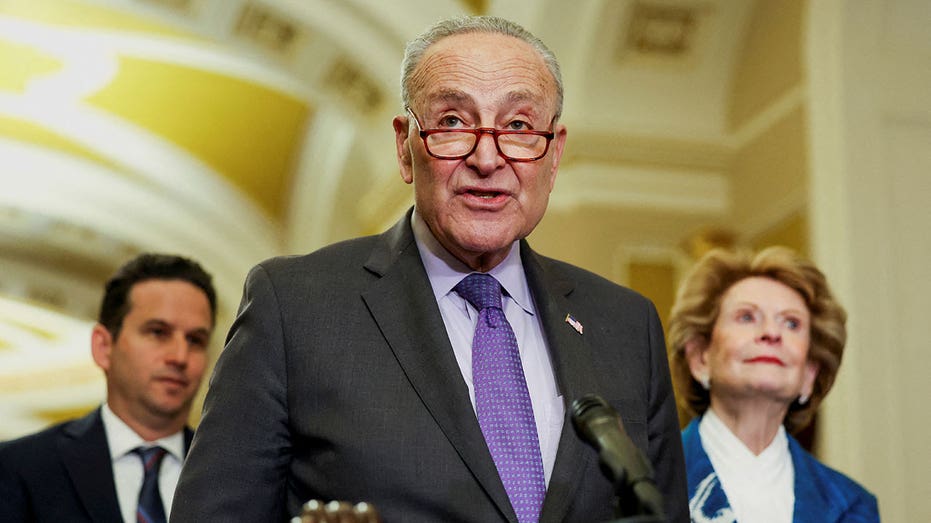
A federal court in Texas that has become a favored destination for conservatives suing to block President Joe Biden’s agenda has decided not to follow a policy adopted by the judiciary’s top policymaking body that aims to curtail the practice of “judge shopping.” Chief U.S. District Judge David Godbey of the Northern District of Texas announced the decision in a Friday letter to Democratic U.S. Senate Majority Leader Chuck Schumer, who had urged him to implement a new policy that aimed to ensure cases challenging federal or state laws are randomly assigned judges. The policy announced by the U.S. Judicial Conference on March 12 would require a lawsuit challenging federal or state laws to be assigned a judge randomly throughout a federal district rather than stay in the specific, smaller division, or courthouse, where the case was initially filed. SCHUMER-LINKED PACS SPEND MILLIONS TO MEDDLE IN GOP PRIMARIES If implemented, that policy would disrupt a tactic used by conservative litigants of filing cases in small divisions in Texas’ four federal districts whose one or two judges were appointed by Republican presidents and often rule in their favor on issues like abortion, immigration and gun control. Following blowback from Senate Republicans and some conservative judges, judicial policymakers later clarified that the policy was discretionary, leaving it to each district court to decide how to implement it. In his letter, Godbey, an appointee of Republican former President George W. Bush, said the judges in his district met on Wednesday. “The consensus was not to make any change to our case assignment process at this time,” he said. His letter was first reported by Law360. Schumer’s spokespeople did not respond to a request for comment on Saturday. The U.S. District Court for the Northern District of Texas has 11 active judges and is divided into seven divisions. Most judges are in Dallas, but some smaller divisions like Amarillo, Fort Worth and Lubbock have just one or two active judges. The U.S. Supreme Court heard arguments on Tuesday in a case arising from one of these small courts, in which U.S. District Judge Matthew Kacsmaryk – an appointee of Republican former President Donald Trump in the single-judge division of Amarillo – suspended approval of the abortion pill mifepristone. The Supreme Court has allowed the pill to remain on the market while it considers the appeal. Justices signaled during Tuesday’s arguments they were unlikely to uphold restrictions.