

Longtime US Rep William Delahunt of Massachusetts dies at 82

Longtime U.S. Rep. William D. Delahunt of Massachusetts, a Democratic stalwart who postponed his own retirement from Washington to help pass former President Barack Obama’s legislative agenda, has died following a long-term illness, his family announced. Delahunt died Saturday at his home in Quincy, Massachusetts, at the age of 82, news reports said. Delahunt served 14 years in the U.S. House of Representatives, from 1997 to 2011, for Massachusetts’s 10th congressional district. He also was the Norfolk County district attorney from 1975 to 1996 after serving in the Massachusetts House of Represenatives from 1973 to 1975. GOING, GOING, GONE: COULD THE REPUBLICANS’ SLIM HOUSE MAJORITY SLIP AWAY BEFORE NOVEMBER? The Delahunt family issued a statement Saturday saying he passed away “peacefully,” but did not disclose his specific cause of death, news reports said. “While we mourn the loss of such a tremendous person, we also celebrate his remarkable life and his legacy of dedication, service, and inspiration,” the statement said. “We could always turn to him for wisdom, solace and a laugh, and his absence leaves a gaping hole in our family and our hearts.” Democratic U.S. Sen. Ed Markey of Massachusetts lauded Delahunt’s long public service as a legislator in the nation’s capital and a prosecutor in the county south of Boston. “I met with Bill in Quincy in February, and he was clear and as committed as ever to working on behalf of the South Shore and the people of Massachusetts,” Markey said in a statement. “It is a fitting honor that the door of the William D. Delahunt Norfolk County Courthouse opens every day so that the people inside can do the hard work of making lives better, as Bill Delahunt did. The Commonwealth and the country are better for Bill Delahunt’s vision and service.” President Nicolás Maduro of Venezuela posted a statement on X, formerly Twitter, mourning Delahunt’s passing. As a member of Congress, Delahunt brokered a 2005 deal with then-Venezuelan President Hugo Chavez to obtain heating oil for low-income Massachusetts residents, according to news reports. Delahunt also attended Chavez’s state funeral in Caracas in March 2013. Delahunt stepped down from the U.S. House in January 2011. He told The Boston Globe he had previously considered retirement, but fellow veteran Bay State legislator Sen. Edward M. Kennedy convinced him he was needed to help pass Obama’s legislative initiatives at the time. Delahunt was an early Obama backer, becoming the first member of the Massachusetts congressional delegation to endorse the Illinois senator’s presidential bid, according to reporting by The Patriot Ledger, the newspaper in Delahunt’s hometown, Quincy. Announcing his retirement in March 2010, Delahunt said Kennedy’s death the previous year turned his thoughts to finding time for priorities beyond Washington. “It became clear that I wanted to spend my time, the time that I have left, with my family, with my friends and with my loved ones,” Delahunt said.
Gautam Buddha Nagar Uttar Pradesh Lok Sabha Election 2024: Know polling date, past results and more

This year’s elections for Uttar Pradesh’s Gautam Buddha Nagar Lok Sabha/Parliamentary Constituency will occur in April.
Meet Sambhavi Choudhary, youngest Dalit woman to contest Lok Sabha election, she is LJP’s candidate from…

She is a third generation politician and daughter of JD(U) minister Ashok Kumar Choudhary.
Tainted water flowed to these Texans’ homes for three years. No one told them.
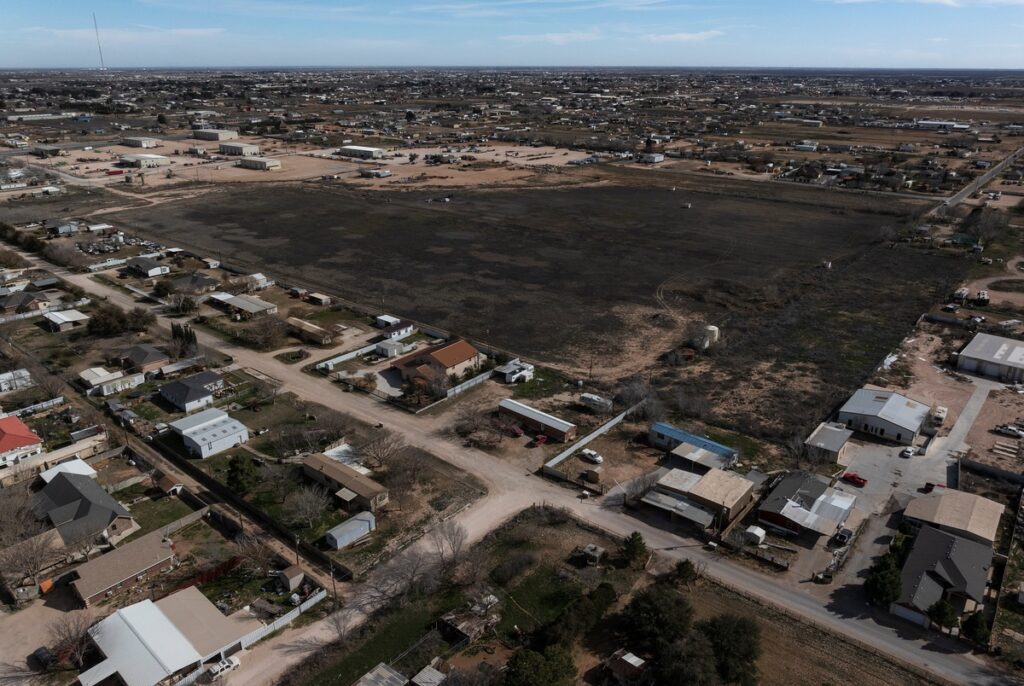
A new operator was assigned to fix the well in Midland County, which is still not compliant with state standards.
How Texas’ cash bail system and under-resourced jails can wreak havoc on women who are poor
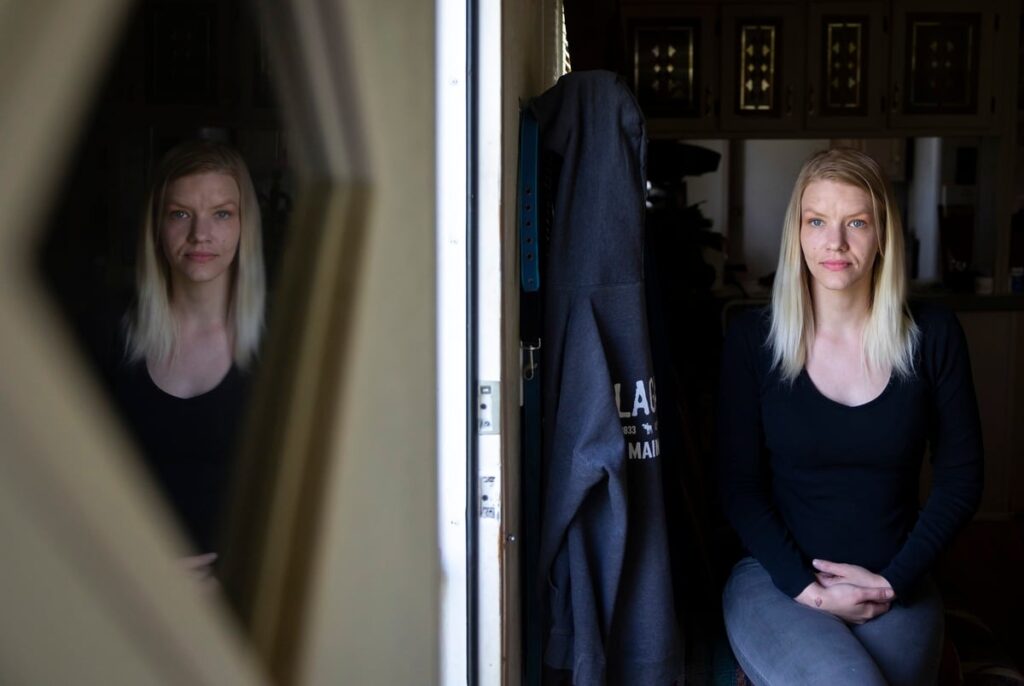
In Texas, money can make a difference in how much time people who are legally presumed innocent sit behind bars awaiting the outcome of criminal cases.
Iran’s persecution of Baha’is branded ‘crime against humanity’

New report says minority group faces a ‘spectrum of abuses’, including arbitrary arrest and property confiscation. Iran’s persecution of its Baha’i minority has been branded “a crime against humanity”. Human Rights Watch alleged in a report released on Monday that Iran’s largest non-Muslim minority has faced a “spectrum of abuses” since the Islamic revolution of 1979. The New York-based NGO suggested that the case fits the remit of the International Criminal Court (ICC). HRW said among the persecution endured by the Baha’is are arbitrary arrest, property confiscation, restrictions on school and job opportunities, and the right to a dignified burial. “The cumulative impact of authorities’ decades-long systematic repression is an intentional and severe deprivation of Baha’is’ fundamental rights and amounts to the crime against humanity of persecution,” the report says. HRW argues that this falls within the scope of the ICC, whose statute defines persecution as the intentional and severe deprivation of fundamental rights contrary to international law on national, religious or ethnic grounds. The findings in the report relied on a number of varied sources, including government policies, court documents, and interviews with Baha’is in and out of Iran. According to HRW, while the intensity of violations against Baha’is “has varied over time”, the persecution of the community has remained constant, “impacting virtually every aspect of Baha’is’ private and public lives”. “In recent years, as Iranian authorities have brutally repressed widespread protests demanding fundamental political, economic, and social change in the country, the authorities have also targeted Baha’is,” the report notes. “Authorities have raided Baha’i homes, arrested dozens of Baha’i citizens and community leaders, and confiscated property owned by Baha’is.” Iran holds “extreme animus against adherents of the Bahai faith” and repression of the minority is enshrined in Iranian law and is official government policy, the report asserts. “Iranian authorities deprive Baha’is of their fundamental rights in every aspect of their lives, not due to their actions, but simply for belonging to a faith group,” said Michael Page, deputy Middle East director at HRW. “It is critically important to increase international pressure on Iran to end this crime against humanity.” This is believed to be the first time a leading international organisation has labelled Iran’s treatment of the Baha’is as a crime against humanity. Unlike other minorities, Baha’is do not have their faith recognised by Iran’s constitution and have no reserved seats in parliament. How many members of the community remain in Iran is not known, but activists believe there could still be several hundred thousand. HRW said as a religious minority unrecognised in Iran’s constitution Baha’is are prohibited from freely holding prayers, even in private. Adblock test (Why?)
Key India opposition leader sent to jail until April 15 in corruption case

Delhi Chief Minister Arvind Kejriwal’s custody extended less than three weeks before the country begins to vote in a seven-phase election. An Indian court has sent Delhi Chief Minister and key opposition leader Arvind Kejriwal to jail until April 15 in a corruption case, less than three weeks before the country begins voting in a seven-phase national election. India’s financial crimes investigating agency, the Enforcement Directorate (ED), had arrested Kejriwal last month in connection with allegations related to the capital city’s liquor policy and he had been remanded to the agency’s custody until April 1. ED lawyers on Monday said Kejriwal had been “non-cooperative” and was “giving evasive replies”, asking the court to remand him to judicial custody for 15 days, news website Live Law reported. Kejriwal’s Aam Aadmi Party (AAP) says he has been “falsely arrested” in a “fabricated” case ahead of the polls, but Prime Minister Narendra Modi’s government and his Bharatiya Janata Party (BJP) deny political interference. Kejriwal blamed Modi for his arrest. “What the prime minister is doing is not good for the country,” he told reporters on his way to the court. All the senior leaders of AAP were already imprisoned in the same corruption case before Kejriwal’s arrest. The action against the high-profile leader led to protests in the capital and the northern state of Punjab, which is also governed by his party, last week. The court’s decision came a day after the INDIA bloc, an alliance of 27 opposition parties including AAP, came together at a rally in New Delhi to protest Kejriwal’s arrest and accused Modi of seeking to rig the election. Besides AAP, several other opposition parties, including regional groups, are also facing action from federal agencies, which they say is “politically motivated”. The country’s main opposition Congress party says it has been hit with large income tax demands which it says is an effort to “cripple it financially” before the election. Modi and the BJP have denied the allegations. During a hearing in the Supreme Court on Monday, India’s Income Tax department said it will not pursue a 35-bn rupee ($420m) payment from the Congress until after the completion of the election in June. The court set July 24 for the next hearing on the tax matter. The seven-phase election is set to be held from April 19 to June 1 and votes to be counted on June 4. Kejriwal’s arrest has also drawn international attention, with the United States and Germany urging a “fair” and “impartial” trial, causing New Delhi to strongly object by asking them to stay away from its “internal” affairs. Adblock test (Why?)
Are Sudan’s civil society activists being targeted by both warring sides?
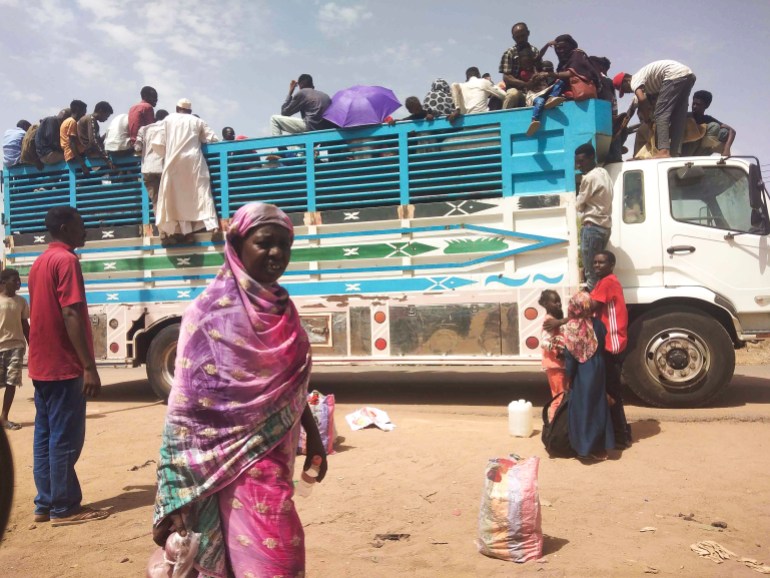
In Sudan’s war, even making food for the poor is dangerous. On March 23, Sudan’s paramilitary Rapid Support Forces (RSF) arrested activists from the Sharq al-Nile neighbourhood in the war-torn capital, Khartoum, while they were supervising soup kitchens feeding thousands of hungry people every day. The recent arrests in Khartoum are only part of a broader strategy of the RSF and the Sudanese Armed Forces (SAF) – who are fighting for power in the country – to clamp down on civil society actors by arresting volunteers, limiting access to aid and obstructing the arrival of relief, according to local volunteers and aid groups. “More arrests could affect the many poor people who depend on the [soup kitchens] to survive,” Musab Mahjoub, a human rights monitor in Sharq al-Nile, told Al Jazeera as a nationwide famine looms. The reason for the March arrests is unknown. “We tried to contact the RSF to ask … but they didn’t respond,” Mahjoub said, adding that the RSF had arrested activists running soup kitchens last month too, although they were all released days later. Local relief groups have called on Western donors to support and protect them from warring parties they believe are profiteering off controlling humanitarian aid. The response from the belligerents, the activists say, has been to arrest, kidnap, rape, and even kill local relief workers to maintain a tight grip over aid operations. With soup kitchens now in the crosshairs, these violations are exacerbating the food crisis in Sudan, where more than 18 million people are coping with acute levels of hunger and five million are suffering “catastrophic” hunger. People board a truck to leave Khartoum on June 19, 2023, before an international conference to raise funds for humanitarian assistance [AP Photo] Settling scores When Sudan’s civil war erupted on April 15 last year, members of the resistance committees – neighbourhood pro-democracy groups that were instrumental in bringing down then-President Omar al-Bashir – set up “emergency response rooms” (ERRs). ERRs started as local initiatives tasked with ferrying vulnerable people out of neighbourhoods where clashes were occurring and administering first aid to the wounded. Over time, the ERRs grew distinct from the resistance committees and began soliciting donations from abroad to feed their hungry communities. But they are now facing similar threats to other civil activists in Sudan. ERR volunteers operating in RSF-controlled areas say that total lawlessness puts them in constant fear of being arbitrarily arrested, beaten or raped. Other ERR activists, who operate in SAF-controlled areas, say they are targeted by military intelligence and security factions tied to the “Kizan” – a common name for members of Sudan’s political Islamic movement that ruled alongside al-Bashir for three decades. Key Kizan figures have come out of the shadows to support the army since the war, with activists saying they are targeting civil society in revenge for it overthrowing them in 2019. Just last month, ERR spokesperson in Khartoum Hajooj Kuka said activists were targeted after the army recaptured neighbourhoods from the RSF in Omdurman, one of the three cities in the national capital region. “Two youths were assassinated by the army … in the communal kitchen of a Sufi sheikh, called Wad Elamin. But now the army is OK with the sheikh and he’s working and opened another kitchen,” Kuka told Al Jazeera. “We also have members who had to flee because one of the militias fighting with the army – called al-Baraa bin Malak – started seeking out people who were part of [pro-democracy] protests.” Al Jazeera contacted SAF spokesman Nabil Abdallah to ask about the military’s purported targeting of local activists, but he did not respond. Obstructing food aid Weeks after war erupted, United Nations agencies and global relief groups that had evacuated Khartoum finally set up field offices in Port Sudan on the Red Sea – SAF’s de facto administrative capital now – which enabled the army to control the humanitarian response, aid groups told Al Jazeera. Since then, the army has severely restricted UN agencies and aid groups from delivering relief to RSF-controlled regions, according to these aid groups. “I’m worried that there is an underlying policy position in general [from the army] to starve out certain parts of the country for direct or indirect reasons and to divert aid elsewhere,” said the country director of one international relief organisation, who requested anonymity out of fear of losing even more access to deliver aid. Sudanese armed popular resistance supporters, who back the army, in Gadarif, eastern Sudan, on March 3, 2024 [AFP] In the last month, no aid has reached RSF-controlled areas from Port Sudan, according to the spokesperson of one UN agency, who requested anonymity for fear of jeopardising current negotiations for aid delivery access. The spokesperson told Al Jazeera that even when the UN obtains “some clearances” to move aid from Port Sudan, they are not given security guarantees from RSF fighters. “The RSF is requesting payment in exchange for security guarantees,” the spokesperson said. “But that’s something that [we] won’t do, and can’t do.” Al Jazeera sent questions to RSF spokesperson Abdulrahman al-Jaali, raising the allegations that the paramilitary was attempting to profiteer from aid convoys, but he did not respond. Humanitarian imperative? A Western aid worker in Sudan, who was not authorised to speak due to the sensitivity of the matter, told Al Jazeera that UN agencies and other global relief groups should be prioritising their “humanitarian imperative” over respecting the sovereignty of Sudan’s de facto military authorities. For months, global relief organisations and UN agencies have lobbied for aid delivery access from two land borders via South Sudan and Chad. But in March, Sudan’s army-aligned Ministry of Foreign Affairs revoked the World Food Programme’s (WFP’s) permission to provide food to West and Central Darfur from the Chadian town of Adre. The ministry cited security reasons, saying the border had been used for arms transfers to the RSF. Three days later, SAF approved WFP food shipments via Tina, Chad, a border area that
Colorado Dems push sweeping gun control laws that are flying under national radar: ‘Public is fed up’

Colorado Democrats are pushing a series of gun control bills that mirror policies in liberal states such as California but have overwhelmingly flown under the radar in the media, Second Amendment experts say. “This should be making national news as it doesn’t just impact Colorado, but the nation as a whole,” Ava Flanell, a firearms instructor in Colorado Springs, told Fox News Digital. “Lawmakers are using these outrageous bills as blueprints, changing the state names and implementing them across the country at a state level because they don’t have the votes to do it nationally. “Last year, it was Washington where they all passed, and the laws are decimating gun stores without a single positive impact on crime. Today, it’s Colorado. These same bills will show up in other states tomorrow if we don’t come together as a whole to fight this.” State Democrats are pushing a gun control blitz this year, including a bill that would ban so-called “assault weapons,” which is typically understood as a semi-automatic rifle, like an AR-15; enact an 11% tax on gun and ammunition sales; and increase standards for concealed handgun training classes. Another bill would prohibit gun owners from carrying in “sensitive” areas, such as parks, banks and college campuses. BIDEN DOJ’S GUN LAW BLUEPRINT WILL IMPACT ABILITY TO DEFEND YOURSELF: GUN RIGHTS GROUPS The bills are under consideration by lawmakers in the state’s General Assembly, where the Democratic Party controls both chambers. The state’s governor, Jared Polis, is also a Democrat, meaning the party has a Democratic trifecta in the Centennial State. The state’s House Judiciary Committee in March advanced a bill that would ban “assault weapons,” sending the bill to the full House, where it’s anticipated to receive support from the Democratic majority. Out of the legislation introduced this year, Flanell took issue with the state’s move to ban types of semi-automatic firearms. “The so-called ‘assault weapons’ ban bill is the most concerning, but they all have tragic consequences for law-abiding citizens. The ‘assault weapons’ bill is incredibly deceptive. They want to ban not only every kind of ‘scary’ gun like ARs and AKs, but also 80-90% of semi-automatic firearms popular today, including handguns and shotguns,” Flanell said. She said the language in the bill is broad and would ban not only the guns, but also firearm features such as “a foregrip, adjustable stock, pistol grip, barrel shroud.” FEDERAL JUDGE RULES IT UNCONSTITUTIONAL TO BAN GUNS FROM POST OFFICES “The bill sponsors claim these features increase lethality, when, in fact, they don’t. They’re merely cosmetic. A muzzle brake, which could be interpreted as a compensator, is another characteristic lawmakers have decided to make a firearm ‘more lethal.’ Muzzle brakes are one of the most popular features to tame recoil and are growing in popularity among female shooters, those who lack upper body strength or have physical limitations.” Antonia Okafor, the founder and president of a nonprofit firearm education group called EMPOWERED, told Fox News Digital Colorado’s moves to ban guns such as AR-15s would leave women especially vulnerable to crime. “After seven years of training women, it is abundantly clear that women prefer an AR-15 for the defense of their home, their family and themselves,” Okafor, a sexual assault survivor, told Fox News Digital. “Despite the anti-gun rhetoric pushed by the media and gun control organizations, the AR-15 allows women to have a larger firearm without having to physically absorb as much recoil as a smaller, handheld firearm. The AR-15 makes it easier for those who have a physical disadvantage to have an upper hand against an attacker and creates a larger perimeter of protection. Simply put, a firearm levels the playing field.” The bill, co-sponsored by Democratic state representatives Elisabeth Epps and Tim Hernandez, both from Denver, defines an “assault weapon” as a “semiautomatic rifle that has the capacity to accept a detachable magazine, or that may be readily modified to accept a detachable magazine, and has one or more of the following characteristics,” including features such as a pistol grip or thumbhole stock and “any feature capable of functioning as a protruding grip that can be held by the non-trigger hand. “The bill defines the term ‘assault weapon’ and prohibits a person from manufacturing, importing, purchasing, selling, offering to sell, or transferring ownership of an assault weapon,” the bill’s summary states. “The bill further prohibits a person from possessing a rapid-fire trigger activator. A person in violation of the prohibitions will be assessed a first-time penalty of $250,000 and $500,000 for each subsequent violation.” Hernandez said the bill becoming law would protect the community from mass shootings. “The vast majority of Americans and over 80% of Democrats support an assault weapons ban and are fed up with weapons of war in our communities,” Hernandez said after the bill passed through committee. “My entire childhood, I was afraid to die in school because adults wouldn’t be bold enough on guns, and those fears only grew when I became a teacher and I saw my students struggle with those same anxieties. We must take action to protect our communities, especially our students, from the death and destruction assault weapons inflict on so many innocent people.” VA GUN CONTROL BILLS ADVANCE IN LEGISLATURE AFTER RECENT SHOOTINGS AT UNIVERSITY, ELEMENTARY CAMPUS Flanell told Fox News Digital Colorado’s “anti-gun lawmakers are undoubtedly out of touch with Americans’ support of the Second Amendment,” citing how the U.S. recently became a constitutional carry majority nation. “Twenty-nine states currently have constitutional carry. While over 50% of the country recognizes the Constitution, states like Colorado are going backwards,” Flanell said. “Our homicide by firearm rate has surpassed the national rate for the first time in over 40 years, while states who have passed constitutional carry are seeing a decrease. JUDGE RULES ILLEGAL IMMIGRANTS HAVE GUN RIGHTS PROTECTED BY 2ND AMENDMENT “This comes after Colorado lawmakers have already enacted gun control measures such as universal and expanded background checks, magazine capacity limits, safe storage, red flag laws, etc.
Maine GOP lawmaker sounds alarm on ‘sanctuary state’ proposal for abortions and sex changes

Maine’s Republican Senate Minority Leader, Trey Stewart, is sounding the alarm on a bill moving through the state’s legislature that would make it a sanctuary state for abortion and gender-transition procedures for minors. Stewart told Fox News Digital in an interview that the bill “would completely usurp parental rights for folks that are in different states across the country, making Maine a sanctuary state.” “So if a minor child was coming to or being brought by a noncustodial parent to Maine for the purpose of abortion or sex-change surgery, there’s nothing that law enforcement can do to stop them,” Stewart said. “And it is a completely radical and crazy idea.” MAINE CONSIDERS BILL THAT WOULD ESTABLISH ‘LEGAL RIGHT’ TO ABORTION, TRANSGENDER SURGICAL PROCEDURES The bill, known as LD 227, is currently being considered in health committee hearings and would establish “a legal right” to abortion and surgical sex changes. It would also block clinicians who carry out the procedures from facing legal penalties. It would also prohibit “interference” with abortion or sex change procedures, legally protect medical workers from facing lawsuits, and could potentially permit concealment of medical records from plaintiffs seeking legal action against a provider. Republicans opposing the bill caution that it might inadvertently allow for the so-called “kidnapping” of adolescents in states that have tougher restrictions to undergo these procedures if they are taken across state borders to Maine. Several Republicans in the legislature are concerned the 21-page bill includes a loophole for kids seeking these procedures to get a ride from someone else other than their parents if they do not approve of the child’s decision. GOP AGS WARN MAINE TO KILL ‘TOTALITARIAN’ BILL MAKING SANCTUARY STATE Stewart emphasized that the bill is problematic because “it is about children,” and not adults who are entitled to making their own decisions. “There’s nothing that law enforcement can do to stop them, which is why you see so many attorneys general across the country concerned about how far this bill goes,” he said. A group of 16 attorneys general, led by Tennessee’s Jonathan Skrmetti, sent a letter this month to Gov. Janet Mills, Attorney General Aaron Frey, and state legislature leadership, calling the bill a “novel effort at state-sanctioned culture war litigation tourism.” LD 227 would reportedly form a liability shield to anyone aiding or offering unlawful services to out-of-state citizens. It would also create a private right of action for damages against law enforcement, prosecutors and other officials in states that are enforcing their respective state laws – even laws whose constitutionality has been confirmed by federal appellate courts. VIRGINIA COUNTY DECLARES TRANSGENDER DAY OF VISIBILITY ON EASTER THIS YEAR “Why should folks care about Maine? Because we’re becoming a liberal bastion for bad ideas that are then going to impact other states,” he said. There are currently at least 23 states that restrict or ban transgender surgical procedures for minors. Proponents of the bill in Maine, including Planned Parenthood, argue that it will provide much needed protection for medical providers in the state. While it’s “extremely unusual” for states to interject themselves into another state’s lawmaking, the AGs said LD 227’s “unique constitutional transgressions” merit their comment. Patience Crozier, a director for the LGBTQ+ Legal Advocates and Defenders (GLAD) organization, suggested that restrictive laws in other states against the procedures are “really horrible attacks on transgender people.” “I think, in Maine, where reproductive and transgender health care is legal, this bill is really important to state the values of Maine and make sure that we’re protecting our providers from those attacks from other states,” Crozier said at a recent hearing about the bill. Fox News’ Brianna Herlihy contributed to this report.