

Senate GOP poised to delay $1.2T funding package amid ‘utterly absurd’ process
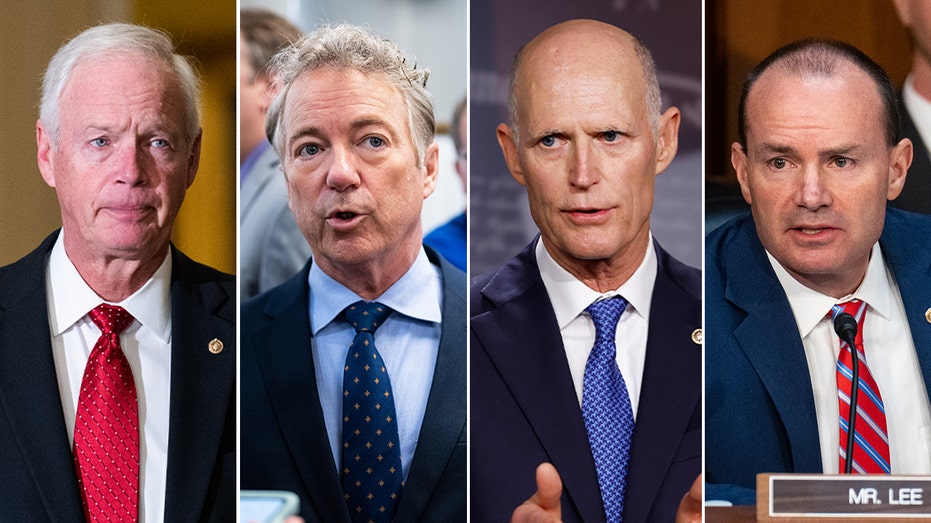
Some Republican senators are poised to make their grievances known when the $1.2 trillion spending package unveiled by congressional leaders passes the House, as is expected, and reaches the upper chamber. “I, of course, plan to push back on the utterly absurd, insulting and lawless suggestion that that is an appropriate legislative process,” Sen. Mike Lee, R-Utah, said after the legislative text for the appropriations measures was released shortly after midnight Thursday morning. A partial government shutdown will occur if the package isn’t passed through both chambers and signed by President Biden by 12:01 a.m. Saturday. CONSERVATIVES FURIOUS AT JOHNSON FOR WAIVING GOP’S 72-HOUR RULE ON $1.2T GOVERNMENT FUNDING BILL Lee slammed the idea of being expected to vote on the bills on Friday. “That’s why I went to the floor and I proposed a [continuing resolution] that would take us to April 12th,” he said, noting that his request was thwarted by Sen. Patty Murray, D-Wash., who objected. According to Lee, “[t]hat is sad.” GOP LEADERS UNLEASH ON JANET YELLEN OVER $110B ENERGY TAX HIKE “This is a crazy way to run the country,” Sen. Rick Scott, R-Fla., said about the amount of time senators had to review the 1,012-page spending package before a partial shutdown. “The process is terrible,” said Sen. Pete Ricketts, R-Neb. “We should have been voting on these bills individually last year, and I have concerns about how much we are spending in these bills.” As for how it will fare among his colleagues on the floor, he predicted several amendments will be offered and that many will have problems with the bills themselves. NANCY MACE UNVEILS BILL TO CRACK DOWN ON ‘PEEPING TOM’ HARASSMENT Sen. Rand Paul, R-Ky., a vocal fiscal hawk, slammed the appropriations measure. “The current level of spending that is represented by this spending bill will add another $1.5 trillion to the debt,” he said. “I think that threatens our country and is a very important debate. We should be debating whether we should continue to have so much deficit.” Prompted on whether he would seek to prolong the process as colleagues are expected to seek expedited passage, Paul said, “We’ll see.” Sen. Mike Braun, R-Ind., said he plans to wait until he sees what the House passes. “I don’t have any real plan other than that,” he said. “I generally vote against [continuing resolutions] and minibuses out of principle.” With the previous slate of funding bills, the expedited voting process was drawn out by frustrated Republican senators. “I’m not going to vote for it,” Sen. Ron Johnson, R-Wis., said of the second slate of funding bills. SENATE STRIKES DOWN BIDEN MOVE ALLOWING POTENTIALLY DISEASED BEEF INTO US But he said it was “hard to say” whether there would be greater resistance to the spending bills this time around. Braun predicted there will similarly be a level of “uncertainty” when the latest package comes to the Senate. Several Republicans have notably reiterated criticisms of the process and content. “But the one certain thing is we always get it done, even if it takes late hours to get it done,” he added. The two-pronged appropriations bill approach was laid out in a continuing resolution passed late last month that designated the deadline for half of the funding measures as March 8 and the other half as March 22. The first slate of spending bills were ultimately passed by both the House and Senate, despite some vocal opposition from Republicans in both chambers. The second group of bills could face additional hurdles because of the package’s late release. The text for the various bills was not unveiled until roughly two days before a partial shutdown would begin, frustrating Republicans who were already unhappy with the numerous continuing resolutions and lack of procedure. Two sources told Fox News Digital that a vote on the package is expected in the House on the earlier side of Friday. Fox News Digital’s Liz Elkind contributed to this report.
Biden’s major semiconductor push is quietly riddled with DEI initiatives
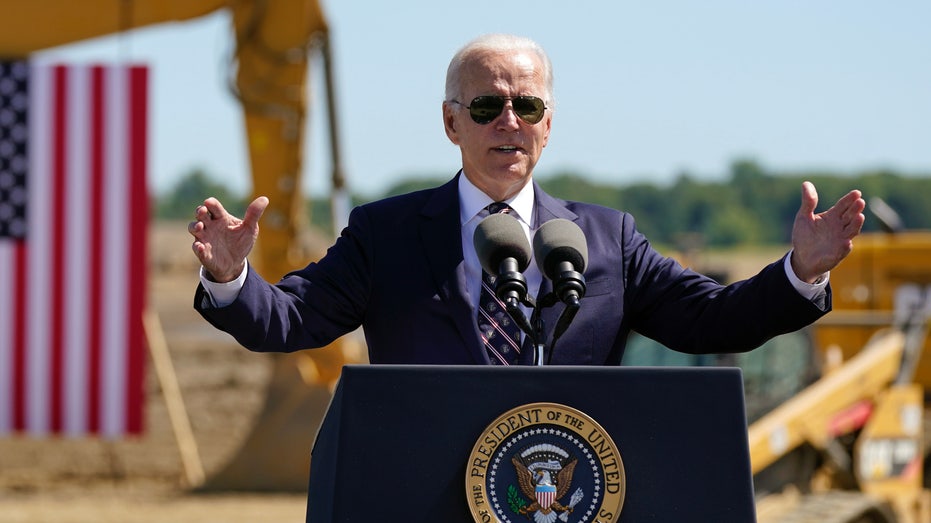
The highly touted bipartisan CHIPS and Science Act, one of the top legislative victories of President Biden’s tenure, is quietly tied to a number of diversity, equity and inclusion (DEI) initiatives that critics argue contravene the law’s objectives. The legislation, which Biden signed in August 2022, is designed to shore up U.S. semiconductor supply chains, earmarking $52.7 billion to establish the CHIPS for America Fund, which supports private-sector investment in domestic research and manufacturing. However, according to a review of federal filings, the funding is contingent on applicants meeting a series of DEI requirements. “If you look through the notice of funding opportunity, which is the Commerce Department’s requirements in order to get funding, there’s literally the word diversity, equity and inclusion and DEI requirements littered throughout,” said Chris Nicholson, head of research at the firm Strive Asset Management. Strive, which was founded by former presidential hopeful Vivek Ramaswamy, has more than $1 billion in assets. “Although this money is announced in some sense, it’s not even going to be given,” said Nicholson, who has researched the semiconductor industry. “That’s the key here. It’s not even going to be given unless [funding recipients], step by step, they meet, and they prove they’re meeting all of these DEI requirements.” VIRGINIA GOV YOUNGKIN VETOES DEM BILL FORCING DIVERSITY DISCLOSURE REQUIREMENTS ON BUSINESSES Months after Biden signed the CHIPS and Science Act into law, the Department of Commerce’s National Institute of Standards and Technology (NIST) issued its first funding opportunity for companies seeking to develop semiconductor projects. NIST Director Laurie Locascio said at the time that funding decisions would be targeted to “maximize the impact of every public dollar spent.” However, the funding opportunity has a lengthy list of DEI requirements that would force semiconductor makers to, for example, “develop an equity strategy” that describes “specific efforts to … promote diversity, equity, inclusion, and accessibility.” MOTHER WHO PULLED KIDS FROM PUBLIC SCHOOL OVER WOKE CURRICULUM SAYS HOME-SCHOOLING PRODUCES ‘AMAZING’ RESULTS This week, Rep. Jim Banks, R-Ind., who chairs the House Anti-Woke Caucus, circulated a memo first obtained by Fox News Digital, highlighting the requirements. In the memo, he blasted the Biden administration for prioritizing DEI, arguing it would discourage foreign investment in the U.S. and had already contributed to project delays. “Attempting to make America stronger and more prosperous, but also more woke, is self-defeating,” Banks told Fox News Digital in a statement. “A woker America is a weaker America.” According to Banks’ memo, applicants for CHIPS for America funding must have a plan to employ ex-convicts, expand employment opportunities for people with “limited English proficiency,” hire more women for construction jobs, and produce a plan for contracting “diverse suppliers” that are women- and minority-owned. In addition, applicants for large grants must guarantee “affordable, accessible, reliable, and high quality” child care for all workers, including all construction workers, allowing CHIPS and Science Act funding to be used for child care center construction. JORDAN SAYS CUTS TO MILITARY SPENDING SHOULD BE ‘ON THE TABLE’ AS MONEY SHOULD NOT GO TO ‘WOKE’ POLICIES And the Department of Commerce’s funding notice mandates applicants submit a climate and environmental justice plan accounting for “climate-related risks that may occur over the lifetime of the facility” while giving preference to applicants whose operations are operated by 100% green energy. “All you have to do is look at the nature of the requirements themselves, and you can see that they’re an enormous roadblock,” Nicholson told Fox News Digital. He noted that the requirement to hire diverse suppliers could be playing a significant role in delaying proposed semiconductor projects nationwide. Nicholson added that another funding provision strongly encouraging applicants to employ union labor is also likely to add considerable costs to manufacturers. Last year, South Korea’s then-minister of trade, industry and energy, Lee Chang-yang, expressed concern about “conditions attached to the act,” specifically noting the Biden administration’s child care requirements, and added that investing in the U.S. semiconductor supply chain is “becoming less appealing,” Korean Economic Daily reported at the time. In a statement to Fox News Digital, the White House blasted Banks’ memo and said the CHIPS and Science Act was doing its job of attracting new investment in America. EXECS PLAN TO INVEST MORE IN AI THIS YEAR BUT IMPLEMENTATION BARRIERS REMAIN “Thanks to President Biden’s Investing in America agenda, companies from across the world are investing billions of dollars building factories across the country and training veterans, people from rural communities, and Americans from all walks of life for the well-paying jobs they’ll provide,” White House spokesperson Robyn Patterson wrote. “Shovels are in ground, facilities are already under construction, and Americans are already feeling the benefits of this President’s economic agenda. It’s sad that Congressman Jim Banks joined the CCP in opposing the landmark CHIPS and Science Act helping to keep manufacturing jobs here at home.” Since Biden signed the legislation, the federal government has announced multiple nonbinding preliminary agreements with semiconductor industry players worth billions of dollars. The most recent such agreement — $8.5 billion in potential direct funding for several projects being developed by California-based tech firm Intel — was announced Wednesday. INTEL EMBARKING ON ‘JOURNEY TO REBUILD’ US CHIP DOMINATION, CEO SAYS But some of the ambitious plans to build semiconductor production in the U.S. have faced significant delays. Last month, Intel abruptly halted construction of its $20 billion Ohio plant, and this week, five suppliers delayed construction of facilities in Arizona aimed at supporting plants being developed by Intel and Taiwan Semiconductor Manufacturing Co. (TSMC). Intel declined to say if the Biden administration’s requirements were delaying any of its plans but said it was “positioned to meet its obligations.” “We are grateful for the support from the Biden Administration, the Department of Commerce, and the entire U.S. government in our shared mission to strengthen the nation’s semiconductor industry,” Intel spokesperson William Moss told Fox News Digital. “Intel is well positioned to meet its obligations and will judiciously adhere to all reporting requirements and
Russian missile strikes target power supply in Ukraine’s Kharkiv

Attacks follow largest raids on Kyiv in weeks, as Zelenskyy pleads with West for air defence systems. Russian missiles have struck Ukraine’s Kharkiv, knocking out part of the city’s power supply a day after Ukrainian President Volodymyr Zelenskyy made an urgent appeal to the West to deliver air defence systems. Kharkiv Mayor Ihor Terekhov said on Friday morning that 15 blasts had been heard, with missiles causing partial blackouts and disabling the city’s water pumps. There were no immediate reports of casualties. Kharkiv lies just 30km (19 miles) from the border with Russia in Ukraine’s northeast and has come under frequent bombardment since Moscow launched its full-scale invasion of the country in February 2022. Ukrainian officials said Russian missiles had also hit Kryvyi Rih, which is Zelenskyy’s hometown, and Vinnytsia, both in central Ukraine, damaging a “critical infrastructure object” in the latter city. Ukraine’s state hydropower company said on Friday that a Russian strike hit Ukraine’s largest dam, the DniproHES in Zaporizhzhia in the south of the country, but that there was no risk of a breach. “There is currently a fire at the station. Emergency services and energy workers are working on the spot, dealing with the consequences of numerous air strikes,” the utility said. The administration of Zaporizhzhia reported eight missile attacks in the city and said some residents had been wounded. The attacks follow closely on the heels of Russia’s strikes on Kyiv the previous day, the largest attack on the Ukrainian capital in weeks after Russian President Vladimir Putin promised retribution for strikes and incursions into Russia’s border regions. In Belgorod, a Russian region along the border with Ukraine, one woman was killed and several others were wounded in a Ukrainian attack on Friday, the regional governor, Vyacheslav Gladkov, said. The Russian Ministry of Defence said it had downed eight rockets fired on Belgorod on Friday from Ukraine with Vampire rocket launchers. Following the assault on Ukraine’s capital, which Russia’s defence ministry said had been delivered with long-range high-precision weapons, Zelenskyy called on the West to deliver air defence systems. Addressing the 27 leaders of the European Union via videolink, as they met in Brussels for a two-day summit, he told them the shortfall in ammunition facing his troops was “humiliating” for Europe. “Europe can provide more – and it is crucial to prove it now,” he said, also calling for additional air defence systems following the massive strike on Kyiv. Today, I addressed the European Council outlining five crucial elements to defend Ukraine and all of Europe from Russian aggression and terror: 1️⃣Air defense2️⃣Artillery ammunition3️⃣Europe’s defense self-sufficiency4️⃣Europe’s political unity5️⃣Frozen Russian assets A thread🧵 pic.twitter.com/SzmeCMeWwf — Volodymyr Zelenskyy / Володимир Зеленський (@ZelenskyyUa) March 21, 2024 EU leaders on Thursday agreed to push ahead with a plan to use the profits from frozen Russian central bank assets to arm outgunned Ukraine, days after Putin tightened his iron grip over his country by winning a new six-year term in presidential elections. The proposal, at the heart of talks between bloc leaders, could unlock some three billion euros ($3.3bn) a year for Ukraine once it is given a final green light. “I’m glad that leaders endorsed our proposal to use the extraordinary revenues from immobilised Russian assets. This will provide funding for military equipment to Ukraine,” European Commission chief Ursula von der Leyen told reporters. The push by the EU to find more funds for Ukraine comes as a $60bn support package from the United States, Ukraine’s other main backer, remains blocked in Congress. Adblock test (Why?)
Australia to contribute $3bn for construction of AUKUS submarines

Defence Minister Richard Marles says allies working ‘at pace’ to ensure the security deal becomes a reality. Australia is set to provide 4.6 billion Australian dollars ($3bn) to British industry to help support the construction of nuclear-powered submarines under the AUKUS deal with the United Kingdom and the United States and ensure its new vessels arrive on time. Senior officials from the UK and Australia, as well as the US ambassador to Australia, visited the naval shipyard where the submarines will be built in the South Australian city of Adelaide on Friday. “The three governments involved here are working at pace to make this happen,” Australian Defence Minister Richard Marles told reporters at the Osborne shipyard where he was accompanied by his British counterpart Grant Shapps, as well as the foreign ministers of the two countries. “This is going to happen and we need it to happen.” Shapps said the submarine programme was expensive, but necessary. “Nuclear-powered submarines are not cheap, but we live in a much more dangerous world where we are seeing a much more assertive region with China, a much more dangerous world all around with what’s happening in the Middle East and Europe,” Shapps told the Australian Broadcasting Corporation. The announcement came a day after Australia and the UK signed a defence pact to better meet security challenges such as China’s increased activity in the South China Sea and the Pacific. Australia, the UK and the US first announced the AUKUS trilateral security alliance in 2021 and revealed further details of how Australia would acquire the nuclear-powered submarines a year ago. The 10-year plan will boost capacity at the UK’s Rolls-Royce factory in Derby where the nuclear reactors for the vessels will be built, while the submarines themselves will be constructed by BAE Systems in Adelaide, the state capital of South Australia. The Virginia-class submarines will be primarily from a British design but will have a US weapons system on board. Australia hopes to have eight nuclear-powered vessels in the water by the 2050s, a mix of the new AUKUS-class subs built at home and in the UK, and Virginia-class vessels purchased from the US. Marles said a “drumbeat” of AUKUS-class submarines would then continue to roll off Australian production lines “every few years” in perpetuity. “There is no country in the world which has obtained the capability to build nuclear-powered submarines, which has then turned that capability off,” he said. “We will see submarines being produced here on an enduring basis.” The nuclear-powered submarines will be quieter and stealthier than Australia’s existing diesel fleet, and capable of deploying over vast distances without surfacing. China has claimed the AUKUS deal risks setting off an arms race in the Asia Pacific. Beijing has stepped up its own military activities in recent years, modernising and expanding its armed forces, including its navy. It has also become more assertive over its territorial claims in the disputed South China Sea where it has built artificial islands and reefs, and deployed its coastguard and maritime militia. The sea is also claimed all or in part by Brunei, Malaysia, the Philippines, Taiwan and Vietnam and Beijing has ignored a 2016 international court ruling that its claim on the sea had no legal basis. Beijing has also become more assertive over its claim to the self-ruled democratic island of Taiwan. On Friday, authorities in Taiwan said they had detected 36 Chinese military aircraft around the island over the previous 24 hours, the highest number in 2024. Adblock test (Why?)
The US war on reproductive rights should concern women everywhere
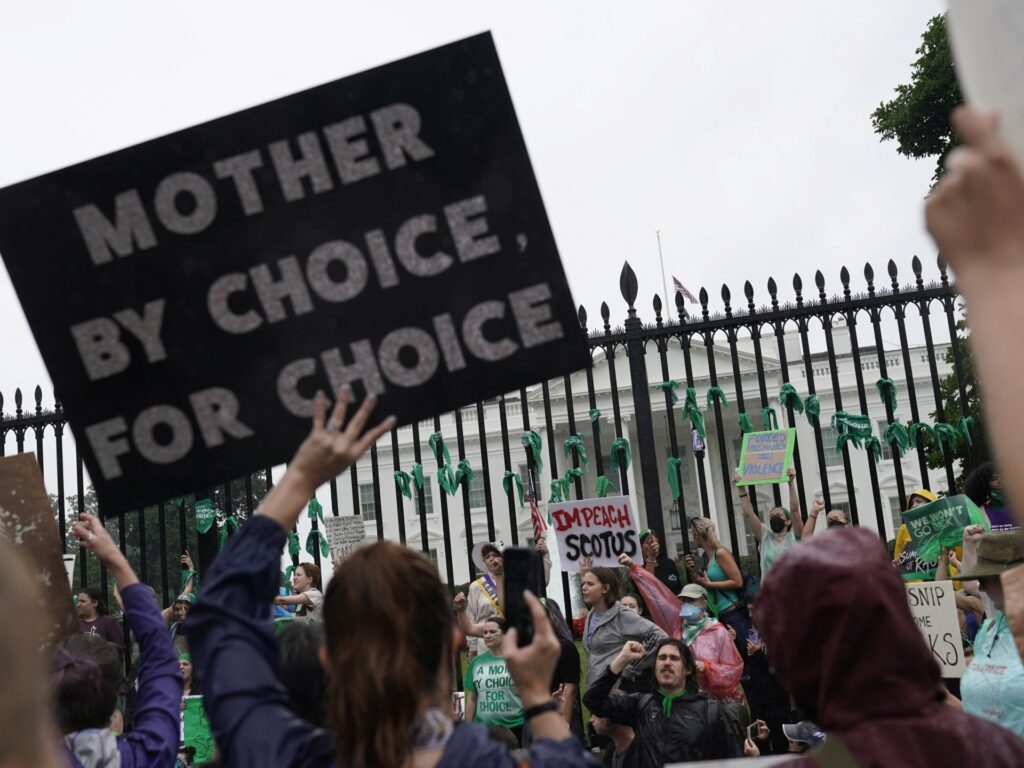
In the United States, women’s reproductive rights, gained through half a century of feminist struggle, are rapidly being replaced with reproductive wrongs. In 2022, the Supreme Court overturned Roe v Wade – the landmark 1973 ruling that gave women the constitutional right to abortion. Since then, in 28 states access to abortion has been restricted depending on gestational age, with bans ranging from six weeks to more than 24 weeks. Abortion is almost completely banned with limited exceptions in another 14 states. In Idaho, for example, abortion is allowed only in cases of rape or incest that have been reported to police, or where necessary to prevent the death of the pregnant woman. A similar ban is in force in Indiana, while in Kentucky and Louisiana, it is banned except in the case of a medical emergency or if the pregnancy is “medically futile”. There are also efforts to establish not only the rights of foetuses but even those of embryos frozen in labs as superior to the rights of women. Just last month, the Alabama Supreme Court ruled that frozen embryos have the same rights as children under state law. The perplexing decision was issued in relation to a “wrongful death” claim made by three couples whose frozen embryos were accidentally destroyed at a fertility clinic. Judges, citing verses from the Bible, ruled that a 1872 state law called “the Wrongful Death of a Minor Act” that allows for parents of deceased children to seek punitive damages where “the death of a minor child is caused by the wrongful act, omission, or negligence of any person” could be applied to “all unborn children, regardless of their location”. The ruling will have overreaching implications on the legality in the state of in vitro fertilisation (IVF), which is problematic in itself as it feeds the surrogacy trade. More importantly, however, this ruling has wide-reaching implications for women’s bodily autonomy. It implies that any man who impregnates a woman – even through rape – could sue that woman under the Wrongful Death of a Minor Act for seeking an abortion at any point in gestation. This blatant war on women’s reproductive rights and bodily anatomy in the US should concern not only Americans but also feminists in Europe, and especially those of us in the UK. This is not only because we should expose and challenge threats to women’s rights wherever they appear, but also because the cultural norms and political perspectives gaining traction in the US will have a significant effect on British politics, and consequently rights and wellbeing of British women and girls. Indeed, in the past few decades, as the anti-abortion movement started to make legal and political gains in the US, we have started to witness a similar trend in the UK. Since 2015, the Pro-life All Party Parliamentary Group (APPG) has been working to dial back abortion rights across the UK. For the past four years, the country’s leading anti-abortion charity, Right To Life UK, has served as the Secretariat of this cross-party group. In 2021, as feminists were campaigning to fully decriminalise abortion, this same charity ran adverts calling on supporters to prevent Parliament from introducing “extreme” laws that would “introduce abortion, for any reason, up to birth”. Since October 2022, Maria Caulfield, the Conservative MP for Lewes, has been serving as the Parliamentary undersecretary of state for women, as well as for mental health and women’s health strategy. Caulfield supports cutting the abortion time limit and voted against buffer zones outside abortion clinics. She is vice chair of the Pro-Life APPG, and has voted against legalising abortion in Northern Ireland. The very fact that such an open and proud opponent of abortion rights was appointed minister for women is horrifying in and of itself, because it communicates the government’s sympathy towards efforts to restrict British women’s rights and freedoms. Caulfield has called the UK’s 1967 Abortion Act, which legalised abortion in Great Britain on certain grounds by registered practitioners, “one of the most liberal abortion laws in the world”. But this is untrue; Britain has some of the most draconian abortion laws in the world, and is still sending women to prison over “illegal” abortions. Indeed, as recently as in June 2023, a woman in Britain was sentenced to 28 months in prison for having an abortion after the legal limit of 24 weeks gestation during a COVID-19 lockdown in 2020. Following an appeal, her sentence was reduced to 14 months and suspended – but the case was a clear warning to all women that this could also happen to them. Feminist campaigners are now demanding an overhaul of the out-of-date laws the 44-year-old mother of three was sentenced under. These laws date back to the1861 Offences Against the Person Act, under which all abortions were criminalised – except those undertaken to save the mother’s life, a caveat introduced in 1929. The 1967 Abortion Act legalised abortions with an authorised provider, but this was a mere amendment to the 1861 act, which was never repealed. Thus, the deliberate termination of a pregnancy remains illegal in the UK unless certain conditions are met. The Abortion Act originally allowed terminations up to 28 weeks, though this was reduced to 24 weeks, the point after which the foetus is accepted as viable outside the womb, in 1991. Today, a woman in the UK may be allowed to abort after 24 weeks only if her life is at risk, or the child she is carrying would be born with a severe disability. Crimes under the Offences Against The Person Act carry a maximum sentence of life in prison. Prosecutions are rare, but according to data obtained under the Freedom of Information Act in England and Wales, 67 women were tried for “procuring an illegal abortion” between 2012 and 2022. While the overturning of Roe v Wade did not directly affect UK abortion law, it certainly emboldened anti-choice campaigners, many of whom have joined forces with their US counterparts
Meet Monica, donor with a single name, who donated Rs 5 lakh to Congress

According to the data, only Monica’s first name appears on this list. No details about Moniac’s full name or whereabouts are available.
Electoral Bonds: EC’s fresh data shows BJP got over Rs 6,900 crore, top 10 donors form 35% of…

The BJP received the maximum funds through these bonds at Rs 6,986.5 crore since they were introduced in 2018.
Weather update: Delhi NCR witnesses clear skies amid rainfall in southern India, check IMD forecast

According to the IMD, the nation’s capital saw its highest maximum temperature on Wednesday-33.6 degrees Celsius-since January
Can Delhi CM Arvind Kejriwal run government from jail? Here’s what law says

The law states that a Chief Minister may only be removed from office or disqualified if he is found guilty in any case. Arvind Kejriwal hasn’t been found guilty yet in his case.
Electoral Bonds: EC releases complete list of donors, parties, unique numbers as revealed by SBI, check details

The BJP remained a major beneficiary of electoral bonds purchased by big corporate groups like Vedanta, Bharti Airtel, Muthoot, Baja Auto, Jindal group, and TVS Motor, according to an analysis of data released by the Election Commission on Thursday.