

Donald Trump defends Kate Middleton over picture editing scandal: ‘Everybody doctors’

Former President Donald Trump shared his opinion on the controversy surrounding a doctored photo of Kate Middleton, saying the Princess of Wales just does what everyone else does. “Well, that shouldn’t be a big deal, because everybody doctors,” Trump said in an interview with British politician Nigel Farage on GB News. During the interview, Trump recalled his experiences when meeting “movie actors” and often wondering if it’s “the same person in the picture.” “It was a very minor doctoring,” said Trump. “I don’t understand why there could be such a howl over that.” PRINCE WILLIAM ‘SIMMERING’ OVER KATE MIDDLETON HEALTH SPECULATION, IS ‘BOUND TO CRACK’: EXPERT The photograph in question surfaced on Mother’s Day after the princess finally broke her silence after weeks of speculation regarding her health. The princess underwent planned abdominal surgery in January. She has seldom been seen in public since. In the doctored photo, the 42-year-old is seen without her wedding ring. Many theorized that the picture was AI-generated or edited. Some speculated that it meant trouble in paradise for the royal couple. KATE MIDDLETON REPORTED SIGHTING TRIGGERS ‘FURTHER SENSE OF MISTRUST’: EXPERT Hours after the photo was released by Kensington Palace, news wire services made a rare move to recall it. The Associated Press issued a “mandatory kill” order to news agencies, saying the picture appeared to have been “manipulated.” Middleton took to social media the next day to explain that she had edited the photo herself. “Like many amateur photographers, I do occasionally experiment with editing. I wanted to express my apologies for any confusion the family photograph was shared yesterday caused,” she wrote. KATE MIDDLETON PHOTO SCANDAL SPIRALS INTO PR MESS FOR ROYAL FAMILY: ‘A SHORTSIGHTED STRATEGY,’ EXPERT SAYS “I hope everyone celebrating had a very happy Mother’s Day,” she added, signing off with “C” for Catherine. “It’s a rough period, that — you know, they’re really going after her,” Trump said in his interview. Kensington Palace previously announced that the Princess of Wales was not expected to return to public duties until sometime after Easter. Fox News Digital’s Caroline Thayer and Elizabeth Stanton contributed to this report.
Kentucky Senate budget bill sets limits on medical cannabis oversight spending

Language put in the main budget bill by the Kentucky Senate would set conditions to unlock funding to oversee the state’s medical cannabis program, which is scheduled to take effect at the start of 2025. The two sentences inserted by senators came up for discussion Monday as House and Senate leaders met in public as part of negotiations to hammer out a final version of the state’s next two-year budget. Lawmakers went line by line through differences in the voluminous spending plans passed by the House and Senate. Republicans have supermajorities in both chambers. The Senate’s version states that no funds for the Office of Medical Cannabis would become available without peer reviewed, published research showing “conclusive evidence as to the efficacy of medical cannabis for the persistent reduction of symptoms of diseases and conditions.” KENTUCKY HOUSE VOTES TO DECREASE EMERGENCY SAFETY MEASURES IN SMALL COAL MINES Republican Sen. Chris McDaniel said the provision reflected the view of senators who want to ensure “we have research coming out that’s appropriate to fund” the medical cannabis office. “While we’re not stripping the funding, we’re waiting on data that tells us that this is effective,” said McDaniel, chairman of the Senate Appropriations and Revenue Committee. “And so we’re just putting a quick pause on that to make sure that we have the appropriate information.” The Senate budget included — with the strings attached — about $10.3 million in state general funds over two years, plus about $4.9 million in other funds, to support the office’s staffing and operations. The House-passed version included the same funding but without the conditions proposed by the Senate. Republican Rep. Jason Nemes, a leading supporter of legalizing medical cannabis in Kentucky, said afterward that he intended to make the case to keep the Senate language out of the final version of the spending plan. Nemes and McDaniel are among the budget conferees. McDaniel said the Senate language shouldn’t be seen as an obstacle for implementing the state’s medical marijuana program. “If the advocates for the program have the evidence that they claim to have, this won’t slow anything down,” he said in an interview after the conference committee meeting. “It would only slow it down if they can’t prove the things that they have claimed in open committee they can prove.” After years of failed attempts, supporters last year got the bill to legalize and regulate medical marijuana through the legislature, and Democratic Gov. Andy Beshear signed it into law. The measure cleared the Senate despite opposition from some of its most influential members, most notably Senate President Robert Stivers and McDaniel. Stivers is a key member of the budget conference committee. The measure allows medical cannabis to be prescribed for a list of conditions, including cancer, multiple sclerosis, chronic pain, epilepsy, chronic nausea and post-traumatic stress disorder. Smokable cannabis products would be prohibited. A person would have to be approved for a card allowing its use. Beshear’s office didn’t offer immediate comment Monday on the proposed Senate conditions. The governor is a leading proponent of legalizing medical cannabis, and last Thursday he announced more progress in setting up the regulatory framework for the program, set to go into effect Jan. 1, 2025.
Georgia lawmakers may be close to deal to limit rise in property tax bills

ATLANTA (AP) — A deal between the Georgia House and Senate on limiting how much assessed home values can rise for tax purposes may be solidifying, although questions remain about the election-year push for property tax relief. The Senate Finance Committee on Monday approved a rewritten bill and state constitutional amendment that would limit increases in a home’s value, as assessed for property tax purposes, to 3% per year, unless a local government or school board used a one-time escape hatch to opt out from the cap. HOUSE REPUBLICANS DEMAND DHS PROVIDE DOCS ON DEPORTATIONS OF BROTHERS OF LAKEN RILEY’S ACCUSED KILLER Voters would have to approve the plan in a November referendum. If approved, the limit would last as long as owners maintain a homestead exemption, typically as long as they own a home. Property taxes are a hot issue for Georgia lawmakers this year, facing complaints that bills have steadily risen along with home values. “Property taxes are the No. 1 thing that we hear about,” said Sen. Jason Esteves, an Atlanta Democrat. And Georgia is far from the only state where lawmakers are reacting to voter discontent over higher levies, with states including Texas, Kansas, Colorado and Pennsylvania seeing the issue take center stage over the past year. Senators had wanted to mandate the cap for every city, county and school district that doesn’t already have a more restrictive cap, while House members had proposed allowing governments to choose to opt in. Under the current proposal, local governments and school districts would have until March 1, 2025 to opt out. But any local government or school district that didn’t exit the plan would be governed by the cap after that. “We wanted mandatory, they wanted opt-in, and we sort of compromised and have an opt-out,” Senate Finance Committee Chairman Chuck Hufstetler, a Rome Republican, told The Associated Press on Tuesday. “So that’s what I believe we’ll have going forward.” Still in question is whether senators will approve a proposal backed by House Speaker Jon Burns to increase the statewide homestead tax exemption. Burns, a Newington Republican, had proposed increasing the amount from $2,000 to $4,000. That could save some homeowners $100 a year on the tax bills by decreasing a home’s taxable value. But it might apply in as few as one-third of Georgia’s 159 counties, testimony has shown. Most counties already have local exemptions that are larger or that exclude the statewide exemption. The Senate Finance Committee on Tuesday amended the House measure to raise the exemption to $10,000 after the House sponsor, Republican Rep. Matt Reeves of Duluth, told senators that House leaders would consider an amount larger than $4,000. “On the amount, I’ve been given word to pass back — do the work of the Senate,” Reeves told senators Tuesday. “We did the work in the House, and whatever number you think is appropriate, we’ll take a close look at it.” Senators have prioritized the valuation cap, but it’s not clear whether Burns will give up on his plan. “I think we’re both very interested in passing some historic tax relief to property owners,” House Ways and Means Committee Chairman Shaw Blackmon, a Bonaire Republican, told the AP. The valuation cap passed unanimously out of committee on Monday, but will need Democratic votes on the House and Senate floor to reach the two-thirds threshold for a constitutional amendment or property tax bill to pass. The measures could also get caught in negotiations between Lt. Gov. Burt Jones and Burns on unrelated topics, such as hospital permitting. A dispute on that subject torpedoed multiple bills last year. Republicans in Georgia have long pushed local governments to roll back tax rates to keep bills level when valuations increase, saying letting bills rise even if tax rates stay level amounts to a backdoor tax increase. At least 39 Georgia counties, 35 cities and 27 school systems have adopted local laws limiting how much assessed values can rise, according to the Association of County Commissions of Georgia. Some of those limits only benefit homeowners 65 or older. Many governments have spent the windfall from rising values to increase employee pay and cover inflation-swollen expenses. A 3% cap could push governments to raise tax rates instead. But most school districts can’t raise tax rates above a certain level. “The ones that are close to the cap, they can go through the steps of opting out,” Esteves said of those districts.
North Carolina county boards dismiss election protests from legislator. Recounts are next

HALIFAX, N.C. (AP) — Elections boards in three northeastern North Carolina counties that make up a House district have dismissed formal protests filed by a 10-term state legislator who is narrowly trailing in his Democratic primary from earlier this month. By Tuesday afternoon, the boards in Warren, Northampton and Halifax counties had disposed of the challenges filed late last week by Rep. Michael Wray, officials said. LONGTIME DEMOCRATIC LAWMAKER CHALLENGES HIS NORTH CAROLINA PRIMARY RESULT Results from the counties that compose the reconfigured 27th House District show Rodney Pierce, a schoolteacher from Halifax County, leading Wray by 35 votes out of nearly 12,000 ballots cast for the March 5 primary. Wray also on Monday asked for a recount of his race in each county, with that work starting Wednesday, Pierce attorney Swain Wood said. Wray’s protests challenged what happened with more than a dozen voters and alleged that a Democratic poll observer at a Halifax County precinct instructed voters to choose Pierce, violating the law. In Halifax County, the board unanimously agreed that Wray in part “failed to contest the manner in which votes were counted or results tabulated sufficient to cast doubt on the results of the election” and failed to offer substantial evidence of a law violation, irregularity or misconduct that could determine the outcome. The protest decisions could be appealed to the State Board of Elections. In a written statement, Wray said he was disappointed with the dismissal but is looking forward to the recount results. Pierce said he’s pleased with how the board handled Wray’s protests and is confident the recount “will confirm the results of the initial count” that favored him. Wray, who joined the House in 2005, has been criticized by outside groups and other Democrats for aligning himself at times with leaders in the Republican-controlled House, where he’s been made one of the senior chairmen of the powerful finance committee. Three other General Assembly incumbents lost their primary elections: Democratic Sen. Mike Woodard of Durham County and Republican Reps. George Cleveland of Onslow County and Kevin Crutchfield of Cabarrus County.
Arizona Dem who almost flipped key US House seat resigns over college sex misconduct claims

An Arizona lawmaker resigned Tuesday, a day after a newspaper reported that he was accused of sexual misconduct in 2015 as a student at George Washington University. ARIZONA DEMOCRAT TO SEEK ABORTION AFTER LEARNING PREGNANCY IS UNVIABLE State Rep. Jevin Hodge, a 30-year-old Democrat, denied the allegations published Monday in the Arizona Republic and initially vowed to continue serving in the Arizona House, but in his resignation statement on Tuesday, he said he accepts responsibility for his actions. “I apologize now, again, to those that may have been caused pain by my actions. As a leader, I must demand more of myself,” Hodge said. “Public service means knowing when to lead — and it also means knowing when to step aside. As I said yesterday, I unequivocally deny the allegations made against me. However, now is not my time to lead.” Hodge was appointed in January to fill a vacancy in District 8 that includes Phoenix, Scottsdale and Tempe. Minority leader Rep. Lupe Contreras said Tuesday that Arizona House Democrats have accepted his resignation.
Sergeant criticized for handling of Lewiston shooter is now running for sheriff

A Maine sergeant who has been criticized by an investigatory panel for his handling of a report about a man who later carried out a mass shooting is running for sheriff, state records show. Sgt. Aaron Skolfield of the Sagadahoc County Sheriff’s Office is running as a Republican against his boss, Sheriff Joel Merry, who is a Democrat. Skolfield was criticized in a report last week from a commission that looked into events preceding the deadliest mass shooting in Maine history, in which Robert Card killed 18 people in a bowling alley and a restaurant in Lewiston. Five weeks before the Oct. 25 shooting, Skolfield responded to a call that Card was suffering from a mental health crisis. MAINE SHERIFF HAD PROBABLE CAUSE TO DETAIN MAINE GUNMAN BEFORE MASS SHOOTING, INDEPENDENT REPORT CLAIMS A commission convened by the governor and attorney general to review the facts of the shooting found that Skolfield should have realized he had probable cause to start the state’s “yellow flag” process, which can be used to remove guns from a potentially dangerous person. Neither Skolfield nor Merry responded to calls seeking comment about the commission’s report last week, and neither responded to calls Tuesday about the election. Both men defended the sheriff’s office’s actions during a January hearing in front of the commission. During the hearing, Skolfield described himself as “just a simple street cop” who responded to Card’s home in September. He said that Card “wouldn’t come out, wouldn’t talk, wouldn’t communicate.” However, the Lewiston commission’s report stated that Skolfield “made only limited attempts to accomplish a ‘face-to-face’ meeting with Mr. Card.” The report also stated that Skolfield “failed to consult the agency’s records concerning a previous complaint about Mr. Card” and “failed to follow up on leads to determine how to contact Mr. Card,” among other criticisms. The filing with the state about Skolfield’s bid for county sheriff contains only limited information. It states that he registered on Feb. 12, a couple of weeks after testifying before the Lewiston commission. It also says he has appointed a treasurer and is using traditional campaign financing. The election is this year. Skolfield’s testimony in January came during one of several public sessions held by the commission. He and other law enforcement officials expressed frustration with implementing the state’s yellow flag law during the sessions. The commission is expected to provide a full report of its findings this summer. Card, an Army reservist, was found dead by suicide after a two-day search following the shootings. He had been well known to law enforcement before the killings, and the extent to which the shootings could have been prevented has been an intense source of scrutiny in the months since. In May, relatives warned police that Card had grown paranoid, and they expressed concern about his access to guns. Card was hospitalized in a psychiatric unit for two weeks in July after shoving a fellow reservist and locking himself in a motel room. In August, the Army barred Card from handling weapons while on duty and declared him nondeployable. In September, a fellow reservist texted an Army supervisor about his growing concerns about Card, saying, “I believe he’s going to snap and do a mass shooting.”
US State Department proposes $260M sale of portable anti-tank guided-missile systems to Morocco

The U.S. State Department is proposing a deal with the government of Morocco that includes the sale of 612 Javelin missiles and other related equipment for an estimated cost of $260 million to improve security for the non-NATO ally in North Africa. Congress was notified of the possible sale Tuesday, when the Defense Security Cooperation Agency delivered the required certification, according to a press release. The Moroccan government requested to purchase 612 Javelin FGM-148F missiles and 200 Javelin Lightweight Command Launch Units (LWCLUs). The systems can be carried by a single soldier and are used to fire guided, anti-tank missiles. SPANISH GOVERNMENT UNLAWFULLY SENT CHILD MIGRANTS BACK TO MOROCCO, TOP COURT RULES Morocco is located on the southern side of the Strait of Gibraltar. The country is also a non-NATO ally, which the Defense Security Cooperation Agency says is an important force when it comes to North Africa’s economic progress and political stability. The sale is intended to help with Morocco’s ability to detect threats and control its borders to help maintain regional stability and security. MOROCCAN NAVY INTERCEPTS 141 MIGRANTS ATTEMPTING TO REACH SPAIN BY CROSSING ATLANTIC OCEAN Along with Javelin missiles and launchers, the sale includes missile simulation rounds; Javelin support equipment; measuring tools; books and publications; power plus distribution equipment; component parts and support equipment; life cycle support and tech support; gunner training; ammunition officer’s training; system integration and checkout; maintenance training; tactical aviation and ground munitions; and other related elements pertaining to logistics and program support. The release noted that the sale of the equipment does not throw the military balance in the region off balance, adding there are no known offset agreements in regard to the sale. In April 2023, the State Department proposed a deal with the Moroccan government that included the sale of High Mobility Artillery Rocket Systems (HIMARS) and other related equipment for about $542 million.
Judge dismisses suit against Delaware court officials filed by blind man who was wrongfully evicted

DOVER, Del. (AP) — A federal judge on Tuesday dismissed a lawsuit against Delaware court officials and constables filed by a legally blind man who was wrongfully evicted from a Wilmington apartment along with two of his daughters. Chief U.S. District Judge Colm Connolly ruled that William Murphy’s claim that officials violated the Americans with Disabilities Act in ousting him must be dismissed because he failed to provide any facts to show he was evicted because of his disability. APPEALS COURT WEIGHS DELAWARE LAWS BANNING CERTAIN SEMIAUTOMATIC FIREARMS, LARGE-CAPACITY MAGAZINES Connolly also dismissed claims that constables who evicted Murphy in 2021 pursuant to a writ from Justice of the Peace Court violated his constitutional and civil rights and those of his daughters. As officers of the court acting upon a facially valid court order, the constables are entitled to “quasi-judicial immunity” from liability, he said. Connolly also tossed claims against the JP Court system, noting that, as an arm of the state, it cannot be sued under the Civil Right Act. “Plaintiffs state in conclusory fashion that defendants have an “evict first, ask questions later policy,” but they do not allege any facts to support this assertion,” Connolly wrote. “On the contrary, the events alleged to have led to and followed the Murphys’ eviction undermine plaintiffs’ claim that such a policy exists,” he noted. “The allegations in the amended complaint make clear that what happened to the Murphys was an aberration brought about by a private actor’s abuse of the law.” Connolly was referring to the actions of landlord Kenneth Stanford, who had obtained a writ of possession against a woman who lived in the apartment before the Murphys moved in. According to court records, Murphy moved into the apartment in November 2020, a month before a court hearing was held in Stanford’s legal action against the previous tenant. Stanford claimed the previous tenant owed him rent and water bills from April 2020 to mid-December 2020, and he testified that he believed the apartment was still under her control. At the same time, however, Stanford filed a court action against the Murphys alleging that they had failed to pay December’s rent. Murphy was evicted in February 2021 pursuant to a writ issued against the previous tenant, even though he showed constables a copy of his lease. They told him he nevertheless needed to vacate the premises and suggested that he file a complaint in JP Court for wrongful eviction. During an emergency hearing one week after the eviction, a deputy magistrate wondered how Stanford could be seeking December rent from both Murphy and the previous tenant, even as he denied that Murphy was his tenant. The magistrate concluded that it was “very clear” that Stanford had misrepresented himself to the court and possibly perjured himself. According to court records, Stanford refused to answer questions posed by the magistrate and said he wanted to consult an attorney. Given that Stanford’s case against the Murphys had not been scheduled, much less resolved, in February 20201, the magistrate determined that Murphy and his daughters has been unlawfully ousted. He also said it seemed that Stanford had “weaponized” a writ against the previous tenant in order to get out of his lease with Murphy. Murphy settled claims against Stanford in the federal lawsuit in 2021. Thomas Neuberger, an attorney representing Murphy, said he plans to appeal Connolly’s ruling.
Governor who clashed with Obama over attempted illegal immigration crackdown reacts to SCOTUS’ Texas ruling

FIRST ON FOX: A former Republican governor widely known for her clashes with the Obama administration while attempting to crack down on illegal immigration in her state reacted to the Supreme Court’s ruling on Tuesday that Texas can enforce a law that allows local police to arrest migrants suspected of crossing the border illegally. Speaking with Fox News Digital immediately following the ruling, former Arizona Gov. Jan Brewer celebrated what she said was the court “finally realizing” it’s OK with the aspects of a law similar to one her state implemented in 2010 that was later partially struck down after drawing international attention for its tough approach to illegal immigration. “I’m happy to hear that they finally realized they’re OK with S.B. 1070. We felt that at the time when it was passed, and we had a lot of legal scholars that agreed,” Brewer told Fox, referencing the Arizona law. “And now we’ve got some principled Supreme Court justices that made the right decision. And I think that we all understand clearly that we have a right to arrest illegal people in our state. They’re breaking the law.” SCOTUS OKAYS LAW LETTING TEXAS POLICE ARREST MIGRANTS SUSPECTED OF ILLEGALLY CROSSING BORDER The Supreme Court struck down parts of S.B. 1070 in 2012, including a provision that would have allowed police to make arrests for violations of federal immigration law. S.B. 4 — Texas’ version of the Arizona bill — was similarly struck down by a federal judge in February, but was stayed by the 5th Circuit Court of Appeals before reaching the Supreme Court. The court did not explain its reasoning for ending the 5th Circuit Court’s stay, but the ruling appeared to be focused less on the merits of the case rather than the stay itself. In a concurring opinion, Justices Amy Coney Barrett and Brett Kavanaugh expressed concern about the moves by the appeals court — and suggested it could rule differently on the law’s merits. When asked about the potential permanence of the law, given a possible future Supreme Court ruling, and whether that might encourage other states to pass similar laws, Brewer predicted that states beyond just those at the border would be inclined to because of the spread of migrants across the country. TOP DEMOCRAT IN TIGHT SENATE RACE BACKS CITIZENSHIP, VOTING RIGHTS FOR MILLIONS OF ILLEGAL IMMIGRANTS “The problem is so vast now that it’s all over. I mean, it’s everywhere. In the Midwest — it’s everywhere. So I think, yeah, they’ll strongly look into it because they want to protect their communities, and their cities, and their counties, and their people,” Brewer said. “It just makes sense. Just because you’re illegal, doesn’t make it OK. I don’t know why it’s so difficult for people to understand. I mean, they are breaking the law. Why do we let them get away with that?” she added. Brewer predicted the ongoing border crisis would encourage people across the country to get out and vote, considering voters have consistently said the issue remains one of their top concerns. Fox News’ Adam Shaw, Bradford Betz, Brianna Herlihy and the Associated Press contributed to this report.
Ohio GOP candidate accidentally concedes race: ‘Please disregard’
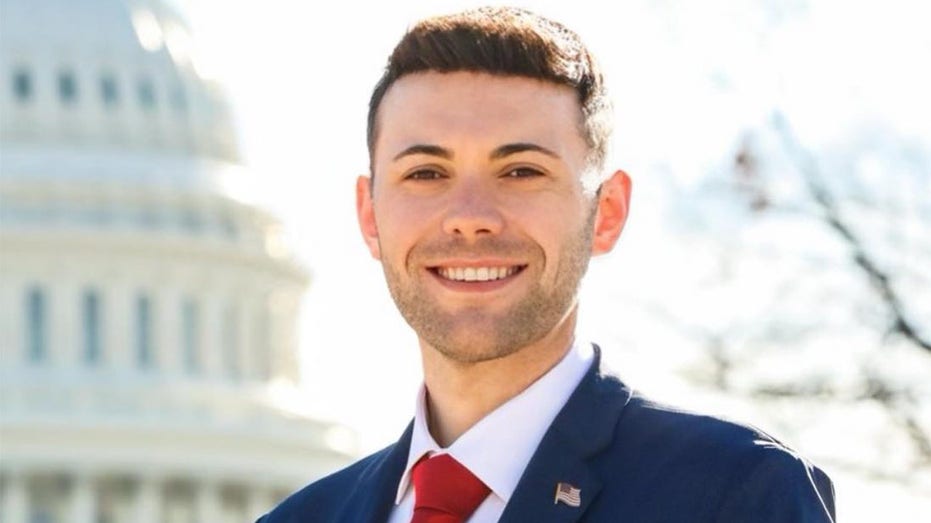
The campaign for Derek Myers, a Republican candidate competing in Ohio’s 2nd Congressional District, suffered a series of embarrassing mistakes, including accidentally sending out a concession email hours before the close of Tuesday’s primary. An email from Myers’ campaign office sent out to media outlets Tuesday, around 3 p.m. ET, lamented that “tonight did not go as we had hoped.” Myers said “from a private watch party in Chillicothe” that he was looking forward to uniting behind the “Congressman-Elect” to get President Trump re-elected to the White House and evict President Biden. Polls in Ohio close at 7:30 p.m. ET. “Listen, I’m in my thirties and as I’ve told everyone on this campaign trial, ‘if I don’t win this race, that’s okay!’ I’ve got thirty-or-fifty more years left – and that’s if I live a good live,” he said. “I’m looking forward to staying in the arena of Ohio politics and working with all Republicans to make Ohio great again!” CENTRIST GROUP NO LABELS SETS UP PANEL TO SELECT THIRD-PARTY PRESIDENTIAL TICKET Less than 10 minutes later, Myers’ campaign office sent out a follow-up email, admitting that the previous one sent had been “in error, due to a technical issue.” “Please disregard the email. Thank you,” the second email read. Roughly 30 minutes later, Myers sent out yet another email explaining in more detail what happened. The email was sent with the self-effacing headline: “So you wanna know what happened, eh?” Myers explained that his campaign team had prepared two emails for the evening: “one declaring victory and one conceding the race.” “The concession email was sent in error as it was being loaded into the media distribution portal, as a draft, in the event of a loss,” Myers said, adding that someone accidentally hit the “send now” button instead of “draft.” But that was not all – he went on to explain that the winning email was also drafted, a common practice for communications teams, so they can be prepared, “especially on such an impotent night.” Not surprisingly, his campaign clarified to Fox News Digital that he meant to say “important.” “It’s simply good strategy. Whatever the results return this evening, I’ll be thankful for this journey. And yes, the media will be getting a release sometime after the results roll in, declaring a victory or concession. Thank you,” Myers concluded. On Twitter, Myers later appeared to poke fun at the apparent typo. “If this whole politics thing doesn’t work out, maybe I can be hired to be a spokesman like Bob Dole?” Myers tweeted, referring to the former U.S. Senator from Kansas and presidential candidate. The tweet included a 1998 commercial for Viagra, featuring Dole. Myers clarified that he had “no issue with that department… yet” and included the hashtags: #InMyThirties, #Impotent, #Spellcheck, and #AlwaysSpellCheck. Myers is competing in a crowded 11-person GOP primary for Ohio’s 2nd Congressional district following Rep. Brad Wenstrup’s decision to retire. The winner of Ohio’s 2nd Congressional District GOP primary is heavily favored to win the general election in November.