

CAA row: SC asks Centre to respond within 3 weeks, next hearing on April 9

Solicitor General Tushar Mehta, appearing for the Centre, told the bench that he needed four weeks to file a reply to the 20 applications.
They counted primary ballots by hand. Now a Texas county Republican party says they found errors.

After declaring a successful hand count of ballots, Gillespie County Republicans had to fix a series of errors in the results reported from almost every precinct.
Varanasi Lok Sabha Constituency: Things to know

The Lok Sabha 2024 elections are planned to start on April 14, and the results will be declared on June 4. Uttar Pradesh, with 80 Lok Sabha constituencies, will witness this year’s polls in seven phases.
Trump says ‘disgusting’ New York AG committed ‘FRAUD’ by allegedly convincing judge to undervalue Mar-a-Lago
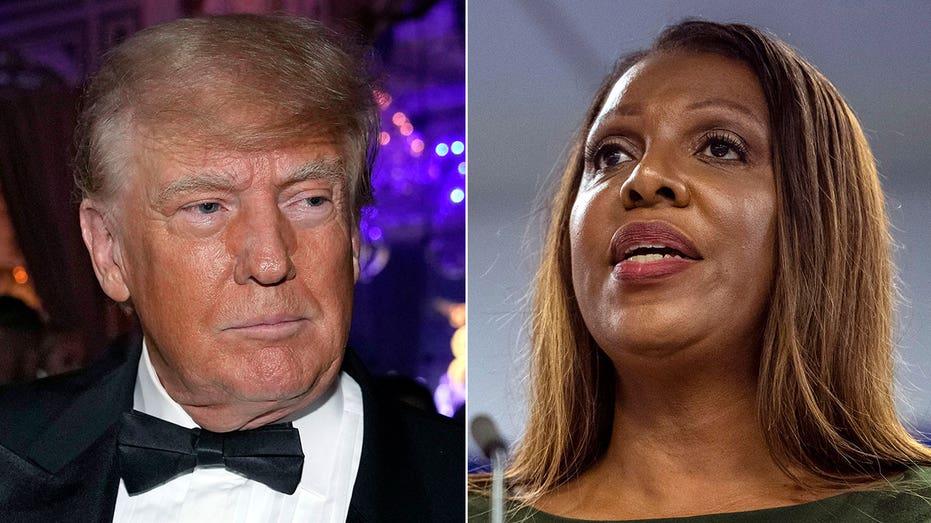
Former President Trump claimed Monday night that New York Attorney General Letitia James engaged in fraud by allegedly convincing a judge to undervalue his Mar-a-Lago estate in Florida amid his civil fraud case in the Empire State. In a post on his social media platform Truth Social, Trump called James a “failed and disgusting” attorney general who significantly undervalued his Florida property. “The only FRAUD in the Peekaboo James case, our failed and disgusting New York State Attorney General, was her convincing ‘Judge’ Arthur Engoron to put a value on Mar-a-Lago, in Palm Beach, Florida, of just $18,000,000, when it is worth 50 to 100 times that amount,” Trump, the presumptive Republican nominee for president, wrote on the platform. “This was fraudulently and illegally done, working closely together in a corrupt Communist system, to set their NARRATIVE after learning that their Values and Facts were completely wrong,” he continued. “Businesses will flee the State as Migrant Crime and Violence continues to flourish. I paid $300,000,000 in Taxes, and this is what I get. WITCH HUNT!!!” LEGAL EXPERTS WEIGH IN ON TRUMP’S OPTIONS AFTER FAILURE TO SECURE $464M APPEAL BOND: ‘UNCHARTERED TERRITORY’ This comes after New York Judge Arthur Engoron handed down his decision last month after a months-long trial beginning in October in which the former president was accused of inflating his assets and committing fraud in financial documents. Engoron ruled that Trump and other defendants were liable for “persistent and repeated fraud,” “falsifying business records,” “issuing false financial statements,” “conspiracy to falsify false financial statements,” “insurance fraud” and “conspiracy to commit insurance fraud.” Later in February, a New York Appeals Court judge denied Trump’s request to delay payment of the $464 million owed as a result of the lawsuit brought by James, but said he would temporarily allow the former president and his sons to continue running their business during the appeals process. A New York Appeals Court judge previously ruled that Trump must post a bond for the full amount of the judgment and that an independent director of compliance will be appointed. On Monday, Trump’s lawyers wrote in a court filing that obtaining the $464 million appeal was a “practical impossibility under the circumstances presented.” TRUMP TRIALS: HERE’S WHERE EACH CASE AGAINST FORMER PRESIDENT AND PRESUMPTIVE GOP NOMINEE STANDS Trump’s attorney Alina Habba told the X22 report Monday she was “confident” her client’s debt would be dismissed. “Despite the fact that witnesses frankly had said that they were great clients, we all made money, they did nothing wrong, we got slammed with this egregious number, and I’m confident we’ll overturn it,” Habba said. In a Truth Social post earlier on Monday, Trump said he “built a Magnificent Business, which helped rebuild New York City and State, with Amazing, Unparalleled, Historic Properties and tons of CASH, which Crooked Joe Biden and his Maniac Persecutors are trying to wrongfully and illegally take from me.” “A bond of the size set by the Democrat Club-controlled Judge, in Corrupt, Racist Letitia James’ unlawful Witch Hunt, is unConstitutional, un-American, unprecedented, and practically impossible for ANY Company, including one as successful as mine,” Trump wrote. “The Bonding Companies have never heard of such a bond, of this size, before, nor do they have the ability to post such a bond, even if they wanted to.” Fox News’ Bradford Betz contributed to this report.
Can India’s Rahul Gandhi defeat Narendra Modi with ‘unity marches’?

Mumbai, India – Loud chants and songs on justice echoed around Shivaji Park in India’s financial capital, Mumbai, as thousands of people gathered at the iconic venue that had played frequent host to rallies by freedom fighters when the country fought for independence from the British decades ago. This time, the slogans called for a different “freedom” – from Prime Minister Narendra Modi’s Bharatiya Janata Party government. On stage, Bollywood singers Vishal and Rekha Bhardwaj sang classic songs from popular films, new and old. The park was decked in flags and life-sized cardboard cutouts of politicians from the opposition Indian National Congress (INC) party. Police officers were everywhere, but the atmosphere was festive – almost resembling that of a rock concert. The man at the centre of the event: Rahul Gandhi, scion of the Nehru-Gandhi family that ruled India for most of its first 50 years after independence. On Sunday evening, Gandhi and a bevy of leaders from other opposition parties launched the election campaign of their Indian National Developmental Inclusive Alliance (INDIA) from Shivaji Park, a day after the Election Commission of India announced dates for the world’s largest vote. Nearly a billion Indians will elect their next government in a seven-phase election that starts on April 19 and ends with the declaration of results on June 4. The INDIA alliance hopes to challenge Modi’s BJP, which is aiming to win a third straight term in office, riding on the back of the prime minister’s personal popularity, even as the Congress and other critics have accused it of dividing the nation on religious lines and favouring select industrialists. At the heart of the opposition alliance’s efforts are long marches undertaken by Gandhi across the length and breadth of the country, to galvanise support against Modi. His Bharat Jodo Nyay Yatra (Uniting India for Justice March) had culminated in Mumbai on Saturday. The marches and Gandhi’s message of unity and justice resonated with supporters at Shivaji Park on Sunday. Ganggu Bai, a 40-year-old cook who lives in Mumbai’s Dharavi – one of the world’s largest slum clusters made famous globally by the Oscar-winning Slumdog Millionaire – was among those at the Sunday rally. “I am here to support the future of our country. and women’s rights,” she said. “This event gives me hope and feels like it is actually for the people of India,” she added. But for Gandhi, the Congress and the INDIA alliance to turn that sentiment into a national wave against the ruling government, they’ll need the votes of more than their core supporters: In the last national elections in 2019, the Congress won just 52 seats in the Lok Sabha or lower house of parliament, while the BJP won an overwhelming majority with 303 seats. Life-size cardboard posters of Rahul Gandhi are seen at a rally to mark the end of the Bharat Jodo Nyay Yatra at Shivaji Park in Mumbai, India [Priyanka Shankar/Al Jazeera] Political message Addressing the rally, Gandhi insisted that the INDIA alliance’s fight was not against a political party [referring to the BJP] or the prime minister – but for a vision of India. “There is a word ‘Shakti’ in Hinduism. We are fighting against a Shakti. The question is, what is that Shakti. The soul of the king is in the EVM (Electronic Voting Machine) and every institution of the country, including the Enforcement Directorate (ED), Central Bureau of Investigation (CBI) and the Income Tax department,” he said, adding that these institutions are the only reason the BJP is in power. The allegation: The “king” is Modi, EVMs can be hacked, and the government is using law enforcement agencies to coerce opposition members and business leaders into submission. #WATCH | Mumbai, Maharashtra: At the conclusion ceremony of the Bharat Jodo Nyay Yatra, Congress leader Rahul Gandhi says, “There is a word ‘Shakti’ in Hinduism. We are fighting against a Shakti. The question is, what is that Shakti. The soul of the King is in the EVM. This… pic.twitter.com/lL9h9W0sRf — ANI (@ANI) March 17, 2024 Several key politicians from the INDIA alliance, like Congress chief Mallikarjun Kharge, Tamil Nadu state Chief Minister MK Stalin and former Maharashtra state Chief Minister Uddhav Thackeray, the former chief minister of Maharashtra, also attended the rally. “Ab ki baar, BJP tadipaar [This time, the BJP will be exiled],” Thackeray said and added that those who tried to divide them [the INDIA alliance] would be defeated. “Wherever Rahul goes, it looks like a festival,” Stalin told the cheering crowds. Then, he alluded to the litmus test that awaits the alliance. “The real victory of Rahul Gandhi’s Bharat Jodo Nyay Yatra stands in defeating BJP and capturing Delhi,” he said. Are Gandhi’s marches working? Gandhi’s rally at Shivaji Park came a day after he concluded his Bharat Jodo Nyay Yatra – a 6,600km (4,100-mile) march from India’s east to west, with detours in each state he passed through. His promise: “panch nyay” or “five pillars of justice” for women, youth, farmers, labourers and justice in terms of equity. During the walk, he announced a one lakh rupee ($1,200) annual payout to every woman below the poverty line, and a 50 percent reservation in in all new recruitments of central government jobs for poor families. He began walking on January 15 this year in the conflict-torn northeast Indian state of Manipur, promising to bring peace to the region where tensions between the state’s mainly Hindu Meitei majority and the predominantly Christian Kuki-Zo have led to violence killing hundreds and displacing more than 60,000 people. Traversing west from Manipur, Gandhi ended his walk in Mumbai on March 16. Previously, he also walked from South India all the way to Kashmir in the north, between September 2022 and January 2023, in a march called Bharat Jodo Yatra (Unite India walk), which focused on fighting against poverty, unemployment and growing polarisation between Hindus and Muslims in India. Those messages are what inspired Sudha Prakash* to walk with Gandhi in his first Bharat
Harsh Mongolian winter leaves 4.7m animals dead; Red Cross issues appeal

UN says Mongolian herders are experiencing extreme ‘dzud’ cold conditions more often, with little time to recover before the next one. Mongolian herders have endured months of extreme cold, known as the “dzud”, that have already claimed the lives of about 4.7 million livestock animals, according to Mongolia’s Emergency Operations Centre (EOC), prompting an emergency appeal for assistance from the Red Cross. At least 2,250 herder families have lost more 70 percent of their livestock, as this year’s dzud blankets grazing lands in deep snow and ice, according to the Red Cross, and there are predictions many more animals will be unable to survive the next few weeks. About 30 percent of the country’s 3.3 million people are nomadic herders, living in dwellings known as gers or yurts on the country’s vast open steppes. Olga Dzhumaeva, head of the East Asia delegation of the International Federation of the Red Cross (IFRC), said herders were facing “the loss of their precious livestock” and “immense pressures on people’s mental and physical health. “The ongoing livestock deaths, diminishing resources and deteriorating conditions of hundreds of thousands of people in Mongolia this winter is a stark reminder of the urgent need for assistance,” she said in a statement on Tuesday. Heavy snowfall has buried more than 1,000 herder households’ gers – round tent-like dwellings [Courtesy of Mongolian Red Cross Society] Mongolians are used to enduring cold conditions, especially during the winter months from December to March, but extreme cold is known as dzud – the Mongolian word for disaster. During dzuds, temperatures in some parts of the country fall as low as minus 50 degrees Celsius (minus 58 Fahrenheit). This year’s dzud has seen numerous blizzards, bringing heavy snow. According to the United Nations, dzuds are already becoming more common with climate change. This is the sixth dzud Mongolia has experienced in the past decade, with herders still struggling to recover after last year’s harsh winter which claimed the lives of 4.4 million livestock animals. The crisis disproportionately affects Mongolian families with smaller herds, the Red Cross said [Courtesy of Mongolian Red Cross Society] A drought last summer also meant that many animals were not able to build up enough fatty stores ahead of the colder months. Changing conditions Climate change has disrupted Mongolia’s four season cycle, leading to a rise “in recurrent summer droughts and subsequent harsh winters” since 2015, Tapan Mishra, the UN resident coordinator in Mongolia, said last month. The loss of grazing options for livestock has meant herders already used up their hay and fodder stocks months earlier than usual, the Red Cross says. According to official data, Mongolia had some 64.7 million livestock animals at the end of 2023. Mongolia is known for its unique breeds of sheep, cattle, horses, goats, dromedaries, Bactrian camels and yaks, according to the UN’s Food and Agriculture Organization (FAO). These include the Bayad sheep, which can endure even Mongolia’s coldest regions after centuries of selective breeding, and provide families with milk, wool and meat. A herder walks with a horse through the snow [Courtesy of Mongolian Red Cross Society] The loss of so many livestock has placed strains on herder communities, who were “prepared for harsh conditions, but not to such an extent”, according to the Red Cross. Bolormaa Nordov, secretary-general of the Mongolian Red Cross Society (MRCS), said she hoped a new Red Cross appeal would help to “minimise the impact of the Dzud emergency and support households with longer-term solutions for their lives and livelihoods”. IFRC’s Dzhumaeva said Mongolians were surviving, but were in urgent need of help. “Yet we see the unwavering hope and resilience of so many families as they battle winter’s wrath with incredible strength,” said Dzhumaeva. Adblock test (Why?)
Israel’s war on Gaza: List of key events, day 165

Twenty Palestinians were killed in the early hours of Tuesday in Rafah, while UN warns Gaza could be hit by famine between mid-March and May. Here’s how things stand on Tuesday, March 19, 2024: Fighting and humanitarian crisis Twenty Palestinians were killed in the early hours of Tuesday in Israeli air strikes on Rafah and central parts of the Gaza Strip, according to Palestinian health officials. At least six people were killed in an Israeli attack on a house in the Nuseirat refugee camp. Israeli forces shelled a house in Jabalia in northern Gaza on Monday, killing at least eight Palestinians, including children, the Palestinian news agency Wafa said. Antonio Guterres, the UN secretary-general, called for an immediate humanitarian ceasefire on Monday after a new report warned that northern Gaza could be hit by famine any time between mid-March and May. Al Jazeera Arabic correspondent Ismail al-Ghoul was released on Monday after being detained for 12 hours and severely beaten by Israeli forces in Gaza City’s al-Shifa Hospital. According to the White House, Israel killed a senior Hamas commander Marwan Issa, in an air strike last week. Diplomacy and regional tensions US President Joe Biden and Israeli Prime Minister Benjamin Netanyahu have agreed to have their teams meet in Washington, DC to discuss “alternative approaches” to a ground offensive on Rafah, according to the White House. The US military’s Central Command (CENTCOM) said on Monday it destroyed “seven anti-ship missiles, three unmanned aerial vehicles (UAV), and three weapons storage containers” in attacks on Houthi-controlled areas of Yemen. Michael Fakhri, the UN special rapporteur for the right to food, has urged the United States to do more to end the ongoing hunger and starvation crisis in Gaza. Separately, EU foreign ministers on Monday “unanimously” approved sanctions against violent settlers who harass Palestinians in the occupied West Bank. Violence in the occupied West Bank The Israeli military arrested three Palestinians from Qalqilya governorate in the occupied West Bank, the Wafa news agency reported on Monday. Two men were arrested after Israeli forces stormed their homes in the town of Azzun, while a third man was arrested from the town of Kafr Thulth, both east of the city of Qalqilya. On Monday, the Israeli military also arrested a man in the Jabal al-Sharif area of Hebron, while in the Balata camp, east of the city of Nablus, Palestinian groups have targeted a bulldozer with an explosive device following an Israeli raid on the area. Adblock test (Why?)
Delhi excise policy case: BRS leader K Kavitha withdraws plea from SC challenging her arrest

BRS leader K Kavitha lawyer submitted before a bench led by Justice Bela M Trivedi that they are withdrawing her petition challenging ED summons.
Newsom’s office dismisses report saying California not on pace to meet 2030 emissions mandate
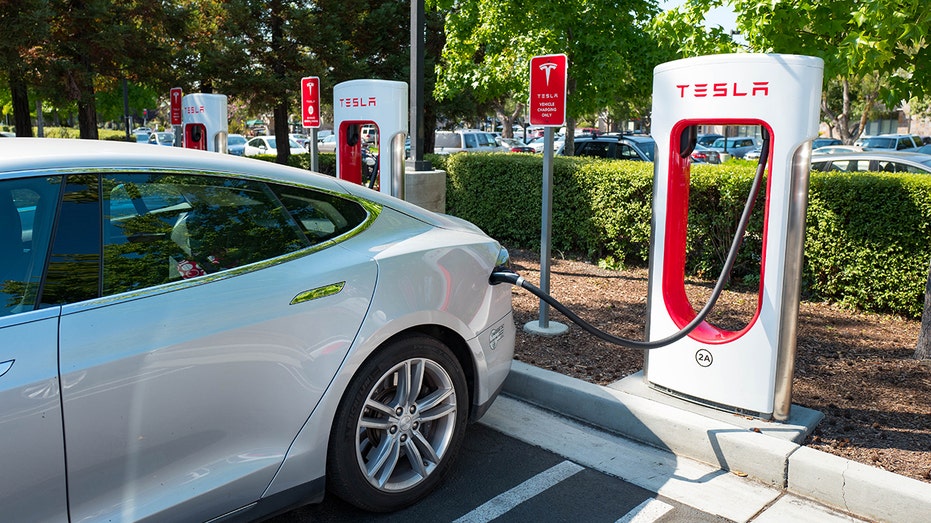
California Gov. Gavin Newsom’s office is dismissing a new report saying the Golden State will fail to meet its climate change mandates unless it nearly triples its rate of reduction of greenhouse gases through 2030. The analysis by Beacon Economics, an L.A.-based economic research firm, found that California’s emissions of carbon dioxide, methane and other gases rose by 3.4% in 2021, after they had dropped during the pandemic. The increase puts California further behind in reaching its required regulation under state law of 40% fewer emissions in 2030 than in 1990. “The cost of getting the state back on pace would depend on what approach we take,” lead researcher Stafford Nichols told Fox News Digital. “Some strategies are cheaper than others. We could make changes to the regulatory frameworks of California to encourage and enable the adoption of new technologies.” BIDEN ADMIN AIMS TO PUSH TOWNS, CITIES TO ADOPT GREEN ENERGY BUILDING CODES: ‘VERY SUSPICIOUS’ “However, sometimes politics gets in the way of this decision-making framework, and politicians do not always choose the most efficient strategies,” he added. California’s regulatory plan championed by Gov. Gavin Newsom to ban new gas-powered vehicles more than a decade from now is aimed at protecting public health by reducing the amount of particulate matter — like dust, dirt and soot — that’s in the air. But not all experts agree with the state’s push for what’s termed “clean energy,” which is energy from renewable sources to generate solar, wind, water, geothermal and bioenergy. Ronald Stein, energy consultant at the nonprofit Heartland Institute, told Fox News Digital in an interview that California’s movement for clean energy is “increasing emissions around the world.” 17 RETIRED MILITARY OFFICIALS RAISE ALARM ON BIDEN’S ELECTRIC VEHICLE PUSH “Because what we’re doing is we’re basically delegating it to other countries that are providing all the products back to California, and they have no environmental or labor controls,” Stein said. “We keep shutting down our gas-powered plants, and now California imports more electricity than any other state.” He added, “We have a demand, our neighbors have a supply.” According to the economic firm’s analysis, a significant amount of emissions, amounting to more than 100 million metric tons annually, would have to be eliminated for California to meet its own goal. The state would fail to slash 258 million metric tons of carbon dioxide equivalent emissions on its current trajectory, the analysis says. VIRGINIA DEMOCRATS UPHOLD STATE’S EV MANDATE DESPITE GROWING OPPOSITION: ‘DEFY COMMON SENSE’ Newsom’s office told Fox News Digital that the analysis doesn’t tell the full story about the state’s climate initiatives. “Nobody thought we would achieve our climate goals, like 1.5 million zero-emission vehicles by 2025 and cutting greenhouse gas emissions to 1990 levels by 2020 – we’re exceeding them years ahead of schedule. We’ll continue proving everybody wrong,” a Newsom spokesperson said. “I want to underscore the point that the study doesn’t take into account a lot of our current and future work to achieve targets,” the spokesperson added. Newsom’s office also said the state is investing more than $48 billion in climate change initiatives alone, including $10 billion in zero-emission vehicles and chargers. “That’s on top of the billions in federal spending that will accelerate the transition to clean energy,” the spokesperson said. People living in California have been paying 32 cents per kilowatt-hour compared to the national average of 18 cents, according to Energy Sage, which has monitored energy prices nationwide. It said California residents have been paying $273 per month on average for electricity, or $3,276 per year. Meanwhile, industry sources told Fox News Digital the Environmental Protection Agency is slated to issue a final decision this week on regulations targeting gas-powered vehicle tailpipe emissions, which officials have boasted will incentivize greater adoption of electric vehicles nationwide but which opponents have criticized as a de facto mandate. The regulations, a key part of President Biden’s climate agenda, would ultimately force automakers to more rapidly expand electric options in their fleets beginning in a matter of years. Fox News’ Eric Revell, Thomas Catenacci and William La Jeunesse contributed to this report.
Trump trials: Here’s where each case against former president and presumptive GOP nominee stands
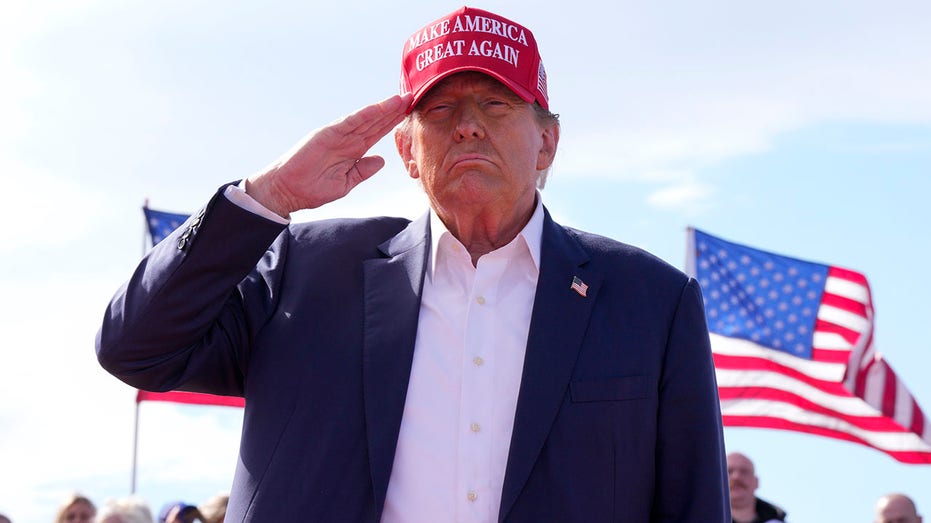
Former President Trump, the presumptive 2024 Republican nominee for president, will likely spend days in court defending himself against charges in multiple jurisdictions while also crisscrossing the country on the campaign trail until Election Day. Trump has pleaded not guilty to all charges in all cases. Many trials have been delayed or put on pause. Here is where each case stands: The Supreme Court is set to hear arguments on whether Trump is immune from prosecution next month. Arguments on presidential immunity are scheduled to begin on April 25. A ruling from the high court is expected by late June. Trump and his legal team, in requesting the Supreme Court review the issue of presidential immunity, said that “if the prosecution of a president is upheld, such prosecutions will recur and become increasingly common, ushering in destructive cycles of recrimination.” “Criminal prosecution, with its greater stigma and more severe penalties, imposes a far greater ‘personal vulnerability’ on the President than any civil penalty,” the request states. “The threat of future criminal prosecution by a politically opposed Administration will overshadow every future president’s official acts — especially the most politically controversial decisions.” SUPREME COURT TO HEAR ARGUMENTS IN TRUMP PRESIDENTIAL IMMUNITY CASE ON APRIL 25 Special Counsel Jack Smith charged the former president with conspiracy to defraud the United States; conspiracy to obstruct an official proceeding; obstruction of and attempt to obstruct an official proceeding; and conspiracy against rights. Those charges stem from Smith’s months-long investigation into whether Trump was involved in the Jan. 6, 2021, Capitol riot and any alleged interference in the 2020 election result. Trump pleaded not guilty to all charges. The trial was set to begin March 4 but was put on hold pending a resolution on the matter. The trial stemming from Manhattan District Attorney Alvin Bragg’s investigation into Trump’s alleged hush-money payments during the 2016 election was scheduled to begin on March 25. Last week, though, a judge delayed the trial until mid-April to give Trump’s lawyers additional time to go through 15,000 records of potential evidence the Justice Department shared from a previous federal investigation into the matter. The U.S. Attorneys Office for the Southern District of New York said much of the newly produced material is unrelated to the state case against Trump. Federal prosecutors have already produced more than 100,000 pages of records for review. Fox News Digital has learned, though, that at least 74,000 pages of records initially were sent only to Bragg’s office and not to Trump’s legal team. JUDGE DELAYS TRUMP’S HUSH-MONEY TRIAL AMID LAST-MINUTE EVIDENCE DUMP BY FEDS Trump’s lawyers were seeking a 90-day delay or a dismissal of charges against him, arguing there were violations in “the discovery process,” whereby both sides exchange evidence. Defense lawyers said a 30-day delay was “insufficient.” Trump’s lawyers have said the materials from the federal investigation are critical for his defense in the state case being brought by Bragg. Bragg indicted Trump on 34 counts of falsifying business records in the first degree. Trump pleaded not guilty to all charges. Bragg alleged that Trump “repeatedly and fraudulently falsified New York business records to conceal criminal conduct that hid damaging information from the voting public during the 2016 presidential election.” The charges are related to alleged hush-money payments made during the 2016 presidential campaign. In 2019, federal prosecutors in the Southern District of New York opted out of charging Trump related to the payments made to adult film actress Stormy Daniels and former Playboy model Karen McDougal. The Federal Election Commission also tossed its investigation into the matter in 2021. U.S. District Court Judge Aileen Cannon dismissed Trump’s motion to dismiss charges of retaining classified documents on the grounds of “unconstitutional vagueness.” Cannon has not yet ruled on Trump’s other argument, which is a motion to dismiss based on the Presidential Records Act. TRUMP FLORIDA JUDGE CANNON DENIES TRUMP DISMISSAL ON ‘UNCONSTITUTIONAL VAGUENESS’ Trump was charged out of Smith’s investigation into his retention of classified materials. Trump pleaded not guilty to all 37 felony charges out of Smith’s probe. The charges include willful retention of national defense information, conspiracy to obstruct justice, and false statements. Trump was also charged with an additional three counts as part of a superseding indictment out of the investigation — an additional count of willful retention of national defense information and two additional obstruction counts. Trump pleaded not guilty. A Fulton County judge recently quashed six counts in the Georgia election interference case against Trump and his 18 co-defendants. Judge Scott McAfee said in an order Wednesday that the state failed to allege sufficient detail for six counts of “solicitation of violation of oath by public officer.” “The Court’s concern is less that the State has failed to allege sufficient conduct of the Defendants – in fact it has alleged an abundance. However, the lack of detail concerning an essential legal element is, in the undersigned opinion, fatal,” McAfee wrote. FULTON COUNTY PROSECUTOR NATHAN WADE WITHDRAWS FROM TRUMP CASE, ALLOWING DA FANI WILLIS TO CONTINUE “As written, these six counts contain all the essential elements of the crimes but fail to allege sufficient detail regarding the nature of their commission, i.e., the underlying felony solicited,” the judge continued. “They do not give the Defendants enough information to prepare their defenses intelligently, as the Defendants could have violated the Constitutions and thus the statute in dozens, if not hundreds, of distinct ways.” Georgia state law prohibits any public officer from willfully and intentionally violating the terms of his or her oath as prescribed by law. Fulton County District Attorney Fani Willis alleged that Trump and six of his co-defendants illegally attempted to persuade numerous state officials to violate their oaths in an effort to overturn the 2020 presidential election in Georgia. Willis charged Trump with one count of violation of the Georgia RICO Act, three counts of criminal solicitation, six counts of criminal conspiracy, one count of filing false documents and two counts of making false