

Donald Trump endorses Ohio congressional candidate Derek Merrin just hours before polls open
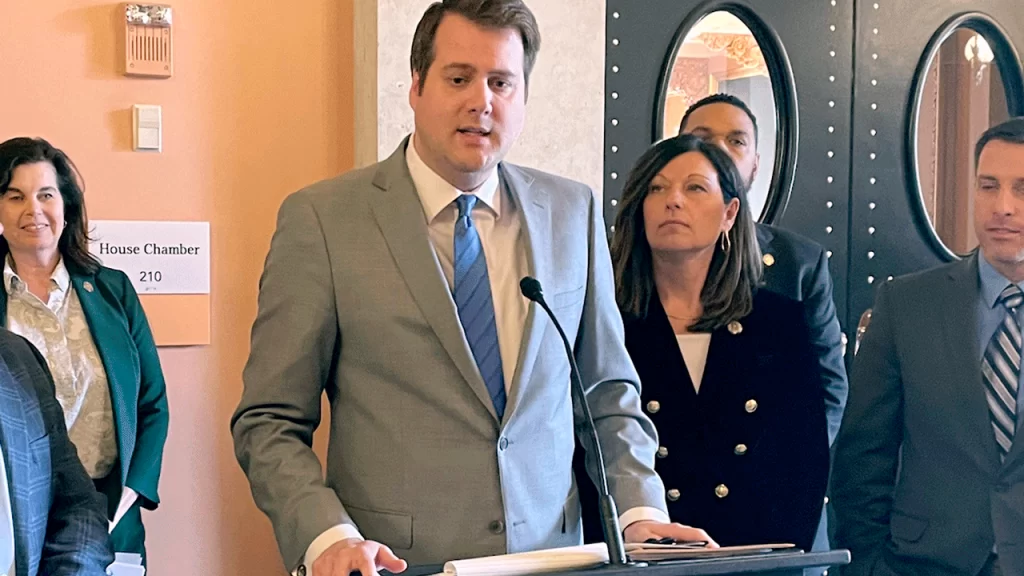
COLUMBUS, Ohio (AP) — Former President Donald Trump issued a last-minute endorsement in a highly sought northwest Ohio congressional district Monday, backing state Rep. Derek Merrin over a rival Republican whom Trump’s closest ally in the state has described as “a rock-solid conservative.” Trump’s decision came about 18 hours before polls were set to open on Ohio‘s primary election — and less than 48 hours after Trump campaigned in the state on behalf of Cleveland businessman Bernie Moreno, his pick for U.S. Senate. OHIO REPUBLICAN SENATE CANDIDATE MATT DOLAN SHOWCASES THAT HE’S ‘A CONSERVATIVE THAT’S GETTING THINGS DONE’ “Derek Merrin is an incredible America First Patriot who is running for Congress in Ohio‘s 9th District against a RINO, Craig Riedel, who is no friend of MAGA,” Trump wrote on his Truth Social platform. “As your next Congressman, Derek will fight hard to Secure our Border, Stop Inflation, Support our Military / Vets, and Protect our always under siege Second Amendment.” House Speaker Mike Johnson, R-La., tapped Merrin, 38, as his pick to take on Democratic incumbent Marcy Kaptur, 77, the longest-serving woman in Congress, this fall. Kaptur is viewed as among the most vulnerable Democrats in the nation. Merrin drew statewide attention for leading an intraparty rebellion in the Ohio House last year after a bitter fight over the speakership. Johnson recruited Merrin after audio surfaced of Riedel criticizing Trump, which raised concerns about his electability in a state that’s twice supported Trump’s presidential bids by strong margins. But that was months ago, back in December, begging the question of why Trump didn’t weigh in earlier. Notably, Riedel’s campaign recently began airing a searing Merrin attack ad — blasting the legislator as “a top henchman” to then-Ohio House Speaker Larry Householder. Householder was convicted last year in the largest bribery scheme in state history and sentenced in June to 20 years in prison. The ad suggests “speculation swirls Merrin could be charged next.” In backing Merrin, Trump parted ways with his best known Ohio ally: U.S. Rep. Jim Jordan. Jordan originally endorsed Riedel and stuck by him even after the remarks involving Trump came to light. Jordan said, “Craig Riedel is a rock-solid conservative who understands that parents, not the government, know what is best for their children. He will fight to cut spending, lower taxes, uphold the Second Amendment, and protect traditional family values.” Trump’s 11th-hour decision to get involved is merely the latest twist in what has been a roller coast primary marked by swift entries and exits, candidate gaffes and bouncing endorsements. At one point, Johnson, Jordan and the state’s Republican senator, JD Vance, were aligned with three different candidates. Vance had backed J.R. Majewski, the party’s 2022 nominee, before he suddenly withdrew from the race earlier this month after facing criticism for remarks he made during a podcast denigrating Special Olympics athletes.
New lawsuit alleges NYC Mayor Eric Adams demanded sex acts from police officer in exchange for career help
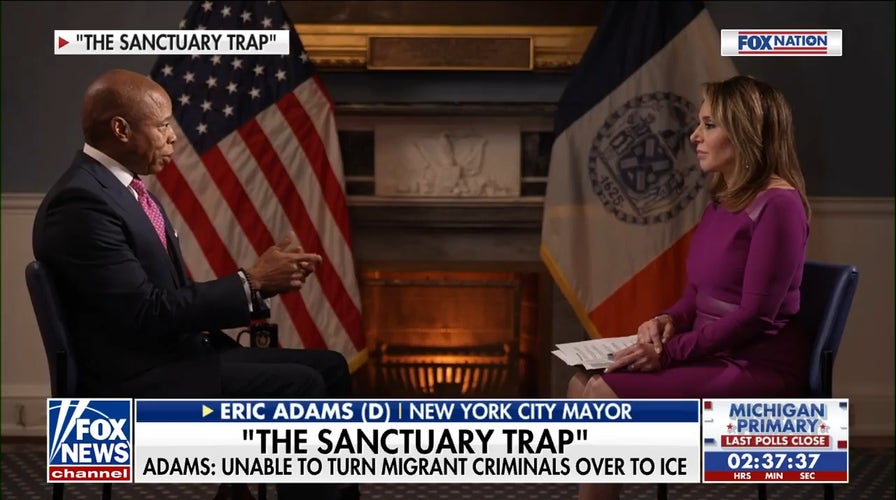
A new lawsuit against New York City Mayor Eric Adams alleges that during his time on the police force in the ’90s he demanded sexual favors from a colleague in exchange for help with a job issue. Adams’ accuser, Lorna Beach-Mathura, says she had been repeatedly passed over for promotions and experienced “resistance all-too-frequently faced by Black and female NYPD … employees in that era.” Adams at the time served as a leader in the Transit NYPD Guardians division, so she sought him out for his help. “Instead of helping Plaintiff get fair treatment at the Defendant Transit Bureau, Defendant Adams preyed on her perceived vulnerability, demanding a quid pro quo sexual favor and sexually assaulting Plaintiff, revealing himself not to be the ‘Guardian’ he purported to be, but a predator,” the lawsuit states. A lawyer for the New York City Corporation Counsel, Sylvia O. Hinds-Radix, called the allegations “ludicrous.” NYC SECURES $106M IN FEDERAL FUNDING FOR REIMBURSEMENT OF MIGRANT COSTS AFTER MONTHS OF DELAYS “While we review the complaint, the mayor fully denies these outrageous allegations and the events described here; we expect full vindication in court. Additionally, in 1993, Eric Adams was one of the most prominent public opponents of the racism within the NYPD, which is why the suit’s allegations that he had any sway over promotions of civilian employees is ludicrous,” she said. According to the lawsuit, Beach-Mathura learned in the fall of 2023 that New York had passed a law allowing survivors of sexual assault to come forward years after an attack and thus felt compelled to bring Adams’ “behavior to light.” She alleges that Adams said he would help her with an employment problem but instead drove her alone to a vacant lot and requested oral sex from her, which she rejected. He continued to sexually assault her, according to the suit. When Adams ran for mayor, Beach-Mathura said she found his comments on the campaign trail “hypocritical and sanctimonious.” HOCHUL, ADAMS ANNOUNCE CRACKDOWN ON TOLL-DODGING ‘GHOST CARS’: ‘THE GHOSTBUSTERS HAVE ARRIVED’ Beach-Mathura said in the lawsuit that Adams initially was going to pick her up and give her a ride home to Coney Island to talk. Once in the car, she realized instead that he was headed to an area near the Hudson River, which made her “nervous and scared.” “Plaintiff was frightened not only due to Defendant Adams’ appalling conduct, but also because she knew that he, as a police officer, had at least one loaded gun in the car,” the lawsuit says. ‘BLING BISHOP’ LASHES OUT AT FBI AFTER BEING CONVICTED OF FRAUD, ATTEMPTED EXTORTION, LYING TO FEDS The lawsuit alleges Adams exposed himself and begged Beach-Mathura to perform oral sex and placed her hand on his genitals. When she refused, he masturbated in front of her, per the lawsuit. Beach-Mathura also says Adams told her he needed to get back to work, drove her to a subway station in Manhattan and dropped her off there. She alleges Adams never helped her with the employment issue and that she eventually left city government in 1994. She now lives in Florida, where she has worked as a public school teacher.
Idaho moves to ban use of public funds for transgender surgeries and hormone therapy
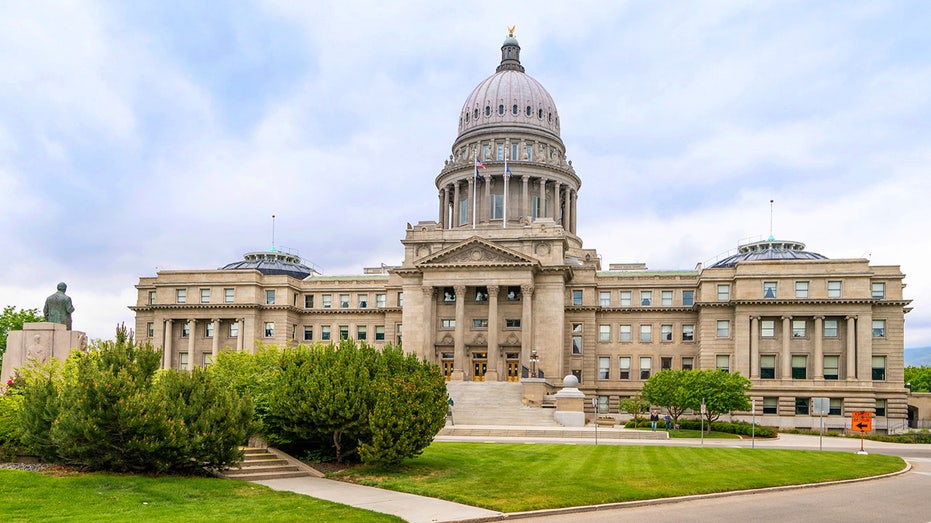
Idaho is expected to pass a bill this week that would ban public funds from going towards transgender sex change surgeries and hormone therapy treatment on state-owned properties. It would also bar state properties, facilities or buildings from being used for surgical procedures pertaining to “gender transitions,” the bill text states. House Bill 668, which cleared the state House in a 58-11 vote last week, states public funds “shall not be used… for purposes of altering the appearance of an individual in order to affirm the individual’s perception of the individual’s sex in a way that is inconsistent with the individual’s biological sex regardless of whether the surgical operation or medical intervention is administered to a minor or an adult, except for exempted surgical operations or medical interventions.” BRYAN KOHBERGER ASKS COURT FOR CHANGE OF VENUE AFTER DELAYS IN IDAHO STUDENT MURDERS TRIAL The bill now heads to the Republican-controlled Senate. If it passes, Gov. Brad Little, a Republican, would have to sign off on it. Little has signed bills in recent years opposing similar issues affecting transgender people. Last year, he signed a bill criminalizing sex reassignment surgeries for minors. He also signed a bill prohibiting transgender students from using public restrooms that do not align with their biological sex. The public funds would specifically target Medicaid, the country’s primary federal health insurance program. The bill also states that physicians and other medical professionals “in the course and scope of employment by the state or a county or local government may provide the surgical operations or medical interventions.” IDAHO MURDERS CASE: JUDGE TO CONSIDER BRYAN KOHBERGER ATTORNEY’S REQUEST FOR SUMMER 2025 TRIAL START DATE If the bill passes, it would make Idaho the 10th state to ban federal funds from going toward transgender surgical procedures and treatment. According to the Associated Press, Idaho has had to defend itself against several lawsuits over denying gender transition treatments and surgeries. In one case, the state was ordered to provide a transgender inmate with gender-transition surgery, and the inmate was later awarded roughly $2.5 million in damages. “This is a taxpayer protection bill in my view,” Rep. Bruce Skaug, R– Idaho, one of the bill’s sponsors, said during a hearing last week. If the bill becomes law, the penalties for violations include fines ranging from $300 to $10,000 and the possibility of a prison sentence of up to 14 years. At least 23 states, including Idaho, have passed laws banning transgender sex changes and hormone treatment for minors. This month, a leading scientific organization in the U.S. — the American Psychological Association — representing more than 150,000 licensed psychologists, announced a new policy urging clinics to provide “unobstructed access” to gender-transitioning treatments for children.
Justice Ketanji Brown Jackson raises eyebrows with comment that First Amendment “hamstrings” government
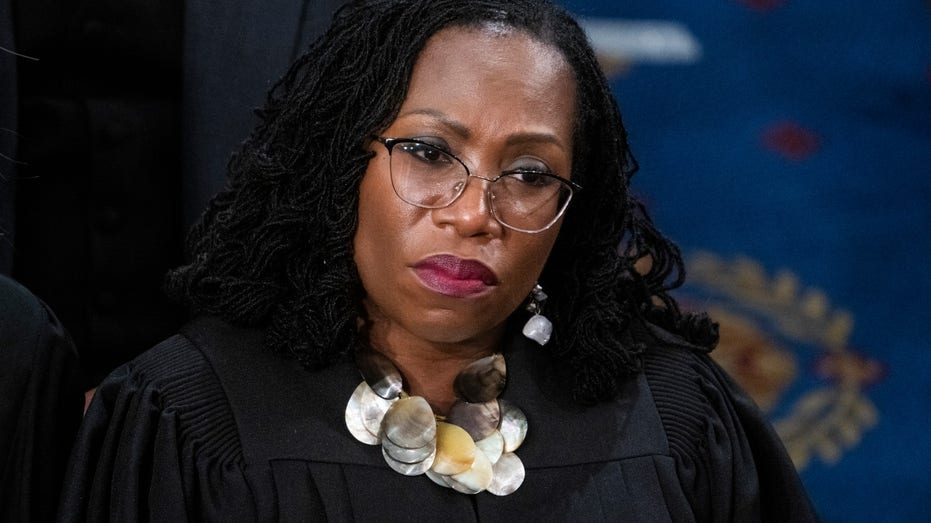
In a debate Monday at the Supreme Court challenging the Biden administration’s alleged coordination with Big Tech to censor certain messages, one justice raised eyebrows in her comments about the government’s relationship with the First Amendment. The case stems from a lawsuit brought by Republican-led states Missouri and Louisiana that accused high-ranking government officials of working with giant social media companies “under the guise of combating misinformation” that ultimately led to censoring speech on topics that included Hunter Biden’s laptop, COVID-19 origins and the efficacy of face masks — which the states argued was a First Amendment violation. In nearly two hours of oral arguments, the justices debated whether the Biden administration crossed the constitutional line, and whether its outreach efforts with private companies amounted to permissible persuasion or encouragement versus illegal coercion or threats of retaliation. “It’s got these big clubs available to it, and so it’s treating Facebook and these other platforms like their subordinates,” Justice Samuel Alito said. But Justice Ketanji Brown Jackson took a different approach. SUPREME COURT TO HEAR ARGUMENTS IN KEY FIRST AMENDMENT CASE CHALLENGING BIDEN ADMIN TEAMWORK WITH BIG TECH “Your view has the First Amendment hamstringing the federal government in significant ways in the most important time periods,” she told the lawyer representing Louisiana, Missouri and private plaintiffs. “The government actually has a duty to take steps to protect the citizens of this country… by encouraging or even pressuring platforms to take down harmful information,” she said. “Justice Jackson appears to be saying that she believes that the states’ view would prevent the government from explaining its facts or positions to the social media companies when there is some danger or imminent threat,” John Shu, a constitutional attorney who served in both Bush administrations, told Fox News Digital, noting that the “heart” of the case “revolves around where the differentiating line between persuasion and coercion exists.” “The First Amendment does not prevent government officials from complaining about a particular post or explaining why the post is factually incorrect. In fact, that’s why X has the ‘Community Notes’ function,” he said. However, Shu noted that the First Amendment “prevents government officials from coercing, whether explicitly or implicitly, publishers to remove posts or articles because the government disagrees with or doesn’t like that viewpoint, even if it is under the guise of ‘national security’ or ‘public health.’” SUPREME COURT TO HEAR FIRST AMENDMENT CHALLENGE TO NEW YORK’S FINANCIAL ‘BLACKLISTING’ OF NRA Missouri Attorney General Andrew Bailey told Fox News Digital in an interview that Justice Jackson was “absolutely right.” “It is hamstringing, and it’s supposed to. The whole purpose of the Constitution is to protect us from the government, and the government exists to protect our rights. But here, the federal government is ignoring our First Amendment protections and weaponizing the federal government to silence our voices,” Bailey said. “And she’s right. It limits what the federal government can and can’t do. And that’s a good thing,” he added. The lawsuit from the states alleges 67 federal agencies and officials coerced platforms like Facebook and Twitter/X to censor individual posts, primarily related to COVID-19 restrictions imposed by the past two administrations, as well as the 2020 presidential election results. Those cited include White House communications staffers, the surgeon general, the FBI and the U.S. cybersecurity agency. In a July 4 court order last year, U.S. District Court Judge Terry A. Doughty imposed the temporary injunction preventing White House and executive agency officials from meeting with tech companies about moderating content, arguing that such actions in the past were “likely” First Amendment violations. The Fifth Circuit Court of Appeals extended the scope of the injunction, and said officials could not “coerce or significantly encourage” changes in online content. In its appeal to the Supreme Court, the Justice Department argued that “a central dimension of presidential power is the use of the Office’s bully pulpit to seek to persuade Americans — and American companies — to act in ways that the President believes would advance the public interest.” That includes areas like public health, voting integrity and national security threats. In Monday’s oral arguments, conservative justices were most vocal against the federal government’s actions, which Alito in October — when the appeal first arrived at the high court — said was “heavy-handed tactics to skew the presentation of views on the medium that increasingly dominates the dissemination of news.” Justice Clarence Thomas suggested how the federal government might subtly coordinate with tech firms. “You just work together, said: Look, we’re right; they’re wrong. Let’s work together. You know, we’re on the same team. Let’s work together to make sure that this misinformation doesn’t gain sort of any following.” But several of their conservative colleagues were concerned about hamstringing the federal government too severely. One hypothetical raised in court was how to respond to an epidemic sprouting online, in which young people were being encouraged as a dare or stunt to record themselves jumping from windows to the ground below, at ever-increasing heights. NEW MEXICO COUNTY COMMISSIONER WHO PARTICIPATED IN JAN 6 RIOT LOSES SUPREME COURT APPEAL “The government is not monolithic either,” said Chief Justice John Roberts, using another hypothetical. “Maybe EPA is trying to coerce a platform about something, and the Army Corps of Engineers is trying to coerce them the other way? I mean, you can’t just sort of pick and choose which part of the government you’re concerned about.” When the lawyer for the plaintiffs argued the federal government was indirectly engaging in “encouragement” with platforms, Justice Amy Coney Barrett interjected. “Just plain vanilla encouragement, or does it have to be some kind of significant encouragement? Because encouragement would sweep in an awful lot.” Justice Elena Kagan raised national security concerns. “Terrorists engage in things that come under the First Amendment. Let’s say they’re just recruiting people for their organizations” online, she asked. “There’s all kinds of things that can appear on these platforms that do all kinds of different harms, and the inability of government that you’re suggesting to reach out
Supreme Court extends block on Texas law allowing police to arrest migrants
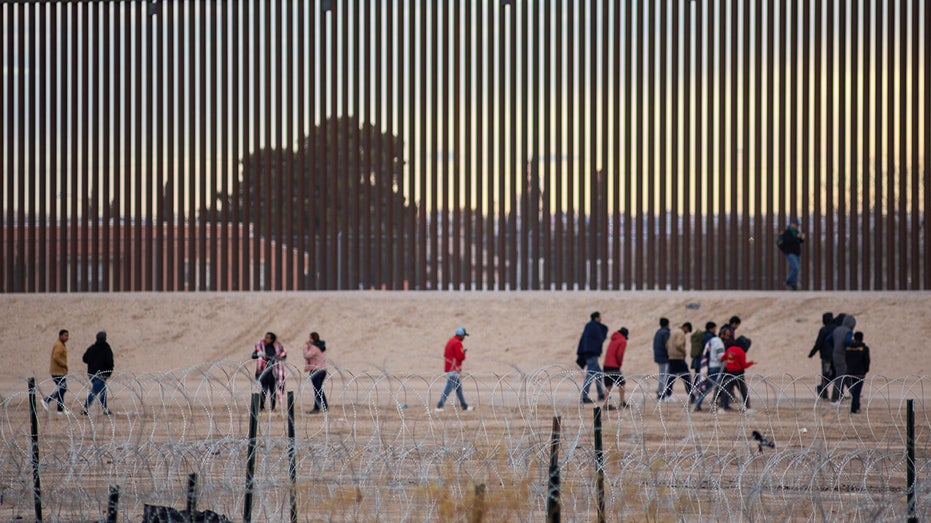
The Supreme Court on Monday extended a block on Texas law that would allow police to arrest illegal immigrants after they crossed the border. In its decision, the Court said that a stay request from the Biden administration would be extended pending further review. Opponents have compared the law, Senate Bill 4, to a similar Arizona law that was partially struck down by the Supreme Court more than a decade ago. HOW THE MOST POWERFUL NATION LOST CONTROL OF ITS BORDERS: FORMER ICE DIRECTOR The Texas Attorney General has said the state’s law mirrored federal law and was put in place to compensate for the Biden administration’s inadequate response at the southern border. The Biden administration sued to strike down the measure, arguing it would usurp core federal authority on immigration, hurt international relations and create chaos in administering immigration law. A federal judge in Texas struck down the law late last month, but the 5th Circuit Court of Appeals quickly stayed that ruling, leading the federal government to appeal to the Supreme Court. The battle over this bill has been only one of multiple legal disputes between the State of Texas and the Biden administration over how far the state can to prevent illegal border crossings. Several Republican governors have backed Gov. Greg Abbott’s efforts, saying the federal government is not doing enough to enforce existing immigration laws. The case is unfolding as record numbers of asylum seekers arrive in the United States, making immigration a front-and-center issue in the 2024 election.
Supreme Court debates Biden administration outreach to digital platforms over controversial posts
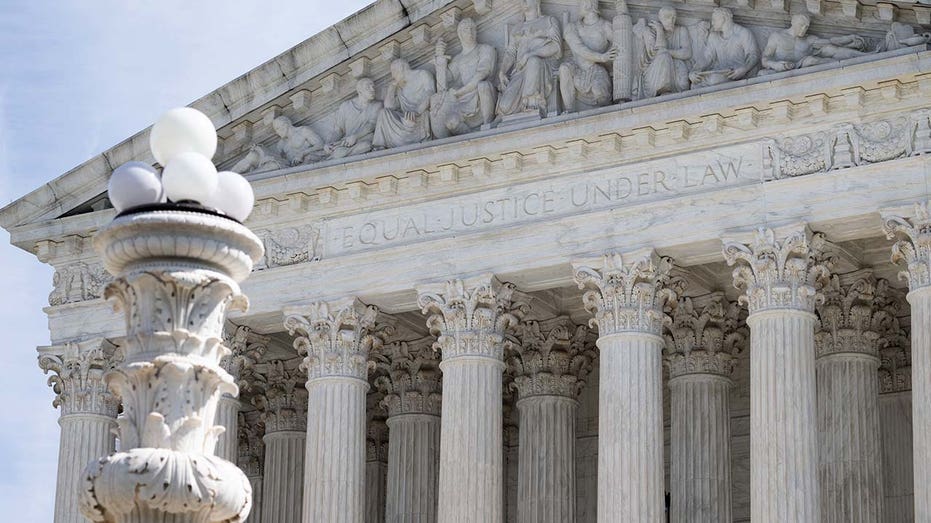
A divided US Supreme Court cast doubt on Monday over calls to limit the ability of the federal government to communicate with social media platforms and the news media about publishing third-party content on controversial or potentially dangerous topics like vaccines, election interference, and terrorism. In nearly two hours of oral arguments in a free-wielding free speech dispute, the justices debated whether the Biden administration crossed the constitutional line, and whether its outreach efforts with private companies amounted to permissible persuasion or encouragement versus illegal coercion or threats of retaliation. Two Republican-led states and several private parties had sued, claiming First Amendment violations by the Biden administration, accused of improperly coordinating with tech firms to remove or limit information posted by private users on their sites. They say it amounted to censoring what some users said about Covid treatments, election security, and other issues the powerful federal government might subjectively find misleading or problematic. THIS WAS CENSORSHIP BY SURROGATE: JIM JORDAN “It’s got these big clubs available to it and it’s so it’s treating Facebook and these other platforms like their subordinates,” said Justice Samuel Alito. But others on the bench took another approach. “Your view has the First Amendment hamstringing the federal government, in significant ways in the most important time periods,” Justice Ketanji Brown Jackson told the lawyer representing Louisiana, Missouri and the private plaintiffs. “The government actually has a duty to take steps to protect the citizens of this country… by encouraging or even pressuring platforms to take down harmful information.” Dozens of protesters gathered in front of the court, mostly opposing the administration’s efforts. This is the latest case at the Supreme Court testing how federal and state governments, big tech platforms, and private users can operate in an increasingly crowded and contentious digital space. The lawsuit alleges 67 federal agencies and officials coerced platforms like Facebook and Twitter/X to censor individual posts, primarily related to COVID-19 restrictions imposed by the past two administrations, as well as the 2020 presidential election results. Those cited include White House communications staffers, the surgeon general, the FBI, and the U.S. cybersecurity agency. The Justice Department told the high court the president and agencies under his control have long enjoyed a “bully pulpit” to try and persuade citizens and companies, in ways that advance the public interest. That includes areas like public health, voting integrity, and national security threats. NEW MEXICO COUNTY COMMISSIONER WHO PARTICIPATED IN JAN 6 RIOT LOSES SUPREME COURT APPEAL But a federal appeals court ruled against the administration, saying officials could not “coerce or significantly encourage” changes in online content. In oral arguments, conservative justices were most vocal against the federal government’s actions, which Alito in October – when the appeal first arrived at the high court – said was “heavy-handed tactics to skew the presentation of views on the medium that increasingly dominates the dissemination of news.” Justice Clarence Thomas asked at one point, suggesting how the federal government might subtly coordinate with tech firms. “You just work together, said: Look, we’re right; they’re wrong. Let’s work together. You know, we’re on the same team. Let’s work together to make sure that this misinformation doesn’t gain sort of any following.” But several of their conservative colleagues were concerned about hamstringing the federal government too severely. One hypothetical raised in court was how to respond to an epidemic sprouting online, where young people were being encouraged as a dare or stunt to record themselves jumping off windows to the ground below, at ever-increasing heights. “The government is not monolithic either,” said Chief Justice John Roberts, using another hypothetical. “Maybe EPA is trying to coerce a platform about something, and the Army Corps of Engineers is trying to coerce them the other way? I mean, you can’t just sort of pick and choose which part of the government you’re concerned about.” Roberts prefaced his remarks with a lighthearted aside, “I have no experience coercing anybody,” which brought laughter to the courtroom. When the lawyer for the plaintiffs argued the federal government was indirectly engaging in “encouragement” with platforms, Justice Amy Coney Barrett interjected. “Just plain vanilla encouragement, or does it have to be some kind of significant encouragement? Because encouragement would sweep in an awful lot.” Justice Elena Kagan raised national security concerns. FORMER SUPREME COURT JUSTICE STEPHEN BREYER SOUNDS OFF ON DOBBS DECISION: ‘TOO MANY QUESTIONS’ “Terrorists engage in things that come under the First Amendment. Let’s say they’re just recruiting people for their organizations” online, she asked. “There’s all kinds of things that can appear on these platforms that do all kinds of different harms, and the inability of government that you’re suggesting to reach out to these platforms and say: we want to give you information that you might not know about on this. President Biden himself has used social media to bluntly promote vaccinations. In a controversial July 2021 Facebook post, he wrote, “They’re killing people… The only pandemic we have is among the unvaccinated, and they’re killing people.” Biden later pulled back on those comments. The current debate comes in a national election year, where there is heated public discourse on ballot integrity and voting regulations. “The question before the justices this morning is actually a fairly simple one. It’s whether the government went too far,” said Thomas Dupree, former top official in the Justice Department under President George W. Bush. “This administration leaning very heavily on these social media companies to take down content that the government didn’t like. Some of it concerned vaccine or health related information. Others concerned election related information. But it’s very different and it’s challenging if you’re a tech company and the government with all of its powers at its disposal, calls you up and says: Hey, we don’t like this post that we’re seeing on your website, We think that you need to take it down.” The high court in February heard separate arguments over a challenge to social media company policies that deal with
Texas GOP chair candidate tried to confront wife’s alleged lover with a loaded gun, police say

Abraham George is running to lead the state party with backing from current Chair Matt Rinaldi, who announced last week he will not seek reelection. He was not arrested or charged.
Trump, co-defendants request to appeal Georgia judge’s ruling keeping Fani Willis on case

Former President Trump and several of his co-defendants are asking Fulton County Superior Court Judge Scott McAfee for permission to appeal after he ruled against dismissing the case and disqualifying District Attorney Fani Willis. McAfee last week denied a full dismissal of the case against Trump and Willis’ disqualification. Instead, he demanded that Fulton County special prosecutor Nathan Wade resign from the case. McAfee warned that without Wade’s withdrawal, Willis would be disqualified from prosecuting Trump. Wade withdrew within hours of the judge’s order. Four co-defendants had accused Willis of having an “improper” affair with Wade, whom she hired to help prosecute the case. Willis and Wade have denied the claims. FULTON COUNTY PROSECUTOR NATHAN WADE WITHDRAWS FROM TRUMP CASE, ALLOWING DA FANI WILLIS TO CONTINUE The motion Monday was filed on behalf of Trump and several co-defendants, including Rudy Giuliani, Mark Meadows, Robert Cheeley, Michael Roman, David Shafer, Harrison Floyd and Cathleen Latham. Trump and his co-defendants are requesting permission to appeal McAfee’s ruling. “In its Order, the Court found that District Attorney Willis’ actions had created an appearance of impropriety and an ‘odor of mendacity’ that lingers in this case, as well as the continuing possibility that ‘an outsider could reasonably think that District Attorney Willis is not exercising her independent professional judgment totally free of any compromising influences,’” the motion states. “Despite this, the Court declined to disqualify District Attorney Willis, finding that eliminating only the Special Assistant District Attorney would cure the lingering appearance of impropriety.” The motion adds that defendants “believe that the relevant case law requires dismissal of the case, or at the very least, the disqualification of the District Attorney and her entire office under the facts that exist here, and the resignation of Mr. Wade is insufficient to cure the appearance of impropriety the Court has determined exists.” “Given these facts and the current state of case law, the Court of Appeals should speak definitively to this outcome-determinative issue now.” Trump attorney Steve Sadow added in a statement, “The motion further notes that the Court found Georgia case law lacks controlling precedent for the standard for disqualification of a prosecuting attorney for forensic misconduct. For these reasons among others, the Court’s Order is ripe for pretrial appellate review.” JUDGE RULES FANI WILLIS MUST STEP ASIDE FROM TRUMP CASE OR FIRE SPECIAL PROSECUTOR NATHAN WADE The filing comes after McAfee last week quashed six counts in the Georgia election interference case against Trump and his 18 co-defendants. McAfee said in an order Wednesday that the state failed to allege sufficient detail for six counts of “solicitation of violation of oath by public officer.” “The Court’s concern is less that the State has failed to allege sufficient conduct of the Defendants – in fact it has alleged an abundance. However, the lack of detail concerning an essential legal element is, in the undersigned opinion, fatal,” McAfee wrote. “As written, these six counts contain all the essential elements of the crimes but fail to allege sufficient detail regarding the nature of their commission, i.e., the underlying felony solicited,” the judge continued. “They do not give the Defendants enough information to prepare their defenses intelligently, as the Defendants could have violated the Constitutions and thus the statute in dozens, if not hundreds, of distinct ways.” Georgia state law prohibits any public officer from willfully and intentionally violating the terms of his or her oath as prescribed by law. Willis alleged that Trump and six of his co-defendants illegally attempted to persuade numerous state officials to violate their oaths in an effort to overturn the 2020 presidential election in Georgia. Willis charged Trump with one count of violation of the Georgia RICO Act, three counts of criminal solicitation, six counts of criminal conspiracy, one count of filing false documents and two counts of making false statements. Trump pleaded not guilty to all charges. Meanwhile, the defendants alleged that Willis benefited financially by hiring Wade in 2021 because they were in a pre-existing romantic relationship and went on several trips together. Michael Roman, a Republican operative who worked on Trump’s 2020 re-election campaign, claimed Wade’s law firm billed taxpayers $650,000 at a rate of $250 an hour since his hiring — and that he used that income to pay for vacations with Willis. CLICK HERE TO GET THE FOX NEWS APP Both Wade and Willis had denied they were in a romantic relationship prior to his hiring. During a two-day evidentiary hearing in February, they each testified that they split the cost of their shared trips. Willis told the court she reimbursed Wade for her share of the trips in cash. A trial date for Trump has not yet been set.
Who is Robert F. Kennedy Jr. and why is he running for president?

The lack of excitement many Americans feel about a presidential rematch has heightened interest in alternatives to the major-party candidates, none more so than Robert F. Kennedy Jr., whose famous name has helped him build buzz for his independent bid. Kennedy is a huge longshot to win Electoral College votes, much less the presidency. But his campaign events have drawn large crowds of supporters and people interested in his message. RFK JR ‘CONSIDERING’ AARON RODGERS AS RUNNING MATE, REP SAYS He plans to announce his vice presidential nominee later this month in Oakland, California, and is stoking expectations that he might pick New York Jets quarterback Aaron Rodgers or former Minnesota Gov. Jesse Ventura. His campaign manager said Saturday that Kennedy has made his choice but didn’t say whom he’s picked. She said he had also interviewed Nicole Shanahan, a California philanthropist who bankrolled a Super Bowl ad for Kennedy, and Mike Rowe, star of the television show “Dirty Jobs.” Here is a look at his campaign and what he’s stood for: Who is RFK Jr? Kennedy, 70, is a member of perhaps the nation’s most famous political dynasty. His uncle was President John F. Kennedy. His father served as attorney general and a U.S. senator before seeking the Democratic nomination for president. Both were assassinated. RFK Jr. built a reputation of his own as an activist, author and lawyer who fought for environmental causes such as clean water. Along the way, his activism has veered into conspiracies and contradicted scientific consensus, most infamously on vaccines. Some members of his family have publicly criticized his views. Dozens of his family members posed with President Joe Biden at a St. Patrick’s Day reception at the White House in a photo his sister Kerry Kennedy posted to social media. Kennedy founded Waterkeeper Alliance, which works to secure clean water, and built a small anti-vaccine organization into Children’s Health Defense, a juggernaut in the movement that saw its reach grow rapidly during the pandemic. Children’s Health Defense has a lawsuit pending against a number of news organizations, among them The Associated Press, accusing them of violating antitrust laws by taking action to identify misinformation, including about COVID-19 and COVID-19 vaccines. Kennedy took leave from the group when he announced his run for president but is listed as one of its attorneys in the lawsuit. He’s married to actress Cheryl Hines. What does Kennedy’s campaign look like? Kennedy’s need to collect thousands of signatures to get on the ballot has taken him to places that rarely see presidential candidates, including Hawaii, Wyoming and West Virginia. At events in Phoenix and Las Vegas, hundreds of supporters queued up outside hours before he was scheduled to arrive. He attracts a legion of fans, many of whom have listened extensively to Kennedy’s interviews on podcasts or YouTube videos. In Nevada, massive graphics and photos were projected on three walls as upbeat music played. Drinks and merchandise were for sale. Kennedy speaks in a quiet, strained voice, sometimes haltingly, the result of a neurological condition called spasmodic dysphonia. What does he talk about? Kennedy frames himself as a truthteller with a track record of fighting for the middle class against powerful interests. He points to lawsuits he’s won against corporate behemoths such as Monsanto and DuPont. “I can fix this country,” he said in Las Vegas in February. “All these agencies that intimidate normal politicians, I’ve sued every one of them. … When you sue these agencies, you get a Ph.D. in corporate capture and how to unravel it.” Corporate capture refers to private interests using their influence to control government decision-making, as when they help draft legislation. Kennedy has been critical of U.S. support for Ukraine and supportive of Israel’s war against Hamas. He wants to reduce military and health care spending because of the impact on budget deficits, and combat rising housing costs so young people can afford to buy homes. Kennedy has found a loyal following among people distrustful of institutions and those who believe the government has been captured by corporations, especially pharmaceutical companies. He hasn’t shied away from his controversial views on health care and vaccines. He wants to dismantle the public health bureaucracy, saying he’d immediately tell the National Institutes of Health to refocus research away from infectious diseases and vaccines and toward chronic diseases. Kennedy insists he is not anti-vaccine and claims he has never told the public to avoid vaccination. But he has repeatedly made his opposition to vaccines clear. He said on a podcast “there’s no vaccine that is safe and effective” and has urged people to resist CDC guidelines on when kids should get vaccinated. While there are rare instances when people have severe reactions to vaccines, the billions of doses administered globally provide real-world evidence that they are safe. The World Health Organization says vaccines prevent as many as 5 million deaths each year. Can he win? The United States has a long history of rejecting independent or third-party presidential candidates. In fact, the last president to win without a party’s backing was George Washington, and he did it before there were political parties. The last third-party candidate to make it to the White House was Abraham Lincoln with the newly formed Republican Party. The last third-party candidate to pull more than single digits in the popular vote was Ross Perot, a businessman who won 19% in 1992 and 8% in 1996. But he won zero electoral votes. And while the independent share of the electorate is growing, it is still dwarfed by voters who consistently support Republican or Democratic candidates, even if they identify as independent. In other words, the odds are long. Kennedy’s case for optimism hinges on his relatively strong showing in a few national polls. Polls during the 2016 presidential campaign regularly put libertarian Gary Johnson’s support in the high single or low double digits, but he ultimately received only about 3% of the vote nationwide. Horse-race polls are also notoriously unreliable
Stalemate over Homeland Security funding raises risk of partial government shutdown

House and Senate appropriations negotiators have yet to release a deal on the second slate of funding bills, including that for the Department of Homeland Security, which is the main issue dragging out discussions, sources told Fox News Digital on Monday. Bills to fund the departments of Defense, Homeland Security, Labor, and Health and Human Services, as well as Financial Services and General Government, the legislative branch, and State and Foreign Operations are due on March 22. However, a dispute has emerged between Republican negotiators and the Biden White House. GOP LEADERS CONFRONT BIDEN’S NEW CLIMATE CZAR ON KEY SECURITY RISKS LURKING IN GREEN AGENDA Three sources, including a senior House leadership aide, confirmed to Fox News Digital that text for the six bills would not be released Monday as was previously expected. The disagreement between the Biden administration and Republicans negotiating the funding bills is over border management provisions in the DHS funding bill, per a Senate Republican leadership source. TIKTOK CREATORS SPEAK TO APP’S POSITIVE ECONOMIC, SOCIAL IMPACT AS POSSIBLE BAN LOOMS According to the source, five of the measures are “essentially done.” The DHS bill has delayed the entire process, however. With no definite release date for the texts of the various funding bills, congressional negotiators run the risk of failing to pass the package before the Friday deadline. This would trigger a partial government shutdown, excluding the portions of the government that were funded in the last slate of bills. On March 8, the first group of funding bills was passed by the Senate. The $460 billion package included provisions for Agriculture and the Food and Drug Administration (FDA), the Justice and Commerce departments, Energy and Water Development, the Department of Interior, and Transportation and Housing. The bills are making their way through Congress as the national debt recently surpassed $34 trillion and is nearing $34.5 trillion. The funding deadlines of March 8 and 22 were agreed to via a continuing resolution late last month, which became the fourth such stopgap measure since the original Sept. 30 deadline for fiscal 2024 appropriations.