

Attack on Pakistan army post near Afghan border kills seven, military says

Assailants used vehicle packed with explosives as well as suicide vests in attack that also involved a shootout. An armed group attacked a military post in northwestern Pakistan near the border with Afghanistan using a vehicle laden with explosives as well as suicide bombs, killing seven security force members, Pakistan’s military said. Troops responding to the attack on Saturday in North Waziristan, a district in the restive province of Khyber Pakhtunkhwa, killed six attackers, some of who were wearing suicide vests, according to the military statement. While the military’s media wing did not say who was behind the attack, a newly formed group, Jaish-e-Fursan-e-Muhammad, claimed responsibility for it. “The terrorists rammed an explosive-laden vehicle into the post, followed by multiple suicide bombing attacks, which led to collapse of portion of a building” in which five security personnel were killed, the military said, adding that another two security force members died in subsequent fighting with the assailants. A clearance operation was still under way in the area. Residents told the Reuters news agency that an explosion shook doors and damaged windows during the attack. Pakistan’s President Asif Ali Zardari and Prime Minister Shehbaz Sharif condemned the attack and paid tribute to the troops who were “martyred”. North Waziristan long served as a base for the Pakistani Taliban and other groups until the army claimed a few years back that it had cleared the region of rebel groups. Occasional attacks have continued, however, raising concerns that the Pakistani Taliban are regrouping in the area. The Pakistani Taliban are a separate group but allies of the Afghan Taliban, who seized power in Afghanistan in 2021 as the United States and NATO troops were in the final stages of their pullout. Since then the Pakistani Taliban have stepped up attacks on security forces, especially in the northwest. Adblock test (Why?)
Can Russia’s Gen Z make a real change?

Following the loss of Alexey Navalny and with the approaching Russian presidential election predetermined, what are the hopes of Russia’s Gen Z? Russia’s Gen Z has only known life under Vladimir Putin – they have grown up with his increasingly anti-Western, patriarchal and patriotic narratives. Polling shows that young Russians are currently the group most critical of Putin’s rule and the most dissatisfied with Russia’s political system. As dissent grows on social media, research also shows that most of Russia’s Gen Z is apolitical. With the upcoming presidential election seemingly predetermined and the opposition sidelined, what drives the activism of young Russians? Most importantly, how does the death of prominent opposition figure Alexey Navalny resonate with the generation he profoundly influenced? Presenter: Anelise Borges Guests:Apollinaria Oleinikova – Political ActivistYulia Zhivtsova – Political Activist and TeacherAnna – Political Activist and Student Adblock test (Why?)
Excise policy case: BRS leader K Kavitha sent to ED custody till March 23 by Delhi court

Special Judge for ED cases M K Nagpal passed the order on an application of the federal anti-money laundering agency seeking her remand.
Play in Israel, just don’t pretend you didn’t know

Since October 7, scores of writers have authored scores of columns pleading – to no avail – with prominent politicians who wield transformative power to stop the genocide unfolding with such obscene lethality in the apocalyptic remnants of occupied Gaza. The same dynamic applies to a gallery of preening artists who claim that they are not only allergic to conformity, but also reject as tantamount to censorship any call from any quarter not to entertain audiences in Israel. Rather than beseeching Nick Cave, the Australian troubadour, or the British band, Radiohead, finally to heed the petitions of Brian Eno, Roger Waters and company and forgo performing in an apartheid state, my aim here is to challenge their, by now, discredited defences to opt to play in Tel Aviv. After not performing in Israel for some 20 years, in 2014, Cave refrained from signing on to an artist-organised pledge – meant to show tangible solidarity with imprisoned Palestinians – to boycott touring in Israel in the aftermath of yet another Israeli killing spree in Gaza. Cave later explained his decision this way: “There was something that stunk to me about that list. Then it kind of occurred to me that I’m not signing the list but I’m also not playing Israel and that just felt to me cowardly, really.” The lobbying, Cave added, constituted a “public humiliation” that apparently fuelled his determination to spurn the overture and stage shows in Israel. “It suddenly became very important to make a stand against those people that are trying to shut down musicians, to bully musicians, to censor musicians, and to silence musicians … so really you could say in a way that the BDS made me play Israel,” Cave said, referring to the Boycott, Divestment, Sanctions movement. In this flattering construct, Cave is the portrait of the principled renegade resisting the “age-old” rejectionist forces bent on muzzling him and, by extension, his art. In a 2017 letter to his “hero” Brian Eno, the British musical savant behind the boycott drive, Cave insisted that he was not a supporter of the Israeli government to blame for the “injustices suffered by the Palestinian population”. And yet, like the Israeli government he distances himself from, Cave recycled the stock canard to discredit the BDS movement by claiming that “the boycott of Israel can be seen as anti-Semitic at heart”. Cave suggested that Eno should, instead, adopt a more salutary approach by travelling to Israel to share his scorn for the “current regime” with “the press and the Israeli people … then do a concert on the understanding that the purpose of your music was to speak to the Israeli people’s better angels”. Cave’s admonition is grounded on a false premise: that the “atrocities” endured by generations of Palestinians are the sole responsibility of a succession of Israeli “regimes” and not the millions of Israelis who empowered and emboldened those regimes by exercising their democratic franchise – time and again. Cave lauded Israel as a “real, vibrant and functioning democracy” but absolved “ordinary Israelis” of the “atrocities” committed by the governments they elect. Cave’s jejune reasoning reached an embarrassing zenith in the following sentence that confuses naivete for wisdom. “How far must we have strayed from the transformative nature of music to feel justified in weaponising music and using it to punish ordinary Israeli citizens for the actions of their government.” Tom Yorke, the lead singer for Radiohead, has recycled, near-verbatim, this rationale in rebuffing filmmaker, Ken Loach, who implored the popular band not to go to Israel in 2017 given its encyclopaedic record of egregious human rights violations. “Playing in a country isn’t the same as endorsing its government,” Yorke responded. “We don’t endorse [Israeli Prime Minister] Netanyahu any more than Trump, but we still play in America.” Yorke’s rejection of BDS has the patina of gravitas that Cave’s smear lacks. “Music, art and academia,” he wrote, “is about crossing borders not building them, about open minds not closed ones, about shared humanity, dialogue and freedom of expression.” Yorke’s pretty soliloquy oozes saccharine. Gaza has been reduced to ruins by deliberate design. The Israeli architects of that ruin do not give a hoot about crossing borders, opening minds, shared humanity, dialogue and freedom of expression. Prime Minister Netanyahu and his septic cabinet are razing Gaza and the occupied West Bank with the explicit consent, approval and encouragement of most Israelis. Polls consistently show that the vast majority of “ordinary Israelis” back every malignant aspect of a genocide meant to erase Gaza. The carpet bombing. The blanket destruction of homes, hospitals, mosques, churches, schools and universities. The forced marches. The blockade of food, water, fuel, and medicine – a sinister blueprint to starve Palestinians into submission and capitulation. The “better angels” Cave urged Eno to “speak to” through music, have, like the bulk of Israel, been consumed by an unquenchable killing rage that burns like a towering bonfire. Cave and Yorke have compounded their blindness with hypocrisy that reveals a defining insincerity. In 2022, Cave was challenged by a fan to square his vocal, unabashed “solidarity” with Ukrainians with his glaring failure to do the same for “brutalised” and “suffering” Palestinians. “This saddens me,” the fan wrote, “for this puts you on [sic] a position of a double standard.” Cave’s reply was a pretentious lump of rhetorical flim-flam brimming with the standard evasions about how “a brutal, unprovoked attack” differs from “a deeply complex clash of two nations that is far from straightforward”. Cave wrote that he “sympathises deeply” with “the tragic fate of all innocents” and reminded his interlocutor that he has helped raise money for schools in Palestinian “communities”. “But this is not the time for these debates,” Cave averred. “This is the time to unite in unequivocal support and love for the Ukrainian people. Right now a catastrophe is unfolding, and I stand with all Ukrainians at this horrific moment in history.” Yorke parroted Cave’s condescension, scolding BDS supporters for engaging in “the
Jammu and Kashmir assembly elections soon, CEC Rajiv Kumar says, ‘will be held after…’
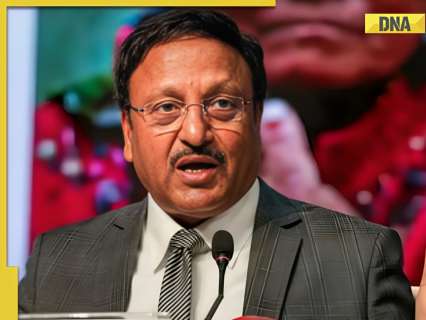
Chief Election Commissioner (CEC) Rajiv Kumar on Saturday said that the Jammu and Kashmir Assembly polls wil be held after the Lok Sabha elections.
Here’s how you can report fraud, spam calls through govt’s new online portal ‘Chakshu’

Here’s how to use the Chakshu portal to report spam calls, fraud:
Lok Sabha polls 2024: Mumbai, Bengaluru, Delhi, Hyderabad, Chennai, Kolkata, Patna to vote on…
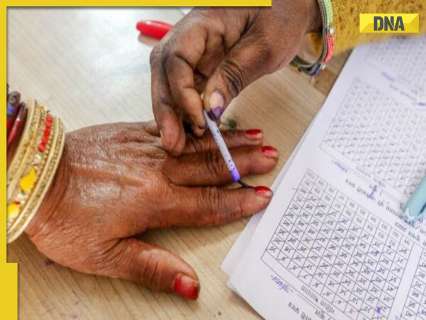
Lok Sabha elections 2024 are set to be conducted in seven distinct phases, with results slated for announcement on June 4.
Lok Sabha Election 2024: Result dates, schedule, facts; all you need to know
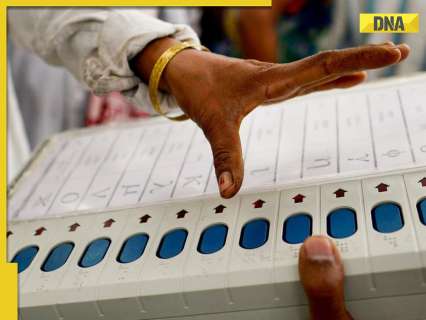
While voting will take place in seven phases from April 19 to June 1, the counting of votes will be on June 4.
Lok Sabha polls 2024: Voting on PM Modi’s Varanasi seat on this date
Phase 1 will be held on April 19, Phase 2 on April 26, Phase 3 on May 7, Phase 4 on May 13, Phase 5 on May 20, Phase 6 on May 25, and Phase 7 on June 1.
Fani Willis’ ‘sordid scandal’ could make finding a jury in the Trump case ‘much harder’: experts
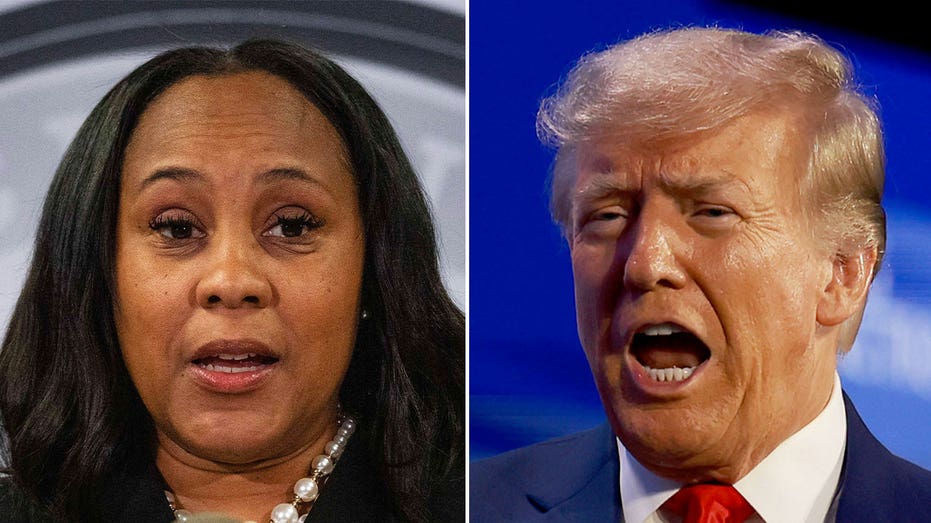
After a Georgia judge gave embattled District Attorney Fani Willis an ultimatum to resign or remove her ex-lover and subordinate counsel, legal experts say their “illicit affair” could complicate jury selection in the case against former President Trump. On Friday morning, Fulton County Superior Court Judge Scott McAfee decided lawyers for Trump and several co-defendants charged in the sweeping 2020 election interference case “failed to meet their burden of proving” an “actual conflict of interest in this case” after alleging Willis benefited from hiring special prosecutor Nathan Wade, with whom she was romantically involved. By Friday afternoon, Wade resigned from his position, noting in a letter to Willis he was doing so “in the interest of democracy,” leaving Willis to move forward with the prosecution. But legal experts told Fox News Digital Willis’ “sordid scandal” further complicates selecting a jury in an already high-profile case. TRUMP GEORGIA CASE: FIVE KEY TAKEAWAYS FROM JUDGE’S ORDER GIVING DA FANI WILLIS AN ULTIMATUM “Judge McAfee said in his order that, ‘Whether this case ends in convictions, acquittals or something in between, the result should be one that instills confidence in the process,’” John Malcolm, a former assistant U.S. attorney in Atlanta, told Fox News Digital. “Fani Willis’ actions here have made that laudable goal much harder to achieve and will certainly prolong the process of picking a jury that does not have a preconceived opinion about what the outcome ought to be or how fair the process has been to the defendants.” GEORGIA JUDGE TOSSES KEY WITNESS’S TESTIMONY AGAINST FANI WILLIS, CITING ‘INCONSISTENCIES’: COURT ORDER While there’s no legal requirement to find a potential juror who doesn’t know anything about the case or hasn’t been following it, the judge must ask potential jurors if they can put aside whatever information they may have heard outside the courtroom along with whatever biases or preconceived notions they have about the case and focus only on the evidence presented in the courtroom. “Jury selection is already a huge challenge in cases involving President Trump,” Jim Trusty, former legal counsel for Trump and a former federal prosecutor, told Fox News Digital. TRUMP ATTORNEY REACTS TO FULTON COUNTY JUDGE’S FANI WILLIS DECISION: ‘PROSECUTORIAL MISCONDUCT’ “Having a sordid scandal play out in public hearings — and making inflammatory comments in church — will not make jury selection any easier,” Trusty said, adding there is a risk “prospective jurors might lie about their biases to be a part of the big case.” John Shu, a legal scholar and commentator who served in the administrations of presidents George H. W. Bush and George W. Bush, said, “The prosecution of former President Donald Trump was already high profile. Adding the fallout of Fani WIllis’ illicit affair and scolding by the Fulton County judge only complicates jury selection.” Willis, from the onset, has sought a trial to commence before the November election, less than one year after a grand jury returned an indictment. But Shu says in light of delays resulting from the motions to disqualify Willis and the judge deciding earlier this week to dismiss some of the charges against Trump and his co-defendants, Willis is still “months away” from getting to trial. Fox News Digital reached out to Willis’ office for comment.