

Bengal CM Mamta Banerjee discharged, to be under ‘close monitoring’ after getting stitches

Chief Minister of West Bengal reported to our hospital today around 7.30 pm with a history of a fall within the vicinity of her home due to some push from behind.
Virginia Gov. Glenn Youngkin says he won’t support recently passed budget that includes tax hike

RICHMOND, Va. (AP) — The budget the Democratic-led Virginia General Assembly passed last week is a “broken” plan that would impose a $2.6 billion tax hike over two years, Gov. Glenn Youngkin said Thursday, announcing he had asked lawmakers to work with him on revisions. Youngkin, who said he hoped to avoid vetoing the budget as a whole, called on Democratic leaders to “get around the table” with his administration to refashion a plan that axes a proposed new sales tax on digital goods and makes corresponding spending cuts to account for the revenue reduction. Youngkin suggested he could then submit compromise amendments to the budget for a General Assembly vote in April, when lawmakers reconvene next. VIRGINIA GOVERNOR CALLS PRO-PALESTINIAN PROTEST THAT DISRUPTED INTERSTATE TRAFFIC ‘UNACCEPTABLE’ “So that’s the work we’ll do over the course of the next three weeks in order to come up with a budget that does not have tax increases in it and make sure that we’re funding our key priorities,” Youngkin said. He also made clear he would keep pushing to advance another priority lawmakers have so far rejected — a $2 billion development district with a new arena backed partly by public dollars and intended to lure the NBA’s Washington Wizards and the NHL’s Washington Capitals to Alexandria. Youngkin‘s remarks, which came during a campaign-style appearance at a Richmond-area restaurant filled with supporters, were the most extended he’s given on the budget since lawmakers adjourned their annual session Saturday after passing the spending plan for the next two years and a bill that makes adjustments to the existing budget. Democrats have defended their budget proposal, which passed with some Republican support, as focused on the needs of working families and Virginia’s public education system. The plan “was on time, it was balanced, structured, consistent with Virginia traditions, invested more in K-12 and advanced the priorities of Virginians we’re working for,” Senate Majority Leader Scott Surovell said Saturday. But Youngkin called the plan “broken” and argued it would take Virginia “backward” after bills signed in the previous two years enacted a combined $5 billion in tax cuts, some through one-time rebates. “They want to put their hand in your pocket and take your money that you deserve to keep and go do pet projects with it,” said Youngkin, who initially introduced the idea of the expanded sales tax in December but did so coupled with a cut to the income tax rates, resulting in a budget plan he said would reduce taxes overall. Lawmakers also included language in their budget legislation directing Virginia to rejoin the Regional Greenhouse Gas Initiative, a multistate carbon cap-and-trade program intended to reduce power plants’ carbon emissions. A regulatory panel removed the state from the program under Youngkin’s direction in a move that’s being challenged in court. The governor argues the program has functioned as a tax on Virginians because utilities can at least partly recover the compliance costs from ratepayers. The combination of the cost of rejoining the initiative along with the proposed new tax on digital goods, which lawmakers expanded to include business-to-business transactions as well, would amount to $2.6 billion over two years, said Youngkin, who made clear he wants both components removed from the bill. “We will not have a tax increase,” he said. Democratic Del. Luke Torian, who chairs the House Appropriations Committee and is the top budget negotiator for his chamber, said in an interview Thursday evening that Youngkin had requested a meeting with legislators and that work was under way to find a date. Torian said he would otherwise reserve further comment on the governor’s speech or his own position on the negotiations until he’d had the chance to discuss the matter with Youngkin. Democratic Sen. L. Louise Lucas, Torian’s Senate counterpart and a sharp critic of the governor, didn’t immediately weigh in on Youngkin’s remarks but took a jab at the proposed arena deal on social media and in emails on which she copied reporters. She has been the Assembly’s leading opponent of the proposal, which Youngkin unveiled in December, and has effectively defeated standalone legislation underpinning it and blocked its inclusion in the budget legislation. “The GlennDome is done,” she wrote in one of the emails, using her nickname for the project. Youngkin, who noted he could insert arena language back into the budget bill, told reporters he hoped the Senate would give the proposal a more thorough vetting. “The Senate has to engage,” he said. Separately Thursday, Youngkin announced he had vetoed 20 bills, on top of eight others he shot down last week. In a statement, his office said the measures “would impose significant burdens on small businesses, limit statewide decision-making, and escalate tuition fees and expenses for hardworking Virginia families.” Among those vetoed was a bill that would have made Virginia the 49th state in the country to allow class-action lawsuits, Surovell said on social media. Another sponsored by Democratic Sen. Jennifer Boysko would have prohibited employers from seeking the wage or salary history of a prospective employee or relying on that information in determining wages or salary. Boysko has argued such legislation would help narrow the wage gap for women and minorities. Lawmakers sent Youngkin over 1,000 bills during the course of the 60-day legislative session. Legislators will meet April 17 to consider his proposed amendments to the budget and other legislation. They can also attempt to override his vetoes, which would require Republicans to join with the narrow Democratic majorities to reach a two-thirds vote threshold.
Japan’s bid to cancel residency of foreigners who dodge taxes stirs unease
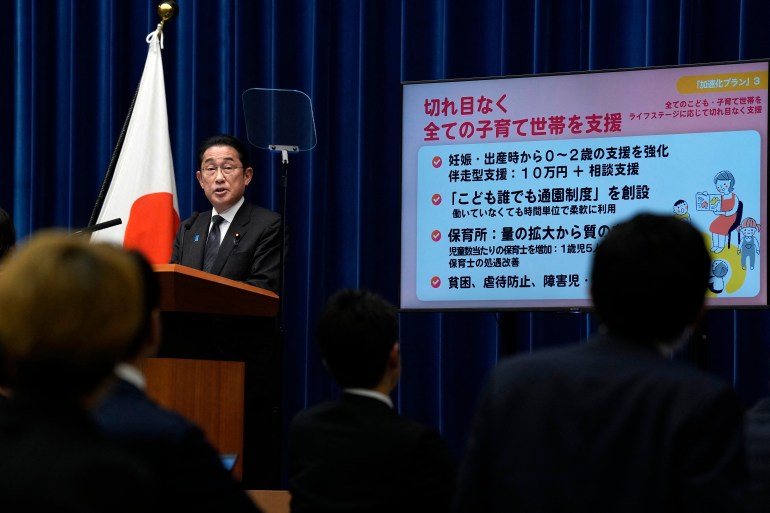
Tokyo, Japan – For foreigners in Japan, permanent residency has long been a much sought-after assurance of security in a country that has historically shunned mass immigration. But proposals by Tokyo to cancel the permanent residence status for those who fail to pay their taxes and social insurance contributions are now calling that security into question, stirring unease among some longtime foreign residents. Ben Shearon, a British native who has lived in Japan for almost 24 years, is among those questioning the rationale behind the proposed changes to immigration law. A permanent resident, Shearon retired in 2022 and now spends most of his time working on his website RetireJapan, where he offers coaching and financial advice to Japan’s expatriate population. “I am not worried about my own status in Japan. I have paid all my taxes and I have also been paying into the national health insurance and public pension in Japan since I arrived,” Shearon told Al Jazeera. “My main issue at the moment is that the headlines seem to feed a narrative that foreign residents, especially permanent residents, are not paying their fair share.” Japan’s Prime Minister Fumio Kishida has raised the alarm about his country’s declining population [File: Eugene Hoshiko/AFP] Under the standard process for obtaining permanent residency, applicants must have lived in Japan for at least 10 years and held a work visa for five of those years. But since 2017, foreign residents have been able to fast-track the process to as little as one year if they score highly on a points-based assessment that looks at work experience, salary, academic qualifications, age and Japanese language proficiency. The law also states that a foreigner’s permanent residence must be in the best interests of Japan, which includes paying taxes, pension contributions and health insurance premiums. At present, the government can only revoke an individual’s permanent residence in a narrow set of circumstances, including being sentenced to more than one year in prison. Under the proposals, authorities would be able to cancel residents’ visas over the non-payment of taxes and prison sentences of less than one year. ‘Small minority’ Shearon, like other foreign-born residents, is concerned that the proposals single out non-Japanese citizens for special scrutiny. “I’m also not a fan of creating new penalties that only apply to foreigners when we already have laws and consequences for not paying tax that apply to everyone in Japan equally,” he said. “If not paying health insurance or pension is a significant problem in Japan, then surely the way to address it is to strengthen enforcement for everyone, not just focus on a small number of a small minority.” Permanent resident visa holders currently number about 880,000 in Japan, less than one percent of the population. Since the announcement of the proposals last month, foreign residents reacting to the plans have generally fallen into one of two camps. While some see Prime Minister Fumio Kishida’s administration stoking xenophobia, others have scoffed at the suggestion foreigners are being singled out, arguing that tax evaders should be punished and only those seeking to game the system have anything to fear. “What are these gaijin even complaining about? If you already pay your taxes, congratulations. You have nothing to worry about,” Oliver Jia, a Kyoto-based researcher and writer, said on X in response to a post decrying the proposals as discriminatory. “Do these people realize that permanent residence by default means you have less rights than citizens? That’s how virtually every country on earth functions,” Jia added. “Japan isn’t going to bend over backwards for you, especially because you’ve decided you don’t want to pay taxes. Unhinged.” Austin Smith, public policy manager at GR Japan, a politically neutral government relations and advisory firm, said the proposed amendment would water down permanent residence status, but only to an extent. “PR visa revocation will likely still be a rarity, but it will be more common than under the current system,” Smith told Al Jazeera. “Still, even a slight increase in the likelihood of having one’s PR status revoked is bound to worry foreign residents, many of whom have built their lives around Japan.” Smith said he believed the measures would most likely only be applied to those who knowingly committed tax evasion or crimes resulting in imprisonment. “There are concerns, however, that this could affect those unable to pay taxes due to job loss or other factors,” Smith said. “Or that it could be expanded in the future to enable revocations for crimes resulting in fines.” Japan’s workforce is shrinking rapidly due to its low birth rate [File: Eugene Hoshiko/AP] The move comes despite a push by Japan to attract more immigrants as it faces rapid population decline. In recent years, municipalities throughout Japan have simplified the pathway for obtaining visas for startup owners and business managers. Later this month, Tokyo is set to launch a new digital nomad visa, targeting remote workers from 49 countries who earn more than 10 million yen a year. Japan’s foreign trainee programme, which has often been maligned as a cover for importing cheap labour since its introduction in 1993, is undergoing a sweeping overhaul to make it easier to transition to being a skilled work visa holder, and, eventually, permanent resident. In late February, the government also eased visa regulations to allow more foreign students to find jobs in Japan after they’ve completed their studies. According to official forecasts, Japan’s population is on track to shrink from about 125 million to fewer than 80 million by 2070. Policymakers see higher levels of immigration as one way to replenish the workforce and avoid a further slowdown in the country’s already meagre economic growth rate. Smith said he is sympathetic to the need for more immigrants, but does not see the proposed changes to the permanent residency rules as necessarily in conflict with Japan’s turn towards pro-immigration policies. “The goal here for lawmakers seems to be aligning PR visa revocation conditions with the guidelines for securing PR status,” he said.
Texas counties lead the US in population growth, Census says

Kaufman County, east of Dallas, grew faster than any other in the country from 2022 to 2023. Harris County added the most new residents.
Missouri Senate passes sweeping education bill
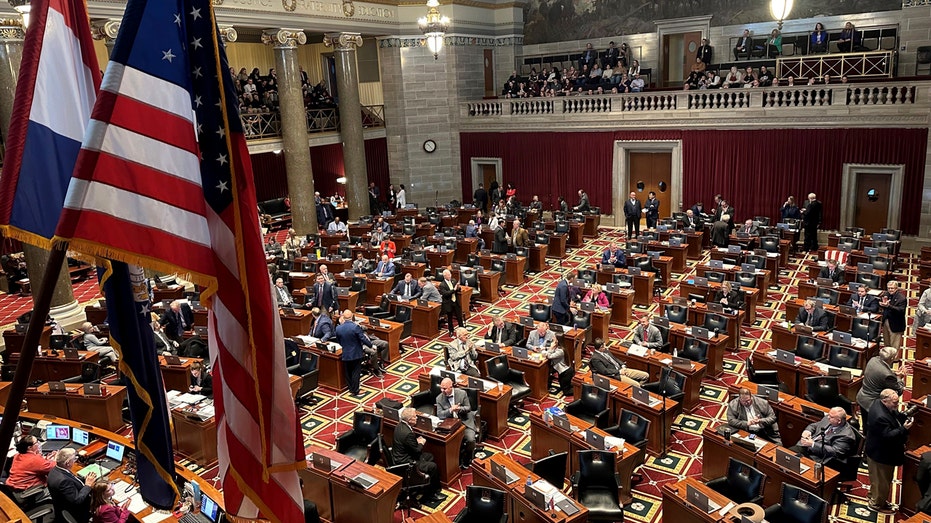
Students across Missouri could have access to scholarships for private schooling through an expanded tax credit program passed Thursday in the GOP-led state Senate. Senators voted 19-10 to pass the sweeping education bill, an approval earned after weeks of bipartisan negotiation. The measure now heads to the Republican-led House for approval. The legislation represents a win for advocates of greater access to non-traditional K-12 education, such as private, religious, charter and virtual schooling. Part of the proposal would allow charter schools to open in Boone County, for example. MISSOURI AG SAYS JUVENILE SYSTEM MUST BE REFORMED AFTER TEEN ARRESTED FOR SLAMMING GIRL’S HEAD INTO PAVEMENT “We were focusing on providing choices beyond just public school,” Republican bill sponsor Sen. Andrew Koenig said. But the measure also includes concessions for ardent public school supporters opposed to using public funding to support charters and private schools. Compromises included in the bill include hundreds of millions of dollars in added funding for K-12 public schools and more money for districts that keep a five-day school week. “Senate Democrats have always held the position that we’re going to oppose privatization of education through the siphoning-off of taxpayer funding,” Democratic Sen. Lauren Arthur said. “So, yes, we strongly oppose vouchers and the expansion of charters. I will say there was a lot in the bill that made it very tempting to vote for.” The heart of the legislation is the expansion of Missouri Empowerment Scholarships Accounts, a voucher-like program that offers education grants to low-income families. The scholarships are funded by private donors, who in turn receive tax credits. The current program limits recipients to residents of the state’s largest cities and to families who make 200% of the federal poverty level, which is $62,400 a year for a family of four. Supporters want to offer the scholarships statewide to families that make as much as 300% of the federal poverty level, or $93,600 for a family of four. The legislation would increase the cap on tax credits from $50 million to $75 million per year. Unrelated, the proposal would require a local vote for large-city school districts to go to four-day weeks. In total, Republican and Democratic Senate leaders estimated the bill would cost the state between $400 million and $450 million a year once fully implemented. In Missouri, the issue of so-called school choice has divided lawmakers beyond typical Republican-Democrat lines. GOP legislators from rural Missouri have pushed back for years against allowing charter schools in their areas for fear that the institutions could draw students away from traditional public schools and undermine what’s seen as the backbone of their communities. And some Democrats want more options for students in cities with underperforming schools. Lawmakers have until mid-May to send bills to Gov. Mike Parson.
Schumer speech on Israel slammed by Republicans, experts as ‘unprecedented’ and ‘ridiculous’

In what’s been called a “hypocritical,” “unprecedented,” “ridiculous” and “shameful” move by Senate Majority Leader Chuck Schumer, GOP political powerhouses are rallying against the New York senator’s suggestion Israel hold new elections and oust Prime Minister Benjamin Netanyahu. It comes at a time of growing U.S. pressure on Israel over the war in Gaza and as the Biden administration is preparing to build a temporary floating dock along the Gaza shoreline to allow for large-scale delivery of food and humanitarian aid to Gazans. The Israeli-Hamas conflict has become an increasingly polarizing issue for many Americans, making it a flash point during an already hotly contested upcoming race for the presidency. SCHUMER CALLS FOR NEW ISRAELI LEADER TO REPLACE NETANYAHU IN SENATE FLOOR SPEECH During his speech on the Senate floor Thursday, Schumer implored Israel to hold new elections and warned it of becoming a “pariah” if Netanyahu remained in power. He claimed Netanyahu had “lost his way by allowing his political survival to take the precedence over the best interests of Israel.” His comments sparked bitter reactions from Republican leaders in the House and Senate, many of whom criticized his apparent lack of understanding or appreciation of Israel’s role as the closest and friendliest ally to the U.S. in the Middle East. “Ridiculous. An absolute dereliction of duty. Undermining the leadership of an ally in the middle of a war and interfering in elections is downright dangerous,” Sen. Tim Scott, R–S.C., wrote on X, formerly Twitter. “Chuck Schumer should be ashamed for turning his back on our greatest ally in the Middle East,” wrote Iowa Sen. Joni Ernst, a Republican running to become the Senate GOP Conference chair. “While he gives lip service to Israel, his statements today show he will follow in lockstep with terrorist sympathizers while American lives are on the line.” “The primary ‘obstacles to peace’ in Israel’s region are genocidal terrorists and corrupt PA (Palestinian Authority) leaders who repeatedly reject peace deals,” Senate Minority Leader Mitch McConnell, R-Ky., wrote on X. “Foreign observers who cannot keep this straight ought to refrain from interfering in the democracy of a sovereign ally.” Richard Goldberg, a senior adviser at the Foundation for Defense of Democracies, a nonpartisan, nonprofit national security think tank based in Washington, D.C., called Schumer’s suggestion “unprecedented.” GANG LEADER ‘BARBECUE’ THREATENS POLITICIANS INVOLVED IN TRANSITION COUNCIL AS KENYA PAUSES POLICE DEPLOYMENT “Somehow, Chuck Schumer knows the politics of Israel better than the people who live in Israel – that’s really where you’ve jumped the shark,” Goldberg said. “And if, for some reason, we as Americans, on both sides of the aisle, accept this as a new form of behavior to do this to other allies – this will just be the starting point. And you will start seeing the White House trying to insert itself and to put its muscle on scales to meddle in elections in other democracies. “And now you’re on a slippery slope, where you really have to question our own democratic values when we do that.” Goldberg served on the National Security Council under former President Trump. Schumer, who is Jewish, is among the top recipients of American Israel Public Affairs Committee (AIPAC) campaign cash – upward of $1.7 million, according to The Jerusalem Post. According to Opensecrets.com, he is seventh on the list of pro-Israel recipients in the Senate from 1994 to the present, below President Biden; Sen. Bob Menendez, D-N.J.; former senator and presidential candidate Hillary Clinton; former Sen. Mark Kirk, R-Ill.; former Sen. Joe Leiberman, D-Conn.; and McConnell. In a post on X, AIPAC wrote, “Israel is an independent democracy that decides for itself when elections are held and chooses its own leaders. America must continue to stand with our ally Israel and ensure it has the time and resources it needs to win this war. Hamas bears sole responsibility for this conflict. The hope for a brighter future for the Middle East begins with Israel’s decisive defeat of Hamas.” Schumer’s remarks have largely been welcomed by congressional Democrats, many of whom have called for a cease-fire in Gaza as the conflict continues to escalate. Joel Rubin, a Democratic strategist and former deputy assistant secretary of state in the Obama adminstration, said Schumer has the “single most pro-Israel voting and legislative record of any member of Congress in the history of the United States.” He defended Schumer by arguing the speech came from an Israeli perspective and one that would facilitate peace in the long term. “Schumer said quite bluntly, ‘Look, I’ve known [Netanyahu] for decades. And the way that Netanyahu’s policy is advancing … it is his extreme kowtowing to the most dangerous voices in Israeli politics,’” Rubin said. “Schumer believes that there are a lot of culprits to blame … and he named them … extremist thinkers who want to essentially kick out all the Palestinians from Gaza. And he said that that is unhealthy for the long-term safety and security of Israel – and by extension for the American-Israeli relationship.”
Delaware bill requiring gun buyers to be fingerprinted, trained, set to become law

Senate Democrats in Delaware gave final approval Thursday to a bill requiring anyone wanting to buy a handgun to first be fingerprinted, undergo training and obtain permission from the state. The bill cleared the Senate on a straight party-line vote Thursday and now goes to Democratic Gov. John Carney, who supports it. Thursday’s vote came exactly one week before a federal appeals court hears arguments on Maryland’s decade-old permit-to-purchase law, which was declared unconstitutional by a three-judge panel of the court in November. Only a handful of other states have similar permit laws, some of which are facing legal challenges. North Carolina repealed its permit law effective earlier this year. DELAWARE HOUSE PASS BILL REQUIRING FINGERPRINTING, TRAINING AND PERMIT BEFORE BUYING HANDGUN “This is a bill about responsible gun ownership,” chief sponsor Sen. Elizabeth Lockman, a Wilmington Democrat, said of Delaware’s legislation. GOP lawmakers argue that the legislation violates the rights of law-abiding citizens to keep and bear arms. They also reject claims that a permit-to-purchase law will reduce gun violence in Delaware, saying criminals will ignore it in the same way they ignore current gun restrictions. Anthony Delcollo, an attorney for Senate Republicans, told lawmakers the bill establishes a default standard that a person is not entitled to buy a handgun, and that it is unconstitutional. Sen. Eric Buckson, a Dover Republican, warned that the bill will face a court challenge if it becomes law. The legislation prohibits licensed gun dealers, as well as private sellers, from transferring a handgun to any person unless he or she has a “qualified purchaser permit.” To obtain a permit, a person must complete a firearms training course and be fingerprinted by the State Bureau of Identification. The SBI would have 30 days to investigate the person and grant a permit if the applicant is qualified. The agency can retain the names and birthdates of permit applicants indefinitely, as well as information about when they completed a training course, and the date a permit was issued or denied. A permit would be valid for two years. It could be revoked, and any guns purchased with it seized, if the SBI director later determines that the person poses a danger to himself or others by having a gun. The bill includes exemptions for active and retired law enforcement officers, and those who already have concealed carry permits. The legislation cleared the state House on a mostly party-line vote last week after Democrats defeated several Republican amendments. GOP lawmakers in the Senate then introduced 15 amendments of their own. Democrats rejected them in a series of straight party-line votes Thursday. Some of the GOP amendments were aimed at ensuring the due process rights of individuals whose permit applications are denied. Others sought to ensure that permit applications are considered without undue delay, and that authorities cannot arbitrarily deny a permit if the applicant meets the requirements. Republicans also introduced proposals to prohibit state law enforcement officials from establishing a registry of gun owners, or requiring applicant to submit demographic information such as gender, national origin and English language proficiency. Before lawmakers voted on the amendments, Republicans peppered Lockman and attorneys with questions about the bill’s impact and how it would be implemented if signed into law. While the bill states that some of its provision take effect immediately, Mark Cutrona, head of the legislature’s research division, assured Republicans that people would not be immediately subject to the permit requirements. Implementation of the requirements would not begin until 18 months have passed, or the State Bureau of Identification has developed the necessary regulations, whichever occurs first, he noted. Major Peter Sawyer of the Delaware State Police was unable to answer several questions from Republican lawmakers about the bill, including what subjective criteria could be used to deny a permit to a person not prohibited by law from having a gun. Under the bill, the SBI director can deny a permit if there is “probable cause” to believe that the person poses a danger to self or others. “It’s hard to say,” Sawyer said when asked about potentially disqualifying criteria, noting that the regulations have not been developed. Sawyer also was unable to explain what process troopers would follow if authorities revoke a person’s permit and order surrender of permit and any guns the person has. Carney has included more than $2.9 billion in his proposed budget for the upcoming fiscal year for the permit program, which he touted during his recent State of the State speech. Carney acknowledged in his speech, however, that “a very small number of people” associated with street gangs are committing “the vast majority of gun violence” in Wilmington and Dover, Delaware’s two largest cities.
US Senate leader Chuck Schumer calls for new Israel elections amid Gaza war

The top legislator in the United States Senate, Chuck Schumer, has offered his most strident criticism of Israel since the war in Gaza began, calling for a leadership shake-up in the country. On Thursday, Schumer, a Jewish-American Democrat, took direct aim at Israel’s Prime Minister Benjamin Netanyahu in a speech from the US Senate floor, saying the Israeli leader has been “too willing to tolerate the civilian toll in Gaza”. Schumer pushed Israel to hold elections to replace Netanyahu and said the prime minister had “lost his way” in his pursuit of “political survival”. “There needs to be a fresh debate about the future of Israel after October 7,” Schumer said, referring to the date when the Palestinian group Hamas launched an attack on southern Israel, spurring the present-day war. “As a democracy, Israel has the right to choose its own leaders, and we should let the chips fall where they may,” Schumer continued. “But the important thing is that Israelis are given a choice.” Schumer, the Senate majority leader, did not suggest a timeline for any eventual vote, though. More than 31,341 Palestinians have been killed in Gaza since the start of the war, many of them children. The spiralling death toll has prompted widespread condemnation and fears of genocide in the territory. But President Joe Biden and other prominent US leaders have largely been circumspect in their criticism of Israel’s military campaign. The US is a longtime ally of Israel, and it contributes approximately $3.8bn in aid to the country every year. Still, Schumer’s words — and more vocal criticisms from Biden himself — have signalled a shift in the approach Democratic leadership is taking towards Israel, amid mounting public pressure to seek a permanent ceasefire. “We should not let the complexities of this conflict stop us from stating the plain truth: Palestinian civilians do not deserve to suffer for the sins of Hamas, and Israel has a moral obligation to do better,” Schumer said in his speech. “The United States has an obligation to do better.” Schumer added that Netanyahu was one of several “major obstacles” to a two-state solution that might eventually resolve the conflict. Netanyahu has repeatedly rejected the notion of a two-state solution, despite the Biden administration insisting it should be a cornerstone of any post-war plans. Given the Israeli government’s refusal so far to change course, Schumer hinted that the US may be forced to “play a more active role in shaping Israeli policy by using leverage”. Response to Schumer’s speech The speech marks one of the most direct and biting speeches given by a high-ranking US political leader during the war’s first five months. And it quickly prompted a response, both from the Israeli government and the Biden administration. Speaking to reporters on Thursday, US Department of State spokesperson Matthew Miller said Schumer’s comments were his own and did not represent the stance of the administration. “There are a number of things we wanted to see Israel do differently,” Miller acknowledged nevertheless. Far-right Israeli Finance Minister Bezalel Smotrich weighed in as well, condemning Schumer’s remarks. “We expect the largest democracy in the world to respect Israeli democracy,” Smotrich said. US Republicans, for their part, used the speech to blast the Democratic leadership. Senate minority leader Mitch McConnell, for instance, described Schumer’s call for new elections in Israel “grotesque and hypocritical”. “The Jewish state of Israel deserves an ally that acts like one,” McConnell said. Critics push for action Schumer attempted to preemptively fend off such criticism during his speech, underscoring his pro-Israel bona fides. As the highest-ranking Jewish person in US government, he also drew on his family’s history with the Holocaust to underscore his sympathy for the Israeli plight. “If the events of the last few months have made anything clear, it is that Israel is surrounded by vicious enemies, and there are many people around the world who excuse and even support their aims to expel and kill Jews living in their hard-won land of refuge,” Schumer said. But while Schumer and other top Democratic leaders have remained stalwart in their support of Israel, their rhetoric has shifted in recent weeks to be increasingly critical of its military campaign. Biden, for instance, has warned Israel about pursuing a ground operation in the southern city of Rafah, calling it a “red line“. Officials have also denounced Israeli impediments to the distribution of aid in Gaza. Still, critics of the administration have said such words are empty without more material action. Earlier this week, for instance, eight US senators — including Vermont’s Bernie Sanders — issued a letter to the president calling on him to premise aid to Israel on the condition that access to humanitarian aid in Gaza be expanded — and any impediments removed. Settler sanctions Schumer’s speech on Thursday also came as the US announced more sanctions on Israeli settlers and illegal outposts in the occupied West Bank — one area the Biden administration has shown more willingness to act. The US Department of State said the outposts known as Moshes Farm and Zvis Farm had been bases for violence against Palestinians. Thursday’s sanctions also targeted three illegal Israeli settlers. The administration in February imposed sanctions on four Israeli men it accused of being involved in settler violence in the occupied West Bank, which has surged since October 7. “It is critical that Israel take additional action to stop settler violence and hold accountable those responsible for it, not just for the sake of the victims of this violence, but for Israel’s own security and standing in the world,” Miller, the State Department spokesman, told reporters. Adblock test (Why?)
Palestinian President Abbas appoints Mohammed Mustafa as prime minister

The move comes as the Palestinian Authority faces pressure to reform from the US amid Israel’s war on Gaza. Palestinian President Mahmoud Abbas has appointed his longtime economic adviser Mohammed Mustafa to be the next prime minister in the face of US pressure to reform the Palestinian Authority as part of Washington’s post-war vision for Gaza. Mustafa, a US-educated economist and political independent, now faces the task of forming a new government for the PA, which has limited powers in parts of the Israeli-occupied West Bank. In a statement announcing the appointment on Thursday, Abbas asked Mustafa to put together plans to re-unify administration in the occupied West Bank and Gaza, lead reforms in the government, security services and economy and fight corruption. Mustafa replaces former Prime Minister Mohammed Shtayyeh who, along with his government, resigned in February citing the need for change amid Israel’s war on Gaza and escalating violence in the occupied West Bank. The internationally recognised PA, which is dominated by the Fatah party, exercises limited self-rule in the occupied West Bank, but lost control of Gaza to Hamas in 2007. Aims to reunify governance of Palestinian lands after face major obstacles, including strong opposition from Israeli Prime Minister Benjamin Netanyahu, and a devastating war that is still grinding on with no end in sight. Fatah and Hamas are expected to meet in Moscow this week for talks. Mustafa, 69, has held senior positions at the World Bank and previously served as deputy prime minister and economy minister. In 2015, Abbas appointed Mustafa as the chairman of the Palestine Investment Fund (PIF), which has nearly $1bn in assets and funds projects across the occupied Palestinian territory. He served as a deputy prime minister responsible for economic affairs from 2013 to 2014, when he led a committee tasked with rebuilding Gaza after the seven-week war in which more than 2,100 Palestinians were killed. Speaking at Davos in January, Mustafa said the “catastrophe and humanitarian impact” of Israel’s continuing war on Gaza was much greater than a decade ago. At least 31,341 Palestinians have been killed in Gaza since October 7, most of its 2.3 million population have been displaced and are in desperate need of aid, and swaths of the enclave now lie in rubble. Biden administration officials have urged Abbas to bring new blood, including technocrats and economic specialists, into a revamped PA to help govern post-war Gaza. But it is unclear whether the appointment of a new cabinet led by a close Abbas ally would be sufficient to meet US demands for reform, as the 88-year-old president would remain in overall control. Israel, meanwhile, has said it will never cooperate with any Palestinian government that refuses to reject Hamas and its October 7 attack on southern Israel. Mustafa, in his Davos remarks, described the October 7 attack as “unfortunate for everybody”. “But it’s also a symptom of a bigger problem … that the Palestinian people have been suffering for 75 years non-stop,” he said. “Until today, we still believe that statehood for Palestinians is the way forward, so we hope that this time around we will be able to achieve that, so that all people in the region can live in security and peace.” Adblock test (Why?)
What is the history of foreign interventions in Haiti?

The proposal initially sparked an uproar. In October 2022, then-Haitian Prime Minister Ariel Henry and 18 top officials called on the international community to send a “specialised armed force” to help combat the spread of gang violence in Haiti. But Haiti has struggled with a long, fraught history of foreign involvement — and the prospect of a new wave of outside interference was met with scepticism. Now, experts say that public opinion is shifting in Haiti, as the violence continues to fester and Haiti’s already tenuous government is on the verge of yet another shake-up. “In October 2022, most Haitians were against an international force,” said Pierre Esperance, executive director of Haiti’s National Human Rights Defense Network (RNDDH). “But today most Haitians will support it because the situation is worse, and they feel there are no other options.” Still, the history of international involvement in Haiti casts such a long shadow that it continues to be a divisive subject — both among the Haitian people and the outside forces that would potentially be involved. A new level of crisis The instability in Haiti entered a new chapter this week when Prime Minister Henry — an unelected official who has been serving as de facto president — announced that he planned to resign. The announcement came after mounting international pressure, as well as threats from the gangs themselves. One of the country’s most notorious gang leaders, Jimmy “Barbecue” Cherizier, told reporters that a “civil war” would erupt if the deeply unpopular Henry did not step down. The calls for an international force to intervene arise from the acute nature of the situation, Esperance and other experts told Al Jazeera. Gang violence has forced more than 362,000 Haitians from their home, largely in and around the capital of Port-au-Prince. The United Nations estimates that at least 34,000 of those have been displaced since the start of the year. Armed groups have also taken control of roadways and other vital arteries around the country, limiting the flow of supplies. With high rates of poverty already driving malnutrition, the UN has warned the country is at risk of famine. “The gangs control more than 95 percent of Port-au-Prince,” Esperance said. “Hospitals don’t have materials, there’s not enough drinking water, the supermarkets are almost empty. People are staying at home because it’s very dangerous.” Will Kenya take the lead? With gang violence at crisis levels and Haiti’s government in shambles, some Haitians are increasingly looking abroad for assistance. An August poll released by the business alliance AGERCA and the consultancy DDG found that about 63 percent of Haitians supported the deployment of an “international force” to combat the gangs. An even higher portion — 75 percent — said the Haitian police needed international support to reestablish order. But countries like the United States and Canada have baulked at the prospect of helming such a force themselves, though they have offered to back other governments that might lead one. In July 2023, Kenya announced it would be willing to deploy forces to Haiti and potentially lead a multinational security mission. The UN Security Council threw its support behind the initiative, approving the Kenya-led mission. But the effort has since stalled, amid court challenges and other slowdowns. In January, a Kenyan court ruled that deploying forces in Haiti would be “illegal and invalid”. And just last Tuesday, Kenyan officials said they would pause any deployment to Haiti until a new government was in place. Jonathan Katz, the author of the book The Big Truck That Went By: How the World Came to Save Haiti and Left Behind a Disaster, told Al Jazeera that the international community’s hesitation to lead a mission to Haiti is a testament to the poor track record of past foreign interventions. “These countries are saying, ‘We need to do this because we can’t think of any other solution,’” said Katz. “But nobody wants to do it themselves because every single one of these interventions throughout Haiti’s history have ended with significant egg on the face for everyone involved.” ‘A direct colonial occupation’ Since the early 1900s, there have been at least three direct interventions in Haiti, including a decades-long occupation by US forces. That occupation lasted from 1915 to 1934 and was carried out in the name of restoring political stability after the assassination of then-President Vilbrun Guillaume Sam. But during their time in Haiti, US forces oversaw widespread human rights abuses and the implementation of a “corvée”, a system of forced labour sometimes likened to slavery. “Slavery it was — though temporary,” said US civil rights leader James Weldon Johnson, writing for The Nation magazine in 1920. “By day or by night, from the bosom of their families, from their little farms or while trudging peacefully on the country roads, Haitians were seized and forcibly taken to toil for months in far sections of the country.” US soldiers even removed substantial funds from the Haitian National Bank, carting them off to New York. “This was a direct colonial occupation that began under US President Woodrow Wilson and lasted for five administrations, both Republican and Democrat,” Katz said of that period. “Later occupations were carried out with varying degrees of directness and indirectness.” A hand in Haiti’s politics For instance, the US would intervene again in Haitian politics during the Cold War, as it propped up governments friendly to its interests in the name of anti-Communism. Positioning himself as an anti-Communist leader upon his election in 1957, Haitian President Francois “Papa Doc” Duvalier actively courted US support, even as he led a brutal campaign of state violence against his own people. Despite misgivings about Duvalier, the US offered him aid: US Ambassador Robert Newbegin, for instance, arrived in Port-au-Prince prepared to give Duvalier’s administration approximately $12.5m in 1960 alone. One estimate puts the total US support given to Haiti under Duvalier and his son, Jean-Claude “Baby Doc” Duvalier, at $900m. Meanwhile, the Duvaliers faced accusations of murder, torture and other violations. The US