

Johnson says House will ‘apply every amount of pressure’ to Senate to pass TikTok bill

Speaker of the House Mike Johnson says the lower chamber of Congress will fiercely pressure the Senate to approve the bipartisan bill targeting TikTok. The bill — which would force Chinese company Bytedance to divest from the social media app or ban it entirely — sailed through the House of Representatives easily yesterday with a 352-65 bipartisan vote. Its future in the Senate is unknown, as Senate Majority Leader Chuck Schumer has remained uncommitted to the idea of bringing it to the floor. 50 DEMOCRATS, 15 REPUBLICANS VOTE ‘NO’ ON BILL AIMED AT BLOCKING TIKTOK “Let’s see what the House does,” Schumer told reporters on Tuesday before the bill’s success in the lower chamber. “I’ll have to consult — and intend to consult — with my relevant committee chairmen to see what their views would be.” The overwhelming bipartisan support for the bill thus far will make it difficult for Schumer and other senators to ignore. “We’re gonna apply every amount of pressure that we can because we think that that’s the right thing,” Johnson told the New York Post just hours after the successful vote. DEFYING TRUMP, HOUSE GOP PLANS TO FORGE AHEAD WITH TIKTOK BILL THAT COULD BAN APP President Biden has publicly stated he would sign the proposed TikTok divestment legislation if it reached his desk. By contrast, former President Donald Trump shocked both parties by completely flipping his views on the app since his term in the Oval Office. He urged against the bill, claiming it would only empower other tech giants such as Facebook. The bill was led in the lower chamber by House China select committee Chair Mike Gallagher, R-Wis., and ranking member Rep. Raja Krishnamoorthi, D-Ill. TikTok’s critics have long warned that the social media app poses a national security threat. Lawmakers have cited concerns about the Chinese government’s ability to leverage its power over Bytedance to access sensitive user data. China hawks have also warned that the app’s popularity among young Americans gives the ruling Chinese Communist Party a platform for a mass influence campaign.
Morocco’s Marrakesh is awakening slowly from the earthquake damage

Marrakesh, Morocco – Like everyone in Marrakesh, 39-year-old Zakaria Lamnichri was surprised when the earthquake hit six months ago. Speaking from his stall in the centre of the city, the easy flow of his conversation interrupted by queries from browsing tourists, he recalls the tremors he experienced as the magnitude 6.9 earthquake ripped through the nearby mountains, claiming the lives of about 3,000 people. “The moment, for those who lived it, was horrifying. My wife and son were away in the mountains. I was here. I was terrified for them. For them, that terror lasted for days,” he said, describing how rescuers struggled to reach the small, isolated village where his family was staying and, like many in the High Atlas Mountains, accessible only by donkey or moped. “No one expected it,” he continued. “No one knew what to do. What affected me especially was the emotional part, of seeing other people’s problems. Of rich people who were left with nothing,” he says, pausing. “People who had children and lost them.” While the epicentre of the earthquake may have been some 75km (47 miles) distant, the destruction that remains in the centre of Marrakesh is a testament to its destructive power. Equally, that the tourists have returned in such numbers is a testament to the enduring lure of the North African city. Zakaria [Simon Speakman Cordall/Al Jazeera] However, for many of the people who live here, like those in the mountains, any sense of permanence, or confidence that the future may hold the same rewards and challenges as the past, has been lost. History ends Today, much of the rubble that blocked the passageways of the 12th-century medina has been cleared. However, for the houses hit the worst, like those in the Jewish district, or mellah, fields of loose rock now lie where homes once stood. Karim Nassir’s house withstood the earthquake. But he remembers being bundled out into the dark, along with his wife and his seven-year-old son. “It was very dark,” he recalls now, his son hanging off his leg. “But you could hear the houses falling down,” he said, describing the dust and confusion that filled the narrow lanes and alleyways that define much of the medina. “A lot of families have changed their houses,” 27-year-old spice seller Abdul Samad says. “A lot of families have gone. It’s all over, look,” he says, pointing to the latticework of cracks and fissures that stretch out along the wall behind him. “My family has changed house,” he says, describing how his family’s home had barely withstood the quake. Parts of the medina still show the damage from September’s earthquake [Simon Speakman Cordall/Al Jazeera] While the damage extends across much of the medina, even reaching as far as the landmark Kutubiyya Mosque, whose distinctive minaret adorns the thousands of fridge magnets on sale throughout the medina, the brunt was felt in the mellah, once home to about 70,000 ethnic inhabitants, reduced over subsequent years by emigration, war and history to a cluster of just 250. Across the mellah, houses that had withstood the passage of generations lie in rubble, their inhabitants forced to live in storehouses and outhouses undamaged by the quake. Everywhere, as it is across the mountains that look down upon the city, people talk of the loss of any sense of permanence, of waiting for the next earthquake that will destroy everything in a region that, historically, has known only earthquakes. Tourists return Inevitably, as news of the earthquake spread around the world, tourists cancelled their trips. Tourism, representing approximately 7 percent of gross domestic product (GDP), is one of the key pillars of the Moroccan economy that had been all but wiped out during the global pandemic. For a time in September at least, it seemed like any kind of sustainable recovery would elude what was Morocco’s most visited city. But as inevitably as the tourists departed, they returned. [embedded content] Despite the destruction and loss of life, 2023 proved a record year, with tourism closing 12 percent up on the previous year. Even in February, the low season by Moroccan standards, Marrakesh’s hotels buzz with the international chatter of hikers, tourists and the curious, while the alleyways and lanes of the medina are full of those seeking a little winter sun and some culture. “Numbers dropped by around half after the earthquake,” stallholder Nourddine Idar says from the depths of the Jewish district, the wall behind him a tapestry of imitation animal hides. “About two weeks later, they were back,” the 26-year-old said, describing the variety of visitors that pass by his shop and peruse his goods. Cracks line the wall opposite him. In the courtyard of one of the mellah’s two synagogues, Brian Cox and Kayleigh Singh, both in their 20s, had just arrived the day before from the United Kingdom to scrutinise an especially confident tortoise. “We just came to see something new,” Kayleigh says. Nourddine Idar’s simple stall in Marrakesh, February 2024 [Simon Speakman Cordall/Al Jazeera] Jack chimes in: “We heard it’s very culturally rich and the people are very nice and welcoming, too.” The future However, there is no denying that the medina remains shattered. Tourists must now snake their way past joints and buttresses to explore the medina’s inner reaches, just as residents have come to lie their washing upon the soaring wooden joints so that they can dry in the sun. In the square, Zakaria combs through a box of welded metal fittings. “You know, coronavirus changed our [attitude to] life, the way you survive, the way you treat money, the way you think money will always be there, that your work will be there. “You know, before corona[virus], we were too arrogant, or at least I was,” he says with a laugh. He looks out at the square, the competing stands and the bustling tourists. “After what happened here, we realised that we were nothing. What we have now, we can lose a second,” he said. “It’s not
Japan court rules ban on same-sex marriage is ‘unconstitutional’

Japan is only G7 nation that excludes same-sex unions with conservative government criticised as stonewalling diversity. A high court in Japan has ruled that the country’s ban on same-sex marriage is “unconstitutional” as pressure mounts for such unions to be legalised. On Thursday, the Sapporo High Court said not allowing same-sex couples to marry violates their fundamental right to have a family, and called for urgent government action to address a lack of laws allowing same-sex unions. A lower court in Tokyo issued a similar ruling earlier on Thursday, becoming the sixth district court to do so. But the Tokyo District Court ruling was only a partial victory for Japan’s LGBTQ community calling for equal marriage rights, as it does not change or overturn the current civil union law that describes marriage as between a man and a woman. Japan is the only member of the Group of Seven (G7) nations that still excludes same-sex couples from the right to legally marry and receive spousal benefits. Support for marriage equality has grown among the Japanese public in recent years, but the governing Liberal Democratic Party, known for its conservative family values and reluctance to promote gender equality and sexual diversity, remains opposed to the campaign. ‘Groundbreaking’ Amnesty International said Thursday’s rulings were “groundbreaking”. “The court decisions today mark a significant step towards achieving marriage equality in Japan. The ruling in Sapporo, the first High Court decision on same-sex marriage in the country, emphatically shows the trend towards acceptance of same-sex marriage in Japan,” said the group’s East Asia researcher Boram Jang. “By recognizing that the government’s ban on same-sex marriage is unconstitutional, these rulings make clear that such discrimination has no place in Japanese society,” the statement said, adding that the government now needs to be proactive in moving towards the legalisation of same-sex marriage so that couples can fully enjoy the same marriage rights as their heterosexual counterparts. Japan: Groundbreaking same-sex marriage rulings a long-awaited victory for LGBTI rights https://t.co/nq6MZT6Pyg — amnestypress (@amnestypress) March 14, 2024 The high court does not have the power to overturn the constitution. Five previous courts delivered varying rulings in the past two years before Thursday with some upholding the current law – while raising concerns about protecting individuals’ rights – and others ruling against it. Dozens of advocacy groups have pushed for anti-discriminatory laws. About 8 percent of the more than 120 million population in Japan identify as being a sexual minority. Views about same-sex marriage in Japan have shifted in recent years, with some 68 percent of the population saying they favour a law legalising it, according to a 2023 survey by the Pew Research Center. Hundreds of municipalities throughout Japan allow same-sex couples to enter partnership agreements but their rights are limited. Partners cannot inherit each other’s assets or have parental rights to each other’s children, hospital visits are not guaranteed, and spousal benefits cannot be collected. Last July, the government passed a “fostering LGBTQ understanding” law that stipulates “there should be no unfair discrimination” against sexual minorities, but critics argue it is not strong enough. “The law passed by the government last year to ‘promote understanding’ of LGBTI people is not enough,” Amnesty said. “There need to be concrete, legal measures in place to protect same-sex couples and the LGBTI community in Japan from all forms of discrimination.” Adblock test (Why?)
‘Do I vote? Hell no’: Russia heads to predictable presidential election

On Friday, Russians will head to the polls to cast their ballots in a presidential election that has an all but certain outcome. Incumbent President Vladimir Putin is widely predicted to win a fifth term. Assuming he serves the full six years until 2030, if taken together with his time as prime minister from 2008 to 2012, he would become the longest-reigning Russian leader since Joseph Stalin. But formally, at least, he is pitted against three other presidential hopefuls: Leonid Slutsky of the ultranationalist Liberal Democratic Party of Russia (LDPR), Vladislav Davankov of the centre-right New People, and Nikolai Kharitonov of the Communist Party. “I’m voting for Putin because I trust him,” 69-year-old Tatyana, from Moscow, told Al Jazeera. “He is very educated and sees the world globally, unlike the leaders of other countries. I support the direction of development of our country under the leadership of Vladimir Vladimirovich [Putin] because we see no other way. Once upon a time, I don’t remember when, I voted for [Boris] Yeltsin.” As Russia’s full-scale invasion of Ukraine continues, Tatyana believes Western powers are at fault. “In recent years, the West has demonised Russia, and it was clear even to me that we were being prepared for slaughter. And if you look at the world map in 2020, you will see how NATO bases have surrounded our country. 1+1=2!!! The mosaic has come together,” she said. According to the latest figures from the independent Levada polling agency in February, 86 percent of Russians approve of Putin’s presidency and his running of the country. Although the reliability of collecting such data in states such as Russia, with a hardline leader, has been questioned, Putin still undeniably enjoys support and his victory is considered a given. That, together with allegations of vote rigging and the careful vetting of candidates, has left many opposition-minded Russians thinking: Why bother? Even so, some Russians are planning protest votes while others won’t be casting a ballot at all. “Do I vote? Hell no,” said 33-year-old Viktor from St Petersburg. “It’s not like a hard stance, I just don’t bother. The thing with Russian political thinking, if you’re against Putin, is that it’s heavily infected with moralism. Like you must vote, just because you don’t have any other ways to express your indignation.” He believes that “such imperatives don’t have any firm ground beneath”. “I just forgot about elections at all,” added a friend of Viktor’s. Few of the Russians Al Jazeera interviewed appeared particularly passionate, one way or the other. “I think this is because the result is predictable,” said 70-year-old Valentina, an academic from St Petersburg. Neither she nor her husband have yet decided whether they’re going to vote. “I don’t remember elections anywhere in the world with an element of surprise. Perhaps there will be an illusion of surprise.” But 33-year-old Alexey, also from St Petersburg, is determined to fulfil his civic duty. “Yes, that’s right, I plan to vote,” he told Al Jazeera. “I’m choosing between coming and ruining the ballot, or not voting for Putin,” said Alexey, requested to be identified only by his first name. He derided the other candidates on the ballot, “but if you had to choose one, then the least cannibalistic one is [Vladislav] Davankov”, he said. “He at least supported [Boris] Nadezhdin. He’s not that conservative. It seems to me that he is against the war [in Ukraine], he’s just afraid to talk about it at this time. In a situation of normal competitive politics, I would not choose him. If Nadezhdin had been allowed to participate in these elections, I would have voted for him.” Boris Nadezhdin took a cautiously open antiwar stance, still referring to it by the official euphemism of “special military operation”. By February, he amassed the 100,000 signatures required to run for the presidency. Neither Nadezhdin nor another dovish hopeful, Yekaterina Duntsova, were considered serious challengers to Putin, but rather a way of letting antiwar Russians express their frustration. But both were disqualified by the central election committee, leaving Davankov as the least hawkish candidate. In January, Davankov signed for and supported Nadezhdin’s candidacy, despite disagreements on some issues. While not running on an openly peacenik platform, Davankov has called for negotiations with Ukraine while being highly critical of both wartime censorship, and what he termed “cancel culture”. Otherwise, Davankov is best known as the lawmaker behind the bill banning sex change surgery in Russia. “Any other result other than a VVP victory is impossible, this is fantasy,” Alexey continued, referring to Putin. “I’m going to vote just to clear my conscience – this is the last opportunity to protest in Russia without the obvious danger of getting arrested. In general, I think that it is important to go to elections, even if they never decide anything in Russia. I also often listened to [Alexey] Navalny’s Smart Voting advice, in both regional and Duma [parliamentary] elections.” The late Kremlin opponent Alexey Navalny, who died mid-February at a penal colony, and his team came up with the concept of Smart Voting in 2018. The idea was to vote tactically for any candidate, of any party, with the best chance of beating Putin’s United Russia party in any local or regional election, with the aim to weaken Putin’s grip over lawmakers. The strategy was criticised for endorsing candidates who are not members of United Russia but are de facto aligned with the Kremlin, the so-called “systemic opposition”. The Communist Party benefitted most from Navalny supporters. Although the party leadership often broadly aligns with the Kremlin and has rallied behind Putin’s invasion of Ukraine, it has also historically organised protests against election results. “Most often I voted for the Communists, because they have the greatest opportunity to rally the protest electorate around themselves,” continued Alexey. “I will say right away that the form that the Communist Party of the Russian Federation takes in Russia is of course not socialism or communism, but there are some reasonable people
Empowering Local Economies: Savaari’s Impact on Regional Tourism

Navigating Uncharted Paths – Savaari’s Mission to Transform India’s Regional Tourism.
Amazon, Meesho, Flipkart, Snapdeal, JioMART ban sale, manufacturing of…

Major e-commerce platforms have decided to ban the sale of this product. Know the reason behind it decision here.
Meet IAS Krati Raj, who disguised herself as patient for surprise check at UP health centre

IAS Krati Raj said that she decided to inspect the UP health centre after receiving several complaints.
New York Republican co-sponsors bill defending IVF treatment
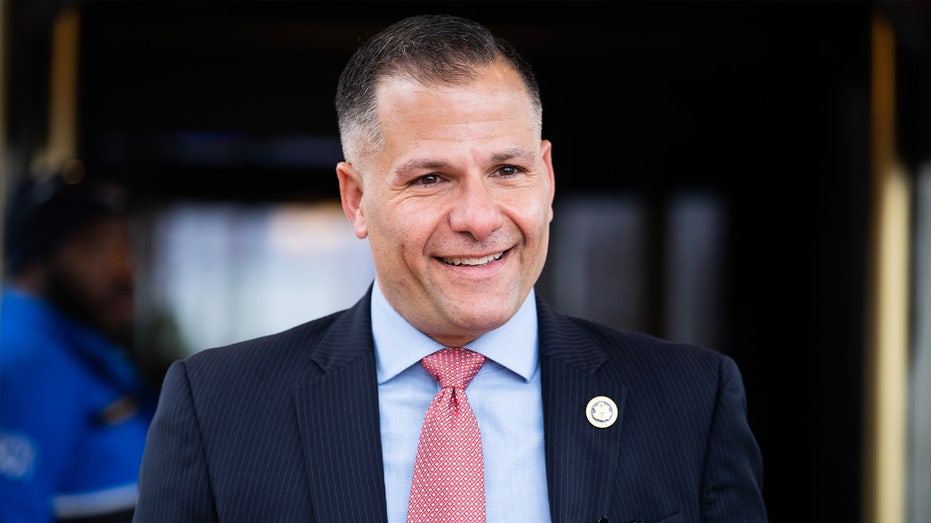
Rep. Marc Molinaro, R-N.Y., became one of the first GOP members of Congress to support legislation defending in vitro fertilization treatment in the wake of an Alabama ruling holding frozen embryos to the same legal standard as children under state law. Molinaro announced in a statement on Wednesday that he cosponsored the Access to Family Building Act, a bill that protects access to IVF given “millions of Americans rely on IVF to have children.” The bill was introduced by Rep. Susan Wild, D-Pa., and companion legislation was introduced in the Senate by Sens. Patty Murray, D-Wash., and Tammy Duckworth, D-Ill. The Access to Family Building Act would establish a statutory right to access IVF, “overriding any state effort to limit services and ensuring no hopeful parent—or their doctors—are punished for trying to start or grow their family,” according to Molinaro’s office. HOUSE REPUBLICAN DRAFTS BILL TO EXPAND ACCESS TO IN VITRO FERTILIZATION “I was troubled by and said at the time that I opposed Alabama’s ruling to limit IVF,” Molinaro said in a statement. “I’m a parent who has personal experience with IVF and support all women and families who choose IVF to bring life into this world. Protecting it is just commonsense.” Alabama Gov. Kay Ivey, a Republican, signed a bill into law earlier this month protecting IVF treatments after a February decision by the state Supreme Court prompted some fertility clinics to pause their procedures. The Alabama Supreme Court ruled that frozen embryos created during fertility treatments should be considered as having the same status as children under state law in wrongful death lawsuits. UNIVERSITY OF ALABAMA AT BIRMINGHAM PAUSES IN VITRO FERTILIZATION FOLLOWING STATE SUPREME COURT EMBRYO RULING The ruling was issued in a pair of wrongful death cases brought by three couples whose frozen embryos were destroyed at a fertility clinic when a patient from the hospital walked into the storage area, removed the embryos from a cryogenic freezer and dropped them on the ground. The decision resulted in a flury of warnings about the potential impact on fertility treatments and the freezing of embryos, which had previously been considered property by the courts. Former President Trump said at a South Carolina rally in late February that he would “strongly support the availability of IVF” as the Alabama ruling reignited debate on abortion amid the 2024 presidential election. Another House Republican, Rep. Mike Carey, R-Ohio, told Fox News Digital and Fox News Radio last week that he is is working on a bill to expand access to IVF for families who cannot afford the procedure. “It would give a tax incentive to help people that are less fortunate be able to do IVF, and I do think it’s something that’s important. Because I do think people that want children should be able to have the opportunity to have children, and IVF is [a] way to do it,” Carey said on Thursday. Fox News’ Liz Elkind and the Associated Press contributed to this report.
‘Death trap’: Israeli forces kill six aid seekers in Gaza City

Israeli forces have shot dead at least six Palestinians and wounded 83 in Gaza City as they were waiting for food and humanitarian supplies at the Kuwait Roundabout, an area where large groups of people gather for arriving aid trucks. The attack on Thursday took place hours after at least five people were killed by an Israeli air strike on a food distribution centre in Rafah, southern Gaza, run by the United Nations Relief and Works Agency for Palestinian Refugees in the Near East (UNRWA), which is the main humanitarian agency in Gaza. There has been an uptick in fatal assaults by Israeli troops on crowds of starving civilians lining up for aid in recent weeks. On Monday night, Israeli forces killed 11 people waiting for food aid at the same roundabout. Reporting from Rafah, Al Jazeera’s Hani Mahmoud said seeking aid has become “really dangerous” in the enclave, adding that “the Kuwaiti Roundabout is now known as a death trap”. “We heard from a hungry and largely traumatised population stranded in the Gaza Strip asking what is the purpose of getting those aid trucks into Gaza and its northern area if they’re getting shot at,” he said. “[The Israeli aggression] also endangers the work of aid workers on the ground,” he added. The Kuwait Roundabout is between the central area of the Gaza Strip and Gaza City, linking northern Gaza to the south. At least 400 Palestinians have been killed in Israeli attacks on aid deliveries. ‘Forbidden’ Sami Abu Salim, an UNRWA employee, told Al Jazeera that he felt frustrated over the attack as the employees of the aid centre in Rafah have been working around the clock to provide aid to displaced Palestinians. “This [attacking an aid centre] is forbidden. We are an international institution,” Abu Salim said. “We take all of this [aid] to the elderly and the children.” The facility in Rafah is one of the last operating food distribution centres in Gaza, and the UNRWA is calling for an independent inquiry into repeated Israeli attacks on the UN agency. Rights groups say that Israel is using starvation as a weapon of war against Palestinians. Agnes Callamard, the secretary-general of Amnesty International, slammed the global community for pretending the crisis in Gaza was of a humanitarian nature and not one engineered by Israel. “While the international community is busy pretending Gaza is a humanitarian crisis, Israel continues to violate international law in total impunity,” she said in a post on X, referencing Israel’s attack on the UN food centre in Rafah. “Humanitarian assistance air drop and a Gaza aid port won’t address these violations. And they won’t address engineered starvation,” she added. While the international community is busy pretending Gaza is a humanitarian crisis, Israel continues to violate international law in total impunity. Humanitarian assistance air drop and a Gaza aid port won’t address these violations. And they wont address engineered starvation. https://t.co/WjTQpcPehr — Agnes Callamard (@AgnesCallamard) March 13, 2024 The UNRWA has said Israeli authorities have not allowed it to deliver supplies to the north of the Strip since January 23. Israel, which controls Gaza’s border crossings, has opened just one entry point into the enclave since the start of the war and imposed “endless checking procedures” for trucks to pass through, UN agencies say. Since February 9, the average number of trucks that entered Gaza daily was about 55, compared with 500 that used to enter before the start of the conflict, according to the UN Office for the Coordination of Humanitarian Affairs (OCHA). The UN has said at least half a million, or one in four people in Gaza, face famine as it highlighted the problem of getting desperately needed humanitarian relief into Gaza amid Israeli restrictions. A new report by humanitarian group Refugees International said that Israel has generated “famine-like conditions” in the Gaza Strip. The group’s research in Egypt, Jordan and Israel revealed that Tel Aviv “consistently and groundlessly impeded aid operations within Gaza, blocked legitimate relief operations and resisted implementing measures that would genuinely enhance the flow of humanitarian aid into Gaza”. The Ministry of Health in Gaza reported on Thursday that at least 31,341 Palestinians have been killed and 73,134 wounded by Israeli attacks since October 7. In the past 24 hours, Israeli attacks have killed 69 Palestinians in Gaza, the ministry said. Adblock test (Why?)
Neglected and exposed: Toxic air lingers in a Texas Latino community, revealing failures in state’s air monitoring system
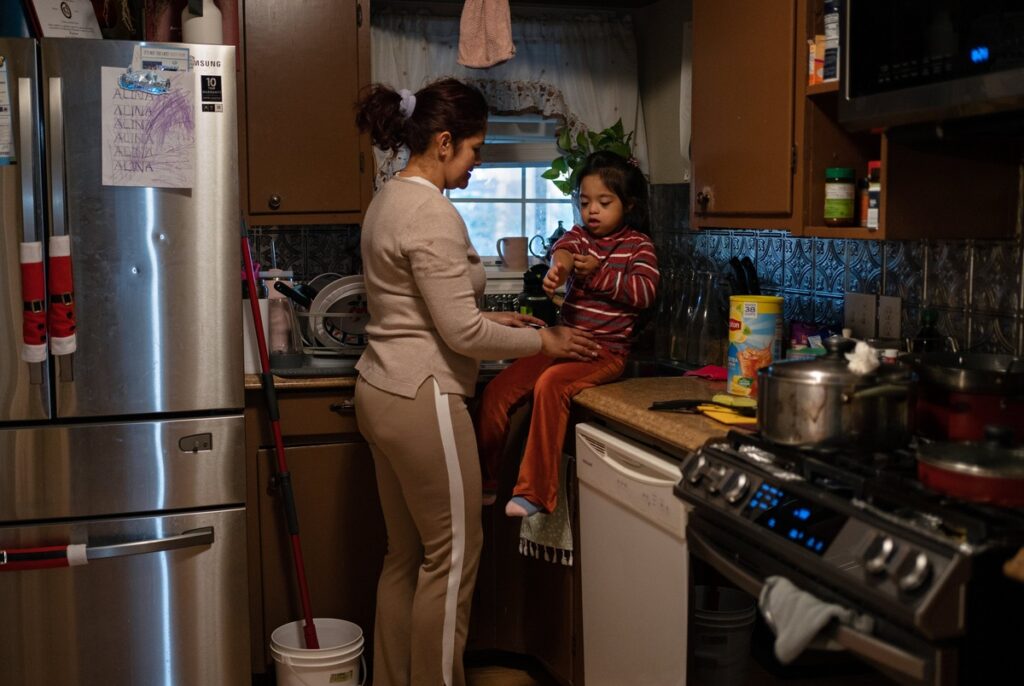
Public data from a network of state air monitors around the Houston Ship Channel is hard to interpret and is often inadequate, leaving Latino-majority neighborhoods like Cloverleaf unaware of whether the air they breathe is safe.