

More than 25 state attorneys general urge Senate to pass Laken Riley Act

FIRST ON FOX: Twenty-six attorneys general across the U.S. penned a letter to Senate leadership on Wednesday urging the passage of H.R. 7511, or the Laken Riley Act, which would detain illegal immigrants for some criminal offenses until they can be deported. Led by South Carolina Attorney General Alan Wilson and Florida Attorney General Ashley Moody, the lawmakers wrote to Senate Minority Leader Mitch McConnell, R-Ky., and Majority Leader Chuck Schumer, D-N.Y., saying the bill needs “immediate attention.” “President Biden’s repeated actions of ignoring the rule of law and abandoning successful policies have created a border crisis of historic proportions,” the letter states. “As attorneys general, we are fighting to preserve the rule of law and keep our states safe when the federal government fails to act or, in the case of illegal immigration, actively makes it worse. To that end, we applaud the bill’s enforcement provision for State Attorneys General.” REPUBLICAN CONGRESSMAN INTRODUCES ‘LAKEN RILEY ACT’ “Unfortunately, the entire country has seen the news of the tragic and avoidable murder of Laken Riley. In broad daylight, Jose Ibarra is alleged to have brutally attacked and killed Riley while she was on a morning run. Reports show Riley’s skull was beaten so violently with an unidentified object that her skull was disfigured,” the attorneys general wrote. “Riley’s death could have been prevented on multiple fronts, but the system failed her,” the prosecutors wrote, adding that H.R. 7511 is “a strong bill that can act as another arrow in the quiver when it comes to combatting illegal immigration and protecting Americans.” In addition to Florida and South Carolina, attorneys general in Alabama, Alaska, Arkansas, Georgia, Idaho, Indiana, Iowa, Kansas, Kentucky, Louisiana, Mississippi, Missouri, Montana, Nebraska, New Hampshire, North Dakota, Ohio, Oklahoma, South Dakota, Tennessee, Texas, Virginia, Utah and West Virginia all signed the letter. The House of Representatives last week passed the Laken Riley Act, which would require federal immigration authorities to detain illegal immigrants charged with local theft or burglary, after Ibarra, who was accused of similar offenses, was arrested for Riley’s murder. LAKEN RILEY’S MOTHER SPEAKS OUT ABOUT ‘AVOIDABLE TRAGEDY’ AFTER DAUGHTER’S FUNERAL The act, which was passed by a 251-170 vote, is named after 22-year-old Laken Riley, a college nursing student who was recently killed on the campus of the University of Georgia. Jose Antonio Ibarra, the illegal immigrant from Venezuela charged with the brutal murder, was arrested in New York prior to the murder, but was not detained by U.S. Immigration and Customs Enforcement (ICE). Before being charged with felony murder, Ibarra was once arrested in New York for endangering a child, and he was cited in Georgia for misdemeanor shoplifting in October 2023 along with his brother, Diego Ibarra, according to The Atlanta Journal-Constitution. After the bill’s passage in the House, the author of the bill, Rep. Mike Collins, R-Ga., urged the Senate to take up the legislation immediately to “ensure justice for Laken and give ICE more tools to detain and deport criminal illegal aliens before they commit more serious crimes.” TRUMP MET WITH LAKEN RILEY’S FAMILY BACKSTAGE BEFORE GEORGIA RALLY: ‘PROFOUNDLY HONORED’ In addition to requiring ICE to issue a detainer for illegal aliens charged with theft or burglary, the bill will also allow individual states to take action against the federal government “if an immigration related action harms the state or its citizens.” On Wednesday, two Senate Republicans introduced the Senate version of the bill as a companion to H.R. 7511. Fox News’ Kyle Morris, Greg Norman, Aubrie Spady, Thomas Phippen, and Danielle Wallace contributed to this report.
Mississippi Senate passes bill for regional control of Jackson’s troubled water system
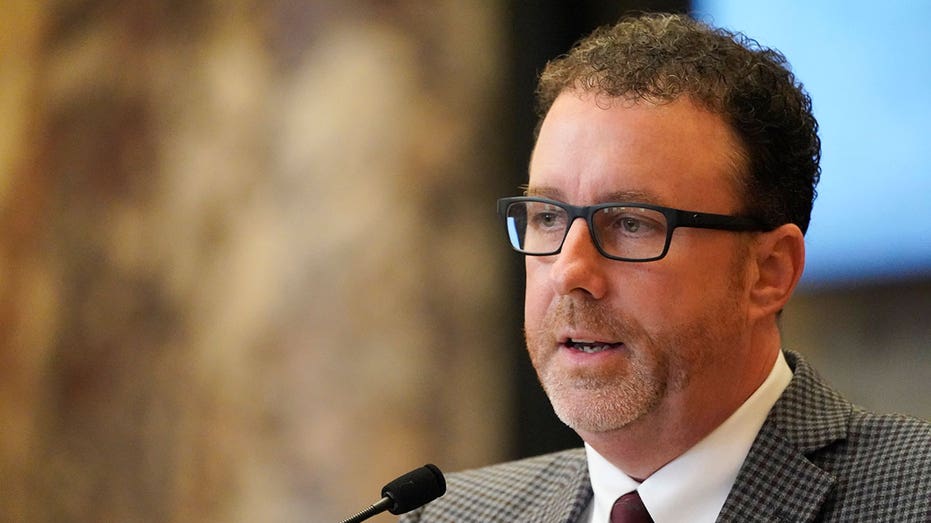
For the second year in a row, the Mississippi Senate has passed a bill that would transfer control of the state capital city’s troubled water system to a regional board. Republican Sen. David Parker of Olive Branch introduced a slightly modified version of the bill after last year’s version died in the House. The proposal drew fierce opposition from Jackson officials, who said the Republican-controlled Legislature was usurping the authority of local leaders, most of whom are Democrats. Almost every Senate Democrat voted against the bill again Tuesday before it passed 35-14. The legislation was held for the possibility of more debate in the Senate. It eventually would go to the House. JACKSON, MISSISSIPPI, PREPARING TO GO WITHOUT WATER PERIODICALLY FOR UP TO 10 YEARS AS CRISIS CONTINUES The bill would create a corporate nonprofit known as the Mississippi Capitol Region Utility Authority to govern Jackson’s water system. It would be overseen by a nine-member board, with one appointment by the mayor, two by the Jackson City Council, three by the governor and three by the lieutenant governor. Under the bill’s original version, city officials would not have had any appointments. Jackson Mayor Chokwe Antar Lumumba opposes the bill, saying it’s an example of the majority-white and Republican-led Legislature trying to seize control from a majority-Black city. Parker said the bill would help address issues that have disrupted the utility on numerous occasions and left residents without consistent access to running water. Infrastructure breakdowns in 2022 caused some Jackson residents to go weeks without water for their basic needs. MISSISSIPPI RESIDENTS TOLD TO BOIL WATER AFTER SYSTEM PRESSURE DROPS Parker’s district is in northwest Mississippi, but he lives with his daughter at an apartment complex in Jackson when the Legislature is in session. He said scooping up water from the building’s swimming pool to use in their shared apartment’s toilets is part of what motivated him to write the bill. “To be continually hearing and seeing in the newspapers that I have no business as a customer of the Jackson water authority to be addressing this situation is, at the very least, concerning to me,” Parker said on the Senate floor. Two Democratic senators who represent parts of Jackson — Sollie Norwood and Hillman Frazier — peppered Parker with questions about why he didn’t meet with them before introducing the proposal. “Senator Parker, you do realize I represent the city of Jackson … and you have not said one word to me regarding this,” Norwood said. Parker responded that he had his assistant place memos on senators’ desks and that he had incorporated feedback from various people in Jackson. Parker pointed to support from Ted Henifin, the manager appointed by a federal court in December 2022 to manage the water system on an interim basis. JACKSON, MISSISSIPPI, WATER CRISIS IMPACTS BUSINESSES “It appears that many of the comments I provided during the last session regarding the bill introduced in 2023 were taken to heart and this bill now includes many of the suggestions I made at that time,” Henifin said in a statement. Among the comments Henifin provided was that federal funds should only be used within the areas served by Jackson’s water system. Jackson-area lawmakers had been concerned that hundreds of millions in federal funds approved by Congress to fix the city’s water system would be diverted to other areas. The bill has been designed to ensure there is a governance structure in place when Henifin leaves Jackson and the federal funds run out, Parker said. The federal order appointing Henifin does not have a termination date on his appointment as Jackson’s water manager.
US national park facing removal of wild horses gains support from Congress

Advocates for some 200 wild horses roaming North Dakota’s Theodore Roosevelt National Park are hoping a signal of support from Congress will prevent the removal of the beloved animals from the rugged landscape. A National Park Service decision is expected around April as to the horses’ future in the park’s colorful, rolling Badlands. It’s part of an ongoing process to craft a park management plan for “livestock” — a term horse advocates reject. Republican Sen. John Hoeven ‘s legislation, tucked in the annual Interior and Environment budget bill that Congress passed and President Joe Biden signed, strongly recommends that the Park Service keep the horses in place. It also signals a potential future action that would deny any funding intended to remove them. NORTH DAKOTA RESIDENTS TO WEIGH ON WHETHER WILD HORSES IN THEODORE ROOSEVELT NATIONAL PARK SHOULD STAY “Now we’ll continue to have a dialogue with them and hopefully get to a good solution,” Hoeven said in an interview with The Associated Press. A remaining question is how many horses would ensure the long-term preservation of the herd. Advocates want to see a genetically viable herd of at least 150 horses to avoid inbreeding issues. Park Superintendent Angie Richman has said the horses, if they ultimate stay, would still have to be reduced to 35 to 60 animals under a 1978 environmental assessment. Richman and the National Park Service did not respond to emails for comment on Hoeven’s legislation. US NATIONAL PARK ATTENDANCE SOARED IN 2023 AS MILLIONS OF AMERICANS CONTINUE TO HEAD OUTDOORS Previously, park officials have said their evaluation of whether the horses should stay is in line with their policies to remove non-native species when they pose a potential risk to resources. The park has proposed removing the horses quickly or gradually or taking no action. Advocates have feared a predetermined ouster of the horses, whose predecessors were accidentally fenced into the park in the 1950s and were subject to subsequent roundups. The horses’ origins include Native American tribes, area ranches and domestic stallions introduced to the park from the late 1970s through the 1990s, said Castle McLaughlin, who researched the horses as a graduate student while working for the Park Service in North Dakota in the 1980s. “They really are sort of living history because they reflect the kinds of horses people in North Dakota, both Native and non-Native, had over the last 150 years,” said McLaughlin, who cheered state leaders’ commitment to preserving the horses and said she is cautiously optimistic but still skeptical the Park Service will “do the right thing here.” The horses are often seen along the park’s scenic road and hiking trails, thrilling visitors and photographers who happen upon them. A vast majority of public comments on the decision process has favored keeping the horses. US NATIONAL PARKS SEE NEW REGULATIONS RESTRICTING TOURIST FLIGHTS Chasing Horses Wild Horse Advocates President Chris Kman said she is hopeful the legislation results in the horses staying, but she awaits the park’s decision and wonders what the legislation means for a management plan for the horses. “I don’t think that any of us will trust, even with an act of Congress, that the park is going to do the right thing and allow a genetically viable herd of horses to stay,” she said. “…Their attitude all along has pretty much been, you know, ‘We can’t keep the horses. We understand the public wants them, but we’re not doing it anyway,’ no matter what the overwhelming response was.” Last year, Gov. Doug Burgum offered state collaboration for maintaining the horses in the park. Richman has said park officials “are certainly willing to work with the governor and the state to find a good outcome.” All of the horses are in the park’s South Unit near Medora. Park officials’ ultimate decision will also affect about nine longhorn cattle in the park’s North Unit.
Judge dismisses some counts against Trump in Fani Willis election interference case

A Fulton County judge has quashed six counts in the Georgia election interference case against former President Donald Trump and his 18 co-defendants. Judge Scott McAfee said in an order Wednesday that the state failed to allege sufficient detail for six counts of “solicitation of violation of oath by public officer.” “The Court’s concern is less that the State has failed to allege sufficient conduct of the Defendants — in fact it has alleged an abundance. However, the lack of detail concerning an essential legal element is, in the undersigned opinion, fatal,” McAfee wrote. “As written, these six counts contain all the essential elements of the crimes but fail to allege sufficient detail regarding the nature of their commission, i.e., the underlying felony solicited,” the judge continued. “They do not give the Defendants enough information to prepare their defenses intelligently, as the Defendants could have violated the Constitutions and thus the statute in dozens, if not hundreds, of distinct ways.” Georgia state law prohibits any public officer from willfully and intentionally violating the terms of his or her oath as prescribed by law. Fulton County District Attorney Fani Willis alleged that Trump and six of his co-defendants illegally attempted to persuade numerous state officials to violate their oaths in an effort to overturn the 2020 presidential election in Georgia. The indictment refers to alleged requests made to members of the Georgia legislature to unlawfully appoint alternative presidential electors and alleged efforts by Trump and his then-Chief of Staff Mark Meadows to solicit Georgia Secretary of State Brad Raffensperger to decertify the election. Multiple defendants challenged the counts on grounds that Willis did not detail the exact terms of the oaths that were alleged to have been violated. McAfee said the indictment should have alleged an underlying felony solicited by the defendants. “In other words, a naked charge of solicitation cannot survive unless accompanied by additional elements establishing the solicited felony,” the judge wrote. In addition to overseeing the election racketeering case against Trump, McAfee is also presiding over allegations brought by a handful of co-defendants that Willis hired special counsel Nathan Wade when they were secretly romantic lovers and financially benefited from his hiring. The bombshell allegations led to a blockbuster evidentiary hearing last month in which Willis and Wade denied the allegations they were in a relationship when he was hired and that Willis never benefited from Wade’s position because she would reimburse him with cash for all the vacations they took together. McAfee is considering the evidence presented in the hearing and is expected to make a decision whether Willis and her team should be disqualified from the case in the next two weeks. McAfee said at the start of the proceedings this month that it’s “clear that disqualification can occur if evidence is produced demonstrating an actual conflict or the appearance of one.” Fox News Digital’s Brianna Herlihy contributed to this report.
Protests in India against ‘anti-Muslim’ citizenship law

NewsFeed There have been protests in India after the government implemented a new citizenship law that discriminates against Muslim refugees, weeks before national elections. Published On 13 Mar 202413 Mar 2024 Adblock test (Why?)
How ‘outstanding leader’ Rohit Sharma helped Ashwin in personal adversity

In an emotional video, Ashwin recalled the events that led to his departure and return during the third Test match against England when his mother was ill. Ravichandran Ashwin has hailed India’s cricket captain Rohit Sharma as a man with a “heart of gold” for his help and leadership during India’s third Test match against England last month, which Ashwin left on the second day when his mother fell ill. Three days after helping his team wrap up a 4-1 series win over Ben Stokes’s England, the off-spinner opened up on the personal adversity that led to his departure from the team in the middle of the match, his return on the fourth day and the emotional toll it took on him as a top-level athlete. “Rohit is a special person, an outstanding leader with a golden heart,” Ashwin said in an emotional video posted on his YouTube channel. “I would give my life for him on the field, that’s the kind of captain he is.” The 37-year-old recollected the events from February 16, the day he took his 500th wicket in Test cricket but also the day his mother collapsed and lost consciousness back home in Chennai, India. “Rohit, me and some other players were having a discussion after the match when I realised my parents and wife had not called me to congratulate [on reaching the 500 wicket milestone],” Ashwin recalled in the video titled “the emotional roller coaster.” “When I called my wife at 7pm her voice was shaking. She asked me to move away from the crowd and told me my mother had collapsed after a headache.” Ashwin said he “blanked out” as soon as he heard the news and wasn’t able to think clearly. “I was crying but I didn’t want anyone to see me cry. I just sat alone in my room not knowing what to do.” Ravi Ashwin says Rohit Sharma’s actions in helping him be with his ailing mother left him ‘gobsmacked’ [File: Tauseef Mustafa/AFP] The 100-Test veteran was in a conundrum as at the end of play, England were 207-2 with the series tied at 1-1. “I thought if I leave the team they will be left with 10 players, a bowler short, against a full-strength squad with the game in the balance. At the same time all I could think of was my mother. I wanted to go see her and quickly come back [to Rajkot].” It was then that Rohit and India’s head coach Rahul Dravid stepped in and made the decision to send Ashwin home. “Rohit asked me to stop thinking, leave and be with my family. He was trying to arrange a chartered flight for me.” Ashwin was able to get on a plane, but his captain ensured the emotionally distressed player did not travel alone and sent the team physio along. “When Kamlesh got a call from Rohit at 9:30pm to see how I was doing, I was gobsmacked! I see an outstanding leader in Rohit. “My respect for him grew tremendously after that day.” Ashwin was able to see his mother, who was recovering and insisted that her son join his team. The bowler returned to Rajkot on the morning of the fourth day as England chased a target of 557 runs to win the Test. The visitors were bowled out for 122, with Ashwin taking his 501st Test wicket. Ashwin ended the series as its leading wicket-taker, with 26, and has climbed to the top of the International Cricket Council (ICC) men’s Test bowling rankings this week. For the sixth time in his career, Ravichandran Ashwin is the No.1 bowler in the ICC Men’s Test Player Rankings 👏 ➡️ https://t.co/hLGP7qOqE3 pic.twitter.com/oYLyWzC4ut — ICC (@ICC) March 13, 2024 Adblock test (Why?)
Not just the UNRWA report: Countless accounts of Israeli torture in Gaza

Though it has yet to respond to Al Jazeera’s request for comment, Israel continues to push back against the accusations of torture levelled at its armed forces in an unpublished report by the United Nations Relief and Works Agency (UNRWA). The report details the extensive use of torture against Palestinians taken prisoner by the Israeli military in Gaza, including 21 UNRWA staff members and 15 family members of UNRWA staff, an accusation Israel has denied. Findings in the report tally with testimonies Al Jazeera has gathered from people detained in Gaza and tortured by Israel since the beginning of its war on the besieged enclave. There have also been well-documented cases in which arbitrarily detained Palestinians were subjected to deeply degrading treatment, a circumstance that was also detailed in the UNRWA report. According to the February report, UNRWA had documented the release of 1,002 detainees – ranging in age from six to 82 – by Israel at the Karem Abu Salem crossing (called Kerem Shalom by Israel) between December 18 and February 19. The released detainees included UNRWA staff, women, children, the elderly and vulnerable people living with conditions like Alzheimer’s and cancer – all of whom were taken from Gaza and held at various locations within Israel. To help these individuals, UNRWA set up a reception facility at Karam Abu Salem where they provide food and water to the released persons and help them try to reach their families. [embedded content] “In most instances, the released detainees are extremely disoriented, hungry, physically exhausted and exhibit visible signs of physical and mental trauma, and are wearing dirty clothes, sometimes with visible blood stains. “They are often unaware that war is continuing, on occasion do not realize they have returned to Gaza, and they do not know the whereabouts or fate of their loved ones,” the report stated. However, UNRWA noted, the releases it documented are only part of the overall number of people being detained and mistreated by Israel in Gaza, as there are many more who are taken, tortured and released within Gaza – it provided an estimate of some 4,000 people overall. Torture In detention, the people taken were interrogated, with UNRWA staff being of particular interest to Israeli interrogators who reportedly tried to coerce confessions of complicity with Hamas or the October 7 attack on Israel, which killed 1,139 people and the capture of 253 who were taken back to Gaza. Practices recorded by UNRWA include the use of a nail gun on prisoners’ knees, sexual abuse against both men and women and the insertion of what appears to be an electrified metal stick into prisoners’ rectums. Mahmoud Abd Rabbu in UN-provided clothing at the hospital where he was being treated after his release [Screegrab/Al Jazeera] “They were beating me with an extendable metal bar. There was blood on my trousers and when they saw it, they beat me there. They used a nail gun on my knee. These nails were kept in my knee for about 24 hours until I was transported to Naqab prison,” one 26-year-old male told UNRWA of his 56 days in Israeli custody. Mahmoud Abd Rabbu, 62, from Jabalia, told Al Jazeera he had been displaced to the Indonesian Hospital and, during the last days of the Israeli siege on the hospital, he was told everyone should move to the south. He headed for a checkpoint that had been determined as “safe” by Israeli forces where he and one other man were picked out of a group of 80 people and detained. He recounts being held in a group of more than 100 men who all endured days of “beatings, hunger and cold”, adding that they were kept blindfolded, not allowed to sleep and were forced to spend most of the day kneeling. “If someone lifted the blindfold off their eyes,” he said, “he would be called over by the soldiers and beaten then strung up on the barbed wire fence.” [embedded content] Another detained man told UNRWA: “They made me sit on something like a hot metal stick and it felt like fire – I have burns [in the anus]. The soldiers hit me with their shoes on my chest and used something like a metal stick that had a small nail on the side,” he said. “They asked us to drink from the toilet and made the dogs attack us,” he recalled, before describing how he had seen the bodies of “maybe nine” people who had been detained and killed, including one who had died after they had “put the electric stick up his [anus]. He got so sick, we saw worms coming out of his body and then he died,” he said. Khaled el-Nabreis from the Khan Younis refugee camp told Al Jazeera that he and several other men spent three days with no food or water, “only beatings, and when we slept they would cover us with wet blankets in the bitter cold” after they were detained by Israeli forces, taken to a location he did not recognise. Several of the individuals tortured and then released by Israel told Al Jazeera the soldiers tormenting them were asking the same kinds of questions, including: “Where are the tunnels?”, “Where is [Hamas leader] Sinwar?”, “Where are the captives?” and “Who do you know who is a Hamas fighter?” Rami Abu Daqqa saw his brother shot in front of his eyes and then endured weeks of torment in Israeli detention [Screengrab/Al Jazeera] Rami Abu Daqqa from Bani Suhaila in Gaza told Al Jazeera that he and his family had tried to return to their home from Rafah in late January. As they approached the house, he said, Israeli snipers opened fire, shooting him in the leg. His voice breaking, he added that his brother, Hani, was shot and killed in the same barrage. He went on to describe how Israeli soldiers both administered first aid for the gunshot wound in his leg and beat him to get him to confess
Lok Sabha Election 2024: BJP releases 2nd list, Khattar to contest from Karnal, Gadkari from Nagpur

The list of 72 names also includes senior leaders Anurag Thakur and Piyush Goyal.
Vance leads bill to address US munitions and readiness amid Ukraine aid battle
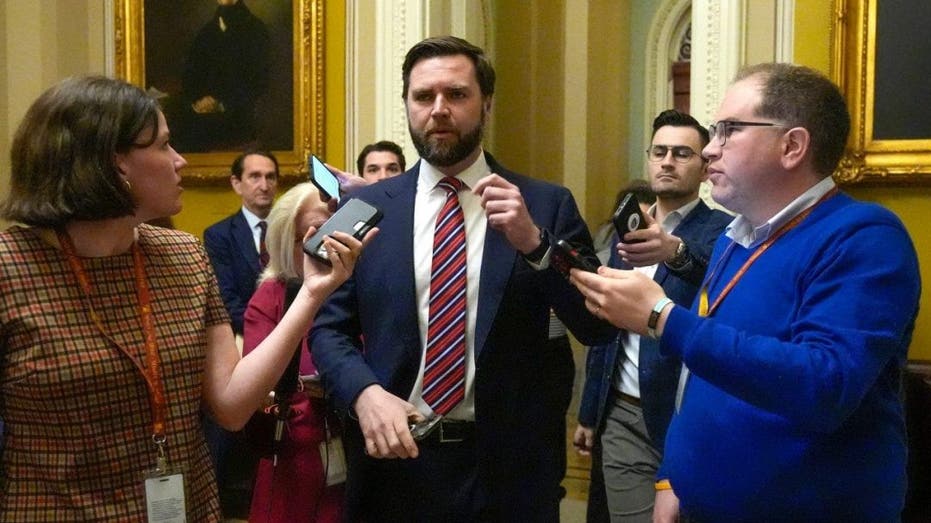
FIRST ON FOX: Sen. JD Vance, R-Ohio, is introducing a bill aimed at addressing the U.S. munition supply chain and evaluating defense readiness as concerns grow over continued foreign aid to Ukraine. As financial support to Ukraine becomes a growing point of contention among lawmakers, Vance introduced the Knudsen Defense Remobilization Act alongside co-sponsors Sens. Marco Rubio, R-Fla., and Eric Schmitt, R-Mo., to look at U.S. defense capabilities. FORMER TOP BIDEN AIDE CONFIRMS WH OFFICIAL’S ALLEGED HISTORY OF BULLYING, SEXUAL HARASSMENT “America’s military stockpiles are dangerously low. Joe Biden has spent two years sending more weapons to Ukraine than we’re capable of manufacturing, and it’s putting our national security at risk,” Vance told Fox News Digital in a statement. “We’re woefully unprepared for any type of major conflict. This legislation would recruit industry experts to identify the shortfalls of our military industrial base and outline necessary regulatory reforms to get defense production back on track.” The bill would establish a commission for the purpose of “American Defense-Industrial Mobilization,” which would be tasked with providing the president and Congress with recommendations regarding the defense-industrial base. The commission would include 12 bipartisan lawmakers, chosen by Senate and House leadership in both parties and by several committees. Per the measure, those on the commission should have expertise in the fields of industrial policy, manufacturing and defense. TOP STATE DEPT. OFFICIAL REASSURES KOSOVO OF SHARED RESPONSIBILITY IN SERBIAN RELATIONS DURING VISIT In the legislation, Vance prefaced that the U.S. is confronted with “a critical lack of domestic industrial capacity necessary to support and maintain its defense, particularly in the event of a major conflict.” The bill also claims that various shortages in the defense supply chain put the country in a position where it would take several years to fully replenish munitions and necessary supplies. “As the United States faces the existential threat of a rapidly modernizing military by the People’s Republic of China, it’s long overdue that the United States take a hard look at how we can remobilize and revitalize our industrial base,” Schmitt said in a statement to Fox News Digital. NYPD GROUP SLAMS BIDEN JUDICIAL NOMINEE WITH TIES TO 9/11 HIJACKER SYMPATHIZERS: ‘DESPICABLE’ Vance’s bill is named for automotive executive William S. Knudsen, who was charged in 1940 with taking over U.S. war production as chairman of the Office of Production Management and a member of the National Defense Advisory Commission. The Ohio Republican noted in the bill that Knudsen’s work allowed the U.S. to mobilize its industrial war production network, referred to as the “Arsenal of Democracy,” which ultimately led to an allied victory in World War II. The measure comes as renewed funding for Ukraine’s defense against Russia remains pending in Congress, with a significant and growing Republican faction expressing skepticism about continued aid to the country, which has been at war for more than two years. SENATE REPUBLICANS INTRODUCE LAKEN RILEY ACT, URGE IMMEDIATE CONSIDERATION OF ‘COMMONSENSE’ BILL An aid package for $95 billion to Ukraine, Israel and Taiwan was passed in the Senate last month, but Speaker Mike Johnson, R-La., has yet to bring it for a vote in the House. However, various discharge petitions launched by other members could seek to sidestep Republican leadership and force a floor vote on the measure. President Biden is expected to sign the package if it reaches his desk. Vance’s bill notably mentions Ukraine’s war, providing for the established commission to assess the “lessons learned” from the fight, in particular whether various U.S. “contingency scenarios in Europe, the Middle East, and Asia” are reflective of that knowledge. The Ohio senator has frequently criticized seemingly unfettered and unaccounted for aid to Ukraine amid its struggle against Russia, sounding the alarm over military preparedness in the U.S. “Behind the price tag, this conflict has revealed the shocking weakness of the defense industrial base on both sides of the Atlantic,” he said last month. According to Vance, both Europe and the U.S. have displayed “fragmented defense industries” that “make limited quantities of the most advanced weapons on Earth, but struggle to produce heavy weaponry at the speed and scale needed to win a major conflict.”
Republicans to spearhead oversight hearing on growing Chinese threat to US agriculture

FIRST ON FOX: A top House panel is planning an oversight hearing to examine the threat China poses to the U.S. agriculture industry as part of broader efforts to curb foreign influence in the key strategic sector. The hearing — titled “The Danger China Poses to American Agriculture” — will be hosted by the House Agriculture Committee on March 20 and will cover a range of issues related to China’s involvement in the domestic agriculture sector. Notably, the hearing will include testimony from South Dakota Gov. Kristi Noem, who has enacted aggressive limitations on foreign ownership of agricultural lands in her state. “It’s no secret that China poses significant threats to our way of life, agriculture is no exception,” Agriculture Committee Chairman Glenn Thompson, R-Pa., said in a written statement to Fox News Digital. “We’ve seen China steal our intellectual property, hack our cyber infrastructure, and buy up American farmland,” Thompson continued. “We will look to every available legislative vehicle, including the farm bill, to stop China in its tracks and strengthen our food and national security.” REPUBLICANS UNVEIL EFFORT BARRING CHINA, RUSSIA FROM BUYING US LAND According to the committee, the hearing will focus on various ways Chinese entities seek to influence the agricultural industry. In addition to China’s growing ownership of productive lands in the U.S., it will examine the intellectual property theft of patented seeds and how cyberattacks harm the industry. Noem will testify during the hearing’s first panel alongside other officials, including Rep. Mike Gallagher, R-Wis., who chairs the House Select Committee on the Chinese Communist Party. A second expert panel will include testimony from Kip Tom, the former U.S. ambassador to the United Nations Agencies for Food and Agriculture. FORMER CIA DIRECTOR LEON PANETTA WARNS CHINA MAY USE MICHIGAN EV PLANT FOR ESPIONAGE Last week, Noem signed legislation prohibiting six foreign governments — China, Cuba, Iran, North Korea, Russia and Venezuela — and associated entities from owning agricultural land in South Dakota. Her office explained at the time that the bill was one of her “top priorities.” “China is aggressively purchasing land and purchasing property close to our strategic national areas that will house our greatest weapons, and we are going to ensure that, in South Dakota, that never happens,” Noem remarked at a bill signing event on March 4. The House Agriculture Committee’s hearing comes shortly after the U.S. Government Accountability Office released a sprawling report earlier this year showing that the Department of Agriculture (USDA) has failed to consistently share timely data on foreign investments in U.S. agricultural land as required under the 1978 Agricultural Foreign Investment Disclosure Act. The USDA’s most recent data suggests that, as of 2021, foreign investment in U.S. agricultural land grew to approximately 40 million acres. Additionally, Chinese agricultural investment in the U.S. increased tenfold between 2009 and 2016 alone. However, data on Chinese ownership since 2016 has yet to be released. REPUBLICANS UNVEIL EFFORT PROTECTING FEDERAL LANDS FROM FOREIGN INVESTORS, CLIMATE ACTIVISTS Additionally, in recent months, certain Chinese projects have received local and federal scrutiny. For example, officials in Grand Forks, North Dakota, rejected a Chinese company’s proposed corn mill over concerns about its proximity to a U.S. Air Force base in February 2023, and locals have pushed back against Chinese green energy firm Gotion High-Tech’s purchase of 270 acres of land in Michigan months later. The Government Accountability Office conducted its review after Thompson and House Oversight Committee Chairman James Comer, R-Ky., led a letter alongside nearly 130 fellow House Republicans requesting such a probe in October 2022. “Growing foreign ownership of U.S. farmland, particularly by China, poses a direct threat to our food security and national security,” Thompson and Comer said in a joint statement in January. The USDA did not immediately respond to a request for comment.