

Who is Muhammad Aurangzeb, the man tasked with fixing Pakistan’s economy?
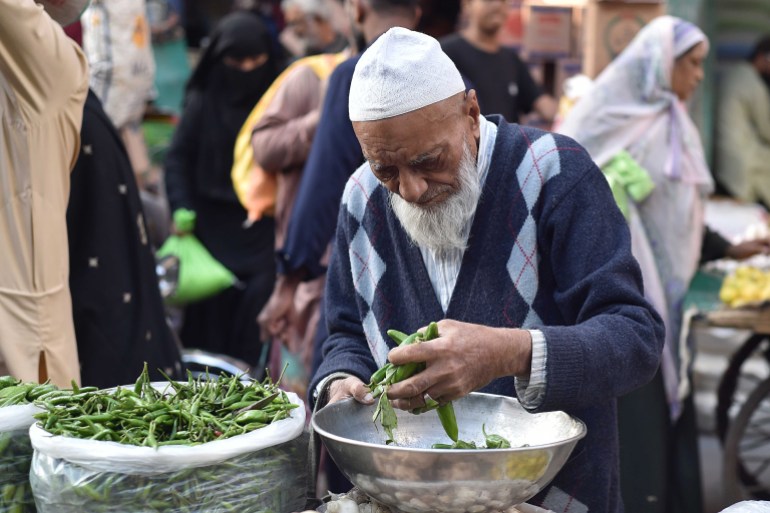
Islamabad, Pakistan — When Pakistan’s 19-member new cabinet took oath on March 11, one man stood out in the lineup: Muhammad Aurangzeb, a political outsider tasked with the challenge of steering the country out of its economic woes. Aurangzeb, a veteran banker who previously headed one of Pakistan’s largest commercial banks, Habib Bank Limited (HBL), has been given the reins of a $350bn economy over several other contenders, including the four-time finance minister Ishaq Dar. A graduate of the Wharton School of Business at the University of Pennsylvania, Aurangzeb also worked in major international banks, such as Citibank and JP Morgan, before his six-year stint at the HBL. A dual national, Aurangzeb had to relinquish his Dutch nationality to hold a public office in Pakistan. While he is not a member of the parliament as yet, according to the country’s rules, he has six months to become a parliamentarian in order to continue as a federal minister. Mr. Muhammad Aurangzeb officially took over the responsibility as Finance Minister of Pakistan after taking oath at the Presidency, today. pic.twitter.com/RSBhulbLwl — Ministry of Finance, Government of Pakistan (@Financegovpk) March 11, 2024 Aurangzeb is not the first banker to become Pakistan’s finance minister. Before him, Shaukat Aziz held the position for eight years (1999-2007) under General Pervez Musharraf’s tenure, before becoming a prime minister. Later, under the government of former prime minister Imran Khan and his Pakistan Tehreek-e-Insaf (PTI), banker Shaukat Tarin was given the portfolio which he held for one year (2021-2022) before the PTI government was removed through a parliamentary vote of no-confidence in April 2022. Aurangzeb’s appointment comes at a critical time when the country faces severe economic challenges, as he works with Prime Minister Shehbaz Sharif and the Pakistan Muslim League-Nawaz (PMLN) government. Sharif and his PMLN came to power after forming a coalition government following the recent February 8 elections, which were marred by allegations of widespread rigging. One of Aurangzeb’s first tasks, say analysts, will be to urgently negotiate a new International Monetary Fund (IMF) loan programme after the expiry of the existing $3bn, nine-month-long agreement in April. A new loan programme with the global lender is necessary for the country which is currently burdened by more than $130bn – at least a third of its gross domestic product – in external debts. Pakistan was scheduled to repay $24bn by June this year but managed to secure some relief from bilateral creditors through rollovers. The country now has to pay nearly $5bn before the end of the fiscal year in June. Meanwhile, Pakistan’s current foreign currency stocks stand at a paltry $7.8bn, enough to cover just about eight weeks of imports. Its currency has devalued by more than 50 percent in the last two years, while inflation, currently at more than 23 percent, shot up to nearly 40 percent in 2023, with a rapid increase in energy tariffs as well as the price of basic food commodities. Inflation in Pakistan hit a record high of nearly 40 percent last year. [Shahzaib Akber/EPA] Many observers believe that Aurangzeb’s experience with global banks and exposure to international financial markets is critical, considering Pakistan’s debt challenges. Sajid Amin Javed, a senior economist associated with the Sustainable Development Policy Institute in Islamabad (SDPI) said Aurangzeb’s appointment is a signal from the government that it is committed to introducing economic reforms – even though they might be politically unpopular. “Partially, this may also be a step to dilute the perception that the PDM government could not deliver in the past,” he told Al Jazeera, referring to a coalition that Sharif led briefly after the removal of Imran Khan’s government, and whose brief tenure coincided with skyrocketing inflation and mounting economic struggles for Pakistanis. But Aurangzeb will need more than his background to succeed in his job, suggested Karachi-based economist Khurram Schehzad. “The key point is not necessarily who the finance minister is, but rather, what would the person do, what their vision is, and what long-term thinking they are bringing to the table,” Schehzad told Al Jazeera. Islamabad-based Javed of the SDPI says these are challenging times for any finance minister but Aurangzeb’s lack of political baggage could work in his favour. “We may see a more reforms-focused engagement with [the] IMF instead of political balancing,” Javed said, referring to pressures from voter lobbies against reforms that traditional politicians often grapple with. Most importantly, he brings fresh thinking on economic policy conduct. Given his global experience, he may go a bit deeper on overhauling of economic policy and country may see a renewed focus on economic growth.” Karachi-based economist Ammar Habib Khan, while acknowledging Aurangzeb’s experience in finance, told Al Jazeera that a macroeconomist might have been better suited for the job than a banker. “Usually, those at the helm [of the government] are unable to understand the long lead time associated with reforms, and the macroeconomic balance that needs to be attained,” he said. “They go for a quick-fix solution, mostly bringing in people that can provide band-aids rather than drive long-tailed reforms.” Adblock test (Why?)
Putin resumes ‘sabre-rattling’ with warning Russia ready for nuclear war
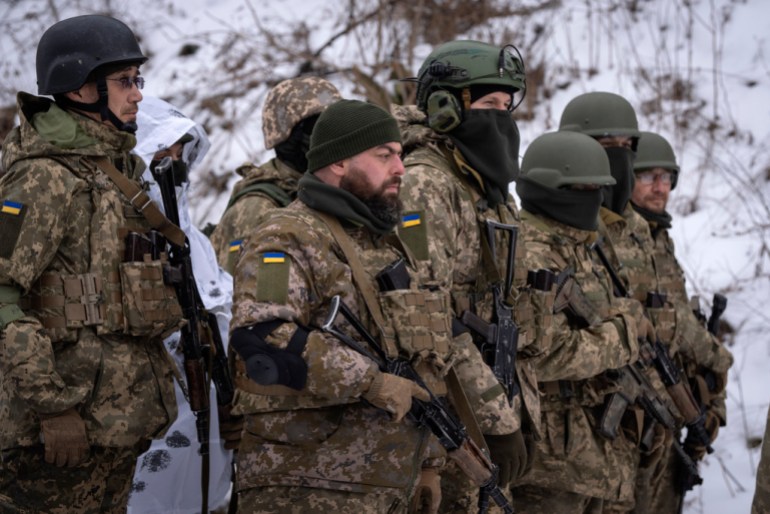
Ahead of weekend elections, Russian president boasts his country’s nuclear capabilities are superior to the West’s. President Vladimir Putin has warned that Russia is “ready” to use nuclear weapons if there is a threat to its statehood. In a recorded interview broadcast by Russian media on Wednesday, the Kremlin chief said his country is ready for a nuclear war from a “military-technical” point of view. His comments signal a resumption of nuclear “sabre-rattling“, as it was branded a year ago, just ahead of this weekend’s presidential election. Two weeks ago, Putin claimed during an annual address to the nation of a “real” risk of nuclear war if Western countries sent troops to fight in Ukraine. On Wednesday, he insisted that Russia’s nuclear arsenal and troops hold the advantage over the West. “From a military-technical point of view, we are, of course, ready. They [Russian forces] are constantly in a state of combat readiness,” Putin said during an interview with the Rossiya-1 state TV channel. “Our triad, the nuclear triad, it is more modern than any other triad,” he continued. “Only we and the Americans actually have such triads. And we have advanced much more here.” Putin and other Russian officials have regularly referenced the country’s nuclear capabilities since the invasion of Ukraine in February 2022 and the West’s response in supporting Kyiv. However, Moscow denies that the reminders are meant to be threatening. Putin was careful to note in his latest comments that the US had sufficient expertise “in the field of Russian-American relations and in the field of strategic restraint” to understand the risks. There was no “rushing” to the nuclear scenario, he said. Interference The Russian president also addressed recent Ukrainian attacks on targets inside Russia, which have surged in recent weeks as Moscow’s forces have made gains on the largely frozen front line in eastern Ukraine. Members of the pro-Ukrainian Russian ethnic Siberian Battalion practice at a military training close to Kyiv, Ukraine, on December 13, 2023. The battalion is made up entirely of Russian citizens who want to fight against Russia’s invasion [Efrem Lukatsky/AP Photo] “The main goal, I have no doubt about it, is to – if not to disrupt the presidential elections in Russia – then at least somehow interfere with the normal process of expressing the will of citizens,” he asserted, referring to the vote scheduled for March 15-17. The election is expected to hand Putin, who has ruled the country since the turn of the century, another six-year term. Ukraine’s military has been reaching deeper into Russian territory, hitting several oil refineries in waves of drone attacks, while anti-Putin Russian volunteer militias claim to have pulled off cross-border incursions into Kursk and Belgorod. On Tuesday, Ukraine launched a sweeping, overnight drone attack on several Russian regions for the second night in a row. Oil refineries in Ryazan, Kstovo and Kirishi, a Russian airbase in Buturlinovka, and a military airfield in Voronezh region, were all hit, according to a Ukrainian source quoted by Reuters. The attack set Rosneft’s biggest oil refinery in Ryazan, just 180km (112 miles) from Moscow, alight. “Judging by the videos online, the consequences were fairly significant,” the source said. Putin also repeated in his interview that Russia is ready for serious talks on Ukraine, although that claim was accompanied by a crude demand that any peace would have to be on his terms. “Russia is ready for negotiations on Ukraine, but they should be based on reality – and not on cravings after the use of psychotropic drugs,” he said. Adblock test (Why?)
US woman rescued from rubble after Israeli air strike in Gaza

NewsFeed A US woman living in Gaza was pulled from the rubble of an Israeli air strike after a two-hour operation to free her. After she was freed, she had a message of solidarity with Palestinians facing Israel’s war. Published On 13 Mar 202413 Mar 2024 Adblock test (Why?)
Arkansas drops ‘X’ from driver’s licenses and IDs: State ‘won’t endorse nonsense,’ Governor Sanders says

Arkansas will no longer permit residents to identify as “X” rather than male or female on state-issued drivers’ licenses or identification cards, officials announced Tuesday. The Arkansas Department of Finance and Administration said it would rescind rules that allow license holders to change their gender “without any verifiable information,” or to use “X” in lieu of gender. Those rules were put in place in 2010 to allow transgender, nonbinary or intersex residents to change the sex listed on their licenses and IDs. “This policy is just common sense. Only women give birth, men shouldn’t play women’s sports, and there are only two genders. As long as I’m Governor, Arkansas state government will not endorse nonsense,” said Republican Gov. Sarah Huckabee Sanders.3 RESEARCHERS ARGUE ‘RAPID ONSET GENDER DYSPHORIA’ DOES EXIST, DESPITE NARRATIVE AGAINST IT The rule change must be approved by a legislative committee of the Arkansas General Assembly. If the policy moves forward, all previously issued licenses and IDs with the “X” designation will remain valid through the existing expiration date, the department said. Residents will have to update their gender when they renew their license or ID. The move is the latest effort by a Republican state to legally define sex as binary, which critics say is discriminatory towards transgender and nonbinary people and creates uncertainty for intersex people — those born with sex chromosomes, external genitalia or an internal reproductive system that is not considered typical for a male or female. ‘GENDER-AFFIRMING’ TREATMENTS DON’T BENEFIT YOUTH, SAYS PEDIATRICIANS GROUP: ‘IRREVERSIBLE CONSEQUENCES’ “This proposed policy seeks to erase the existence of non-binary and intersex Arkansans by denying them identity documents that reflect their true selves, forcing them into categories that do not represent their identities,” the American Civil Liberties Union of Arkansas said in a statement. At least 22 states and the District of Columbia allow “X” as an option on licenses and IDs. Arkansas has more than 2.6 million active driver’s licenses, and 342 of them have the “X” designation. The state has about 503,000 IDs, and 174 with the “X” designation. DETRANSITIONER WARNS GENDER IDEOLOGY COULD HAVE ‘LONG-TERM RAMIFICATIONS’ FOR KIDS: THEY ‘CANNOT CONSENT’ DFA Secretary Jim Hudson said the discontinued policy was not supported by state law and had not gone through the public comment process and legislative review required by state law. “This change announced today reflects a commonsense approach that ensures a license or ID issued by the State of Arkansas is based on objective, verifiable information,” said DFA Secretary Jim Hudson. “All of our stakeholders in law enforcement, other government agencies, caregivers, schools, and businesses depend on DFA-issued licenses and IDs to keep our communities safe and to prevent fraud.” The Associated Press contributed to this report.
Top GOP leaders in New Mexico Senate and House opt out of re-election
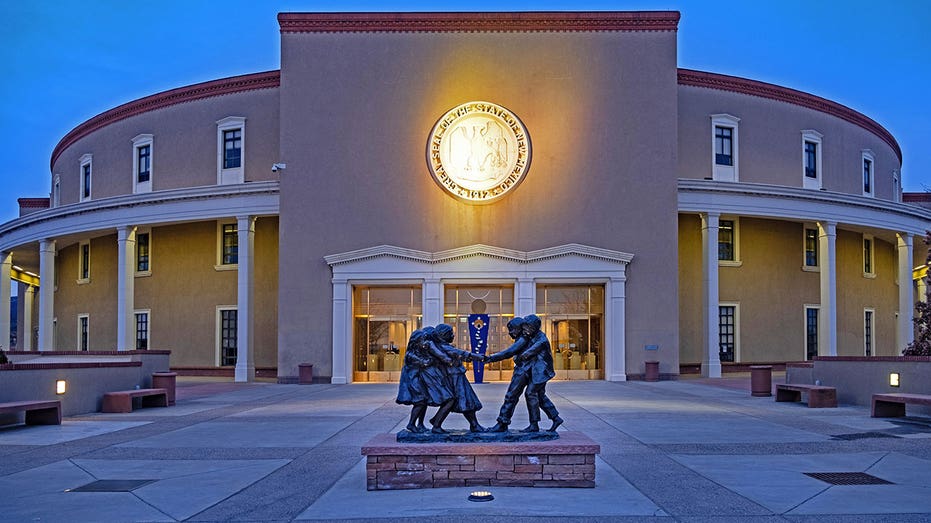
The top-ranked Republicans in the New Mexico House and Senate won’t seek reelection this year as their party seeks a stronger footing in the Democrat-led Legislature. Senate Republicans are reckoning with the first election since a redistricting plan from Democrats merged GOP-led districts. Senate Republican leader Greg Baca of Belen said his decision to leave the Senate by year’s end was informed by conversations with his family, prayer and attention to new political boundaries adopted by the Democrat-led Legislature in 2021. NEW MEXICO HOUSE REJECTS PAID FAMILY LEAVE EXPANSION, CONSIDERS POLITICAL DEEPFAKE REGULATION “Careful observers of the progressive plan to pit two Hispanic Republicans against each other through redistricting may have seen this coming,” said Baca in a statement, while endorsing Republican state Sen. Joshua Sanchez of Bosque in the merged district. “In short, I refuse to allow the radical left to pit brother against brother.” House minority leader T. Ryan Lane of Aztec also chose not to seek reelection, saying he wants to spend more time with his wife and two sons. NEW MEXICO GOVERNOR AND STATE LEGISLATURE COMPROMISE ON GUN CONTROL AND HOUSING, BUT DISAGREE ON PAID LEAVE Lane, an attorney who runs a craft ice cream store with his wife, said the Republicans are well positioned to gain seats in the House. “I think the people of New Mexico are waking up to the fact that progressive politics are why New Mexico is consistently last,” he said. “I feel like I’ve left my caucus in the House Republicans to be positioned well for success moving forward.” State legislative candidates raced against a Tuesday-evening deadline to submit signature petitions that can qualify them for the state’s June 4 primary and November general election. Democrats outnumber Republicans nearly 2-1 in the state Senate, amid a wave of retirement announcements that could tilt the partisan balance next year. In the House, Democrats currently have a 25-15 seat advantage after winning back the House majority in 2016. The entire Legislature is up for election in November. In drawing new Senate districts, the Legislature embraced recommendations from Native American communities for shoring up Indigenous voting blocs in the northwest of the state. But Republicans at the same time bristled at provisions that merged two Republican-held districts. The Legislature’s annual session adjourned in mid-February with approval of several public safety initiatives and an annual budget plan that slows down a spending spree linked to an oil production bonanza in the Permian Basin that overlaps southeastern New Mexico and portions of Texas. Separately on Tuesday, four state House Republican legislators from southeastern New Mexico and Farmington urged the state land commissioner to reverse course on her decision to withhold some lease sales for oil and gas development until the Legislature agrees to raise royalty rates in premium tracts from 20% to 25%. AMERICANS EXPOSED TO NUCLEAR RADIATION BY GOVERNMENT WOULD BE COMPENSATED UNDER APPROVED SENATE BILL A letter to Land Commissioner Stephanie Garcia Richard warns of possible unintended consequences including job losses and reduced government income if petroleum producers redirect investments from New Mexico to other oil fields. It was signed by Republican state Reps. Jim Townsend of Artesia, Larry Scott of Hobbs, Rod Montoya of Farmington and Jared Hembree of Roswell. State Land Commissioner Stephanie Garcia Richard said the state will forgo a trove of income and investment returns over the lifetime of future leases if royalties stay capped at 20%. In New Mexico, royalty payments from oil and gas development on state trust land are deposited in a multibillion-dollar investment trust that benefits public schools, universities and hospitals. The accountability and budget office of the Legislature says a 25% royalty rate cap would increase annual revenues by $50 million to $75 million.
Bhojpuri singer Pawan Singh, BJP’s pick for Asansol, announces to fight elections days after withdrawing candidature

“I will contest elections to fulfil the promise made to my society, people, and mother. Your blessings and cooperation are expected. ‘Jai Mata Di,” he said on X.
Nayab Singh Saini govt wins trust vote in Haryana Assembly day after BJP-JJP split

In the 90-member state assembly, BJP has 41 MLAs and the support of six independents.
Mamata Banerjee cuts ties with her brother, says, ‘he can do…’

Banerjee said, ‘Before every election, he creates a problem. I don’t like greedy people. I don’t believe in dynasty politics that I will give him ticket in elections. I have decided to disown him and cut off all relationship with him’
With new state funds in hand, community colleges waive tuition for some high school students
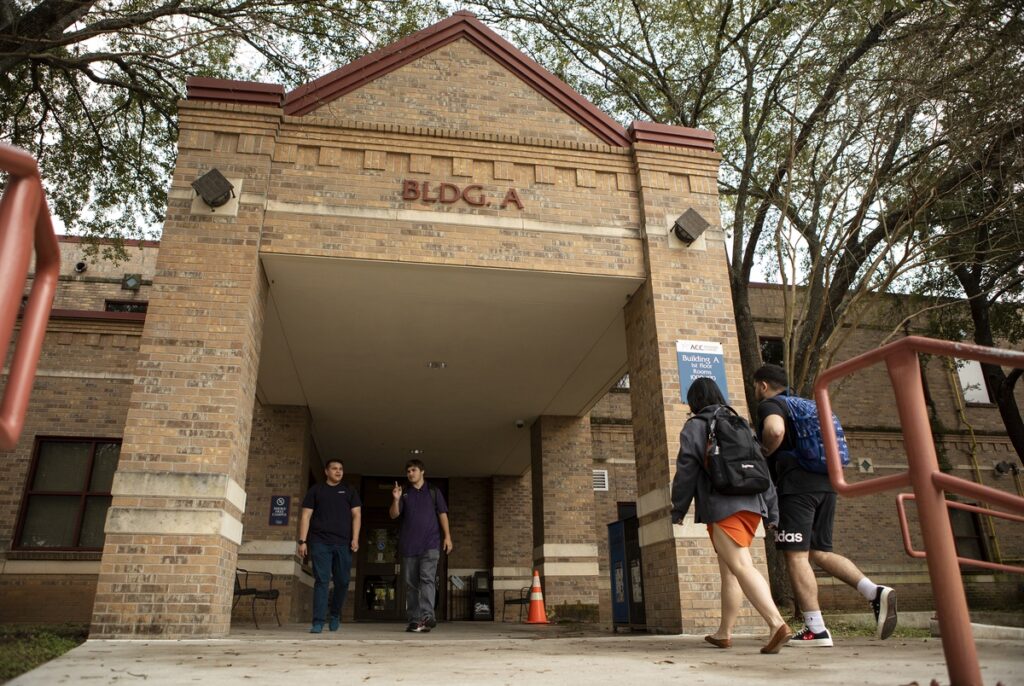
Community college leaders hope free tuition programs will help change the conversation about the affordability of higher education amid a growing skepticism over the value of a college degree.
Why covid patients who could most benefit from paxlovid still aren’t getting it

During the pandemic, the federal government offered Americans a 5-day course of Paxlovid, the antiviral drug that lessens COVID-19 symptoms. But now that Pfizer is charging for it, confusion over insurance coverage, price, has made patients wary.