

Special Counsel Hur says he did not ‘disparage the President unfairly’ ahead of hearing
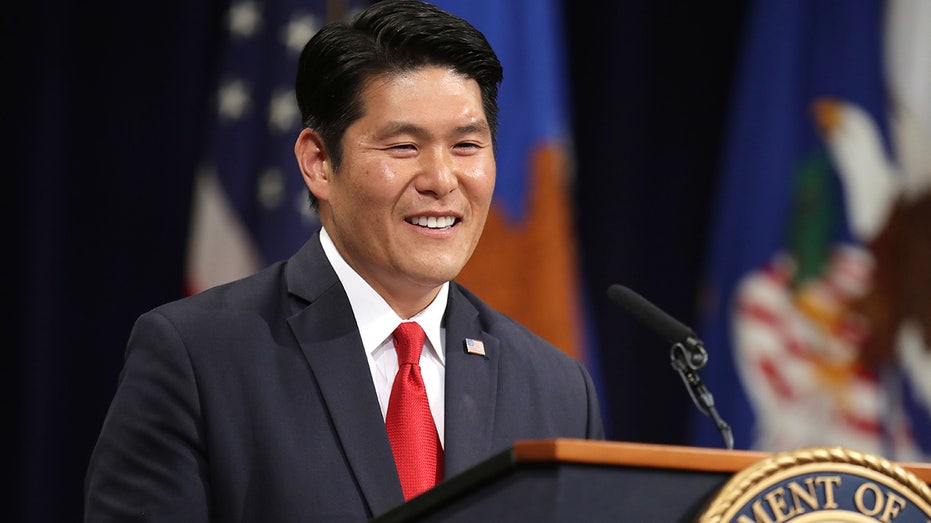
Special Counsel Robert Hur is standing by his report on President Biden’s handling of classified documents, maintaining he did not unfairly characterize his mental health. Hur — who is expected to testify Tuesday in front of the House Judiciary Committee on Capitol Hill at 10 a.m. — will push back against accusations of politicizing the report by commenting on Biden’s failing memory. “My assessment in the report about the relevance of the President’s memory was necessary and accurate and fair,” Hur wrote in a copy of the prepared remarks obtained by Fox News. “Most importantly, what I wrote is what I believe the evidence shows, and what I expect jurors would perceive and believe.” SPECIAL COUNSEL ROBERT HUR TO TESTIFY PUBLICLY ON FINDINGS FROM BIDEN CLASSIFIED RECORDS PROBE The remarks continued, “I did not sanitize my explanation. Nor did I disparage the President unfairly. I explained to the Attorney General my decision and the reasons for it. That’s what I was required to do.” Hur, who released his report to the public in February, did not recommend criminal charges against Biden for mishandling and retaining classified documents and stated that he wouldn’t bring charges against Biden even if he were not in the Oval Office. Those records included classified documents about military and foreign policy in Afghanistan and other countries, among other records related to national security and foreign policy, which Hur said implicated “sensitive intelligence sources and methods.” SPECIAL COUNSEL CALLS BIDEN ‘SYMPATHETIC, WELL-MEANING, ELDERLY MAN WITH A POOR MEMORY,’ BRINGS NO CHARGES Hur did not recommend any charges against the president but did describe him as a “sympathetic, well-meaning elderly man with a poor memory” — a description that has raised significant concerns for Biden’s 2024 re-election campaign. Democratic lawmakers and part leaders sharply criticized the inclusion of comments about the president’s mental capabilities, saying it unnecessarily politicized the investigation. “I analyzed the evidence as prosecutors routinely do: by assessing its strengths and weaknesses, including by anticipating the ways in which the President’s defense lawyers might poke holes in the government’s case if there were a trial and seek to persuade jurors that the government could not prove his guilt beyond a reasonable doubt,” Hur claimed in the prepared remarks. He added, “There has been a lot of attention paid to language in the report about the President’s memory, so let me say a few words about that. My task was to determine whether the President retained or disclosed national defense information “willfully”—meaning, knowingly and with the intent to do something the law forbids. I could not make that determination without assessing the President’s state of mind.” Fox News’ Tyler Olson and David Spunt contributed to this report.
Biden fuzzy on dates, fumbled details in interviews with Special Counsel Hur
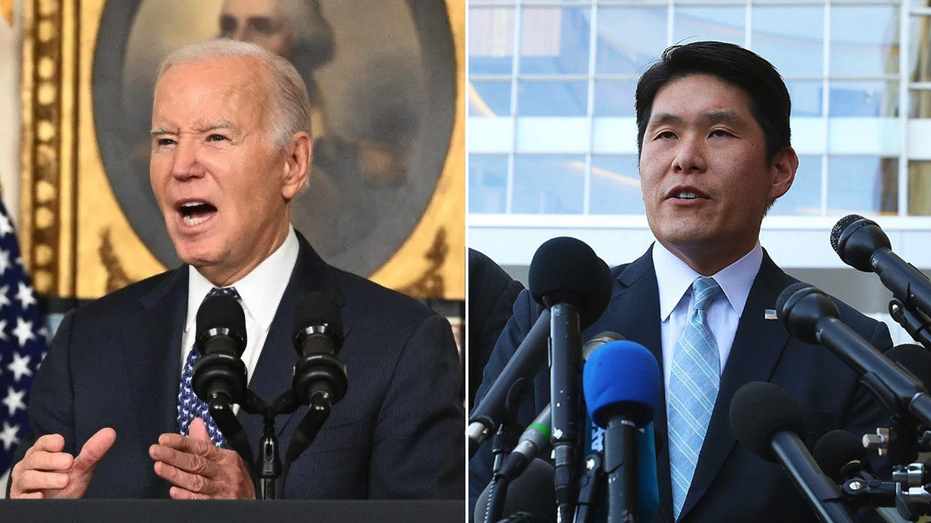
Transcripts of President Biden’s interviews with former Special Counsel Robert Hur show the president repeatedly told prosecutors he did not know how classified documents ended up in his home and offices. More than five hours of Biden’s interviews were turned over to Congress by the Justice Department on Tuesday, hours before Hur is set to testify to the House Judiciary Committee on his investigation into the Democratic president’s handling of classified documents. The interview transcripts show Biden was at times fuzzy about dates as he recalled decades-old stories. “I have no idea,” Biden said when asked how classified information ended up at his Delaware home and former Penn Biden Center office in Washington, D.C. The president added that had he known the documents were there, he would have returned them to the government. The president did acknowledge that he intentionally kept his personal diaries — which officials said contained classified information. Biden insisted they were his own property, a claim also asserted by previous presidents and vice presidents, and that he had a right to keep them. SPECIAL COUNSEL ROBERT HUR TO TESTIFY PUBLICLY ON FINDINGS FROM BIDEN CLASSIFIED RECORDS PROBE Biden said that he left it to his staff to safeguard classified information that was presented to him, often leaving papers on his desk in heaps for aides to sort through and secure. “I never asked anybody,” Biden said. He noted that many of his staff had worked with him for years, to the point where they didn’t need direction from him. “It just — it just got done. I don’t know. I can’t remember who.” Hur, in his report on President Biden’s alleged improper retention of classified records, did not recommend criminal charges against Biden. “We conclude that no criminal charges are warranted in this matter,” said the report, which was released in early February. “We would reach the same conclusion even if the Department of Justice policy did not foreclose criminal charges against a sitting president.” The special counsel infamously described Biden as “a sympathetic, well-meaning, elderly man with a poor memory.” Hur stood by those remarks in his prepared testimony to the Judiciary Committee. He will say his report “reflects my best effort to explain why I declined to recommend charging President Biden.” BIDEN RETAINED RECORDS RELATED TO UKRAINE, CHINA; COMER DEMANDS ‘UNFETTERED ACCESS’ AMID IMPEACHMENT INQUIRY “My assessment in the report about the relevance of the President’s memory was necessary and accurate and fair,” Hur wrote in a copy of the remarks obtained by Fox News. “Most importantly, what I wrote is what I believe the evidence shows, and what I expect jurors would perceive and believe. I did not sanitize my explanation. Nor did I disparage the President unfairly. I explained to the Attorney General my decision and the reasons for it. That’s what I was required to do.” Confusion over the timing of the death of Biden’s adult son Beau — who died May 30, 2015 — was highlighted by Hur in his report as an example of the president’s memory lapses. But the transcript shows that Hur never asked Biden about his son specifically, as a visibly angry Biden had suggested in comments to reporters the day the report was released. “How in the hell dare he raise that,” Biden said of Hur. “Frankly, when I was asked the question, I thought to myself it wasn’t any of their damn business.” However, the transcript shows that Biden recalled the interview incorrectly. SPECIAL COUNSEL CALLS BIDEN ‘SYMPATHETIC, WELL-MEANING, ELDERLY MAN WITH A POOR MEMORY,’ BRINGS NO CHARGES Hur asked Biden about where he kept the things that he was “actively working on” while he was living in a rental home in Virginia immediately after leaving the vice presidency in January 2017. And in that context, it was Biden himself who brought up Beau’s illness and death as he talked about a book he’d published later in 2017 about that painful time. “What month did Beau die?” Biden wondered aloud, adding, “Oh God, May 30th.” A White House lawyer who was present supplied the year, 2015. “Was it 2015 he died?” Biden said. The president went on to tell a story about how his late son had encouraged him to remain involved in public life after the Obama administration ended. Several portions of the transcript were redacted by the Justice Department, National Security Council and State Department to hide sensitive intelligence and details of foreign affairs matters. Fox News Digital’s Greg Norman, Brooke Singman and Fox News’ Tyler Olson, as well as the Associated Press contributed to this report.
Primaries kick off for Mississippi’s 4 US House seats, 1 Senate seat
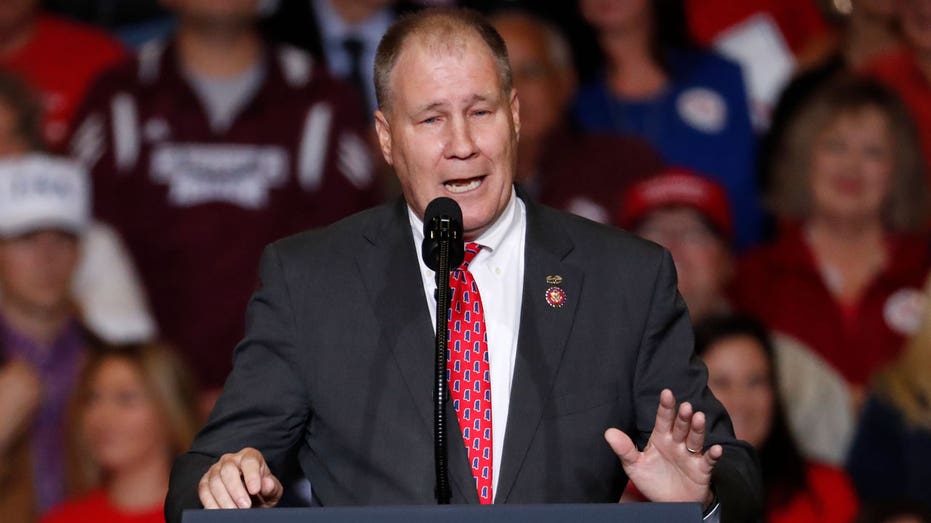
Mississippians head to the polls with party primaries for all four of the state’s U.S. House seats and one U.S. Senate seat. Polls are open from 7 a.m. to 7 p.m. CDT Tuesday. If runoff elections are needed, they will be held April 2. The general election is Nov. 5. Here’s a look at the candidates who are vying for the nominations. MISSISSIPPI CITY, POLICE DEPARTMENT UNLAWFULLY JAILING PEOPLE OVER UNPAID FEES THEY CAN’T AFFORD: DOJ Rep. Trent Kelly is unopposed for the Republican nomination in north Mississippi’s 1st Congressional District. He is a former district attorney and has been in the House since winning a 2015 special election. Kelly is a member of the House Armed Services Committee. Dianne Dodson Black and Bronco Williams are competing in the Democratic primary. Black is a business owner and was the Democratic nominee in the 1st District in 2022. She says she wants to support President Joe Biden’s economic policies, restore abortion rights and limit access to semi-automatic rifles. Williams, a theater and Spanish teacher, says he wants the U.S. to invest in alternative energy sources, improve transportation and increase access to health care. Rep. Bennie Thompson is unopposed for the Democratic nomination in the 2nd Congressional District, which encompasses most of the city of Jackson and rural areas in the Delta and along the Mississippi River. Thompson has been in the House since he won a 1993 special election. He is the ranking Democrat on the House Homeland Security Committee. The three candidates in the Republican primary are Ron Eller, Andrew Scott Smith and Taylor Turcotte. Eller is a military veteran and physician assistant who ran unsuccessfully for the Republican nomination in the 2nd District in 2022. He says he supports construction of a U.S.-Mexico border wall and expansion of domestic energy production. Smith has worked in farming and commercial real estate. He says he wants to rejuvenate agriculture, rebuild infrastructure, reinforce the southern U.S. border and require more transparency in government. Turcotte has worked in advertising and as a regional sales manager for a vacuum cleaner company. She says she is running because she wants to secure the U.S. borders. Republican Rep. Michael Guest is unopposed in the primary and the general election in central Mississippi’s 3rd Congressional District. Guest is a former district attorney who was first elected to the U.S. House in 2018. He is chairman of the House Ethics Committee and vice chairman of the Homeland Security Committee. Rep. Mike Ezell faces two challengers in the Republican primary in south Mississippi’s 4th Congressional District. Ezell is a former sheriff and was first elected to the House in 2022. He has voted to impeach Homeland Security Secretary Alejandro Mayorkas and to end U.S. military assistance to Ukraine. Former President Donald Trump endorsed him this year. Carl Boyanton and Michael McGill are challenging Ezell in the Republican primary. Boyanton has owned a produce distribution company. He ran unsuccessfully for the Republican nomination for the 4th District U.S. House seat in 2020 and 2022. He says he wants to enact term limits, eliminate some federal agencies and limit government spending. McGill is a military veteran. He says he wants to improve power grids, highways and other infrastructure, increase funding for mental health services and eliminate pay disparities between women and men. Craig Elliot Raybon is unopposed for the Democratic nomination in the 4th District. Sen. Roger Wicker faces two challengers in the Republican primary — Ghannon Burton and Dan Eubanks. Wicker was appointed to the Senate in 2017 by then-Gov. Haley Barbour after fellow Republican Trent Lott stepped down. Wicker is an attorney and served in the Mississippi state Senate before winning a U.S. House seat in north Mississippi in 1994. He is the ranking member of the Armed Services Committee and has pushed to expand shipbuilding for the U.S. military. He has been endorsed by Trump. Burton is a military veteran. He says he believes the 2020 presidential election was rigged, and he criticizes Wicker for voting to certify the results. Burton says he wants to close the U.S. border but he believes “globalists want it open.” Burton says he believes COVID-19 vaccines are poison. Eubanks is a state representative and a Presbyterian pastor. He says he believes “J-6ers” — people charged in the Jan. 6, 2021, riot at the U.S. Capitol — have been denied due process and are “rotting away in jail.” Eubanks says he wants to reduce federal spending and he believes Wicker’s record is “anything but conservative.” Ty Pinkins is unopposed for the Democratic nomination. He is an attorney and ran unsuccessfully for Mississippi secretary of state in 2023. He says he wants to fight poverty and improve access to health care.
Nayab Singh Saini takes oath as new Haryana Chief Minister hours after ML Khattar resigns

Nayab Singh Saini takes oath as new Haryana Chief Minister hours after ML Khattar resigns.
Kentucky House passes bill aiming to curb sale of vaping products to teens

Legislation aimed at cracking down on the illegal sale of electronic cigarettes to young people and keeping unauthorized vaping products out of stores won passage in the Kentucky House on Monday. Republican state Rep. Rebecca Raymer, the bill’s lead sponsor, said it’s a response to the state’s “vaping epidemic” and, in particular, complaints about how rampant vaping has become in schools. “As I dove into this subject, I learned that most of what is confiscated is flavored and disposable vapes. Looking further, I found out that many of these vapes are not even authorized for sale,” Raymer said in a statement after the bill’s passage. OVER 2.5M AMERICAN TEENS VAPED IN 2022, OFFICIALS SAY The measure cleared the House on a 62-26 vote and heads to the Senate next. Republicans have supermajorities in both chambers. The bill would require Kentucky businesses to acknowledge whether they’re involved in the retail sale of tobacco products when filing business paperwork with the Secretary of State’s office. That list would be sent to the Kentucky Department of Alcoholic Beverage Control, which regulates tobacco and vape sales. The minimum legal age to buy smoking products is 21 in Kentucky. For a first citation under the bill, retailers would face a fine of $100 to $500. The penalty would grow to $1,000 for a second offense and $5,000 for third and subsequent offenses. The bill also includes fines for wholesalers and manufacturers found to be involved in the distribution of unauthorized tobacco products. US SCHOOLS INVEST MILLIONS IN SURVEILLANCE TECHNOLOGY TO COMBAT TEEN VAPING EPIDEMIC The number of different electronic cigarette devices sold in the U.S. has skyrocketed since 2020, driven almost entirely by a wave of unauthorized disposable vapes from China, according to tightly controlled sales data obtained by The Associated Press. Federal officials are seizing more shipments of unauthorized e-cigarettes at U.S. ports, but new flavored products continue pouring into the country from China, according to government and industry data reviewed by the AP. The numbers demonstrate the Food and Drug Administration’s struggles to control the tumultuous vaping market. Most of the disposable e-cigarettes, which are thrown away after they’re used up, come in sweet and fruity flavors that have made them the favorite tobacco product among teenagers. The Kentucky legislation — House Bill 11 — is meant to keep e-cigarettes, vapes and other tobacco products not authorized by the FDA out of stores in the Bluegrass State. “The measure balances a Kentucky consumer’s access to FDA-authorized products and our obligation to keep vapes and other e-cigs with dangerous ingredients off our shelves and away from our children,” Raymer said in the statement Monday. VAPES DISGUISED AS SCHOOL SUPPLIES WORRY AUTHORITIES AND PROMPT WARNINGS AS ITEMS POUR INTO US FROM CHINA During the House debate, the proposal drew sharp criticism from Republican state Rep. Savannah Maddox, who said it would ban products used by Kentucky adults. She predicted a public backlash against the bill. “This is being proposed as something that is designed to reduce harm in minor children, when in reality it will do no such thing,” she said. “What it will do is harm Kentucky’s businesses.” She condemned it as an example of government overreach. “Where does it end? I don’t believe it’s the appropriate role of government for us to take on this ‘nanny state façade’ and to ban products of this nature,” Maddox said. Raymer replied that the bill is meant to follow the FDA’s regulatory authority. “I am not a big government type of person,” Raymer said. “But the fact of the matter is we are not the regulatory authority over these products. The FDA is. That was granted through our duly elected officials through Congress.”
Republicans and Democrats fight for Ohio as former swing state’s political landscape shifts
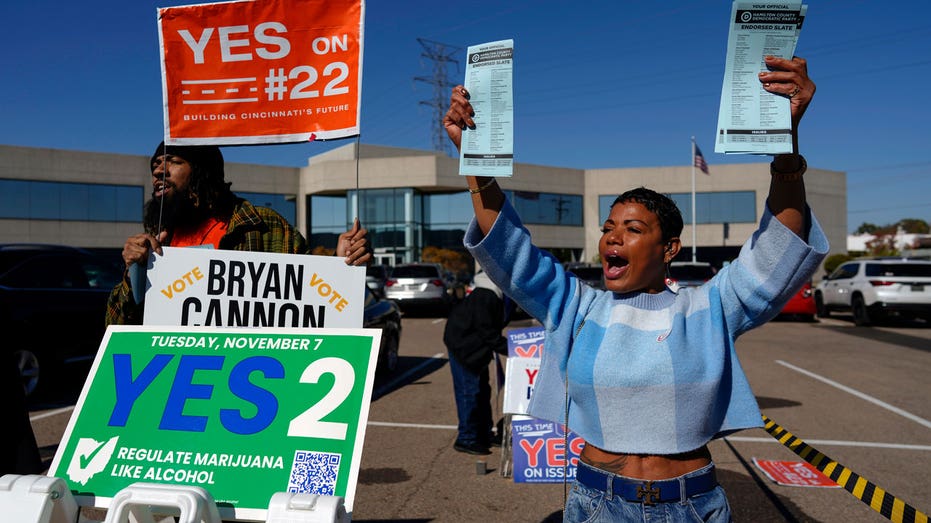
For more than half a century, Ohio was one of the most important states to watch during presidential election years, a place where both parties competed vigorously for support from voters who were often genuinely undecided. Then came Donald Trump. Beginning in 2016, Ohio became reliably Republican as more and more voters embraced the New York businessman’s brash brand of politics. When Trump won the state in 2020 without clinching the White House, he became the first to win Ohio but lose the presidency since the state sided with Richard Nixon over John F. Kennedy in 1960. With that, the Buckeye State’s bellwether status was officially unrung. OHIO GOV. DEWINE MAKES ENDORSEMENT IN UBER-COMPETITIVE SENATE RACE Now there are hints that the dynamic may be shifting again after the U.S. Supreme Court overturned federal constitutional protections for abortion. Ohio voters responded last year to the 2022 ruling by overwhelmingly approving an amendment enshrining abortion rights in the state constitution. They did so after swarming polls to defeat a Republican effort that would have made doing so more difficult. The state also legalized recreational marijuana. There’s a risk of overinterpreting the results from 2023, but the victories have encouraged Democrats defending a pivotal U.S. Senate seat this year. Last August’s GOP-backed effort to make amending Ohio’s constitution harder showed Ohioans that “Republican politicians were not on their side,” said Ohio Democratic Party Chair Elizabeth Walters. “The Democratic Party isn’t getting ahead of themselves after just one election, but it does provide some hope that steadily, and with a lot of work, Ohioans could drift more to the left than to the right in upcoming elections,” she said. Democrats’ most immediate concern is re-electing three-term U.S. Sen. Sherrod Brown. He’s unopposed in the March 19 primary as Republicans hash out who will run against him, but Brown is viewed as among the nation’s most vulnerable Democrats in November’s general election, when voters also will cast ballots for president and Congress. Delaware County voter Janelle Tucker, 53, said as she perused the floral section of a Kroger on Tuesday that she can’t predict how Ohio will vote this fall. She’s a Democrat and a “big fan” of Brown but said she just doesn’t know what will happen. “Ohio used to be sort of the pulse of the voter, and it’s not anymore,” she said. “It’s fascinating because it seems like the voter strongly approved women’s rights, but the representatives don’t support the voters.” Since Trump, Tucker said, “I feel like I don’t know my community anymore.” Brown stands as a rare Democrat to be elected statewide in Ohio. Republicans control every statewide non-judicial office, both chambers of the state Legislature with supermajorities and the Ohio Supreme Court — and they have for years. Mark Weaver, a long-time Ohio-based Republican consultant, said, “Anyone who suggests that Ohio has become purple again is going to have to offer up evidence other than 2023.” He chalked up the resounding success of November’s Issue 1, which guaranteed an individual’s right “to make and carry out one’s own reproductive decisions,” to abortion rights groups outraising and outspending their anti-abortion opponents, therefore driving more left-leaning voters to the polls. Unless those same groups put similar millions into Brown’s race, Ohio will “return to its reliable red state results,” Weaver said. That’s what happened in 2022, when then-Democratic U.S. Rep. Tim Ryan ran what was widely considered a textbook campaign for the Senate seat vacated by Republican Rob Portman, only to lose by more than 6 points to Republican venture capitalist and “Hillbilly Elegy” author JD Vance. Vance had been backed by Trump. But Ryan failed to garner the financial support from national Democrats that Brown is receiving. The Democratic Congressional Campaign Committee has committed at least $10 million to re-elect him and Montana Democratic Sen. Jon Tester. David Niven, an associate professor of political science at the University of Cincinnati, said Brown has a shot at keeping his seat if he focuses on abortion in a way that connects with voters. AFTER EAST PALESTINE TRAIN DERAILMENT, TOXIC CHEMICALS DID NOT NEED TO BE BURNED OFF, NTSB SAYS Brown, acutely aware of the issue’s potential to help him, has wasted no time contrasting his stance on abortion with those of his Republican opponents: Cleveland businessman Bernie Moreno, Secretary of State Frank LaRose and state Sen. Matt Dolan. “I have always been clear about where I stand: I support abortion access for all women,” he wrote in a text to voters the week after the November referendum. “I know where my opponents stand, too: All three would overturn the will of Ohioans by voting for a national abortion ban.” Moreno, LaRose and Dolan each celebrated the overturning of Roe v. Wade, which returned abortion policy to the states, but now support a 15-week federal abortion limit that’s been cast as a compromise by influential anti-abortion groups. The Ohio Republicans’ stances vary on imposing limits even earlier and on allowing exceptions later in pregnancy. Abortion is also a hot topic in three closely watched Ohio Supreme Court races, where Democrats are defending two sitting justices and dreaming of flipping a third open seat to take control of the seven-member court. The future of Ohio abortion law could be forged there, and on other states’ high courts, as the legal questions surrounding abortion rights are hashed out. Niven’s takeaway from 2023? “If the Democrats could make elections strictly about issues, they would win,” he said. Supporting evidence for that theory can be found in Ohio’s suburbs, which may prove pivotal again. In 2018, Brown lost three suburban counties — Butler, outside Cincinnati; and Delaware and Licking, outside Columbus — where the abortion rights issue went on to win last November. In two others where Issue 1 lost narrowly — the Cincinnati area’s Clermont and Warren counties — the abortion question outperformed Brown’s 2018 percentage by double digits. All five of those counties voted for Trump in 2020. At the Keystone Pub &
Deadline to update Aadhaar card details for free extended; check last date, how to update

Aadhar issuing body Unique Identification Authority of India (UIDAI) has extended the deadline for updating Aadhaar card details for free. Users can now update their details for free until June 14, 2024.
DNA Verified: Is CAA an anti-Muslim law? Centre terms news report as ‘misleading’

As CAA rules unveiled on Monday, the central government will now start granting Indian nationality to persecuted non-Muslim migrants from three countries.
IAF’s Tejas aircraft crashes near Jaisalmer, pilot safe

Indian Air Force Light Combat Aircraft (LCA), Tejas crashed in Rajasthan’s Jaisalmer on Tuesday (March 12).
Weather update: IMD predicts rainfall in 11 states, snowfall in Himalayas this week; Check full forecast

The weather department predicted light to moderate rainfall and snowfall followed by thunderstorms and lightning over Jammu and Kashmir, Ladakh, Himachal Pradesh, and Uttarakhand on March 13 and March 14. These weather conditions are set to end after that.