

Locking it up: Trump, Biden, expected to clinch GOP, Democrat, presidential nominations in Tuesday’s primaries
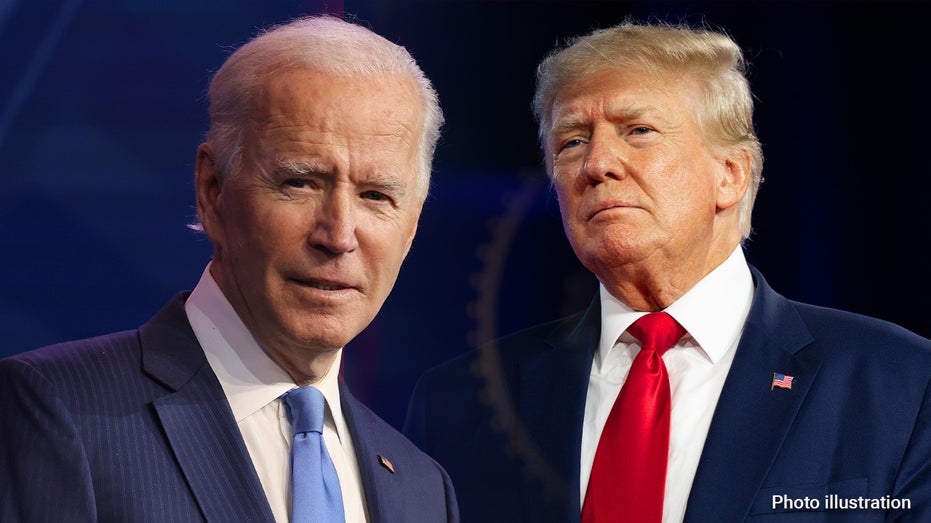
President Biden and former President Donald Trump are expected to make their 2024 general election rematch official on Tuesday. That’s when the Democratic incumbent and his Republican predecessor in the White House are all-but-certain to officially clinch the two major party presidential nominations, as Georgia, Mississippi, and Washington State hold primaries. With no major challengers left, both Biden and Trump are expected to collect all or nearly all the delegates up for grabs in Tuesday’s contests, putting each of them over the top and making them the Democratic and Republican presumptive presidential nominees. BIDEN, TRUMP, SWEEP SUPER TUESDAY CONTESTS AS THEY MOVE CLOSER TO CLINCHING NOMINATIONS Trump swept 14 of the 15 GOP primaries and caucuses a week ago, on Super Tuesday – which moved him much closer to officially locking up the 2024 Republican presidential nomination. And Trump’s last rival for the nomination – former U.N. ambassador and former South Carolina Gov. Nikki Haley – dropped out of the race the day after Super Tuesday. WHERE THE 2024 PRESIDENTIAL NOMINATION RACES STAND Trump currently has 1,075 delegates. He needs 1,215 to lock up the nomination. Fifty-nine GOP delegates are up for grabs in Georgia, with 40 at stake in Mississippi and 43 in Washington State. Nineteen more delegates are up for grabs in Hawaii, which holds a Republican presidential caucus later in the evening. In the Democratic nomination race, Biden has 1,866 delegates. The president, who also swept 14 of 15 contests last week, needs 1,968 to clinch renomination. Georgia should put Biden over the top if he captures all 108 delegates up for grabs. Thirty-five Democratic delegates are at stake in Mississippi, with another 92 in Washington State. Both Biden and Trump made campaign stops Saturday in Georgia, which is also a crucial general election battleground state. Georgia was one of a half dozen states that Biden narrowly carried four years ago as he defeated Trump to win the White House. The rematch between Biden and Trump is the first for the White House since 1956 – when Republican President Dwight D. Eisenhower defeated former Democratic Gov. Adlai Stevenson of Illinois as they faced off for a second time. Get the latest updates from the 2024 campaign trail, exclusive interviews and more at our Fox News Digital election hub.
Defying Trump, House GOP plans to forge ahead with TikTok bill that could ban app
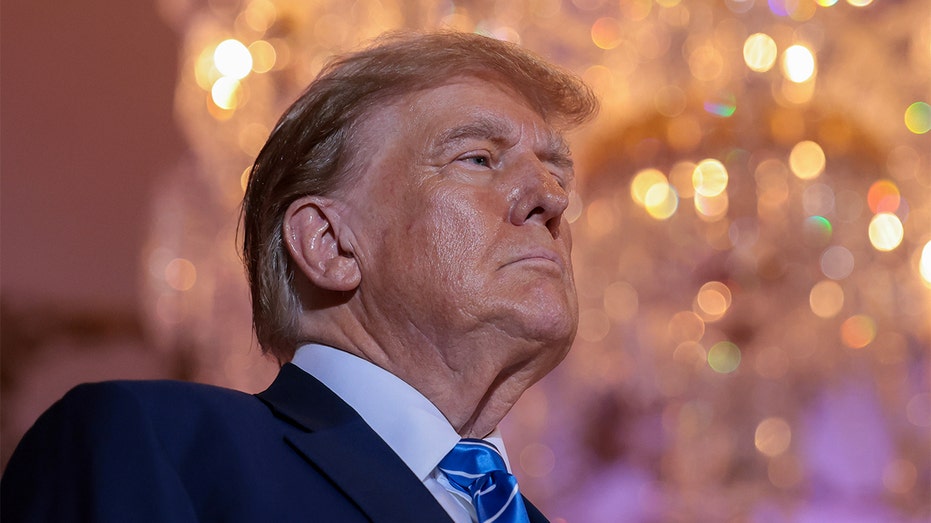
House Republican leaders are expected to vote Wednesday on a bill that could lead to a nationwide ban on TikTok, even as former President Trump appears to undermine efforts to restrict the app. Fox News Digital has learned that the House of Representatives is expected to take the bill up under suspension of the rules, meaning it bypasses the usual procedural hurdles in exchange for raising the threshold for passage from a simple majority to two-thirds. The bill passed through the House Energy and Commerce Committee in an unprecedented bipartisan 50-0 vote on Thursday. GOP LAWMAKERS PRESS TIKTOK CEO ON ‘DELUGE OF PRO-HAMAS CONTENT’ ON PLATFORM Later that same day, Trump posted on his Truth Social app, “If you get rid of TikTok, Facebook and Zuckerschmuck will double their business. I don’t want Facebook, who cheated in the last Election, doing better. They are a true Enemy of the People!” The measure would ban TikTok from online app stores if its parent company, ByteDance, does not divest from it within 165 days. ByteDance is a Beijing-headquartered tech company that critics say is under the influence of China’s ruling communist party, a claim the company has denied. But top U.S. officials have warned that TikTok likely gives the Chinese government access to mountains of sensitive American user data, even as the company insists guardrails are in place to prevent that. Trump’s hesitance about a ban appears to be a shift from his earlier position as president, when he tried to block the app in the U.S. in 2020. He said in a CNBC interview Monday morning that “there’s a lot of good and there’s a lot of bad” with TikTok. KEVIN O’LEARY OFFERS TO BUY TIKTOK AND TURN IT INTO A ‘NEW AMERICAN COMPANY’ IF PROPOSED BAN ADVANCES Trump conceded he still believes TikTok is a national security threat but added, “[Y]ou have that problem with Facebook and lots of other companies, too.” “When you talk about highly sophisticated companies that you think are American, they are not so American, they deal in China … if China wants anything from them, they will give it, so that’s a national security risk also,” Trump said. But Republicans who spoke with Fox News Digital brushed off concerns that Trump, as de facto leader of the GOP, could sway House leaders and other members away from their support of the bill. “Trump was right about the national security problem posed by TikTok in 2020. And he’s right today that just pushing TikTok users onto Facebook isn’t the answer. That’s why our bill is the right path forward; it surgically removes CCP control and creates an opportunity to put TikTok in better hands,” one of the bill’s leaders, House China Select Committee Chair Mike Gallagher, R-Wis., told Fox News Digital. BILL BANNING TIKTOK APP HEADED TO HOUSE AFTER UNANIMOUS COMMITTEE VOTE A senior GOP aide told Fox News Digital that a majority of lawmakers are “already convicted” on the issue of TikTok. “This is a security threat, and they’re going to do what they can to prevent that. They’ll argue that we’re just asking that it be purchased by [a company in a non-adversarial country], we’re actually not shutting it down. … So, I don’t think a lot of people are necessarily swayed at the moment,” the senior GOP aide said. “[Trump] has been supportive of something like this in the past. I think that people will just kind of roll with that in mind.” House Speaker Mike Johnson, R-La., and House GOP Conference Chair Elise Stefanik, R-N.Y., two of Trump’s highest-ranking Capitol Hill allies, did not respond when asked for comment on Trump’s criticism of the bill. Both have suggested their support.
‘Dark day’: India on edge over religion-based citizenship law before polls

New Delhi, India — Protests have erupted in parts of India over the Narendra Modi government’s implementation of a controversial citizenship law ahead of national elections, as security forces rushed to areas of the national capital that had previously been epicentres of large demonstrations against the legislation. The notification of the Citizenship (Amendment) Act (CAA) on Monday introduces the country’s first religion-based citizenship test after decades of a constitutional setup that swears — at least officially — by secularism. Critics say the law discriminates against Muslim asylum seekers. The amendment expedites citizenship for refugees from India’s neighbouring nations who are Hindu, Sikh, Christian or from other religious minorities — but not if they are Muslim. As a result, the benefits do not extend to the Rohingya from Myanmar, persecuted Ahmadiyya from Pakistan, or the Hazara from Afghanistan, for instance. “The CAA has always been about creating two tiers of citizenships in India: non-Muslims and Muslims,” said Yogendra Yadav, a political scientist and activist who was closely associated with the anti-CAA protests. “It is voter polarisation [by the BJP] before elections but are we surprised?” Parliament passed the CAA in 2019, but Modi’s Bharatiya Janata Party (BJP) government has since delayed its implementation. Months-long protests against the law brought parts of New Delhi to a standstill, as the capital was hit by sectarian violence in early 2020. More than 100 people were killed in the violence, mostly Muslims. On Monday, after the government announced the notification of the law, protests broke out at the Jamia Millia Islamia university in New Delhi, students told Al Jazeera. Soon, police forces arrived as tensions rose. Police were also rushed to northeast Delhi, which had witnessed some of the worst violence after the passage of the 2019 law. Security forces also conducted flag marches in areas near Shaheen Bagh, which became a hub of protests against the CAA in 2019 and 2020. Separately, in the northeastern state of Assam, activists from several organisations, including the All Assam Students’ Union (AASU), burned copies of the law and called for a statewide shutdown on Tuesday. Similar protests are also lined up in other regional states, including Meghalaya and Tripura, by various student groups. Many of these groups are critical of the law not because of allegations that it discriminates against Muslims — but because they oppose any influx of refugees from other nations. ‘Timed to polarise’ Lawyers and critics of the government have also questioned the timing of the implementation of the law — on the eve of Ramadan, which began in India on Tuesday, and weeks before national elections, which are expected to be held in April and May. Different groups have filed more than 200 petitions challenging the law that are still pending before courts. “The CAA is unconstitutional and discriminatory on several grounds, including exclusion based on religion,” said Prashant Bhushan, a senior Supreme Court lawyer. “The timing of the notification is meant to polarise the electorate upon the Hindu-Muslim divide.” The Modi government has previously linked the CAA to another controversial initiative, the proposed National Register of Citizens (NRC) that could lead to the deportation of millions who have lived in India for generations but do not have identity papers proving the legal status of their ancestors. Muslim groups and rights activists say the combination of the CAA and the NRC could be used to target members of India’s 200 million-strong Muslim population. “You will use NRC to exclude people, then use CAA to only selectively include people,” said Bhushan. Asaduddin Owaisi, a member of parliament from Hyderabad and leader of the opposition All India Majlis-e-Ittehadul Muslimeen party, said the “divisive” law is “meant to target only Muslims”, adding that people will have no choice but to oppose it again. The Indian government has repeatedly denied these accusations, saying the CAA is meant to grant citizenship, not to take it away from anyone. It called the earlier protests politically motivated. ‘Divide and distract’ The introduction of the CAA law comes at a time when the Modi government is facing scrutiny over an electoral bonds scheme that allowed corporate groups to donate millions of dollars to political parties without any transparency over who was giving whom how much. In February, India’s Supreme Court struck down the scheme, calling it unconstitutional, and ordering the public sector State Bank of India (SBI) — which implemented the electoral bonds initiative — to reveal details of donors. The top court told the SBI to release the details by Tuesday, in a setback for the government, which had attempted to shield that information from public scrutiny. Hours later, the Modi administration announced the CAA implementation. “It is a diabolic attempt to divide and distract,” said Yadav. “Divide along the communal lines and distract from the issue of electoral bonds.” The publication of the notification on Monday evening “appears to be an attempt to manage the headlines after the Supreme Court’s severe strictures on the Electoral Bonds Scandal”, said Jairam Ramesh, a senior leader of the opposition Congress party. For millions of Muslims in India, though, the moment brings back memories of a tumultuous period four years ago. ‘Fight for identity’ Ahad was 18 when he skipped his college in New Delhi to join hundreds of women in Shaheen Bagh, a Muslim working-class neighbourhood, to block a crucial road between the capital and Noida, a suburb, as part of anti-CAA protests. “It was a fight for our identity, our existence,” recalled Ahad, who requested he only be identified by his first name. Four years later, the law was notified at a time when he and his friends were busy with Ramadan preparations. “The government timed it like an ace,” he said, heading out of home for tarawih prayers. “Everyone around us is busy planning for Ramadan, and the news came out of nowhere.” After the violence broke out in New Delhi in February 2020, the government clamped down on the activists and student leaders organising protests. Nearly 750 cases were
Citizenship Amendment Act: Know how to apply for citizenship on online portal
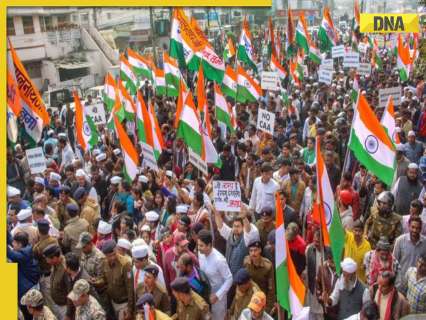
The Central government led by Prime Minister Narendra Modi notified the Citizenship Amendment Act (CAA) on Monday, five years after it was passed in Parliament.
Haryana Chief Minister Manohar Lal Khattar, Cabinet resign amid BJP-JJP split
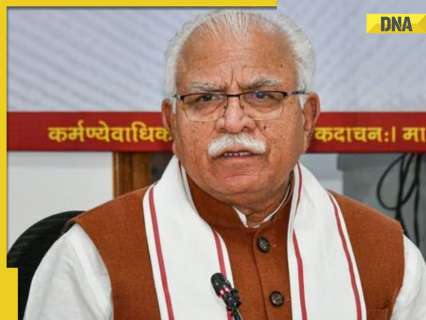
The development came amid speculation of cracks emerging in the state’s ruling BJP and Jannayak Janata Party (JJP) coalition over seat sharing ahead of the Lok Sabha elections.
Haryana Cabinet likely to resign today after BJP, JJP head for a split

Union Minister Arjun Munda and BJP national general secretary Tarun Chugh are on the way to Chandigarh as observers.
Pakistani woman Seema Haider welcomes CAA rules notification; Will she get citizenship after implementation of act?

Haider, who had adopted Hinduism and married Greater Noida resident Sachin Meena, also praised Prime Minister Narendra Modi for the decision and asserted that the CAA would help her get Indian citizenship.
Haiti’s Prime Minister Ariel Henry has resigned: Guyana president

DEVELOPING STORYDEVELOPING STORY, Announcement comes amid emergency CARICOM summit on the crisis in Haiti. Haiti’s Prime Minister Ariel Henry has resigned, according to Mohamed Irfaan Ali, Guyana’s president and the current chair of the Caribbean Community (CARICOM). 74-year-old Henry tendered his resignation after CARICOM leaders held an emergency summit on the situation in Haiti where gang-led violence amid repeatedly postponed elections has caused chaos. “We acknowledge his resignation upon the establishment of a transitional presidential council and naming of an interim prime minister,” Ali said, thanking Henry for his service. The alliance of gangs, led by Jimmy “Barbecue” Cherizier, had warned of civil war if Henry, who became prime minister after the 2021 assassination of President Jovenel Moise, did not step down. Cherizier’s gangs went on the rampage when Henry was out of the country last week, seeking to rally support for a Kenya-led foreign police intervention his government had argued was necessary to restore order so that elections could be held. gangs went on the rampage in Port-au-Prince last week amid wider frustration at Henry’s refusal to leave office as agreed [File: Odelyn Joseph/AP Photo] Henry, who was supposed to step down in February, has since been effectively locked out of the country and landed in Puerto Rico last week after being denied entry into the Dominican Republic, which shares the island of Hispaniola with Haiti. CARICOM’s Ali said the emergency talks, which took place in Jamaica, were seeking to bring “stability and normalcy” to Haiti, the poorest country in the region. US Secretary of State Antony Blinken was also at the summit and promised an additional $100m for a United Nations-backed force to stabilise the country, as well as $30m in humanitarian assistance. Blinken said the meeting was “critical” for Haiti and the region. The US backed “a proposal developed in partnership with CARICOM and Haitian stakeholders to expedite a political transition through a creation of a broad based, independent presidential college,” the State Department said in a statement. The body would be tasked with meeting the “immediate needs” of Haitian people, enabling the security mission’s deployment and creating security conditions necessary for free elections, Blinken said. The breakthrough came after a meeting of regional leaders of the Caribbean Community (CARICOM) in Jamaica [Gilbert Bellamy/Reuters] Adblock test (Why?)
Russia detains South Korean in country’s east on suspicion of spying

Baek Won-soon was detained in Vladivostok earlier this year – the latest foreign national to be imprisoned in Russia. Russia has detained a South Korean in the country’s east, accusing him of spying. Citing the authorities, the Russian state-run TASS news agency identified the man as Baek Won-soon and said he had been detained in the city of Vladivostok “at the start of the year”, before being transferred to Moscow for “investigative actions” at the end of last month. Baek, whose case has been classified as “top secret”, is being held in Lefortovo Prison, where a court on Monday ordered his detention to be extended until June 15, TASS said. The agency cited an unnamed law enforcement official as saying Baek had passed on information “constituting state secrets to foreign intelligence services.” No further details were made public. South Korea’s Ministry of Foreign Affairs said in a statement its consulate had been providing assistance since it became aware that Baek had been detained. It declined to give more details on the matter citing the ongoing investigation. The Yonhap news agency’s Korean service said Baek was a missionary who had been involved in rescuing North Korean defectors and providing humanitarian aid. He was detained in January a few days after arriving in Vladivostok by land from China, the agency added. The incident marks the first time a South Korean has been detained in Russia on spying charges. Russia labelled South Korea an “unfriendly” country in 2022 because of its support for Western sanctions against Moscow over its invasion of Ukraine. Russia has also deepened relations with North Korea after leader Kim Jong Un travelled to Russia last September and met Russian President Vladimir Putin. The United States and others have accused North Korea of providing weapons to Russia for use in its war in Ukraine in exchange for technological know-how to advance Pyongyang’s military modernisation programme. Both countries have denied the allegations. Over the past year, Russia has detained multiple foreign nationals and accused them of committing various offences. US journalist Evan Gershkovich was detained for alleged espionage in March 2023 and is also being held at Lefortovo prison, which is notorious for its harsh conditions and keeping detainees in near-total isolation. His detention has been extended until the end of March with court proceedings held behind closed doors. In October, Russian-US journalist Alsu Kurmasheva was detained for failing to register as a foreign agent and later charged with spreading “false information” about the Russian military. Her detention has been extended until April. Espionage carries a maximum jail term of 20 years in Russia. Gershkovich and Kurmasheva both deny the charges against them. Adblock test (Why?)
‘BJP’s desperate attempt…’: Congress President Mallikarjun Kharge questions CAA rules notification timing

“After seeking nine extensions for the notification of the rules, the timing right before the elections is evidently designed to polarise the elections, especially in West Bengal and Assam,” the Congress leader said.