

Ramadan 2024 moon sighting: When will the holy month of Muslims begin in India? Know all details

The crescent moon of Ramadan 2024 is likely to be seen in some parts of the world tonight ( March 10, 2024).
Syria avoids regional cold shoulder despite Captagon drug trade
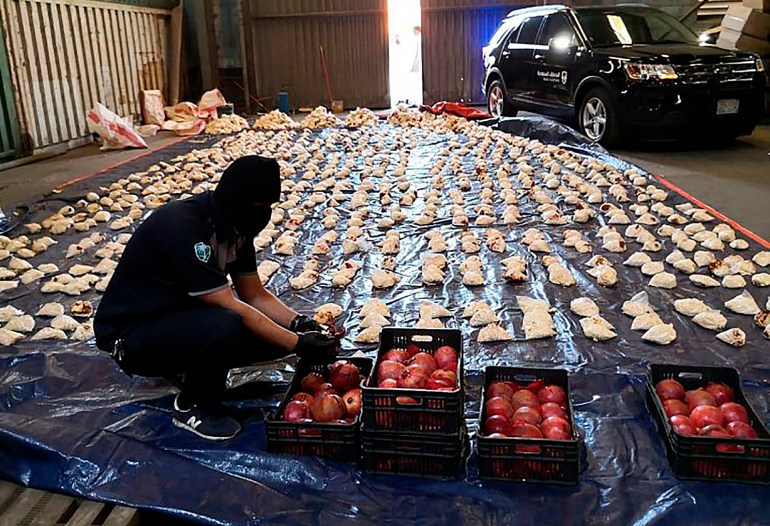
In Iraq’s western Anbar province, authorities made a new drug bust at the end of February, seizing 80kg (176lb) of the narcotic Captagon. It is just the latest seizure of the Middle East’s budget amphetamine of choice in Iraq, and in a region that lies just across the border from Syria, where the regime of President Bashar al-Assad has increasingly come to rely on the manufacture and export of the drug as an illicit source of funding in an economy devastated by war. Rising to international prominence in the 2010s after it reportedly became the drug of choice for ISIL (ISIS) fighters, Captagon was originally developed in the 1960s and often called the “poor man’s cocaine”. By the 2000s, production had largely moved to the Middle East, where the drug’s quality varies almost as much as its customer base. In some of the more affluent regions of the region, Captagon is used by young people to add an illicit thrill to a weekend’s evening. But for a taxi driver facing the prospect of another double shift, Captagon can mark the difference between making a rent payment or not. The Syrian government has taken advantage of this market, according to experts and Western governments. Captagon has proven ideal for Damascus which, facing international isolation and the destruction of traditional tax-raising means, has turned to the drug trade. The highly addictive narcotic can be manufactured quickly and has become a source of profit for individuals associated with the regime, with the business and economics website Syria Report noting that both the shrinking space for legitimate business as well as the expansion of the narcotics trade has effectively combined to make drug manufacturing the most important source of foreign currency in the country. While Syria denies involvement in the Captagon trade, the United States, the European Union and the United Kingdom imposed sanctions last year on Syrian individuals, including two cousins of al-Assad, as well as others with close ties to the government and the military, in an attempt to target what the US estimated to have become “a billion-dollar illicit enterprise”. In its statement, the Council of the European Union was also explicit, stating that the trade in Captagon had become a “regime-led business model, enriching the inner circle of the regime and providing it with revenue that contributes to its ability to maintain its policies of repression against the civilian population”. The war “has hit the regime tremendously, not simply directly as a result of the fighting and destruction, but also via sanctions and restrictions on dealing with the regime internationally”, said HA Hellyer, a Middle East security expert at the Carnegie Endowment for International Peace and the Royal United Services Institute. “The Iranians and Russians have tried to ameliorate, but with limited success, and that’s impacted the regime generally as well as [al-]Assad’s clan in particular.” The Syrian connection Syria is a central node in the regional Captagon trade, with Caroline Rose, a director of the New Lines Institute’s Captagon Trade Project, explaining how pills are trafficked by units of the military’s Fourth Armoured Division from locations such as Deraa and Sweida in the south of the country overland to Iraq, or trafficked by the government’s allies, Hezbollah, into Lebanon. While Hezbollah has denied involvement in the Captagon trade, there is growing evidence that the drug’s reach is expanding. In December, Jordanian forces exchanged fire with Syrian Captagon smugglers attempting to take advantage of heavy fog to rush the border, the second time in a single week. “Globally, the Captagon trade is worth around $10bn. Of that, roughly $2.4bn went directly to the Syrian regime last year,” Rose said. “Little or nothing went to restructuring or the needs of the Syrian people.” “We know that Assad is close to [Libyan renegade general] Khalifa Haftar, so there’s a lot of chat about the al-Assad regime using eastern Libya as a base. We’re also seeing a growing number of Captagon captures in countries across the coup belt,” Rose said, referring to the string of countries spanning Africa from Guinea to Sudan. Alternatively, the narcotic finds its way from Syria to Europe, before being repackaged and directed to the Gulf, where customs officials are assumed to be less wary of shipments carrying EU or UK paperwork. “We haven’t seen any fresh seizures in Europe for a few months now,” Andrew Cunningham, of the European Monitoring Centre for Drugs and Drug Addiction, said. “However, we know that transiting pills through Europe is still an important part of their network.” “Captagon has generally failed to establish a market for itself within Europe,” he said of the drug, which has failed to compete against more accessible harder drugs in Europe and the omnipresent reach of alcohol. “However, that’s not to say there aren’t manufacturing labs there. There have been a number of raids in the Netherlands, for example, but their output appears to have been destined for the Arabian Peninsula.” Regional countries announced seizures of tens of millions of Captagon pills in recent months [File: Saudi Press Agency via AP] Regional reintegration However, despite international disquiet at Syria’s trade in narcotics, analysts suspect that regional actors may be placing concern over Captagon as secondary to enhancing regional unity, a trend exacerbated by the war in Gaza. Last May, Syria was readmitted to the Arab League, going some way to rehabilitating the al-Assad regime, which had previously been shunned by most of the region for its years-long war against the country’s opposition, and the hundreds of thousands killed as a result. “Israel’s war on Gaza and the resulting escalation within the region will have only impressed upon those regional powers the need not to escalate matters with the [al-]Assad regime,” Hellyer said. While the shock waves from Israel’s war on Gaza reverberate around the world, often drawing stark dividing lines between ruler and ruled, in Syria, it may be offering the regime further respite from international censure. Adblock test (Why?)
Nigeria school abductions: More pupils snatched as army hunts for missing

Locals tell Al Jazeera they feel abandoned by the government and will have no peace of mind until the children return. Armed men have kidnapped 15 pupils from a boarding school in northwestern Nigeria days after more than 280 students were abducted from another school with the army still searching for them. The men broke into the Islamic seminary in the village of Gidan Bakuso in Sokoto state on Saturday and seized 15 children from the hostel as they slept, police told The Associated Press news agency. Liman Abubakar, the head of the seminary, said the pupils were aged between eight and 14. Sokoto police spokesman Ahmad Rufai told the AP that one woman was also abducted from the remote village, adding that a police tactical squad was deployed to search for the students. It was the third incident of mass kidnapping in northern Nigeria since late last week, when more than 200 people, mostly women and children, were abducted by suspected fighters in Borno state. On Thursday, 287 students were taken hostage from a government primary and secondary school in Kaduna state. Abandoned by government Saturday’s kidnappings come as the Nigerian government launched a search and rescue mission for 287 missing children who were taken from Kuriga, in northwestern Kaduna state on Thursday in the largest mass abduction in three years. Kuriga residents told Al Jazeera’s Ahmed Idris that the children were seized by more than 100 attackers shortly after their daily assembly as they spoke of feeling abandoned by the government. “They shot indiscriminately, herding us like cows and beating us,” Mustafa Abubakar, a student who managed to escape, told Al Jazeera in Kuriga. Abubakar recalled military jets flying over them twice before he escaped. “There was a long burst of gunfire at one point, but I’m not sure if it was from the aircraft or from the bandits,” the still-dazed student said as he returned to the school from where he was taken. Teacher Nura Ahmad said 187 pupils were kidnapped from the Kuriga secondary school and 100 others from the primary school. Reporting from the compound that houses both primary and secondary schools, Idris said it was moved as the “earlier location was vulnerable to attacks and mass abductions which have forced the closure of many schools in northern Nigeria”. This has “caused the region to lag behind the rest of the country in student enrollment”, Idris reported, adding that the government and aid agencies are concerned about the future of millions of children in Nigeria. Kaduna Governor Uba Sani insisted security forces were “working round the clock” to bring back the children. “There is no peace or peace of mind in this family,” parent Shehu Lawal told Al Jazeera. “None in the village. We hardly eat or sleep. We only come home in daytime and find a safer place to stay the night. That’s our lives since the abduction,” said Lawal, whose child is missing. While Nigeria’s President Bola Tinubu ordered security forces to pursue the attackers, the military has been hampered by a multitude of crises across Africa’s most populous country and is spread thin, and local vigilante groups are not enough of a bulwark against the armed gangs. Kidnappings are common in northwestern and central Nigeria where criminal gangs occupying vast, remote forests terrorise residents. Known as bandits, these groups loot villages, and kill and kidnap residents, especially students, for huge ransoms. Some 1,400 children have been abducted in Nigeria since 300 girls were taken from the northeastern town of Chibok in 2014, sparking widespread international condemnation. Attackers also took 150 children in Kaduna in July 2021, the previous major abduction. The students were reunited months later after their families paid ransoms. Adblock test (Why?)
Palestinians fear Israeli violence in Jerusalem during Ramadan
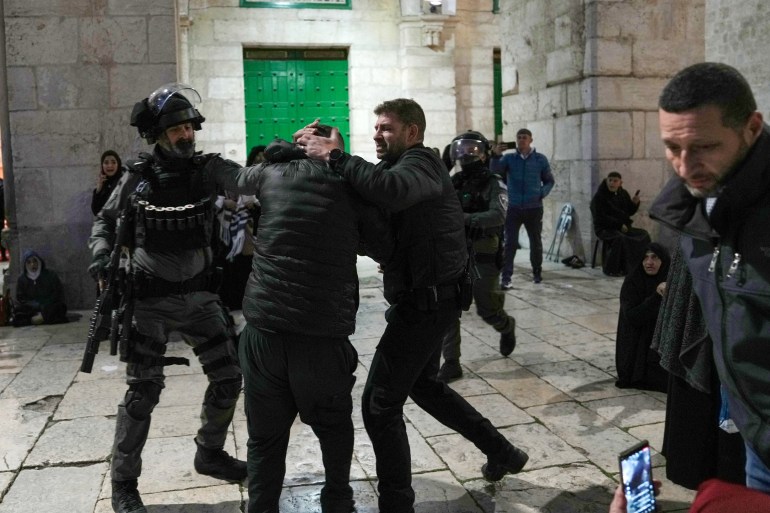
Occupied East Jerusalem – The mood in occupied East Jerusalem is tense as the city’s Palestinians prepare for Islam’s holy month of Ramadan. From dawn to sunset, Ramadan requires practising Muslims to abstain from eating, drinking, smoking and sexual relations before they break their fast with friends, family and communities. But the Palestinians who spoke to Al Jazeera say they are too depressed to hang up decorations or engage in festivities. Many are just praying for a ceasefire in Gaza, where more than 30,000 people have been killed by Israel in retaliation for a deadly attack on Israeli civilians and military outposts by the Qassam Brigades and other Palestinian armed fighters on October 7. Others fear that Israeli authorities and far-right settlers will attack Palestinians during the holy month as part of a broader campaign of collective punishment, as has happened before. “I’m really worried about possible provocation,” said Munir Nuseibah, a Palestinian human rights lawyer who lives in East Jerusalem. “We learned from the past that the more there is a police presence and police intervention in East Jerusalem during Ramadan, the more we will see [violent] confrontations.” History of violence During Ramadan, tensions frequently mount around Al-Aqsa Mosque, the third-holiest site in Islam. Palestinians from across the occupied West Bank yearn to pray in the mosque, yet Israeli police have traditionally obstructed access and attacked worshippers. Israeli police detain a Palestinian worshipper at Al-Aqsa Mosque during Ramadan on April 5, 2023 [Mahmoud Illean/AP Photo] Last year, Palestinians resorted to barricading themselves inside the mosque to prevent Israeli police from interfering with itikaf, a religious practice that entails spending whole nights in prayer and worship in mosques. But Israeli security managed to break through, firing stun grenades and tear gas and indiscriminately beating worshippers, including women and the elderly. At least 450 Palestinian men were arrested. “There is nothing inherently violent about Al-Aqsa and certainly nothing inherently violent about Ramadan. It’s important to recall that because some people get the idea that this is all about Islam,” said Daniel Siedmann, a lawyer and resident of Jerusalem. Palestinians attribute most of the violence to the provocative measures taken by Israeli authorities, which occupy the city and the holy site. Israeli police often allow hundreds of Israeli Jews – who refer to Al-Aqsa Mosque as the Temple Mount – access to the holy site, which violates the latest status-quo agreement that Israel, Jordan, Palestine and the United States affirmed in 2015. The agreement stipulates that Al-Aqsa Mosque is a place of worship exclusively for Muslims, yet grants access to non-Muslims on specific days and hours. However, many fear that far-right Israeli ministers may try to provoke Palestinians by allowing Israelis into the mosque to taunt or clash with worshippers. “There is caution and fear from everyone that Israeli settlers will try and provoke Palestinians. The Israeli government is against the Palestinian people,” said Rony, a 27-year-old Palestinian from occupied East Jerusalem. [embedded content] A flashpoint? Israeli police are controlled by Itamar Ben-Gvir, the far-right minister of national security. In February, he called for barring Palestinian residents in the West Bank from praying in the mosque during Ramadan. Israeli officials later overrode his suggestion in an apparent attempt to maintain calm in Jerusalem, but did say they would impose some restrictions on “security grounds”. Seidmann said Ben-Gvir could still spark chaos, even if he is commanding officers outside the compound. “Just because Ben-Gvir is not influencing what happens at the gates of Al-Aqsa doesn’t mean that he won’t cause problems 200 or 300 metres [220 to 330 yards] away from the mosque,” he told Al Jazeera. Any violence against Palestinian worshippers in East Jerusalem or the rest of the occupied West Bank could trigger mass unrest, warns Ibrahim Matar, a Christian Palestinian from occupied East Jerusalem. He said Al-Aqsa is symbolic for all Palestinians and recalled how the late Palestinian leader Yasser Arafat walked away from the heavily criticised peace process in 2000, in part because Israel insisted on maintaining sovereignty over the mosque. Two months later, Israel’s then-opposition leader Ariel Sharon stormed Al-Aqsa with more than 1,000 heavily armed policemen and soldiers. The move led to outrage which culminated in the second Intifada, a Palestinian uprising against Israel’s occupation, that lasted for five years. Tens of thousands of Muslims pray near the Dome of the Rock in Al-Aqsa Mosque compound on April 17, 2023, 27 Ramadan, believed to be Laylat al-Qadr, one of the holiest nights during the month [Hazem Bader/AFP] In the shadow of Israel’s war on Gaza, Matar believes that a similar move by the Israelis could set off another chapter of popular unrest. “Al-Aqsa could be a flashpoint for another war,” he told Al Jazeera. Under the shadow of war Palestinian citizens of Israel and those in the occupied territory say the ongoing bloodshed in Gaza is hanging over everyone like a dark cloud. US President Joe Biden has attempted to broker a truce in Gaza to retrieve Israeli captives still held by Hamas and calm tensions during Ramadan. But with prospects for a ceasefire looking slim, Rony believes the war will affect the situation between Palestinians and Israelis in Jerusalem. He said many Palestinians are “dying inside” from watching scenes of the devastating war on television and social media. He also fears that Israeli officials or ministers will exploit their anger by harassing Palestinians in East Jerusalem. “Most of us feel like we are in a house prison. [We feel] like we have to stay at home to avoid being hit or harassed [during Ramadan],” he told Al Jazeera Matar agrees, adding that Gaza and Al-Aqsa have a symbiotic relationship. He recalled the short 11-day war between Hamas and Israel in 2021, which was triggered by Israel attacking worshippers in Al-Aqsa and evicting Palestinians from Sheikh Jarrah, a neighbourhood in East Jerusalem. Similar unrest could unfold this Ramadan. “If one part of Palestine is suffering, then every part of Palestine suffers,” Matar told Al Jazeera. [embedded
Jewish MIT students file federal lawsuit over ‘wildfire of antisemitism’ allowed on campus after Oct. 7
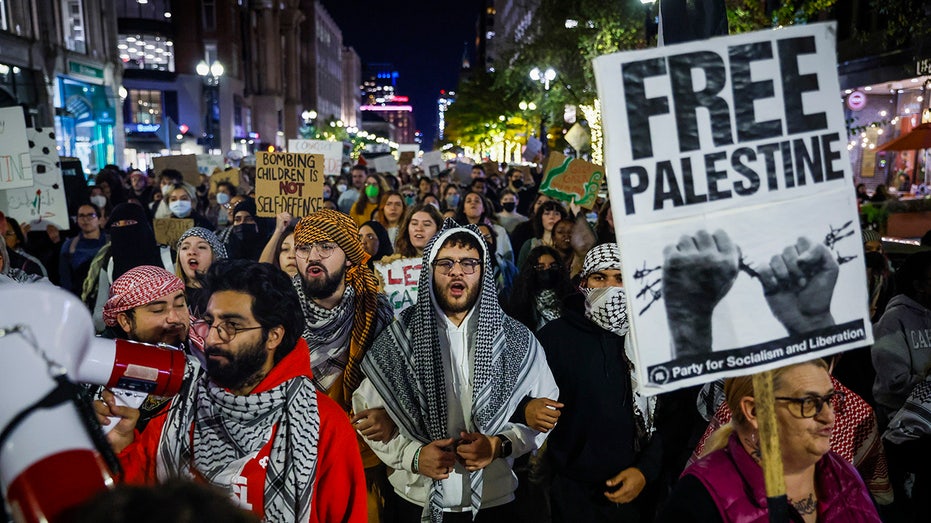
Jewish students at the Massachusetts Institute of Technology (MIT) filed a federal lawsuit Friday alleging the prestigious Cambridge institution has failed to take any meaningful action to stop the “spreading wildfire of antisemitism, including antisemitic conduct” in the wake of the Oct. 7 Hamas attacks on Israel. StandWithUs Center for Legal Justice (SCLJ) and two MIT students filed a federal lawsuit in Massachusetts District Court describing how MIT allegedly turns a blind eye to “hateful antisemitic discrimination and harassment” on its campus, refuses to enforce policies to protect Jewish and Israeli students and faculty, and has thereby created a hostile environment for Jews. “In enabling this discriminatory conduct, MIT has directly and intentionally contributed to a pervasively hostile campus environment in violation of Title VI of the Civil Rights Act of 1964 and breached its duties to Plaintiffs, to its other Jewish students, to its Israeli students, and, indeed, to the entire MIT campus community,” the complaint says. “Any alleged ‘action’ taken by MIT in response to discriminatory and harassing speech and conduct was not designed to have any meaningful impact in stopping the spreading wildfire of antisemitism, including antisemitic conduct.” Fox News Digital has reached out to MIT for comment on the lawsuit. HOUSE REPS DEMAND MIT HAND OVER RECORDS ON ‘PERVASIVE’ ANTISEMITISM: ‘WE HAVE GRAVE CONCERNS’ The lawsuit calls on MIT to implement “comprehensive, meaningful remedial measures,” including terminating administrators, professors, or other university employees or staff “responsible for the antisemitic abuse permeating the school,” as well as suspending or expelling students and student groups, and to communicate broadly that MIT will “condemn, investigate and punish ant conduct that discriminates against or harasses members of the Jewish community. MIT’s “blatant and intentional disregard for its legal obligations to its students, Plaintiffs and other students have suffered injury, including in their educational experience,” the lawsuit says. MIT PROFESSOR PENS EXPOSE OF CAMPUS ANTISEMITISM: ‘HARASSING A SMALL AND VULNERABLE COMMUNITY’ The complaint alleges that Jewish professors reported incidents where MIT students disrupted the academic environment and intimidated faculty by yelling outside their offices while rattling the doors. One professor described incidents where Jewish and Israeli MIT students were physically prevented from attending a class by a hostile group of pro-Hamas and anti-Israel MIT students. Jewish students attested that rather than dispersing antisemitic mobs on campus, MIT warned Jewish students to steer clear of certain areas – effectively sending Jewish and Israeli students underground at their own university – with no repercussions for the students violating school policies and creating an unsafe environment for Jewish students, according to the complaint.
Lok Sabha polls: TMC releases list of 42 candidates from West Bengal, star cricketer Yusuf Pathan to contest from…

TMC MP Abhishek Mamata Banerjee on Sunday declared that the party’s candidates for the 42 Parliamentary Constituencies dropped around eight sitting MPs.
Woman arrested after she showered Kamala Harris’ motorcade with red liquid in Phoenix

A woman was arrested after allegedly tossing a red liquid onto Vice President Kamala Harris’ motorcade during a campaign visit to Phoenix. Anasilvia Gomez-Zamora, 30, was taken into custody in connection with the incident, which happened at around 6 p.m. on Friday near 7th Street and Southern Avenue. She was charged with aggravated assault on a police officer, endangerment and resisting arrest. BIDEN BORDER VISIT UNDERSCORES KAMALA HARRIS’ SHRINKING ROLE IN HANDLING MIGRANT CRISIS The woman was standing on a sidewalk near where the motorcade was driving when she threw a red liquid, according to Phoenix Police. The liquid landed on eight Phoenix Police officers on motorcycles. “The motor officers were able to continue the motorcade as they progressed through their route. Other officers in the area were able to locate and arrest the woman responsible,” Sgt. Phil Krynsky told Fox 10. Police said the liquid was determined to be non-hazardous. VP KAMALA HARRIS DODGES QUESTION WHETHER SHE’D DEBATE TRUMP RUNNING MATE Gomez-Zamora was booked into jail in Maricopa County on Saturday but has since been released. Harris was visiting Phoenix to campaign on her “Fight for Reproductive Freedoms” tour in support of abortion access for women in the U.S., her fourth trip to Arizona as vice president.
PM Modi inaugurates airport projects worth Rs 10000 crore from UP’s Azamgarh

The project launched by PM Modi includes 12 new terminal buildings of Pune, Kolhapur, Gwalior, Jabalpur, Delhi, Lucknow, Aligarh, Azamgarh, Chitrakoot, Moradabad, Shravasti and Adampur Airport.
New York proposal would provide $2,600 to inmates after they leave prison

A new bill introduced by New York state lawmakers would offer inmates leaving prison around $2,600 in an effort to help them get back on their feet. The legislation, introduced by State Senator Kevin Parker and Assemblyman Eddie Gibbs, would allow inmates to collect around $400 each month over six months once they leave prison. As the bill currently stands, there are no limitations on how or where the money can be spent, according to Fox 5 New York. “In New York, crime pays, literally,” State Senator George Borrello said. FUMING OFFICIALS DEMAND HOCHUL REPEAL NY BAIL REFORM LAWS AS BODY-CHOPPING SUSPECTS FREED Borrello said he is strongly opposing the bill and that the state should prioritize other legislation over giving out money to inmates being released. “My colleagues seem to think that these are folks that are a victim of circumstances,” Borrello said. “You chose to commit a crime in New York State. If you really are concerned about how much money you’re going to have in your pocket when you leave prison, then don’t go there to begin with.” Currently, inmates leaving prison are given $40, which comes from their garnished earnings behind bars. “In this economy that amount is barely enough to get groceries or purchase clothes for a job interview,” Gibbs said. “The first 72 hours after release are crucial in determining an individual’s successful reintegration into society. By increasing the amount to up to $2,550 in the span of a few months, we allow folks the opportunity to reach their full potential. This isn’t just a social justice bill but a public safety one. We need to start offering real support to folks re-entering society if we want to reduce recidivism and ensure stability and dignity for all.” NEW YORK GOV HOCHUL CALLS IN NATIONAL GUARD, STATE POLICE TO HELP CURB CRIME IN NYC SUBWAYS The Center for Community Alternatives’ Ismael Diaz Jr., who has previously spent some time in prison, says that $40 does not do enough to help former inmates reintegrate into society. “This $40 that they give you, they’ve been doing this for over 50 years,” Diaz Jr said, adding that $40 was worth a lot more 50 years ago than it is now. The sponsors of the bill are requesting that $25 million be set aside for this new initiative. Samra Haider of The Center for Employment Opportunities, which is backing the bill, said providing more money to inmates leaving prison has proven to cut down on recidivism by almost 30%. “It just helps them give a little breathing room to allow them to focus on their job search, re-acclimate to the community, and so we think that will really help an individual’s reentry home from prison,” Haider said.
India signs free trade agreement with European Free Trade Association

India signed the Free Trade Agreement (FTA) with the four-nation European Free Trade Association (EFTA) bloc, on Sunday.