

‘Most vexing’ test: Can Pakistan’s Sharifs revive talks with India’s Modi?

Islamabad, Pakistan — It was a brief, formal exchange. On March 5, two days after Shehbaz Sharif became Pakistan’s 24th prime minister, his Indian counterpart posted a 13-word message on social media platform X. “Congratulations to @CMShehbaz on being sworn in as the Prime Minister of Pakistan,” the Indian premier wrote. Sharif took two days to respond. “Thank you @narendramodi for felicitations on my election as the Prime Minister of Pakistan,” he wrote on March 7. Modi’s congratulatory message and Sharif’s response set off questions, even in a US State Department briefing, about the prospect of a detente between the nuclear-armed subcontinental neighbours that have barely functional diplomatic relations. The State Department weighed in, saying it hoped for a “productive and peaceful relationship” between New Delhi and Islamabad. But even though the Pakistani prime minister’s elder brother Nawaz Sharif has a long history of seeking breakthroughs with India – including with Modi – analysts on both sides of the border say that the direction of ties can only be gauged after India’s upcoming national elections, scheduled to take place in April and May. Maleeha Lodhi, a retired Pakistani diplomat who has served as ambassador to the United Nations, United States as well as the United Kingdom, said that managing relations with New Delhi will prove the “most vexing” foreign policy test for the current government. “It’s true that previous PMLN were amenable to engage with India but it used to be reciprocal,” she told Al Jazeera, referring to the Pakistan Muslim League Nawaz (PMLN), the party of the Sharif brothers. “But today there are many obstacles to normalising ties which are not easy to overcome. “With India going to the polls this year, any significant engagement will have to wait till after the elections.” Kashmir conundrum Arguably, the biggest obstacle to any movement towards normalcy between the neighbours remains the question of the Kashmir valley, the picturesque, but contentious Himalayan region over which they have fought multiple wars since gaining independence from British rule in 1947. The region is claimed in full by both, but each only governs parts of it. New Delhi has accused Islamabad of backing Kashmiri armed rebels fighting either for independence or for a merger with Pakistan. Islamabad has denied the allegations, saying it only provides diplomatic support to the region’s struggle for the right to self-determination. Relations between India and Pakistan further worsened in 2019 when Modi’s Hindu nationalist government revoked Article 370 of the Indian Constitution, which used to give Indian-administered Jammu and Kashmir partial autonomy. Kashmir is at the heart of the differences between India and Pakistan, and is a subject in which each of the neighbours has set conditions for talks that are unacceptable to the other. India insists that the status of Jammu and Kashmir is an internal matter for the country. Pakistani leaders, on the other hand – including the Sharif brothers – have linked progress in ties with India to a reversal of the 2019 decision by New Delhi. Former Indian high commissioner to Pakistan, Sharat Sabharwal said that if the aim is to improve relations, the ball is in Pakistan’s court, adding that it was Pakistan that suspended trade as well as downgraded diplomatic representation. “Since then, it has made engagement with India contingent upon India reversing its move to end the special status of Jammu and Kashmir under the Indian Constitution. This is just not going to happen,” he told Al Jazeera. “It is for the Pakistan government to take a more pragmatic and constructive view if things are to move forward.” The Sharif touch Yet, despite the tough posturing on both sides, some analysts are cautiously optimistic about the possibility of a renewed attempt by the two governments to improve ties, in large part because of the history that the Sharifs share with Modi and his Bharatiya Janata Party. In February 1999, the then-Indian Prime Minister from the BJP, Atal Bihari Vajpayee, took a bus ride across the border to Lahore to meet Nawaz Sharif, who was then in his second stint as prime minister. Nawaz and Vajpayee signed a treaty that was seen as an historic confidence-building breakthrough between the two countries, less than a year after both of them conducted nuclear tests that had escalated tensions in the region. However, three months after the treaty, the two countries engaged in a war in Kargil in Indian-administered Kashmir. India accused Pakistani soldiers of infiltrating into territory it controlled. Nawaz blamed his then-military chief, General Pervez Musharraf and other top commanders for orchestrating the incursion behind his back. Only a few months later, Musharraf carried out a military coup in October 1999 in which Sharif was removed from power, just two years after assuming charge as the prime minister. A year after Nawaz finally returned to power in 2013, the BJP, too, came back into office after a decade in opposition – this time with Modi as prime minister. Nawaz joined leaders from across South Asia in travelling to New Delhi for Modi’s oath-taking ceremony. Nawaz Sharif became the first Pakistani premier to visit India to attend a prime minister’s oath-taking in 2014 [Harish Tyagi/EPA] Then, on Christmas day in December 2015, Modi stunned both nations with a surprise visit to Lahore to attend the wedding of Nawaz’s granddaughter. The Pakistani government said that the two nations would restart a formal dialogue and announced a meeting of senior diplomats in January 2016. But merely a week later, four attackers targeted an Indian Air Force base which resulted in the deaths of at least eight Indians, including security personnel. India once again blamed Pakistan for the incident and demanded it arrest the perpetrators behind the attack. In September 2016, after armed fighters attacked an Indian Army outpost in Kashmir, Indian soldiers crossed over into Pakistani-administered territory to raid what New Delhi described as “militant launch pads”. Three years later, in February 2019, just before India’s last national elections, tensions soared again, after 46 Indian paramilitary soldiers were killed
Bollywood ‘takeover’: Pro-Modi films swamp Indian voters ahead of election

Mumbai, India – A grimacing police official, staring into the camera, declares her intent to publicly shoot dead “leftists” while attacking “left-liberal, pseudo-intellectuals” as well as students of Jawaharlal Nehru University (JNU), a left-leaning university space in the cross-hairs of the Modi government. Men in skull caps, the visuals intercut with bloody violence, declare that Rohingya Muslims will soon displace Hindus and make for half of India’s population, while a harrowed Hindu woman fighting against these men says she wants to meet Prime Minister Narendra Modi. A biopic on the early 20th century Hindu nationalist ideologue Vinayak Damodar Savarkar has a voiceover that insists that India would have freed itself of British colonial rule over three decades before it did, if not for Mahatma Gandhi. These are scenes from upcoming Hindi films slated for release over the next few weeks. As India’s nearly one billion voters get ready to pick their national government in general elections between March and May, Modi and his ruling Bharatiya Janata Party (BJP) are receiving campaign support from an atypical ally: cinema. A slew of new films, timed with the elections and often helmed by major production houses, are relying on storylines that overtly either promote Modi and his government’s policies or target rival politicians. Not even national icons like Gandhi or top universities like JNU are spared – the institution has long been a left-leaning bastion of liberal education, often antagonistic to the BJP’s Hindu majoritarianism. Many of these stories peddle Islamophobic conspiracies commonly circulated among Hindu right-wing networks that are aligned with the BJP’s political agenda. At least 10 such films have either been released recently or are poised to hit theatres and television in this election season “This is part of a larger attempt to ‘take over’ the Hindi film industry, just as other forms of popular culture have been infiltrated,” said Ira Bhaskar, a retired professor of cinema studies at JNU who also served as a member of the country’s censor board until 2015. Bhaskar was referring to the growing Hindu nationalist narratives found in pop culture forms like music, poetry and books. The latest films include biopics that glorify the controversial legacies of Hindu majoritarian heroes and BJP leaders. Savarkar, a controversial anti-colonial Hindu nationalist, advocated rape against Muslim women as a form of retribution for historical wrongs. Two of the upcoming films, Accident or Conspiracy: Godhra, and The Sabarmati Report, claim to “reveal” the “real story” behind the Godhra train burning of 2002 where 59 Hindu pilgrims died in a fire that was the spark for anti-Muslim riots orchestrated by Hindu right-wing groups that claimed over 1,000 lives, mostly Muslims. The riots happened when Modi was the state’s chief minister. Another film, Aakhir Palaayan Kab Tak? (Until when will we need to flee?), shows a Hindu “exodus” purportedly due to Muslims. Then there’s Razakar, a multilingual release on what it calls the “silent genocide” of Hindus in Hyderabad by Razakars, a paramilitary volunteer force that inflicted mass violence before and after India’s independence in 1947. The film has been produced by a BJP leader. In late February, Modi himself praised Article 370, a newly released film that lauds his government’s contentious decision to strip Indian-administered Jammu and Kashmir of its special status and statehood while placing hundreds under house arrests and imposing lockdowns in the region. Film reviewers have called the movie a “puff piece” and a “thinly veiled propaganda film” in favour of the Modi government while treating its critics and opposition leaders with “derision”. Bhaskar said the new films were “clear propaganda, no doubt about it”. A growing trend The surge in such movies builds on a pattern also seen before the 2019 elections when Modi returned to power for a second time. On the eve of that vote, a clutch of films tried to bolster the BJP’s popularity. Some tried to take down the ruling party’s critics, like the Accidental Prime Minister (PM), a searing take on Modi’s predecessor, Manmohan Singh. Others stoked jingoism, like Uri: The Surgical Strike, which recreated the military strikes that Indian forces made inside Pakistan-controlled Kashmir in retaliation against a terror attack on an Indian military camp in Kashmir’s Uri region in September 2016. The film ended with a scene of a pleased-looking Modi-resembling prime minister. Both films were released in the same week, days before the elections. But Bhaskar said that while the trend isn’t new, it has grown since 2014, when Modi came to power, starting off with the changed way that the Indian film industry dealt with historical representations. “Over the last few years, we have seen a shift in the representation of Muslim rulers who are all, now, portrayed as barbarians and temple-destroyers,” Bhaskar said. “This was also propaganda, though in a not-so-direct way, where the message was: Muslims don’t belong to India, they were invaders.” These positions align with the Hindu right-wing ecosystem’s publicly-stated aims of purging Mughal history from public consciousness. Such films, in the past, have faced allegations of amplifying social divisions and hate speech. Screenings of films like The Kashmir Files, depicting the Kashmiri Pandit exodus of the 1990s, often saw audiences, at the end of the film, rising up and calling for violence against Muslims and advocating their boycott. Another film, The Kerala Story, panned widely for inaccuracies in depicting an alleged ISIL/ISIS conspiracy to lure Christian and Hindu girls to join the group, played a part in igniting societal tensions among communities, leading to violence in the western Indian region of Akola in Maharashtra. Fear and opportunism Film industry insiders attribute this new genre of films to a mix of unease, opportunism and a helpful nudge from the establishment. A number of industry insiders this writer contacted refused to speak on record, for fear of retribution. Bollywood, in the recent few years, has frequently been a victim of high-decibel campaigns, often endorsed by BJP leaders – from boycotting films to calling for bans on them. Hindu right-wing groups have often targeted films and shows for broadcasting “anti-Hindu” content. In 2021, BJP leaders
India’s moves not conducive to peace and tranquility, says Chinese Foreign Ministry amid diplomatic standoff

The 9,000 soldiers who were initially tasked with guarding the disputed Chinese border will now report to the newly established fighting command
Helicopter crashes along U.S.-Mexico border, killing three

Two National Guard members and a U.S. Border Patrol agent died in the crash in Starr County Friday afternoon.
‘Will neither safeguard peace nor…’: China responds as India adds more troops at disputed border

The 9,000 soldiers who were initially tasked with guarding the disputed Chinese border will now report to the newly established fighting command
Canada lifting freeze on UNRWA funding after weeks of protests, criticism

Montreal, Canada – Canada has announced it is lifting a freeze on funding for the United Nations agency for Palestinian refugees (UNRWA), after facing fierce criticism for cutting assistance during Israel’s war in Gaza. In a statement on Friday, Canadian Minister of International Development Ahmed Hussen said the government is “resuming its funding to UNRWA so more can be done to respond to the urgent needs of Palestinian civilians”. Canada had joined the United States and several other countries in cutting funding to UNRWA in late January, after Israel accused about a dozen of the agency’s more than 13,000 employees in Gaza of taking part in a Hamas attack on October 7. UNRWA immediately sacked the employees in question and announced that it was opening a probe into the allegations, which it described as “shocking” and “serious”. UN Secretary-General Antonio Guterres also appointed an independent panel to investigate. Israel, however, did not provide concrete evidence to back up its allegations. Canadian broadcaster CBC News also reported in early February that Canada had not seen any intelligence backing the claim before it decided to cut the funding. The decision to cut funding for UNRWA — which relies on government contributions to fund its operations in the occupied Palestinian territories, Jordan, Syria and Lebanon — drew immediate concern and calls from rights advocates to reconsider. UNRWA also is the key agency providing critical humanitarian supplies to Palestinians in the Gaza Strip, where Israel’s continued bombardment and siege have killed more than 30,000 people and led to widespread hunger and disease. Humanitarian groups had warned that cutting UNRWA funding would have dire repercussions for Palestinians in Gaza and urged donor countries to reverse their decisions. Since then, the situation in the Strip has deteriorated further, as Israeli military attacks continue. About a dozen Palestinian children have died in recent weeks due to a lack of food and water in Gaza, according to health authorities in the coastal enclave. Palestinians gather to inspect a destroyed building following an Israeli attack on Deir el-Balah on March 8 [Ashraf Amra/Anadolu Agency] ‘Reckless political decision’ On Friday afternoon, Canadian human rights advocates welcomed the government’s decision to lift the freeze on UNRWA funding but stressed that the money should not have been cut to begin with. “Resuming aid to UNRWA is a much-needed decision, and it would not have been possible without the important advocacy from across civil society,” said Thomas Woodley, president of the advocacy group Canadians for Justice and Peace in the Middle East. “Minister Hussen’s cancellation of funding was a reckless political decision that never should have been made. Canada’s irresponsible actions threatened to collapse the aid infrastructure in Gaza, putting the lives of millions of people at risk,” Woodley said in a statement. “Canada must significantly increase funding to UNRWA to compensate for the harm its actions have caused to the people of Gaza.” The government contributed $66.5m ($90m Canadian) to UNRWA from 2019 though mid-2023. Last June, Ottawa also announced that it would provide as much as $74m ($100m Canadian) to the agency over four years to help fund education, health care and other services. Canadian media outlets have reported that the next installment of that funding — about $18m ($25m Canadian) — is due in April. Meanwhile, the head of the National Council of Canadian Muslims also noted on Friday that “there are no other agencies that can replicate UNRWA’s central role in the humanitarian response in Gaza”. “While funding should not have been paused in the first place, the government made the right decision today by renewing and increasing funding,” the group’s CEO, Stephen Brown, said in a statement. Pressure on Trudeau Canadian Prime Minister Justin Trudeau’s government had faced pressure from pro-Israel lobby groups to maintain its freeze on funding for UNRWA. Members of Trudeau’s own Liberal Party also had urged him to withhold the funds. Pro-Israel Liberal legislators Anthony Housefather and Marco Mendicino said in a letter on Thursday that they had recommended “that Canada work in lockstep with the United States and other allies”. They urged the government “to leverage alternate partners and to create new vehicles of humanitarian aid that will meaningfully reach the civilians of Gaza in the short term”. But experts and humanitarian groups have said UNRWA is best suited to provide much-needed assistance to Palestinians in Gaza. In a news conference on Friday afternoon, Hussen said the decision to resume funding was “in recognition of the significant and serious processes that the United Nations has undertaken to address the issues in UNRWA”. It also comes in recognition of “the critical role that UNRWA plays in providing much-needed support to over two million Palestinians in Gaza, as well as … millions more in the broader region”, Hussen told reporters. Palestinians in Gaza are being starved amidst catastrophic conditions. The need for life-saving aid has never been more urgent. Today’s announcement by Canada 🇨🇦 on the resumption of funding to United Nations Relief and Works Agency (UNRWA) will save lives. There are no other… pic.twitter.com/lYQalSibi1 — NCCM (@nccm) March 8, 2024 Adblock test (Why?)
Snubs, protests and history makers: What to know about the 2024 Oscars

The red carpet has been unfurled for the 96th annual Academy Awards, one of the movie industry’s oldest and most acclaimed ceremonies. It’s a night of glitz, artistry and controversy, as some of the biggest films in the United States and around the world compete for the golden statuettes known as Oscars. Taking place in Los Angeles, California, this year’s Academy Awards ceremonies are set to pit box office rivals Barbie and Oppenheimer against one another in a closely watched race for Best Picture. While Oppenheimer is an early favourite for the win, other categories are harder to predict, with tight races in the two leading actor categories, for instance. And with Israel’s war in Gaza raging into a sixth month, protests and politics are expected to make an appearance at the annual award show, too. Here’s what you need to know about this year’s Oscars. Reporters photograph the red carpet roll-out at the Dolby Theatre on March 6 in Los Angeles [Chris Pizzello/AP Photo] How did the Academy Awards begin? While the Oscars have become synonymous with glitz and glam, their origins were relatively humble. It was May 1929, and a crowd of black-tied celebrities crowded into the Roosevelt Hotel in Hollywood for the very first Academy Awards ceremony. Tickets were only $5. Hollywood heartthrob Douglas Fairbanks hosted the event, which lasted a grand total of 15 minutes — a far cry from today’s three-plus-hour runtime. It helped, of course, that the winners had been announced three months prior in a bulletin. The Oscars were born on the cusp of a seismic change in Hollywood: the advent of sound films. One of the films nominated in that first ceremony was 1927’s The Jazz Singer, considered the first “talkie” in cinema. What organisation is behind the awards? The “Academy” in the award name refers to the Academy of Motion Picture Arts and Sciences, an organisation for filmmaking professionals that honours achievement in the industry. Founded in 1927, the Academy was composed of 36 original members, including writers, directors, producers and other industry insiders. The swashbuckling actor Douglas Fairbanks was among them. So too was silent-movie darling Mary Pickford — though, tellingly, she was one of only three women among the 36. Questions of representation within the Academy’s membership continue to spur criticism, even to this day. One of the central figures in the early Academy was the head of the Metro-Goldwyn-Mayer (MGM) studios, a powerful figure named Louis B Mayer. A Russian-born film producer, he feared how unions might interfere with his work — and he conceived of the Academy in part to address labour issues without union participation. Why are the trophies called ‘Oscars’? The nickname for the iconic golden statuette, “Oscar”, became widely used in 1934. The origins of the name remain unclear, but one popular story credits the moniker to a future executive director of the Academy, Margaret Herrick. She reportedly observed that the statuette resembled her uncle, Oscar, and the nickname quickly caught on. A worker puts the final touches on an Oscar statue before it is placed out for display [File: Eric Gaillard/Reuters] How many Oscar categories are there? At the first Oscars ceremony in 1929, there were only 12 categories, plus two special awards given. But that number tumbled to seven the very next year. Those original categories included mentions for Best Actor, Best Actress, Art Direction and Outstanding Picture. The directing category was split in two: one for comedy and the other for drama. Nowadays, there are 24 regular categories, in addition to several special categories that are not awarded every year. But there’s only one Best Director category, unlike in 1929. How are the nominees picked? To be eligible to be nominated, a film must be shown at a commercial theatre in Los Angeles County during the calendar year. That means a whopping 321 feature films were eligible in 2023 across two dozen categories. Members of the Academy participate in an initial vote to determine the nominees, based on their specific industry field. Actors select the acting nominees, for example. OK, what about the winners? Who picks those? Once the nominees are picked, all voting Academy members select the winners. There are an estimated 10,500 members in total, with nearly 9,500 eligible to vote. But marketing campaigns, particularly from large studios, are common practice ahead of the awards ceremony to rally support for a given film or artist. Critics have therefore slammed the role money plays in the selection process. They have also pointed to the Academy’s membership as indicative of larger diversity problems: A majority of members are white and male, leading to questions about the winners they select. Director Christopher Nolan’s film Oppenheimer is considered a leader in the Best Picture race [Universal Pictures/AP Photo] What are some of the biggest films at this year’s Oscars? There was no bigger moment in the entertainment world last year than the odd-couple double feature known as Barbenheimer. That was the moniker fans gave to Oppenheimer and Barbie, two blockbusters released on the same day in July. Both have continued to enjoy strong momentum going into Oscars season: Oppenheimer with 13 nominations, Barbie with 8. But Oppenheimer, a sweeping biopic of nuclear physicist J Robert Oppenheimer, is expected to dominate categories like Best Picture and Best Director, potentially delivering a long-awaited win to director Christopher Nolan. Barbie, meanwhile, was the highest-grossing film of the year, pulling in more than $1.4b worldwide. But while it got nods for categories like Best Picture and Best Supporting Actor, it was widely seen as snubbed in the Best Actress and Best Director slots. Legendary director Martin Scorsese is also a frontrunner in this year’s competition with Killers of the Flower Moon, a film based on the real-life story of a killing spree that targeted the Osage Nation in the 1920s. Fellow auteur Yorgos Lanthimos is back in the running as well with Poor Things, a feminist-inspired Frankenstein tale with steampunk aesthetics. Poor Things received 11 nominations,
Pompeo doesn’t rule out serving in second Trump admin; doesn’t comment on jobs ‘I’ve not been offered’
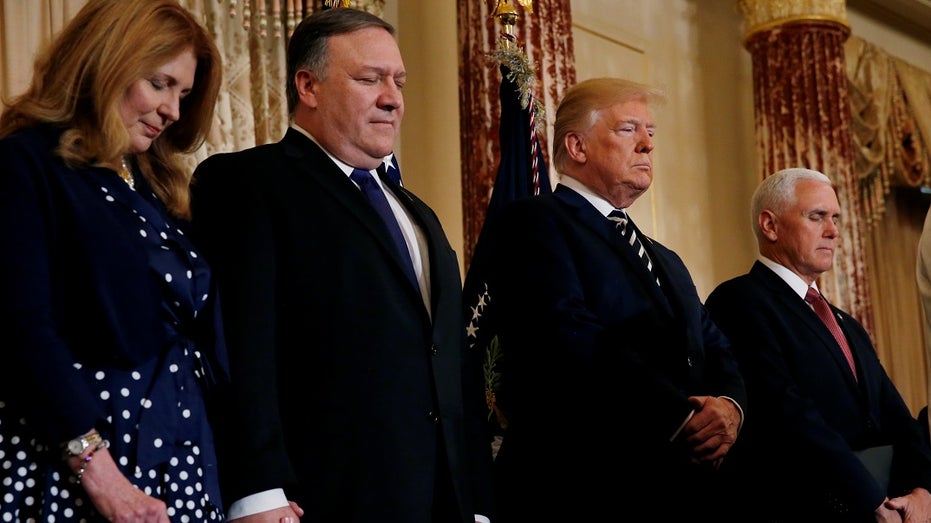
Former Secretary of State Mike Pompeo has not ruled out a chance to serve under former President Donald Trump for a second time should he become the Republican presidential nominee and come out victorious in November. Pompeo served as Trump’s director of the CIA and secretary of state during his first term. On Friday, he was asked about serving under Trump for a second time during a Friday appearance on “Your World with Neil Cavuto.” TRUMP CALLS FOR DEBATES WITH BIDEN ‘ANYTIME, ANYWHERE, ANYPLACE’ “I don’t often comment on jobs I’ve not been offered,” he said. “If I get a chance to serve and think that I can make a difference, I’m almost I’m almost certainly going to say yes to that opportunity to try and deliver on behalf of the American people,” he told Cavuto. Cavuto noted that Trump in the past has demanded strict loyalty from those working under him. “I’m confident President Trump will be looking for people who will faithfully execute what it is he asked them to do,” Pompeo replied. “I think as a president, you should always want that from everyone.” “I must say, as secretary of state, I certainly wanted my team to do what I was asking them to do, and was enormously frustrated when I found that I couldn’t get them to do that,” he added. TRUMP CONSOLIDATES POWER OVER RNC Some of Trump’s most ardent supporters when he came into office have turned against him in recent years. Former Vice President Mike Pence drew Trump’s ire when he refused to abide by Trump’s wishes that he reject the certification of some electoral votes during a joint session of Congress held on Jan. 6, 2021. Last year, he briefly mounted an unsuccessful campaign against Trump to win the Republican presidential nomination. Former national security adviser John Bolton called Trump “unfit” to be president in a new memoir. In a January interview with ABC News’ “Good Morning America,” he described what he thinks a second Trump term would look like. “I think if you look at what Trump did in his first term — which I try and describe in the original book — you can extrapolate from that what a second term will be like, and basically it will be the same except worse,” Bolton told George Stephanopoulos. Trump has not made any mention of potential running mates or cabinet nominations for his second White House bid.
Maryland Senate passes bill to allow illegal migrants buy health insurance
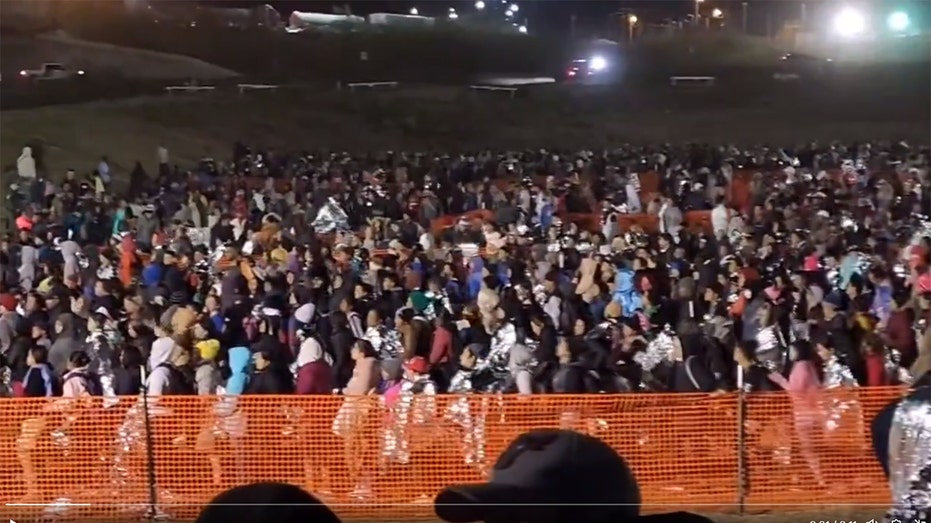
Illegal migrants would be able to buy health insurance in Maryland under a new bill that recently passed in the state’s House and Senate. On Friday, the Maryland Senate approved the “Access to Care Act” on a party line vote of 34-13. The Maryland House previously passed a similar version of the legislation on a 101-34 vote in late February. Each chamber will need to vote to approve the other’s before the legislation can be sent to Democratic Gov. Wes Moore. MARYLAND ABORTION CLINIC GRANT PROPOSAL WOULD FUND SECURITY AS ABORTION DEMAND RISES Ninfa Amador-Hernandez, a policy analyst for the immigrant advocacy group CASA, told Maryland Matters that the bill is a “step forward” to ensure that all Maryalnd residents have access to healthcare. MARYLAND LAWMAKER WANTS TO RAISE TAXES, ALTER TAX BRACKET TO FUND REPARATIONS FOR BLACK RESIDENTS “Maryland is a home for immigrants, and we see this bill as just another step forward to ensuring that all our Maryland residents have the best access and quality of life and care that they can have,” Amador-Hernandez told the local outlet. Sources familiar with the legislation told Fox News Digital that the bill would add additional costs to Maryland taxpayers. If signed into law, the legislation would allow undocumented citizens access to purchase health care at the same rate as American citizens. The measure would also require the Maryland Health Benefit Exchange to submit a federal waiver application by July 1, 2025, to implement the program. The waiver is needed since there are federal restrictions on undocumented migrants buying health insurance. CLICK HERE TO GET THE FOX NEWS APP The program in Maryland could start as early as 2026, if a waiver is granted. The Associated Press contributed to this report.
Days after IED blast, Bengaluru’s Rameshwaram Cafe to reopen today

Raghavendra Rao, the owner of Rameshwaram Cafe informed that all precautionary measures have been taken to ensure security at the outlet.