

Kentucky bill to create future-oriented energy commission advances as coal power plants close

Kentucky lawmakers advanced a bill Wednesday to form a commission tasked with assessing electric generation capabilities and energy demands in a state long known as a coal-producing powerhouse. The commission’s role would include reviewing plans by Kentucky utilities to retire power plants, and its findings and recommendations would be submitted to regulators at the state Public Service Commission. The shuttering of coal-fired power plants has been an agonizing issue in Kentucky’s coalfield regions, contributing to a deep decline in coal-related jobs. Supporters of the bill said the overarching goal is to ensure that the Bluegrass State has ample supplies of reliable energy sources to fuel a growing economy. Business and conservation critics portrayed the bill as a potential barrier to the replacement of aging and inefficient coal-fired power plants. BIG OIL COMPANIES ASK SUPREME COURT TO INTERVENE IN HIGH-STAKES CLIMATE CASE The measure, cosponsored by the Senate’s top leader, received its first hearing Wednesday when the bill cleared the Senate Natural Resources and Energy Committee. The proposal goes to the full Senate next and would still need House approval. Both chambers have Republican supermajorities. “Senate Bill 349 simply requires due diligence and a thorough review to ensure existing capacity is not retired too quickly, and that any new or replacement generation is ready to meet Kentucky’s energy needs,” said Republican Sen. Robby Mills, the bill’s lead sponsor. The bill also drew pushback from some leading utility executives who said it would add another layer of bureaucracy overseeing an industry that’s already heavily regulated. “This is a bill that would create needless review by a new governmental authority, comprised of many members having preexisting biases,” said Amy Spiller, president of Duke Energy’s utility operations in Ohio and Kentucky. “An authority that cannot accomplish its predetermined operational objective without jeopardizing reliability, affordability and blunting Kentucky’s economic growth.” The legislation would create the Energy Planning and Inventory Commission. Its members would mostly be appointed by the governor and confirmed by the Senate. The 18 members would include a handful of people associated with fossil fuel industries but would include a range of other people. Its roles would include assessing the adequacy of the state’s electric generation capabilities, anticipated future statewide electric demands and the energy grid’s ability to withstand natural disasters. It also would review the economic impact to an area if a power plant were to close. Under the bill, a utility would have to inform the new commission’s five-member executive committee at least a year before submitting to the PSC its application to retire a power plant. The executive committee would review the proposed plant retirement and submit its findings to the PSC. A utility could not start a plant’s decommissioning until its replacement is constructed and in operation, unless the utility can demonstrate the replacement generation is not needed to provide reliable service. The bill reflects a top priority of Republican Senate President Robert Stivers, who has called for a closer look at the state’s future energy-producing capabilities and consumer demands. “This is an attempt to really focus in on energy because it is what makes and drives our economy,” he said. Spiller agreed that there’s a need for a collaborative study about the state’s energy needs, but said the group can’t be “artificially weighted” toward one preference. “We cannot simply suggest that an aging and antiquated unit must be kept online to solve all of the future growth needs in the commonwealth,” she said. Stivers responded that it’s not a “coal-focused issue.” He noted that the bill recognizes an “all-of-the-above approach” to power generation, including coal, oil, natural gas, wind, solar, hydropower and nuclear. The Senate recently passed a bill aimed at laying the foundation to attract nuclear energy projects to Kentucky. The bill is pending in the House. “The reality is we know there are potential alternative fuels out there,” Stivers said Wednesday. “And this is the attempt to create exactly what everybody’s talking about, a study group from all sectors of the energy society.” Kentucky’s coal industry has declined drastically over the the last two decades, with the state producing about a quarter of the coal it mined 20 years ago. But the state still generates about 68% of its electricity from coal, though that number has declined from about 90% historically as the power generating industry closed coal plants and switched to generators powered by cheaper natural gas.
LGBT student group in Texas asks SCOTUS for emergency relief on canceled campus drag show

An LGBTQ+ student group at West Texas A&M University in Canyon has asked the U.S. Supreme Court for emergency relief, alleging free speech violations after the public university’s president canceled a planned campus drag show. Spectrum WT student group and student leaders want an injunction issued that would allow the show to proceed while a lawsuit continues in the lower courts. “This act of censorship is predicated on nothing more than the president’s personal opinion that a planned performance on campus ‘demeans,’ ‘mock[s],’ and ‘denigrates’ women,” the appeal filed on Wednesday states. “Without an immediate injunction, a viewpoint-driven prior restraint that has hung over West Texas A&M for nearly a year will continue to irreparably injure college students’ free expression.” EVERYTHING YOU NEED TO KNOW ABOUT THE FIRST AMENDMENT The appeal has gone directly to Justice Samuel Alito, who can decide the matter on his own or ask his colleagues to weigh in. The initial lawsuit was filed in March of last year by the legal advocacy group, the Foundation for Individual Rights and Expression (FIRE). The lawsuit alleged that university President Walter Wendler unilaterally canceled a student group’s charity drag show fundraising for LGBTQ+ suicide prevention because of his personal religious beliefs and because drag shows are “derisive, divisive and demoralizing misogyny.” GOP LAWMAKER BEHIND FLORIDA DEFAMATION BILL SAYS CRITICS ARE WRONG: ‘NOTHING IN THIS BILL’ HURTS CONSERVATIVES The lawsuit also alleges that Wendler knowingly violated the First Amendment, when he stated in a campus wide email that said he would “not appear to condone the diminishment of any group at the expense of impertinent gestures toward another group for any reason, even when the law of the land appears to require it.” “I believe every human being is created in the image of God and, therefore, a person of dignity. Being created in God’s image is the basis of Natural Law,” Wendler said in the email. “Does a drag show preserve a single thread of human dignity? I think not. As a performance exaggerating aspects of womanhood (sexuality, femininity, gender), drag shows stereotype women in cartoon-like extremes for the amusement of others and discriminate against womanhood,” he said. LAW PROFESSOR: FIRST AMENDMENT CAN BE ‘ACHILLES HEEL,’ MAKES US ‘PARTICULARLY VULNERABLE TO DISINFORMATION’ The district and appeals courts declined to rule on an expedited timeline, so FIRE appealed to the Supreme Court ahead of the show scheduled for March 22. “With Spectrum WT’s next show only weeks away, our clients and free expression at West Texas A&M need the courts’ immediate intervention,” FIRE attorney Adam Steinbaugh, adding the group is “asking the Supreme Court to step in and put an end to the censorship that has muzzled protected expression at West Texas A&M for far too long.” CLICK HERE TO GET THE FOX NEWS APP A representative for West Texas A&M declined to comment, citing pending litigation.
Jill Biden’s State of the Union guests: Alabama IVF patient, Swedish PM, UAW president and more
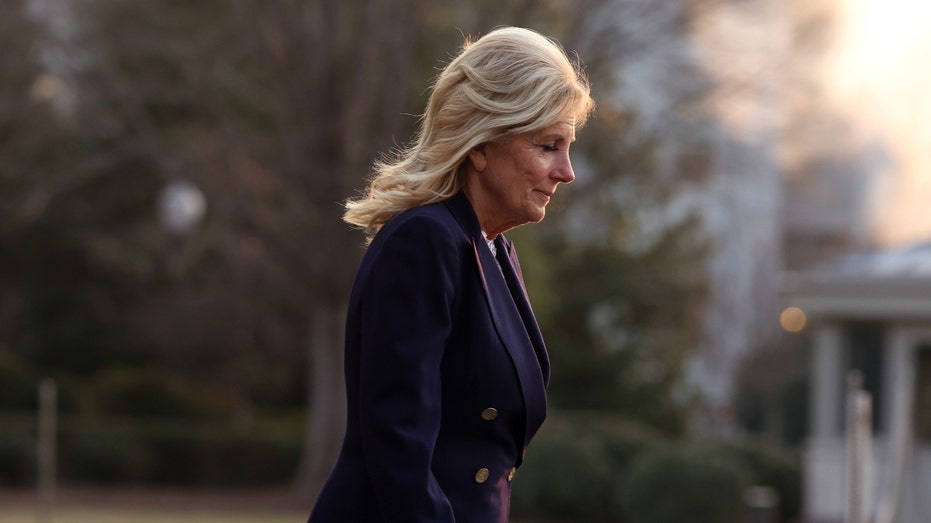
First lady Jill Biden’s guests for the State of the Union (SOTU) address on Thursday night include an Alabama woman who is seeking in vitro fertilization (IVF), Swedish Prime Minister Ulf Kristersson and United Auto Workers President Shawn Fain. President Biden will deliver his last SOTU address before voters cast their ballots in the general election come November. The first lady’s choice of guests for her viewing box provides a glimpse into several issues Biden may focus on in his remarks: wider abortion access, immigration, foreign affairs, support for union workers and stricter gun control, to name a few. “Each of these individuals were invited by the White House because they personify issues or themes to be addressed by the President in his speech, or they embody the Biden-Harris Administration’s policies at work for the American people. The Second Gentleman, Mr. Douglas Emhoff, will also join the First Lady in the viewing box,” her office said in a statement. WHAT PRESIDENT BIDEN NEEDS TO SAY ABOUT HIS AGE AND TRUMP IN HIS STATE OF THE UNION ADDRESS Latorya Beasley, a mother from Alabama, was seeking to expand her family through IVF “when her embryo transfer was abruptly canceled as a result of the recent Alabama Supreme Court decision,” according to the White House. Kate Cox, a Texas mother of two, will also be in attendance. Cox fought in a high profile legal battle with the Lone Star state after being denied abortion access. She subsequently crossed state lines to get the procedure done. Maria Shriver, an abortion advocate and journalist, is another guest of the first lady. She helped develop the White House Initiative on Women’s Health Research and is the cousin of independent presidential candidate Robert F. Kennedy Jr. President Biden is also likely to discuss crises abroad, focusing on the wars in Ukraine and Gaza. The first lady will host Shelby Nikitin, a U.S. Navy officer who protected the Navy’s maritime shipping vessel from threats by Yemen’s Iran-backed Houthi rebels in the Red Sea, earning her the Bronze Star. BIDEN’S STATE OF THE UNION ADDRESS: BRET BAIER, MARTHA MACCALLUM TO LEAD FOX NEWS CHANNEL’S SPECIAL COVERAGE Several lawmakers will host the families of victims still held hostage by Hamas terrorists. Sweden will officially become the 32nd NATO ally on Thursday. To mark the occasion, Swedish Prime Minister Ulf Kristersson will be another guest in the first lady’s viewing box. “Sweden is a strong democracy with a highly capable military that shares our values and vision for the world. Having Sweden as a NATO Ally will make the United States and our Allies even safer,” the White House wrote. ALABAMA SEN KATIE BRITT TO DELIVER REPUBLICAN RESPONSE TO BIDEN STATE OF THE UNION ADDRESS: ‘TRULY HONORED’ Biden has repeatedly touted himself as the most pro-union president in recent history. The first lady will also host United Auto Workers President Shawn Fain alongside UAW Local 126 member Dawn Simms. Simms worked at an auto plant in Belvidere, Illinois, when it closed. It reopened in February 2023 after Fain helped negotiate the UAW-Big Three contract. Simms joined Biden to mark the plant’s reopening. Biden has called on Congress to do more to curtail gun violence, even after the passage of the White House Office of Gun Violence Prevention program. Another guest of Jill Biden, Jazmin Cazares, is likely to highlight this. Cazares, a resident of Uvalde, Texas, began advocacy for stricter gun control after her sister was killed in the mass shooting at Robb Elementary School in May 2022. A statement from the White House reads: “Cazares spent her senior year of high school traveling across the country and sharing Jackie’s story. She spoke alongside March for Our Lives leaders at the Texas State Capitol and testified before lawmakers to advocate for tighter background checks and extreme risk protection order laws.”
Georgia immigration bill would cut state funding of sanctuary cities in wake of Laken Riley murder

Some Georgia senators want to punish cities and counties that they say are illegally harboring immigrants who are in the country without permission by cutting off most state aid to the local government and removing elected officials from office. The Senate Public Safety Committee voted 4-1 on Wednesday to rewrite House Bill 301, with supporters saying the move is needed to enforce a 2009 state law that outlaws so-called sanctuary cities and counties. It’s the latest measure proposed by Republicans after police accused a Venezuelan man of beating a nursing student to death on the University of Georgia campus. GOP CONGRESSMAN INTRODUCES ‘LAKEN RILEY ACT’ TO REQUIRE ICE TO DETAIN MIGRANTS ARRESTED FOR THEFT Jose Ibarra was arrested last month on murder and assault charges in the death of 22-year-old Laken Riley. Immigration authorities say Ibarra, 26, unlawfully crossed into the United States in 2022. It is unclear whether he has applied for asylum. Riley was a nursing student at Augusta University’s Athens campus. She was found dead Feb. 22 after a roommate reported she didn’t return from a morning run in a wooded area. The Senate committee completely rewrote a bill that previously regulated penalties from speeding tickets issued by automated cameras. State Sen. Kim Jackson, a Stone Mountain Democrat, complained that she had no time to read the new language before the meeting, calling it “frustrating and disappointing.” The new bill would let any Georgia resident sue, asking a judge to declare if a city or county was violating the 2009 law. If a judge agrees, the state would cut off state aid, as well as federal aid it controls, except for a short list of emergency and health services. For example, a county or city would get no state money for building and maintaining roads. Judges could restore funding if a local government repeals the offending policy. A judge would then be required to issue a permanent order barring the government from ever readopting any sanctuary policy. The bill also provides for removal of local elected officials if cities or counties adopt sanctuary policy. The bill lets any Georgia resident complain to the Board of Community Affairs. The board would conduct a hearing on whether an official is breaking state law and recommend to the governor whether to suspend the official. The governor could then remove the official and appoint a replacement. Officials can petition to be reinstated, but that would happen only if they can show that their service “is more likely than not to improve the ability” of the government to comply with the anti-sanctuary law. Republican Sen. Randy Robertson of Cataula told the committee that the measure would ensure sheriff’s offices comply with U.S. Immigration and Customs Enforcement so they don’t evade the 2009 law. “What we’ve done in this legislation is we’ve added some teeth, because there were none in the past,” Robertson said. Critics of the measure say it’s a further attempt by Republican lawmakers to impose their will on cities and counties, and would let activists tie up cities and counties with court cases and administrative proceedings. “We have built-in accountability measures for when communities do not like what their local government or local sheriffs are doing, and those are elections. We should not be using the legislature to dictate to local communities,” said Isabel Otero, Georgia policy director for the Southern Poverty Law Center. Otero likened the measure to Georgia’s former Immigration Enforcement Review Board, which investigated complaints about local immigration enforcement. For example, then-Lt. Gov. Casey Cagle filed a complaint that the Atlanta suburb of Decatur was violating state law in 2017 when Cagle was running for governor. The board dismissed the complaint against Decatur, and a law quietly dissolved the board in 2019. It’s the second bill seeking a harder stance on immigration to advance this year. Last week the Georgia House voted 97-74 for House Bill 1105, which seeks to require local law enforcement to help identify immigrants in the country illegally and detain them for possible deportation by U.S. Immigration and Customs Enforcement. Multiple Republicans on Wednesday said Athens-Clarke County was a target of the new proposal, including Lt. Gov Burt Jones. “As part of our ongoing commitment to protect Georgians, we are taking a stand against those who attempt to implement sanctuary policies that violate the law and harbor criminals,” Jones said in a statement. Athens-Clarke Mayor Kelly Girtz has denied that the consolidated city-county is violating state law, noting that it files a yearly certification of compliance. Critics point to a 2019 resolution by the Athens-Clarke County Commission that said local government “strives to foster a community where individuals of all statuses feel safe.” But Girtz notes that resolution doesn’t have the force of law.
Modi makes rare pre-election Kashmir trip, but struggles to ‘win hearts’

Srinagar, Indian-administered Kashmir – In his first speech in the main city of Indian-administered Kashmir since scrapping its semi-autonomous status in 2019, India’s Prime Minister Narendra Modi claimed the move had brought development and prosperity to the region’s residents. “I am working hard to win your hearts,” Modi told a rally on Thursday in Srinagar, where he announced a slew of developmental projects worth $777m, which he said will boost the agro-economy and tourism in the disputed region. “Today, there is no Article 370, hence the talent of the youth of Jammu and Kashmir is being fully respected and they are getting new opportunities. Today there are equal rights and equal opportunities for everyone here,” he said, referring to the constitutional provision that granted a special status to the Muslim-majority region, also claimed by neighbouring Pakistan. “The country is seeing these smiling faces of yours … [and] feeling relieved to see you all happy,” he said, concluding his 27-minute address by wishing people well during Ramadan, the Muslim holy month that begins next week. A paramilitary soldier stands guard as people queue up for a security check outside the stadium in Srinagar where PM Narendra Modi held the rally [Mukhtar Khan/AP Photo] But independent analysts and many Kashmiris said they were left disappointed by the PM’s speech, which many had anticipated might have offered more substantive political messaging aimed at reaching out to a region that New Delhi and Modi’s party have long had a tense relationship with. The 2019 break For decades, the abrogation of Article 370 was a core agenda of Modi’s Hindu majoritarian Bharatiya Janata Party (BJP) in order to “fully integrate” the region with the rest of India. The article allowed the region to have its own laws and barred outsiders from buying land or getting local jobs. But Modi’s government split the former state into two territories – Ladakh, and Jammu and Kashmir – and brought them under New Delhi’s direct rule. To curb street protests against the action, the government launched a security crackdown and curtailed civil liberties and press freedom. In defence of its controversial move, the government said New Delhi’s direct rule would bring progress to Kashmir and eradicate the armed rebellion against New Delhi’s rule that began in 1989. Tens of thousands of people, mostly civilians, have been killed in the conflict since, turning the Himalayan territory into one of the most militarised regions in the world. But the BJP’s move was opposed by Kashmiris, who feared the government was trying to change the region’s demography by allowing people from other parts of India to settle or invest there. “This is the new Jammu and Kashmir which we had been waiting for decades,” Modi said in remarks made ahead of the national election in April and May in which he is seeking a third straight term. People attend the rally addressed by Modi [AP Photo] ‘Disappointed the audience’ Residents, however, said they had low expectations for the prime minister’s visit – and that their grievances were not addressed in his speech. “The highest expectation was the restoration of the statehood. The second could have been the restoration of democracy since the central rule has been far too long. People don’t have a voice here,” said a 33-year-old Kashmiri who did not want to reveal his identity over fears of reprisal by the authorities. Indian-administered Jammu and Kashmir has not had regional elections since 2014. The government formed then was dissolved by the BJP’s central government in 2018. In December 2023, the Supreme Court, while upholding the scrapping of the special status, said state elections must be held by September this year. But on Thursday, Modi did not give any assurances about holding the vote in his speech. “Two things people wanted to hear was the dates of elections and statehood,” New Delhi-based academic Radha Kumar, who has worked extensively on the Kashmir conflict, told Al Jazeera. “On both those points, PM Modi disappointed the audience,” she said. “One would expect he would give reassurance that the elections would be held by the deadline. Surprisingly, there was no reference.” But Zameer Ahmad, a BJP member from Kashmir’s Kupwara district, defended Modi’s visit, saying it gave the residents a chance to talk about their issues. “We have a future with the BJP because they will win elections. I think the PM will listen to us and solve our problems,” he said. Government employees mobilised as crowd Modi’s BJP is not a key player in Indian-administered Kashmir. Multiple government employees, including teachers, said their departments and offices had effectively ordered them — around 20,000 people in all — to attend Modi’s rally. Many schools in the region were closed for the day. “We hardly got any sleep and left home at 4am. It was a job compulsion,” Ahmad, a 45-year-old employee from Anantnag district, 50km (31 miles) from Srinagar, told Al Jazeera, outside the football stadium in the city where the event was held. A female teacher from southern Kashmir said she felt no excitement for the event. “I can’t say anything. We were directed by the administration to come.” Mehbooba Mufti, the last elected chief minister of the region, criticised the government for mobilising its employees for the rally. “This visit is only meant to address and drum support amongst the BJP’s core constituency in the rest of India for the upcoming parliament elections,” she posted on X. Adblock test (Why?)
What’s slowing down America’s clean energy transition? It’s not the cost

For the first time, clean energy in the United States is at the same price as energy from burning fossil fuels thanks to policy measures, including President Joe Biden’s signature climate legislation, the Inflation Reduction Act (IRA). But a new report says non-cost barriers are now slowing the country’s transition to renewables. The report, released in February by the Clean Investment Monitor, analysed different modelling scenarios and found that the IRA is expected to meet its goal of reducing GHG emissions by roughly 40 percent by 2030. Passed in 2022, the IRA is the largest investment to address the climate crisis ever passed in the US. The investment is significant in a country that is one of the world’s largest contributors to GHG emissions. (China, the US and India are the world’s top three emitters.) The report found that electric vehicle sales were at the top of the projected range in 2023, and investment in utility-scale clean electricity reached record levels last year. However, factors like local opposition to renewables and long delays in grid connection are slowing the pace of the clean energy transition. Trevor Houser, one of the lead authors of the report, said two decades of policy work, including the passing of the IRA, have reduced the cost of clean energy to the point that it is competitive with coal and fossil gas (called “natural gas” by the fossil fuel industry), and can be deployed without increasing prices for households and businesses. “It’s exciting to see those two decades of work paying off and these new, cleaner technologies having achieved a level of cost reduction and a point of scale where they can be widely deployed,” Houser said. Now, the only issue is the speed of the transition. In the last two years, high inflation and supply chain issues led to temporary price increases. “That appears to be correcting now,” Houser said. The bigger obstacles, he said, are ramping up manufacturing, connecting transmission lines, and addressing growing opposition to renewables. “The thing that’s more concerning to me is the ability to get local acceptance and to get projects permitted and built fast enough,” he added. Opposition to renewables The area of land needed to deliver solar and wind power is much larger than coal or fossil gas plants, leading to tension when homeowners and other groups hear of renewable projects proposed nearby. Backlog in connecting clean energy to the grid is slowing down US transition [File: AP Photo] “People are supportive of wind and solar, generally, but just don’t want it right next to them,” Houser explained. “The way that a lot of homeowners are very supportive of homeless shelters just as long as it’s not on their block.” But this NIMBYism, an acronym for “not in my backyard” that reflects the opposition of residents to developments in the vicinity of their homes, is not isolated to a few corners of the country. A 2023 report by the Sabin Center for Climate Change Law at Columbia Law School found organised opposition in 35 states, resulting in at least 228 significant local restrictions against wind, solar and other renewable energy facilities. The report found that nearly 300 projects had encountered serious opposition, ranging from letter-writing campaigns to lawsuits. “Delays from litigation alone can kill a project,” noted Matthew Eisenson, the report’s author and senior fellow at the Renewable Energy Legal Defense Initiative at the Sabin Center for Climate Change Law. While some concerns are rooted in impacts to tribal lands, resources and sacred sites, known as “green colonialism”, Eisenson said opposition from tribes affects only a small percentage of renewable energy projects. Instead, he said, most complaints about clean energy projects are from non-Indigenous communities with concerns about visual impacts, community character, impacts on property values and loss of agricultural land. The most intense opposition can be found in the Midwest, especially Ohio and Michigan, and parts of the South, including Virginia, according to Eisenson’s research. Opposition has been especially effective at the municipal level, where town and county boards are staffed by common citizens who aren’t experts in energy policy, he said. Often it only takes a small number of people to show up at meetings to block a project. “But that’s not to say that a majority of people in all these communities actually support stopping projects,” Eisenson said. Opponents have successfully passed not only local bans but also state laws. Eisenson pointed to Ohio, where a state law enacted in 2021 allows counties to establish restricted areas where wind and solar projects are banned. At least 16 counties have since established restricted areas on solar farms. Offshore wind, especially, has faced fierce opposition from non-environmental groups, and it is “the area where we see the highest correlation between misinformation and opposition,” Eisenson said. “There has been a concerted misinformation campaign to tie whale beachings to offshore wind development and exploration.” Eisenson is concerned that all this pushback is having a significant impact on the rollout of renewables. “There’s still a big question mark about how much of this infrastructure actually gets built,” he said. Referring to the NIMBYism, Houser said the question is when to put the collective interest of the climate over the interest of the individual. “The challenge now for policymakers is, can they prioritise rapid construction to clean energy for climate relative to some other issues when there are trade-offs?” he said. Backlogged grid Another major obstacle that’s slowing the renewable transition is a backlog in connecting clean energy to the grid. The grid is the transmission system that moves power across long distances towards cities, where local distribution brings power to homes and businesses. But delays have emerged as new projects ask to be connected to the grid, explained Lori Bird, director of US Energy for the World Resources Institute, a global research organisation. New projects must apply to connect to the grid. “They have to go through a study process to be able to get an interconnection agreement,” she
Could soaring housing prices affect Biden’s re-election bid?

The US economy is remarkably strong. But, borrowing costs are high and many Americans can’t afford to buy a home. The American economy is booming. Inflation is down, the job market is strong and wages are rising. Yet, many people in the US do not feel better off now than when Joe Biden took office in 2021. Americans are getting ready to cast their ballots in November. The health of the US economy is vital to any president seeking re-election. While Biden has avoided a recession, there’s one major factor weighing heavily on consumer sentiment – the housing market. Also, having made the G20 agenda, is a global tax on billionaires coming? Plus, checked bag fees are at record highs. Adblock test (Why?)
Mahashivratri 2024: Are banks, stock market closed on March 8? Check state-wise holiday list

In observance of Mahashivratri, Banks will remain closed in several states across India. It will be a three-day extended weekend for many people as the second Saturday and Sunday will follow March 8.
Lok Sabha Election 2024: Congress leaders meet to finalise party’s candidates
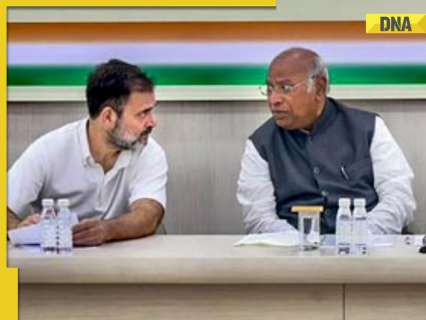
The top leadership of the Congress is attending a meeting in the national capital on Thursday to finalise the party’s candidates for the upcoming Lok Sabha elections.
Xcel Energy acknowledges role in Texas’ Smokehouse Creek wildfire

The Smokehouse Creek Fire has grown to be the largest in state history.