

American Samoa snubs Biden 2 caucuses in a row after backing Jason Palmer in 2024, Michael Bloomberg in 2020
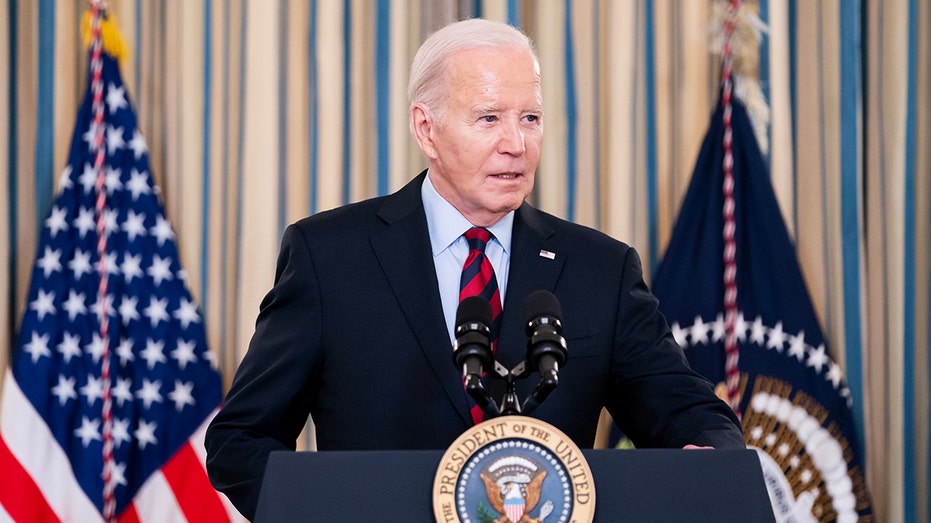
President Biden overwhelmingly won the Democratic contests on Super Tuesday, with one notable exception — American Samoa. The American territory, an island located in the South Pacific Ocean, voted for an unlikely Democratic candidate named Jason Palmer, a 52-year-old businessman from Baltimore. Out of 91 ballots cast in the territory’s caucus, Palmer won 51 and Biden won 40, according to the local party. The upset will not derail Biden’s march toward his party’s nomination, but it marks the second time the American territory has rejected Biden. During the 2020 Democratic primaries, billionaire Michael Bloomberg’s only win came in American Samoa. He garnered 175 votes in the contest with Tulsi Gabbard coming second with 103 votes. Bernie Sanders earned 37 votes and Biden came fourth with 31. AMERICAN SAMOA PRIMARY 2024 ELECTION RESULTS After Tuesday’s caucus, Palmer thanked American Samoa in a message on X. “Honored to announce my victory in the American Samoa presidential primary. Thank you to the incredible community for your support. This win is a testament to the power of our voices. Together, we can rebuild the American Dream and shape a brighter future for all.” WHO IS JASON PALMER, THE OBSCURE PRESIDENTIAL CANDIDATE WHO DELIVERED BIDEN’S FIRST 2024 LOSS? Six delegates were at stake in the U.S. territory, with the vote split between Palmer and Biden. On Tuesday, Palmer said winning the island by a mere 11 votes came as a shock to him. “I found out that I had won because my phone started blowing up with friends and campaign staffers texting me,” Palmer told The Associated Press. He has also never visited American Samoa. TRUMP REACTS TO SUPER TUESDAY VICTORIES: ‘RARELY HAS POLITICS SEEN ANYTHING QUITE LIKE THIS’ “I have been campaigning remotely, doing Zoom town halls, talking to people, listening to them about their concerns and what matters to them,” he said. Palmer entered the race in November 2023. According to his campaign website, he admits he has a “very little chance of winning,” but he wants his campaign to emphasize new “ideas, solutions and changing the conversation.” He has also loaned himself $500,000 for his campaign. CLICK TO GET THE FOX NEWS APP “You can’t take the money with you when you die,” he said. “But you can change the world while you’re here.” Residents of U.S. territories can vote in primaries but do not have any official representation in the Electoral College. The Associated Press contributed to this report.
North Carolina US House seats expected to flip Republican under new district map, election data shows
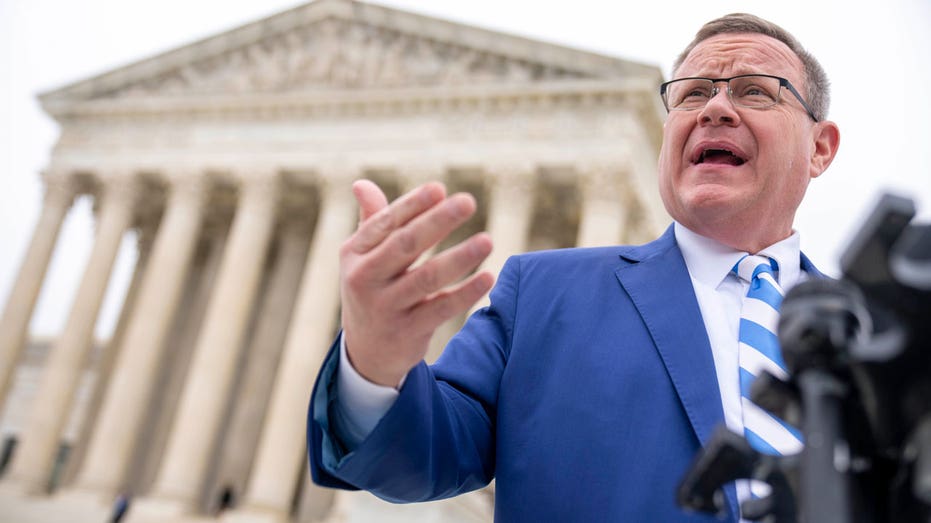
North Carolina House Speaker Tim Moore won the Republican nomination for Congress in the state’s 14th District on Tuesday, starting what was expected to be a thorough shake-up of the U.S. House delegation. The 14th is one of three congressional districts expected to flip from Democrats to Republicans in the November election after the state’s Republican-controlled General Assembly redrew voting maps fashioned by judges for the 2022 elections. Candidates in the 6th and 13th Districts appeared headed for runoffs after none of them received more than 30% of the vote. TRUMP ENDORSES NORTH CAROLINA GOV CANDIDATE AS ‘MARTIN LUTHER KING ON STEROIDS’ The new maps seem likely to transform a delegation now comprising seven Democrats and seven Republicans to one with 10 Republicans and four Democrats. In the wake of the redistricting changes, five incumbents didn’t run for another term. Democratic Reps. Jeff Jackson, Kathy Manning and Wiley Nickel decided to forgo reelection bids in districts that are now much more heavily tilted toward Republicans. Republican Reps. Dan Bishop and Patrick McHenry are stepping aside for unrelated reasons. Moore easily defeated two Republican opponents. The Speaker’s colleagues in the General Assembly redrew the 14th District in a way that seems to ensure the Kings Mountain lawyer will get his wish to serve in Congress. Moore is leaving the state Legislature after 21 years. Army veteran and registered nurse Pam Genant won the Democratic nomination in the district, which includes portions of Charlotte and points west to the foothills. Fourteen Republicans were competing for the open 13th District, now shaped like a horseshoe running north, east and south around Raleigh. Smithfield attorney and first-place finisher Kelly Daughtry appeared to be headed for a runoff after she just missed the 30% threshold to win outright. Her opponent was undecided, with former federal prosecutor Brad Knott of Raleigh and Wake Forest businessman Fred Von Canon battling for second place. The nominee will take on Democrat Frank Pierce in November. In the 6th District, Blue Cross and Blue Shield lobbyist and political newcomer Addison McDowell and second-place finisher and former U.S. Rep. Mark Walker appeared headed for a runoff after outpacing four other Republicans in the currently Democratic district. No Democrat filed to run in the seat, which stretches from Greensboro and Winston-Salem south and west to Concord. The second-place candidate has to request another election in writing. A runoff would be held on May 14. In the open 8th District seat, the Rev. Mark Harris held a narrow lead early Wednesday over political newcomer and Union County farmer Allan Baucom. Justin Dues is the only Democrat running in the district, which stretches from Charlotte east to Lumberton. In 2018, Harris appeared to receive the most votes in the general election for Congress, but never took office. A new election was ordered over an absentee ballot fraud probe and he decided not to run again. He now calls what happened a “manufactured scandal.” The 10th district came open when McHenry, who had a brief stint in 2023 as the U.S. House speaker, unexpectedly announced that he wasn’t running again. Green Beret Pat Harrigan, who unsuccessfully ran in a different U.S. House district in 2022, won the Republican nomination. Harrigan will take on Democrat Ralph Scott Jr. and a Libertarian Party candidate in the November general election. Previous election data shows there remains one likely swing district in North Carolina. First-term Democratic Rep. Don Davis is running for reelection in the 1st District. He will take on ex-Army colonel Laurie Buckhout, who won the GOP nomination for the district in the northeast part of the state. Several Republican incumbents are running again, including Rep. Virginia Foxx, who defeated a Republican challenger on Tuesday as she seeks an 11th term from the 5th District in northwestern North Carolina. Republican Reps. Greg Murphy in the eastern 3rd District and David Rouzer in the southeastern 7th District are unopposed in the primaries. Chuck Edwards in the far-western 11th District and Richard Hudson in the Piedmont and Sandhills-area 9th District are also seeking reelection and defeated primary opponents whom they vastly outspent. Democratic Rep. Deborah Ross in the Raleigh-dominated 2nd District won her party’s nomination and will face Alan Swain who earned the Republican nod. Democratic Rep. Valerie Foushee in the Durham-area 4th District was unopposed and will face Republican Eric Blankenburg, while Rep. Alma Adams in Charlotte’s 12th District was unopposed in the Democratic primary and will face the GOP’s Addul Ali.
RFK Jr’s campaign says he has enough signatures to get on ballot in Nevada

Robert F. Kennedy Jr. said his campaign has met the threshold to appear on the presidential general election ballot in Nevada. The independent politician expressed his plans to stand for election in all 50 states during an interview with NewsNation on Super Tuesday. “We collected enough signatures today — 15,000 signatures. I think we even have a 60% cushion in Nevada,” Kennedy said. He continued, “That’s our fourth state. We’re beating our benchmarks in all the other states, so we’re very confident we’re going to be on the ballot in every state.” NIKKI HALEY TO DROP OUT OF 2024 RACE, ENDING CHALLENGE AGAINST TRUMP FOR GOP PRESIDENTIAL NOMINATION: SOURCES Kennedy’s long-shot presidential campaign continues to offer him up as an alternative to the distant frontrunners in the Republican and Democratic parties. Former President Trump and President Biden continued marching toward their respective parties’ presidential nominations largely unhindered this Super Tuesday as both swept nearly every contest on the largest primary night of 2024. BIDEN CRUISES TOWARD LIKELY 2020 REMATCH — BUT SUFFERS DEFEAT TO LITTLE-KNOWN CANDIDATE Former U.N. Ambassador Nikki Haley, who had hoped to find some light at the end of the tunnel after staking her candidacy on the 15 states casting ballots, suspended her campaign Wednesday, sources confirmed to Fox News. Meanwhile, Biden’s top challengers looked for any glimmer of success after making their case against the president’s age and ability to take on Trump in a general election rematch. Biden lost his first contest in the race for the Democratic presidential nomination on Tuesday to an unknown candidate in the U.S. territory of American Samoa. CLICK HERE TO GET THE FOX NEWS APP As a territory, American Samoa does not get a vote in the general presidential election and is only permitted to send delegates to the convention during the primary season. Trump won nearly every Super Tuesday state as he got closer to clinching the GOP nomination for president. Still, after winning her first contest in the race for the Republican nomination in the Washington, D.C., primary over the weekend, Haley secured her first statewide victory by narrowly edging out Trump in Vermont. Fox News’ Brandon Gillespie and Brooke Curto contributed to this report.
New AI video tools increase worries of deepfakes ahead of elections
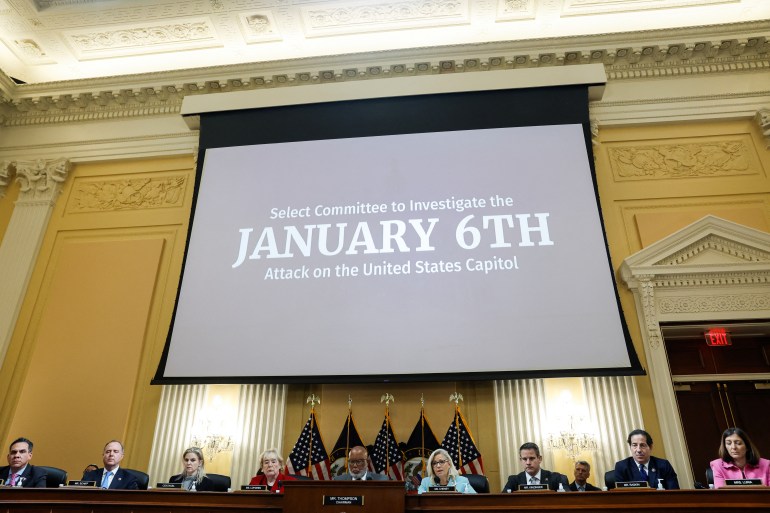
The video that OpenAI released to unveil its new text-to-video tool, Sora, has to be seen to be believed. Photorealistic scenes of charging woolly mammoths in clouds of snow, a couple walking through falling cherry blossoms and aerial footage of the California gold rush. The demonstration reportedly prompted movie producer Tyler Perry to pause an $800m studio investment. Tools like Sora promise to translate a user’s vision into realistic moving images with a simple text prompt, the logic goes, making studios obsolete. Others worry that artificial intelligence (AI) like this could be exploited by those with darker imaginations. Malicious actors could use these services to create highly realistic deepfakes, confusing or misleading voters during an election or simply causing chaos by seeding divisive rumours. Regulators, law enforcement and social media platforms are already struggling to cope with the rise of AI-generated disinformation, including faked audio of political leaders that have allegedly helped to skew an election in Slovakia and discourage people from voting in the New Hampshire primaries. Politicians and civil society worry that as these tools become more and more sophisticated, it will be harder than ever for everyday people to tell what is real and what is fake. But experts in political disinformation and AI say that the increasing use of AI products is only a new facet of an old problem. These tools just add to an already well-stocked arsenal of technologies and techniques used to manipulate and mislead. Dealing with the challenge of deepfakes really means addressing the unresolved questions of how to regulate the social media platforms on which they will spread and making Big Tech companies responsible when their products are left open to misuse. “These AI image generators threaten to make the problem of election disinformation worse but we should be very conscious that it’s already a problem,” said Callum Hood, the head of research at the Center for Countering Digital Hate (CCDH), a campaign group. “We already need tougher measures from social media platforms on that existing problem.” Several companies that offer generative AI image makers, including Midjourney, OpenAI and Microsoft, have policies that are supposed to prevent users from generating misleading pictures. However, CCDH claims these policies are not being enforced. In a study released on March 6, the centre showed that it was still relatively straightforward to generate images that could well be dangerous in the highly partisan context of the United States elections, including faked photorealistic images of President Joe Biden in hospital or greeting migrants on the Mexican border and CCTV-style images of election tampering. Former US President Donald Trump’s claim that the 2020 elections were stolen helped instigate violent protests at the Capitol building [Jonathan Ernst/Reuters] These images reflect common falsehoods in US politics. Former President Donald Trump has routinely promoted the idea that the results of the 2020 election were manipulated, a lie that helped give rise to violent protests at the Capitol building in January 2021. “It shows [the companies] haven’t thought this through enough,” Hood said. “The big vulnerability here is in images that can be used to support a narrative of stolen election, or false claims of election fraud.” The researchers found significant differences in how individual image makers responded to the prompts – some would not allow users to create images that were very obviously partisan. “Those differences show that it is possible to put effective safeguards in place,’ Hood said, adding that this reflects a choice on the part of the companies. “It’s symptomatic of a broader imbalance between the profit motive and safety of AI companies,” he said. “They have every incentive to move as fast as possible with as few guardrails in place so they can push products out, push new features out and grab a bit more in venture funding or investment. They have no incentive to slow down and be safe first.” OpenAI, Microsoft and MidJourney did not respond to requests for comment. Little achieved That incentive is only likely to come in the form of regulation that forces tech companies to act and penalises them if they do not. But social media disinformation experts say they feel a sense of déja vu. The conversations taking place around the regulation of AI sound eerily like those that were had years ago around the spread of disinformation on social media. Big Tech companies pledged to put in place measures to tackle the spread of dangerous falsehoods but the problem persists. “It’s like Groundhog Day,” said William Dance, a senior research associate at Lancaster University, who has advised United Kingdom government departments and security services on disinformation. “And it tells you how little, really, we’ve achieved in the last 10-15 years.” With potentially highly charged elections taking place in the European Union, the UK, India and the US this year, Big Tech companies have once again pledged, individually and collectively, to reduce the spread of this kind of disinformation and misinformation on their platforms. In late February, Facebook and Instagram owner Meta announced a series of measures aimed at reducing disinformation and limiting the reach of targeted influence operations during the European Parliament elections. These include allowing fact-checking partners – independent organisations Meta allows to label content on its behalf – to label AI-generated or manipulated content. Meta was among approximately 20 companies that signed up to a “Tech Accord”, which promises to develop tools to spot, label and potentially debunk AI-generated misinformation. “It sounds like there’s a kind of blank template which is like: ‘We will do our utmost to protect against blank’,” Dance said. “Disinformation, hate speech, AI, whatever.” The confluence of unregulated AI and unregulated social media worries many in civil society, particularly since several of the largest social media platforms have cut back their “trust and safety” teams responsible for overseeing their response to disinformation and misinformation, hate speech and other harmful content. X – formerly Twitter – shed nearly a third of its trust and safety staff after Elon Musk took over the platform
‘Joyful but afraid’: Disabled Indian academic Saibaba’s family on acquittal
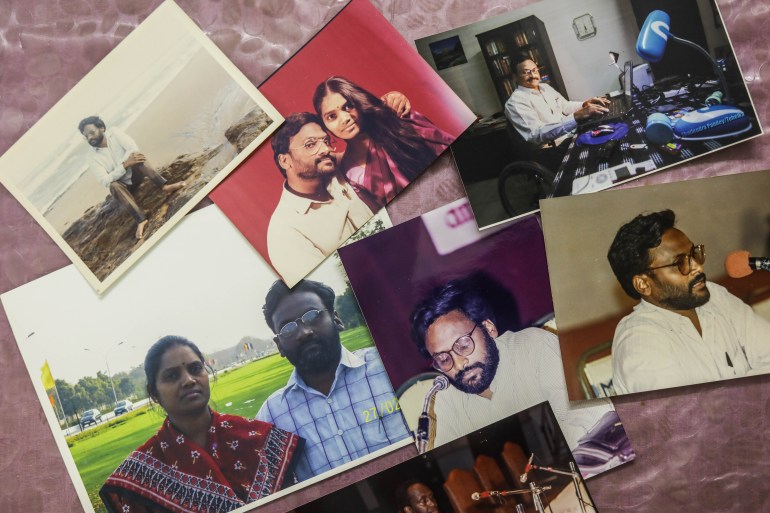
New Delhi, India – Vasantha Kumari shuffles through things she needs to pack for her visit to Nagpur where she will meet her academic husband, Gokarakonda Naga Saibaba, who is being released from prison after a decade for suspected links with Maoist rebels. Saibaba, 57, a professor of English who is paralysed waist down and uses a wheelchair, was arrested in May 2014 for being an alleged member of the banned Communist Party of India (Maoist) and charged under the Unlawful Activities Prevention Act (UAPA), an anti-terror law declared “draconian” by several rights groups. In March 2017, he was sentenced to life imprisonment. On Tuesday, Saibaba was acquitted along with four others of all charges by the Nagpur bench of the Bombay High Court. Pandu Narote, the sixth accused in the case, died in August 2022 awaiting the verdict. This is Saibaba’s second acquittal. In October 2022, the Bombay High Court ordered his release, saying legal procedures were not properly followed during the trial. But within 24 hours, the Supreme Court cancelled the order, stating the charges against Saibaba and the other accused were “very serious” and required a new hearing. “On one side, we are joyful; on the other, we are afraid. They did the same thing in 2022. I know he has not done anything wrong. But now, I can only hope,” Kumari, also 57, told Al Jazeera as she prepared to travel to Nagpur, 1,072km (666 miles) south of New Delhi to receive her husband. Some photos of academic GN Saibaba and his wife Vasantha Kumari [Md Meharban/Al Jazeera] She has reasons to be worried. Within hours of the court order, the government in Maharashtra state, which had prosecuted Saibaba and others in the case, again approached the Supreme Court to challenge the acquittal. In its 293-page verdict on Tuesday, the Bombay High Court said the prosecution had failed to establish the grounds on which Saibaba was arrested in the case, including the allegedly incriminating material found at his New Delhi residence. The court held that mere possession of Maoist literature did not constitute an offence under the UAPA – an overturning of the same ground on which another court had ordered his life imprisonment in 2017. ‘Voice of tribal rights’ Saibaba, who taught at Delhi University, rose to prominence nearly 15 years ago when he protested against Operation Green Hunt, a paramilitary offensive launched by the Congress-led government in power at the time to crush an armed Maoist rebellion in several parts of central and western India. The Maoists say they are waging a war against the Indian state to protect the rights of the tribal and marginalised people, many of whom live in forests sitting on top of vast mineral reserves eyed by influential private corporations. Nandita Narain, retired maths professor and former president of the Delhi University Teachers’ Association (DUTA), told Al Jazeera her colleague Saibaba is a powerful voice in support of tribal rights. “[The] state is particularly bent on silencing voices in support of tribal rights in areas where a corporate plunder is taking place because the land is very mineral rich,” she said. “He posed a greater challenge to the state and the corporates. That is why they wanted to silence him.” Activists have described Saibaba’s imprisonment as a national security threat, despite his serious paralysis, as a textbook case of India’s prolonged – and often botched – court trials as well as denial of facilities to disabled inmates in the country’s perpetually cramped prisons. Saibaba has had permanent post-polio paralysis since he was five. He used to crawl on the ground and wore slippers on his hands until he moved from Hyderabad to New Delhi in 2003 to teach at Delhi University’s Ram Lal Anand College and was finally able to buy a wheelchair. During his decade-long imprisonment, he was twice infected with COVID-19, once with swine flu, and diagnosed with severe health conditions including hypertrophic cardiomyopathy with left ventricular dysfunction, a brain cyst, kidney stones and acute cervical spondylitis. His wife Kumari said he never got the treatment he needed in jail. “He faints frequently. He requires physiotherapy and cardiac monitoring,” she said, adding that she plans to get her husband treated at a good hospital when he is freed. Saibaba’s wife Vasantha Kumari at their residence in New Delhi [Md Meharban/Al Jazeera] In the summer of 2022, Saibaba had staged a three-week protest, including a four-day hunger strike, to get a plastic water bottle in his cell. He had also protested against a wide-angle CCTV camera recording the toilet and bathing area of his prison. Following the protest, the jail authorities allowed him to keep a water bottle and the camera angle was tilted. When his mother died of cancer in 2020, Saibaba was denied permission to attend her funeral. Kumari claimed the courts and the state discriminate in granting bails or acquittals based on the accused’s political and ideological associations. “You see how other accused are granted bail and acquitted so quickly, including rape and murder charges. However, when people like my husband are acquitted, the state steps in and prevents him from being released, keeping him in jail,” she said. In August last year, Mary Lawlor, the United Nations special rapporteur on human rights, slammed Saibaba’s prolonged detention as “inhumane”, citing grave concerns for his health and demanding an immediate release. Lawlor said his small cell had no window and a wall made of iron bars, “exposing him to extreme weather, especially in the scorching summer heat”. ‘He lost 10 years of his life’ For Kumari and their 26-year-old daughter Manjeera, the last 10 years have been harrowing. Saibaba was suspended by Delhi University shortly after his arrest. The family was forced to vacate university housing and received only half of his salary until 2021, when he was sacked. “In 2014, some intellectuals, students and writers formed a committee for Saibaba’s release. Through them, I received some financial and legal assistance,” said Kumari. But that
Navalny’s widow calls for Russia election day protests against Putin

Yulia Navalnaya calls presidential election a ‘sham’, urges Russians to register their protest at polling stations. Yulia Navalnaya, the widow of Russian opposition leader Alexey Navalny, has called for people to join mass election day protests against President Vladimir Putin. In a video on YouTube, Navalnaya on Wednesday urged Russians to gather at polling stations on March 17 and spoil their ballots or vote against Putin, who is almost certain to win a fifth term as president. Navalnaya promised to continue the work of her husband, Putin’s toughest opponent, who died last month in an Arctic prison colony. Navalny had backed ideas of simultaneous election protests in one of his final posts on social media, for people to turn out en masse at the same time on election day in cities across the country. “We need to use election day to show that we exist and there are many of us,” Navalnaya said. “We are real, living people, and we are against Putin. You need to come to the voting station on the same day and at the same time – March 17 at noon,” she continued. “What to do next? The choice is yours. You can vote for any candidate except Putin. You can ruin the ballot, you can write ‘Navalny’ in big letters on it. And even if you don’t see the point in voting at all, you can just come and stand at the polling station, and then turn around and go home.” The elections will be held from March 15 to 17. Despite Navalnaya’s moves to unite those who supported her husband against Putin, the Russian opposition remains largely fractured. In the video, she said she had drawn hope from the large crowds of supporters that turned out for Navalny’s funeral last week. Hundreds were detained after laying flowers at makeshift memorials for him as many chanted anti-Putin slogans. She called the upcoming vote a “sham” and alleged that Putin would “draw up any result he wants”. Navalnaya has made high-profile political appearances since Navalny’s death, including meeting United States President Joe Biden, addressing the Munich Security Conference and speaking at the European Parliament. The Kremlin has strongly denied accusations that Putin was behind Navalny’s death, which drew condemnation from world leaders as the opposition figure was mourned across the world. His death certificate said he died of natural causes at the age of 47. Adblock test (Why?)
ED prepares to arrest suspected leader involved in alleged secret empire

It is believed that Jain’s influence extends beyond his hometown of Bhopal to Dubai. There, many illegal betting platforms, including the Mahadev App, are thought to be under his control.
Top Republicans rally behind Trump, call for unity after dominant Super Tuesday showing: ‘Primary is over’
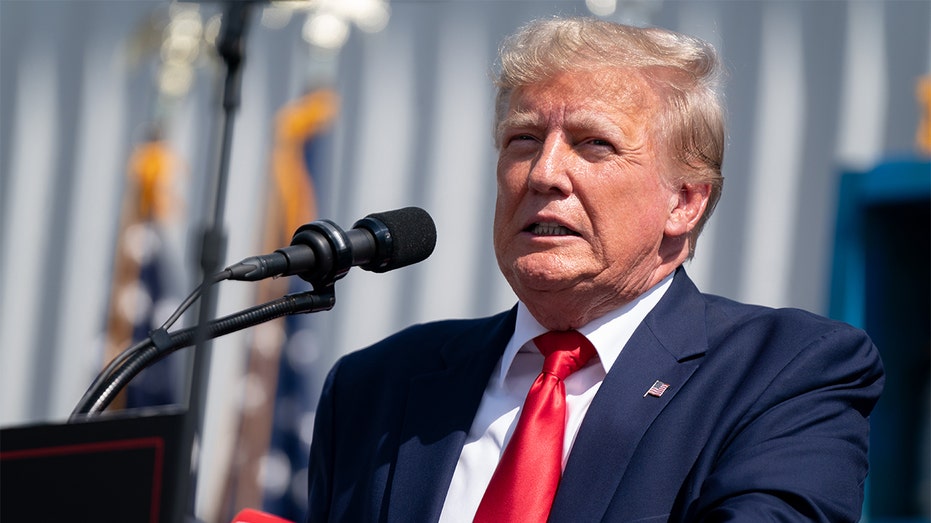
Reactions poured in from prominent conservatives on social media as former President Trump cruised to victory in nearly every contest in Super Tuesday’s primaries, most of whom called on the party to unite behind him. “Man I knew Trump would have a good night but this is a rout,” Ohio GOP Senator JD Vance posted on X as Trump continued to stack up victories in state after state on Tuesday night. “For voters, we have the next six months to convince them that DJT deserves another term.” “But for donors and political professionals, it’s time to unite behind our nominee. Please stop wasting time and money.” “Admit it,” Texas Republican Gov. Greg Abbott posted on X. “The primary is over.” TRUMP REACTS TO SUPER TUESDAY VICTORIES: ‘RARELY HAS POLITICS SEEN ANYTHING QUITE LIKE THIS’ “Time for Republicans to unite and restore sanity at the border.” “It is LONG past time for us to rally around President Trump as our Republican nominee who will defeat Joe Biden this November,” GOP Congresswoman Elise Stefanik, thought by some to be in consideration for Trump’s running mate, posted on X. “The GOP presidential primary is over,” Ohio GOP Chair Alex Triantafilou posted on X. “President Trump’s resounding Super Tuesday victories have solidified it. It is time to listen to our voters and unite the Republican Party.” BIDEN PLANS TO ‘TRIGGER TRUMP’ IN NEW ‘AGGRESSIVE’ ELECTION STRATEGY: REPORT “Voters across our country have spoken — this race is about the American people,” South Carolina Republican Sen. Tim Scott, also rumored to be a potential pick for vice president, posted on X. “It’s about safe streets, quality education, and a secure border. Donald J. Trump is the one candidate to unite our country around success and WIN in November.” Trump made no mention of Haley in his victory speech on Tuesday night but said that “success will bring unity to our country.” “We’re honored to have received the support of millions of Americans across the country today, including in Vermont where Nikki became the first Republican woman to win two presidential primary contests,” Haley’s campaign said in a statement on Tuesday as she appeared to finish Super Tuesday with only Vermont in the win column. “Unity is not achieved by simply claiming ‘we’re united.’ Today, in state after state, there remains a large block of Republican primary voters who are expressing deep concerns about Donald Trump. That is not the unity our party needs for success. Addressing those voters’ concerns will make the Republican Party and America better.”
Primary election in new Alabama US House district goes to runoffs

Alabama voters shook up the state’s congressional delegation Tuesday, throwing out one Republican incumbent and sending four candidates to runoffs in a district redrawn by a federal court to give Black voters greater opportunity to elect a representative of their choice. Republican Rep. Barry Moore won an unusual and closely fought primary in the 1st Congressional District against fellow GOP Rep. Jerry Carl. After the courts overhauled the district lines, Moore was drawn out of the 2nd Congressional District. While he could have run for his current House seat — and moved into the district if he won — Moore opted to challenge Carl in the more solidly Republican 1st District. Runoffs will be required to decide the general election match-up in the revamped 2nd District, a race that will be closely watched in November as Democrats seek to flip a once reliably GOP congressional seat in the Deep South. EVERYTHING YOU NEED TO KNOW ABOUT KATIE BRITT, THE SENATOR GIVING THE SOTU GOP RESPONSE For the Democratic nomination, Shomari Figures and state Rep. Anthony Daniels will meet in an April 16 runoff. Daniels, of Huntsville, is the minority leader in the state House of Representatives. Figures served as deputy chief of staff to U.S. Attorney General Merrick Garland. Figures and Daniels have both stressed their government experience, Figures at the federal level and Daniels in Montgomery. On the Republican side, former state Sen. Dick Brewbaker will face attorney Caroleene Dobson to decide the party’s nomination. Republicans are keen to maintain their hold on the seat this November, with control of the U.S. House of Representatives on the line. The 2nd District was redrawn by a federal court last fall after judges ruled the state’s previous map likely violated the Voting Rights Act. The three-judge panel said Alabama, which is 27% Black, should have a second district where Black voters make up a substantial portion of the voting age population and have a reasonable opportunity to elect a candidate of their choice. The new 2nd Congressional District stretches from Mobile through Montgomery to the Georgia border. The race drew a crowded field with 11 Democrats and seven Republicans in the primaries, making it likely that a runoff would be needed to decide the nomination. A runoff is triggered when one candidate does not capture 50% of the primary vote. Carl and Moore’s primary was also heated, with the two Republicans and their supporters trading accusations over voting records, late tax payments and loyalty to former President Donald Trump. Both are in their second terms in Congress after being elected in 2020 to their respective districts. Moore is a former member of the Alabama Legislature, and Carl served as president of the Mobile County Commission. “I am grateful to God, my family, the voters, my staff and the many dedicated volunteers and supporters who made tonight possible,” Moore said Tuesday night. Moore will face Democrat Tom Holmes in November. In addition to Figures and Daniels, Democratic candidates in the 2nd District included state Rep. Napoleon Bracy, Jr. of Prichard; state Sen. Merika Coleman of Pleasant Grove; state Rep. Juandalynn Givan of Birmingham and state Rep. Jeremy Gray of Opelika. Also running were former U.S. Marine James Averhart, education consultant Phyllis Harvey-Hall, retired businessman Willie J. Lenard, businessman Vimal Patel and Larry Darnell Simpson. The other five Republicans who qualified to run were state Sen. Greg Albritton of Atmore; business owner Karla M. DuPriest; real estate agent Hampton Harris; Stacey T. Shepperson of Saraland; and Newton City Council member Belinda Thomas.
Nikki Haley drops out of 2024 race, ending challenge against Trump for GOP presidential nomination: sources

Thirteen months after she launched her 2024 Republican presidential campaign in her hometown of Charleston, South Carolina, Nikki Haley is ending her White House bid, two sources confirmed to Fox News Digital. The former two-term South Carolina governor who later served as U.N. ambassador in former President Donald Trump’s administration is expected to say Wednesday morning that she is suspending her campaign for the GOP nomination, but she is not immediately expected to endorse Trump. In a Republican presidential field that topped a dozen candidates last summer, Haley was the final remaining rival to Trump, who for months has been the commanding front-runner in the GOP race as he makes his third straight White House bid. Haley – who in 2021 and 2022 made numerous trips to Iowa and New Hampshire, the two lead-off states in the Republican presidential nominating calendar – formally launched her 2024 campaign in February of last year. Haley polled in the single digits for much of last year and faced an uphill climb to win the nomination. But courtesy of well-regarded performances in the late summer and autumn in the first three GOP primary debates, Haley grabbed momentum and saw her poll numbers soar. That surge increased in December, as Haley caught up with Florida Gov. Ron DeSantis in the latest Iowa polls and in national surveys, for a distant second place behind Trump. And Haley zoomed to second place and narrowed the gap with Trump in New Hampshire, thanks in part to a crucial endorsement from Republican Gov. Chris Sununu. Trump ended up winning the Jan. 15 Iowa caucuses by 30 points over DeSantis, with Haley finishing slightly behind the Florida governor in third place. DeSantis, who was a distant third and mired in the single digits in the public opinion polls in New Hampshire, dropped out of the race two days before the primary, turning the GOP nomination battle into a two-candidate race between Haley and Trump. Haley, thanks to strong support from independents, won 43% of the vote in New Hampshire, finishing 11 points behind Trump. After Trump scored landslides in the Nevada and U.S. Virgin Islands GOP caucuses in early February, the race moved to Haley’s home state of South Carolina. While Haley campaigned relentlessly in her home state and Trump made only a handful of stops, the former president enjoyed the backing of South Carolina’s governor, both senators, and scores of state lawmakers and officials. But Haley remained defiant amid increasing calls by fellow Republicans for her to drop out of the race. “I refuse to quit. South Carolina will vote on Saturday. But on Sunday, I’ll still be running for president. I’m not going anywhere,” Haley emphasized in a major speech a couple of days ahead of her home state primary. And she emphasized that “I have no fear of Trump’s retribution.” On the campaign trail days ahead of the South Carolina primary, Haley told her supporters, “I will take the bruises. I will take the cuts. This is going to be messy and I’ll take the hurt, because I believe nothing good comes easy. Sometimes we have to feel pain to appreciate the blessing.” Haley has also turned up the volume in her verbal attacks on Trump, from his legal entanglements to his controversial comments on NATO and the death of Russian opposition leader Alexei Navalny, as well as his mocking of her husband, who is overseas on a military tour of duty. And she continued to spotlight both the 77-year-old Trump and 81-year-old President’s Biden’s verbal miscues as she repeatedly questioned their mental and physical durability and argued that it was time for a new generation to steer the country. Trump ended up topping Haley by 20 points in South Carolina, and he followed that up with an even bigger win three days later in Michigan’s Republican presidential primary. But Haley kept going, as she campaigned across the country in the 15 states from coast to coast that held Super Tuesday GOP nominating contests on March 5. Trump rolled into Super Tuesday with plenty of momentum, after sweeping the Michigan’s GOP’s party convention, and winning large victories in the Missouri, Idaho, and North Dakota caucuses. “We’ve been launching like a rocket to the Republican nomination,” Trump touted Saturday night at a rally in Richmond, Virginia, as he pointed to his ballot box victories in Michigan, Missouri and Idaho. But Haley, who repeatedly highlighted that she would remain in the GOP nomination race at least through Super Tuesday despite the extremely long odds she faces, on Sunday enjoyed victory for the first time in the 2024 race. Haley topped Trump by roughly 30 points in Washington D.C.’s Republican primary this past weekend. She captured 19 delegates and made history as the first woman to win a GOP presidential primary or caucus. Haley, who garnered strong support in the GOP primaries from independents and whose fundraising remained formidable, said she was staying in the race as an option for voters dissatisfied with a likely Biden-Trump rematch. But Haley held no public events or election night gatherings on Super Tuesday evening and remained mum on any plans going forward. Haley reiterated in an interview on Saturday with Fox News’ Bill Melugin that “we’re going to go as long as we’re competitive,” but she did not specifically define what competitive means.