

Chip Roy unveils bill to let Americans sue COVID-19 vaccine makers over injury, negative effects
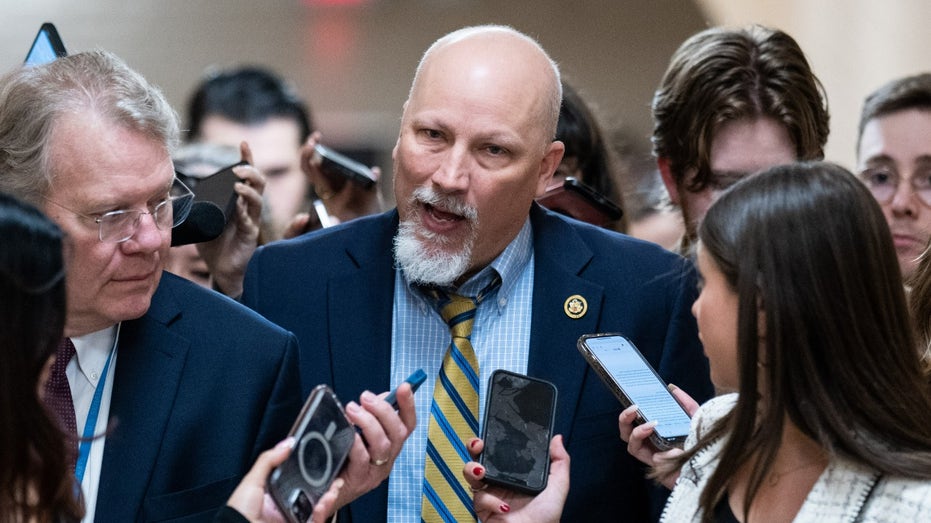
FIRST ON FOX: Rep. Chip Roy, R-Texas, is unveiling a new bill on Tuesday that would allow Americans to sue COVID-19 vaccine makers over adverse health effects allegedly caused by the shot. The Let Injured Americans Be Legally Empowered (LIABLE) Act is aimed at wiping away COVID-19 vaccine manufacturers’ statutory protections, opening them up to civil lawsuits. A summary of the bill obtained by Fox News Digital said, “The LIABLE Act will allow Americans who took vaccines that were misleadingly promoted and forced onto many Americans via federal mandates to pursue civil litigation for their injuries. These vaccines were given emergency use authorization unilaterally and did not go through the normal FDA approval process.” CDC RECOMMENDS ADDITIONAL COVID VACCINE FOR ADULTS 65 AND OVER Currently, manufacturers and health care providers responsible for distributing COVID-19 vaccines are mostly immune from civil lawsuits, even if those seeking money damages have medical proof of their vaccine-related injuries. That’s because the Public Readiness and Emergency Preparedness (PREP) Act of 2005 limits liability for the manufacturing, development and distribution of medical countermeasures related to a public health emergency. The PREP Act also created the Countermeasures Injury Compensation Program (CICP), which has a one-year statute of limitations and only provides compensation in the event of death or serious injury. According to Roy, CICP has compensated people just 11 times despite thousands of claims lodged. “Millions of Americans were forced to take a COVID-19 shot out of fear of losing their livelihoods and under false pretenses,” Roy told Fox News Digital. “Many have faced injury from the vaccine, but few have been afforded…recourse. To date, a mere 11 injury claims have been paid out despite nearly 700 million doses of the vaccine having been administered.” ASK A HEALTH EXPERT: ‘SHOULD I TAKE PAXLOVID IF I HAVE COVID?’ Despite the public health emergency declaration for the COVID-19 pandemic expiring last May, PREP Act liability protections for the vaccine are expected to mostly last through the end of this year, according to a report by the Congressional Research Service. Roy’s LIABLE Act would allow Americans claiming to be injured from the vaccine to retroactively sue manufacturers despite the aforementioned protections. While credited with saving countless lives during the pandemic, the COVID-19 vaccine has also been blamed by critics for side effects such as blood clots, strokes and even sudden death. PROTEST OF CDC’S NEW COVID GUIDANCE PLANNED FOR THEIR MONTH IN WASHINGTON, DC: ‘URGENT NEED’ Many of these cases still require further study, but it’s a trend that’s alarmed Republican lawmakers who have long said mandating the COVID-19 vaccine is a violation of Americans’ right to privacy. Andrew Powaleny, PhRMA spokesperson, criticized the bill in a statement to Fox News Digital. “COVID-19 has been a reminder of why we need safe and effective vaccines. All vaccines, including those for COVID-19, are subject to a rigorous safety and efficacy review process and post-market monitoring. By upending the existing liability framework manufacturers rely upon to provide predictable vaccine development, our ability to address future public health threats will be at risk,” he said. Roy has led the charge against those vaccine mandates, including leading efforts to roll back COVID-19 vaccine mandates in the U.S. military. His latest bill has at least a dozen House GOP co-sponsors. Fox News Digital reached out to the Department of Health and Human Services and Pharmaceutical Research and Manufacturers of America (PhRMA) for comment.
Georgia prosecutor alleges Fani Willis asked Bradley not to testify on affair: ‘They are coming after us’
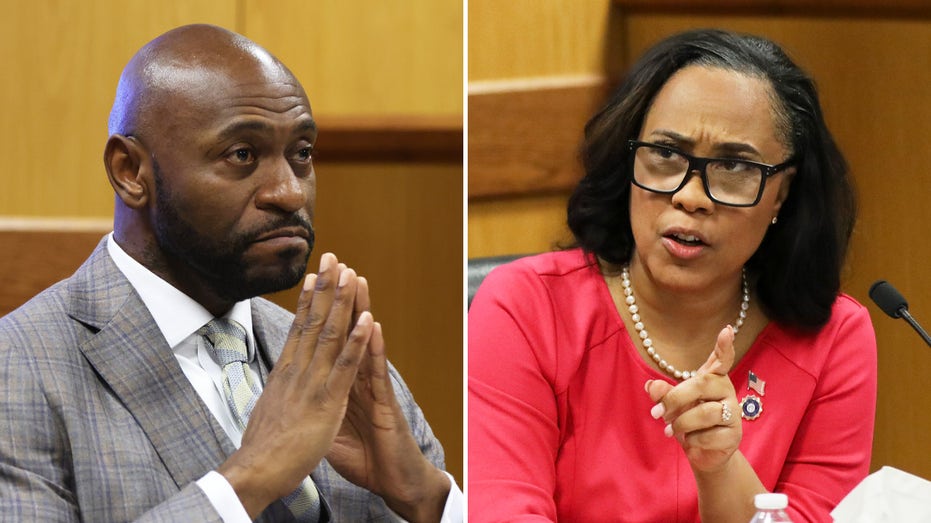
A co-defendant in the 2020 Georgia election interference case says a new witness is prepared to testify against Fani Willis should evidence be re-opened in her disqualification proceedings. David Shafer, a former Georgia Republican Party chairman, filed a notice of proposed testimony in Fulton County Superior Court announcing that Cindi Lee Yeager, a co-chief deputy district attorney for Cobb County, stands ready to appear as a witness, FOX 5 Atlanta reported. According to the filing, Yeager claims to have had “numerous” interactions with the defense’s star witness, Terrence Bradley, and can corroborate his claims that Willis began an affair with special prosecutor Nathan Wade years earlier than they both claimed. “Mr. Wade had definitively begun a romantic relationship with Ms. Willis during the time that Ms. Willis was running for District Attorney in 2019 through 2020,” a summary of Yeager’s proposed testimony states. TRUMP LAWYERS MAKE CLOSING ARGUMENTS IN DA FANI WILLIS ‘IMPROPER’ AFFAIR ALLEGATIONS: ‘IRREPARABLE STAIN’ The motion informs the court that Yeager contacted Shafer’s counsel after watching Bradley’s testimony. She told the attorneys about alleged in-person and other conversations she had with Bradley from August 2023 through January 2024, during which they discussed Willis and Wade. Bradley, Wade’s former law partner and divorce attorney, allegedly told Yeager that Willis and Wade initiated their romantic relationship shortly after meeting at the 2019 Municipal Court Continuing Legal Education Conference, and that it continued through 2020, while Willis campaigned for district attorney. Yeager alleges Bradley shared that he had “personal knowledge” of the affair and included details regarding the use of Robin Yeartie’s apartment and other meetings before November 2021, when Wade and Willis claim their relationship started. The Cobb County prosecutor also claims she overheard a September 2023 phone conversation between Willis and Bradley discussing an article about how much money Wade and his law firm had earned from working on the election interference case. FULTON COUNTY DA FANI WILLIS ACCUSED OF LYING ABOUT TIMING OF AFFAIR WITH TRUMP PROSECUTOR During this alleged conversation, which took place before Bradley was subpoenaed as a witness against Willis, Yeager claims she heard the district attorney tell Bradley, “They are coming after us. You don’t need to talk to them about anything about us.” The motion states Yeager agreed to come forward after seeing how Bradley’s testimony during Willis’ disqualification hearing did not match what he had purportedly told her. “Therefore, in the event that the Court re-opens the hearing to receive additional evidence, as requested by the State and Defendant former President Trump, Mr. Shafer requests that the defense be permitted to subpoena Ms. Yeager and present Ms. Yeager’s testimony relating to the matters set forth herein,” the motion states. It is unclear if Judge Scott McAfee will reopen evidence to allow Yeager’s testimony to be admitted. KEY WITNESS IN FANI WILLIS CASE TESTIFIES HE MAY HAVE LIED IN TEXTS ABOUT FRIENDS’ AFFAIR The judge heard closing arguments Friday on allegations that Willis benefited financially from her affair with Wade and should be disqualified from her case against former President Donald Trump. Willis and her office are leading the sweeping racketeering cases against the former president and 18 co-defendants. Several co-defendants, including Shafer and Michael Roman, earlier this year accused Willis of hiring Wade while they were romantically involved and that she benefited from his government salary through lavish vacations they took together. Willis and Wade have both denied the allegations and have claimed their romantic involvement started after Wade was hired in 2021. Willis claimed in court testimony that she would always reimburse Wade for her portion of their shared travels in cash. There are no receipts for those reimbursements, and one witness claimed their relationship started as early as 2019. Last month, Bradley testified under oath regarding what he knew about Willis and Wade’s personal relationship. He took the stand after McAfee determined Bradley could not claim attorney-client privilege. Bradley, when pressed under oath, said he could not recall several details and timelines about conversations he had with former client Wade about Wade’s romantic relationship with Willis. Bradley said he could not recall key details or specific information more than two dozen times in the roughly two-hour testimony in Fulton County Superior Court on Tuesday. He also said he had only ever discussed Wade’s relationship with Willis once with Wade. After hearing all the arguments and testimony, McAfee said he would issue a decision in the next two weeks. Fox News’ Brianna Herilhy contributed to this report.
Photos: Israel bombs mosque, hitting families sheltering nearby

Deir el-Balah, Gaza – At dawn on Saturday, Israeli aircraft bombed a mosque next to makeshift tents housing displaced people in the city of Deir el-Balah in the central Gaza Strip. The bombing resulted in the killing of a young woman and left 20 others injured. They were transferred to the city’s Al-Aqsa Martyrs Hospital. The 33-year-old woman, Walaa Saada, was known for her community and humanitarian efforts during the war. She was killed in her tent while she was sleeping next to her mother, Yosra Abu Saada, who was injured in the attack. “My daughter Walaa and I had dinner together before I went to bed.” Yosra told Al Jazeera. “Walaa stayed awake working on some lists of displaced people in need on her laptop.” Suddenly, Yosra woke up to piles of stones raining down on her from the bombing, while dust covered their surroundings and their tent collapsed on them. “I did not realise what was happening around me. I thought I was dreaming, but I controlled myself and started calling my daughter Walaa, but she did not answer.” “People and paramedics rushed to our aid. I was desperately calling out for Walaa until I saw her lifeless body lying on the ground, soaked in her own blood,” Yosra said while crying. In a nearby tent, 60-year-old Mahmoud Saadeh and his family were asleep before finding themselves thrown to the ground by the explosion. “I woke up and found myself far away [from our tent] with my family members. Everyone was screaming and the children were screaming,” Mahmoud says. “The mosque’s rubble had flattened our tents completely.” Suffering severe chest injuries, Mahmoud received limited medical attention at the hospital due to shortages of supplies and resources. “The medical staff were overwhelmed. Some nurses attended to us with what little they had. But resources were scarce, so we left.” “As you can see, our tents were completely burned and we lost all of our things that we fled with from one area to another. Now, we do not know where we will go.” The displaced in Deir el-Balah have come from all over Gaza, forced to flee under Israeli attack. The Gaza Health Ministry reports that more than 30,000 people have been killed in Israel’s war on Gaza, and international condemnation of Israel’s targeting of civilian areas has been growing as the war persists. Adblock test (Why?)
The Israelis who want a ceasefire in their country’s war on Gaza

West Jerusalem – “I don’t believe in this war and I don’t believe that the goals of this war can be achieved,” said 39-year-old Avital Suisa. “This war is pointless.” That blunt position is not typical for Israelis, but neither is Suisa. She’s an activist from West Jerusalem, and is a firm believer in the two-state solution, even as Israeli society drifts away from that position, and one-state apartheid rule becomes more entrenched on the ground. Suisa also regularly travels to the occupied West Bank, where she tries to discourage and even fend off settlers from attacking vulnerable Palestinian Bedouins. But while Suisa sits firmly on the left of Israeli politics, and is in a minority when it comes to her activism, calls for a ceasefire in Israel are increasing – for various different reasons. Some believe a ceasefire is the best way to save Israeli captives taken by Hamas, while others add that killing innocent people in Gaza jeopardises Israel’s security in the long run. Some only want a temporary pause, while others – like Suisa – want a permanent end to the fighting. Since an October 7 attack on Israel by Hamas’s Qassam Brigades and other Palestinian armed factions – in which 1,139 people were killed and nearly 250 taken captive – Israel has killed more than 30,600 people in Gaza, starving the civilian population and destroying more than 70 percent of the enclave. Israel’s stated aim has been to “eradicate Hamas”, but its scorched-earth tactics have deliberately and disproportionately killed civilians, including thousands of women and children. The atrocities have sparked outrage across the world and prompted United States and European officials to begin to push for a ceasefire, including US Vice President Kamala Harris, who called for a six-week pause in the fighting on March 4. But for Suisa, those calls for only a temporary pause don’t go far enough. “Of course, the fact that nearly 1,200 people died on October 7 – some in a brutal way – is terrible. But that does not justify killing [more than] 30,000 people in Gaza – many kids and women – who didn’t do anything to me,” Suisa told Al Jazeera. Captives exchange On Sunday, families of Israeli captives held by Hamas marched from southern Israel to downtown West Jerusalem, where they called for the immediate release of their loved ones. Many in the crowd told Al Jazeera they supported a ceasefire that would bring their loved ones home. “I understand it is not possible to bring back all the hostages [through military means]. The rational way is to bring them all back through a deal,” said Shay Bickmann, a 28-year-old Israeli medical student whose aunt was killed on October 7, and whose cousin was taken captive. She did not clarify whether she supported a temporary or a full ceasefire, but said she defers to the Israeli government’s judgement and that she realises it is “problematic to make a deal with a terror organisation”. Hamas is considered a “terrorist” organisation by Israel, the US and the European Union, but many Palestinians view the group as a legitimate resistance organisation. Despite her views on making a deal with Hamas, Bickmann added that she does not want revenge, but wants to live in peace with her neighbours. Shay Bickmann at a protest in downtown Jerusalem calling for the release of Israeli captives in Gaza. Her cousin was taken on October 7 and her aunt was killed [Mat Nashed/Al Jazeera] A temporary truce brokered in November led to the release of 110 Israeli captives in exchange for 240 Palestinian prisoners. Another captive exchange might give hope to countless Palestinians in the West Bank and Gaza, whose loved ones have been unlawfully arrested or disappeared by the Israeli army. According to Addameer, which monitors Palestinian detainees, Israel holds about 9,070 Palestinian political prisoners – a sharp increase from the 5,200 held before October 7. Many Palestinians – including children – were arrested and are being held in administrative detention without charge for expressing sympathy for Palestinians in Gaza or for waving a Palestinian flag. The number of detainees does not include the many Palestinians being held, interrogated and tortured in Israeli bases and makeshift detentions in Gaza, Addameer told Al Jazeera. Israel’s retaliatory violence against Palestinians in the occupied West Bank and Gaza has compelled some Israelis to call for a permanent ceasefire. “I think we need to get a ceasefire to start to promote a better place and region [for Palestinians and Israelis]. That would be a start,” said Naima, an Israeli who did not disclose her last name due to the polarising political climate in Israel. A return to normal Many Israelis also told Al Jazeera that they yearn for life to return to normal, although the effects on daily life in Israel have been marginal compared to the destruction of Gaza that has upended the lives of 2.3 million Palestinians. However, Israel’s economy has been impacted by Israel’s ongoing war in Gaza. Its construction sector has been hit hard, and both foreign and domestic tourism, which struggled to recover after the COVID-19 pandemic, have flatlined since October 7. Plia Kettner, 39, said most of the service industry, including her restaurant which caters to tourists, has taken a financial hit. “I hope we can recover once the war ends and tourists return,” she told Al Jazeera. Despite the financial woes, Kettner added, she believes that about half the population would prefer to continue an indefinite war on Gaza until Hamas is eradicated while the other half believes that negotiating a ceasefire to secure the release of Israeli captives is the foremost priority. However, experts and commentators have long argued that Hamas cannot be defeated in any demonstrable sense and that an all-out war on Gaza will not reinforce Israel’s security. Suisa said that in her view, Israel’s war on Gaza is generating so much suffering it will perpetuate another “cycle of violence”. “I do think that many people in
Meta’s Instagram, Facebook hit by widespread outages

Facebook users unable to sign in while Instagram users’ feeds not refreshed. Users of Meta’s Facebook and Instagram platforms have experienced login issues in what appears to be a widespread outage. The social media platforms were down for hundreds of thousands of users across the globe from about 15:00 GMT on Tuesday, but the sites appeared to be returning to normal about two hours later. “Earlier today, a technical issue caused people to have difficulty accessing some of our services,” Meta spokesperson Andy Stone said in a post on X, formerly Twitter. “We resolved the issue as quickly as possible for everyone who was impacted, and we apologize for any inconvenience,” he added. The issue peaked about 15:30 GMT with 500,000 reports of outages for Facebook and 70,000 reports for Instagram, according to the outage tracking website Downdetector.com. Threads, the rival to Twitter that Meta launched in 2023, also suffered reported outages although Meta’s messaging service WhatsApp appeared to be spared. Facebook suffered a similar outage in October 2021, which was attributed to technical issues. At the height of the incident on Tuesday, Facebook’s status page, intended for advertisers, said the site was suffering “major disruptions” and “engineering teams are actively looking to resolve the issue as quickly as possible.” Users trying to access Facebook were asked to log in but were unable to sign in using the correct password. On Instagram, the feeds of mobile users were not being refreshed. The outage was among the top trending topics on X with several users saying they had suddenly been logged out of the Meta-owned social media platforms. Adblock test (Why?)
T-Squared: The Texas Tribune is joining FRONTLINE’s Local Journalism Initiative

Through this partnership, we’ll analyze immigration and politics along the U.S.-Mexico border.
Federal agency asserts water rights in Georgia wildlife refuge as proposed mine nears approval

A federal agency is asserting legal rights to waters that feed the Okefenokee Swamp and its vast wildlife refuge, setting up a new battle with a mining company seeking permits to withdraw more than 1.4 million gallons daily for a project that critics say could irreparably harm one of America’s natural treasures. In a letter obtained by The Associated Press, the U.S. Fish and Wildlife Service tells Georgia state regulators that federal law prohibits diverting water from the Okefenokee National Wildlife Refuge in quantities that would harm its function as a protective habitat for native animal and plant species. “Disruption to the natural flow of groundwater in this interconnected system could have far-reaching consequences for both the Refuge and surrounding areas,” Mike Oetker, the federal agency’s acting Southeast regional director, wrote in a Jan. 31 letter to Georgia regulators. He added: “Any decision regarding the proposed mining permit must be made with consideration of federal reserved water rights.” US REGULATORS GRANT NATIVE AMERICAN TRIBES AUTHORITY TO BLOCK UNWANTED HYDOPOWER PROJECTS Twin Pines Minerals is on the cusp of obtaining permits it has sought since 2019 to mine titanium dioxide less than 3 miles from the southeastern boundary of the Okefenokee refuge, the largest U.S. refuge east of the Mississippi River. The Okefenokee refuge covers nearly 630 square miles in southeast Georgia and is home to more than 400 animal species including alligators and bald eagles. The swamp’s wildlife, cypress forests and flooded prairies draw roughly 600,000 visitors each year, according to the Fish and Wildlife Service, which manages the refuge. Scientists have warned that mining near the Okefenokee’s bowl-like rim could irreparably harm the swamp’s ability to hold water and increase the frequency of withering droughts. Interior Secretary Deb Haaland in 2022 declared the proposed mine poses an “unacceptable risk” to the fragile ecosystem at the Georgia-Florida line. Twin Pines has insisted its proposed 773-acre mine won’t harm the Okefenokee refuge. Regulators with the Georgia Environmental Protection Division have said their own analysis “concluded that water level in the swamp will be minimally impacted.” The Georgia agency issued draft permits for the mining project Feb. 9, starting a 60-day period for public comments before regulators work up final permits for the agency’s director to approve. While it’s unclear how much permits might be delayed by the Fish and Wildlife Service’s formal assertion of water rights, legal experts said Georgia regulators are legally obligated to work with the federal agency to ensure the Okefenokee keeps enough water to function as a wildlife refuge. Legal issues dealing with water consumption are generally left to the states. However, a U.S. Supreme Court ruling in 1908 established that public lands reserved by the federal government for Native American tribes, national parks and other purposes have rights to water that take precedence over other users. “This doctrine does not just give the Fish and Wildlife Service a seat at the table,” said Megan Huynh, an attorney for the Southern Environmental Law Center. “It legally entitles the Okefenokee to as much water as is necessary to support the primary purpose of the refuge and wilderness area.” While federal agencies commonly assert water rights for public lands in the West, where the arid climate makes water more scarce, they have rarely done so in the eastern U.S., said Ryan Rowberry, a Georgia State University law professor who has studied how federal reserved water rights protect public lands. “Now we’re moving into a different era,” Rowberry said. Growth in population, industry and awareness that climate change is getting worse have called into question the premise that “there’s enough water for everybody” in eastern states, he said. The move by the Fish and Wildlife Service seeks to reassert some level of federal oversight of Twin Pines’ proposed mine. Typically, the U.S. Army Corps of Engineers would also need to approve permits. But it lost that authority over the Georgia project in 2020 because of regulatory rollbacks under then-President Donald Trump. The Fish and Wildlife Service’s letter to the Georgia Environmental Protection Division asks for federal officials and state regulators to meet and “work together to quantify the amount of water” the Okefenokee refuge needs. The state agency has not yet responded. “Georgia EPD is reviewing the letter from U.S. Fish & Wildlife Service like all of the other comments being submitted” by the public on Twin Pines’ mining application, John Eunice, the state agency’s deputy director, said in an email Monday. He anticipated a response “once the public comment period has closed.” The groundwater use permit Twin Pines is seeking would allow an average daily withdrawal of 1.44 million gallons of water from the Floridan Aquifer to process mining debris and waste. The plan calls for removal of additional water that gushes into mining pits during excavation. Any discussions between federal officials, Georgia regulators and Twin Pines over the Okefenokee’s water needs and how much water the proposed mine would divert from the swamp could be contentious. Hydrologists for the National Park Service said last year that documents Georgia regulators relied upon to conclude the mine wouldn’t harm the refuge contained technical errors and “critical shortcomings” that made them unreliable. Regulators stood by their analysis.
Georgia candidates flood state Capitol to qualify for 2024 elections

Georgia’s 2024 elections kicked into high gear Monday with the start of qualifying for state and federal offices. Dozens of candidates from the Republican and Democratic parties streamed to the state Capitol to sign papers and pay their qualifying fees, while those running for nonpartisan posts and as independents lined up across the street to qualify with the secretary of state’s office. Candidates have until noon Friday to sign up. While the presidential contest will top Georgia’s November ballots, all 14 of the state’s congressional seats, plus its 56 state Senate seats and 180 state House seats are also up for grabs. Parties will decide their nominees in primaries on May 21, the same day Georgia will elect judges and other nonpartisan offices. Runoffs will be held on June 18 for any offices in which a candidate doesn’t win a majority on May 21. FULTON COUNTY, GA, STILL DEALING WITH DAMAGE LEFT BY JANUARY RANSOMWARE CYBERATTACK Because of court-ordered redistricting, all the members of Congress whose districts touch metro Atlanta have at least some new territory, as do many state Senate districts in metro Atlanta and state House districts in metro Atlanta and middle Georgia. A judge ruled those lines discriminated against Black voters, prompting another round of redistricting that is likely to preserve Republican majorities. Of the 13 congressional incumbents seeking reelection, 12 quickly qualified on Monday. They included all five Democratic U.S. representatives — the 2nd Congressional District’s Sanford Bishop, the 4th District’s Hank Johnson, the 5th District’s Nikema Williams, the 6th District’s Lucy McBath, and the 13th District’s David Scott. Also qualifying were seven of the eight Republican incumbents seeking election: the 1st District’s Buddy Carter, the 5th District’s Andrew Clyde, the 7th District’s Rich McCormick, the 8th District’s Austin Scott, the 11th District’s Barry Loudermilk, the 12th District’s Rick Allen and the 14th District’s Marjorie Taylor Greene. Georgia’s 2024 presidential election is likely to be close again. But because of how Republicans drew the congressional districts, none are expected to produce competitive races in November. That means primaries are likely to determine the winners. With Republican U.S. Rep. Drew Ferguson, who has represented western Georgia’s 3rd District for four terms, not running for re-election, GOP candidates are scrambling to replace him. Four qualified on Monday, including former state Sens. Mike Crane of Franklin and Mike Dugan of Carrollton, former state Rep. Philip Singleton of Sharpsburg, and former police officer and purchasing manager Jim Bennett of Bowdon. Others are expected to qualify in coming days. Singleton is touting his record as an outspoken conservative who nettled House leadership during his time in the state legislature and his work as McCormick’s congressional chief of staff. “Hopes and dreams don’t achieve anything in our form of government,” he said. “You have to, we have to do the work.” Dugan points to his military, business and legislative background. “It’s a job interview,” he said. “I’m asking the constituents of the 3rd District to hire me.” McBath is running in her third drastically different district in six years, covering parts of Cobb, Douglas, Fulton and Fayette counties. Republicans also targeted her former district when they redrew lines in 2021. She said she will continue to emphasize lowering drug prices, health care, worker training and gun control. “We keep having these discussions over and over again, but I’m happy to represent any constituent,” McBath said of her redrawn district. “I’m happy to continue to do the work. And I have decided as I have in every election, I will not let the extremist Republicans determine when my work in Congress is done. I will let the people decide.” Cobb County Commissioner Jerica Richardson and state Rep. Mandisha Thomas of South Fulton are running against McBath in the Democratic primary. Scott’s district is sharply different as well, now covering Rockdale County and parts of Clayton, Newton and Gwinnett counties. He’s seeking his 12th term in Congress after facing questions about his health. On Monday, Scott said he wanted to serve another term so he could bolster funding for historically Black agricultural colleges including Georgia’s Fort Valley State University, and to do more for housing assistance. “Thank God I’m in good health, moving and doing the people’s work,” Scott said. Marcus Flowers, who made an unsuccessful bid against Marjorie Taylor Greene in northwest Georgia’s 14th District, is running against Scott in the Democratic primary. Georgia will also have at least one contested state Supreme Court race. Justice Andrew Pinson, elevated by Republican Gov. Brian Kemp to the high court in 2022 from the state Court of Appeals, picked up a challenge from former Democratic U.S. Rep John Barrow. Judicial races are nonpartisan.
Federal appeals court stops DeSantis’ ‘Stop WOKE Act’ on constitutional grounds

A federal appeals court ruled on Monday against Florida’s Individual Freedom Act, a law signed by Republican Gov. Ron DeSantis that intended to block “woke” ideologies in the workplace and schools. A three-judge panel for the U.S. Court of Appeals for the 11th Circuit said the so-called “Stop the Wrongs to our Kids and Employees Act,” or “Stop WOKE Act,” which blocks businesses from teaching diversity programs and lessons, was unlawful and flew in the face of the U.S. Constitution as it was based on viewpoints the state government held. “The State of Florida seeks to bar employers from holding mandatory meetings for their employees if those meetings endorse viewpoints the state finds offensive. But meetings on those same topics are allowed if speakers endorse viewpoints the state agrees with, or at least does not object to,” wrote Judge Britt C. Grant, speaking on behalf of the three-judge panel. “This law, as Florida concedes, draws its distinctions based on viewpoint – the most pernicious of dividing lines under the First Amendment.” “We cannot agree, and we reject this latest attempt to control speech by recharacterizing it as conduct. Florida may be exactly right about the nature of the ideas it targets. Or it may not. Either way, the merits of these views will be decided in the clanging marketplace of ideas rather than a codebook or a courtroom.” Grant added: “The First Amendment keeps the government from putting its thumb on the scale.” DESANTIS SAYS FLORIDA WILL CUT FUNDING TO ALL CRT, DEI PROGRAMS: ‘WITHER ON THE VINE’ Grant, who was appointed by former President Trump, argued that regardless of any merit behind Florida’s law, how it was written actually violated the First Amendment. “Even if we presumed that the act served the interest of combating discrimination in some way, its breadth and scope would doom it,” Grant said. “Banning speech on a wide variety of political topics is bad; banning speech on a wide variety of political viewpoints is worse.” “Here, speech is not regulated incidentally as a means of restricting discriminatory conduct – restricting speech is the point of the law. That important distinction sets this Act apart from Title VII as an outright violation of the First Amendment,” the opinion continued. FEDERAL JUDGE HANDS DESANTIS ADMIN WIN OVER ‘STOP WOKE ACT’ A district court previously blocked its enforcement, prompting the initial appeal by the governor’s office. Fox News Digital reached out to DeSantis’ executive office but did not immediately receive a response. The act says employers cannot subject “any individual, as a condition of employment,” to “training, instruction, or any other required activity that espouses, promotes, advances, inculcates, or compels” certain beliefs about race, sex or other “diversity, equity, and inclusion” issues. The law called certain viewpoints on these issues “hostile speech” and said businesses or schools requiring employees or students to learn its content amounted to “invidious discrimination.” NYC FORCES ALL CITY EMPLOYEES TO UNDERGO RADICAL CRITICAL RACE THEORY TRAINING: ‘REALLY UNFAIR’ In addition, the law prohibits government-funded schools that aim to “indoctrinate or persuade students to a particular point of view inconsistent with” these principles. READ THE APPEALS COURT OPINION – APP USERS, CLICK HERE: “That many people find these views deeply troubling does not mean that by banning them Florida is targeting discrimination,” Monday’s opinion read. “By limiting its restrictions to a list of ideas designated as offensive, the Act targets speech based on its content. And by barring only speech that endorses any of those ideas, it penalizes certain viewpoints – the greatest First Amendment sin.” In addition to Grant, Judges Charles R. Wilson and Andrew L. Brasher ultimately determined that Florida’s law “contains an illegal per se ban on speech the state disagrees with.” Plaintiffs in the case – Honeyfund.com, Florida-based Ben & Jerry’s franchisee Primo Tampa, and Collective Concepts – argued the law’s mandatory-meeting provision violated their rights to free speech and described the law as particularly vague. In a statement posted online Monday, Primo Tampa called it a “victory for my freedom of speech.” “Today’s ruling is a victory for my freedom of speech and that of all other business owners, but it’s also a victory for the free market: businesses remain free to respond to guest and team member needs,” said Antonio McBroom, CEO of Primo Tampa. “The government obviously has no right to patrol my workplace for words that some politicians don’t like. And the government obviously has no right to substitute its preferences for those of any businesses’ guests and team members.” Protect Democracy, the group representing the plaintiffs, similarly said Monday’s ruling was “a major victory for free speech in the workplace.” “Speech codes have no place in American society, and elected officials have no business censoring the speech of business owners simply because they don’t agree with what’s being expressed,” Shalini Goel Agarwal, Protect Democracy counsel, said in a statement. And, “Barring employers from engaging in speech that powerful politicians don’t like is a move straight out of the authoritarian playbook. Today is a good day for the First Amendment and the ability of American businesses to speak freely.”
Sen Hawley wants Biden to hike tariffs on Chinese energy imports

FIRST ON FOX: Sen. Josh Hawley, R-Mo., wants President Biden to increase tariffs on any imported energy components from China, a week after he introduced another bill that would hike tariffs on Chinese electric vehicle imports. “President Biden’s climate agenda undermines U.S. energy independence and will make us more reliant on China,” Hawley told Fox News Digital in a statement. “We can’t afford energy policies that enrich our greatest adversary at the expense of American workers here at home. It’s time to declare our energy independence from China—and we can start by raising tariffs on China’s green energy sector.” Tariffs are taxes or duties imposed by a government on imported or exported goods. CHINA’S BELT AND ROAD INITIATIVE PLAGUED BY CORRUPTION AND POLITICAL BACKLASH: REPORT Hawley will introduce a new bill on Tuesday called the Declaring Our Energy Independence from China Act. It would require the president to apply additional tariffs on all battery components, solar energy components and wind energy components imported from China at a 25% rate. The president could increase the rate by 5% annually for the next five years, peaking at 50%, according to the bill. Since former President Trump’s term, the average U.S. tariffs on Chinese imports remain at approximately 19.3%, according to an estimate from the nonprofit research group Peterson Institute for International Economics. FBI TO EXAMINE POSSIBLE DEBRIS OF CHINESE SPY CRAFT FOUND BY ALASKAN FISHERMEN The bill would also require a report on subsidies China provided to its battery, solar and wind energy sectors over the past 15 years, including direct fund transfers, tax breaks and preferential access to resources. Last year, Biden halted tariffs on solar imports for two years. A bipartisan Congressional Review Act resolution was passed to end the pause, but the president vetoed it. Biden also introduced mandates to transition American manufacturers and workers toward electric vehicles (EVs), targeting two-thirds of all U.S. automobiles to be EVs by 2032. US AMBASSADOR TO CHINA DOESN’T ‘FEEL OPTIMISTIC’ ABOUT FUTURE RELATIONS BETWEEN COUNTRIES According to a U.S. Department of Defense report last summer, China controls most renewable energy equipment production and material supply chains. Hawley is not the only one concerned about China dominating the U.S. energy industry. In January, a group of bipartisan senators sent a letter to Biden urging him to increase tariffs on Chinese imported solar panels. “By 2026, China will have enough capacity to meet annual global demand for the next ten years,” Sens. Marco Rubio, R-Fla., Jon Osoff, D-Ga., Raphael Warnock, D-Ga., and Sherrod Brown, D-Ohio wrote. “This capacity is an existential threat to the U.S. solar industry and American energy security.” Last week, Hawley proposed a bill to boost the current 2.5% tariff on vehicles to 100%, effectively increasing the overall tariff on all Chinese automobile imports from 27.5% to 125%. Fox News Digital reached out to the White House for comment on Hawley’s bill.