

Ohio GOP Senate candidate touts key pro-2A group’s endorsement: ‘Only candidate’ voters ‘can trust’ on guns

Ohio Secretary of State Frank LaRose, currently in the middle of a contentious Republican Senate primary race, is touting a key endorsement from a prominent pro-Second Amendment group in the state and making the case that he is the strongest candidate when it comes to gun rights. “I have stood up to fight for gun rights when it’s hard,” LaRose told Fox News Digital. “It’s easy to say you’re a pro-gun conservative on the campaign trail. Everybody’s going to say that. But when you’re actually standing up on the Senate floor to cast a vote and people in the gallery are yelling terrible things about you, and you still do the right thing, that demonstrates who you are.” LaRose was recently endorsed in the race by the Buckeye Firearms Association, the largest grassroots pro-Second Amendment group in the state, and told Fox News Digital he believes his record on guns tops the other Republicans in the field, businessman Bernie Moreno and state Sen. Matt Dolan. “Four years ago, Mr. Moreno recorded a video mocking gun owners and saying, you know, ‘Who needed 100 bullets to shoot a deer?’ Which is a profound misunderstanding of what the Second Amendment is actually for. When he says that you should be able to classify guns like you rank, like you rate movies, kind of makes this bizarre comparison to pornography and says, guns should be rated PG, R and not R, He’s really mirroring some long-standing leftist talking points on gun control.” GOP SENATOR ENDORSES TRUMP-BACKED OHIO SENATE CANDIDATE TO FACE VULNERABLE DEMOCRAT LaRose was referring to a 2019 interview, that his campaign has posted on social media, comparing it to messaging from Democrats, where Moreno said he doesn’t believe in taking guns away but questioned why someone needs “100 bullets at time” and asked how “you are going to eat a deer that has 100 bullets in it?” LaRose also questioned Moreno’s six-year tenure as a board member of a Cleveland Foundation that gave money to a Michael Bloomberg-linked anti-gun group, suggesting that Moreno should have resigned in protest when the foundation gave money to liberal causes. GOP SENATE CANDIDATE IN BATTLEGROUND STATE RAILS AGAINST VULNERABLE DEM INCUMBENT: ‘OUT OF TOUCH’ “I think he was showing us who he really is,” LaRose said. “I think that a lot of the other groups recognize that that’s not genuine. That’s why folks like Buckeye Firearms are endorsing me and no one else for the race.” Moreno told Fox News Digital that he is a lifetime member of the NRA, received the highest rating a non-incumbent can receive from BFA, criticized LaRose for supporting No Labels in the past, and said it is “stupid” and “desperate” to imply that he was mocking gun owners in the 2019 interview, which he called an attempt to “fool” Ohio voters. “The reality is I was born in Colombia, South America,” Moreno, who has been endorsed by former President Donald Trump, said. “I understand exactly why we have a Second Amendment. That’s not confusing to me. It’s to protect from the tyranny of government and what we’ve seen over the last three years, especially with COVID, government overreach is exactly what happens when you have a population that’s not armed.” “From my point of view, I look at my wife, we have guns in the car, guns that we carry on ourselves because we get death threats and all kinds of lunatics. So a gun that has 100 bullets, I look at it as 100 chances for my wife to survive. So I completely understand it. Frank’s trying to take something that was said obviously in jest in a podcast years and years and years ago where I wasn’t in public office, I wasn’t somebody making public policy.” LaRose also criticized Dolan for his previous support of a “red flag” law in the state. “Dolan is well known as an anti-gun guy,” LaRose told Fox News Digital. “He literally sponsored the red flag law in Ohio. He wrote it and introduced it, I think twice, that would allow firearms confiscation. This was a bill that was so liberal that, of course, it didn’t go anywhere in our state legislature. But when it comes to gun rights, both of my opponents have shown themselves to be weak on this issue, and I’ve demonstrated the opposite.” In a statement to Fox News Digital, Dolan campaign spokesperson Brad Miller defended Dolan’s record on gun rights. “Matt Dolan has a strong Second Amendment record, including supporting the Castle Doctrine, concealed carry, and constitutional carry,” Miller said. “Matt stands with law enforcement fighting to keep suicidal and homicidal individuals from purchasing a gun and enhancing straw purchase laws to keep guns out of criminal hands. Frank LaRose can explain to Ohioans why he thinks those individuals who want to harm fellow citizens should be able to purchase a gun.” LaRose told Fox News Digital that gun rights are a key issue in the Buckeye State, where hunting, freedom and being self-sufficient are important to voters. “We’re a state with people that don’t want to simply rely, although we support law enforcement and we’re all about protecting our men and women in blue, we want to be able to take care of protecting our families ourselves,” LaRose explained. “Because maybe sometimes, you live a long way from the police station, and if you are in jeopardy or your family’s in jeopardy, you believe in being able to protect yourself and these are all values that Ohioans hold dear, and it’s not just an urban or rural issue.” Polling in late January by Emerson College suggested all three candidates are essentially tied. Polling released by the Moreno campaign this week showed him holding a 10-point lead but also showed that 27% of voters are undecided with just a couple weeks left before the primary. Ohioans will decide on Tuesday, March 19, which candidate will become the GOP nominee to square off against incumbent Democratic Sen. Sherrod Brown
Contentious election in Austin, Texas, matches Soros-backed DA against Dem challenger calling for ‘change’

Voters are heading to the polls in Austin, Texas, on Tuesday to weigh in on a primary race between the county’s George Soros-backed progressive District Attorney Jose Garza and his Democrat challenger Jeremy Sylestine, in a race where public safety and crime have been at the forefront. Garza, who took office in deep blue Travis County in 2021 after a campaign backed by progressive billionaire Soros, pledging to “reimagine” criminal justice and prosecute police officers, has defended his record as district attorney saying that he is “doing exactly what Travis County voters elected him to do, fixing our broken criminal justice system by standing with survivors, working to end the excessive use of force by police, and prioritizing treatment over incarceration for nonviolent drug offenses.” Garza’s critics, including Sylestine, who previously worked in Garza’s office before starting his own practice, have made the argument that Garza’s office has not advocated for victims of crime and has promoted policies that make the city less safe. “It seems like every day, there’s a new story that comes out where someone has been left holding the bag and disrespected by the DA’s office,” Sylestine told Fox News Digital last month. “I know from being a prosecutor that there are tough decisions you have to make, but the cases that I’m seeing in terms of domestic violence and sexual assault are just very incongruent with what my experience was and what I want to do is return that power to the victim because the system isn’t designed to protect their rights.” ‘STUNNED’ MOTHER OF DEPUTY KILLED BY MOTORIST BLASTS SOROS DA FOR NOT PURSUING CHARGES: ‘UNCONSCIONABLE’ Fox News Digital has spoken to numerous family members of crime victims in Austin who have all expressed similar sentiments that Garza’s office has put their wishes on the “back burner” in order to pursue a political agenda that does not align with strong prison sentences. Several of those family members held a press conference on Monday, including Conny Branham, whose son Christopher was murdered in 2020 in a mob-style attack in a case where the Branham family says Garza ignored their wishes at every turn as he negotiated plea deals with the suspects. “We had no say in anything,” Branham said. “We don’t matter to him.” AUSTIN’S SOROS-BACKED DA BLASTED AFTER MAN CHARGED WITH 7TH DUI, KILLING 2 PEOPLE RELEASED ON BOND “Our heart breaks for them and for their loss, and we work hard every single day with law enforcement to win justice for those families,” Garza said earlier in the day. Additionally, Garza has been under fire for the backlog of cases in his office, his claims that he has a higher conviction rate than his predecessor, which was contradicted by a recent KXAN-TV report, and high profile examples of his office letting violent criminals facing serious charges out of jail while certain crimes have surged. “DA José Garza might spin crime statistics for political purposes, but Travis County residents know better,” Sylestine recently told CBS Austin. “The reality is under Garza’s leadership, our communities have experienced a significant rise in violent crime – especially homicide, aggravated assault, and motor vehicle theft.” SOROS-BACKED DA CUTS DEAL GIVING NO JAIL TIME TO ‘WASTED’ BUS DRIVER WHO KILLED CYCLIST IN CRASH Garza has also faced scrutiny for his aggressive prosecution of police officers in a climate where the relationship between city officials and the police department was already fractured from the city council’s move to defund the police in 2020. That tense relationship came to a head last year, when Garza sparked outrage for showing up at the funeral of a fallen police officer in what some called a “slap in the face.” AUSTIN CRIME VICTIM’S MOTHER RIPS CITY COUNCIL ‘COWARDS’ FOR DEFUNDING POLICE, TURNING CITIZENS INTO ‘TARGETS’ Sylestine, who calls himself a “proud Democrat” and a “progressive,” says he intends to improve the relationship with the police department. “I grew up as a prosecutor and as a young lawyer in the system, so a lot of the officers and detectives that were making up my cases when I was a younger lawyer are now in commanding positions,” Sylestine said. “So in terms of the relationship that I have, those men and women of the force, they know my brand and they know that I’m not an APD or law enforcement apologist either. If there’s something that’s been done wrong, they know that Jeremy Sylestine will hold them accountable. But they also know that it takes good communication and trust to make those relationships work and right now, that’s fractured, and it doesn’t have to be.” Sylestine continued, “Mr. Garza came in and had a political bullseye painted right on the chart on the backs of APD officers. They advertised for prosecutors who wanted to come in specifically to do that and if we did that with any other group, there would be an uproar over what sort of fixed mindset we were having, coming into our cases.” Sylestine has raised significantly more money than Garza, which the Garza campaign has blamed on Republicans crossing over into the Democratic primary and pushing a message with “false Republican talking points.” “I think what you’re seeing in my campaign is not any sort of Republican or GOP or right-leaning message,” Sylestine told KUT News. “I’m really throwing right down the middle here. This is a campaign about criminal justice and what it means to people — and having someone in the office who’s going to do the job.” The winner of Tuesday’s primary will move on to the November general election against Republican Daniel Betts. Polls in Travis County open at 7 a.m. and close at 7 p.m.
Competitive North Carolina gubernatorial primary kicks off as Gov. Cooper reaches term limit
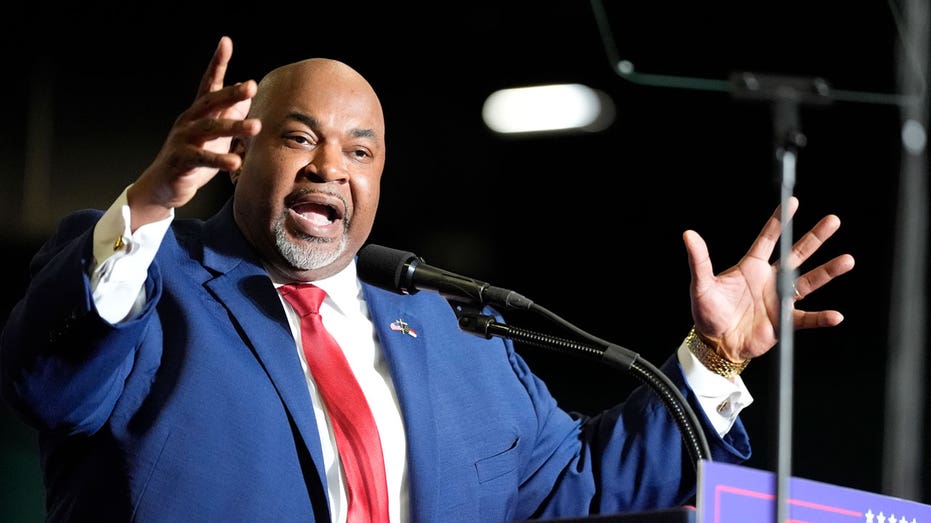
North Carolina primary voters were choosing potential successors to term-limited Gov. Roy Cooper on Tuesday, with the Democratic attorney general and the Republican lieutenant governor among those seeking to advance to what is expected to be an expensive and competitive fall campaign. Five Democrats and three Republicans were competing for their parties’ gubernatorial nominations in the nation’s ninth-largest state, which is also a likely presidential battleground this year. Lt. Gov. Mark Robinson, State Treasurer Dale Folwell and trial attorney Bill Graham are seeking the GOP nomination. The Democratic field includes Attorney General Josh Stein — who received Cooper’s endorsement — former state Supreme Court Justice Mike Morgan and three others candidates who’ve spent very little. DOZENS OF NORTH CAROLINA REPUBLICANS COMPETE FOR CONGRESSIONAL SEATS Robinson, who would be the state’s first Black governor, formally received Donald Trump’s endorsement over the weekend at a rally. Trump called him “Martin Luther King on steroids,” comparing his speaking abilities to those of the late civil rights leader. But Robinson’s harsh comments on LGBTQ+ rights and other issues are seen as a liability by Democrats and some Republican opponents. North Carolina is poised to be one of the most competitive states this fall as President Joe Biden and Trump appear headed toward a likely rematch. The governor’s race could have implications for the presidential contest if Democrats can tap into controversies surrounding Trump and Robinson to portray the Republicans as out of step with the state’s urban areas and with unaffiliated voters, who are now the state’s largest voting group. Cooper, a Democrat first elected governor in 2016, has continued a long run of Democratic dominance in the governor’s mansion in a Southern state that otherwise has shifted rightward. The GOP has won only one gubernatorial race since 1992. A general election victory by a Republican would essentially neuter veto power that Cooper has used a record number of times to block additional abortion restrictions, stricter requirements for voters and other policies backed by conservatives. GOP legislators have been able to override many of Cooper’s vetoes, however. Robinson, who has a working-class background, is a favorite of the party’s GOP base. While he raised more money overall than primary rivals, Folwell and Graham have used personal funds towards late-campaign media buys. They’ve questioned Robinson’s general-election electability, particularly in light of his rhetoric while lieutenant governor and for comments he made on social media before entering politics. Stein, the son of a civil rights lawyer, is by far the largest fundraiser in the race. His campaign committee collected over $19.1 million and had $12.7 million in cash in mid-February, according to the most recent campaign report summaries filed. Stein, who would be the state’s first Jewish governor if elected, would largely seek to continue Cooper’s agenda to increase public education funding and promote clean energy industries while acting as a bulwark against what Democrats consider to be extreme GOP policies. The former state legislator was narrowly elected attorney general in 2016 and has focused recently on protecting citizens from polluters, illegal drugs and high electric bills. Robinson, who is already the state’s first Black lieutenant governor, has dismissed conventional climate change as “junk science,” and has fought teachers who he says have assigned inappropriate reading materials on racism and sexuality to young pupils. Robinson has said making education leaders accountable and teaching students the basics are among his policy goals if elected. Before Tuesday, over 690,000 people had cast early in-person and mail-in ballots in North Carolina, where voters also were choosing nominees for other statewide executive and appellate court positions.
Alabama Republicans to choose chief justice nominee following controversial frozen embryo ruling
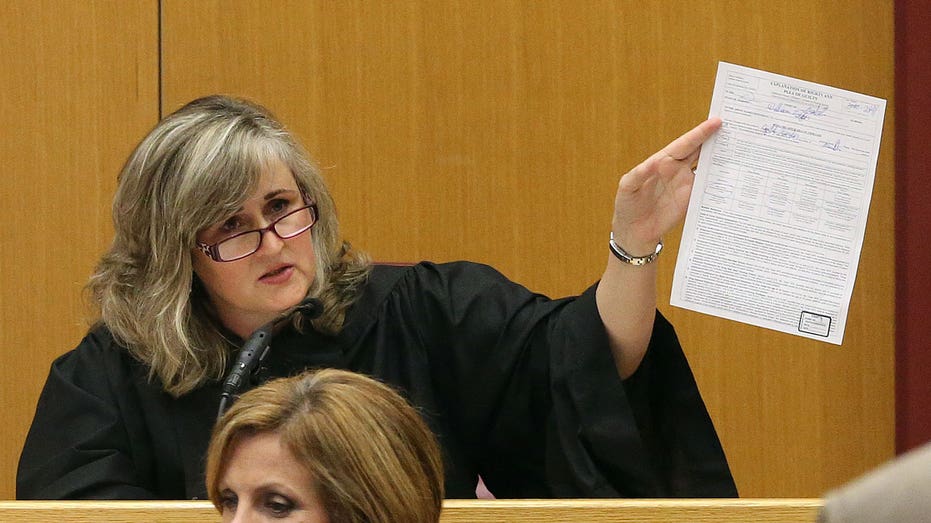
Alabama Republicans will choose who they want to replace the retiring chief justice of the state Supreme Court, which last month drew national attention for its decision to recognize frozen embryos as children. The ruling has raised concerns about civil liabilities for fertility clinics, and three major providers announced a pause on in vitro fertilization services. Competing for the GOP nomination are Sarah Stewart, a current associate justice on the Alabama Supreme Court, and Bryan Taylor, a former state senator and legal adviser to two governors. The winner will face Circuit Judge Greg Griffin, a Democrat from Montgomery, in November. Griffin is unopposed in the Democratic primary. ALABAMA HOUSE, SENATE PASS PROTECTIONS FOR IVF AFTER COURT RULING Chief Justice Tom Parker cited verses from the Bible and Christian theologians in his concurring opinion, alarming advocates for church-state separation while delighting religious conservatives who oppose abortion. Parker cannot run again because Alabama law prohibits judges from being elected or appointed after age 70. The Alabama chief justice serves on the state’s highest court, and also serves as the administrative head of the state court system. Stewart was elected to the Supreme Court in 2018 after serving 13 years as a circuit court judge in Mobile. She was part of a Supreme Court majority that issued the ruling in a pair of wrongful death cases brought by three couples who had frozen embryos destroyed in an accident at a fertility clinic. The justices ruled that the couples could purse lawsuits for the wrongful death of a child. Stewart signed on to a concurring opinion written by Associate Justice Greg Shaw that the wrongful death law covers “an unborn child with no distinction between in vitro or in utero.” Taylor is a former military prosecutor, state senator, Iraq War veteran and had served as chief legal advisor to Gov. Kay Ivey and an adviser and policy director for Gov. Bob Riley. During his time in the Alabama Legislature, he was best known for authoring the revamp of the state’s ethics law that was later used to prosecute former House Speaker Mike Hubbard.
As AI’s influence grows, lawmakers struggle to keep up

While artificial intelligence made headlines with ChatGPT, behind the scenes, the technology has quietly pervaded everyday life — screening job resumes, rental apartment applications, and even determining medical care in some cases. While a number of AI systems have been found to discriminate, tipping the scales in favor of certain races, genders or incomes, there’s scant government oversight. Lawmakers in at least seven states are taking big legislative swings to regulate bias in artificial intelligence, filling a void left by Congress’ inaction. These proposals are some of the first steps in a decades-long discussion over balancing the benefits of this nebulous new technology with the widely documented risks. AI’S BIGGEST IMPACT: WHICH SECTORS HAVE BENEFITED MOST AS JOB SECURITY REMAINS A VITAL CONCERN “AI does in fact affect every part of your life whether you know it or not,” said Suresh Venkatasubramanian, a Brown University professor who co-authored the White House’s Blueprint for an AI Bill of Rights. “Now, you wouldn’t care if they all worked fine. But they don’t.” Success or failure will depend on lawmakers working through complex problems while negotiating with an industry worth hundreds of billions of dollars and growing at a speed best measured in lightyears. Last year, only about a dozen of the nearly 200 AI-related bills introduced in statehouses were passed into law, according to BSA The Software Alliance, which advocates on behalf of software companies. Those bills, along with the over 400 AI-related bills being debated this year, were largely aimed at regulating smaller slices of AI. That includes nearly 200 targeting deepfakes, including proposals to bar pornographic deepfakes, like those of Taylor Swift that flooded social media. Others are trying to rein in chatbots, such as ChatGPT, to ensure they don’t cough up instructions to make a bomb, for example. Those are separate from the seven state bills that would apply across industries to regulate AI discrimination — one of the technology’s most perverse and complex problems — being debated from California to Connecticut. Those who study AI’s penchant to discriminate say states are already behind in establishing guardrails. The use of AI to make consequential decisions — what the bills call “automated decision tools” — is pervasive but largely hidden. It’s estimated as many as 83% of employers use algorithms to help in hiring; that’s 99% for Fortune 500 companies, according to the Equal Employment Opportunity Commission. Yet the majority of Americans are unaware that these tools are being used, polling from Pew Research shows, let alone whether the systems are biased. An AI can learn bias through the data it’s trained on, typically historical data that can hold a Trojan Horse of past discrimination. Amazon scuttled its hiring algorithm project after it was found to favor male applicants nearly a decade ago. The AI was trained to assess new resumes by learning from past resumes — largely male applicants. While the algorithm didn’t know the applicants’ genders, it still downgraded resumes with the word “women’s” or that listed women’s colleges, in part because they were not represented in the historical data it learned from. “If you are letting the AI learn from decisions that existing managers have historically made, and if those decisions have historically favored some people and disfavored others, then that’s what the technology will learn,” said Christine Webber, the attorney in a class-action lawsuit alleging that an AI system scoring rental applicants discriminated against those who were Black or Hispanic. Court documents describe one of the lawsuit’s plaintiffs, Mary Louis, a Black woman, applied to rent an apartment in Massachusetts and received a cryptic response: “The third-party service we utilize to screen all prospective tenants has denied your tenancy.” When Louis submitted two landlord references to show she’d paid rent early or on time for 16 years, court records say, she received another reply: “Unfortunately, we do not accept appeals and cannot override the outcome of the Tenant Screening.” That lack of transparency and accountability is, in part, what the bills are targeting, following the lead of California’s failed proposal last year — the first comprehensive attempt at regulating AI bias in the private sector. Under the bills, companies using these automated decision tools would have to do “impact assessments,” including descriptions of how AI figures into a decision, the data collected and an analysis of the risks of discrimination, along with an explanation of the company’s safeguards. Depending on the bill, those assessments would be submitted to the state or regulators could request them. Some of the bills would also require companies to tell customers that an AI will be used in making a decision, and allow them to opt out, with certain caveats. Craig Albright, senior vice president of U.S. government relations at BSA, the industry lobbying group, said its members are generally in favor of some steps being proposed, such as impact assessments. “The technology moves faster than the law, but there are actually benefits for the law catching up. Because then (companies) understand what their responsibilities are, consumers can have greater trust in the technology,” Albright said. But it’s been a lackluster start for legislation. A bill in Washington state has already floundered in committee, and a California proposal introduced in 2023, which many of the current proposals are modeled off of, also died. California Assembly member Rebecca Bauer-Kahan has revamped her legislation that failed last year with the support of some tech companies, such as Workday and Microsoft, after dropping a requirement that companies routinely submit their impact assessments. Other states where bills are, or are expected to be, introduced are Colorado, Rhode Island, Illinois, Connecticut, Virginia and Vermont. While these bills are a step in the right direction, said Venkatasubramanian of Brown University, the impact assessments and their ability to catch bias remain vague. Without greater access to the reports — which many of the bills limit — it’s also hard to know whether a person has been discriminated against by an AI. A more intensive but accurate way
Progressive LA County DA Gascon faces 11 primary challengers amid uproar over crime
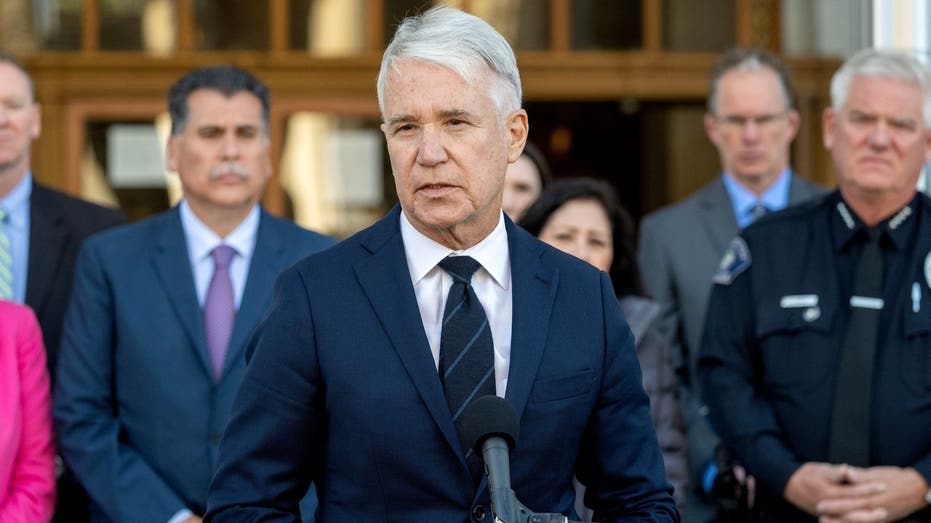
One of the nation’s most progressive district attorneys is facing almost a dozen challengers in his Tuesday bid for re-election. Los Angeles District Attorney George Gascón is facing 11 opponents in the nonpartisan primary, including prosecutors from his own office seeking to replace him. Local prosecutors Jonathan Hatami and Eric Siddall have thrown their hats into the ring against Gascón, as well as former federal prosecutors Jeff Chemerinsky and Nathan Hochman. A candidate must receive 50% of the vote or more to win the primary outright – an unlikely outcome with 11 individuals up for consideration. Without a clear victory, the election will go to a runoff in November between the top two candidates. HUSBAND OF AMERICAN KILLED BY MEXICO CARTEL SAYS THEY FLED LOS ANGELES OVER CRIME Gascón is facing criticism from all sides with accusations of disregard for public safety and an unwillingness to crack down on rampant crime. Critics point to state laws, local ordinances and law enforcement’s alleged unwillingness to follow through on cases as key obstacles to restoring law and order in the city. AS LOS ANGELES COUNTRY ZERO BAIL RULES GO INTO EFFECT, PROSECUTOR CALLS IT ‘INVITATION’ TO COMMIT MORE CRIMES Due to Proposition 57, approved by the voters of California in 2016, every minor convicted in adult court must receive an additional transfer hearing in juvenile court to determine if the individual should be tried as an adult. In many cases, however, Gascón’s office chose not to participate in transfer hearings and the inmate would be released. Last year, zero-dollar bail guidelines took effect in Los Angeles County and allowed suspected offenders to be freely released for a range of crimes, including some types of theft, assaults and vandalism, among other offenses. Los Angeles County faces an uptick in brazen smash-and-grab crimes impacting retailers amid criticism that these allegedly soft-on-crime policies are to blame for the region’s crime woes. Prior to his role as district attorney, Gascón served as the district attorney of San Francisco and the chief of the San Francisco Police Department. As a former police officer, he also served as the LAPD assistant chief and the chief of police in Mesa, California. Fox News’ Nikolas Lanum and Louis Casiano contributed to this report.
Utah bill encouraging teachers to get firearms training, carry on campus passes legislature

A new bill in Utah that aims to encourage teachers to carry guns on campus by providing a tactical training program for educators passed in the state legislature last week. Utah’s House Bill 119 would establish the “Educator-Protector Program,” which would include state-funded training to incentivize teachers to responsibly secure or carry a firearm on school grounds. Under the measure, teachers who hold a valid concealed carry permit can participate for free in an annual program training them to defend their classrooms against active threats and to safely store, carry, load and unload firearms in a school setting. Participating teachers would be expected to attend the free training course on an annual basis. FLORIDA HOUSE PASSES BILL TO LOWER MINIMUM AGE TO BUY A FIREARM Instructors appointed by county sheriffs would lead the training, which, according to the bill, would cost the Department of Public Safety about $100,000 annually. The bill has divided Utah residents. Clark Aposhian, a member of the Utah Shooting Sports Council, told FOX13 Salt Lake City that the bill is “a logical next step” since those with concealed carry permits in Utah can already carry firearms in schools. “But what this does is incentivizes additional very specific classroom type training for defense of a classroom,” Aposhian said, adding that teachers are the “first engagers” during a school shooting. Brian Peterson, a sixth-grade teacher at Lake Ridge Elementary School in Magna, told The Associated Press that the training would be “invaluable.” “Knowing how to defend your classroom, whether it’s with a weapon or improvised weapon, is what teachers need,” he said. Challengers to the bill, however, maintain that having more guns on school campuses could create a greater danger for students. “Expecting teachers to make split-second decisions in high-stress situations may inadvertently blur the lines between core responsibilities and the burden of safeguarding students,” emergency nurse Jade Christensen told FOX13 Salt Lake City. GEORGIA HOUSE ADVANCES GUN SAFETY TRAINING TAX CREDIT, BAN ON GUN STORE MERCHANT CATEGORY CODE Stan Holmes, a U.S. Army veteran with 30 years of teaching experience in Utah’s public schools, told news outlets that the similar training he took years ago was a “joke,” and that it failed to convince him that “everyone could handle themselves in a crisis situation.” Participating teachers who choose not to carry a gun on their person would be required to pay out of pocket for a biometric gun safe, which uses unique biological data such as a fingerprint or retinal scan to verify the owner’s identity. The bill also states that teachers who participate will be protected from civil liability if they use the gun on campus while “acting in good faith” and without gross negligence. School districts will also be shielded from liability if a participating teacher fires their weapon on school grounds. The bill will go into effect on May 1 if Republican Gov. Spencer Cox signs it into law. The Associated Press contributed to this report.
Palestinians seeking aid attacked by Israeli forces again

NewsFeed Israeli forces have once again opened fire on desperate Palestinians seeking aid from a supply convoy entering Gazy City. This is the second such attack since last Thursday’s ‘flour massacre’ which killed at least 117 people. Published On 5 Mar 20245 Mar 2024 Adblock test (Why?)
Turkey detains 7 suspected of spying for Israel

Suspects allegedly collected data on individuals and companies in Turkey and sold it to Mossad. Turkish police have detained seven people suspected of selling information to the Israeli spy agency Mossad. The suspects were taken into custody on Tuesday during simultaneous raids in Istanbul, Interior Minister Ali Yerlikaya said on X. The detentions are the latest in a wave of such arrests in Turkey. The detainees are suspected of collecting data on individuals and companies in Turkey and selling it to the Israeli intelligence agency, Yerlikaya said. The raids were a joint operation with Turkey’s National Intelligence Organization (MIT). “We will never allow espionage activities to be carried out within the borders of our country. We will catch them one by one and bring them to justice,” Yerlikaya insisted. A video released by the Minister of the Interior showed police raiding homes in Istanbul and apparently seizing guns, drugs and electronic devices. It was not immediately known if any charges had been issued and the authorities provided no additional information. Israel did not immediately comment on the operation. Wave of arrests Last month, seven other people were arrested on similar grounds, while in early January, 34 people were detained by Turkish police on suspicion of spying for Israel. The suspects arrested in January have been accused of planning to carry out activities including reconnaissance and “pursuing, assaulting and kidnapping” foreign nationals living in Turkey. At the time, Justice Minister Yilmaz Tunc said most of the suspects were charged with committing “political or military espionage” on behalf of Israeli intelligence. The state-run Anadolu Agency, citing unnamed security officials, said those detained on Tuesday included a former civil servant currently working as a private detective, who was allegedly trained by Mossad in Belgrade, Serbia. He reportedly collected information on Middle Eastern companies and individuals, and placed tracking devices in vehicles of people targeted by Israeli intelligence. He received payments in cryptocurrency that did not appear in official records, MIT said. Following years of tension, Turkey and Israel normalised ties in 2022 and reappointed ambassadors. However, the resumed quickly deteriorated with the start of the Israel-Hamas war, with Ankara one of the strongest critics of Tel Aviv’s military campaign in Gaza. In December, the head of Israel’s Shin Bet security agency said that his organisation was prepared to target the Hamas group anywhere, including in Lebanon, Turkey and Qatar. Turkey’s President Recep Tayyip Erdogan quickly warned of “serious consequences” should Israel target anyone on Turkish soil. Adblock test (Why?)
UNRWA photographer recounts Israeli killing of his daughter

NewsFeed ‘I relive it every single day.’ A Palestinian father and UNRWA photographer returns to the place where Israeli forces killed his four-year-old daughter while following evacuation orders to flee to south Gaza. Published On 5 Mar 20245 Mar 2024 Adblock test (Why?)