

No immunity for MP or MLAs for taking bribes: Supreme Court

The top court held that corruption and bribery by legislators destroy the functioning of Indian Parliamentary democracy.
Delhi Budget 2024: CM Kejriwal government all set to present ‘Ram Rajya’ budget today

The AAP government’s budget has “Ram Rajya” as its theme, according to reports. Atishi, the finance minister for the Delhi government, arrived at the Assembly on Monday to present the budget for the 2024-2025 fiscal year.
Japan’s Nikkei stock index passes 40,000 for first time amid AI fanfare

Nikkei 225 gains as much as 1 percent after last month beating 1989 record. Japan’s benchmark stock market index has smashed the 40,000 mark for the first time, continuing its comeback after decades of stagnation. The Nikkei 225 gained 1 percent to 40,308.85 during morning trading on Monday, as investors took an upbeat view of Japanese firms following gains on Wall Street. Tech shares including Tokyo Electron and Advantest were among the biggest gainers. Japanese stocks have become some of the hottest buys over the past year as foreign investors take advantage of the cheap yen and corporate governance reforms that have boosted shareholder returns. The Nikkei rose by more than 28 percent in 2023, beating the S&P 500 in a bumper year for the US stock market. Last month, the benchmark index surpassed its 1989 record of 38,915.8, set as Japan’s economy was on the precipice of an asset crash that kicked off several “lost decades” of economic stagnation. The Japanese stock market’s reviving fortunes come amid a sustained rally in US shares fuelled by excitement surrounding advances in artificial intelligence. US tech companies have soared in value in recent months, with chipmaker Nvidia’s market capitalisation on Friday surpassing $2 trillion. Japan’s overall economy has not matched the fortunes of its stock market, with structural challenges, including a shrinking population and rigid labour force, weighing on growth. Japan’s economy last month officially entered recession, giving up its spot as the world’s third-largest economy to Germany. Adblock test (Why?)
Australia gives $41mn to ASEAN countries for ‘free, open’ South China Sea
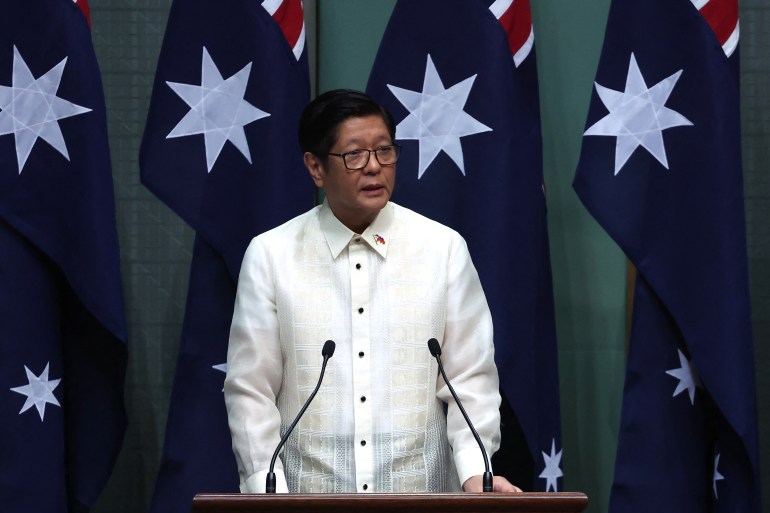
Funds come after Philippine president told Australian parliament he would ‘not yield’ a ‘square inch’ in the South China Sea. Australia’s Foreign Minister Penny Wong has announced 64 million Australian dollars ($41.8m) in funding for maritime security on the first day of a special summit with members of the Association of Southeast Asian Nations (ASEAN) in Melbourne. “The countries of our region rely on oceans, seas and rivers for livelihoods and commerce, including free and open sea lanes in the South China Sea,” Wong said in her address to a forum on maritime cooperation on Monday morning. Wong did not specify which countries the funding would go to but “welcomed efforts” by Indonesia, Malaysia, Vietnam and the Philippines to “delimit their maritime boundaries”. Malaysia, the Philippines and Vietnam claim parts of the South China Sea, which China claims almost in its entirety. “What happens in the South China Sea, in the Taiwan Strait, in the Mekong subregion, across the Indo-Pacific, affects us all,” Wong said. The special summit hosted in Melbourne marks 50 years since Australia became a “dialogue partner” of ASEAN, whose members are countries in Southeast Asia, and comes as its members last year held their first-ever joint military drills. The ruling centre-left Labor party has long aimed to forge closer ties with the region, recognising Australia’s proximity to Southeast Asia. But Australia’s relationship with its regional neighbours and its interests in the South China Sea is also viewed through the lens of Australia’s close ties with the United States and its membership in the Australia, United Kingdom and United States security pact known as AUKUS. In her speech, Wong quoted Indonesian President Joko Widodo as saying, “We also have the responsibility to lower the tension, to melt the ice, to create space for dialogue, to bridge the differences” in the region. Indonesia, along with Malaysia, is among Australia’s allies in the region to have raised concerns that Canberra’s investing tens of billions of dollars in nuclear submarines is potentially contributing to a nuclear arms race in Southeast Asia and the wider Asia Pacific. Philippines ‘will not yield one square inch’ In a speech to Australia’s parliament last week, Philippine President Ferdinand Marcos Jr was resolute on his countries’ position on the South China Sea, amid rising tension with Beijing over their competing claims. “I will not allow any attempt by any foreign power to take even one square inch of our sovereign territory,” Marcos said. The Philippines has reported multiple incidents with China in the South China Sea, accusing its coast guard of dangerous manoeuvres and filing diplomatic protests with Beijing over its actions. “The challenges that we face may be formidable, but equally formidable is our resolve. We will not yield,” he said. Philippine President Ferdinand Marcos Jr addresses the House of Representatives at Parliament House in Canberra on Thursday [David Gray/AFP] But while some Australian representatives reportedly applauded Marcos’s remarks, at least one member of Australia’s parliament, Senator Janet Rice, publicly questioned his legacy and was kicked out for holding up a sign saying, “Stop the Human Rights Abuses”. Marcos Jr is the son of former Philippine hardline leader Ferdinand Marcos who was overthrown in a popular uprising in 1986 and fled into exile. Greens Senator Janet Rice holds a sign as Philippine President Ferdinand Marcos Jr delivers an address to members and senators at Parliament House in Canberra, Australia on Thursday [Mick Tsikas/AAP Image via AP] On the streets outside parliament last week, activists held protests on Australia’s apparent lack of scrutiny of its allies’ human rights records, amid ongoing protests over Australia’s support for Israel’s assault on the Gaza Strip. More protests are planned around this week’s ASEAN summit. Wong’s speech also included a nod to Australian funding for climate change resilience through the Mekong-Australia partnership, as many Australians, and neighbouring Pacific countries, question increasing militarisation in a time of climate crisis. Adblock test (Why?)
After 8 summonses, Delhi CM Arvind Kejriwal agrees to appear before ED

The Delhi CM failed to appear before the federal agency on previous occasions.
Delhi LG approves draft uniform policy for inter-departmental allotment of land
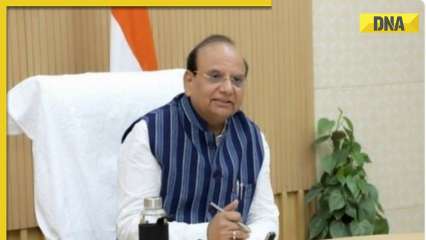
The policy is now formulated with the approval of the LG and will come into force with immediate effect.
2 shooters arrested in Haryana politician Nafe Singh Rathee’s murder case from Goa

The arrested men have been identified as Saurav and Ashish, residents of Delhi’s Nangloi area.
Noida airport-Ghaziabad RRTS coming soon: Distance, stations and more

The planned route connects Ghaziabad to the Noida Airport, including a three-coach metro and an eight-coach rapid rail.
Former Border Patrol Chief says Biden, Harris never spoke to him during his tenure
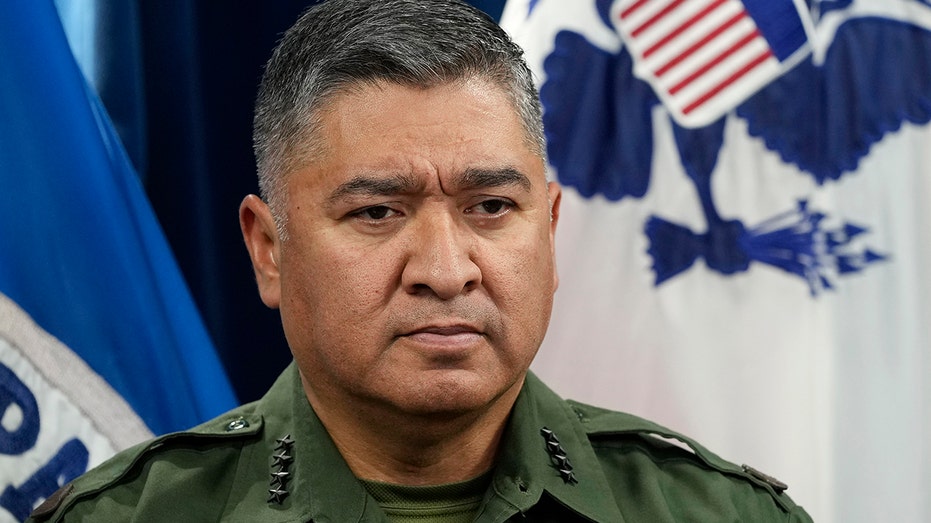
The former Chief of the U.S. Border Patrol told 60 Minutes that President Biden never spoke to him during his two years on the job. Neither did Vice President Kamala Harris, tapped as the administration’s “border czar” by President Biden in May 2021. Raul Ortiz served as the U.S. Chief of Border Patrol under President Biden and deputy chief under former President Trump before retiring in May 2023. In an interview that aired Sunday, Ortiz excoriated politicians – Republicans and Democrats alike – who engage in media ops in a “two-mile stretch,” neglected hundreds of miles of open borders. But he expressed particular frustrations for the president, saying that in his two years in office, “I’ve never had one conversation with the president or vice president.” “I was the chief of the Border Patrol, I commanded 21,000 people. That’s a problem,” he said. US BORDER PATROL SHOOTS, KILLS BANDIT ROBBING MIGRANTS IN CALIFORNIA Ortiz said the U.S. needs to send a clearer message to Central and South America that they will be sent back if they do not have a legitimate asylum claim. Asked if he believed the White House has sent mixed messages to migrants, he said: “most definitely.” Ortiz presided over Border Patrol during some of the most high-profile incidents, including 15,000 Haitian migrants under the bridge in Del Rio, agents being falsely accused of whipping, the end of Title 42 expulsions, and record-setting illegal crossings. Ortiz testified under oath in March 2023 during a House field hearing in McAllen, Texas that the border is not secure. He retired two months later. His interview comes after Biden and Trump made dueling trips to the southern border, underscoring how central the border is to the 2024 presidential election.
Meet Shivam Mishra, tobacco tycoon with cars worth over Rs 100 crore, owns watches expensive than Rolls-Royce, raided by

According to an official, the income tax officers visited the home of Shivam Mishra, the son of KK Mishra, the owner of Banshidhar Group, on the second day of the searches.