

Norway gives Arctic foxes a helping hand amid climate woes

One by one, the crate doors swing open and five Arctic foxes bound off into the snowy landscape. But in the wilds of southern Norway, the newly freed foxes may struggle to find enough to eat, as the effects of climate change make the foxes’ traditional rodent prey more scarce. In Hardangervidda National Park, where the foxes have been released, there has not been a good lemming year since 2021, conservationists said. That is why scientists breeding the foxes in captivity have also been maintaining more than 30 feeding stations stocked with dog food kibble across the alpine wilderness – a rare and controversial step in conservation circles. “If the food is not there for them, what do you do?” asked conservation biologist Craig Jackson of the Norwegian Institute for Nature Research, which has been managing the fox programme on behalf of the country’s environment agency. That question will become increasingly urgent as climate change and habitat loss push thousands of the world’s species to the edge of survival, disrupting food chains and leaving some animals to starve. While some scientists have said it is inevitable that more feeding programmes to prevent extinctions will become necessary, others have questioned whether it makes sense to support animals in landscapes that can no longer sustain them. As part of the state-sponsored programme to restore Arctic foxes, Norway has been feeding the population for nearly 20 years, at an annual cost of about 3.1 million Norwegian krone ($293,000) and it has no plans to stop anytime soon. Since 2006, the programme has helped to boost the fox population from as few as 40 in Norway, Finland, and Sweden, to about 550 across the Scandinavian Peninsula today. Adblock test (Why?)
Protecting climate refugees requires a legal definition

During the UN Climate Conference (COP28) in Dubai last year, the terms “climate migrants” and “climate refugees” echoed loudly across meeting rooms and panels. These labels were passionately used by high-ranking UN officials, external stakeholders, scholars and activists grappling with the consequences of climate change. During a panel discussion, I emphasised that these terms hold no legal weight and inquired about the need for specific legal protections for those affected by climate-induced displacement. My question was quickly shut down by the panel organisers, surprising attendees. My thoughts ran quickly to the many people displaced by climate change I knew: the Ecuadoran refugees who arrived in New York, seeking sanctuary from environmental turmoil at home, the women in the Sundarban islands of West Bengal facing climate-driven disasters but unable to relocate, and many of my neighbours in Brooklyn, who have experienced recurrent home destruction due to heavy rainfall. All of them do not have any form of international legal protection that can guarantee them dignified life. Sadly, the dismissive response at COP28 reflects a larger pattern of denial. Legally defining “climate refugees” has been fiercely debated globally on many accounts. Critics often argue that attributing migration solely to climate change oversimplifies a complex web of influences on human mobility. They claim that these terms diminish the role of institutional and human responses, and social conditions in transforming environmental stressors into crises. Thus, this complexity makes it impossible to distinguish between climate refugees and economic migrants. Ironically, this argument actually persists alongside predictions that estimate a possible 1.2 billion people (PDF) might be displaced by 2050 due to climate-change-related hazards. After COP28, this recurring chorus echoed in my mind: “No legal changes are needed; we have it covered with UN initiatives like the 2018 Global Compact for Safe, Orderly, and Regular Migration”, which commits (PDF) parties to creating “conducive political, economic, social and environmental conditions for people to lead peaceful, productive and sustainable lives in their own country and to fulfil their personal aspiration”. Under its second objective, the compact emphasises the need for cohesive approaches in handling migration challenges amid both sudden and gradual natural disasters, urging the integration of displacement concerns into disaster preparedness strategies. Let us pause for a moment. While these policies project preparedness, they fall remarkably short in offering robust legal recognition and protections to those facing climate crises and the need to move – including the groups and individuals in the examples I shared earlier. This absence of a specific legally defined framework poses hurdles for individuals seeking migration status due to climate change impacts. Calls to establish international legal frameworks tailored to address migration needs arising from environmental factors have been equated with opening Pandora’s box. Some suggest this could challenge the 1951 Refugee Convention, which defines the term “refugee” strictly along the lines of “fear of being persecuted for reasons of race, religion, nationality, membership of a particular social group or political opinion.” They worry an unravelling that would add climate and environmental movement protection might destabilise our already fragile global commitments to upholding all refugee rights. They warn that this opening might overshadow the plight of those fleeing persecution and conflicts. My sympathy for this concern runs deep. I agree that this critique deserves careful consideration. But here is the crux: The urgency to address climate-induced humanitarian crises shouldn’t be paralysed by the complexities of diplomacy or the fear of potential aftershocks. Let us be clear: The pains of any form of persecution, and seeking refuge from conflicts demand immediate action. But we should not allow these complexities to shroud the urgency of rethinking international agreements. International agreements are reviewed all the time, so doing so regarding climate change realities would be no different. Think about the 1992 UN Framework Convention on Climate Change – the first legally binding treaty signed by 154 countries committing to reduce atmospheric concentrations of greenhouse gases to “prevent dangerous anthropogenic interference with the climate system”. Its outcome has been far from satisfactory, but it placed us on track to formulating the Paris Agreement in 2015, and finding ways to make common progress in addressing climate change. Similarly, when it comes to a legal framework for climate refugees, maybe we will not negotiate binding conventions today, maybe not tomorrow. But we can start thinking – or rethinking – them now. The time has come to envision a sensible and sustainable course towards protection for vulnerable populations grappling with the effects of climate change and environmental disasters, while safeguarding existing refugee statuses. This calls for a collective effort, uniting those directly affected by climate change, alongside scholars, activists, international organisations, and government representatives, to rethink, conceptually and legally, the implications of creating a radically different approach. Being mindful of the multilayered challenges of slow-onset climate change could help develop a spectrum of strategies, intertwining migration management, refugee protection, and environmental solutions for those who stay and/or return. Our overarching aim should be to prevent the heartbreaking displacement of people from their homes involuntarily, while also ensuring the human rights of those who have no choice but to leave or are already displaced. These strategies align with previous agreements, but they also call upon us to collectively reimagine and address the evolving needs and diverse vulnerabilities of both humanity and the planet. Human rights-based approaches and explicit legal frameworks are essential for enforcing claims at all levels of governance and providing access to sustainable environmental justice. Fear cannot lead our decisions. Upholding human rights should be the compass guiding us through this intricate political and climate landscape. The views expressed in this article are the author’s own and do not necessarily reflect Al Jazeera’s editorial stance. Adblock test (Why?)
Washington Post editorial board says Biden should ignore liberal ‘wish lists,’ secure border to beat Trump

The Washington Post editorial board warned that President Biden‘s efforts to defeat former President Trump in a 2024 presidential rematch may depend on how loyal he is to the “wish lists” of left-leaning interest groups ahead of the election. “Mr. Trump could well win if their rematch were today, but Mr. Biden has eight months to improve his fortunes. Nodding to the priorities of every Cabinet agency and the wish lists of liberal interest groups won’t shift any narratives,” the Post’s editorial board noted Saturday. The editorial board’s claim came as it discussed next week’s State of the Union address and warned Biden not to “squander his biggest televised audience of the year by delivering another box-checking laundry list that drags on more than an hour.” Specifically, the left-leaning news outlet suggested that Biden should promise to use executive action on the border crisis, saying that he “will lose reelection if he doesn’t address the southern border.” “It’s valid to castigate Republicans for killing the sensible bipartisan border deal, something Mr. Biden did during his visit to a Texas border town on Thursday — but insufficient. He needs to convey he understands that many see the millions of border crossings as a breakdown in one of the federal government’s core responsibilities and outline how he will use executive authorities to stop it if Congress won’t,” the editorial board wrote. POLLS SHOW BIDEN FACING ‘ENTHUSIASM GAP’ HEADING INTO 2024 ELECTION SEASON Prompting Biden to resonate with more viewers and listeners, the editorial board insisted the president must “rethink an exhausted format, step up to the bully pulpit and make a case less for himself than for his worldview” as he addresses a joint session of Congress on March 7. “He needs to push back on the self-defeating isolationism, nativism and protectionism of the ‘America First’ movement, whose ideas are as dangerous now as when they were previously tried, and failed, in the 1930s,” the editorial board wrote. Several national polls in recent weeks suggest that Biden is suffering from an enthusiasm gap when it comes to how excited voters are to support him in November. A Monmouth University poll conducted last month showed that only 32% of registered voters feel at least somewhat enthusiastic about Biden’s candidacy, and that number stands at just 62% among Democrats. The same number of registered voters, 32%, say they are at least somewhat confident in Biden’s physical and mental ability to be president. The same poll shows that confidence in Biden’s abilities among Democrats has dropped significantly to 72% after standing at 91% in 2020. The Monmouth poll also shows Biden with a meager 39% approval rating and that he is under water on several issues with voters, including jobs, immigration and foreign policy. BIDEN APPROVAL PLUMMETS TO NEAR CARTER LEVEL: GALLUP The weak approval rating is backed up by other polls, and the Real Clear Politics average shows that his approval rating has been under 50% since August 2021. According to Gallup, Biden is significantly losing support from key demographics, including young voters, Black voters and Hispanic voters. Gallup explained that most of the decline in Black voters referring to themselves as Democrats has been in the last few years. “Most of the decline has been recent, with the net-Democratic ID for this group falling 19 points from a 66-point advantage in 2020,” Gallup said. “At that time, 77% of Black adults favored the Democrats and 11% the Republicans, so the 2023 findings represent an 11-point decrease in Democratic affiliation since 2020 and an eight-point increase in Republican affiliation.” Other mainstream news outlets have taken notice of the enthusiasm numbers, including the New York Times editorial board, which wrote earlier this month that Biden “needs to do more to show the public that he is fully capable of holding office until age 86.” The Biden campaign previously pointed Fox News Digital to “several indicators of enthusiasm” they have seen in favor of the president. “In the Nevada primary, we saw higher turnout than 2008 – despite that being a far more competitive election,” Biden campaign spokesperson Lauren Hitt said. “The email from the First Lady after the Hur report was our best-performing email since the launch.” Hitt also pointed to Biden winning “more votes in NH as a write in candidate than Obama did in ‘12” and highlighted that Obama was on the ballot, and Biden wasn’t. “January was our best grassroots fundraising month ever, we doubled the number of small-dollar donors from December,” Hitt added. “We brought in over $1M in donations following President Biden’s speech marking the anniversary of the January 6th insurrection.” Fox News’ Andrew Mark Miller contributed to this report. Get the latest updates from the 2024 campaign trail, exclusive interviews and more at our Fox News Digital election hub.
Oklahoma school investigated after video shows kids licking toes for fundraiser: ‘Disgusting’

Oklahoma authorities are investigating a local high school after footage from a fundraiser event appeared to show students sucking and licking one another’s toes last week. The footage from Deer Creek High School in Edmond, Oklahoma, shocked and disgusted social media users across the country this weekend. Oklahoma State Superintendent Ryan Walters soon announced an investigation into the incident, calling it “disgusting.” The footage, originally obtained by Fox 25, was taken during a week-long fundraiser for a local coffee shop that employs people with special needs. Students from 9th through 12th grade volunteered to take part in various class competitions that students paid to attend, according to the outlet. The video shows student volunteers who were paired up, one set sitting on chairs while the others laid down below them and licked peanut butter off of their toes. CONSERVATIVES APPLAUD UNIVERSITY OF FLORID ELIMINATING ALL DEI EMPLOYEES: ‘DEI MUST DIE’ “This is disgusting,” Walters said in a statement on Friday. “We are cleaning up this filth in Oklahoma schools. Our agency is investigating.” COLLEGE DEI CRACKDOWN PASSES ALABAMA SENATE Outrage librarian Libs of TikTok soon shared the footage on social media, demanding to know “who approved this.” The account mistakenly claimed that the students were paired up with adults in the activity, however. Reactions to the incident rolled in, with Sen. Ted Cruz, R-Texas, declaring “this is child abuse.” Walters then replied to Cruz’ statement, saying “Completely agree. We are stopping this in Oklahoma.” FLORIDA GOV RON DESANTIS SIGNS LAW WITH BIG POTENTIAL IMPACT ON EPSTEIN CASE Parents and students also reacted in statements to Fox 25. One parent who spoke with the outlet anonymously said “It was surprising,” one student told the outlet. “I didn’t think they were going to do all that. I was just shocked. I didn’t really have like a feeling. I was kind of disgusted, and then kind of glad I wasn’t over there.” “Whenever she told me yesterday that was happening, I had to ask her, ‘Wait, what? They’re licking peanut butter off of toes? What?” one parent said of a conversation with their student. Meanwhile, the school celebrated the “success” of the fundraiser in a public statement. “This afternoon, Deer Creek High School announced a grand total of $152,830.38 raised for Not Your Average Joe Coffee, an organization created to ‘inspire our community by including students and adults with intellectual, developmental and physical disabilities,” school staff wrote. “On Thursday, February 29, 2024, Deer Creek High School hosted an assembly called the Clash of Classes for students who paid to attend. During this assembly, ninth through twelfth grade students volunteered to participate in various student-organized class competitions, in the spirit of raising money for NYAJ. All participants in the assembly were students who signed up for the game(s) they played ahead of time. No Deer Creek faculty or staff participated in any of the games during this Clash of Classes assembly. Many dedicated students gave generously of their personal time to achieve this momentous accomplishment, which will serve communities beyond the boundaries of Deer Creek. We would like to thank all of the patrons, businesses and sponsors who contributed to the success of this year’s Wonderful Week of Fundraising,” the statement continued. Walters’ office did not immediately respond to a request for comment from Fox News Digital seeking further information about the investigation into Deer Creek.
BJP releases first list of 195 candidates, PM Modi to contest LS polls from Varanasi
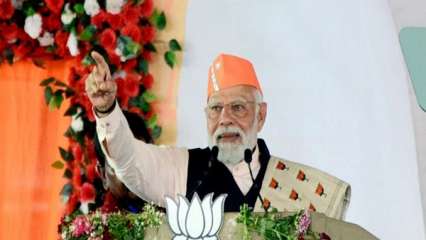
Prime Minister Narendra Modi will contest Lok Sabha elections from Varanasi again. Of 195 candidates, 34 are Ministers from Centre and States while two are former Chief Ministers who are in the list.
AI-generated porn, including celebrity fake nudes, persist on Etsy as deepfake laws ‘lag behind’

Etsy, the online retailer known for providing a platform to sell hand-made and vintage products, continues to host sellers of “deepfake” pornographic images of celebrities and random women despite the company’s efforts to clean up the site. The proliferation of sexually explicit images generated by artificial intelligence (AI) — including depictions of celebrities — on an otherwise innocuous marketplace comes as a shock to many experts. The problem has persisted on the platform for months. “That sounds like a total innocuous platform for people to do this. Usually we find a lot of explicit content on Twitter, or some other particular portals for that kind of materials,” Siwei Lyu, a computer scientist and expert on machine learning and the detection of deepfakes, told Fox News Digital. “But polluting the space on such a platform [like Etsy] is quite hard to believe.” NEW YORK MAN CHARGED FOR ALLEGEDLY SMUGGLING $200K OF RARE BUTTERFLIES, SELLING THEM ON EBAY, ETSY The explicit content isn’t hidden, either. Fox News Digital found that a simple search of “ai nude” or “deepfake porn” on Etsy each yielded 1,000+ results, while a search for “porn” turned back zero results. Even without a narrowed search, some explicit-AI generated items appeared in the “You may also like” algorithm while searching for other unrelated items. While not all the results showed pornographic content, many of the nude images are of entirely fabricated women created by AI. One shop even sells an e-book guide on how to create X-rated AI content. Ninety-five photos of Margot Robbie were also being sold for $10.95 by a shop with the description “Margot Robbie Nude Photorealistic AI Celebrity Nude Art – | NSFW Ai Girl | AI Girl | Celebrity Nude” as of Thursday. Several of the display photos were actual images of the “Wolf of Wall Street” actress, while others were fully nude AI-generated photos of her. One of the AI-generated photos of Margot Robbie depicted the actress in a sexual act. Robbie’s team did not immediately respond to Fox News Digital’s requests for comment. GOODLE GEMINI BACKLASH EXPOSES COMMENTS FROM EMPLOYEES ON TRUMP, ‘ANTIRACISM’ AND ‘WHITE PRIVILEGE’ Another block of AI photos for sale were labeled “Ariana Grande Photorealistic AI Nude Art – Seductive and Sensual Digital Artwork | NSFW Ai Girl | AI Girl | Cosplay.” The stack of preview photos featured suggestive photos of the singer, but none showing her in the nude. Fox News Digital also reached out to Grande’s team. After Fox News Digital requested comment from Etsy, the listings were removed for violating policies. But some of the photos had already been bought and downloaded. “AI, especially generative AI technologies, these days are powerful enough to create very realistic images, and a lot of people fall for that, because they do not understand this,” Lyu said. Lyu explained that generative AI, a deep learning concept in AI software that allows the system to learn and develop over time to improve its results, makes it “technically challenging” to identify fake images. And now that this software has become widespread for personal use, it makes it more difficult for laws to catch up to potentially nefarious activity, such as the creation of celebrity deepfakes or AI-illustrated pornography. Lyu said the current laws “lag behind” the rapid development of AI. Blake Klinkner, an assistant law professor at the University of North Dakota teaching cybersecurity law, has been studying the emerging intersection of law and AI. He said the First Amendment covers a host of creative liberties, and federal laws haven’t yet weeded out potentially criminal AI-generated images. SILICON VALLEY PROGRAMMERS HAVE CODED ANTI-WHITE BIAS INTO HALF THE AI CHATBOTS TESTED “It’s very accessible for individuals to take really any image or video or audio and run it through a software program to create a deepfake,” Klinkner told Fox News Digital. He added that photos of celebrities are run through AI software “which learns how to map the person’s face, or even videos, and then create these obscene, pornographic images.” “So you’re seeing these images sold on Etsy online, and a relatively simple search can, unfortunately, lead to a lot of results of individuals selling these images,” Klinkner said. “And again, because AI is relatively affordably accessible these days, there’s not a whole lot stopping individuals from making these images and even trying to sell them.” Klinkner added that when these cases are brought forth, judges are often unfamiliar with deepfakes and are hesitant to apply old laws to a fairly modern problem. “They can’t really wrap their heads around a computer taking an image and creating images that look like you that really aren’t you,” he said. Users who create such images are hard to track down, too, as many use aliases and fake photos on their profiles. Klinkner said it creates “a Whack-A-Mole situation” where if one account gets taken down, a new account can just be made. WHAT IS ARTIFICIAL INTELLIGENCE (AI)? In December, Etsy swept some of its marketplace after a Forbes report exposed 16 accounts that were selling explicit celebrity deepfakes. Two of the celebrity victims were actresses Olivia Munn and Jenna Ortega. Etsy removed the accounts. “We are deeply committed to the safety of our marketplace and community. While some mature content is allowed on Etsy, we have long prohibited pornography and we closely monitor our marketplace to identify and remove content that violates our policies,” Alice Wu, head of trust and safety at Etsy told Fox News Digital in a statement. “Evolving our policies and expanding our enforcement efforts related to mature content — including in emerging areas like AI deepfakes — is a key priority for Etsy this year.” But thousands of pornographic images — accessible on the website by anyone regardless of age — remain easily available on the platform. According to Etsy’s rules, pornography “of any sort” is prohibited, while “mature content is restricted.” The company claims that it takes a “liberal approach” to what constitutes pornography. Etsy allows some
In Lydd, Palestinians fear tinderbox of Israel’s war, threat of expulsion

Lydd, Israel – One week after Israel began bombing Gaza last October, Ghassan Mounayer received a call from the Israeli police. An officer warned him not to write any critical Facebook posts about the war or call for demonstrations in Lydd [Lod in Hebrew], where Palestinian citizens of Israel like Mounayer live alongside Jewish Israelis. “They said, ‘We’re watching your Facebook’, and not to write anything ‘Satanic’,” said Mounayer, who is a human rights activist. “I said, ‘Do you have any examples of posts like this?’ He said, ‘Don’t be smart. You are being watched’.” Since Israel launched its war on Gaza following Hamas’s deadly attack on October 7, tensions in mixed Palestinian and Israeli cities have approached boiling point. But few places are as tense as Lydd, a city run by far-right Mayor Yair Revivo and where relations between Palestinians and Israeli Jews have been fraught for years. Palestinian activists say they fear for their lives, living in the shadow of the Israeli authorities and heavily armed Jewish Israeli citizens, many of whom belong to supremacist movements. They are warning that the city could “explode” into conflict and lead to the persecution and even expulsion of Palestinian residents. “Palestinians know that Israelis are looking for any situation to kill us or arrest us, because right now it is war time,” Mounayer told Al Jazeera. “Israel is just a democracy for Jewish Israelis and many Jewish Israelis want us to leave Lydd and go to Arab villages.” ‘Living under constant threat’ Palestinians in Lydd make up about 27 percent of the city’s population, many of whom live in urban and impoverished neighbourhoods and whose families have lived in Lydd for generations, pre-dating the Nakba or catastrophe, when 750,000 Palestinians were uprooted from their homes and villages during the creation of Israel. Some are the children and grandchildren of Palestinians who fled the village of Majdal, which is roughly 62km (38 miles) from Lydd, during the Nakba. Others from Majdal – now called Ashkelon in Israel – went to Gaza. Entire Palestinian families remain split between Lydd and Gaza today. Maha al-Nakeeb, a Palestinian human rights lawyer in Lydd, has lost 16 of her relatives in Israel’s relentless bombing campaign in Gaza. Despite the trauma, she has refrained from commenting or critiquing the war on social media out of fear that she could be arrested. In the first two weeks after October 7, at least 100 Palestinian citizens of Israel were arrested for social media posts expressing sympathy or anger over Israel’s war on Gaza, which has killed more than 30,000 people to date, the vast majority of whom are children and women. Thousands more are lost under the rubble of the war, presumed dead. “Palestinians are living under constant threat … all Arabs here live in fear,” al-Nakeeb told Al Jazeera. “The Israelis want us to think that we live in their house. That this city – this place – does not belong to us.” Mounayer added that Israel has historically tried to punish or crush expressions of solidarity between Palestinians who live in Israel and those who live in the occupied territories. He added that Palestinians in Lydd are holding in their anger over all the reports of Israeli atrocities coming out of Gaza. “Israel does not want us to feel solidarity with our brothers and sisters. They don’t want us to ask for collective rights,” he said. ‘We are not treated as citizens’ Israeli extremists have long viewed Lydd – and other mixed cities – as a battleground on which they are fighting to increase their numbers and gradually erase Palestinian existence. This is the explicit mission of Garin Torani, or Biblical Seeds, an Israeli supremacist group that intentionally settles in Palestinian neighbourhoods across Israel. With most Palestinians unable to acquire building permits, members from this group and other far-right Israelis exploit this discriminatory policy to build new homes in heavily populated Palestinian districts. When Prime Minister Ariel Sharon pulled Israeli troops and settlers out of Gaza in 2005, many settlers relocated to Lydd and other mixed cities. Illegal settlers from the occupied West Bank have also strategically relocated to Lydd to “Judaise” the city, often resulting in acute gentrification and soaring tensions with Palestinians. But whenever a dispute erupts, the security forces and Mayor Revivo solely protect Jewish Israelis, according to Nisrine Shehada, a Palestinian activist in Lydd. “We are citizens of this state, but we are never treated as citizens,” she told Al Jazeera from her office. Shehada recalled Lydd’s solidarity protests with the Palestinians who were being expelled from Sheikh Jarrah in East Jerusalem and attacked in Al-Aqsa Mosque in May 2021. Back in Lydd, far-right Jewish Israelis responded to the protests by attacking and shooting at a group of Palestinians on May 10. They killed 32-year-old Musa Hassuna, a Palestinian resident in the city. After the incident, protests escalated as did ethnic violence between Israelis and Palestinians. A Jewish Israeli man, Yigal Yehoshua, was killed by a Palestinian mob a week later. According to Human Rights Watch, Israeli authorities handled the killings of Hassuna and Yehoshua very differently. All Jewish Israeli suspects were released on bail within just two days of Hassuna’s killing and were then later cleared of all charges. However, eight Palestinian men were swiftly arrested in connection with Yehoshua’s killing and accused of “murder” and “terrorism”. Police also failed to protect Palestinians from violence by far-right Jewish Israeli groups and arrested 120 Palestinians in Lydd, compared with just 34 Jewish Israelis. “The protests were understandable and expected, but the government made all Palestinians pay a price for it,” said al-Nakeeb. ‘We know they want to kick us out’ Palestinian residents of Lydd told Al Jazeera that they do not want any confrontations with far-right Jewish Israelis in the city, despite Israel’s continuing atrocities in Gaza. Many fear that Palestinian communities could be gunned down or expelled from the city altogether if tensions boil over. Since October 7, Israel’s far-right National Security
Kashmiri journalist Aasif Sultan re-arrested days after release

Aasif Sultan, a former editor of Kashmir Narrator magazine, has been re-arrested under ‘anti-terror’ law days, two days after his release following five years in jail. A Kashmiri journalist, who was released after spending more than five years in jail earlier this week, has been re-arrested by police in another case under India’s stringent “anti-terror” law, according to his lawyer. Aasif Sultan, 36, has been sent to a five-day police remand after he was produced in a court in the city of Srinagar on Friday, Adil Abdullah Pandit, Sultan’s lawyer, told Al Jazeera. Pandit said that Sultan was arrested on Thursday in a 2019 case regarding violence inside the central jail in Srinagar under the Unlawful Activities Prevention Act (UAPA), which international rights groups have described as a “draconian” law. Srinagar is the largest city and summer capital of Indian-administered Kashmir. Rights activists have said getting bail under a UAPA case is nearly impossible, which means Sultan could stay in jail without trial indefinitely. The case is related to “the sections of rioting, unlawful assembly, endangering human life, attempt to murder under Indian Penal Code (IPC) and section 13 of UAPA for advocating, abetting or inciting unlawful activity”, according to the lawyer. At the time of the violence, Sultan was already lodged in jail. The riots inside the jail had erupted over a move by authorities to shift prisoners to jails outside Indian-administered Kashmir. Hundreds of Kashmiris have been lodged in jails in other parts of India, making it difficult for families to meet their relatives. ‘Harbouring militants’ Sultan worked as an assistant editor for a Srinagar-based English magazine, Kashmir Narrator, which is now defunct, when he was arrested in September 2018 on allegations of “harbouring militants”. His family has denied the allegations, saying he was being targeted for his work as a journalist. On February 27 he was released from a jail in the northern Indian state of Uttar Pradesh about 1,400km (870 miles) away. But the brief joy for his family in Batamaloo locality in Srinagar turned into grief on Thursday when Sultan was re-arrested. “He saw his five-and-half-year-old daughter for the first time since his 2018 arrest. His daughter is asking about him and we don’t know how long this fight can be,” one of Sultan’s relatives told Al Jazeera on the conditions of anonymity, referring to the difficulty in securing bail under the UAPA. “He looked very weak and wanted to rest. His blood pressure was also unstable. When we asked the police, they said he was accused in another case.” Sultan was able to secure bail in the 2018 case in April 2022, when a court said that investigation agencies had failed to establish his links with any armed group. There has been an armed rebellion in Kashmir against Indian rule since the 1980s. But authorities immediately charged him under the Public Safety Act (PSA), a law under which a person can be jailed for up to two years, without a trial. Amnesty International has termed it a “lawless law”. Sultan’s release on Tuesday came more than two months after the Jammu and Kashmir High Court quashed his detention order under the PSA. Laxmi Murthy, co-founder of Free Speech Collective, an organisation that advocates freedom of expression, said, “The re-arrest of Aasif Sultan is another example of ‘lawfare’ or the (mis)use and overuse of draconian laws to harass journalists.” “Since the process is punishment, Aasif Sultan will have to spend the next few years of his life proving his innocence.” Since India scrapped Kashmir’s special status in 2019 and imposed central rule, authorities have cracked down on free speech under which multiple journalists and activists have been arrested — mostly under “anti-terror” laws such as the UAPA. Adblock test (Why?)
Europe risks losing credibility over silence on Israel’s war on Gaza: MP

Europe risked any credibility to speak on Russia’s actions in Ukraine if it remained silent on Gaza, according to a Belgian member of parliament, who is among the more than 200 lawmakers who have signed a letter calling for an arms embargo on Israel. “We are so hypocritical in Europe to speak about international law when we speak about Ukraine and Russia, [but] if we don’t have the same [views] when we speak about the Palestinians, we will not have any credit in the future to speak about [it],” Simon Moutquin, a Belgian member of parliament, told Al Jazeera in an interview on Saturday. More than 200 legislators from countries, which fund Israel militarily, on Friday called for their countries to stop selling weapons to Tel Aviv citing “violations of international law” as Israel’s relentless bombardment of Gaza has killed more than 30,000 people, most of them civilians. In a letter signed by parliamentarians from 13 countries, the lawmakers announced that they would not be “complicit” and would take “immediate coordinated action” in their respective legislatures to stop their governments from arming Israel. The Belgian member of parliament said that his own country had to act to stop Israel as well, citing a “risk of genocide” if countries continue to fund Tel Aviv’s war on Gaza. “As a signatory country of the Convention Against Genocide, [Belgium has] a legal and moral obligation to act and prevent the risk of genocide, so I think this letter … is a good first step, but we need to go further,” said Moutquin, who raised concerns about an internal split in the European Union that has seen the bloc struggle to address Israel’s war on Gaza cohesively. Continued military funding for Israel amid Gaza war The United States is by far the biggest funder of the Israeli military, providing roughly $3bn in aid annually. Presently, US lawmakers are debating an additional $14bn to support Tel Aviv’s operations in Gaza. Washington sent guided-missile carriers and F-35 fighter jets, as well as other military equipment to Tel Aviv in the immediate aftermath of Hamas’s October 7 attacks on Israel, and Tel Aviv’s subsequent declaration of war on the Gaza Strip. Some 68 percent of Israel’s weapons imports between 2013 and 2022 came from the US. Tel Aviv also relies on German weapon imports, primarily air defence systems and communications equipment. In total, Germany provides 28 percent of Israel’s military imports, although that rose nearly tenfold between 2022 and 2023 after Berlin ramped up sales to Israel in November. The United Kingdom, Canada, France and Australia among others also provide military support to Israel. However, following an International Court of Justice (ICJ) ruling that found Israel may “plausibly” be committing genocide in Gaza and that ordered Israel to prevent genocide in Gaza, some countries have stopped exporting arms to Tel Aviv. In the Netherlands, a court in February ruled that exports of parts for military fighter jets be halted after rights groups sued the government. Similarly, Belgium, Spain and Japan have also ceased military cooperation with Tel Aviv in recent weeks. Legislators in donor countries ‘take a stand’ An arms embargo on Israel is a legal necessity, the legislators said in the open letter, citing the ICJ’s February ruling. “Our bombs and bullets must not be used to kill, maim, and dispossess Palestinians,” they said. “But they are: we know that lethal weapons and their parts, made or shipped through our countries, currently aid the Israeli assault on Palestine that has claimed over 30,000 lives across Gaza and the West Bank.” Largely from France, Australia, Spain, Turkey and Brazil, the representatives accused Israel of defying international law by not only continuing its war on Gaza, but also ramping up plans for an invasion of Rafah, the last enclave that is housing more than 1.5 million Palestinians displaced by the war. “Today, we take a stand,” the letter further read. “We will take immediate and coordinated action in our respective legislatures to stop our countries from arming Israel.” Legislators from Germany, Portugal, the US, Ireland, Netherlands, Canada, Belgium and the UK were also signatories to the missive. At least 30,228 people have been killed in Gaza since October 7, most of them children and women. Aid is barely flowing in, causing deaths from starvation and dehydration. The UN has warned that invading Rafah will be“the nail in the coffin” of the humanitarian crisis in the strip. Adblock test (Why?)
Lok Sabha Elections 2024: BJP announces names of 5 candidates from Delhi, 4 sitting MPs replaced; check full list

The party has revised its candidates on majority of the seats of the national capital. In the last two Lok Sabha elections, the BJP had won all the 7 Delhi Lok Sabha seats.