

IMD weather update: Delhi-NCR receives light rainfall, heavy rains predicted in these states, check forecast

As per the Indian Meteorological Department (IMD), a Western Disturbance along with a cyclonic circulation over northwest Afghanistan and nearby areas is currently influencing the weather pattern in the country.
State calls for investigation into cause of Texas Panhandle wildfires
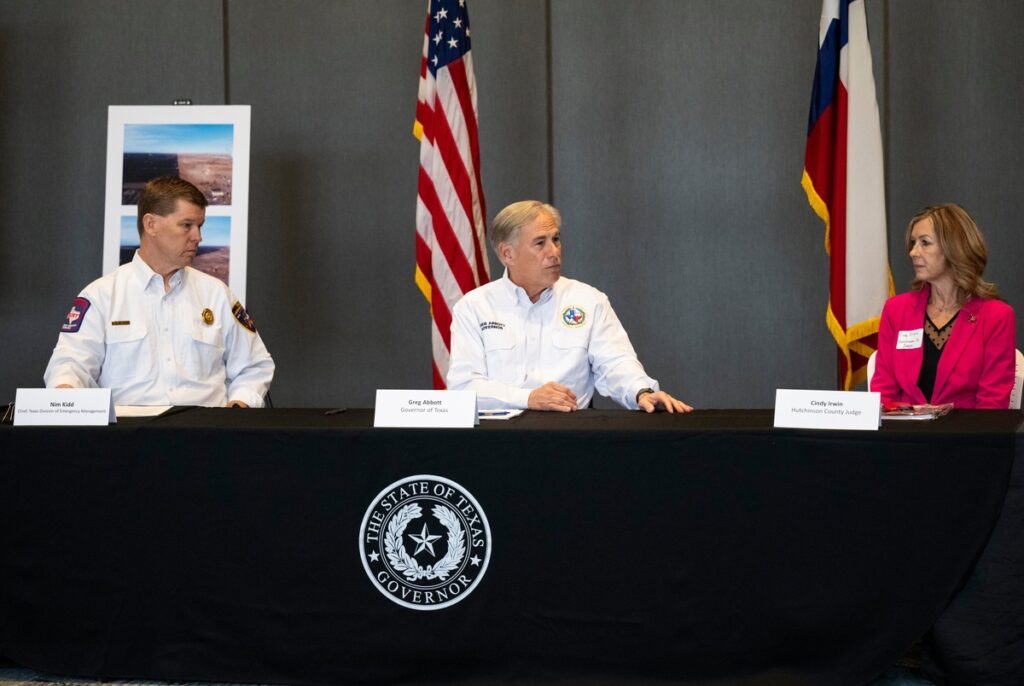
As officials try to determine a cause for the wildfires, a Canadian homeowner filed a lawsuit blaming an energy company for the destruction.
Manchester City ready for United to try to ‘close gap’ in Premier League

Who: Manchester City vs Manchester UnitedWhat: Premier League footballWhen: Sunday, March 3, 2024, 15:30 GMTWhere: Etihad Stadium, Manchester, England Manchester City manager Pep Guardiola says the Premier League champions are ready for rivals Manchester United to try to “close the gap” ahead of Sunday’s derby match at the Etihad Stadium. City are just one point behind league leaders Liverpool, who travel to Nottingham Forest on Saturday. United are eight points off Aston Villa in fourth spot, the fourth Champions League qualification spot. New minority owner at Old Trafford, Sir Jim Ratcliffe, laid out his plans to return the 20-time English champions to the summit when he completed his acquisition of 27 percent of the club’s shares this month, including re-establishing the pecking order in the city. Ahead of Sunday’s match, Guardiola admits the recent change at United is likely to change matters. “Sir Jim and others know the diagnosis of the club. If Sir Jim said they need two or three years to be there, who am I to say the opposite?” the manager said. “I’m sure they will work to close the gap.” 🔴👔 Mikel Arteta🔵👔 Pep Guardiola👹👔 Erik ten Hag Only one can win February’s @BarclaysFooty Manager of the Month award! #PLAwards | Vote 👉 https://t.co/ynFTphsa0X pic.twitter.com/W3cnwW7Jzx — Premier League (@premierleague) February 29, 2024 Last season’s treble winners, City also added the European Super Cup and Club World Cup to their haul by the end of 2023. Guardiola says he knows this era of dominance on the blue side of Manchester will end eventually, but he’s determined it won’t be anytime soon. “In the ’80s it was Liverpool, the ’90s, it was United – now we are this many years, winning seven Premier League titles in the last 11, 12 years,” he said. “It has happened, but in 50 or 60 years, there has never in one country been a club that dominates and controls everything, so we can try to extend for as many years as possible what we are trying to do.” United’s Premier battle for a Champions League spot Although not feasting at the top table, United have their own battles to fight and Champions League qualification is top of their agenda. A home defeat by Fulham last weekend ended a seven-game unbeaten run, but United manager Erik ten Hag remains in defiant mood. “We are also on a good run. The spirit is very good,” he said. “We have done it before against City, also against Liverpool. We will prepare well. The players are looking forward to it. I can smell it. I’m excited.” City defeated United in the FA Cup final last season on the way to emulating the domestic treble only their rivals, in 1999, had previously achieved. This fixture last season resulted in a humiliating 6-3 defeat, although United did win at Old Trafford. That was not the case this season though, with City claiming a 3-0 win in the reverse fixture in October. “We need a great day,” ten Hag admitted. “We like the challenge and we are looking forward to the challenge with them. We know we have to give everything and show a team performance if we want to get the result. But if you do it, it is possible.” 🗓️ 3 Mar: Man Utd🗓️ 6 Mar: Champions League round of 16🗓️ 10 Mar: Liverpool🗓️ 16 Mar: FA Cup quarter-final🗓️ 31 Mar: Arsenal🗓️ 3 Apr: Aston Villa Pep Guardiola is looking forward to @ManCity‘s upcoming run of fixtures 💬 pic.twitter.com/2SWB7nLEqt — Premier League (@premierleague) March 1, 2024 Following the United game, City face a tough run of games facing their title rivals Liverpool and Arsenal in the league, along with their Champions League last 16-second leg with Copenhagen on Wednesday. “I prefer that than the opposite,” Guardiola said on the challenge he faces in all competitions. “Key players, we have 20 key players. We have had key players out injured and still done well. “So nice to play the fixtures. They are the best. A chance to get to the quarterfinals of the Champions League, then Anfield, a chance against Newcastle United [in the FA Cup] – we work to arrive here to live these moments.” Form guide Manchester City’s season has picked up pace since their Club World Cup triumph in December. Pep Guardiola’s side have won 14 of their last 15 games and are undefeated in their last 18 games. United had been on a seven-game undefeated run until Fulham’s surprise win at Old Trafford in the Premier League last weekend. Erik ten Hag’s side returned to winning way in the FA Cup in midweek by overcoming Nottingham Forest 1-0. Head-to-head The Manchester rivals first faced each other in the old Division Two in England in November 1894. United won 5-2 at City before sealing the double over their neighbours with a 4-1 win in the return fixture in January 1985. There have been 190 meetings in total with United winning 77 to City’s 60. Team news Manchester City are without Jack Grealish, who injured his groin in the FA Cup at Luton on Tuesday. Defender Josko Gvardiol is close to a return from an ankle injury but the derby is likely to be too soon. Manchester City predicted lineup: Ederson; Kyle Walker, Josh Stones, Ruben Dias, Nathan Ake; Rodri; Phil Foden, Bernardo Silva, Julian Alvarez, Jeremy Doku; Erling Haaland Manchester United’s main absentees are defender Luke Shaw and striker Rasmus Hojlund. Harry Maguire, Lisandro Martinez and Aaron Wan-Bissaka are also all absent from the back line. Manchester United predicted lineup: Andre Onana; Diogo Dalot, Raphael Varane, Jonny Evans, Victor Lindelof; Kobbie Mainoo, Casemiro; Christian Eriksen, Bruno Fernandes, Alejandro Garnacho, Marcus Rashford Adblock test (Why?)
What is Super Tuesday and why is it important? All you need to know
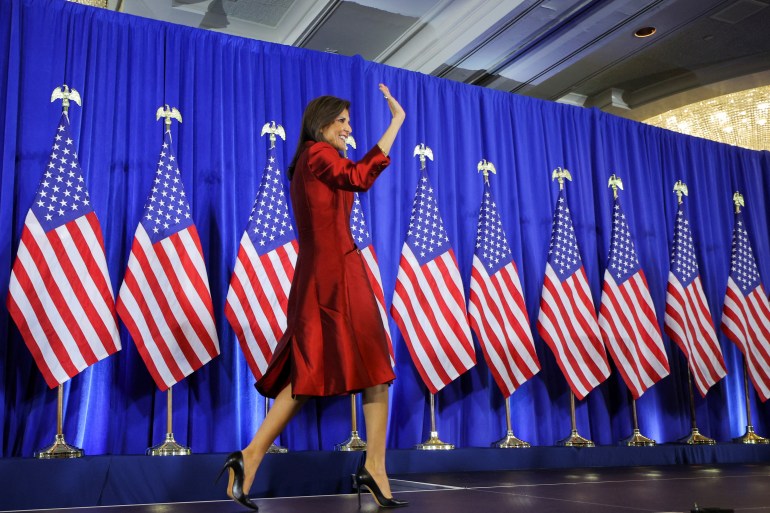
One of the busiest days in the United States election calendar is nearly here. Super Tuesday takes place on March 5, with millions of voters expected to cast their ballots in presidential primaries and caucuses across more than a dozen states. Also on the ballot will be races for both chambers of the US Congress — the House of Representatives and Senate — as well as other contests. President Joe Biden faces little opposition on the Democratic side and is all but guaranteed to be confirmed as the party’s nominee. In the race for the Republican presidential nomination, however, Super Tuesday could spell the end of the road for former United Nations Ambassador Nikki Haley. She is the last major candidate still challenging the frontrunner, former President Donald Trump, but her campaign has failed to make a dent in Trump’s iron-clad grip on the party. Here’s all you need to know about Super Tuesday, its history and its biggest battlegrounds this year. What is Super Tuesday? Super Tuesday is the day when the largest number of states hold their presidential primaries and caucuses. Those state-level races help candidates from the two major political groups — the Democrats and the Republicans — gather the delegates they need to earn their party’s nods. Delegates ultimately represent their states at a party convention, where they cast votes for the nominee based on the primary and caucus results. During this year’s Super Tuesday races, 874 Republican delegates will be up for grabs — or about 36 percent of all those available. A candidate needs at least 1,215 of 2,429 total delegates to win the Republican nomination. For Democrats, 1,439 of the party’s 3,979 total delegates will be at stake on Tuesday. When is Super Tuesday? This year, it falls on Tuesday, March 5. Which US states are voting on Super Tuesday? Fifteen US states are holding votes on Super Tuesday: Alabama Alaska Arkansas California Colorado Maine Massachusetts Minnesota North Carolina Oklahoma Tennessee Texas Utah Vermont Virginia The territory of American Samoa will also be voting. The results of the Democratic caucuses in Iowa, which are being held via mail-in ballot, are also expected on March 5. Where does the phrase “Super Tuesday” come from? The origins of the phrase are a bit murky, but Pew Research Center editor Drew DeSilver says it dates back to at least 1976. At the time, though, “Super Tuesday” referred to the last major primaries in June: California, New York and Ohio. But most experts agree that, as DeSilver writes, “Super Tuesday was born, more or less as we know it today”, in 1988. That’s when a group of Democrats in southern US states decided to “front-load” the presidential primary process after Republican President Ronald Reagan cruised to victory four years earlier over Democratic White House hopeful Walter Mondale. Their thinking was that by holding their votes on the same day, early in the election cycle, they could better influence their party’s pick — and ensure that the eventual nominee can succeed in the American South. The 1988 effort didn’t work, but Super Tuesday remains the day that most US states hold their votes. Why does Super Tuesday matter? Super Tuesday matters because about a third of the delegates will be allocated by each party to decide their respective presidential nominee. A strong showing can effectively give a presidential campaign a shot in the arm, helping White House hopefuls secure more financial contributions and build momentum. But a poor result can bring a campaign to a screeching halt. “Because there are so many states holding contests simultaneously, candidates need to be really well funded, well organised and have good name recognition to do well across the board on Super Tuesday,” Caitlin Jewitt, an associate professor of political science at Virginia Tech, told Al Jazeera. “If we have a clear frontrunner going into Super Tuesday, we often see that — after Super Tuesday — that candidate is by far the frontrunner and many others drop out of the race.” Jewitt pointed to the 2020 Democratic race as one example of how Super Tuesday can jump-start a campaign. That year, Biden delivered a strong showing on Super Tuesday after a slow start: He won 10 states. The race then transformed into a two-man competition between him and Senator Bernie Sanders. Successful Republican candidates have likewise enjoyed a boost from Super Tuesday. Jewitt noted that, in 2016, Texas Senator Ted Cruz did not do as well as he had hoped on Super Tuesday, while Trump did better than expected. He went on to win the presidency that year. “So we see Trump start to gain momentum from that,” Jewitt said. What can we expect this year in the presidential primary contests? For Haley, the ex-UN ambassador, a poor showing could augur the end of her campaign for the 2024 Republican nomination. Polls show her trailing Trump in all of the Republican contests on Super Tuesday. “It’s not going to be so super,” Jewitt said of the lopsided races. “It’s much less important this year. It may be important because it might be Haley’s sort of last stand, but other than that, it looks inevitable that Joe Biden and Donald Trump will gain their respective nominations, and so we don’t expect very many surprises on Super Tuesday.” Haley — who has lost to Trump by a sizeable margin in all the early state contests so far — said she planned to stay in the race until at least Super Tuesday. Her plans beyond that are unclear. “I’m not giving up this fight when a majority of Americans disapprove of both Donald Trump and Joe Biden,” she said after losing a February 24 primary in her home state of South Carolina. Republican presidential candidate Nikki Haley walks on stage after the South Carolina Republican primary in Charleston, South Carolina, on February 24 [File: Brian Snyder/Reuters] Will there be more on the ballot than the presidential primary races? Yes. Americans will also be voting
Money, power and the peril of courting Chinese nationalism

In January, a Chinese ultranationalist vlogger – video blogger – came across red circular stickers on the glass doors of a shopping mall in Nanjing featuring the words: “Happy 2024.” The vlogger claimed that what appeared to be innocent New Year decorations were, in fact, nationalistic Japanese motifs since the red circles resembled the rising red sun in Japan’s national flag. “This is Nanjing, not Tokyo! Why are you putting up junk like this?” he snarled at a manager at the mall. Local police subsequently got involved and ordered staff at the mall to take down the decorations and gave the mall’s management an official warning. “It is the most ridiculous thing I have ever heard,” 33-year-old noodle shop owner Alice Lu from Shanghai told Al Jazeera. “If red circles are not allowed then there is no end to the things that must be removed,” Lu said. Red souvenir plates with images of China’s Mao Zedong (right) and Chinese President Xi Jinping (left) in Beijing, China in 2017 [Tyrone Siu/Reuters] Following the standard set by the local police in Nanjing, users on Chinese social media were quick to highlight the absurdity of all the red circular objects that would need to be banned, including the logo of China’s telecommunications giant Huawei, posters of China’s first Communist leader, Mao Zedong, featuring a rising sun in the background, and even traffic lights. The fiasco drew in China’s state-run CCTV which chastised the vlogger in an article on its Weibo account, calling his actions “detrimental to individuals, companies and society as a whole”. Shaoyu Yuan, a scholar of Chinese studies at Rutger’s University in the United States, said CCTV’s comments demonstrated an attempt by the Chinese government to maintain state control over the narrative surrounding nationalism. “They want to ensure that nationalism serves as a unifying force rather than being misused,” Yuan told Al Jazeera. The logo of the Chinese telecommunications giant Huawei Technologies is pictured next to a statue on top of a building in Copenhagen, Denmark, in 2021 [Wolfgang Rattay/Reuters] Steering patriotism Under the rule of Chinese President Xi Jinping, fervent patriotic sentiment has been encouraged among the public for years. Xi said in June that “love of our country, the feeling of devotion and sense of attachment to our motherland is a duty and responsibility of every Chinese”, and that “the essence of patriotism is loving the country, the Party and socialism all at the same time”. The importance of state-defined patriotism was highlighted at the beginning of January when a new “patriotic education law” came into effect in China with the stated aim of instilling “love of the country and the ruling Chinese Communist Party (CCP)”. During Xi’s presidency, that patriotic fervour has been projected outward from China by its “wolf warrior” diplomats, including former foreign ministry spokesperson Zhao Lijian who infamously floated the idea that the US military was responsible for the COVID-19 coronavirus outbreak in Wuhan. Zhao also posted a fabricated image depicting an Australian soldier holding a bloody knife to the throat of an Afghan child in 2020, at a time when relations between Australia and China were in free fall. While the CCP promotes its own version of patriotism, it also moderates nationalistic output at times, too. Incessant bashing of the US online is a common pastime among active Chinese nationalists. But leading up to a highly anticipated summit between President Xi and US President Joe Biden in November, China’s media and nationalist commentators suddenly dialled down their anti-US rhetoric. Beijing adjusts the volume on nationalistic rhetoric to serve its interests, according to Yuan, engaging in a balancing act of patriotic sentiment when necessary. “While nationalism is encouraged as a means of fostering a strong national identity and loyalty, its excesses can lead to extremism and undermine international diplomacy, social harmony and public order,” Yuan said. Nationalism turns violent Lu from Shanghai said the Nanjing incident was an example of how the promotion of intense patriotic feelings in China has led to a toxic environment – particularly when it comes to Japan-related topics. “It is a bit scary actually how anti-Japanese feelings can make some people react in China,” she said. Chinese modern nationalism directed at Japan is deeply influenced by historical conflicts, most notably the events of the Second Sino-Japanese War during World War II, Yuan said. “These have left a lasting imprint on the Chinese collective memory, fuelling sentiments of resentment and vigilance towards Japan,” he said. Anti-Japanese sentiment was on display in 2022 when a known cosplayer was approached by police in Suzhou, a city not far from Shanghai, as she was taking pictures of herself on the street wearing a Japanese kimono. Before being taken away, a police officer was recorded shouting at the woman: “If you came here wearing hanfu (traditional Chinese clothing), I wouldn’t say this, but you are wearing a kimono as a Chinese. You are Chinese!” A few days after the arrest, CCTV launched a social media topic promoting the wearing of hanfu-style clothing. A protester holding a banner shouts slogans during an anti-Japan protest over disputed islands called Diaoyu in China and Senkaku in Japan, outside the Japanese Ito Yokado shopping mall at Chunxi Road business area in Chengdu in 2010 [Jason Lee/Reuters] The Suzhou incident pales in comparison, however, to August 2012 when a dispute in the East China Sea over control of the Senkaku/Diaoyu Islands, which are administered by Tokyo but claimed by Beijing, led to large anti-Japanese protests across urban China. While protests are often swiftly broken up by the Chinese authorities, the anti-Japanese demonstrations in several cities saw no interference, and from there they turned increasingly violent. In the central Chinese city of Xi’an, a Chinese man in a Japanese car was pulled out of his vehicle and severely beaten, sustaining life-changing injuries. The government-controlled People’s Daily subsequently said in an editorial that it did not condone the violence, but attempted to explain it as a sign of Chinese people’s patriotism.
As wildfires rage through Panhandle, Fritch residents seek respite at church

Shaken by the devastation, families find comfort in each other as they pick through the rubble and commune at a church in nearby Borger.
Nikki Haley gains endorsements from moderate GOP senators amid uphill primary battle

Nikki Haley on Friday received endorsements from two of the GOP’s most moderate senators in Susan Collins, R-Maine, and Lisa Murkowski, R-Alaska. Collins, who previously voted to convict then-President Trump in his impeachment trial in which he was acquitted, revealed Friday that she voted for Haley in Maine’s primary this week, calling her “extremely well-qualified.” “She has the energy, intellect, and temperament that we need to lead our country in these very tumultuous times,” she said, according to the Bangor Daily News. On Friday, Murkowski also threw her support behind the former South Carolina governor, saying she was “proud” to endorse her. HALEY SLAMS TRUMP FOR SENATE LOSSES, CALLS OUT GOP LAWMAKERS FOR COURTING HIM Collins and Murkowski are the only senators to endorse Haley as the rest of the party has coalesced behind Trump, including South Carolina Sen. Tim Scott, from Haley’s home state. “We need a president who sees Americans as one American family, and that’s why I came to the very warm state of New Hampshire to endorse the next president of the United States, President Donald Trump,” Scott said in January. Haley has yet to win a primary or caucus, having most recently lost South Carolina 39% to Trump’s 59%. DC PRIMARY REPRESENTS HALEY’S BEST CHANCE YET TO BEAT TRUMP Still, the 52-year-old has refused to drop out of the race, insisting Republicans need another option besides Trump. She also claimed last week that Trump would not be able to beat President Biden in the general election. CLICK HERE TO GET THE FOX NEWS APP “Donald Trump will not win the general election. You can have him win any primary you want, he will not win a general election,” she told CNN last Friday. “We will have a female President of the United States: It will either be me or it will be Kamala Harris. But if Donald Trump is the nominee, you can mark my words, he will not win a general election.”
Rameshwaram Cafe blast: Man who planted IED bomb at Bengaluru eatery identified on CCTV

The Deputy Chief Minister said that the accused took a coupon from the counter for Rava Idli but left without eating. He left his bag in the cafe which allegedly had the IED.
Rahul Gandhi’s Bharat Jodo Nyay Yatra to reach Madhya Pradesh today
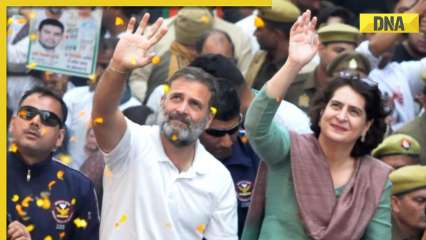
Rahul Gandhi is scheduled to lead a road show once it reaches Gwalior on Saturday evening and also address a public meeting in Hazira, MP Congress leader KK Mishra told reporters.
Case over deletion of deceased North Dakota AG’s emails will not be prosecuted

A special prosecutor has declined to press charges in connection with the deletion of late North Dakota Attorney General Wayne Stenehjem’s state email account days after his death in 2022. The deleted emails are part of a nearly 2-year-old controversy involving a building cost overrun of over $1 million disclosed by Drew Wrigley, Stenehjem’s successor. The issues, which happened before Wrigley’s tenure, rattled lawmakers, who tapped the state auditor to look into the matter. A Montana state investigator also probed the situation and gave a lengthy report last year. FARGO LOSES CHALLENGE TO NORTH DAKOTA’S CRACKDOWN ON LOCAL GUN CONTROL LAWS In July 2022, records Wrigley released in response to media requests revealed that Stenehjem’s executive assistant, Liz Brocker, had directed the deletion of his emails the day after he died, as well as those of his chief deputy, Troy Seibel, after Seibel resigned months later. Brocker herself resigned around the time reporters found out. Mountrail County State’s Attorney Wade Enget outlined his decision in a memo Thursday to Burleigh County State’s Attorney Julie Lawyer, saying he can’t file a charge of tampering with public records because North Dakota law didn’t clearly define at the time that emails are a government record. A new state law for email retention has since taken effect. Enget told The Associated Press he is still reviewing the Montana report regarding the remodel and lease of the building, which houses divisions of the attorney general’s office. The cost overrun occurred under Stenehjem. Brocker’s attorney, Tom Dickson, said Enget made the correct decision. “When you looked at the law in effect in 2022 or during the time frame we’re talking about here, it wasn’t a violation, and I concluded that almost right away,” Dickson said. Brocker now works in the Burleigh County State’s Attorney’s Office. Separate from Enget’s review, Republican state Rep. Jason Dockter, of Bismarck, who has an ownership interest in the building, was charged with a misdemeanor for “voting on legislative bills appropriating money to pay for property he had acquired a pecuniary interest in,” according to a complaint. He has pleaded not guilty; a trial is set for May.