

House Oversight releases James Biden’s deposition transcript as impeachment inquiry moves into ‘next phase’
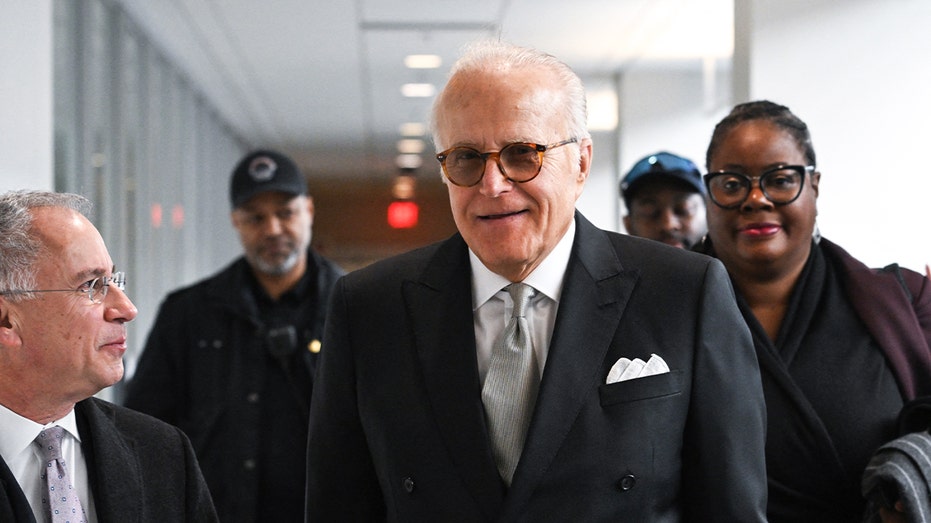
The House Oversight Committee released the transcript of President Biden’s brother James Biden’s testimony on Friday, as the panel enters its “next phase” of the impeachment inquiry. Fox News Digital obtained the transcript on Friday. James Biden testified before the committee last week that his brother, the president, was never involved in his family’s business dealings. House Oversight Committee Chairman James Comer, R-Ky., on Wednesday, after hearing testimony from Hunter Biden, James Biden, and their ex-business associates, said the impeachment inquiry against President Biden would move into its “next phase,” and hopes hold public hearings. This is a developing story. Please check back for updates.
Dems mock RNC for ‘desperate’ fundraising drive that includes stark admission on DNC’s money advantage

FIRST ON FOX: Democrats are rubbing salt in the wound when it comes to their massive fundraising advantage over Republicans as the GOP attempts to use its money troubles to fire up would-be donors. The Republican National Committee (RNC) has started running digital ads admitting that it “can’t afford” to go toe-to-toe with the Democratic National Committee (DNC) as both parties move deeper into a crucial election year. “Here’s the honest truth: things aren’t looking too good for Republicans. The Democrats are outraising us. They will be able to buy ads in markets we can’t afford, and they will OUTSPEND US. We are gearing up for the election of our lifetime,” the ad running on X says. BALLOT HARVESTING, POLL WATCHERS AND MORE: LARA TRUMP REVEALS HER PLAN TO TURBOCHARGE RNC The ad has drawn the attention of the DNC, which told Fox News Digital on Friday it was evidence of how “desperate” the RNC is. “In response to RNC’s dire financial situation, the RNC released the following statement on behalf of the DNC: ‘Here’s the honest truth: things aren’t looking too good for Republicans. The Democrats are outraising us. They will be able to buy ads in markets we can’t afford, and they will OUTSPEND US.’ We agree,” a DNC spokesperson quipped, using the RNC’s own words. Fox News Digital has reached out to the RNC for comment. MIAMI MAYOR, FORMER WHITE HOUSE HOPEFUL FRANCIS SUAREZ ENDORSES DONALD TRUMP FOR PRESIDENT Last month, Fox News Digital was the first to report on Democrats’ vast fundraising advantage over their Republican counterparts, who began the election year facing a shortage of cash and party disarray in crucial swing states. According to year-end reports filed with the Federal Election Commission (FEC), the Democratic National Committee (DNC) began the year with nearly three times the cash on hand reported by the Republican National Committee (RNC), and brought in nearly three times as much fundraising in the final month of 2023. The RNC reported its worst fundraising year since 2013, raising just $87.2 million in 2023, and starting 2024 with just over $8 million in cash on hand. If adjusted for inflation, the RNC’s fundraising was last this low in 1993 — before the 2002 McCain Feingold Act restricted political committee fundraising from corporations and capped donations from individuals. NIKKI HALEY BETS IT ALL ON SUPER TUESDAY AFTER DISMAL PRIMARY NIGHT DOWN SOUTH The DNC reported $120 million raised in 2023, and a record $21 million in cash on hand, marking a massive $13 million gap between the two committees. It also reported raising $14.7 million in December to the RNC’s $5.3 million. Although the RNC brought in more direct contributions than the DNC throughout the year, the latter enjoys a joint fundraising agreement with incumbent President Biden’s re-election campaign, as well as its other joint fundraising committees. The DNC overall outraised the RNC — which does not have a joint fundraising agreement with a sitting president — for much of the period. National committees of either party often see a decline in fundraising during election cycles against an incumbent president of the opposite party. RNC Chairwoman Ronna McDaniel is expected to formally resign her position after the March 5 Super Tuesday primaries, weeks after former President Trump asked her to step down. Trump endorsed his daughter-in-law, Lara Trump, to be co-chair alongside North Carolina GOP chair Michael Whatley as chairman. Get the latest updates from the 2024 campaign trail, exclusive interviews and more at our Fox News Digital election hub.
After fierce debate, Alaska governor threatens to veto education package

Alaska Republican Gov. Mike Dunleavy has threatened to veto an education package overwhelmingly passed by lawmakers after a bruising debate, saying it lacks provisions he favors, including a pilot program offering annual bonuses of up to $15,000 as a way to attract and keep teachers. Dunleavy, a former educator, said this week that there is still time for lawmakers to address issues like the proposed bonuses and changes to the application process for charter schools aimed at promoting such schools. The governor has 15 days, excluding Sundays, to act on a bill sent to him if the Legislature is in session. He can sign the bill, veto it or let it become law without his signature. A decision is expected by March 14. ALASKA FACES TEACHER SHORTAGE AS EDUCATION FUNDING DEBATE DOMINATES LEGISLATURE Some key lawmakers say the package was a compromise and question whether the state can afford the bonuses — or even if they would work. Debate over education funding has dominated this legislative session. The House last week voted 38-2 to support a compromise package that included a $175-million increase in aid to districts through a school funding formula; language encouraging districts to use some of the extra funding for teacher salary and retention bonuses; a state education department position dedicated to supporting charter schools and additional funding for K-3 students who need reading help. The vote followed a period of intense debate that also showed divisions within the Republican-led majority. The Senate, led by a bipartisan coalition, agreed 18-1 on Monday to support the package, sending it to Dunleavy. The compromise stemmed from negotiations after the House failed to support bringing up for debate a version of the bill that advanced from the House Rules Committee. That version included Dunleavy’s bonus plan, charter provisions and a roughly $80 million increase in state aid through the formula. After the bill passed the House, Republican Speaker Cathy Tilton said that while the compromise “fell short” of the earlier proposal, “I’d still call it a ‘qualified’ success.” School officials had sought a roughly $360 million increase in funding, citing the impact of inflation and high energy and insurance costs. But the state, which relies heavily on oil and earnings from Alaska’s nest-egg oil-wealth fund, has struggled with deficits over the last decade, and some lawmakers questioned whether that amount was realistic. The Legislature approved a one-time, $175 million boost last year, but Dunleavy vetoed half that. Lawmakers did not have enough votes for an override. Dunleavy has cast the bonuses and support of charter schools as a way of doing things differently. He has questioned whether simply increasing funding to districts will improve student performance. He has proposed paying teachers bonuses of $5,000 to $15,000 a year over three years, with the highest amount for those in the most remote areas. Estimates suggest the program could cost about $55 million a year. The language in the education package encouraging districts to use some of the funds for bonuses “does not ensure the desired ends are realized,” Dunleavy spokesperson Grant Robinson said by email Thursday. Republican Senate President Gary Stevens told reporters this week that there is a limit to what the state can afford. A revised revenue forecast is expected by mid-March, and lawmakers haven’t even begun publicly debating how big this year’s dividend payout to residents from oil-wealth fund earnings should be — typically one of the most contentious debates of the session. Sen. Bill Wielechowski, an Anchorage Democrat, raised questions about how well bonuses might work. He said he thinks there’s a “fair expectation” that teachers from overseas or the Lower 48 would leave after the three years is up. He said the level of support for the compromise bill was “pretty unheard of these days” for a controversial measure. Tom Klaameyer, president of NEA-Alaska, a teachers’ union, said if Dunleavy vetoes the education package, “then our schools remain in crisis.” The measure “was simply a life preserver that was being thrown or could have been thrown to schools to stem the crisis,” he said. He added: “We’re saying, throw the life preserver.”
Georgia judge set to hear final arguments in affair allegations against Fani Willis
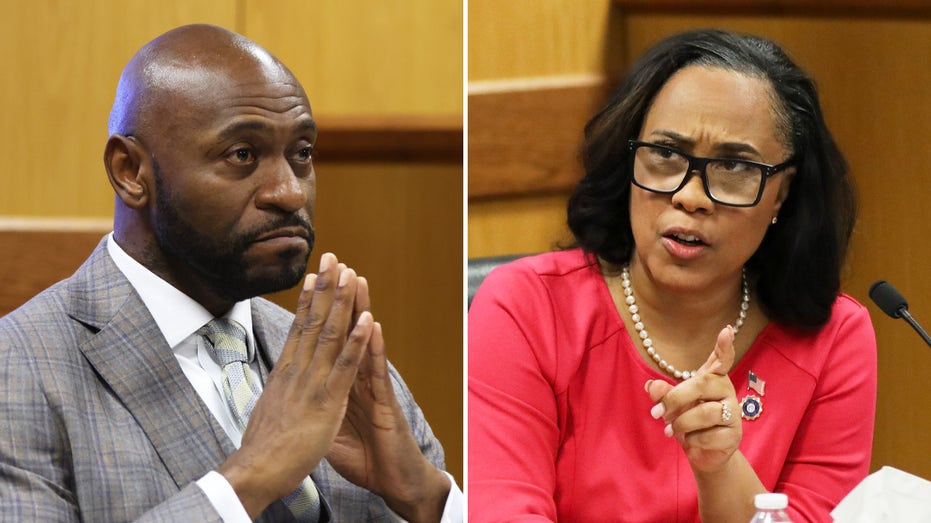
A Georgia state judge is set to hear final arguments on Friday afternoon on allegations that Fulton County District Attorney Fani Willis’ affair with special prosecutor Nathan Wade benefited her financially and should disqualify her from the case against former President Trump. Willis and her office are leading the sweeping racketeering cases against the former president and 18 co-defendants. Several co-defendants, including Michael Roman, earlier this year accused Willis of hiring Wade while they were romantically involved and that she benefited from his government salary through lavish vacations they took together. Willis and Wade have both denied the allegations and have claimed their romantic involvement started after Wade was hired in 2021. Willis claimed in court testimony that she would always reimburse Wade for her portion of their shared travels in cash. There are no receipts for those reimbursements, and one witness claimed their relationship started as early as 2019. Before closing arguments begin Friday, Judge Scott McAfee will also determine whether newly revealed text message data — allegedly showing that Wade visited Willis’ private home at least 35 times before he was hired — should be admissible as evidence. FULTON COUNTY DA FANI WILLIS ACCUSED OF LYING ABOUT TIMING OF AFFAIR WITH TRUMP PROSECUTOR Wade testified last month that he did not visit Willis’ condo more than 10 times before being hired in November 2021. Willis and Wade maintain that their relationship began in early 2022. Cellphone data seems to show that Wade twice traveled to Willis’ apartment late at night without leaving until the next morning. Wade and Willis have both testified that they did not sleep together at Willis’ condo in Haperville. The defense is trying to prove the existence and extent of any financial benefit to Willis from Wade from their relationship, which is the crux of their argument that Willis should be disqualified. Earlier this week, former law firm partner and divorce attorney Terrence Bradley testified under oath regarding what he knew about Willis and Wade’s personal relationship. Bradley took the stand after McAfee determined Bradley could not claim attorney-client privilege. Bradley, when pressed under oath, said he could not recall several details and timelines about conversations he had with former client Wade about Wade’s romantic relationship with Willis. KEY WITNESS IN FANI WILLIS CASE TESTIFIES HE MAY HAVE LIED IN TEXTS ABOUT FRIENDS’ AFFAIR Bradely said he could not recall key details or specific information more than two dozen times in the roughly two-hour testimony in Fulton County Superior Court on Tuesday. He also said he had only ever discussed Wade’s relationship with Willis once with Wade. Earlier this month, Willis’ father, John C. Floyd III, took the stand and confirmed what Willis testified to, that her father taught her to keep large amounts of cash on hand at all times. She said it was from these funds that she reimbursed Wade for luxury trips, which is why she had no record of the payments. Floyd also said he did not meet Wade until 2023 and that he was unaware his daughter had a romantic relationship with Wade until about seven weeks ago, when allegations of Willis’ impropriety were first made in court filings. TEXT MESSAGES SHOW TIMELINE OF EVENTS TO DISQUALIFY FANI WILLIS, TRUMP CAMP ASSERTS Michael Roman, a GOP political operative and co-defendant in the Trump case, first alleged that Willis had a conflict of interest in the case because she benefited financially from hiring her lover. Four co-defendants have made similar accusations. The defense, led by John Merchant, is also trying to prove Willis and Wade were romantically involved prior to Wade’s employment in the DA’s office. Robin Yeartie, a former “good friend” of Willis and past employee at the DA’s office, testified she had “no doubt” Willis and Wade’s relationship started in 2019, after the two met at a conference. Willis dismissed Yeartie’s testimony and said she no longer considers Yeartie a friend. The highlight of the two-day proceeding was Willis’ own — and unexpected — testimony, which was described by one expert as “belligerent.” She verbally sparred with lawyers for hours, at one point prompting the judge to threaten to strike her testimony. She also raised eyebrows by appearing to wear her dress backward. She did not return to the witness stand the following day. McAfee said at the start of the proceedings this month that it’s “clear that disqualification can occur if evidence is produced demonstrating an actual conflict or the appearance of one.” Fox News Digital’s Chris Pandolfo and Timothy Nerozzi contributed to this report.
Appeals court rules some Jan. 6 Capitol riot defendants improperly sentenced over ‘interference’

A federal appeals court in Washington, D.C., has ruled that some criminal defendants who were charged in connection with the Capitol riot on January 6, 2021, had their sentences improperly increased. The U.S. Court of Appeals for the D.C. Circuit ruled Friday that defendant Larry Brock’s sentence improperly included charges of “interference with the administration of justice.” According to Circuit Judge Millett, who wrote the court’s opinion, interference with Congress’ certification of the electoral votes in the 2020 presidential election does not apply to a sentence enhancement. “Brock challenges both the district court’s interpretation of Section 1512(c)(2)’s elements and the sufficiency of the evidence to support that conviction. He also challenges the district court’s application of the three-level sentencing enhancement for interfering with the ‘administration of justice.’” The appeals court affirmed Brock’s conviction but disagreed on the sentencing, saying: “As for Brock’s sentence, we hold that the ‘administration of justice’ enhancement does not apply to interference with the legislative process of certifying electoral votes.” AIR FORCE VET SEEN IN CAPITOL WITH ZIP TIES INTENDED ‘TO TAKE HOSTAGES,’ PROSECUTOR SAYS Other aspects of Larry Brock’s conviction were upheld but the appeals court said it would “vacate Brock’s sentence” and remanded the district court to resentence the single “interference” charge. Other January 6 defendants received longer sentences because of the same charge, which could throw their respective sentences into question. “Larry Brock participated in the violent January 6th riot at the United States Capitol that forced the evacuation of members of Congress and their staff and prevented Congress’s certification of the 2020 presidential election until the next day. After a bench trial, the court convicted Brock of six crimes, including corruptly obstructing Congress’s certification of the electoral count under 18 U.S.C. § 1512(c)(2),” Judge Millet wrote. “At sentencing, the district court applied a three level sentencing enhancement to Brock’s Section 1512(c)(2) conviction on the ground that Brock’s conduct resulted in ‘substantial interference with the administration of justice.’” TRUMP SAYS FILES DELETED BY JAN 6 COMMITTEE ‘EXONERATED ME COMPLETELY’ Brock was initially arrested and charged on January 6, 2021, on just two charges: knowingly entering or remaining in any restricted building or grounds without lawful authority, and violent entry and disorderly conduct on Capitol grounds. The “interference” charge was added at a later date. According to the U.S. Attorney’s Office, D.C., Brock was charged after he attended then-President Trump’s “Stop the Steal Rally” on the morning of January 6th. He then marched with others to the U.S. Capitol, entering the building at approximately 2:24 p.m. HOUSE JAN. 6 COMMITTEE DELETED MORE THAN 100 ENCRYPTED FILES DAYS BEFORE GOP TOOK MAJORITY: SOURCES “When he arrived, Brock ascended the Upper West Terrace and entered the building through the door to the Senate Wing. After exiting, he attempted to open a set of secured doors marked ‘U.S. Senate’ with an unidentified set of keys,” the attorney’s office said in 2021. It continued: “Brock ultimately reached the Senate floor, where he spent approximately eight minutes walking around and looking at paperwork on desks. During this time, Brock told others not to sit in the Vice President’s chair or to be disrespectful, explaining that the rioters could not afford to ‘lose the IO war.’” Brock left the Capitol at 3:02 p.m. “On his way out, he deescalated an altercation between another rioter and Capitol Police officers and guided the rioter out of the Capitol. In total, Brock spent approximately 38 minutes inside the building,” the attorney’s office said.
Iran Revolutionary Guard member and two others killed in attack in Syria

Iranian media reports say IRGC member Reza Zarei was killed in a suspected Israeli attack in the port city of Baniyas. A member of Iran’s Islamic Revolutionary Guard Corps (IRGC) and two other people have been killed in a suspected Israeli attack, Iran’s state news agency IRNA reported. IRNA said Reza Zarei, a member of the IRGC, had been “killed at dawn today by the usurping Zionist regime” in the port city of Baniyas. The Syrian Observatory for Human Rights war monitor corroborated Friday’s attack. It said three explosions shook the centre of Baniyas, on Syria’s Mediterranean coast, during the dawn strike on a villa that sheltered “a group affiliated with Iran”. A building was destroyed, killing an Iranian and two other non-Syrians who were with him, said the Britain-based Observatory, which relies on a network of sources inside Syria. There were separate reports that several others were also injured in the attack. There was no comment from Israel after the strike, but its air force has repeatedly bombed targets in Syria. On Thursday, Israel killed a Hezbollah member in a strike on Syria, close to the Lebanese border, the Observatory said, hours after similar attacks. “Yet another targeted assassination in Syria, yet another member of the Iranian Revolutionary Guards killed in Syria,” said Al Jazeera’s Zeina Khodr, reporting from Beirut in Lebanon on Friday. “Iranian media is blaming Israel. Israel usually does not comment on individual strikes but it has acknowledged carrying out hundreds of strikes against Iranian targets and Iranian-linked targets in recent years. “But in recent weeks, what we have seen is more frequent attacks, similar attacks. Back in December, for example, one of the top commanders of the Revolutionary Guards in Syria was assassinated in Damascus.” Israel has been carrying out raids for years as it does not want Iran to entrench itself militarily in Syria, according to Khodr. But since Israel’s war on Gaza began on October 7, its strategy has changed. “It is now going after high-value targets,” our correspondent said. “Reza Zarei, the man who was killed in Baniyas, was in charge of Iranian oil shipments to Syria. According to analysts, Israel is targeting these high-value targets to cut the link between the command in Tehran and local actors in Syria affiliated to Iran,” she added. Iran’s Revolutionary Guard have scaled back deployment of their senior officers in Syria due to a spate of deadly Israeli attacks and were relying more on allied militias to preserve their sway there, the Reuters news agency reported in February. Adblock test (Why?)
In New York, Israeli conscientious objectors find community after ostracism

New York, United States – He feared being called a “mishtamet”. A draft dodger. Someone who shrinks from their responsibility. But at age 17, Jewish social worker Asaf Calderon made a fateful decision: not to participate in the mandatory military service required of nearly all Israeli citizens. Instead, he pursued and was granted a medical exemption for mental health reasons. Still, his choice came with a cost. A soft-spoken man with round glasses and a tender smile, Calderon, 34, noticed that, afterwards, his friends started to seem distant. Members of his family fell out of contact. He realised his decision had left him a pariah in Israel, even among his loved ones. He eventually moved away to New York City. “It doesn’t matter why you do it,” Calderon said of becoming a conscientious objector, someone who refuses to participate in military service on ethical or moral grounds. “You are going to get ostracised in a way.” But the war in Gaza has amplified the pressures he and other conscientious objectors face. Since October 7, Israel has led a military campaign in the Palestinian enclave, with ground forces and aerial bombardment levelling entire neighbourhoods. The offensive follows an attack on southern Israel that killed an estimated 1,200 people. The subsequent war, however, has left more than 30,000 Palestinians dead, many of them children. United Nations experts have warned of a “risk of genocide”. “The main thing that I’ve been told ever since the war started, by Israeli people who oppose me, is that I have lost my Israeli-ness. That I’m no longer Israeli,” Calderon told Al Jazeera. Then came Shoresh. Founded in the United States at the end of November, partly in reaction to the war, the group aims to promote anti-Zionism from the viewpoint of Israelis themselves. Members of Shoresh join a Hanukkah march in New York City to call for a Gaza ceasefire [Claudia Gohn and Carolyn Gevinski/Al Jazeera] There, Calderon met others who avoided Israeli military service through roundabout means — or applied for official status as conscientious objectors. It gave him a sense of community that he struggled to find elsewhere. Guy Erez, who has attended Shoresh events, described joining the group as an antidote to the isolation. “Oh my God,” he remembers thinking. “Somebody gets it. Thank God I’m not crazy.” A tradition of mandatory military service There are no official statistics about the number of conscientious objectors in Israel — in part because there is no single profile of what a conscientious objector is. Some, like the members of Shoresh, are anti-Zionists, critical of Israel’s founding as a Jewish nation-state. Others, particularly in Orthodox Jewish communities, object to military service for religious reasons. Still more oppose certain military activities they might be called upon to perform, like assignments that take them into the occupied Palestinian territories. The history of mandatory military service — and refusing to comply — goes back as far as Israel itself. In May 1948, shortly after Israel declared independence, its government founded a conscription-based military, drawing largely from existing militias and paramilitary forces. By the following year, though, mandatory service had become cemented in Israeli law. Today, once Israeli men turn 18, most are expected to serve 32 months in the military. Women, meanwhile, serve 24 months. Broad exceptions are carved out for certain Palestinian citizens of Israel, religious groups, married people and “those deemed unfit medically or mentally”. And conscientious objectors can also apply for an exemption before a special military committee. But critics argue relatively few applications are granted, outside of religious grounds or proven track records of pacifism. Without such an exemption, the consequences of rejecting military service can be severe. Israel’s Defence Service Law stipulates that a citizen’s failure to fulfil their military duty can result in up to two years’ prison time. If they intentionally “injure or maim” themselves in the process, that prison sentence can jump up to five years. Since the war in Gaza began, an 18-year-old named Tal Mitnick has become the highest-profile instance of military refusal. He surrendered to the Tel Hashomer military base in December for a 30-day sentence. “I believe that slaughter cannot solve slaughter,” he said in a video recording, before walking inside. Mandatory service in the Israeli military is a long-running tradition, stretching back to the 1940s [Amir Cohen/Reuters] Refusing in solidarity with Palestinians The Israeli-Palestinian conflict has long been a motive for “refusers” — or “seruvnikim” — like Mitnick to reject military service, even before the current war began. In 2014, for instance, reserve soldiers with Unit 8200, a secretive intelligence group, penned an open letter to Prime Minister Benjamin Netanyahu, refusing to take part in Israeli military actions involving Palestinians. “There’s no distinction between Palestinians who are, and are not, involved in violence,” the reservists said of the military’s actions. The military’s “intrusive supervision”, they added, “does not allow for people to lead normal lives and fuels more violence, further distancing us from the end of the conflict”. Their public refusal was believed to be the first of its kind for Israel’s intelligence community. But Netanyahu has long pledged to take a firm stance against so-called “refuseniks”. Last year, when military reservists threatened to shirk their duties in protest of his government’s far-right reforms, Netanyahu threatened a crackdown: “The government will not accept refusal to serve.” Like many Israeli children, Roni Zahavi-Brunner — another member of Shoresh — grew up never questioning the requirement to serve, even though her family was relatively progressive. It wasn’t until she went to a boarding school in Italy that her perspective changed. Some of her classmates were Palestinians. Zahavi-Brunner came to know their struggles intimately, as they lived day in and day out together. “We were all 16, and yet they all had so many scary interactions with the [Israeli] military at such a young age,” said Zahavi-Brunner. “And I realised that that’s not something that I’m really willing to take part in.” One classmate became a close friend.
Israeli MP denounces ‘tsunami of fanatic nationalism’ in Israel

‘We are on the brink of a fascist dictatorship,’ Knesset member Ofer Cassif tells Marc Lamont Hill. Over the past five months, Israel’s war on Gaza has caused mass devastation and led to more than 30,000 deaths. In January, the International Court of Justice (ICJ) in The Hague found that there was a plausible risk that Israel may be committing genocide. While the ICJ case has been met with opposition from Israel’s political class, there have been those who have voiced support. Israeli parliament member Ofer Cassif has been an outspoken supporter of the ICJ procedures – a position that resulted in a failed attempt to expel him from Israel’s legislature, the Knesset, last week. So what is the cost of dissent in Israel in the current climate? This week on UpFront, Marc Lamont Hill speaks to Cassif about the current political climate in Israel and unpacks the push within Israel to silence dissent. Adblock test (Why?)
Record winter heat, dry air helped drive Panhandle fire risk

Texas has a wildfire season in winter, but climate change is extending it, scientists say.
Utah bill would protect clergy members when reporting child abuse to police

Utah faith leaders who learn about ongoing child abuse from a perpetrator during a religious confession will be able to alert police without fear of legal ramifications under a bill that received final legislative approval Thursday in the state Senate. The measure extends to clergy members the same legal protections that exist for mandatory reporters of child abuse and neglect, such as doctors, teachers or therapists. It passed the Senate in a 26-0 vote after receiving similarly unanimous approval in the House earlier this month. It now heads to the desk of Republican Gov. Spencer Cox. State law in Utah, where the vast majority of lawmakers belong to the locally headquartered Church of Jesus Christ of Latter-day Saints, exempts clergy of all denominations from a requirement to report child abuse if they learn about the crime in a confessional setting. Certain communications to clergy are considered privileged under the law, meaning neither the clergy member nor the person who confessed can be forced to testify in court about the contents of the conversation. NEW LEADER IN LDS CHURCH SAYS IT SHOULD DO MORE TO HELP VICTIMS OF SEXUAL ABUSE While the bill does not remove the legal loophole known as clergy-penitent privilege, Rep. Anthony Loubet said it provides new protections that could incentivize clergy members to come forward. State law already requires clergy members who learn about abuse from any source other than the perpetrator to tell authorities. “We hope to foster an environment where reporting child abuse is seen as not only a moral duty, but also a legally protected act,” the Kearns Republican and primary sponsor said. “This bill represents a step forward in achieving that balance.” Religious leaders who report abuse still will not be required to testify. But by reporting the crime to police, Loubet said a more objective party can start investigating and find other witnesses to speed up abuse intervention. Past proposals from Utah lawmakers to scrap the clergy exemption never even received a committee hearing as powerful religious groups pressured lawmakers to defend the sacred nature of confidential confessions. The new policy shielding clergy from being sued by a confessant they’ve accused of abuse is notably not opposed by The Church of Jesus Christ of Latter-day Saints or the Catholic Diocese of Salt Lake City, both organizations told The Associated Press this week. However, the Catholic Diocese expressed concern that the bill could be a gateway to further changes requiring Catholic priests to report abuse learned through confession, which spokesperson Marie Mischel said would present them with “the untenable choice of breaking the law or being excommunicated.” Doug Anderson, spokesperson for The Church of Jesus Christ of Latter-day Saints, said church leaders do not oppose the policy but would not elaborate. An earlier investigation by The AP revealed that more than half the states grant clergy-penitent privilege. As a result, some child predators who admit their crimes to clergy but not to law enforcement remain free and can continue harming children without police intervention. Although child welfare advocates have attempted to alter or eliminate the privilege, religious institutions including the Catholic Church, the Latter-day Saints and the Jehovah’s Witnesses have successfully lobbied state legislators throughout the country to maintain the loophole. The AP has catalogued more than 100 attempts to amend or eliminate the privilege, all of which failed. The AP investigation also found that the privilege is part of a risk management playbook that has helped the faith widely known as the Mormon church keep child sexual abuse cases secret. In addition to invoking the clergy privilege, the church also runs a sexual abuse reporting helpline that church leaders can use to divert abuse accusations away from law enforcement and instead to church attorneys who might bury the problem. Loubet has characterized the Utah bill as a compromise that enhances child protections while maintaining respect for sacred practices — interests that he said should not be mutually exclusive. Similar bills in Vermont and Delaware failed to pass out of committee last year. A clergy reporting proposal remains active in the Washington state House after it passed the Senate earlier this month. Child abuse prevention advocates such as Rabbi Avremi Zippel, program director at Chabad Lubavitch of Utah and chair of the Utah Crime Victims Council, said clergy members often see the good in people and can be blinded by their own subjectivity when they hear reports of wrongdoing. Zippel, an outspoken survivor of childhood sexual abuse, said it’s important for religious leaders to know they can divert to impartial investigators who might be able to save a child like him from future harm. “For clergy, so often we make it an attempt in our regular day-to-day lives to portray God. And sadly, from time to time, the impetus is born for us to play God,” he said. “The ability for clergy to also have the ability to avail themselves of the protections of reporting, to kick those situations to an objective outsider, is a gift that so many of our clergy across the state approve of.” But some local lawyers, such as Steve Burton of the Utah Defense Attorneys Association, have said abusers often approach church leaders because they have no one else they can ask for help. The bill, he argued, undermines that trust and may lead abusers to never pursue a path toward healing.