

Sen. John Cornyn declares candidacy for Republican leader after McConnell steps down

Texas Senator John Cornyn has officially entered the race to succeed Minority Leader Mitch McConnell, R-Ky. McConnell, 82, announced Wednesday that he plans to step away from leadership after becoming the longest-serving party leader in Senate history. Cornyn is one of McConnell’s top lieutenants in the GOP conference, though he does not currently hold a leadership role. “I am asking my Republican colleagues to give me the opportunity to succeed Leader McConnell,” Cornyn said in a statement released Thursday. In the developing pool of potential successors, Cornyn is frequently mentioned as one of the “three Johns” likely to next lead the conference. The other two are Sens. John Thune, R-S.D. and John Barrasso, R-Wyo. Of the three, Barrasso is considered the most conservative, a source familiar with Senate Republican conference discussions told Fox News Digital. Barrasso is also believed to be a more palatable option for the various factions of Republicans in the Senate who don’t always see eye to eye. He notably endorsed former President Trump early last month. However, Cornyn and Thune have also endorsed Trump for re-election, and Cornyn boasts that he voted with Trump more than 92% of the time during his term in the White House. The Texas Republican’s pitch is that he’s a proven election-winner with a track-record of building consensus to advance legislation. His statement pointed to his two terms as chairman of the National Republican Senatorial Committee, during which time Republicans unseated five Democrats and positioned the conference to capture the majority in 2014. “I believe the Senate is broken — that is not news to anyone. The good news is that it can be fixed, and I intend to play a major role in fixing it,” Cornyn said. To assuage criticisms from hardline Republicans over the Senate process, Cornyn pledged to “improve communication, increase transparency, and ensure inclusion of every Member’s expertise and opinion.” “We will restore the important role of Senate committees and reestablish the regular appropriations process, rather than lurch from one crisis to another. And we will return power back to our members; there will be no more backroom deals or forced votes on bills without adequate time for review, debate, and amendment,” Cornyn promised. Those promises appear to be an answer to Sen. MIke Lee, R-Utah, one of the most conservative members of the conference and a frequent McConnell critic. “Anyone wanting to be the next Senate GOP leader should tell Senate Republicans — as specifically as possible — how he or she would do the job differently than it’s been done since 2007,” Lee posted on X after McConnell announced he would step down. Lee demanded that the next Republican leader leverage “must-pass” spending bills to achieve conservative priorities like cutting spending and slashing regulations; that they refrain from interfering in GOP primaries against conservative candidates; and that they not “organize ambush sessions in an effort to scold and humiliate conservative senators,” among other grievances hardline senators have long voiced against McConnell. But only a handful of senators ever sided with Lee and others against McConnell. When Sen. Rick Scott, R-Fla., challenged McConnell for leadership in 2022, the vote was 37-10 in favor of McConnell. One Republican voted “present.” Some of those who reportedly voted against McConnell were senators Josh Hawley, R-Mo; Ted Cruz, R-Texas; Braun; Ron Johnson, R-Wis.; and Lindsey Graham, R-S.C. This is a developing story and will be updated. Fox News’ Chad Pergram contributed to this report.
Biden ‘must take a cognitive test,’ Trump says after president’s physical

Former President Trump is demanding that President Biden take a cognitive exam to prove his mental capacity for re-election. Trump made the remarks on Thursday via his proprietary social media platform, Truth Social. “Crooked Joe Biden must take a Cognitive Test. Maybe that way we would be able to find out why he makes such terrible decisions,” Trump wrote. “I took two of them, and ACED them both (no mistakes!).” WHITE HOUSE SPOX KJP SAYS BIDEN PASSES A ‘COGNITIVE TEST’ EVERYDAY WITH RIGORS OF THE PRESIDENCY “All Presidents, or people wanting to become President, should mandatorily take this test!” the former president added. White House press secretary Karine Jean-Pierre on Wednesday defended President Biden not taking a cognitive test as part of his physical exam, arguing that the demands of the job prove he does not need one. “If you look at what a clinical cognitive test is – actually what it does – it is a 15-minute appointment that is administered by someone who, most of the time, people don’t actually know,” Jean-Pierre said. BIDEN HEALTH SUMMARY RELEASED BY WHITE HOUSE, PRESIDENT CALLED ‘HEALTHY, ROBUST’ A reporter asked why a cognitive test was not included in the president’s physical exam this week, given the recent scrutiny he has received over major gaffes that raised questions about his mental fitness. Jean-Pierre said Biden’s doctor felt it was unnecessary and added that “folks need to understand that the president passes a cognitive test every day.” “You think about the job growth, you think about the record small business action, you think about the bloom in that particular space of 16 million more small businesses have been created. You think about delivering historic investment that has been done by a president who has to deal with these issues every day, again, on a granular level and so his doctor, including the neurologist, do not believe that he needs one,” Jean-Pierre said. In a release from Dr. Kevin O’Connor, the president’s physician, Biden was declared fit to “successfully execute the duties of the presidency.” “President Biden is a healthy, active 81-year-old male, who remains fit to successfully execute the duties of the Presidency, to include those as Chief Executive, Head of State and Commander in Chief,” the release said. Fox News Digital’s Bradford Betz contributed to this report.
Fetterman applauded for defending Boebert from ‘recreational cruelty’ online after son’s arrest

Democratic Sen. John Fetterman defended the son of Republican Congresswoman Lauren Boebert from critics on social media following news that the 18-year-old had been arrested. “This is a family in crisis and the recreational cruelty I see on social media needs to be out of bounds,” the Pennsylvania Democrat posted on X Wednesday in response to news that Boebert’s son had been arrested. “I know the impact this has on children. I’m calling for restraint because cruelty has substantial collateral damage. We can’t ever forget that they didn’t sign up for this.” Fetterman, who has struggled with well-documented mental health struggles of his own and been criticized by Boebert in the past, was praised on social media for his post by both Democrats and Republicans. FETTERMAN BLASTS PRO-PALESTINIAN PROTESTERS: ‘WHY AREN’T YOU DEMANDING THAT HAMAS SURRENDERS?’ “Amen to this,” veteran Democratic political strategist Mo Elleithee posted on X. “I keep rethinking this guy,” Townhall senior columnist Kurt Schlichter posted on X. “I don’t see eye to eye with John Fetterman on policy very much but he proves that he’s a more decent human being than most politicians,” political commentator Ian Miles Cheong wrote on X. “Another W for John Fetterman,” political commentator and attorney A.G. Hamilton posted on X. Fetterman’s tweet came after news broke Wednesday that Tyler Jay Boebert is facing five felony charges and more than a dozen misdemeanor offenses in connection to a recent string of vehicle trespass and property thefts, according to police in Rifle, Colorado. FETTERMAN BELIEVED GOING PUBLIC WITH MENTAL HEALTH STRUGGLES WOULD ‘END’ HIS CAREER He was charged with four counts of criminal possession of ID documents belonging to multiple victims, one count of conspiracy to commit a felony and “over 15 additional misdemeanor and petty offenses,” the department stated. Reached for comment shortly after the charges were reported, Rep. Boebert said, “I love my son Tyler, who has been through some very difficult, public challenges for a young man and the subject of attention that he didn’t ask for.” CLICK HERE TO GET THE FOX NEWS APP “It breaks my heart to see my child struggling and, in this situation, especially when he has been provided multiple opportunities to get his life on track,” she said in a statement to Fox News Digital. “I will never give up on him and I will continue to be there for him. As an adult and father, Tyler will take responsibility for his actions and should be held accountable for poor decisions just like any other citizen.” Fox News Digital’s Chris Pandolfo contributed to this report
Minnesota’s budget surplus soars to $3.7 billion, providing legislative breathing room

Minnesota’s budget outlook has improved, officials said Thursday, with a slightly bigger surplus forecast for the current budget that will give the Legislature a little more breathing room this session. Minnesota Management and Budget said the current two-year budget period, which runs through June 2025, is now expected to end with a surplus of just over $3.7 billion. That’s an increase of more than $1.3 billion from the last forecast, which was released in December. That compares with an overall state budget of $72 billion. MINNESOTA PROJECTS SHORT-TERM BUDGET SURPLUS, LONG-TERM DEFICIT AS HEALTH, EDUCATION SPENDING HIKES KICK IN “The near-term economic outlook has improved, with growth expected to persist through 2027,” the budget office said, citing higher tax collections. Corporate tax revenues are showing the largest gains due to higher-than-expected corporate profits. The budget office is also forecasting a smaller potential deficit for the next two-year budget, which begins in July 2025. MINNESOTA BUDGET TARGETS ADD UP TO NEARLY $17.9 BILLION IN NEW SPENDING, INCLUDES $3 BILLION FOR TAX CUTS Spending is still projected to exceed revenue, but only by $1.5 billion instead of the $2.3 billion previously forecast.
Kamala Harris praises ‘nonpartisan poll worker,’ immediately backfires when people learn who he really is

Vice President Kamala Harris took to social media to praise the efforts of poll workers, amid the presidential primaries and just months ahead of the 2024 election, but her complimentary remarks quickly backfired. “Our democracy could not function without nonpartisan poll workers like Vasu and Rob whom I met in Georgia. President Biden and I thank you and we support you,” she said on X Tuesday, sharing a photo of her appearing to listen to Vasu Abhiraman. Instead of applauding a “nonpartisan” poll worker, X’s Community Notes immediately tagged the tweet with additional context that readers “might want to know,” including that Abhiraman is actually a liberal advocate who promotes the progressive movement. “The ‘nonpartisan poll worker’ on the left is Vasu Abhiraman, a staffer at the left-wing Alliance for Justice and formerly of ACLU Georgia,” reads a notice on Harris’ tweet. KAMALA HARRIS ‘READY TO SERVE’ AS DEMOCRATS SOUND THE ALARM ABOUT BIDEN’S AGE: REPORT Abhiraman’s biography on the AFJ website identifies him as “the Helen Rosenthal Senior Counsel for the Building the Bench program at Alliance for Justice.” “In this role, he serves as a dedicated advocate for diversity and inclusion in the federal and state judiciary, working collaboratively with a coalition of organizations to identify and recruit potential candidates for the bench,” it continues. He is also credited with training “thousands of poll workers and deputy registrars to safeguard the democratic process during the COVID-19 pandemic.” Several X users immediately took notice of the additional context. One user described Harris’ tweet as “like a major self-own” and said it was “just sad.” HALEY SAYS US WILL HAVE ‘FEMALE PRESIDENT’ — EITHER HERSELF OR KAMALA HARRIS “Kamala… it is posts like this that destroy your credibility,” the user added. “If your staff cannot vet these properly before posting, you need to fire them. We will always fact-check and investigate all claims like this.” “Vasu and Rob are non-partisan? Can you prove that?” another added. One user responded: “Vasu Abhiraman (left) is quite partisan, actually.” “I really appreciate community notes!” added another. And, “Community Notes FTW [for the win].” On its website, the AFJ says its mission is to “build the strength of progressive movements by training and educating nonprofit organizations on advocacy, harnessing their collective power to transform our state and federal courts.”
Republicans sound alarm on migrant surge’s threat to hospitals in ‘sanctuary’ cities

FIRST ON FOX: Republicans on the House Ways and Means Committee are pushing the Biden administration to take action over reports that safety net hospitals in at least one state are hitting a breaking point due to a surge of migrants that has left states and cities overwhelmed across the U.S. – with lawmakers warning it could soon spread to other hospitals across the country. Republicans led by Chairman Jason Smith, in a letter to Health and Human Services Secretary Xavier Becerra, cited reports that the main safety net hospital – a hospital that provides care for uninsured patients – in Denver, Colorado, is facing financial pressures and has turned away patients “due to a massive influx of illegal immigrants into that community and the resulting increase in hospital visits and services provided to those individuals.” CBS News reported that the hospital had about $60 million in uncompensated care in 2020, and that is now up to $136 million, with a quarter coming from non-Denver residents. Officials have said that it is at a “critical point.” DUELING BIDEN, TRUMP VISITS TO BESIEGED BORDER COME AMID FRESH SLEW OF VIOLENT CRIMES BY ILLEGAL IMMIGRANTS The Republicans cited reporting that showed Denver Health is warning it is unable to invest in the buildings and is turning away Denver residents in the area seeking care for mental health and substance abuse. However, the lawmakers warn that the problem could soon become national. The nation is gripped by a three-year migrant crisis that saw more than 2.4 million migrant encounters in FY23 alone and more than 300,000 in December. A number of states, including those with “sanctuary” policies that forbid or limit cooperation with Immigration and Customs Enforcement (ICE), are struggling to deal with the numbers they are seeing and say the numbers are straining services. They have also appealed to the federal government for additional help. WHITE HOUSE CALLS FOR SANCTUARY CITIES TO COOPERATE WITH ICE AMID FUROR OVER ILLEGAL IMMIGRANT CRIMES “Denver Health’s challenges may soon be mirrored by hospitals in sanctuary cities across the country, imperiling the nation’s health care safety net and threatening health care access for vulnerable patients,” the Republicans say. The Republicans ask Becerra what actions the department has taken to ensure that hospitals are not turning away patients due to a surge of migrants into the area “as a result of their locations’ sanctuary policies.” The letter also asks what guidance it has provided to hospitals facing such a surge, and if it will amend Medicare regulations to require hospitals to prepare for such an eventuality. Fox News Digital reached out to HHS for comment on the letter. 7.2M ENTERED US UNDER BIDEN ADMIN, AN AMOUNT GREATER THAN POPULATION OF 36 STATES The letter comes as both President Biden and former President Donald Trump are heading to the border. Democrats and the administration have blamed Republicans for the current crisis by saying they refuse to pass additional funding and comprehensive reform to fix the crisis — including a recent funding and reform bill that failed to take off in the Senate. Biden is expected to renew calls to pass the bill when he visits the border. Republicans, however, blame the administration for the crisis and argue that it coincided with an ending of Trump-era policies and more liberal policies, including increased catch-and-release and reduced interior enforcement. “President Biden’s disastrous border policies are directly responsible for the unprecedented crisis at our southern border, resulting in millions of illegal immigrants flooding American communities and straining our public health infrastructure,” Smith said in a statement to Fox News Digital. Smith said he and his colleagues on the committee are “committed to holding the Biden HHS accountable to ensure our health care system is prepared to address the challenges this administration’s border policies have created.” “Until we return to the Trump-era policies that actually secured the border, the health of our entire nation will continue to suffer the consequences,” he said.
Conservatives rally behind Pennsylvania Amish farmer who suffered police raid over milk sales

Republicans on social media are rallying behind an Amish farmer in Pennsylvania who suffered a police raid last month for selling milk in violation of government regulations. Amos Miller argues that he sells his products only to his “private membership association” and not to the public, exempting him from government regulations. However, the state’s agriculture department alleges that his products have been connected to E. coli outbreaks in two other states. Those reports led to a raid of Miller’s farm in early January, followed by a lawsuit from the agriculture department. Lawyers for Miller have countered, saying the raid was justified by reports of a 2016 death supposedly linked to Miller’s products. CHAOS IN PHILADELPHIA SUBURBS: 6 MISSING AFTER HOUSE ERUPTS IN FLAMES, 2 OFFICERS AND GIRL REPORTED SHOT “The problem is: it never happened,” attorney Robert Barnes wrote in a court filing last week, according to Lancaster Online. “In fact, the elderly lady who died had advanced cancer, and never drank any raw milk product of Amos Miller’s, as her caretaker testified to under oath and a former Wall Street Journal reporter had already previously investigated and independently found.” Rep. Thomas Massie, R-Ky., condemned the raid as “shameful” in January, arguing it was a classic example of government overreach. TWIN ALLEGEDLY TRIED TO TAKE BLAME FOR SISTER AFTER FATAL AMISH BUGGY CRASH IN MINNESOTA “It’s a shame that small farmers have been pushed into these situations by overbearing government regulatory agencies and lawmakers captured by corporations and monopolies,” he told Newsweek in a statement on Wednesday. “I support all small farmers and consumers who wish to engage in voluntary transactions. It’s imperative that Congress take up my PRIME Act to ameliorate the plight of small farmers like Amos,” he added. Donald Trump Jr. also weighed in on X, sharing a video of the police raid and condemning Pennsylvania for going after “farmers selling to their neighbors.” Not all Republicans are siding with Miller, however. State Rep. Dave Zimmerman, who represents nearby Lancaster County, argues that Miller is not above the law. “Let me be very clear, I’m 100% against government overreach and have spent much of my time in the legislature fighting overregulation,” he wrote in a Jan. 17 statement. “I also recognize that while limiting the government is critical, some government is necessary.” “Mr. Miller’s case is not about the buying and selling of raw products as some have suggested – many farmers throughout the state sell raw products. I can go to a local farm right now to purchase raw products. There are many farmers with roadside stands right here in Lancaster County who sell raw products. Mr. Miller’s case is about following basic agriculture regulations that every other farmer in the state is subject to for the production of safe food. Is it too much to ask for farmers to follow these basic requirements to ensure food safety?” he asked. “Is the solution to simply ignore Mr. Miller and allow him to violate basic regulations that all other farmers must follow? That would certainly not be fair to other farmers,” he said. Miller’s defense against the state lawsuit is ongoing, but authorities have placed hundreds of products in Miller’s farm store under a detention order pending the result of the litigation.
What to expect as Iran votes to elect parliament, religious leaders
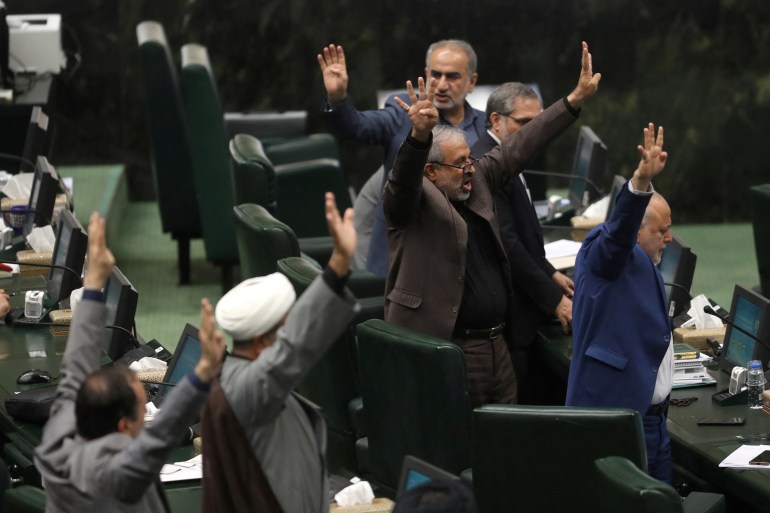
Tehran, Iran – Iranians will head to voting stations on Friday for parliamentary elections and to vote for the political and religious leaders who will choose the next supreme leader. Tens of millions of people are eligible to vote, but voter apathy remains high in Iran as the country faces a multitude of challenges following a tumultuous period since the last parliamentary elections in 2020. Here are the essentials you need to know in advance of the polls. Who can vote and when does voting start? Voters must be at least 18 years old. More than 61.2 million people are eligible to vote in a country of roughly 85 million. Polls will open across Iran at 8am local time (04:30 GMT) and will remain open for 10 hours as per the law. In the past, time for voting has always been extended, sometimes going past midnight when there is demand. Authorities have said 59,000 voting stations will be operational across the country, with 5,000 in the capital, Tehran, and 6,800 in the wider province of Tehran, which includes several other cities as well. In 1,700 voting stations, voting will be carried out “completely electronically” with polling devices prepared to accommodate voters. The Interior Ministry has dispatched 250,000 security force personnel to oversee voting and make sure the elections are held safely. Law enforcement will be supported by the Islamic Revolutionary Guard Corps (IRGC) and its Basij forces, along with the army. More than 90 people were killed in early January in a twin bombing in Kerman that was claimed by ISIL (ISIS), so security is expected to be tight. Who is being elected? The votes cast on Friday will determine the 290 lawmakers who will make up the parliament for the next four years. Votes will also be cast for 88 clerics who will each take a seat for eight years at the Assembly of Experts, which is tasked with selecting the country’s supreme leader. All candidates have been vetted by the powerful constitutional body known as the Guardian Council before being deemed eligible to run. The council, half of whose members are directly selected by Supreme Leader Ayatollah Ali Khamenei, also has to greenlight any law passed by parliament before it can move to the government for implementation. Will many people turn out to vote? The incumbent lawmakers – comprising mostly conservatives and hardliners – were elected to parliament in a February 2020 election that saw a 42-percent turnout, the lowest since the establishment of the Islamic republic after Iran’s 1979 revolution. While Iranian elections regularly saw turnouts of over 60 percent or even 70 percent in previous decades, a trend of apathy has persisted in more recent years. Only 48 percent of the electorate cast their votes in the 2021 presidential elections. Iranian Parliamentarians attend a parliament session in Tehran, Iran on August 13, 2023 [ISNA/WANA via Reuters] Why did voter turnout drop? Quite a few factors are believed to have combined to cause low turnout at the last parliamentary elections in 2020. Those elections came just more than a month after the United States assassinated Iran’s top general, IRGC Quds Force commander Qassem Soleimani, in a drone strike in Iraq. In the aftermath, at a time when war with the US seemed to be looming on the horizon, the IRGC downed a Ukraine National Airlines passenger flight with two missiles, killing all 176 on board in an incident it said was caused by a “human error”. Voting also came two days after Iran confirmed its first COVID-19 death after weeks of speculation that the virus was spreading across the country. The supreme leader in part blamed publicity surrounding the virus as a reason for lower-than-usual turnout. By 2020, it had also been two years since the US had reneged on Iran’s 2015 nuclear deal with world powers, imposing harsh unilateral sanctions on Iran. Those sanctions remain in place and have continued to squeeze the country’s troubled economy, which continues to be dogged by its decades-long malaise of consistently high inflation – now at about 40 percent – and high unemployment. Iran’s national currency, the rial, has also been slipping since the start of 2024, and was trading at approximately 585,000 to the US dollar on Thursday, having lost more than 15 percent of its value this year. Moreover, the previous election came after major public protests that started in November 2019, while this year’s election is coming in the aftermath of the deadly September 2022 nationwide protests, which lasted for months and reverberated across the globe. The elections for the 12th parliament and the sixth Assembly of Experts on Friday are also taking place as Israel’s war on Gaza has openly pitted the “axis of resistance” of political and military groups across the region backed by Tehran against the US and its allies. Who is up for election? Parliament speaker Mohammad Bagher Ghalibaf is expected to be re-elected. He has urged people to vote for his 30-strong list of allied candidates for Tehran, which includes a range of conservative and hardline candidates, including six women. The overwhelming majority of the rest of the seats in parliament are also expected to be won by such candidates, with all branches of power now dominated by these factions since the nuclear deal unravelled under former centrist President Hassan Rouhani in 2015 and pressures mounted on Iran. The Reformist Front, a coalition of groups that acts as the closest thing there can be to an opposition party in Iran, has said it refuses to take part in a “meaningless and non-competitive” election. But some reformist and centrist candidates have joined forces with others in an apparent effort to form at least a non-conservative minority in the parliament. Iran’s parliament has little say in the formulation of the country’s foreign policy and is mostly tasked with rules affecting local affairs, with issues related to the economy regularly at the top of the agenda. In recent months, it has also made headlines
Chadian opposition leader dies in gun exchange, state prosecutor says

The announcement comes a day after heavy gunfire erupts in N’Djamena near the headquarters of Yaya Dillo’s party. Chadian opposition politician Yaya Dillo has been killed during an exchange of fire with security forces, state prosecutor Oumar Mahamat Kedelaye says at a news conference. Heavy gunfire was heard on Wednesday in the capital, N’Djamena, near the headquarters of Dillo’s party, a witness told the Reuters news agency said. The shooting erupted after several people were killed in earlier clashes near the National Security Agency building. “He didn’t want to surrender and fired on law enforcement,” Abderaman Koulamallah, the Chadian communications minister also told the Agence France-Presse news agency. On Thursday, there was heavy military presence in the capital and access to the presidential palace was blocked. Internet access, which was blocked a day earlier, had still not been restored, the Reuters witness said. The violence flared amid tensions ahead of a presidential election set for May and June that could return the Central African state to constitutional rule three years after military authorities seized power. Dillo, leader of the Socialist Party Without Borders (PSF) and a cousin of transitional President Idriss Deby, had denied any involvement in the attack on the security agency. Speaking to the AFP, Dillo, who was planning to run in the coming election, dismissed the allegation as a “lie” and said it was politically motivated. Dillo also condemned accusations by the government of a PSF-coordinated “assassination attempt against the president of the Supreme Court”, which Dillo called “staged”. Adblock test (Why?)
Russian troops inch ahead as war in Ukraine barrels into third year

Ukrainian forces in the east struggled to find stable new defences during the past week, as Russian troops continued to advance after capturing Avdiivka – suggesting that artillery and other shortages were affecting Ukraine’s ability to hold the entire 1,000km (620-mile) front line. Ukrainian forces withdrew from Avdiivka on February 17, after a four-month Russian onslaught to take the town. On February 24, Ukrainian defenders also withdrew from the village of Lastochkyne, three kilometres (1.9 miles) west of Avdiivka, never having had a chance to build proper defences under fire. “There were no defences built there, and the fighters had to withdraw from the battles in Avdiivka and gain a foothold in the very process of hostilities,” one Ukrainian military reporter known as DeepStateUA wrote on Telegram to his 700,000 followers, predicting that the same would occur at other points of retreat. Three days later, Ukrainian troops withdrew from the villages of Stepove and Sieverne, north and south of Lastochkyne, after fierce overnight battles. Oleksandr Tarnavskyi, commander of the Tavria Group of Ukrainian forces, which is fighting in this area, said on February 27 that the line of defence had “stabilised” along Tonenke-Orlivka-Berdychi axis, a row of three villages immediately to the west of Lastochkyne, but even that assumption seemed precarious. Geolocated footage the following day showed Russian troops at the southeastern approaches to Orlivka. Tavria spokesman Dmytro Lykhoviy said Russian forces had increased the size of attacking units from squads to platoons or even companies. A squad can be as small as half a dozen troops. Platoons can be as big as 50, and a company can reach 200 troops. [Al Jazeera] Russian troops also claimed on February 26 to have advanced to the outskirts of Ivanivske, a village west of Bakhmut, the last city to fall to Russian forces, in May. And Russian forces reclaimed Robotyne, a village Ukrainian troops recaptured during last summer’s offensive at the western end of the front, in Zaporizhia. Geolocated footage on February 24 showed Russian troops in the centre of Robotyne, where military reporters said they had secured the central fortified positions in the school and recreational centre. Russian troops also continued to assault Ukrainian positions in Krynky, on the left bank of the Dnipro River in Kherson, without success. Control of the air One reason for Russian success in Avdiivka appears to have been the fact that Moscow’s forces secured local air superiority and used it to drop glide bombs – large, inert weapons fitted with fins to fly further and strike more accurately. Ukrainian President Volodymyr Zelenskyy said Russia had dropped more than 3,200 glide bombs since the beginning of the year. Ukraine has targeted Russian bombers and the command planes that coordinate them. On February 27, Ukraine downed two Sukhoi-34 bombers, at least one of them in the east, which are used to drop glide bombs. More consequentially, on February 23 the Ukrainian military shot down a Russian A-50 early warning and control plane over the Sea of Azov coast. The A-50 is an airborne radar used to monitor enemy air activity and air defences. Russia has used them to feed target coordinates to fighters, bombers and long-range missiles. Ukrainian military intelligence chief Kyrylo Budanov said the operation had left Russia with just six A-50 planes in the Ukraine theatre, and that more would be downed. [Al Jazeera] Zelenskyy told allies gathered in Paris that a strategic goal for this year was to deprive Russia of air superiority, just as it had been deprived of its control of the Black Sea and its superiority on land. Ukraine has long-targeted these planes, which are very difficult to replace. Russia only built 40 of them, and crew training takes years. Some reports suggest they will be vital to Russian efforts to shoot down Ukrainian F-16s, once they start flying. Western allies have promised to hand Ukraine at least two dozen. A year ago, fighters bombed the Machulishchi air base in Belarus, where Russia had parked an A-50, damaging it. On January 15, Ukraine downed an A-50 in the Sea of Azov, along with an Ilyushin-22 command plane. Ukraine also continued ranged attacks on Russian energy and defence infrastructure. On February 24, its military intelligence and security service said they had jointly organised a successful drone attack against the Novolipetsk Metallurgical Plant, in Lipetsk, 370km (230 miles) southeast of Moscow. The plant supplies steel for the manufacture of artillery, missiles and drones. Russia, too, continued its aerial campaign against Ukrainian infrastructure using missiles and drones. From February 21-28, Ukraine downed 79 Iranian-designed Shahed drones out of 98 launched, along with a number of missiles. What are Ukraine’s allies doing? Ukraine’s allies continued to pledge military assistance. Denmark announced a $228m military aid package including 15,000 rounds of ammunition. Germany announced a new military aid package that included 14,000 artillery rounds and reconnaissance drones. French President Emmanuel Macron gathered 20 heads of government, including 15 from the EU, in Paris on February 26, to discuss increasing the supply of artillery rounds to Ukraine. The European Union has said it will be in a position to manufacture a million artillery rounds a year by the end of 2024. Macron also called for the formation of a new alliance to supply “missiles and bombs of medium and long range to carry out deep strikes”. France and the UK were the first to supply Ukraine with Storm Shadow/SCALP missiles, with a 140km (87-mile) range, last May. Until then, the longest-range weapon Ukraine had was 80km (50-mile) range HIMARS rockets. The US is now reportedly thinking of supplying 300km range ATACMS missiles, and Ukraine claims it has developed a 700km range (435-mile) missile. [Al Jazeera] While there was “no consensus” on the sending of Western ground troops to Ukraine, “nothing should be excluded. We will do whatever it takes to ensure that Russia cannot win this war,” Macron said. Russian President Vladimir Putin responded with a threat of nuclear war, should NATO members send troops to Ukraine.