

President Biden’s great-great-grandfather was pardoned by Abraham Lincoln, documents show

President Biden’s great-great-grandfather received a pardon from President Lincoln, according to newly discovered documents in the National Archives. Biden’s relative in the incident, Moses J. Robinette, got into a fight with another Union Army civilian employee while camped along the Rappahannock River near Beverly Ford, Virginia, as the Civil War raged on March 12, 1864, according to documents reviewed by The Washington Post. The fight left the other man, John J. Alexander, bleeding from knife wounds, and Robinette was charged with attempted murder and was incarcerated near Florida. Three of Robinette’s friends were officers in the U.S. Army, and they petitioned Lincoln directly to overturn the sentence. WHY BIDEN’S ANGER AND DEFENSIVENESS INFLAMED ANXIETY ABOUT HIS MEMORY ISSUE They argued Robinette’s sentence was overly harsh for “defending himself and cutting with a Penknife a Teamster much his superior in strength and size, all under the impulse of the excitement of the moment,” according to the Post. DOJ DEFENDS SPECIAL COUNSEL REPORT ON BIDEN’S MEMORY: ‘CONSISTENT WITH LEGAL REQUIREMENT,’ NOT ‘GRATUITOUS’ They went on to say that Robinette was a true and faithful supporter of the Union and had opposed “traitors and their schemes to destroy the government.” “Think of his motherless Daughters and sons at home! … [Praying for] your interposition in behalf of the unfortunate Father … and distressed family of loved Children, Union Daughters & Union Sons,” they added. The petition first arrived at the desk of West Virginia Sen. Waitman T. Willey, who endorsed it and sent the request along to the White House. After a presidential review of the case, Lincoln agreed with the request and pardoned Robinette. “Pardon for unexecuted part of punishment. A. Lincoln. Sep. 1. 1864,” Lincoln wrote at the time, according to the Post. Robinette went on to live until 1903. The White House did not immediately respond to questions from Fox News Digital regarding whether Biden was aware of this incident in his family history.
Taliban’s conditions to attend UN meeting ‘unacceptable’, Guterres says

The Taliban has set unacceptable conditions for attending a United Nations-sponsored meeting about Afghanistan in the Qatari capital, Doha, UN Secretary-General Antonio Guterres says. “I received a letter [from the Taliban] with a set of conditions to be present in this meeting that were not acceptable,” Guterres said at a news conference on Monday. “These conditions denied us the right to talk to other representatives of Afghan society and demanded a treatment that would, to a large extent, be similar to recognition,” the UN chief added. The two-day meeting which ended on Monday in Doha brought together member states and international envoys to Afghanistan to discuss an array of issues facing the country. But the Taliban didn’t attend because its demands were not met. The Taliban took over Kabul in August 2021 after United States and NATO forces withdrew following two decades of war. However, no country recognises it as Afghanistan’s government, and the UN has said that recognition is almost impossible while bans on female education and employment remain in place. The biggest point of contention between the international community and the Taliban are the bans imposed on women and girls. Since it retook power, it has ordered women to cover up when leaving home, stopped girls and women from attending high school and university, and banned them from parks, gyms and public baths. The Taliban insists the bans are a domestic matter and reject criticism as outside interference. Guterres said it was essential to revoke the restrictions. In January, Taliban chief spokesperson, Zabihullah Mujahid, said the UN preoccupation with Afghan women was unwarranted and dismissed its concerns. “Afghan women wear hijab of their own accord,” he said on X. “They don’t need to be forced. The Vice and Virtue Ministry hasn’t forced anyone [to wear hijab] either.” Another point of contention is the appointment of a UN special envoy in the country, which the Taliban opposes. On Monday, Guterres said there needed to be “clear consultations” with the Taliban to have clarification of the envoy’s role and who it could be to “make it attractive” from the Taliban’s point of view. He said it was in the Taliban’s interests to be part of the consultations. Many governments, international organisations and aid agencies have cut off or severely scaled back their funding for Afghanistan in response to the Taliban policies, causing a serious blow to the country’s struggling economy. “One of our main objectives is to overcome this deadlock,” Guterres said, explaining that a roadmap needed to be created in which “the concerns of the international community” and the concerns of the “de facto authorities of Afghanistan” are taken into account. Lotfullah Najafizada, CEO of Amu TV, an international media outlet, told Al Jazeera the Taliban made a strategic mistake by not attending the talks. “I think it is very important also for the Taliban to understand where the world stands. At the moment the world has planned to go ahead without the Taliban, which is not something that they expected,” he said. “I think it is very important for the international community to build consensus and deal with the Taliban with one voice.” The meeting in Doha also aimed at a more coordinated response to tackle issues in Afghanistan. Guterres said there had been discussion of a “contact group”, with a “limited number of states able to have a more coordinated approach in the engagement with the de facto authorities”. He said this could include permanent members of the UN Security Council, neighbouring countries and relevant donors but it would be “up to member states to decide how to create it”. “I believe it would be a way to have coherence in the way the international community is engaging with the de facto authorities of Afghanistan,” he said. Adblock test (Why?)
Wisconsin Gov. Evers signs new legislative maps into law after Republicans pass them

Wisconsin Democratic Gov. Tony Evers signed new legislative district maps into law on Monday that he proposed and that the Republicans who control the Legislature passed to avoid having the liberal-controlled state Supreme Court draw the lines. Democrats hailed the signing as a major political victory in the swing state where the Legislature has been firmly under Republican control for more than a decade, even as Democrats have won 14 of the past 17 statewide elections. “When I promised I wanted fair maps — not maps that are better for one party or another, including my own — I damn well meant it,” Evers said prior to signing the maps into law at the state Capitol. “Wisconsin is not a red state or a blue state — we’re a purple state, and I believe our maps should reflect that basic fact. WISCONSIN’S GOP-LED LEGISLATURE MAKES SECOND ATTEMPT TO DRAW MAPS BEFORE SUPREME COURT DOES Democrats are almost certain to gain seats in the state Assembly and state Senate under the new maps, which be in place for the November election. Republicans have been operating since 2011 under maps they drew that were recognized as among the most gerrymandered in the country. Democrats tried unsuccessfully for more than a decade to overturn the Republican-drawn maps. But it wasn’t until control of the state Supreme Court flipped in August after the election of liberal Justice Janet Protasiewicz that Democrats found a winning formula. They filed a lawsuit the day after Protasiewicz joined the court. Republicans argued that Protasiewicz shouldn’t hear the lawsuit because she said during her campaign that the GOP-drawn maps were “rigged” and “unfair.” But she did not recuse herself. Protasiewicz ended up providing the deciding fourth vote in a December ruling that declared the current maps to be unconstitutional because not all of the districts were contiguous, meaning some areas were geographically disconnected from the rest of the district. The court said it would draw the lines if the Legislature couldn’t pass maps that Evers would sign. The court accepted maps from the governor, Democratic and Republican lawmakers, as well as three other parties to the redistricting lawsuit. Consultants hired by the court determined that maps submitted by the Legislature and a conservative law firm were “partisan gerrymanders,” leaving the court with four Democratic-drawn maps to choose from. Facing a mid-March deadline from the state elections commission for new maps to be in place, the Legislature on Tuesday passed the Evers maps. While skeptical Democrats voted against the governor’s plans, many of the party’s leaders praised Evers’ signing of the new maps Monday. “Wisconsin will no longer be among the most gerrymandered states in the nation,” Assembly Democratic Leader Greta Neubauer said in a statement. Neubauer, who voted against the maps, added that “this is the beginning of a new era in Wisconsin — where the will of the people will once again be the law of the land.” Senate Democratic Leader Dianne Hesselbein said in a statement that the new maps are “a huge win for the people of Wisconsin” — even though she voted against the maps. Wisconsin Democratic Party Chairman Ben Wikler said the new maps will have a “reverse coattails” effect benefitting Democrats in the statewide presidential and U.S. Senate races this year because more legislative races will be competitive. Republicans described having no better option. Republican Assembly Speaker Robin Vos said just before the bill was passed that the maps were a “huge win” for Evers and that under them, “the Legislature will be up for grabs.” Other Republicans were even more stark. “Republicans were not stuck between a rock and hard place,” Republican state Sen. Van Wanggaard said in a statement. “It was a matter of choosing to be stabbed, shot, poisoned or led to the guillotine. We chose to be stabbed, so we can live to fight another day.” Democrats also raised concerns that under the bill, the maps wouldn’t take effect immediately. That raises a legal question for any special or recall elections that take place before November, given that the state Supreme Court already ruled that the old maps are unconstitutional. Evers said Monday that “these maps will take effect immediately after publication and will be in place for the fall elections.” He also asked the state Supreme Court to clarify that the maps will be in effect for any special elections prior to the November election. WISCONSIN REPUBLICANS WOULD MAINTAIN MAJORITY IN PROPOSED LEGISLATIVE MAPS, BUT WITH REDUCED DOMINANCE Under the new maps, there would be 15 incumbents in the Assembly who would be forced to run against another incumbent and six such pairings in the Senate. Only one of the Assembly pairings would pit one Democratic incumbent against another one. In the Senate, the only Democratic pairing includes an incumbent who has already decided not to run this fall. Litigation continues in more than a dozen states over U.S. House and state legislative districts that were enacted after the 2020 census. The Wisconsin Supreme Court also has been asked by Democrats to take up a challenge to the state’s congressional district lines. The lawsuit argues the court’s decision to order new state legislative maps opens the door to challenging the congressional map. Republicans hold six of the state’s eight congressional seats.
Israel to restrict access to Jerusalem’s Al-Aqsa Mosque during Ramadan
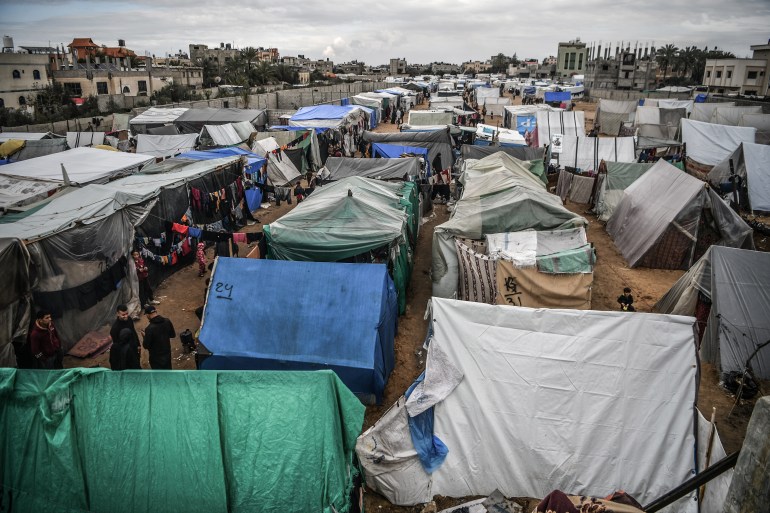
PM’s office says Israel will impose some restrictions on access to Old City site during Islamic holy month. Israel will impose some restrictions on access to Al-Aqsa Mosque in the Old City of occupied East Jerusalem during the Muslim holy month of Ramadan according to “security needs”, Prime Minister Benjamin Netanyahu’s office says. The Al-Aqsa compound, the third holiest site in the world for Muslims, sits atop a hill in the Old City. The site is also revered by Jews, who refer to it as the Temple Mount. Restrictions on access to the site have long caused friction, particularly around religious holidays such as Ramadan, which will begin about March 10 this year. Asked about the possibility of blocking access for some worshippers during the holy month, Netanyahu’s office said on Monday: “The prime minister made a balanced decision within the security needs determined by professionals.” His office gave no further details. Hamas, the Palestinian group that governs the Gaza Strip, denounced the planned restrictions and urged Palestinians to mobilise against them. It described the restrictions as “a continuation of Zionist criminality and religious warfare led by the extremist settlers group in the terrorist occupation government against our Palestinian people”. The group called on Palestinians in Israel, Jerusalem and the occupied West Bank to “reject this criminal decision, resist the occupation’s arrogance and insolence, and mobilise to stand firm and steadfast in Al-Aqsa Mosque”. Israel often sets rules to limit the number of worshippers at the site, citing security reasons. Israeli forces have previously undertaken violent raids at the site during Ramadan. Tents in Rafah house Palestinian families displaced by Israel’s air, land and sea attacks on the Gaza Strip on February 18, 2024 [Abed Zagout/Anadolu via Getty Images] The announcement comes as Israel warns that it will continue its assault on Gaza during Ramadan, including in the densely populated Rafah area in the south. “The world must know and Hamas leaders must know: If by Ramadan the hostages are not home, the fighting will continue everywhere to include the Rafah area,” war cabinet member Benny Gantz said on Sunday. “We will do so in a coordinated manner, facilitating the evacuation of civilians in dialogue with American and Egyptian partners and to minimise the civilian casualties as much as possible.” “Hamas has a choice. They can surrender, release the hostages and the civilians of Gaza can celebrate the feast of Ramadan,” he said. Israel launched its assault on Gaza on October 7 after Hamas led attacks on Israel, killing at least 1,139 people, according to an Al Jazeera count based on official figures. It also took about 250 other people captive. Israel’s bombardment and ground invasion of Gaza has killed more than 29,000 people, according to Palestinian authorities. It has also reduced much of Gaza to rubble and displaced more than 80 percent of its population, according to aid groups. Negotiations over a potential truce and hostage-for-prisoner exchange have appeared to stall in recent weeks with Netanyahu publicly describing demands by Hamas as “delusional”. The United States, Israel’s top ally, has said it still hopes to broker a pause in hostilities but signalled it would veto a draft United Nations resolution calling for a ceasefire and argued against measures that could jeopardise “the opportunity for an enduring resolution of hostilities”. There is growing international pressure on Israel to halt the war in the enclave, especially as UN agencies warn of catastrophic damage and casualties if Israeli forces press on towards Rafah. Still, Netanyahu has insisted on his war goals of “destroying” Hamas. On Sunday, the Israeli leader promised “total victory” over Hamas despite rising anger from desperate relatives of the remaining captives and growing antigovernment protests. Israel says it believes about 130 captives remain in Gaza, including 30 presumed dead. Adblock test (Why?)
Qatar criticises Israel’s Netanyahu over Hamas comments

Qatar Foreign Ministry officials accuse prime minister of seeking to prolong Israel’s war on Gaza. Qatar has criticised comments from Israeli Prime Minister Benjamin Netanyahu in which he said the Gulf state should do more to secure the release of hostages held by Hamas in Gaza and claimed that the Palestinian group is financially dependent on Doha. In a speech before American Jewish leaders on Sunday, Netanyahu said pressure should be applied on Qatar, which played a key role in mediating November’s truce and hostage-prisoner exchange between Israel and Hamas. “Qatar can press Hamas as no one else can. They host Hamas leaders. Hamas is dependent on them financially,” Netanyahu said. “I urge you to press Qatar to press Hamas because we want our hostages released.” Qatari Ministry of Foreign Affairs spokesman Majed Al-Ansari said Doha “categorically rejects the empty accusations”. “The Israeli Prime Minister’s recent statements in which he calls on Qatar to pressure Hamas into releasing the [Israeli] hostages are nothing but a new attempt by him to delay and prolong the war for reasons that have become clear to everyone,” he wrote on X on Monday. The Israeli prime minister’s recent statements calling on Qatar to pressure Hamas to release the hostages are nothing but a new attempt to stall and prolong the war for reasons that have become obvious to everyone. The Israeli Prime Minister knows very well that Qatar has been… — د. ماجد محمد الأنصاري Dr. Majed Al Ansari (@majedalansari) February 19, 2024 “We categorically reject the empty accusations made by the Israeli Prime Minister regarding Qatari efforts in reconstruction and humanitarian aid to the Palestinian people in Gaza, portraying them as funding Hamas, which he personally knows were carried out in full coordination with Israel, the US, Egypt, the United Nations, and all concerned parties,” Al-Ansari said. Qatari Prime Minister Sheikh Mohammed bin Abdulrahman bin Jassim Al Thani said over the weekend that negotiations over a potential ceasefire were “not very promising”. Sheikh Mohammed, who is also foreign minister, said on Saturday he could not give details on the talks but, as with past deals, there were two elements: humanitarian conditions in Gaza and the number of Palestinian prisoners to be released in exchange for the release of Israeli captives. The United States, Qatar and Egypt have spent weeks trying to broker a halt to fighting in Gaza and release of the captives, but there’s a wide gap between Israel’s and Hamas’s demands. Qatar said on Saturday that the talks “have not been progressing as expected”. Hamas has said it will not release the remaining hostages without Israel ending the war and withdrawing its forces from Gaza. It also demands the release of hundreds of Palestinians imprisoned by Israel, including top fighters. Netanyahu has publicly rejected the demands and any scenario in which Hamas would rebuild its military and governing capabilities. He said he sent a delegation to ceasefire talks in Cairo last week at US President Joe Biden’s request but doesn’t see the point in sending a team again. In an interview with Israel’s Kan public broadcaster, Netanyahu’s national security adviser, Tzachi Hanegbi, said military pressure and sticking to a strict line in negotiations could lead Hamas to drop its “absurd demands”. Netanyahu also opposes Palestinian statehood, which the US calls a key element for normalisation of relations between Israel and regional heavyweight Saudi Arabia. Previously in December, Israel pulled its Mossad negotiators from Qatar after an impasse in negotiations. Israel had accused Hamas of not fulfilling its side of an agreement to extend the November truce in Gaza. Adblock test (Why?)
Corporate Japan deals an unwitting blow to US East Asia policy

Japanese trading giant Itochu’s surprise announcement on February 5 that it was terminating its agreement with the Israeli defence contractor Elbit Systems has sent shockwaves throughout corporate Japan. Itochu stated specifically that they based their decision on the International Court of Justice ruling that Israel may be committing genocide in Gaza, and on the position of the Japanese government that the ICJ decision must be implemented “in good faith”. Itochu matters; it is a household name in Japan, being the third largest trading firm and one of the titans of the country’s economy with a 2023 revenue of over $104bn. Prominent trading companies like Itochu are also politically important, as they have historically been looked at as the captains of Japan’s trade-based economy. Itochu’s decision sends a very clear message about the acceptability of doing business with Israel. The decision puts Itochu in a different league from the many Western states and companies that have either ignored the ICJ ruling or disparaged the charges of genocide as “without merit”. The governments of the United States, the United Kingdom, France and Germany, just to name a few, have continued to shower Israel with weapons and political support to continue the wanton slaughter of innocent civilians, in blatant violation of the ICJ’s preliminary decision. Some Western governments have started to backtrack on their support, but words are cheap, and the flow of weapons continues. Indeed, those governments have taken their criminal complicity to a new level, by terminating funding to UNRWA, the main UN agency serving Palestinian refugees, on the basis of no doubt spurious Israeli accusations that a handful of the organisation’s 13,000 staff may have been involved in the October 7 attacks on Israel. One cannot help but question the timing of the “dodgy dossier” Israel submitted to its Western accomplices, literally hours after the ICJ issued its ruling that Israel was plausibly committing genocide. Always recipient to the Israeli narrative, the pliant Western media have duly highlighted UNRWA’s imagined involvement in terrorism, while practically ignoring the ICJ ruling. The defunding of UNRWA will almost inevitably result in famine amongst the over 85 percent of Palestinians in Gaza who are displaced – a textbook example of “deliberately inflicting conditions of life calculated to bring about the physical destruction” of an ethnic group, which qualifies as an act of genocide under international law. Generally, Japan is not an outspoken champion of Palestinian rights – indeed, the country joined its Western allies in stopping funding for UNRWA – or of human rights in general. Itochu, for its part, is one of the first Japanese companies to start human rights-based due diligence of its business operations (a process which clearly failed when they signed an agreement with Elbit in the first place). Nevertheless, in recent years Japanese companies have proven increasingly sensitive to public opinion on human rights and environmental issues. The failed 2020 Tokyo Olympics left behind a legacy of wasted public funds and corruption, but it at least served as a catalyst for corporate Japan to take the UN Guiding Principles on Business and Human Rights (which state that companies have a responsibility to respect international human rights norms) more seriously. That is not to say that Japanese companies are necessarily better than their Western counterparts – they are not – but in this instance, the demonstrations that had been taking place in front of Itochu’s Tokyo headquarters, and the popular boycott of the Itochu-owned convenience store chain Family Mart in Muslim countries like Malaysia, clearly pushed the company over the line. According to Itochu, the agreement with Elbit was to procure material for the Japanese military, not for the provision of Japanese technology or weapons to Israel (Itochu also stated they tied up with Elbit on the basis of a Japanese government request – a claim implausibly denied by the authorities). Assuming that is true, that makes the cutting of ties even more significant. Itochu has essentially accepted that doing business with Israeli military companies ipso facto results in complicity with Israeli genocide. It logically follows that relations with companies – Israeli or not – that are involved with other Israeli violations of international law should also be terminated. That is exactly what the Boycott, Divestment, and Sanctions (BDS) campaign rightfully calls for, to hold the apartheid state to account for its crimes. Itochu’s decision is surely the harbinger of increasing Israeli isolation. The Western world has long been the primary front line of the BDS movement and the Israeli attempts to suppress it. The developments in Japan show, if there ever was any doubt, that BDS has truly gone global. The decision by Itochu may also have reverberations far beyond Palestine, since Japanese remilitarisation has long been integral to the US’s grand strategy in East Asia. After World War II, Japan adopted a pacifist constitution that prohibits the use of force to resolve international disputes. However, US pressure on Japan to play a larger military role in Asia has increased in recent years, as Americans get more and more anxious about Chinese challenges to US hegemony. What until then was a cautious Japanese approach changed dramatically in 2012, with the advent of the ultranationalist Shinzo Abe as prime minister. With little to no regard for public opinion, Abe rammed through extremely controversial bills and policies aimed at remilitarisation, in particular giving the military much greater latitude in fighting in concert with allied (read: US) forces even outside of Japan. Weapons exports and international joint development, long a taboo, became a government priority overnight. Japan also proactively entered into alliances overtly aimed at keeping China in its place in the international pecking order, such as the Quadrilateral Security Dialogue. Abe finally stepped down in 2020, but the general direction has remained the same, and in 2022 the government jumped on Russia’s invasion of Ukraine to push forward a near-doubling of the military budget. From the get-go, stronger relations with Israel were integral to Japan’s greater incorporation into the US military alliance. Heavy reliance on oil from Arab
Farmers reject Centre’s proposal on MSP, to resume protest from Feb 21

Besides a legal guarantee of MSP, farmers are also demanding the implementation of the Swaminathan Commission’s recommendations among other things.
Biden admin reportedly doubling down on gas car crackdown
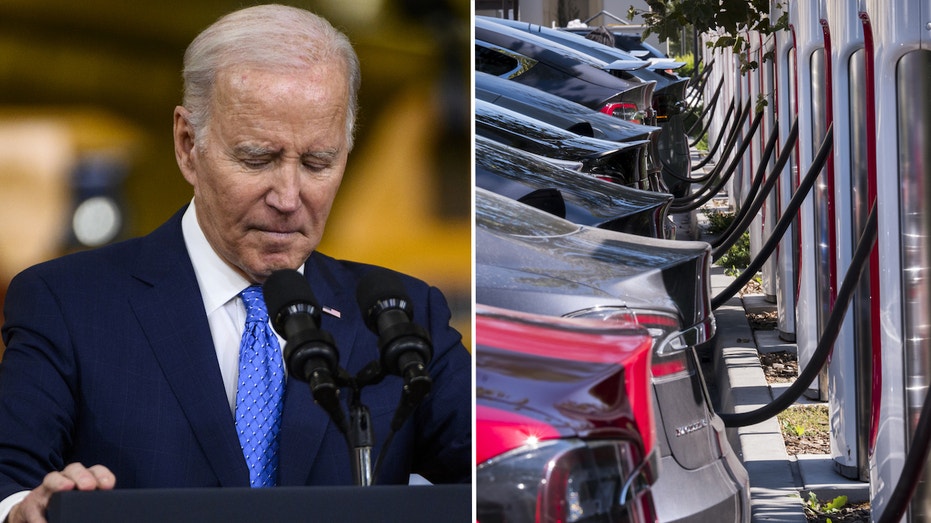
The Biden administration is poised to soon finalize gas-powered car tailpipe emissions standards that consumer advocates and energy industry groups have dubbed a “de facto electric vehicle mandate.” The Environmental Protection Agency’s (EPA) proposed tailpipe emissions – which were in recent weeks submitted to the White House Office of Management and Budget for final review – are designed to ensure a staggering 67% of new car sales are electric by 2032. Over the weekend, the New York Times and Washington Post reported the White House is set to double down on that lofty goal while loosening earlier targets. “The President has been clear since 2020 that he intends to use his agencies to eliminate sales of new gas cars,” the American Fuel & Petrochemical Manufacturers said in a statement following the media reports. “Tinkering with the near-term speed of implementation doesn’t change the end game, which is banning new gas-powered cars.” “Consumers would still end up in the same place, with vastly restricted access – and in some cases no access if California’s ban receives EPA approval – to the range of new vehicle options they enjoy today that fit their needs and budgets,” the group, which has lobbied against the EPA’s proposal, added. “Lowering the pace of the forced transition would not help consumers or protect our country’s energy security.” VIRGINIA DEMOCRATS UPHOLD STATE’S EV MANDATE DESPITE GROWING OPPOSITION: ‘DEFY COMMON SENSE’ In a statement to Fox News Digital, EPA spokesperson Timothy Carroll declined to comment on the reports but said the agency was committed to finalizing a tailpipe standard that is “readily achievable, secures reductions in dangerous air and climate pollution and ensures economic benefits for families.” HOUSE JOINS SENATE, STRIKES DOWN BIDEN EV CHARGER RULE PROTECTING CHINESE COMPANIES Citing officials familiar with the administration’s plans, the New York Times first reported, and the Washington Post later confirmed, that the more aggressive federal tailpipe regulations and targets for EV sales would be delayed until 2030 under the plan EPA is preparing to finalize soon. Automakers would then be forced to rapidly ramp up compliance with the standards in just a couple of years. The reported slight delay on the initial implementation of the hefty standards for new vehicles is being considered as a result of concerns auto union leaders expressed to White House officials. Over the last year, the broader push for mass EV proliferation has hit several roadblocks as sales have declined and prices have ticked up. “When it’s all said and done, the outcome is the same,” Tom Pyle, the president of the Institute for Energy Research, told Fox News Digital in an interview. “The Biden administration is attempting to force automakers to produce only electric vehicles and the market is clearly not interested in that. They can try to soft-pedal all they want, but the fact is it’s still a ban on conventional cars.” “The last year has shown that EVs are not ready for prime time,” Pyle continued. “They may be a vehicle of choice for some people, but the vast majority of car buyers want an affordable and reliable vehicle. EVs aren’t that.” MAINE FORCED TO DELAY VOTE ON EV MANDATE AMID WIDESPREAD POWER OUTAGES Overall, under the proposal, which EPA unveiled in April 2023, the White House projected that 67% of new sedan, crossover, SUV and light truck purchases would be electric by 2032. In addition, up to 50% of bus and garbage truck, 35% of short-haul freight tractor and 25% of long-haul freight tractor purchases could be electric by then. But, in the months since it was first released, EPA has faced considerable pressure from industry and Republican lawmakers to reverse the proposal. They have argued the market isn’t ready for such a massive increase in EV purchases, while the proposed standards would benefit China and lead to higher prices for Americans. “The proposals are the latest effort by the Biden administration to commandeer America’s transportation sector and force its complete vehicle electrification under the guise of mitigating climate change,” a group of more than 150 House Republicans wrote to EPA Administrator Michael Regan in May. According to the Alliance for Automotive Innovation, an industry group that represents several major automakers, 9.3% of total car purchases in the U.S. last year were electric or plug-in hybrid, up from 7% in 2022. That uptick was driven largely by purchases in California and urban areas where the majority of EV purchases are made. At the same time, EVs remain far more expensive than traditional gas-powered cars. Even factoring in generous federal and state subsidies, the average cost of an EV is about $52,500, according to the Alliance for Automotive Innovation, while the average subcompact car costs $24,000.
Lindsey Graham, who voted against Senate foreign aid bill, ‘very optimistic’ about House proposal

Sen. Lindsey Graham, R-S.C., said Sunday that he feels “very optimistic” about a House bipartisan caucus’ $66 billion foreign aid package for Ukraine, Israel and the Indo-Pacific that also includes border security measures. “I don’t want to wait — I want to act now,” Graham said on CBS’ “Face the Nation.” “I want to turn the aid package into a loan, that makes perfect sense to me. And I think the bipartisan Problem Solvers group has an idea that will sell.” Graham added that depending on how the bill is written, it “makes perfect sense” to him. “I feel very optimistic after having been on the phone all weekend talking to my House colleagues that there’s a way forward on the border and Ukraine,” he said. 4TH GEN FARMER BLASTS BIDEN ADMIN FOR SENDING BILLIONS TO UKRAINE AS US FARMERS SUFFER: ‘FACING EXTINCTION’ The 30-page House proposal, released Friday, comes as Republican lawmakers shot down any chance of the Senate’s $95 billion aid package — which Graham voted against — making it to the floor. The bill is designed to curtail the influx of migrants at the southern border as officials struggle to get a handle on the crisis. It would re-up former President Trump’s “Remain in Mexico” policy, which mandated asylum seekers to remain in Mexico while they await their court hearings, and additionally prohibits the use of federal funds for transferring migrants between detention centers or other locations, except when necessary for processing their immigration cases. “I think that’s a winning combination,” Graham said of the proposal. “Let’s make it a loan. I think that gets you President Trump on the aid part.” Graham’s vote against the Senate’s foreign aid package last week came as a surprise to pundits, as Graham has historically been a staunch defense funding hawk. His vote followed after Trump floated the idea on his Truth Social account of classifying foreign aid as a loan and instructed House Republicans to reject the Senate’s failed bipartisan border deal. However, even though the South Carolina Republican agreed with Trump on making the funds loans, he said “with all due respect, we cannot wait” to secure the border. “It’s a national security nightmare,” he said. BIDEN APPEARS TO CONFUSE NATO WITH UKRAINE IN CALLING FOR CONGRESS MEMBERS TO PASS FUNDING BILL Graham’s appearance on “Face the Nation” comes just days after he visited the southern border with state colleague Sen. Tim Scott, R-S.C. “The bipartisan senate bill, without the Remain in Mexico policy change, is woefully inadequate to the task at hand. Everyone we met with said going back to Remain in Mexico is a key ingredient to fixing the problem,” Graham wrote on X from Eagle Pass, Texas, on Friday. “I encourage all of my colleagues to come down here to listen and learn.” The bill also includes $47.7 billion to assist Ukraine’s military defense against Russia, $10.4 billion for Israel and $4.9 billion for U.S. allies in the Indo-Pacific. The bill, dubbed the Defending Borders, Defending Democracies Act, is led by Reps. Brian Fitzpatrick, R-Pa., and Jared Golden, D-Maine. In a Dear Colleague letter on Monday, Fitzpatrick argued that the House’s bill, unlike the Senate bill, which included humanitarian aid for Gaza, “narrows prior foreign aid proposals to critical military essentials for Ukraine and Israel.” HOUSE REPUBLICAN INTRODUCES BILL TO REIMBURSE TEXAS THE NEARLY $4 BILLION IT SPENT TO SECURE BORDER “Congress is responsible for making the laws that govern our borders, providing resources to enforce those laws, and overseeing the federal agencies responsible for enforcement. It is a mistake to defer our responsibility to the Executive Branch, and the crisis at the border is too great to wait more than eight months for the outcome of an election,” the letter stated. “We can fulfill our duties by passing this bill to restore expulsion authority and by amending the Immigration and Nationality Act to make ‘Remain in Mexico’ a requirement, not an option. These two policies would empower the Border Patrol and Immigration and Customs Enforcement to reassert order and control at our border.”
The foundation feeding thousands in Hebron impoverished by Israel’s war

Hebron, occupied West Bank – Sari al-Jabari has shown up early to work at Hebron’s Tikkiyya Ibrahimiyya, a refuge for the poor and the needy since its founding in 1279, one of the oldest in the region. A tikkiyya is a charitable foundation in the Islamic tradition, set up to offer shelter, food and help to those most in need. The 37-year-old oversees the Tikkiyya’s cold storage, a vital part of the supply chain, he explains, if thousands of meals are to be prepared a day. Al-Jabari believes fervently in the mission he volunteered in for three years before being hired a year and a half ago. He explains his role to Al Jazeera, how the following day’s needs are determined so that every family that came there had enough food, irrespective of its size, to get them through the day. “We work hard to provide enough food to everyone who comes here,” he adds, gesturing around at the team of nine other permanent staff and what looks like countless volunteers. Fresh bread was on the menu at the Tikkiyya [Mosab Shawer/Al Jazeera] The Tikkiyya has been running since the 13th century, although it is now beside the Ibrahimi Mosque, not in its original location. In 1963, the building it was in was demolished and the foundation had to move, only to move again in 1983 to its current location, metres from an Israeli checkpoint but still accessible to those who need it. Hebron, like many other cities in the occupied West Bank, is hamstrung by Israeli checkpoints that choke off movement for the people living there and make transport between cities nearly impossible. But the Tikkiyya team perseveres, day after day. Keeping people alive Before October 7, when Israel launched a relentless assault on the Gaza Strip in retaliation for an attack by armed Palestinian factions out of Gaza on Israeli territory, the Tikkiyya provided about 1,000 meals a day. It relied on donations to allow it to make that much food, and the Palestinian Authority’s Ministry of Awqaf and Religious Affairs provides funding for salaries and administrative costs. That was, until the war on Gaza caused a chain reaction of economic distress, with tens of thousands of workers from Gaza trapped in the occupied West Bank and unable to go home or work while trade has ground almost entirely to a halt. Some people come to take meals to eat at home with their families [Mosab Shawer/Al Jazeera] The Palestinian Authority has had to shore up the Tikkiyya’s funding in light of the thousands of extra hungry mouths that need to be fed. Like 55-year-old Hatem Dawoud al-Rajabi and his family who have been relying upon the Tikkiyya since al-Rajabi’s work as a plumber dried up after the war broke out. “I found no alternative but to go to the Ibrahimiyya,” he said, adding that he has a wife and 11 children. Thankfully, he said, “the Tikkyya helps people”, with him and his family one among many. Hebron, he adds, is a “city where nobody ever goes to bed hungry”, an adage about the city. Bubbling away The Tikkiyya team is determined to not let people like al-Rajabi down, and they bustle around the different parts of the building, taking care of administrative tasks, setting up the dining areas for women and men, preparing the containers that some families will take their food away in. Those families start lining up as early as 10am, so the team starts work between 5:30 and 6am, right after dawn prayers. On the day Al Jazeera visited, the menu was chicken, soup and fresh bread. Different days bring different meals, depending on seasons, availability and what has been donated. Some days the team cooks beef, other days sheep, and some days simpler fare like beans or soup. Checking on the doneness of the day’s meal [Mosab Shawer/Al Jazeera] In the spacious kitchen with its enormous cooking cauldrons and utensils, the chefs bustle around preparing everything they would need for the day. The teams are distributed according to their tasks. Some are putting the pots in position while others are preparing the chicken and others are lighting the stoves. One of the Tikkiyya’s longer-serving employees, 56-year-old Ataya al-Jebrini is looking around happily, taking in the activity. He spent 23 years on the payroll, then decided to volunteer his time for free for the past nine years. Despite the decades, al-Jebrini explained, the nature of his work has not changed significantly, with the same daily rhythm taking over every morning at the crack of dawn and the frenetic activity taking the team through the day. Hazem Mujahid, the Tikkiyya director, estimates that the operating costs are about 35,000 shekels ($9,700), a figure that is expected to double as Ramadam approaches. Responsibility for raising that money falls to the head of the tikkiyya’s supervision and support committee, where Wissam al-Kurdi is responsible for maintaining the Tikkiyya’s 745-year-old mission. He has already begun looking for donors to get the Tikkiyya through the days to come. A member of the team prepares coffee for his hard-working colleagues [Mosab Shawer/Al Jazeera] Adblock test (Why?)