

Get ready for threads of innovation: Bharat Tex 2024 opens its doors on February 26

This four-day event, to be held at Bharat Mandapam and Yashobhoomi in New Delhi.
NC environmental board can end lawsuit amid Gov. Cooper’s ongoing membership challenge, judges say
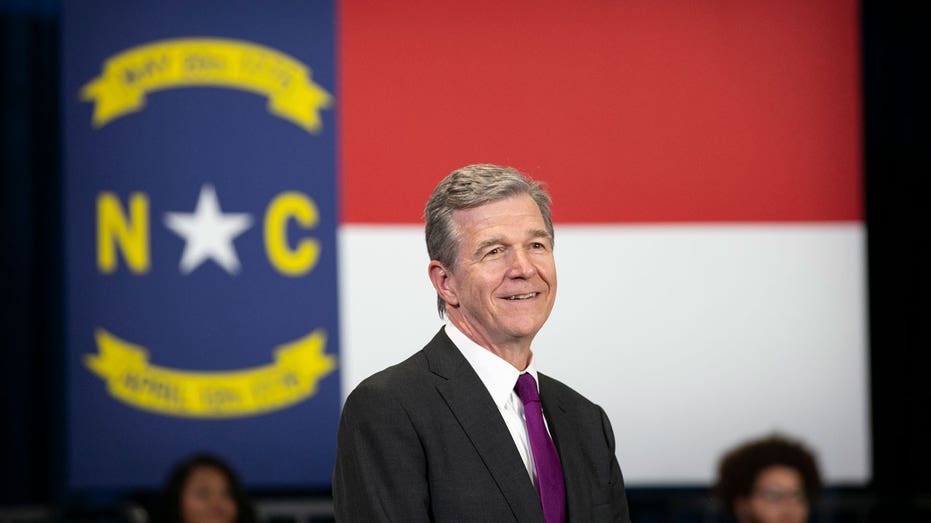
A North Carolina environmental board whose recent membership alteration by the General Assembly is being challenged by Gov. Roy Cooper can cancel its own lawsuit over pollution limits while the governor’s broader litigation about several state commissions continues, judges ruled Friday. The decision from a three-judge panel — a setback for Cooper — dissolves last month’s order from a single judge to temporarily block the Environmental Management Commission from dismissing its complaint against the Rules Review Commission. The rules panel had blocked regulations from the environmental panel on new numerical standards in surface waters of a synthetic industrial chemical because it said some information it received was inadequate. The environmental panel is one of seven boards and commissions that the Democratic governor sued GOP legislative leaders over in October. Cooper alleges that lawmakers violated the state constitution with laws in 2023 that contain board memberships that weaken his control over them. On six of the boards, including the environmental panel, the governor no longer gets to fill a majority of positions. Republicans have said the changes bring more diversity to state panels. NORTH CAROLINA GOV. COOPER SIGNS EXECUTIVE ORDER TO CONSERVE 1M ACRES OF FORESTS AND WETLANDS The judges heard three hours of arguments Friday from attorneys for Cooper and GOP legislative leaders, mostly pitching why their clients should come out victorious in Cooper’s full lawsuit. The judges didn’t immediately rule on those competing judgment requests, but asked the parties to send draft orders by Feb. 23. Any ruling could be appealed to state courts. The lawsuit is one of many filed by Cooper against GOP legislative leaders over the balance of power in the two branches of government since 2016. The panel of Superior Court Judges John Dunlow, Paul Holcombe and Dawn Layton in November blocked changes to three challenged boards while Cooper’s lawsuit played out. But the Environmental Management Commission was not part of their injunction. That opened the door to a reconstituted commission, with a new chairman and fewer Cooper allies as members, to vote in January to back out of the lawsuit that was filed when Cooper appointees held a majority of commission positions. Cooper’s attorneys argued that the withdraw provided evidence that changes to the 15-member body prevented him from carrying out laws in line with his policy preferences. Dunlow didn’t give a reason in court Friday why the three judges denied Cooper’s request for a longer injunction preventing the environmental commission from dismissing its lawsuit. The body is also one of three challenged commissions where membership now also includes appointees of the insurance or agriculture commissioners, who like the governor are executive branch officers. Cooper lawyer Jim Phillips argued that the state constitution “charges the governor alone with the responsibility to ensure that our laws are faithfully executed.” He again emphasized state Supreme Court rulings from the 1980s and 2010s as confirmation that GOP legislators went too far in membership changes that took away Cooper’s appointments and gave them to the General Assembly, its leaders or other statewide elected officials. But Matthew Tilley, a lawyer for House Speaker Tim Moore and Senate leader Phil Berger, said the governor has “never been alone in the exercise of executive power in our state.” Tilley also suggested the distribution of duties to other executive branch officers is a General Assembly policy preference that isn’t subject to judicial review.
Historic Illinois home of Paul Powell, the ‘Shoebox Scandal’ politician, faces sale as trust funds dwindle

Paul Powell, the southern Illinois political powerhouse who died and left behind $800,000 in cash in the notorious “Shoebox Scandal,” used to say, “The only thing worse than a defeated politician is a broke one.” For more than half a century, a Powell-established $250,000 trust sustained his legacy, for better or worse. But the account that maintained his birthplace as a museum will soon run dry. The fate of the home in Vienna, a town of 1,300 about 140 miles southeast of St. Louis, is uncertain, but it likely will be sold. For decades it has been home, according to Powell’s wishes, to the Johnson County Genealogical and Historical Society, which has the home looking as it did during the political giant’s time in office, with memorabilia cluttering the walls. FORMER ILLINOIS SENATOR HALTS FEDERAL TRIAL AFTER ABRUPTLY ADMITTING TO FRAUD AND MONEY LAUNDERING The upkeep runs about $5,000 annually, while last year the society’s income was $4,300, said board member Gary Hacker, 85, whose parents were schoolmates of Powell and mowed his lawn as a teenager in the early 1950s. “We’re probably going to be putting it on the market for sale,” Hacker said. “The historical society will relocate.” Southern Illinois was Powell’s fiefdom for much of the mid-1900s. He brought jobs by expanding the state’s prison infrastructure to the region, pumped money and status into Southern Illinois University and promoted county fairs and pari-mutuel betting on horse racing, which served the dual purpose of enriching Powell, who held racetrack stock. While in later years Powell spent more time in Springfield and Chicago, when he was at home, favor-seekers streamed to the house. Sunday afternoons were spent in the sunroom he added in the 1950s, where three televisions were tuned to separate networks carrying sports, Hacker said. “He was pretty adept at watching football, smoking cigars and conducting political business on the telephone or with people who visited him there,” Hacker said. Winning a House seat in 1934, the Democrat was elected speaker in 1949, 1959 and 1961 — once despite Republicans claiming a one-seat majority. His quid pro quo deals with the boss of Chicago, Mayor Richard J. Daley, ensured projects for both regions and were often punctuated with another Powell aphorism: “I can smell the meat a-cookin’!” Powell’s leverage only grew with his 1964 election as secretary of state. “When Paul Powell was a man of influence, people knew where Johnson County was,” said John Rendleman III, a lawyer from Carbondale. Rendleman’s father, a Powell friend and executor of his estate, uncovered one of the more outlandish political scandals in a state renowned for splashy corruption cases. After Powell’s sudden death at 68 in October 1970, the elder Rendleman found $750,000 in cash, stuffed mostly in attache cases but also in at least one gift box from Marshall Field & Co., in his suite at Springfield’s St. Nicholas Hotel. Another $50,000 was stashed in his Capitol office about five blocks away. A federal investigation concluded Powell skimmed much of it by awarding contracts to friends with kickback conditions. His estate, settled in 1978, was worth $4.6 million, the equivalent of $21.8 million today. He had $1 million worth of stock in horse tracks where he determined the most favorable racing dates. The IRS claimed $1.7 million, and the state of Illinois $230,000. News reports on other politicians with horse racing stock led to federal prison for former Gov. Otto Kerner, at the time a federal appeals judge. Future politicians were required by law to start completing annual statements of economic interest. FORMER ILLINOIS SENATOR’S WIRE FRAUD AND MONEY LAUNDERING TRIAL DELAYED AGAIN The number of curiosity-seekers once drawn to the Powell home by the bizarre legend has dwindled, Hacker said. Few remember Powell even in Vienna. “Memories last about a generation,” Rendelman said. About $80,000 remains in the trust, Hacker said. Subtracting legal fees and the home’s value, appraised at about $60,000, will empty the account. A court date for closing the trust has not yet been scheduled. Telephone and email messages seeking comment were left for the trustee at First Mid Bank & Trust in Mattoon. It’s not beyond possibility that the house will remain open, Hacker said. One potential buyer has suggested making the three-bedroom home of about 1,700 square feet (160 square meters) into a bed-and-breakfast.
No Labels still pursuing third-party candidates after Manchin’s decision not to run for president
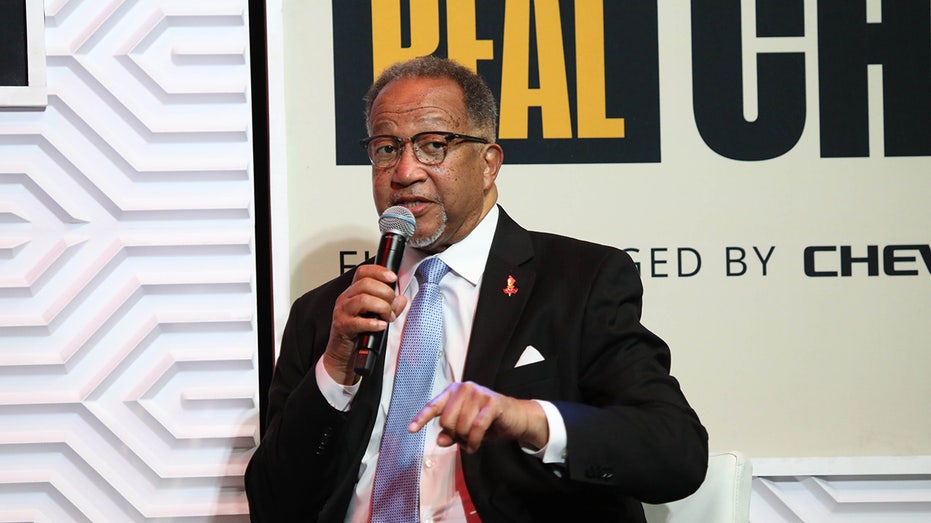
The No Labels organization says it is still considering options for a third party presidential candidate after Sen. Joe Manchin, D-W.Va., decided not to run. “We’re talking with several exceptional leaders. We have our own internal process,” No Labels national co-chair, Dr. Benjamin F. Chavis, said Sunday on MSNBC’s “The Weekend.” “In the next couple of weeks or more, we will probably make an announcement whether or not we will give the ballot access to a unity ticket,” Chavis, a longtime civil rights activist and former executive director of the NAACP, added. “A unity ticket means a Republican and a Democrat. And we are talking to Republicans, Democrats, and independents.” Chavis said that No Labels has qualified for the ballot in 16 states so far ahead of the 2024 election and is still working to qualify for all 50, pushing back against co-host Michael Steele’s argument that it would be challenging for No Labels or any third-party ticket to win come November. JOE MANCHIN WILL NOT LAUNCH THIRD-PARTY PRESIDENTIAL RUN “It’s a long, tedious process. And we’re very pleased with the voter access that we’ve gotten so far. And we’re going to keep pushing,” he said. “We’re in a state of uncertainty in our nation. The only thing that’s certain right now is uncertainty,” So I don’t think we should speculate on what’s going to happen because nobody really knows. What we do know is that the majority of the American people don’t want to see a repeat of 2020,” Chavis added. Manchin announced Friday that he will not be running for president, shooting down months of speculation that he would join the race on a third-party ticket. FORMER MARYLAND GOV LARRY HOGAN ANNOUNCES REPUBLICAN RUN FOR SENATE “I will not be seeking a third-party run, I will not be involved in a presidential run,” Manchin said during a speech at West Virginia University as part of his “listening tour” that kicked off last month with his daughter’s campaign group “Americans Together” — a movement that touts itself as the “moderate majority” that rejects the “extremism in politics.” Another potential No Labels candidate, former Republican Maryland Gov. Larry Hogan, a vocal critic of former President Trump, decided earlier this month instead to run for an open U.S. Senate seat in his state to be vacated by the retiring three-term Democratic Sen. Ben Cardin.
ICJ occupation hearing: ‘Ruling could change world for Palestinians’
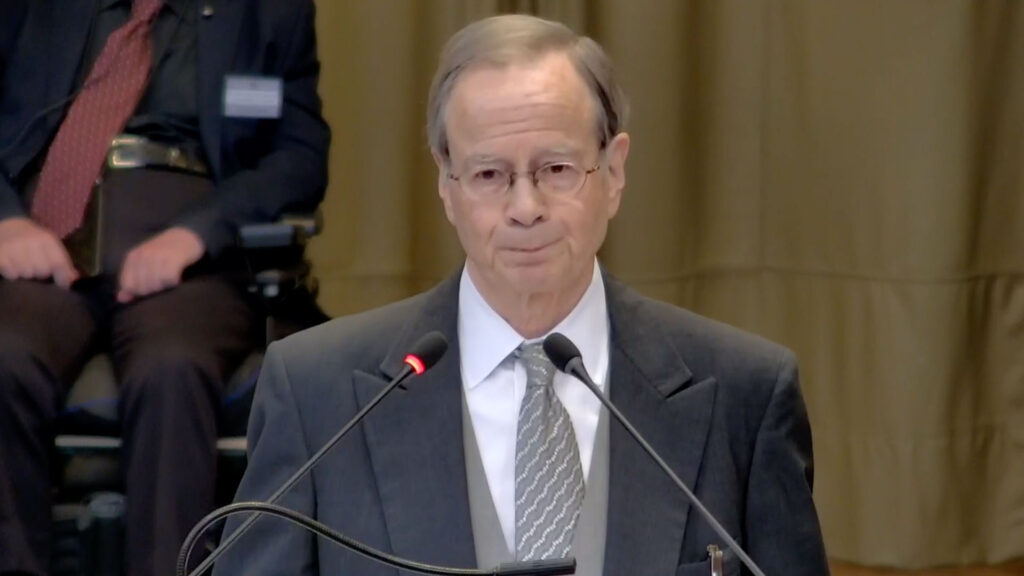
NewsFeed A legal representative for Palestine at the ICJ hearing on Israel’s occupation says that the UN’s top court cannot remain silent and that their words could ‘change the world’. Published On 19 Feb 202419 Feb 2024 Adblock test (Why?)
Niger defaults on debt payments again as post-coup woes pile

The West African state’s total debt default since last July’s coup is now $519m. Niger missed a debt payment of 13.4 billion CFA francs ($22m) last week, the West African debt management agency said on Monday, bringing the total default to some $519m since a July coup and its suspension from regional financial markets. The West African monetary union debt management agency UMOA-Titres said in a statement that Niger had failed to make a repayment of principal which was due on February 16. It previously missed payments in August, November, January and February. UMOA-Titres noted that this occurred in the context of Niger being subject to sanctions imposed by the Economic Community of West African States (ECOWAS) and the West African Economic and Monetary Union, also known by its French acronym UEMOA. “This situation is carefully monitored by UMOA-Titres in collaboration with the institutions concerned,” the agency said in a statement on Monday. The sanctions were imposed after the July 30 coup by members of the Nigerien presidential guard, that overthrew President Mohamed Bazoum. Other countries, including the United States, that had provided aid for health, security and infrastructure needs, also suspended their support. Until the coup, aid accounted for almost half of Niger’s annual budget. Niger’s neighbours also closed their borders to the country, and more than 70 percent of its electricity, supplied by Nigeria, was cut off. Financial transactions with West African countries were suspended. Niger’s assets in external banks were frozen, and hundreds of millions of dollars in aid were withheld. In July, a planned 30 billion CFA franc ($51m) bond issuance by Niger was cancelled by the Central Bank of West African States (BCEAO). The sanctions were the most stringent yet imposed by the regional bloc to stem the tide of coups in the Sahel. But they have had little or no effect on the ambition of the government, which has consolidated its hold on power while millions in Niger face growing hardship. Last month, the country announced, along with neighbours Mali and Burkina Faso, that it was leaving ECOWAS with immediate effect. The three states formed the Association of Sahel States (ASS) in September and are reportedly considering discontinuing the use of the CFA, the currency of the UEMOA. Adblock test (Why?)
Ukraine: Escaping the Darkness

In war-torn Ukraine, a family weighs the dangers of leaving their makeshift bunker for the promise of freedom outside. In the wake of Russia’s invasion of Ukraine, a young family endures life in Mykolaiv’s subterranean haven, “The Garages”. As the front line shifts, volunteer soldier Yuri is determined to keep his family safe underground even when their neighbours return to life outside. But his wife, Svetlana, is craving a normal home, and their teenage daughters are growing restless in isolation. When a chance for a new life emerges in the countryside, the family must reach an agreement, balancing their dreams and fears. Ukraine: Escaping the Darkness is a film by Clement Gargoullaud. Adblock test (Why?)
Delhi-Meerut Namo Bharat train services extension: Operations on other stations to begin soon; check details

Delhi-Meerut RRTS (RapidX) is an 82.15 km semi-high speed rail line with 22 stations connecting Delhi-Ghaziabad-Meerut.
Abortion issue could threaten Larry Hogan’s bid for bipartisan support in Maryland Senate run

Republicans hoping to pick up an open U.S. Senate seat in deep blue Maryland have the most competitive candidate they’ve fielded for decades. But former Gov. Larry Hogan will need more than GOP support to overcome sustained outrage about the U.S. Supreme Court’s decision to strike down constitutional protections for abortion. With Maryland voters set to decide whether to enshrine the right to abortion in the state constitution in November, it may be harder for Hogan to reassemble the bipartisan coalition that elected him to the governor’s office in 2014 and kept him there four years later. His task was laid out vividly by Lynn Johnson Langer, a Democrat walking to lunch in downtown Annapolis several days after Hogan announced his Senate bid. Hogan is likable enough to have won her vote in his second campaign for governor, but the stakes are too high for her to support handing Republicans another win in a closely divided Senate. FORMER MARYLAND GOV LARRY HOGAN ANNOUNCES REPUBLICAN RUN FOR SENATE “We need more Democrats, so, sorry Hogan,” Langer said. “I don’t think he’s a bad guy. Like I said, I don’t always agree with him. In fact, a lot I don’t agree with him.” Hogan’s decision to veto legislation to expand abortion access in Maryland in 2022 lingers with voters like Langer. She supports abortion rights unequivocally and said she probably will back a candidate who doesn’t hedge. Hogan has said he does not support taking abortion rights away, even though he personally opposes abortion. However, as governor, he vetoed legislation to end a restriction that only physicians provide abortions. When his veto was overridden by Democrats who control the Legislature, he used the power of his office to block funding set aside to support training non-physicians to perform them. Abortion already is protected in Maryland law, but Democrats who control the Legislature voted last year to put a state constitutional amendment before voters. In doing so they were following a proven political formula used successfully by several states in the aftermath of the Supreme Court decision. “This is an issue the Democrats care about, and this is a big thing about Maryland: It doesn’t matter how popular you are with your base, and it doesn’t matter how popular you are among independents, the path to the Senate in Maryland goes through the Democratic Party,” said Mileah Kromer, an associate professor of political science at Goucher College, who has written a book about Hogan. “You need Democratic votes to win, and that’s just the math of the state.” Hogan attracted national attention during his tenure as governor as one of the rare Republicans willing to criticize Donald Trump, who appointed three conservative justices that created the Supreme Court’s conservative majority that voted to overturn Roe v. Wade in 2022. Now, Hogan will be on the same ballot as the former president, who is deeply unpopular in Maryland. Mary Kfoury, a Democrat who lives in Edgewater, Maryland, praised Hogan for speaking out against Trump, though that’s not enough to get her vote. “I really don’t think we can afford to have a Republican,” Kfoury said. “I want to keep Maryland as blue as possible, especially with things as close as they are, but I think if we had to have a Republican in the Senate he would be a terrific person to have, because he truly states what he thinks and he’s for more traditional Republican values and has bravely spoken against Trump.” Hogan focused his governorship on pocketbook concerns, largely avoiding social issues and maintaining civility with the Legislature. In a video announcing his candidacy, he highlighted that aspect of his tenure. “For eight years, we proved that the toxic politics that divide our nation need not divide our state,” Hogan said. “We overcame unprecedented challenges, cut taxes eight years in a row, balanced the budget, and created a record surplus. And we did it all by finding common ground for the common good.” While Kromer describes Hogan’s Senate candidacy as “an uphill battle,” she said it would be wrong to dismiss a candidate who consistently maintained high approval ratings during his eight years as governor, despite the 2-1 advantage Democrats hold over Republicans in the state. “For me, it’s not just that Hogan was popular, it was that Hogan was persistently popular for eight years,” said Kromer, who wrote “Blue State Republican: How Larry Hogan Won Where Republicans Lose and Lessons for a Future GOP.” Democrats running to succeed retiring Sen. Ben Cardin pounced on concerns about abortion rights, after Hogan announced his surprise Senate bid just hours before the state’s filing deadline. “We know what’s at stake in this election — our fundamental freedoms over our bodies,” said Angela Alsobrooks, the chief executive in Prince George’s County, the state’s second-largest jurisdiction in the suburbs of the nation’s capital. Alsobrooks, who could make history as Maryland’s first Black U.S. senator, is running in the Democratic primary against U.S. Rep David Trone, the wealthy founder of Total Wine and More who has invested more than $23 million in his own campaign. Hogan, speaking publicly for the first time since announcing his candidacy last week, told CNN on Wednesday that “I would not vote to support a national abortion ban.” He also said that while he understands “why this is such an important and emotional issue for women across Maryland and across the country,” he doesn’t believe the constitutional amendment in Maryland is necessary, because abortion rights already are protected in state law. The state approved legislation in 1991 to protect abortion rights if the Supreme Court were to allow abortion to be restricted. Voters showed their support for the law the following year, when 62% backed it in a referendum. “I think Democrats put this on the ballot to try to make it a political issue, and voters can make their decision on whether they think it’s important or not, but it’s not going to change anything in our state,” Hogan told
Hillary Clinton claims Trump will withdraw US from NATO if elected: ‘He means what he says’

Former Democratic presidential candidate Hillary Clinton warned this weekend that former President Trump will try to withdraw the U.S. from NATO if he wins re-election in November. Clinton made the claim during remarks at the Munich Security Conference in Germany, telling U.S. allies that they should take Trump’s claims to heart after the former president warned NATO countries to contribute their fair share. “We have a long struggle ahead of us, and the obvious point to make about Donald Trump is take him literally and seriously,” she said. “He means what he says. People did not take him literally and seriously in 2016. Now he is telling us what he intends to do, and people who try to wish it away, brush it away, are living in an alternative reality.” “He will do everything he can to become an absolute authoritarian leader if given the opportunity to do so. And he will pull us out of NATO even though the Congress passed a resolution saying that he couldn’t without congressional support, because he will just not fund our obligations,” she said. NATO MEMBERS BRACE FOR TRUMP WIN AS RECORD NUMBER OF MEMBERS MOVE TO MEET SPENDING PLEDGES Clinton’s comments seemed directed toward NATO secretary general Jens Stoltenberg, who has said he is confident the U.S. will “remain a strong ally and committed ally” regardless of the outcome this November. BIDEN SAYS TRUMP QUESTIONING EUROPEAN COMMITMENT TO NATO IS ‘DUMB,’ ‘UN-AMERICAN’ Trump has been heavily critical of NATO on the campaign trail in recent weeks, doubling down on his claim that member countries should not receive protection if they do not pay their share toward NATO’s budget. Stoltenberg did say last week that Trump’s rhetoric does “undermine” the security of the alliance. “The whole idea of NATO is that an attack on one ally will trigger a response from the whole alliance and as long as we stand behind that message together, we prevent any military attack on any ally,” Stoltenberg said. “Any suggestion that we are not standing up for each other, that we are not going to protect each other, that does undermine the security of all of us.” While Stoltenberg expressed concern over Trump’s remarks, the former president’s comment did spark a rush to confirm member countries’ contributions in the coming year. The NATO chief announced that 18 of the alliance’s 31 members are on track to meet their pledges of contributing 2% of GDP to the group. European states are on track to contribute $380 billion this year, and Germany will meet its 2% pledge for the first time since the Cold War. CLICK HERE TO GET THE FOX NEWS APP The figures show a dramatic uptick compared to 2023, which saw just 11 NATO allies meet their 2% spending pledge.