

GOP Senate candidate sounds the alarm about Biden’s cognitive issues after Hur report: ‘Scary for us’
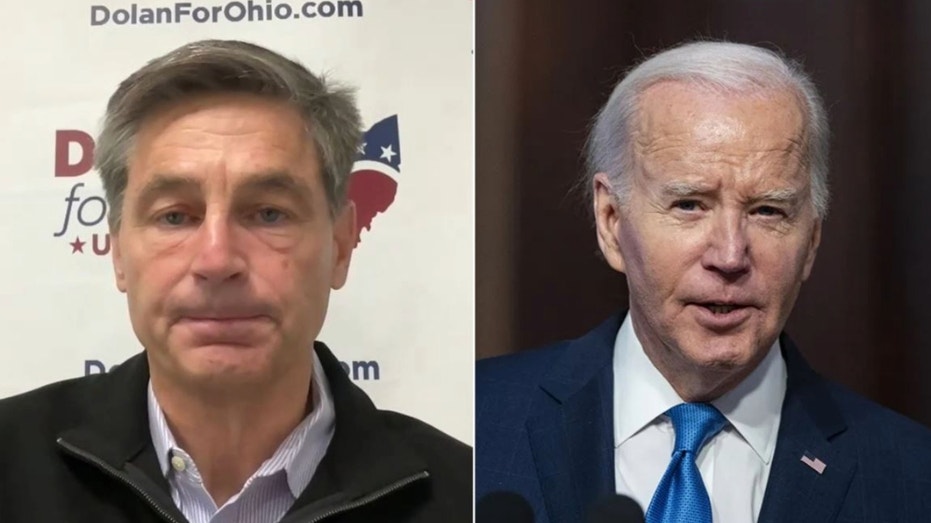
Ohio Republican State Sen. Matt Dolan, who is currently running for a Senate seat in Ohio, told Fox News Digital this past week that Ohio voters are concerned about President Biden’s ability to serve in light of a Special Counsel report that questioned his memory. “I’m very concerned. I mean, I don’t know that President Biden is capable of being president of the United States,” Dolan told Fox News Digital after Special Counsel Hur’s report cast serious doubt on Biden’s cognitive abilities. “That is a huge concern for us. Now obviously I’m running in a Republican primary. I’m talking to a lot of Republicans, so it’s just a matter of course it’s scary for us,” Dolan said. “That was a very telling report about who’s running the show in Washington and that should make us scared.” “We don’t want a president who we don’t know who’s truly making the decisions in the White House,” he continued. WHY BIDEN’S ANGER AND DEFENSIVENESS INFLAMED ANXIETY ABOUT HIS MEMORY ISSUE Hur’s report referred to Biden as a “sympathetic, well-meaning, elderly man with a poor memory” and outlined several examples of Biden failing to remember the timeline of major events. The Biden administration pushed back on the report and defended Biden’s mental sharpness. Still, Republicans have argued that the report shows the 81-year-old president is not fit to serve another term. DOJ DEFENDS SPECIAL COUNSEL REPORT ON BIDEN’S MEMORY: ‘CONSISTENT WITH LEGAL REQUIREMENT,’ NOT ‘GRATUITOUS’ Dolan is currently locked in a tight GOP primary against two other Republican opponents to determine who will challenge Democratic Sen. Sherrod Brown in November and the state senator told Fox News Digital that he is confident he is the candidate who can make the case that Brown is “out of touch” with Ohio voters. “I think people are very frustrated that they have a government that is not working to do what’s best for the individual, for the businesses, and for the individual to thrive,” Dolan told Fox News Digital. “Instead, they see Sherrod Brown and Joe Biden trying to expand the size of government and saying, don’t worry, government will solve these problems and people are sick of it and they don’t feel secure. We got to change.” The Ohio Senate primary will be held on March 19.
Akhilesh Yadav sets condition for Congress, says will join Rahul Gandhi’s Yatra after decision on seat sharing

Samajwadi Party chief Akhilesh Yadav has made his participation in the Congress’ Bharat Jodo Nyay Yatra conditional to a decision on seat sharing
Ukraine accuses Russia of killing unarmed prisoners after fall of Avdiivka

Security Service of Ukraine announces probe after footage of alleged executions circulates on Telegram messaging app. Ukraine has launched an investigation into allegations that Russian forces executed eight unarmed Ukrainian soldiers after they took control of the city of Avdiivka. The Security Service of Ukraine, under the guidance of the Donetsk Regional Prosecutor’s Office, opened a pre-trial investigation into the alleged killing of unarmed prisoners of war in Avdiivka and the village of Vesele, state-run media outlet Ukrinform said on Monday. “Under the procedural supervision of the Donetsk Regional Prosecutor’s Office, a pre-trial investigation has been initiated into the violation of the laws and customs of war combined with premeditated murder (Part 2 of Article 438 of the Criminal Code of Ukraine),” Ukrinform quoted the security agency as saying in a statement. Ukrinform said evidence of the killings was shared on the Telegram messaging app, including footage showing a Russian soldier shooting two captured Ukrainian soldiers at close range. Moscow has not publicly responded to the claims. Ukraine has repeatedly accused Russia of unlawful killings and other war crimes since Moscow launched a full-scale invasion of its neighbour in February 2022. Russia has also accused Ukraine of committing violations of international law. Russia on Saturday announced that it had taken full control of Avdiivka after the withdrawal of Ukrainian forces in the biggest gain for Moscow since the fall of Bakhmut last May. Russian President Vladimir Putin hailed the capture of the city as “an important victory” in the nearly two-year-long war. Ukraine’s military said on Sunday that Russian forces launched multiple attacks to the west of Avdiivka to build on their territorial gains, including unsuccessful assaults on the village of Lastochkyne. “The enemy is trying to actively develop its offensive,” Ukrainian military spokesman Dmytro Lykhoviy said on state TV. Ukrainian forces’ retreat from Avdiivka came after they were forced to ration ammunition due to dwindling supplies, which the administration of United States President Joe Biden has blamed on Congress’s failure to swiftly approve a package of military aid for Kyiv. Adblock test (Why?)
What’s the ICJ case against Israel’s illegal occupation of Palestine?

The International Court of Justice will begin hearings on Monday in a case against Israel’s occupation of Palestinian territories, barely a month after it issued a series of directions to Tel Aviv in a separate case where it is accused of genocidal acts in the Gaza Strip. In a first-of-its-kind case, at least 52 countries will present arguments on controversial Israeli policies in the West Bank, the Gaza Strip and occupied East Jerusalem. It’s the largest number of parties to participate in any single ICJ case since the court was established in 1945. Israeli authorities, since 1967, have illegally occupied the West Bank and East Jerusalem – part of Palestine under the United Nations-determined division of historic Palestine in 1948 – running a system that restricts the citizenship rights of Palestinians, hampers their free movement and strips them of ancestral lands. Between 1967 and 2005, Israel also directly occupied Gaza, and since 2007, has imposed a land, sea and air blockade on the coastal enclave. It decides what food, water, medicines, fuel, construction material and other commodities can go into Gaza, and stops their flow when it wants. Even as the war on Gaza is now in its fifth month, Palestinians in the West Bank have come under increased attacks from Israeli forces, with hundreds of people killed. In a statement last week, the ICJ said oral arguments in the case would last for about a week, during which all countries, as well as three international organisations, are expected to state why they support or oppose Israel’s measures. Tel Aviv has declined to present, choosing to submit a written argument instead. A court ruling is likely in several months. Israeli forces prevent Palestinians from reaching the Al-Aqsa Mosque [Mostafa Alkharouf/Anadolu via Getty Images] Here’s all you need to know about the case: Who brought the case against Israel? The case was triggered by a request from the UN General Assembly (UNGA) on December 30, 2022, when a majority of members voted to seek the court’s opinion on the legal consequences of the continuing Israeli occupation of Palestine. Arab countries, Russia and China voted in favour of the move, while Israel, the US, Germany and 24 others voted against it. During the Six-Day War in 1967, Israel occupied East Jerusalem and the West Bank, which were formerly under Jordanian control, and with an Arab-majority population. Most countries and the UN still view occupied East Jerusalem as the capital of a future Palestinian state, and regard Israel’s occupation as illegal under international law. In a long missive to the ICJ, signed by UN Secretary-General Antonio Guterres, the UNGA asked judges to answer questions about how the rights of Palestinans are being affected by the occupation and continuing attempts to displace them, as well as what the responsibilities of the UN and its member states were in the face of those violations. “What are the legal consequences … from the ongoing violation by Israel of the right of the Palestinian people to self-determination, from its prolonged occupation, settlement and annexation … aimed at altering the demographic composition, character and status of the Holy City of Jerusalem, and from its adoption of related discriminatory legislation and measures?” the UNGA missive asked. The UNGA asked the court to answer those questions using a combination of international humanitarian laws, as well as the Charter of the United Nations and various UN resolutions. According to Human Rights Watch, Israel’s policies in the occupied territories amount to apartheid and persecution, both crimes against humanity. The Hague-based court hears and adjudicates on matters between states, and it’s the second time it will weigh in on Israel’s illegal occupation. In 2004, the ICJ ruled that Israel’s ‘barrier wall’ in the West Bank that separates many Palestinian families, is illegal and should be dismantled. However, Israel rejected the ruling, and has since extended the wall. What countries will participate? The oral hearings will last from Monday, February 19, until Monday, February 26. A total of 52 countries – about 10 a day – will present their arguments to ICJ judges through the week. A majority of them originally voted in favour of the UN decision to approach the ICJ. A few, like Canada, voted against, while Switzerland abstained from the vote. Legal teams representing the State of Palestine will kickstart the hearings on Monday. On Tuesday, South African and Canadian teams will be among the speakers. The US, China and Russia will take the floor between Wednesday and Thursday, while the Maldives will wrap up the final presentation. Three multilateral organisations will also make their cases in the proceedings: the League of Arab States, the Organisation of Islamic Cooperation and the African Union. Israeli forces prevent Palestinians from gathering at Lions’ Gate (Bab al-Asbat) [Mostafa Alkharouf/Anadolu via Getty Images] So this is different from South Africa’s ICJ case against Israel? It is. This case is separate from another ICJ case by South Africa on December 29 that alleges that Israel is committing the crime of genocide in Gaza in its continuing war on the Strip. In a preliminary ruling in that case, the court ordered Israel to prevent and punish incitement to genocide, and to provide needed humanitarian aid by February 26. The case whose hearings start on Monday, is not linked directly to the current war that Israel is waging on Gaza, though it pertains to many of the concerns of international law violation that bind Tel Aviv’s approach to all Palestinian territories. What might the court’s ruling be? The ICJ is composed of 15 judges from different parts of the world, elected by the UNGA for nine-year terms. Justice Nawaf Salam of Lebanon currently leads as president. Judges will listen to the extensive presentations and publish a written opinion afterwards. It is unclear when the opinion will be released, but the ICJ’s processes are painstaking and usually take time. Some law experts say the opinion might surface before the end of the year. It’s hard to predict what
How RSS textbooks are reshaping Indian history and science under Modi
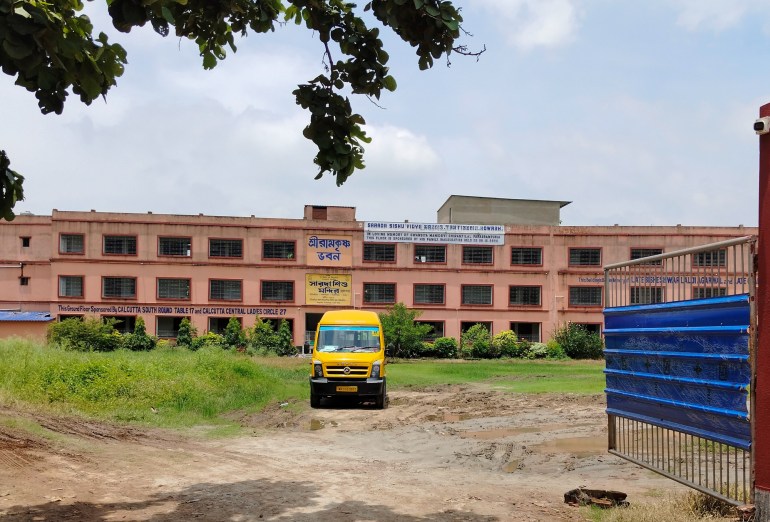
Kolkata, India – At the three-storey building of Sarada Shishu Vidya Mandir, a school for grades five to 10 in Uluberia town in the eastern Indian state of West Bengal, students gather every day at the prayer hall 15 minutes before their classes begin. The walls in the prayer hall are bedecked with colourful posters of Hindu deities, saints, mythological figures, ancient Indian scholars, kings and Hindu religious practices. The prayer starts with the Saraswati Vandana, a chant praising Saraswati, the Hindu goddess of knowledge. The same routine is followed at Sarada Shishu Mandir, the preprimary school for children to grade four which stands next to it. Sarada Shishu Vidya Mandir, an RSS-run school in Howrah, West Bengal [Snigdhendu Bhattacharya/Al Jazeera] When students enter the classrooms after the prayers, they encounter the same ancient figures yet again – in a series of books called Sanskriti Bodhmala, or cultural awareness manuals, published in English, Hindi and several other Indian languages. The Sanskriti Bodhmala books are mandatory for the students of classes four to 12, who also have to take a nationally coordinated annual test based on these books. For more than two centuries, millions of Indians, especially Hindus, have long read about the ideas and philosophies attributed to ancient scholars from what is known as the Vedic era (1500 BC to 500 BC), when many of the religion’s scriptures were written. But under Prime Minister Narendra Modi, many of these concepts have made their way into India’s vast formal schooling system, blurring the lines between religious Hindu beliefs on the one hand and established history and science on the other. In a country where half the population is younger than 25, this, say critics, has given Modi’s Bharatiya Janata Party (BJP) and their Hindu majoritarian partners the ability to use pedagogy to influence the minds of millions of young Indians – many of whom will be voting for the first time in national elections expected to be held between March and May. Atoms to aviation Vedic-era philosopher Kanada was the world’s first atomic scientist, say the books meant for the students of classes four and six. Kanada, in his book Vaisheshika Darshan, did write about anu (atoms) being the smallest particles of substances that cannot be further divided. But the substances he listed – prithvi (earth), jala (water), tejas (fire), vayu (air), akasha (ether), kala (time), dik (space), atma (soul) and manas (mind) — make it clear, say scientists, that he was speaking in philosophical or metaphysical terms. The class five textbook tells them that Vedic sage Bharadwaja, who is credited with writing the book Vymaanika Shastra (Science of Aeronautics), was the “father of aviation”. The class five and class 12 books call ancient Indian physician Sushruta “the inventor of plastic surgery”. The Sanskriti Bodhmala books are not approved by the government. But they have been taught in addition to the state-approved syllabus for decades in a large chain of schools run by the Rashtriya Swayamsevak Sangh (RSS), the far-right ideological mentor of the BJP. The schools are formally operated by Vidya Bharati, the education wing of the RSS, which controls more than 12,000 such schools catering to nearly 32 million students across India. The schools are affiliated with the Central Board of Secondary Education (CBSE) or the government education boards of the states they are located in. A poster on a school wall depicts RSS founder KB Hedgewar and his successor MS Golwalkar as ‘great men who birthed a new awakening in the Hindu society’ [Snigdhendu Bhattacharya/Al Jazeera] In recent years, unsubstantiated historical and scientific claims – being taught in Vidya Bharati schools – have made their way into the formal syllabus of state-run schools. The claims of Kanada’s atomic theory and Sushruta’s plastic surgery are already a part of the curriculum of the National Institute of Open Schooling (NIOS) – an education board controlled by the federal government. The NIOS describes itself as “the largest open schooling system in the world with a cumulative enrolment of 4.13 million [during last five years]” students. The NIOS curriculum also encourages students to find out about Vedic mathematics – another subject taught specifically at RSS schools. The National Council of Educational Research and Training’s (NCERT) new module on India’s moon mission says the book Vymaanika Shaastra “seemingly reveals that our civilisation had the knowledge of flying vehicles”. The NCERT is the apex body advising the federal and state governments on school education, including model textbooks. However, various state education boards may differ from NCERT’s advice and pursue their own syllabus. Among federal government boards, CBSE had 1.2 million students appearing in the grade 12 exams and 1.8 million students appearing in the grade 10 exams in 2020. In Vidya Bharati schools, students must keep shoes outside classrooms [Snigdhendu Bhattacharya/Al Jazeera] In 2019, federal Education Minister Ramesh Pokhriyal said, “Our scriptures mentioned the concept of gravity much before Newton discovered it.” Sanskriti Bodhmala books say the same, one of its books attributing it to fifth-century mathematician Aryabhatta and another to 12th-century mathematician Bhaskaracharya. “The Sanskriti Bodhmala books have no conflict with the formal syllabus, as the history presented here is entirely missing in the existing formal syllabus, which thoroughly neglects India’s pre-Mughal history. That is where we stress on,” Proloy Adhikary, in charge of Uluberia’s Sarada Vidya Mandir, told Al Jazeera. He said the National Education Policy (NEP) that the Modi government has introduced had been implemented in Vidya Bharati schools for several years now. “The NEP has taken some of our schools’ practices to the broader sphere,” he said, hoping for more information from the Sanskriti Bodhmala books to find their way into the formal national school syllabus. ‘Glorious culture’ Vidya Bharati says its cultural awareness examination for students was introduced in their schools “with a view to transmitting a glorious culture to the new generation”. Debangshu Kumar Pati, a Vidya Bharati official in West Bengal, claimed the contents of their books are well-researched. “We inform students of the history that
PM Modi lays foundation stone of the Shri Kalki Dham Temple in UP’s Sambhal

Prime Minister Narendra Modi launched 14000 projects across Uttar Pradesh worth more than Rs 10 Lakh crore at the fourth ground-breaking ceremony of UP Global Investors Summit 2023 on Monday. Meanwhile, Lucknow is aglow with vibrant lights in preparation ahead of the Prime Minister’s visit to Uttar Pradesh.
Delhi CM Kejriwal skips ED summons again in excise policy case, AAP calls it ‘illegal’

The AAP called the ED summons ‘illegal’ saying that the matter of the validity of the summons is now in the court.
Year of the Dragon: China faces critical moment in push to revive economy

China last year narrowly beat its economic growth target of 5 percent, one of its lowest benchmarks in decades. Looking ahead, analysts expect the economy to face stiff headwinds in the Year of the Dragon. Against the backdrop of a crisis-stricken property market, subdued export earnings and crackdowns on private industry, international investors are pulling out of Chinese stocks at record rates. With business sentiment faltering, economists broadly agree that Beijing needs to roll out measures to stimulate greater domestic consumption. But while some analysts are calling for radical measures to jolt China’s economy, expectations are subdued due to Beijing’s long-held aversion to large-scale social spending. Some analysts also see grounds for optimism, looking beyond the current difficulties. China is experiencing its longest deflationary run since the 2008 Global Financial Crisis. Consumer prices fell in January for a fourth straight month and declines look likely to extend into 2024. “China didn’t see the boost most people expected after COVID restrictions were removed in late 2022,” Kevin P Gallagher, the director of the Boston University Global Development Policy Centre, told Al Jazeera. “Authorities are now keenly aware of the threat of falling prices.” Falling prices risk turning into a self-reinforcing cycle if households and businesses postpone purchases in the hope that goods will keep getting cheaper. Deflation also squeezes debtors as the real cost of borrowed money rises. In China, where the debt-to-GDP (gross domestic product) ratio, including local government liabilities, reached 110 percent in 2022, that poses a growing headache for policymakers. In recent months, authorities have ramped up support measures to try and stem falling prices – mortgage rates on home purchases have been lowered and banks have been allowed to hold smaller cash reserves to spur increased lending. China’s real-estate sector accounts for 20-30 percent of GDP [Andy Wong/AP] Much of China’s deflationary woes can be traced back to its beleaguered real-estate sector, which accounts for 20-30 percent of GDP. After the 2008 Global Financial Crisis, local governments encouraged a debt-fuelled construction boom to boost growth. But after decades of rapid urbanisation, housing supply has run ahead of demand. Amid several high-profile developer defaults, including the failure of Evergrande Group, new home sales fell by 10-15 percent in China last year, according to the Fitch Ratings agency. In turn, Chinese households have become cautious about spending money, especially on property, while a weak social safety net encourages families to save for emergencies. In 2022, household consumption accounted for just 38 percent of China’s GDP. By comparison, private spending made up 68 percent of the GDP in the United States that same year. “Households ran down savings during the pandemic,” Sheana Yue, a China economist at Capital Economics, told Al Jazeera. “The real-estate crash undermined consumer confidence even further. China also has an ageing population and, typically, spending declines with age.” The upshot is that gross national savings exceeded 40 percent in 2023, more than double the US level. “Looking ahead, getting people to spend their savings won’t be easy. For decades, economists have encouraged the government to rebalance the economy away from investment in favour of consumption,” Yue said. At 42 percent of GDP, China’s rate of investment dwarfs that of other emerging economies, let alone advanced economies – which average 18-20 percent. In addition to housing stock, Beijing has invested heavily in roads, bridges and train lines. As with housing, however, years of over-investment have resulted in spare capacity. Revenues at China Railway, for instance, regularly fall short of costs. At the end of 2022, the state-backed agency was 6.11 trillion yuan ($886bn) in debt. “We’re seeing the limitations of China’s capital-intensive infrastructure model,” Yue said. “And given that interest rates are already quite low, Beijing will need to start stimulating consumption to generate high and stable growth.” Yue said policymakers should remove incentives to hoard savings by spending more on education, healthcare and pension provisions. Analysts expect the National People’s Congress, China’s rubber-stamp parliament, to again set an annual growth target of about 5 percent when it meets in March. While many economists have exhorted Beijing to stimulate growth through household transfers, Victor Shih, an expert on the Chinese economy at the University of California, San Diego, expects investment-driven growth to continue to hold sway. “Marxist ideology, which valorises industrial production, remains the fundamental basis for policymaking in Beijing,” Shih told Al Jazeera. “In all likelihood, the government will continue to subsidise manufacturing. Consumption, by contrast, is viewed as indulgent.” Shih added: “There are 1.4 billion people in China, so comprehensive social assistance would be extremely expensive, especially in a deflationary context.” Shih said Beijing could raise household consumption by urging companies to pay higher wages but that “China’s manufacturing edge is partly based on subdued worker income”. As such, “higher wages would undermine Chinese exports, which is an important source of output”, he said. “I don’t think the government will shift budgetary priorities in favour of the Chinese people… which will likely result in a period of economic weakness.” Separately, Beijing has other strategic priorities, said Gary Ng, a senior Asia Pacific economist at Natixis in Hong Kong. “President Xi [Jinping] appears less keen on stimulating rapid growth than he is on optimising the economy for security and resilience,” Ng told Al Jazeera. In recent years, Beijing has invested heavily in strategic industries like artificial intelligence and advanced computer chips. By moulding industrial policy on the basis of national security, Beijing has set its sights on reducing its reliance on foreign technology and supporting its long-term geopolitical ambitions. At the same time, Ng said, “Beijing has shown a new willingness to invest in more consumer-facing tech sectors, like renewable energy and electric vehicles.” “Unlike property, these industries have the capacity to create jobs and promote economic self-sufficiency,” he said. Ng also stressed that economic transformation takes time and that “there’s no magic pill for lightning-quick growth”. “Investment in high-tech sectors should, slowly, reform China’s economic base,” he said. “Incidentally, private consumption is already on
As Thailand’s Thaksin goes free, questions about his political future loom

Bangkok, Thailand – Thailand’s jailed former Prime Minister Thaksin Shinawatra has been released on parole after being detained for six months at a police hospital over corruption-related offences. Thaksin’s release, the culmination of a period of reconciliation between his populist movement and the country’s conservative establishment, raises questions about what role the former telecoms tycoon might play in Thai politics going forward. Thaksin, a towering but divisive presence in Thai politics whose populist policies appealed to rural dwellers who felt neglected by the country’s ruling elites, led Thailand between 2001 and 2006, when his government was toppled in a military coup. Even after fleeing the country in 2008 to avoid punishment for abuse of power and other offences while in office, Thaksin, 74, exerted a looming presence over politics in Thailand. Thaksin’s sister Yingluck Shinawatra served as Thailand’s first female prime minister from 2011 until 2014, under the banner of the Pheu Thai Party, which was born out of the remnants of Thaksin’s Thai Rak Thai. Thaksin’s return to Thailand in August following nearly 16 years of self-imposed exile coincided with the Pheu Thai Party’s return to power after it formed a coalition government with the pro-military Palang Pracharath Party and United Thai Nation led by Prime Minister Srettha Thavisin. The Move Forward Party, the winners of elections in May, were blocked by the military-appointed Senate from forming government amid an establishment backlash to proposed reforms to the military and the monarchy, including a pledge to amend Thailand’s controversial lese-majeste law. The timing of Thaksin’s return and his receipt of a royal pardon, which reduced his eight-year sentence to one year, has led to speculation that a secret deal was made to allow him to come home on favourable terms. Move Forward, the leader of the opposition in parliament, said in a statement on Sunday that the circumstances of Thaksin’s release raised questions about whether there are double standards in the justice system. The Pheu Thai Party, which is led by Thaksin’s daughter Paetongtarn, has denied striking a deal to win the former prime minister leniency. Supporters of Thailand’s former Prime Minister Thaksin Shinawatra gathered at his home to celebrate his release [File: Chalinee Thirasupa/Reuters] For supporters of Thaksin, whose arrival at his home in western Bangkok on Sunday was met by a scrum of media and well-wishers, his release is a small measure of justice for a man unfairly hounded for taking on the establishment. Peemai Sirikul, a Thaksin supporter, said the former leader’s release meant “mission accomplished”. “He shouldn’t have been punished as he did nothing wrong, – it’s because of the coup d’état,” she told Al Jazeera. “Thaksin lost his life unfairly for 17 years.” Others see Thaksin as a recipient of special treatment. Within hours of being sentenced last year, Thaksin complained of health issues and was transferred from prison to Bangkok’s Police General Hospital where he spent the next six months. While the exact conditions of Thaksin’s parole are unclear, local media have reported that he is expected to spend the remainder of his one-year sentence at home. On Sunday, dozens of protesters gathered outside Thailand’s Government House to object to Thaksin’s parole. One activist wore a makeshift sign stating, “Where is Thaksin the prisoner?” Pichit Chaimongkol, the leader of the Students and Peoples Network for Thailand Reform, said he wants to see justice. “Thaksin didn’t go to the right jail. He took a rest and was very comfortable,” he told Al Jazeera. “Against the politics of Thailand and every law, we say he should go to the right jail. We are asking for real justice from the government. Thaksin did some wrong things, so how does he have the right to be very comfortable and not go to jail?” Mark S Cogan, an associate professor of peace and conflict studies at Kansai Gaidai University in Japan, said Thaksin’s release sends the wrong message. “Thaksin’s release sends a terrible message to the Thai people, that there are criminal repercussions for violations of draconian laws, which have ensnared many human rights and democratic activists, but rich, connected elites like Thaksin, who were once accused of serious crimes, have an offramp and an escape back into wealth and power,” Cogan told Al Jazeera. Thaksin Shinawatra led Thailand between 2001 and 2006 [File: Sakchai Lalit/AP] Thailand experienced major political unrest in 2020 and 2021 as large street demonstrations called for a change in government and reform of the monarchy. In recent years, hundreds of people have been arrested under Thailand’s lese-majeste law, known as Article 112, which carries lengthy prison terms for defaming, insulting or threatening the monarchy. Cogan said that Thaksin is likely to again get involved in Thai politics following his release. “Now a relatively free man, he will inevitably reinsert himself into national affairs, calling into question the legitimacy of the Srettha government due to his control over the Pheu Thai Party,” he said. But Thitinan Pongsudhirak, a political science professor at Chulalongkorn University in Bangkok, said Thaksin may not have the influence he once did. “Thaksin is seen as having sold out by some of the Pheu Thai base by forming government with pro-military parties and cutting a deal with the establishment just to get himself home,” he told Al Jazeera. “His commuted sentence from eight years to one and then to be paroled in six months without a day in jail will reinforce the sense of inequality and injustice. His extraordinary stand-alone treatment is unlikely to boost the Pheu Thai’s popularity.” “Thaksin’s political power is much less than it used to be after all the ups and downs over two decades,” Thitinan added. “His Pheu Thai party is not so dominant now as it lost the election for the first time last May to Move Forward.” Despite his parole, Thaksin is not completely out legal jeopardy. On Monday, the billionaire ex-prime minister met with prosecutors investigating a royal insult complaint stemming from remarks he made in South Korea in 2015. Thailand’s attorney-general’s office
ICJ to hold hearings on Israel’s occupation of Palestinian territories

Hearings into the legality of Israel’s 57-year occupation of Palestine are separate from the genocide case brought by South Africa. The United Nations’s highest court is set to open historic hearings into the legality of Israel’s 57-year occupation of the Palestinian territories. The week-long proceedings, which begin at the International Court of Justice (ICJ) in The Hague on Monday, come as Israel continues its devastating war on Gaza. The assault has killed more than 29,000 Palestinians since October 7. The case is separate from the genocide complaint South Africa filed at the ICJ against Israel for its alleged violations in the ongoing war. It focuses instead on Israel’s occupation of the West Bank, Gaza and East Jerusalem since 1967. The Palestinians seek all three areas for an independent state. Palestinian representatives, who speak first on Monday, will argue that the Israeli occupation is illegal because it has violated three key tenets of international law, the Palestinian legal team told reporters on Wednesday. They say Israel has violated the prohibition on territorial conquest by annexing large swathes of occupied land, violated Palestinians’ right to self-determination and imposed a system of racial discrimination and apartheid. “We want to hear new words from the court,” said Omar Awadallah, the head of the UN organizations department in the Palestinian Foreign Ministry. “They’ve had to consider the word genocide in the South Africa case,” he said, referring to the separate case before the court. “Now we want them to consider apartheid.” Awadallah said that an advisory opinion from the court “will give us many tools, using peaceful international law methods and tools, to confront the illegalities of the occupation”. The court will likely take months to make a ruling. After the Palestinians present their arguments, an unprecedented 51 countries and three organisations – the League of Arab States, the Organization of Islamic Cooperation and the African Union – will address the judges in the wood-panelled Great Hall of Justice. Israel will not present an oral argument, although it has sent written observations. The case arrived at the court after the UN General Assembly (UNGA) voted by a wide margin in December 2022 to ask the 15-judge panel for a non-binding advisory opinion on the Israeli occupation. The request was promoted by Palestinians and opposed vehemently by Israel, which said any potential decision from the court would be “completely illegitimate”. Israel captured the West Bank, East Jerusalem and Gaza in 1967 during a war with Egypt, Jordan and Syria. Israel withdrew from Gaza in 2005 but still controls the enclave’s borders. In the occupied West Bank, it has built 146 settlements, according to the watchdog group Peace Now, which are home to more than 500,000 Jewish settlers. The West Bank settler population has grown by more than 15 percent in the last five years, according to a pro-settler group. Israel also has annexed East Jerusalem and considers the entire city to be its capital. An additional 200,000 Israelis live in settlements built in East Jerusalem, which Israel considers to be neighbourhoods of its capital. Palestinian residents of the city face systematic discrimination, making it difficult for them to build new homes or expand existing ones. The international community overwhelmingly considers the settlements to be illegal. Israel’s annexation of East Jerusalem, home to the city’s most sensitive holy sites, is not internationally recognised. The case marks the second time the UNGA has asked the ICJ, also known as the World Court, for an advisory opinion related to the occupied Palestinian territory. In July 2004, the court found that Israel’s separation wall in the West Bank violated international law and should be dismantled, though it still stands to this day. Adblock test (Why?)