

Thousands take part in pro-Palestine protests across the world

Protests took place in major world cities, including London, Madrid and Istanbul. Thousands of people have taken to the streets around the world to protest against the war in Gaza as Israel pledges to go forward with its offensive in Rafah in southern Gaza. Waving pro-Palestinian flags and banners, thousands marched through the streets of Madrid, Spain to demand an immediate ceasefire in Gaza. The crowd snaked through closed-off streets in the Spanish capital from Atocha train station to the central Plaza del Sol square behind a large banner that read: Freedom for Palestine. Many carried signs that read “Peace for Palestine” and “Don’t ignore Palestinian suffering”. At least six ministers from Prime Minister Pedro Sanchez’s cabinet also took part in the demonstration, five from the left-wing Sumar party, his junior coalition partners, as well as Transport Minister Oscar Puente of the prime minister’s Socialist party. “We need an immediate ceasefire, an end to the killing and attacks against innocents, we must achieve the release of all hostages,” Puente told reporters at the start of the march. In the UK’s capital London, approximately 250,000 people took part in the protest demanding a ceasefire in Gaza, according to the Palestine Solidarity Campaign (PSC). Today 250,000 people took to the streets to demand an immediate #CeasefireNOW to #StopGazaGencide. We won’t stop until Palestine is free 🇵🇸 pic.twitter.com/NPE5nqJpuZ — PSC (@PSCupdates) February 17, 2024 Reporting from London, Al Jazeera’s Harry Fawcett said that according to organisers the demonstration taking place in London is expected to be among the top three in terms of size since the start of the war in Gaza in October. “This could be an indication of the increasing concern about the situation in Gaza, on the cusp of Israel’s intended intensification of military operations in Rafah in the south. YouGov has issued a poll saying that two-thirds of people in the UK now support an immediate ceasefire,” Fawcett said. Fawcett said that the main body of the march arrived outside the Israeli Embassy, where solidarity speeches and a static protest took place. The organisers also timed the beginning of the march to ensure that an event at a nearby Jewish synagogue was over. A pro-Palestinian supporter poses with a placard during a National March for Palestine in central London [Justin Tallis/AFP] More than 1,500 police officers were on the streets in London to police the protest. According to the Metropolitan Police, 12 people were arrested for placard-related offences, assaults on officers and refusal to remove face coverings. “Despite these arrests, the overwhelming majority who took part were peaceful and acted entirely with the law,” the police said in a statement on the social media platform X. Pro-Israeli groups have attempted to paint the mass pro-Palestinian movement in the UK as anti-Semitic. The protest movement regards that as an attempt to whitewash Israel’s assault on Gaza, which has now killed almost 29,000 people. Pro-Palestine protests also took place in Sweden and other countries, where people demanded that Israel stop its offensive on Rafah and called for a ceasefire. Demonstrations in Israel Protests also took place in Israel’s capital Tel Aviv and outside Israeli Prime Minister Benjamin Netanyahu’s residence in West Jerusalem with demonstrators calling for a captive-prisoner exchange deal and immediate elections in the country. The rallies took place in the wake of Netanyahu’s decision last week not to send an Israeli delegation to Cairo for further negotiations on a deal to release more than 100 captives still held in Gaza. The Hostages and Missing Families Forum called the decision a “death sentence” for the remaining captives. But in a news conference on Saturday, Netanyahu denounced the possibility of elections in Israel right now. He also said that Israel’s military “pressure is working” against Hamas, claiming the army has “reached areas in Gaza that the enemy never imagined”. “Whoever is telling us not to operate in Rafah is telling us to lose an ear,” he added, saying that the Israeli army would attack Rafah – a city in southern Gaza that now hosts more than one million displaced Palestinians – even if a deal to release captives is reached with Hamas. Adblock test (Why?)
Democratic presidential candidate announces campaign layoffs, vows to remain in race: ‘Really tough day’
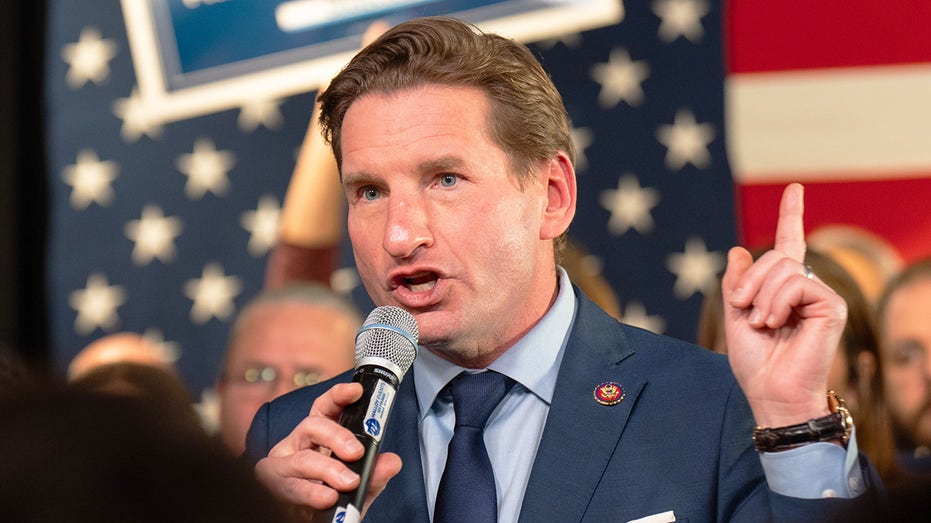
Democratic presidential candidate Dean Phillips announced Friday that he had to lay off “a lot” of his campaign staff as he faces difficulties raising enough cash to operate his campaign the way he wants to, but said he will remain in the race for the White House. “I found it almost impossible to raise enough to do this campaign the way I want. And today, sadly, I had to announce layoffs to a lot of my staff members,” Phillips, who currently represents Minnesota’s 3rd Congressional District in the House, said in a video shared to X. Describing those he laid off as “amazing people who gave up a lot personally and a lot professionally” to help his campaign, Phillips said it was a “really tough day” between himself and those who were let go. Despite the layoffs, Phillips vowed to remain in the race, insisting that’s a “promise” he made to those who are no longer working on his campaign. BIDEN CHALLENGER DEAN PHILLIPS SAYS EVERYONE CAN SEE PRESIDENT’S ‘DECLINE’ AFTER SPECIAL COUNSEL REPORT “I made a promise to them, and I’m gonna make it to you,” he continued. “I’m not giving up. I’m going to continue. I’m on ballots in 43 states, our country is desperate for change.” “We can be hopeful again, we can be optimistic again, and we can celebrate America again. But we gotta do it together,” he added. Speaking to his supporters in the video, Phillips said, “I’m going to continue this journey as long as you want this journey continued.” The video of Phillips featured repeated pleas for financial support for his campaign, which has struggled in recent weeks as incumbent President Biden strengthens his hold on Democratic voters. “I love you all and thank you for keeping the faith,” he said. “Join me, the Dean team, we can do it.” DEMOCRATIC BIDEN CHALLENGER SAYS HE AND HALEY ARE THE ‘LAST TWO STANDING’ TO MOVE US FORWARD Phillips, who announced he was entering the 2024 White House race with a long-shot Democratic primary challenge against Biden last October, has so far struggled against the president in a handful of key, early-voting states. In the New Hampshire Democratic primary election last month, Phillips garnered 20% of the vote, compared to Biden who earned 64% as a write-in-candidate. In the South Carolina Democratic primary election earlier this month, Phillips was wiped out by Biden who earned 96% of the vote. Phillips failed to clear 2% support in that election and was also topped by Marianne Williamson, who ended her campaign last week. Phillips is set to go up against Biden again this month in the Feb. 27 Michigan Democratic primary election. Following Special Counsel Robert Hur’s report this month that found Biden struggled to remember basic events in his life, Phillips said Biden’s “decline” was clear. The report outlined instances where Biden had a difficult time remembering key details and events, including when he served as vice president and the exact date his son, Beau, died. “Anybody who has their eyes open can see what’s going on,” Phillips said of Biden. “I think it’s a shame. I think it’s embarrassing. And I think it’s sad. And I think it’s a shame for a president who could cement a legacy, pass the torch and do what’s best for the country. It’s not just about him.” “[W]e all see with our own eyes his speeches and the decline. He’s an 81-year-old man,” Phillips said, adding that Biden would serve until 2029 if he were re-elected.
Jharkhand cabinet expansion: 8 to 12 MLAs unhappy over portfolio, reach Delhi

Amid strong resentment brewing among some Congress legislators in Jharkhand over the induction of four party MLAs in the cabinet of Chief Minister Champai Soren.
BJP leaders praise PM Modi’s development, cultural measures; farmers and South India find mention

Amid protests by a section of farmers, Defence Minister Rajnath Singh said in his remarks while proposing the resolution that no government has done as much for farmers as the one led by Narendra Modi.
Haley: Trump should not use RNC as ‘piggy bank’ for legal woes

Republican presidential candidate Nikki Haley on Friday warned that former President Donald Trump will use the RNC to pay his mounting legal fees, should he win the 2024 GOP nomination. In an interview on CNN, Haley said she does not want Trump to use the Republican National Committee (RNC) — which solicits donations from GOP voters — as his personal “piggy bank.” “My biggest issue is I don’t want the RNC to become his legal defense fund,” Haley told CNN’s Kaitlan Collins. “I don’t want the RNC to become his piggy bank for his personal court cases. We’ve already seen him spend $50 million worth of campaign contributions toward his personal court cases.” “Now we see him trying to get control of the RNC, so he can continue not to have to pay his own legal fees,” she added. TRUMP BARRED FROM OPERATING BUSINESS, ORDERED TO PAY OVER $350 MILLION IN NY CIVIL FRAUD CASE Haley’s comments came after a New York judge ordered Trump to pay more than $350 million in the civil fraud case brought by state Attorney General Letitia James. Judge Arthur Engoron ruled that Trump and other defendants were liable for “persistent and repeated fraud,” “falsifying business records,” “issuing false financial statements,” “conspiracy to falsify false financial statements,” “insurance fraud,” and “conspiracy to commit insurance fraud.” The judge also barred Donald Trump Jr. and Eric Trump from serving as officers or directors of any New York corporation or legal entity in New York for two years. TRUMP VISITS MANHATTAN COURT TO BLAST NYAG CASE, PRAISES APPELLATE RULING IN HIS FAVOR Engoron’s ruling came weeks after Trump was ordered to pay over $83 million in a defamation case brought by writer E. Jean Carroll, who accused Trump of sexual assault. The RNC previously acknowledged that it had been paying certain legal fees “that relate to politically motivated legal proceedings waged against President Trump,” according to reporting from The Hill, including investigations by then-Manhattan District Attorney Cy Vance Jr. and New York Attorney General Letitia James. However, in 2022, the RNC said it would not pay Trump’s legal bills once he declared himself a candidate for the White House. TRUMP ENDORSES NEW RNC CHAIR, ANNOUNCES DAUGHTER-IN-LAW’S RUN FOR VICE CHAIR Haley raised concerns that should Trump win the 2024 GOP nomination, he would commandeer the RNC and loyal GOP donors to pick up the tab for his civil judgments. Trump has already endorsed North Carolina GOP chair Michael Whatley to take over from current RNC Chairwoman Ronna McDaniel, along with his daughter-in-law Lara Trump to potentially serve as vice-chair. “The problem is that doesn’t help us when any seats in the House, in the Senate or anything else if the RNC is all focused on his legal fees,” Haley said on CNN. “He’s made the co-chair his daughter-in-law. He’s made his campaign manager the director of operations. He’s trying to control the RNC after the fact that he tried to get me out of the race so that he could be the presumptive nominee. All of that is so that he has an arm to pay his legal fees,” she continued. “That’s the fear that every Republican should have, because we won’t win anything if he goes down that path.” The Trump campaign and RNC did not immediately respond to requests for comment. Trump and Haley will face off in the South Carolina Republican primary next Saturday on Feb. 24, 2024. Fox News Digital’s Michael Lee contributed to this report. Get the latest updates from the 2024 campaign trail, exclusive interviews and more at our Fox News Digital election hub.
The ‘inclusive’ Afghan government Afghans do not want

On February 18, UN Secretary-General António Guterres will host a meeting of special envoys for Afghanistan in Doha, Qatar. The Taliban had earlier confirmed it will be sending a delegation to the event, which will also be attended by other Afghan political stakeholders and representatives of the Afghan civil society. This gathering is being held to accommodate one of the recommendations presented by the UN Special Coordinator for Afghanistan Feridun Sinirlioğlu in his November report (PDF) on the state of affairs in the country. Although the report highlighted the need to focus on confidence-building measures between the international community and Afghan stakeholders, which would imply identifying areas of possible cooperation that are not politically sensitive, some difficult issues are bound to be brought up at the meeting. Prime among them would be the matter of the formation of an inclusive government in Afghanistan. This demand has been reiterated by regional and international actors as one of the key preconditions for the recognition of the Taliban government. Seeking inclusive governance after a conflict is a routine diplomatic intervention. The idea is that inclusion is vital in peace-building, as it can resolve grievances produced by exclusion and prevent the re-emergence of violence. However, the term evokes unpleasant memories for the Afghan people because it reminds them of the Bonn Conference that followed the US invasion of Afghanistan where the exiled and reviled warlords of the country were given a clean slate and an opportunity to participate in the subsequent power-sharing arrangement. This inclusion of the warlords effectively meant impunity for crimes and played a vital role in the failure of the subsequent attempts at state-building in Afghanistan. The warlords were also spoilers of the peace process with the Taliban, the failure of which led to the eventual fall of Kabul to Taliban forces in August 2021. The Taliban has used the negative sentiment the term invokes in the population to its advantage, refusing to succumb to international pressure to include other Afghan political forces in its government. It has made clear that it considers such pressure an attempt to repeat the experience of the Bonn Conference. This is not an unpopular move, as the Afghan people dread the return of warlordism to Afghanistan. Some of these exiled warlords who still have eyes on power include Abdul Rashid Dostum who has been accused of sexually assaulting political opponents and of committing war crimes during the US invasion and Abdul Rasul Sayyaf who was one of the warlords responsible for the Afshar massacre of 1993 in which up to 1,000 people were butchered in a western district of Kabul. Ahmad Massoud, the son of the late Ahmad Shah Massoud, who was also involved in the Afshar massacre and the Afghan civil war, has also recently emerged as a political player. He is currently attempting to rally exiled warlords and allies of his father to fight against the Taliban while seeking funding from foreign governments. Apart from the warlords, there is a great number of former Afghan officials of the previous government who have expressed a desire to come back to power. Many of them are being included in conversations on the future of Afghanistan despite standing accused of large-scale corruption and even drug trafficking. It is not clear if any of the warlords or other problematic political players will participate in the meeting in Doha. The invitation process has not been transparent and it seems attempts were made to include some controversial figures, as the Taliban warned it would not attend if the selection of the Afghan participants was not agreeable to its leadership. If the meeting in Doha is meant to find ways to build bridges with the Taliban, then it should not be a venue where the inclusion of warlords and former Afghan officials of ill repute is pushed. Such a move would be counterproductive as it would make the Taliban more reluctant to engage. The issue of larger participation in the Taliban government can be brought up when enough trust has been built and momentum generated. While it is clear who should not be part of a future government, finding qualified and trusted figures from non-Taliban political forces can be a challenge. That is because, between 2001 and 2021, the elections in the country were repeatedly rigged, making it unclear who represents the will of the Afghan people. Ultimately, the Taliban should be allowed to choose who beyond its movement to include in government. This is not an ideal outcome but it would be an improvement on the current status quo. The demand for the Taliban to break its current monopoly on power should be framed differently if it is ever to be realised. The term inclusivity not only is a non-starter for the Taliban but also evokes bad memories in Afghanistan’s general population. The views expressed in this article are the author’s own and do not necessarily reflect Al Jazeera’s editorial stance. Adblock test (Why?)
Somalia president accuses Ethiopia of trying to annex part of its territory

President Mohamud ‘categorically objects’ to Ethiopia’s Red Sea port deal with Somaliland, territory Somalia claims as its own. Somali President Hassan Sheikh Mohamud has accused Ethiopia of trying to annex part of his country’s territory by signing a sea access deal with the breakaway region of Somaliland. Speaking at the African Union summit in Ethiopia’s capital, Addis Ababa on Saturday, Mohamud also said Ethiopian security forces tried to block his access to the summit amid a dispute between the two countries. The agreement between Ethiopia and Somaliland signed on January 1 “is nothing more than annexing part of Somalia to Ethiopia, and changing the borders of Somalia,” Mohamud told reporters. “Somalia categorically objects to that.” As part of the deal, signed by Ethiopian Prime Minister Abiy Ahmed and Somaliland’s leader Muse Bihi Abdi, Somaliland grants Ethiopia a 50-year lease on a naval base with access to Somaliland’s Berbera port for commercial marine operations. Neither side has made the terms of the deal public, but it appears to give Ethiopia the right to build a port in Somaliland in exchange for recognition. Somaliland has enjoyed de facto independence for three decades, but Somalia considers the self-governing region and its four million people to be a part of its northern territory. Mogadishu regards any international recognition of Somaliland as an attack on Somalia’s sovereignty, and the Somali government has called the port deal with Addis Ababa “outrageous” and “unauthorised”. “Ethiopia is misleading the world by claiming that they need an access to the sea,” Mohamud said on Saturday. “The question is not an access to the sea. The question is how Ethiopia wants access to the sea.” He claimed senior officers from Ethiopia’s military were in Somaliland “preparing the ground” for the territory’s annexation. It was not possible to verify his allegation. Somalia has suggested it would be prepared to go to war to stop Ethiopia from building a port in Somaliland. But Ethiopia’s Abiy has played down fears of an armed conflict over the Somaliland deal, telling lawmakers earlier this month that he had “no intention” of going to war with Somalia. ‘Provocation’ Reporting from Addis Ababa on Saturday, Al Jazeera’s Mohamed Vall noted that Somalia’s president had been very outspoken in his remarks at the AU Summit. “[Mohamud] accused Ethiopia not just looking for access to the sea in a normal way, because Ethiopia has lots of other neighbours who have access to the sea, who have sea shores … The real purpose, he said, of Ethiopia’s [deal] is to annex Somaliland, which is a part of the sovereign republic of Somalia,” Vall said. “The Somali president condemned the behaviour of the Ethiopian government, saying that they have even tried to block his access to the venue of the summit today,” our correspondent added. “He wondered how can this happen in a country that hosts the AU, an organisation based on equality between African states and the freedom of the leaders coming here to access the summit.” Mohamud, attending the 37th summit of the AU, said that Ethiopian security services tried to block him from leaving his hotel in Addis Ababa on Saturday morning, forcing him to travel in the convoy of Djibouti’s president. When the pair arrived at the AU headquarters, armed guards tried to prevent them from entering the building, Mohamud said, describing the alleged action as “provocation”. Ethiopia however said it had “warmly welcomed” Mohamud and accorded him the full honours of visiting heads of state and governments to the summit. Prime Minister Abiy’s spokesperson Billene Seyoum told the AFP news agency that the Somalia delegation was blocked when its security detail tried to enter a venue with weapons. “The Somali delegation security attempted to enter the AUC premises with weapons which was blocked off by AUC security,” she said. As African leaders convene in Ethiopia for the AU summit, Palestinian Prime Minister Mohammad Shtayyeh also attended the two-day gathering and raised the issue of Israel’s war in Gaza with leaders of the AU who remain divided over their support for Palestine. Adblock test (Why?)
Hungary could ratify Sweden’s NATO membership in February: PM Orban

Budapest is the only NATO member yet to ratify Stockholm’s membership to the world’s largest military alliance. The Hungarian parliament can ratify Sweden’s NATO membership when it convenes for its new session later this month, Prime Minister Viktor Orban has told his supporters. “It’s good news that our dispute with Sweden will soon be settled,” Orban said in his state-of-the-nation address on Saturday in Budapest. “We are going in the direction that at the start of parliament’s spring session we can ratify Sweden’s accession to NATO.” Orban highlighted that he and Swedish Prime Minister Ulf Kristersson had taken steps “to rebuild trust” between the two countries. But he did not say what those steps were. Sweden applied to join NATO in May 2022 in a historic shift in policy prompted by Russia’s invasion of Ukraine. Hungary is the only NATO country not yet to have ratified Sweden’s application, a process that requires the backing of all NATO members. Turkey was the only other NATO holdout, but the Turkish parliament voted to approve Swedish membership last month. Earlier this month, lawmakers from Hungary’s governing Fidesz party boycotted an emergency parliament session in which a vote on Sweden’s bid to join NATO was on the agenda. Fidesz cited what it called unfounded Swedish allegations that it has eroded democracy in Hungary as the reason why Sweden’s NATO bid had been held up. Hungarian officials have also indicated that Fidesz lawmakers won’t support holding a vote on Sweden’s NATO bid until Kristersson accepts an invitation by Orban to visit Budapest to negotiate the matter. On Wednesday, Swedish Foreign Minister Tobias Billstrom said his country hoped that Hungary would soon ratify its accession to NATO, removing the last obstacle to its membership. Billstrom reiterated there would be no negotiations on the ratification despite Orban inviting Kristersson to “negotiate” Sweden’s accession. “There is nothing to negotiate, if there is a visit, it’s not going to be a negotiation, that has been made very clear by my prime minister,” the Swedish foreign minister said earlier this week. The delay in ratifying Sweden’s NATO application has also soured Budapest’s relations with the United States and raised concerns among its allies. US Senator Ben Cardin, a Maryland Democrat and chairperson of the Senate Foreign Relations Committee, also raised the prospect of imposing sanctions on Hungary for its conduct and called Orban “the least reliable member of NATO”. Orban, who has better ties with Russia than other EU states and most NATO members, has repeatedly said his government backs Sweden joining the alliance, but the legislation has been stranded in the Hungarian parliament since mid-2022. The Hungarian Parliament is scheduled to reconvene on February 26. Adblock test (Why?)
Weather update: IMD issues heavy rain, hailstorm alerts for these states, check forecast here

Residents in these regions are advised to stay updated with the latest weather forecasts and take necessary precautions to ensure safety during the anticipated adverse weather conditions.
Jammu: Flying drones, other aerial devices temporarily banned ahead of PM Modi’s visit

Ahead of Prime Minister Narendra Modi’s visit to Jammu on February 20, authorities on Saturday temporarily banned flying drones, paragliders and remote-controlled micro-light aircraft in Jammu.